
Woman Demands an Officer Get a Ticket and Turns the Stop Into a Showdown
Woman Demands an Officer Get a Ticket and Turns the Stop Into a Showdown
A traffic stop that might have ended with a citation becomes a prolonged argument when a young woman challenges the officer’s authority, insists that parking changed the legality of the stop, and then becomes fixated on whether another officer should receive a ticket for an alleged turn-signal violation. The viral footage is memorable because the dispute keeps expanding long after the original traffic issue should have been the main focus.
A Traffic Stop That Refuses to Stay Simple
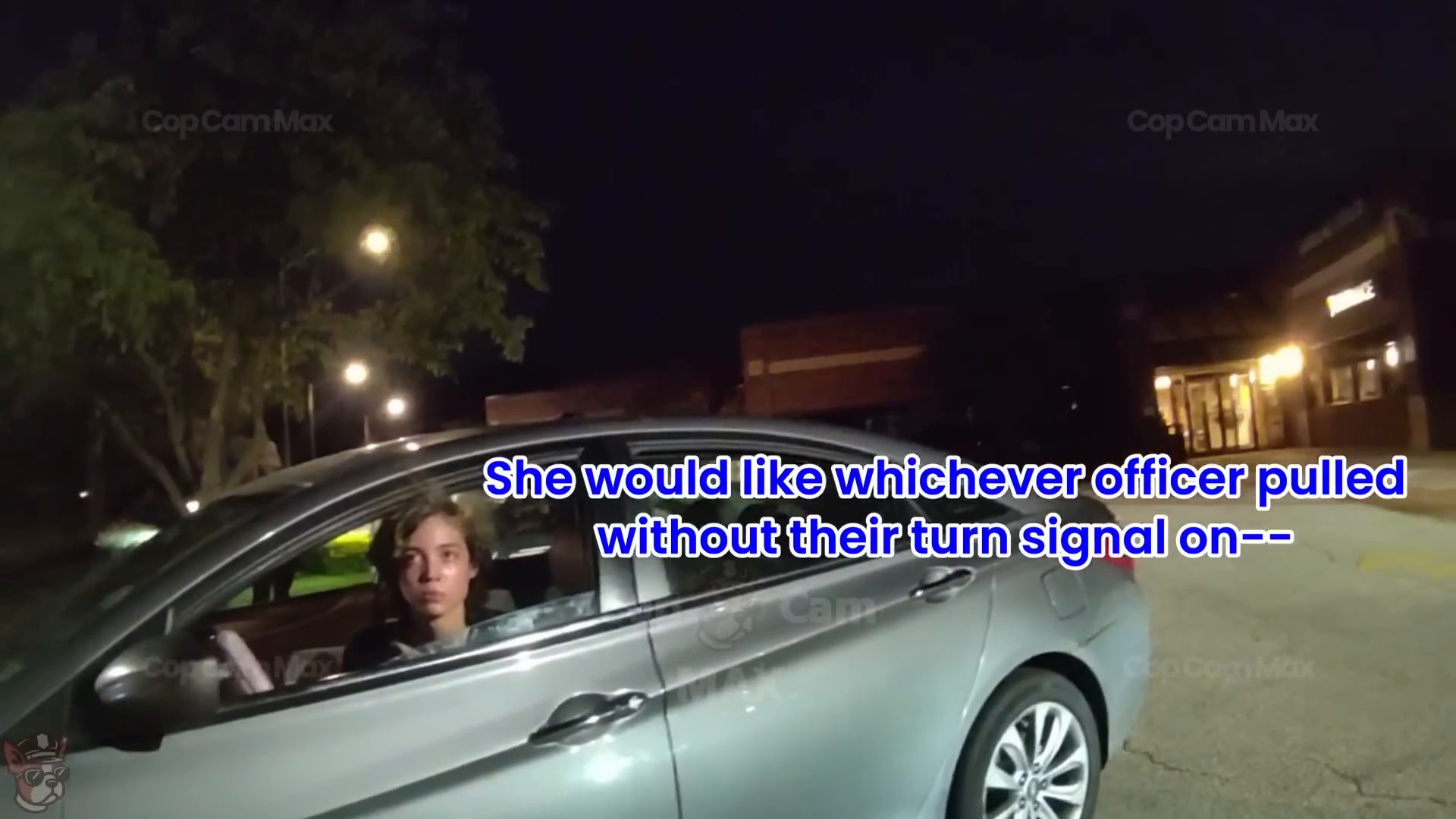
The video begins with an officer following a vehicle after observing driving behavior that prompts a traffic stop. The woman pulls into a parking space before the officer completes the stop and quickly argues that this somehow changes the officer’s authority to detain her. The disagreement starts almost immediately, and the tone makes clear that this will not be a routine exchange of license, registration and citation information.
The officer repeatedly attempts to explain that a driver cannot defeat a traffic stop merely by reaching a parking spot before emergency lights are fully activated. A police officer who has observed an apparent traffic violation can generally initiate a lawful stop based on that observation. Whether a vehicle happens to be moving, stopped at a light or entering a parking area does not automatically erase the officer’s basis for the contact.
The woman does not accept that explanation. Instead, she challenges the officer’s statements, disputes his interpretation of events and repeatedly redirects the conversation. The result is a familiar body-camera dynamic: the officer is trying to complete a specific enforcement action while the driver is trying to turn the encounter into a broader argument about fairness and authority.
The Parking-Space Argument Goes Nowhere
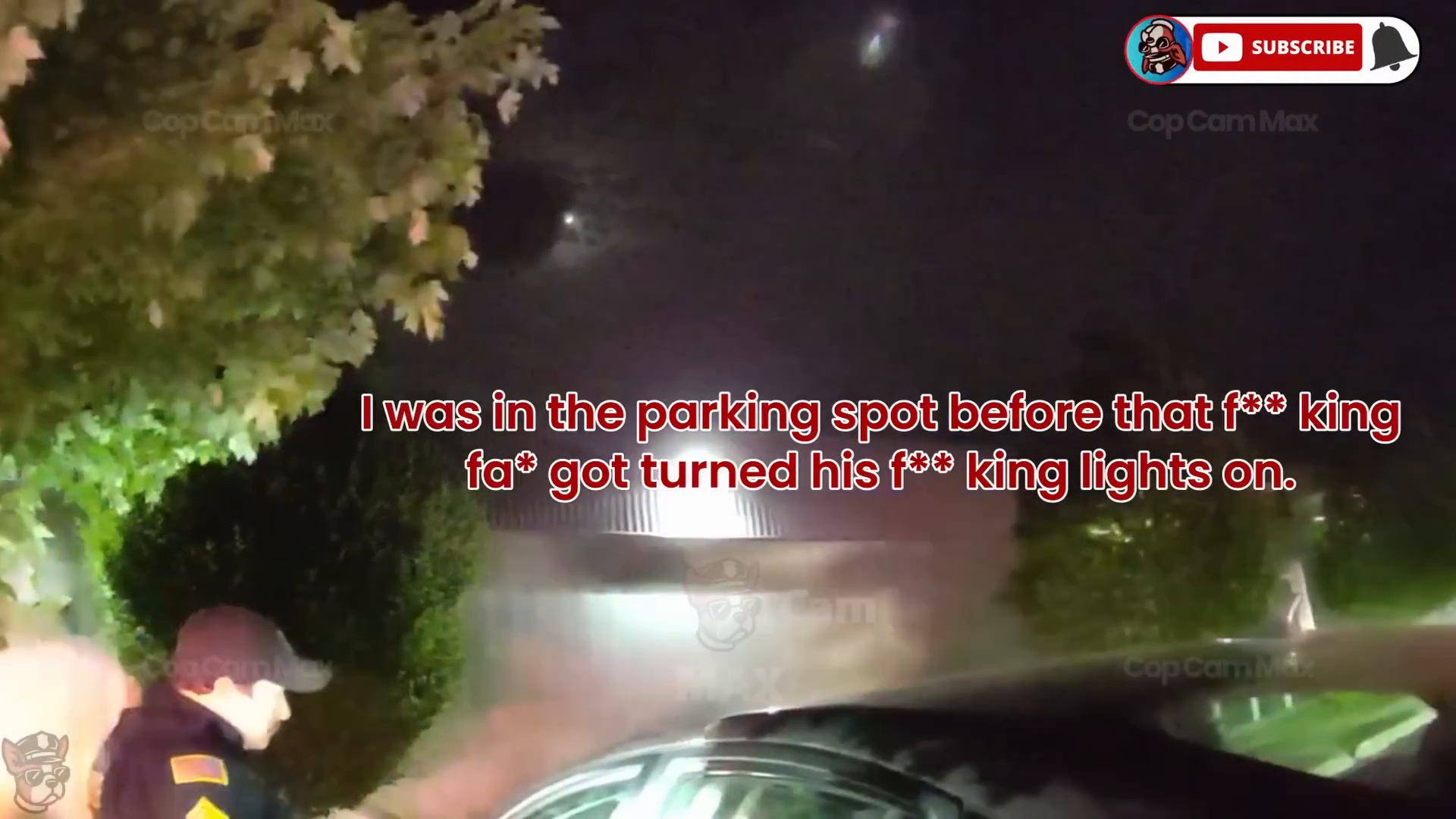
One of the central disputes concerns the woman’s belief that pulling into a parking space before the officer activates his lights makes the stop improper. The footage shows the officer rejecting that premise. From his perspective, the relevant question is what he observed before the vehicle stopped, not whether the driver happened to reach a parking spot first.
This distinction is important because traffic enforcement does not depend solely on the moment emergency lights appear in a rearview mirror. Officers can observe a violation, follow a vehicle and then make contact after it stops. The exact legal analysis depends on jurisdiction and the facts, but simply parking is not a universal shield from enforcement.
The conversation becomes circular because the woman continues returning to her interpretation even after the officer has explained his. Instead of narrowing the disagreement, each repetition seems to increase her frustration. The officer, meanwhile, continues trying to move the stop toward a conclusion.
A New Complaint Takes Over the Encounter
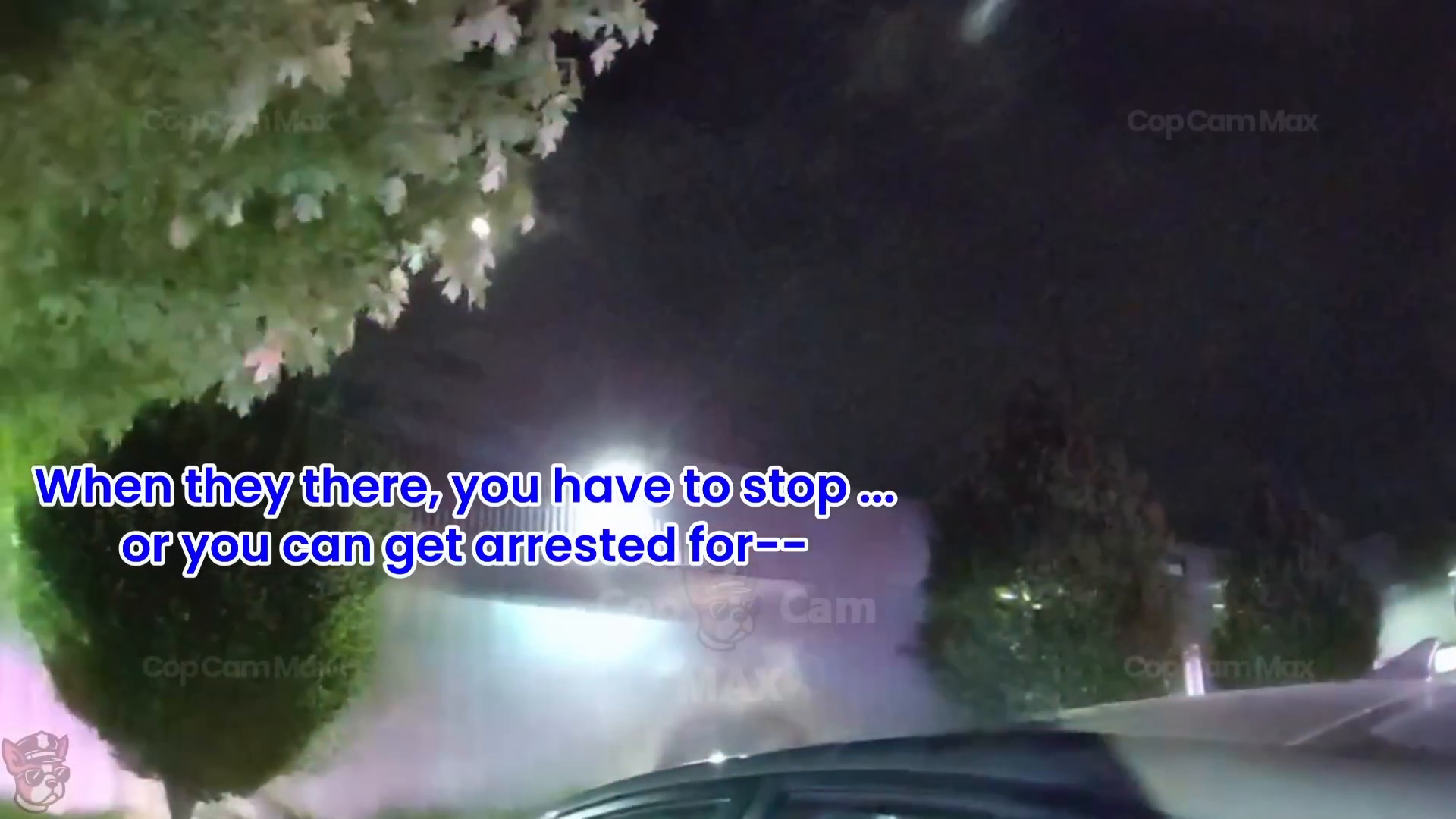
The most viral portion of the footage begins when the woman focuses on another officer’s driving. She claims that the officer failed to use a turn signal and insists that he should receive a traffic ticket. What begins as a complaint quickly becomes the dominant subject of the encounter.
The phrase “give him a ticket” is repeated so often that it became the defining line associated with the video online. The original upload from Cop Cam Max was published on April 21, 2025, and accumulated millions of views as clips of the confrontation spread across social media. The publisher’s description frames the original stop as involving a speeding driver who pulled into a parking spot before emergency lights were activated. citeturn0youtube21
Other online references to the same footage likewise identify the argument about the officer’s turn signal as the moment that made the encounter viral. The dispute even inspired remixes built around the repeated demand for a ticket. citeturn0search8
Why Her Demand Does Not Control Police Discretion
A civilian can report conduct they believe violates traffic law. That does not mean an officer standing at the scene is required to issue a citation simply because someone demands one. Traffic citations involve observation, evidence, jurisdiction and enforcement discretion.
If an officer personally observes another driver commit an offense, the officer may have authority to act. But the complaining person does not become the decision-maker. The same principle applies when the alleged violator is another officer. Police officers are not categorically exempt from traffic laws, but emergency operations, statutory exceptions and agency policy can affect how particular conduct is evaluated.
The footage does not provide enough verified information to conclude that the other officer legally committed an offense. It shows the woman insisting that he did. Those are different things. Her certainty becomes part of the conflict because she treats her allegation as though it automatically requires the first officer to write a citation.
The Argument Becomes More Important Than the Original Stop
As the confrontation continues, the original reason for the traffic stop becomes almost secondary. The woman repeatedly raises her voice and returns to the same demand. Officers attempt to respond, but the conversation no longer functions like a normal exchange of information.
This is one of the reasons the video became so widely shared. Viewers are watching a person become increasingly focused on a side dispute while officers are trying to finish the matter that brought them together in the first place. The mismatch between those priorities produces both tension and absurdity.
From a procedural standpoint, arguing with an officer does not automatically create a new crime. People generally have broad First Amendment rights to criticize police. The legal line is more likely to involve conduct rather than mere disagreement: threats, physical interference, refusal to comply with lawful detention, obstruction or other behavior defined by state law.
That distinction matters because the woman’s words are provocative, but provocative speech alone should not be casually converted into an invented criminal charge. Any later arrest or prosecution must be tied to actual conduct and documented legal grounds.
The Officer Keeps Trying to End the Stop
Throughout the footage, officers repeatedly attempt to move the encounter toward resolution. That is easy to overlook because the woman’s voice and repeated demand dominate the audio. Yet the body-camera sequence shows police explaining, waiting, redirecting and trying to complete the traffic matter.
Traffic stops are temporary seizures under the Fourth Amendment. Their duration should be reasonably related to the purpose of the stop and ordinary tasks associated with it. A driver’s own conduct can affect how long an encounter lasts, especially when officers have to repeatedly explain instructions, address new allegations or respond to escalating behavior.
The video therefore provides an interesting example of how a short enforcement action can become lengthy without the underlying traffic issue itself becoming more complicated. The complication comes from the interaction.
The Viral Phrase Becomes a Distraction
Once the woman begins repeating her demand, the phrase takes on a life of its own. Online audiences clipped it, quoted it and turned it into a meme. Reddit discussions about the video focused heavily on the repetition, while other sites embedded the original upload and debated whether the officer should have handled the confrontation differently. citeturn0reddit32turn0search4
That viral afterlife can distort how an incident is remembered. A catchy line becomes the entire story even though the full video contains a longer sequence of driving, questioning, legal disagreement and attempts by officers to conclude the stop.
Watching the complete footage is therefore more useful than seeing only the repeated demand. It reveals how the argument develops and why the officers’ patience becomes part of the story.
What the Footage Can Actually Establish
The supplied video confirms several important points. A woman is stopped after an officer follows her vehicle. She argues that parking affects the legality of the stop. She becomes highly focused on an alleged turn-signal violation by another officer and repeatedly demands that he receive a ticket. The interaction becomes increasingly heated.
The footage also shows why online descriptions should not be treated as police reports. The viral upload was published in 2025, but the underlying body-camera incident may have occurred earlier. Reuploads, edits and sequels can blur the chronology. A publication date is not necessarily an incident date.
Research located the original viral upload and multiple discussions of the same footage, but it did not produce a sufficiently authoritative primary police report that could be matched with confidence to every detail of the encounter. For that reason, this article does not state the woman’s full identity, exact department, exact charge list, sentence or final court outcome as established fact.
Why the Encounter Is a Useful Lesson in Traffic Stops
Drivers do not have to agree with an officer’s interpretation of traffic law at the roadside. They can challenge a citation in court, preserve evidence, request records and consult an attorney. What usually does not help is trying to litigate every disputed point while the stop is still underway.
The courtroom and the roadside serve different functions. At the roadside, the officer is making an enforcement decision based on what they observed and the information available. In court, the driver can contest that decision before a neutral judicial process.
This does not mean officers are always correct. It means there is a safer and more effective mechanism for resolving disagreements than turning a traffic stop into an escalating argument. The woman in this video appears determined to win the debate immediately, and that determination prevents the encounter from settling down.
Police Accountability and Roadside Reality
The woman’s underlying principle is not inherently unreasonable: police officers should be accountable to the law. The problem is the leap from that principle to the demand that one officer must immediately issue another officer a ticket because she says a violation occurred.
Accountability can take many forms. A person who believes an officer violated traffic law or department policy may be able to file a complaint, submit video, contact a supervisor or pursue other review procedures. Those mechanisms allow evidence and policy to be evaluated without turning an active traffic stop into a confrontation about a separate officer.
The body-camera footage captures the collision between those two ideas. The woman believes equal treatment requires immediate enforcement. The officers treat the issue as something that does not override the traffic stop already in progress.
How Repetition Changes the Tone
Repeated language can have a powerful effect during a confrontation. The words themselves may remain the same, but volume, timing and refusal to move to another subject can transform a disagreement into a scene that feels unstable.
That is exactly what happens here. The demand for a ticket stops functioning as a question or complaint and becomes a refrain. Officers are no longer simply answering it; they are managing the broader behavior surrounding it.
For viewers, the repetition is almost comedic because it is so extreme. For officers at the scene, however, repetition can be a sign that ordinary conversation is no longer resolving the situation. That can influence decisions about distance, backup and how quickly to end the contact.
The Internet Sees a Meme, the Camera Shows a Process
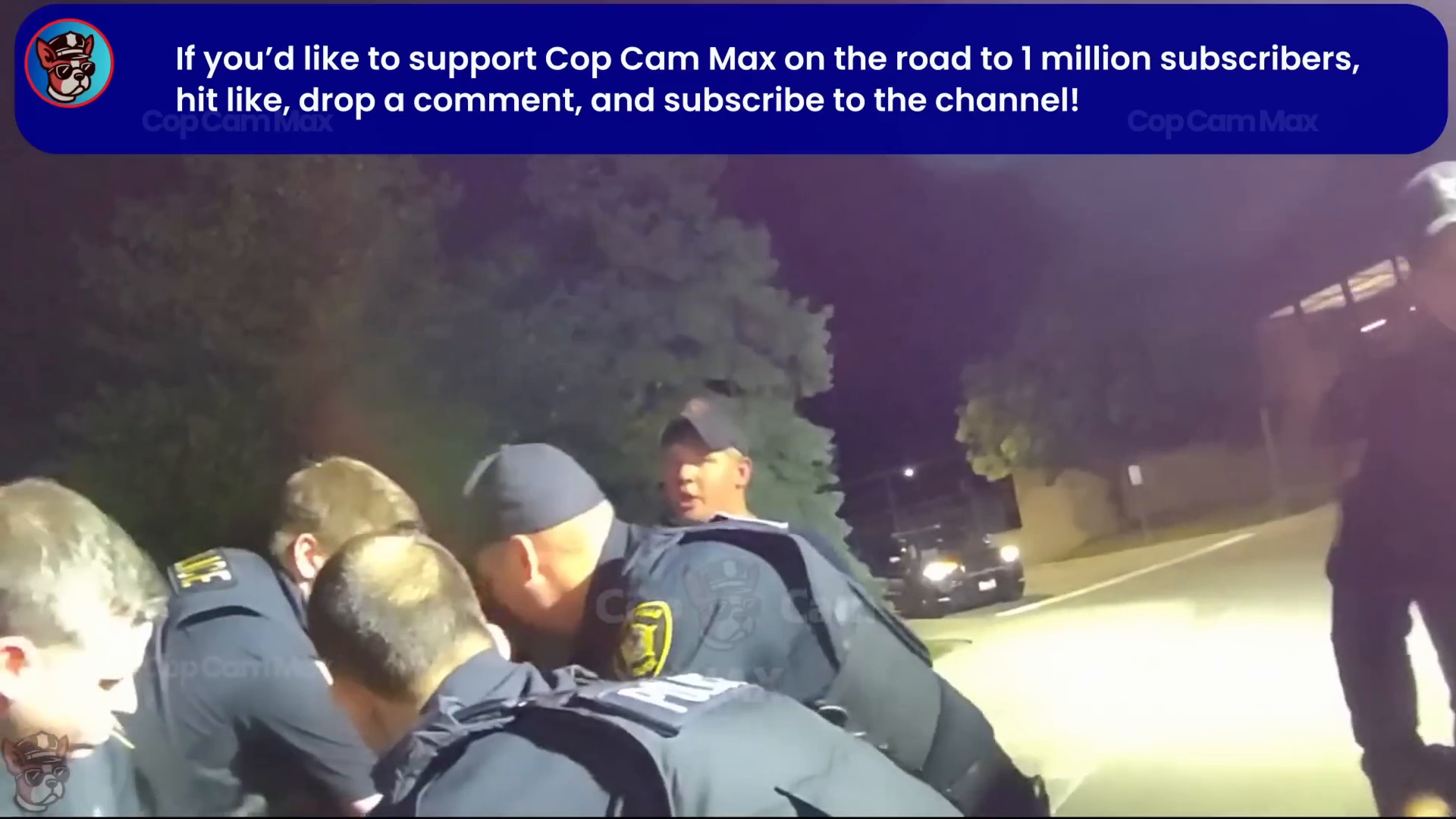
The online version of this incident is dominated by one phrase. The body-camera version is more complicated. It shows an officer observing driving behavior, following the vehicle, making contact, addressing the woman’s legal argument, attempting to complete the stop and then dealing with an increasingly intense side dispute.
This is why full-length police footage often changes the viewer’s understanding. A thirty-second clip can preserve the loudest moment while removing everything that explains how the people reached it.
The original Cop Cam Max upload became a major viral video, and follow-up references later connected the same woman to another police encounter. Those secondary discussions are useful for tracing the internet history of the clip, but they are not sufficient to establish every legal fact about the original incident. citeturn0search0
What Remains Unverified
Several claims circulated online about the woman’s later jail time, sentencing and subsequent encounters. Some forum posts state specific numbers, but those claims were not supported by a primary court record found during this research. They are therefore not repeated here as verified facts. citeturn0search7
This is an important distinction for body-camera reporting. A viral person may appear in multiple videos, and commenters often combine details from separate cases. Without court records or an official agency release, it is easy to attach the outcome of one incident to another.
The safest factual foundation remains the footage itself and the original upload: a traffic stop, a dispute about whether parking defeated the stop, an allegation that another officer failed to signal, and an increasingly emphatic demand that he be ticketed.
A Small Traffic Dispute Becomes the Whole Story
The remarkable part of the encounter is how far it travels from its starting point. What begins as a traffic enforcement contact becomes an argument about police authority, fairness, signaling, discretion and whether an officer should punish another officer on demand.
The woman’s insistence does not produce the outcome she wants. Instead, it prolongs the encounter and creates the very viral spectacle that later defines the video online.
The footage is a useful reminder that being convinced of a legal position is not the same as being correct about how that position must be enforced. People can challenge police action, but the place and method of that challenge matter.
Watch the Entire Encounter in Context
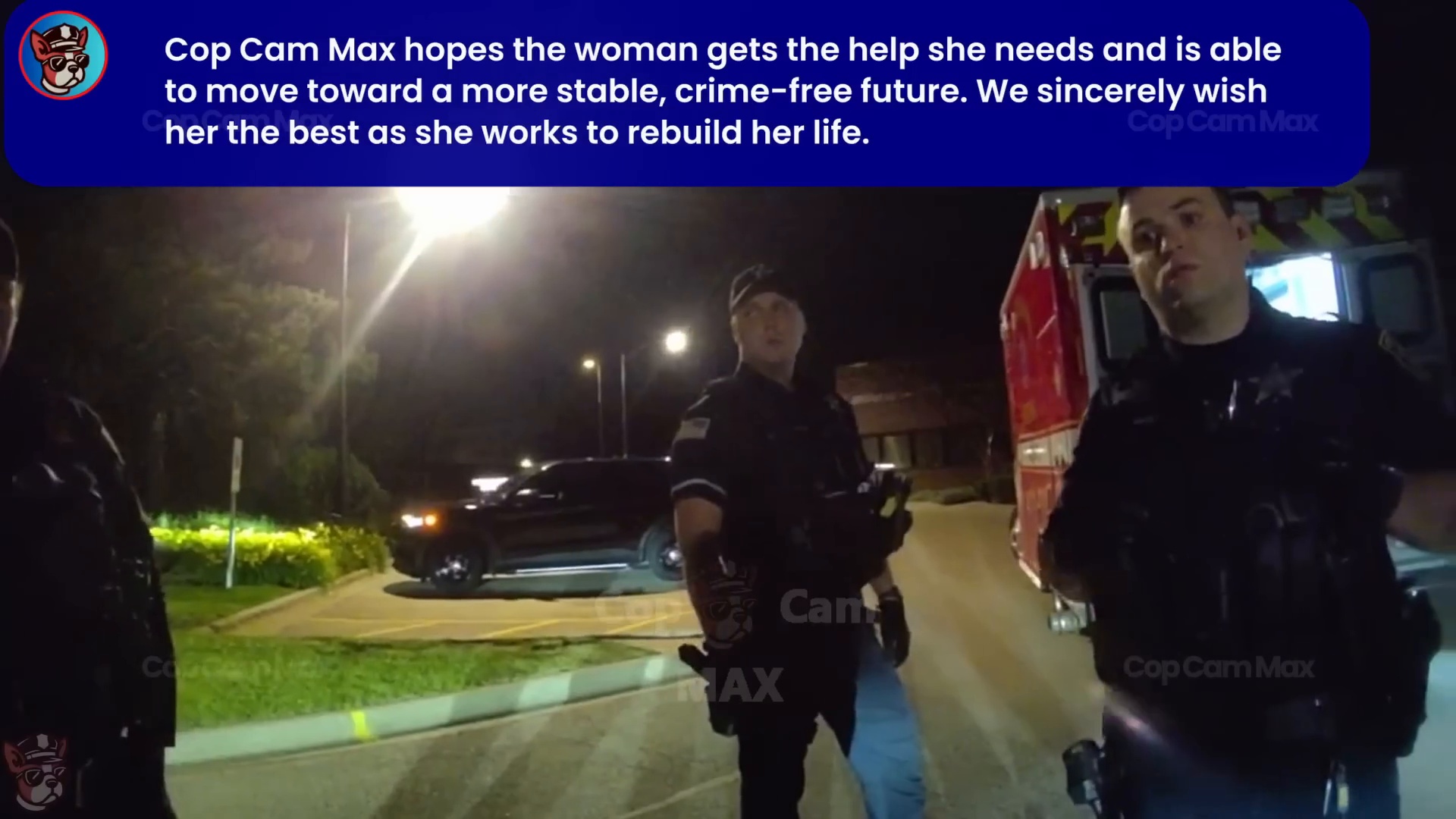
The repeated demand is the clip everyone remembers, but the full video shows how much happens before and around it. Seeing the entire stop makes it easier to understand why the argument grows, how officers respond and why a simple traffic issue turns into a prolonged confrontation.
Comments (0)
Loading comments...
May You Like

Karen Entitled’ Woman Gets Tased After Allegedly Ramming Police Cars

What Happens when you get Caught Shoplifter Stealing Local Store

The Truth Behind the Suspicious Vehicle and the Standoff with Police













