
Welfare Call Escalates Into a Felony Arrest After Deputies Intervene
Welfare Call Escalates Into a Felony Arrest After Deputies Intervene
A Call for Help Brings Deputies to a Palm Coast Neighborhood
On the evening of April 19, 2024, Flagler County deputies responded to Farraday Lane in Palm Coast, Florida, after the communications center received a 911 call concerning a highly intoxicated woman. The woman was later identified by the Flagler County Sheriff’s Office as Julia Jones, 40, of Palm Coast.
The supplied body-camera footage matches the official account closely. Its AXON overlay shows April 19, 2024 shortly after 6:26 p.m., the patrol vehicle is clearly marked Flagler County Sheriff, and the woman, setting and sequence correspond with footage later released by the agency. Official reporting places the dispatch shortly after 7 p.m.; body-camera timestamps can reflect recording-system timing and do not change the strong visual and narrative match.
Deputies located Jones near the intersection of Farraday Lane and Fawn Lane. According to the Sheriff’s Office, she was having difficulty maintaining her balance and smelled strongly of alcohol. A witness reportedly told deputies that Jones may have consumed a very large amount of vodka that day.
What begins as an effort to check on an intoxicated resident and keep her away from moving traffic soon becomes a prolonged confrontation. The shift is gradual at first: questions, requests to remain near the patrol vehicle, arguments over whether she can leave, and repeated efforts by deputies to calm the situation.
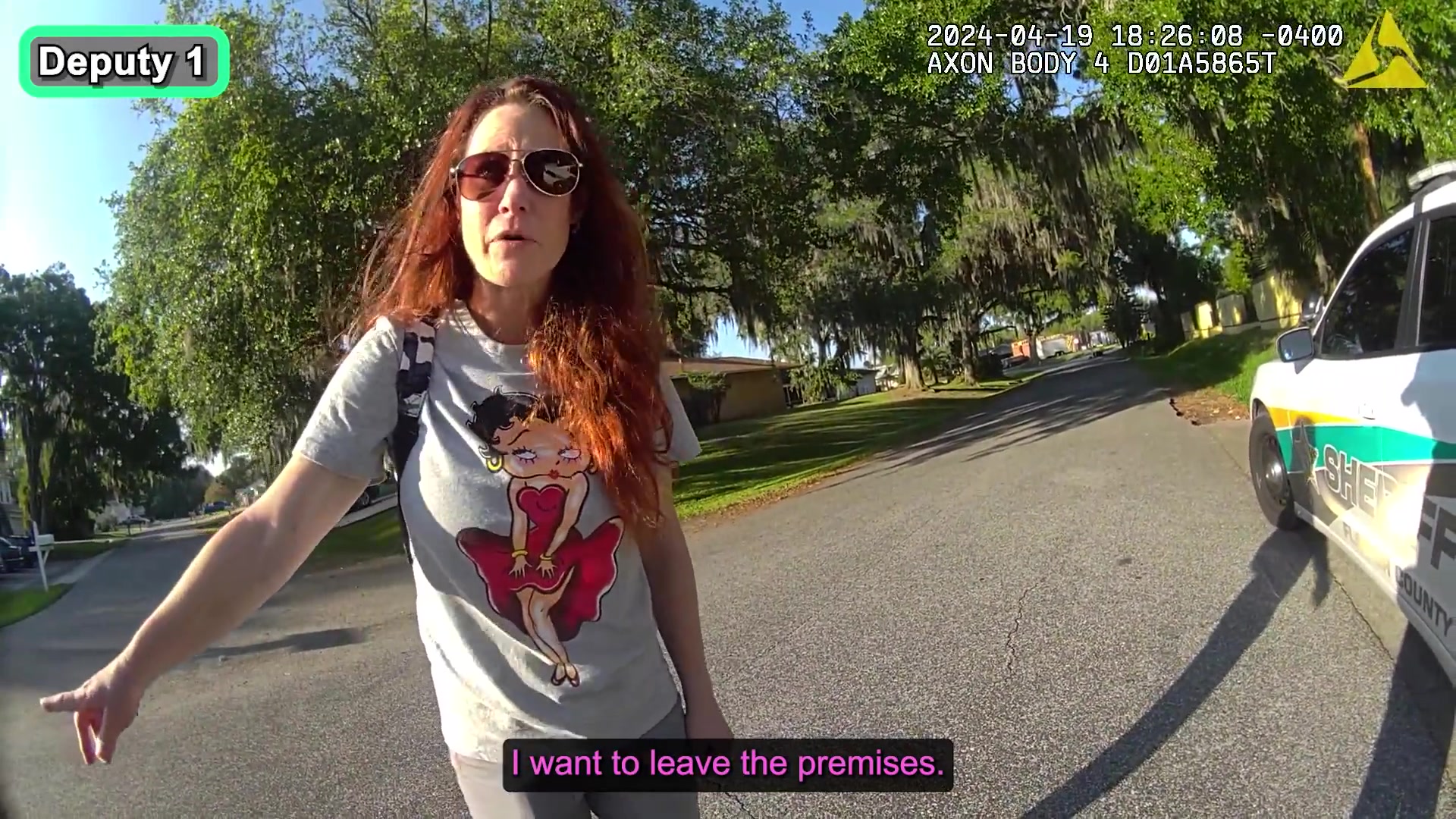
Deputies Try to Keep Jones Away From Traffic
The body-camera footage shows Jones standing near a patrol car on a residential street. Deputies explain that they want her to remain in a safer position rather than swaying toward the roadway. Jones repeatedly says she wants to leave the area and challenges the officers’ authority to keep her there.
For deputies, the immediate concern is not simply whether someone has consumed alcohol. A visibly unstable person near traffic can create a safety problem even before any criminal allegation is considered. The officer therefore continues trying to keep Jones close to the patrol vehicle while speaking with her.
The interaction becomes increasingly argumentative. Jones questions the deputies, raises her voice and insists that she should be allowed to leave. The deputies continue giving directions rather than immediately moving to a physical arrest.
This early portion of the video is important because it provides context for the later struggle. A short clip beginning only when officers grab Jones would omit the repeated conversation and the safety concerns that preceded the detention.
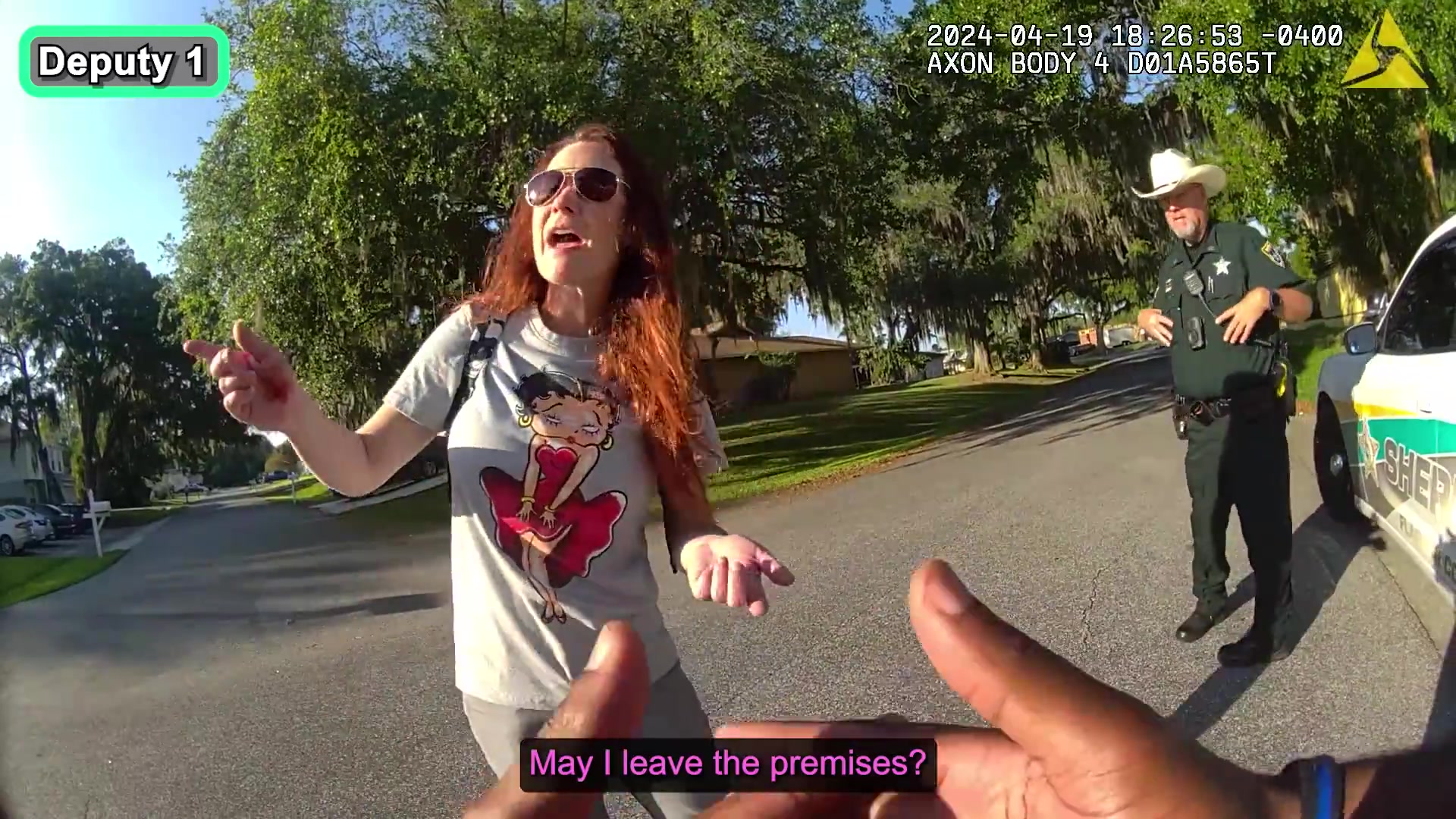
The Encounter Becomes More Confrontational
As the conversation continues, Jones becomes increasingly agitated. The footage shows her arguing at close range with deputies and resisting their efforts to control the encounter. According to the Flagler County Sheriff’s Office, she began screaming as deputies attempted to detain her to prevent further disturbance.
The agency said Jones then spat at deputies and struggled to break free. Body-camera footage captures the encounter becoming physically chaotic as officers attempt to secure her while she continues yelling and resisting.
Spitting at an officer can have consequences beyond disorderly conduct because physical contact with a law-enforcement officer may support a battery allegation under Florida law, depending on the circumstances. The Sheriff’s Office ultimately announced a battery-on-a-law-enforcement-officer charge among the counts filed after the arrest.
The key point is that the felony allegation did not arise simply because deputies were conducting a welfare-oriented or intoxication call. It arose from what authorities alleged Jones did during the encounter with the deputies.
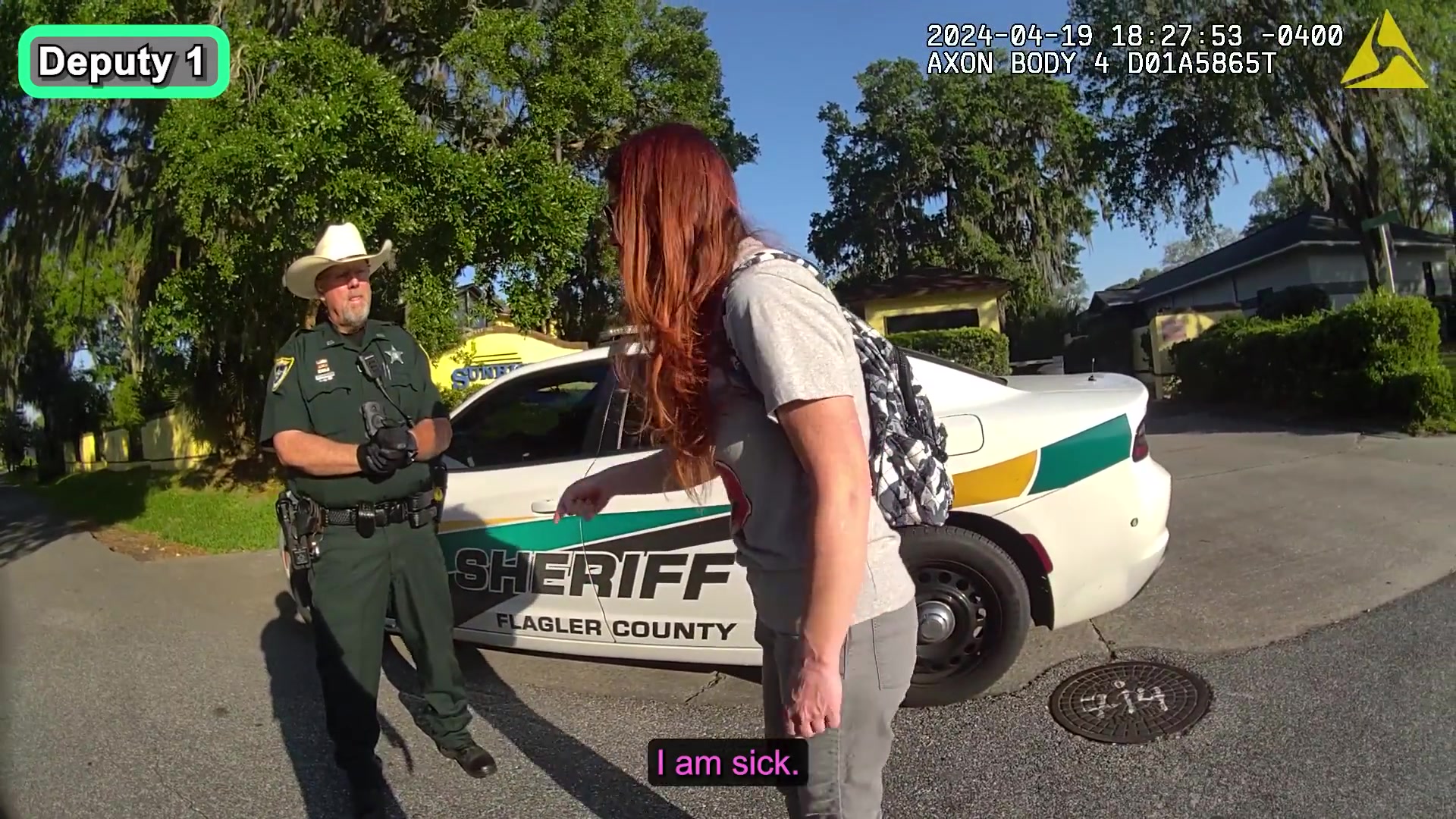
Medical Personnel and Deputies Work to Gain Control
The struggle does not end immediately. Deputies and medical personnel work together to get Jones under control and into handcuffs. The body camera moves rapidly during the physical portion of the arrest, illustrating one limitation of officer-worn video: during close contact, the camera records the officer’s movement rather than a stable wide shot.
Despite the chaotic footage, the official account provides a clear sequence. Jones allegedly spat on deputies, resisted efforts to detain her and continued struggling for several minutes before responders were able to place her in the patrol vehicle.
Once a person is handcuffed, officers still have to monitor behavior and medical condition. Intoxication can complicate that process because balance, judgment, communication and physical responses may all be affected. Deputies also have to distinguish deliberate resistance from possible medical distress.
In this case, the encounter would later require a hospital stop before Jones could be booked into jail.
A Backpack Search Adds Another Charge
After Jones was detained, deputies searched her backpack. The Flagler County Sheriff’s Office said they found a small purple bag containing three white pills. Authorities identified the pills as acetaminophen and hydrocodone.
Hydrocodone is a controlled prescription medication. The Sheriff’s Office said the discovery resulted in a possession-of-hydrocodone charge. That charge was separate from the conduct deputies said occurred during the roadside confrontation.
This distinction helps explain why a call that began around an intoxicated person ultimately produced several different allegations. Disorderly intoxication related to the public disturbance, battery on a law-enforcement officer related to the alleged physical contact with deputies, and the drug count arose from the pills found during the search.
The footage itself cannot chemically identify a pill. That information comes from the Sheriff’s Office release, so it should be attributed to the agency rather than inferred from an image of the backpack.
The Ride to Jail Turns Into Another Safety Problem
After officers placed Jones in the patrol vehicle, the confrontation continued. Released footage shows her shouting from the rear seat and berating deputies. According to the Sheriff’s Office and local reporting, she then began repeatedly banging her head inside the vehicle.
The deputy eventually stopped because the behavior created a new risk of injury. Jones was transported to AdventHealth Palm Coast for medical clearance rather than being taken directly to the detention facility.
This step is significant because booking is not supposed to override an immediate medical concern. If a detainee appears injured, loses consciousness or deliberately strikes their head against a vehicle, officers may need medical personnel to evaluate the person before jail staff accept custody.
After receiving medical clearance, Jones was transported to the Sheriff Perry Hall Inmate Detention Facility.
The Arrest Includes a Felony Allegation
The Flagler County Sheriff’s Office announced that Jones was arrested on charges of disorderly intoxication in a public place causing a disturbance, battery on a law-enforcement officer and possession of hydrocodone. Contemporary reporting repeated those charges based on the agency’s release.
The battery-on-a-law-enforcement-officer allegation is the felony component that explains the original video title’s emphasis on a “felony arrest.” The encounter did not begin as a felony investigation. The more serious allegation developed during the deputies’ attempt to manage and detain Jones.
The Sheriff’s Office said Jones posted a $7,500 bond and was released. Posting bond is not a finding of innocence or guilt; it simply concerns release from custody while the criminal process continues.
Later public reporting about a separate 2026 arrest involving Jones stated that the 2024 battery charge was not prosecuted, while she was found guilty of disorderly intoxication and resisting an officer without violence. That later information is useful context because it shows why initial arrest charges should never automatically be described as final convictions.
The Official Record Adds Important Context to the Viral Footage
The body-camera video is dramatic, but the official Flagler County release helps separate what viewers can see from what investigators documented. The camera shows Jones arguing, resisting and being placed into custody. The agency release identifies her, describes the original call, reports the alleged spitting and lists the pills recovered from her backpack.
Local reporting from FOX 35 Orlando and other outlets independently repeated the Sheriff’s Office account and published portions of the body-camera footage. Those sources also reported the hospital diversion after Jones began banging her head inside the patrol vehicle.
This cross-checking matters because generic titles such as “Welfare Check Ends In Felony Arrest” can apply to many unrelated police encounters. Here, the date, agency markings, woman’s appearance, dialogue and sequence all line up with the Julia Jones incident in Palm Coast.
It also reveals that “welfare check” is a simplified description. The official Sheriff’s Office release says deputies were responding to a 911 report of a highly intoxicated woman causing concern. The practical purpose involved checking on and controlling an intoxicated person, but the official wording should be preserved when describing the dispatch.
Why the Encounter Escalated So Quickly
Several factors overlap in the footage. Jones wants to leave. Deputies believe she is too impaired to safely wander into traffic and say she is causing a disturbance. The disagreement becomes louder, then physical. Once deputies decide to detain her, resistance makes the situation more difficult.
The encounter demonstrates how quickly a low-level public-safety call can generate additional criminal allegations. Officers do not need to arrive expecting a felony for a felony charge to arise later from conduct during the response.
At the same time, each allegation should be kept separate. Intoxication is not the same as battery. Resistance is not the same as possession of a controlled substance. The later disposition of one count does not automatically determine the others.
That careful separation is especially important when writing from police footage because agency releases often describe the arrest stage, while court records may later narrow, dismiss or modify charges.
A Neighborhood Call Ends at the County Jail
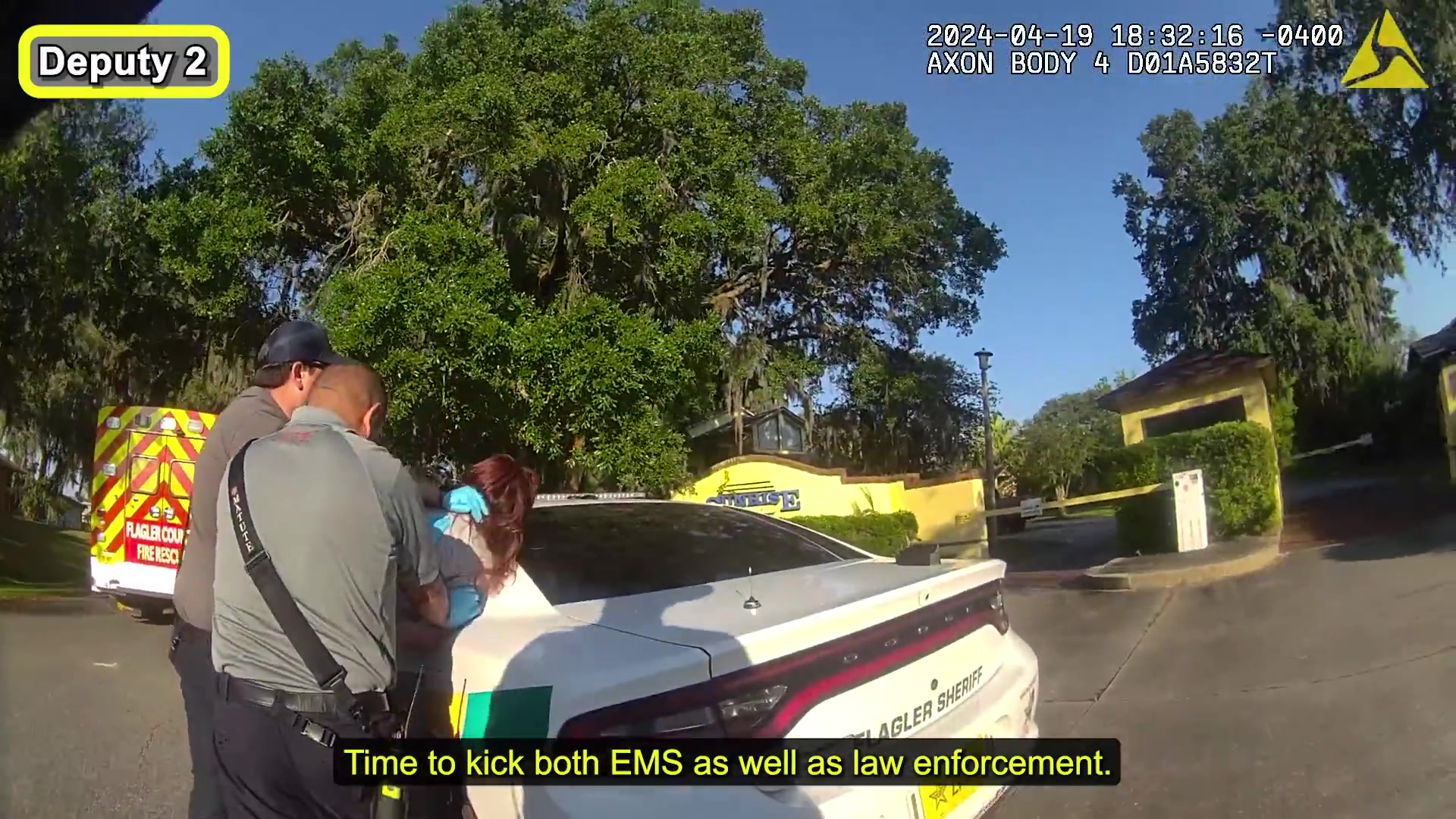
The supplied footage begins in bright evening sunlight on a quiet Palm Coast street. Jones is standing beside a Flagler County patrol car and repeatedly saying that she wants to leave. At that moment, the scene does not resemble a major felony investigation.
Within minutes, the encounter has changed. Deputies say Jones becomes increasingly agitated, spits on them and physically resists detention. A search of her backpack produces prescription pills authorities identify as hydrocodone. The ride toward jail is interrupted when she repeatedly bangs her head inside the patrol vehicle.
Medical staff clear her at AdventHealth Palm Coast, and deputies ultimately book her into the county detention facility. The Sheriff’s Office announces several charges, including the felony battery allegation, and Jones later posts bond.
The later legal history is a useful reminder that arrest charges are only the beginning of the criminal process. Subsequent reporting indicates that the battery count was not prosecuted, while other conduct resulted in a different disposition. That distinction prevents a body-camera headline from becoming an inaccurate statement about final guilt.
The full video is valuable precisely because it shows the progression. A call concerning an intoxicated resident becomes an argument over leaving, then a physical detention, then an arrest involving multiple allegations. Each stage helps explain the next without requiring exaggeration.
Comments (0)
Loading comments...
May You Like

Cops Arrive for a Medical Emergency and Walk Into Drunken Chaos

UCF Student’s Pronoun Dispute With Campus Police Escalates Into an Arrest

High-Speed CHP Chase Ends When Spike Strips Stop Suspect














