
Wanted Man Runs From a Traffic Stop but Police Track Him Down
Wanted Man Runs From a Traffic Stop but Police Track Him Down
Officers Recognize a Wanted Man Before the Stop Begins
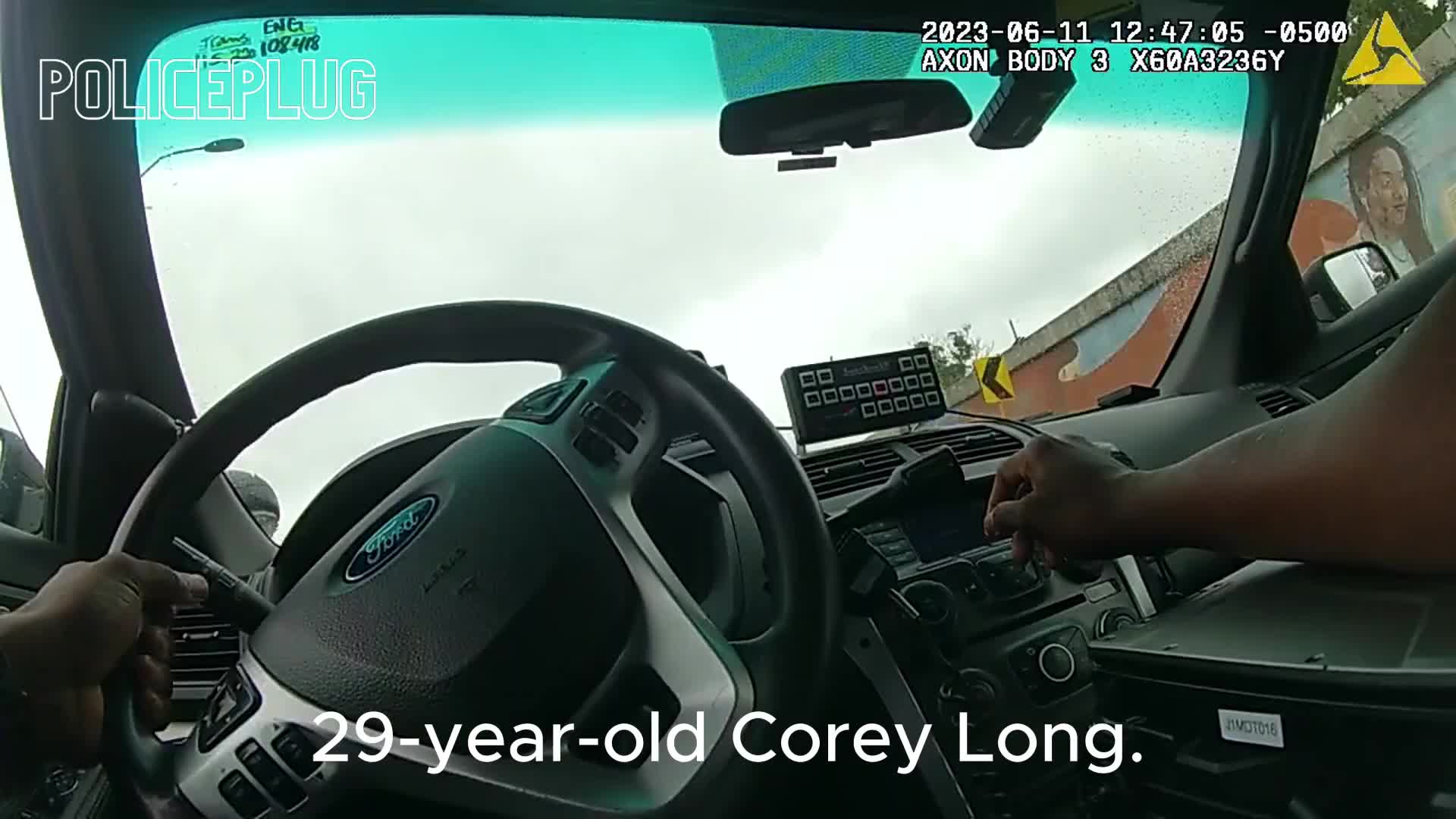
The encounter begins around lunchtime on June 11, 2023, in Joliet, Illinois. The supplied body-camera footage carries an AXON timestamp showing 12:47 p.m., and an opening graphic identifies the man police are looking for as 29-year-old Corey Long. Those details line up with contemporaneous local reporting about an arrest made by Joliet police that Sunday in the city's Ridgewood area.
According to Joliet police spokesman Dwayne English, officers spotted Long riding in a Kia Forte near Elgin Avenue and Harwood Street at approximately 12:45 p.m. Officers already knew that Long had an outstanding arrest warrant from Grundy County. The warrant, police later said, stemmed from his failure to appear in court.
That context is important because the officers are not simply stopping an unknown motorist to investigate a minor traffic issue. They believe they have identified a person for whom a court has already authorized an arrest. Once the vehicle is stopped, their objective is therefore straightforward: locate Long, prevent him from leaving and take him into custody on the warrant.
The body-camera footage initially has the controlled feel of a routine police contact. An officer is inside a patrol vehicle, communications equipment is visible, and the scene develops in daylight. Nothing in those first moments communicates how quickly the encounter will move away from the vehicle and into nearby residential property.
The Stop Lasts Only Moments Before Long Runs
Police reported that once the Kia stopped, Long got out and ran. Officers ordered him to stop, but he continued fleeing. The body-camera footage captures the immediate change in pace as officers leave their vehicles and begin pursuing on foot.
A foot pursuit creates a very different problem from a vehicle stop. An officer who had a clear view of a person moments earlier can lose sight of that person after a single turn between houses, fences, garages or parked vehicles. The officer also has to watch the ground, traffic and obstacles while listening to radio updates and trying to keep other units informed.
In a residential neighborhood, the search becomes even more complicated. Back yards and side passages can provide hiding places, while fences can slow officers and create blind corners. Officers also have to remember that they are moving through private property where uninvolved residents may suddenly encounter police searching for someone.
The video shows that urgency. Officers are not casually walking the area. They are trying to close the distance before Long can disappear into the neighborhood. At the same time, the pursuit is not a license to assume where he has gone. Officers have to follow actual observations and coordinate their movements rather than simply entering every property nearby.
The Search Moves Into the Ridgewood Neighborhood
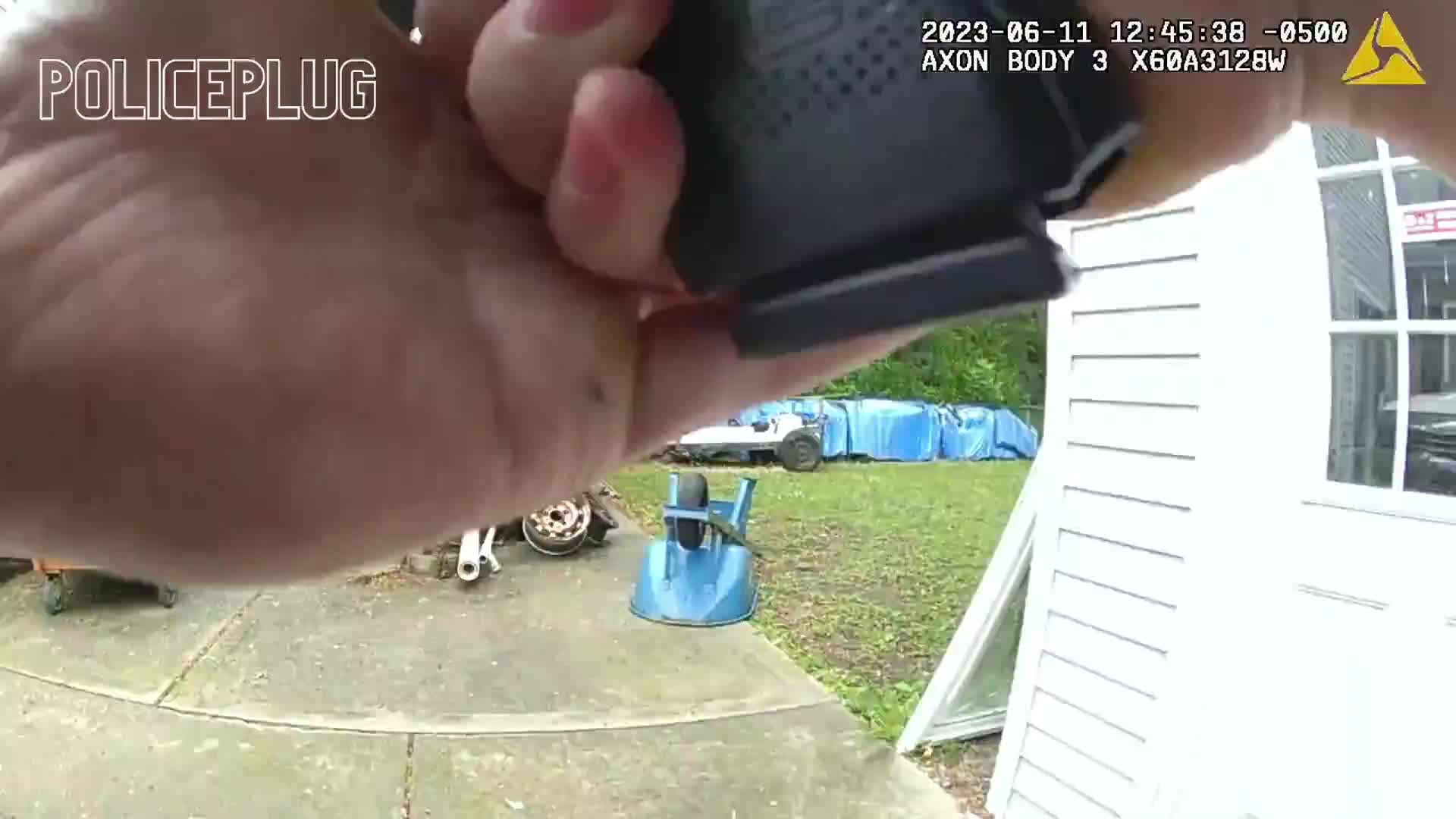
Joliet police said officers eventually located Long in the backyard of a residence in the 400 block of Mohawk Avenue. That location provides a strong match with the neighborhood search visible in the footage. Officers move through residential spaces, communicate with one another and attempt to establish where the fleeing man has gone.
This phase of the encounter is less dramatic than the first sprint, but it is tactically important. Once visual contact is broken, police need to prevent a search from becoming disorganized. One officer may cover a likely exit while another checks a yard or alley. Radio traffic becomes essential because officers approaching from different directions need to know where their colleagues are.
The available reporting does not indicate that Long was accused of being armed during this incident, so it would be wrong to add that claim simply because officers approach cautiously. Caution during a search is normal. Officers do not necessarily know whether a fleeing person has access to a weapon, whether someone else is present or whether a yard contains hazards that cannot be seen from the street.
That distinction is important when interpreting police footage. An officer's tactical behavior can show what precautions are being taken, but it does not automatically prove a fact about the person being pursued. Here, the verified facts are narrower: Long had an outstanding warrant, police tried to stop the vehicle he was riding in, and he fled on foot.
Police Find Long but the Encounter Is Still Not Over
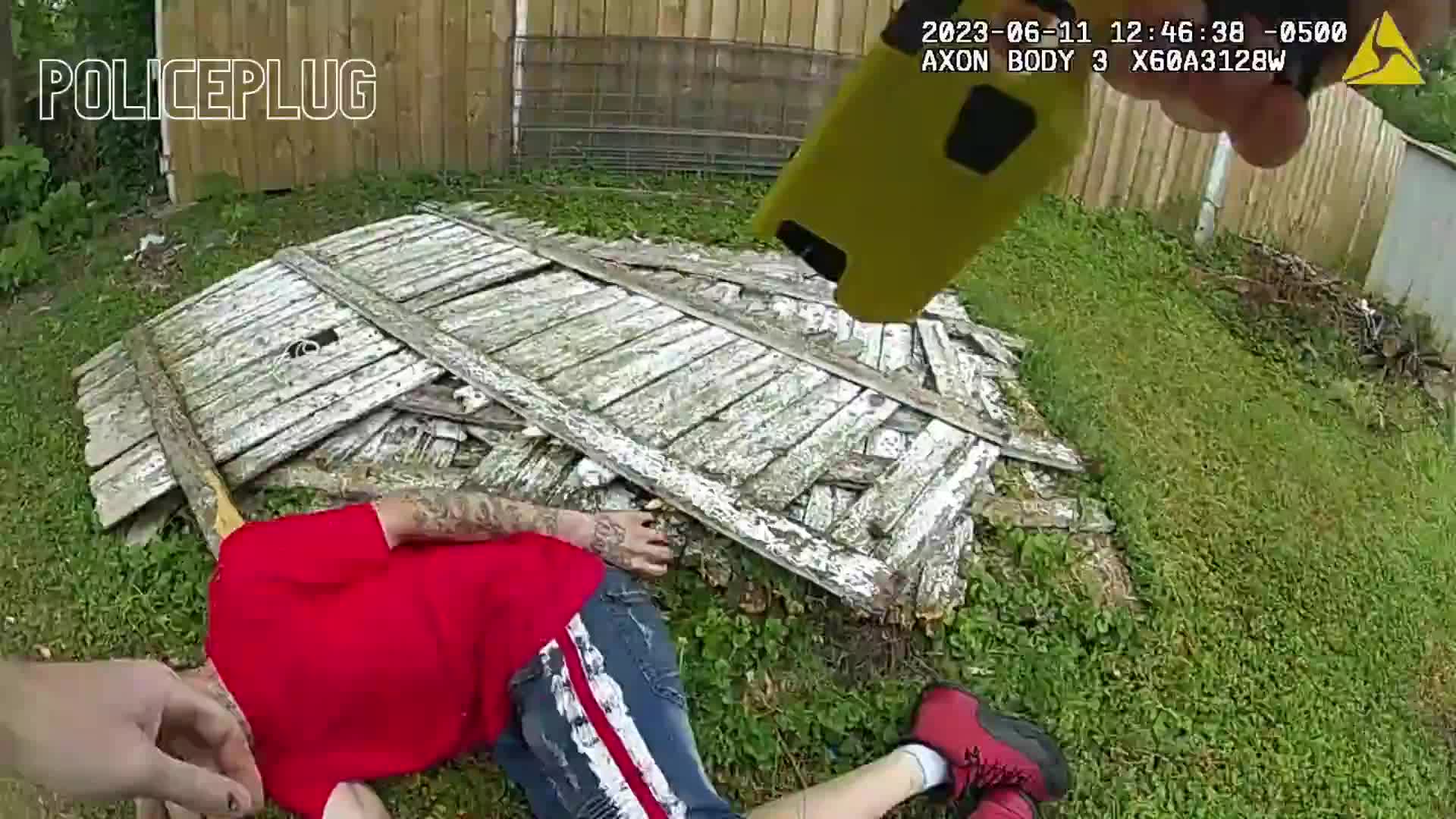
Finding a fleeing person does not automatically end a pursuit. Police said that after officers located Long in the backyard, he continued to ignore commands to submit to arrest. The footage shows officers converging and repeatedly trying to gain compliance.
At this point, the legal situation is different from the moment officers first saw Long in the Kia. Police already had the Grundy County warrant, and Long's flight had created additional grounds for investigation and potential charges. Officers were now attempting to physically complete an arrest after a pursuit through the neighborhood.
Commands during an arrest serve several purposes. They tell the person exactly what officers expect, create an opportunity for voluntary compliance and help coordinate multiple officers who may be approaching from different angles. When a person refuses those commands, officers must decide whether to wait, reposition or use force to gain control.
Local reporting based on Joliet police information says Long continued to disregard officers' commands. Police ultimately deployed a Taser. A conducted-energy weapon is intended to give officers an intermediate option between hands-on control and higher levels of force. Its use is still subject to agency policy and review, and its presence should not be treated as proof that every deployment is automatically appropriate.
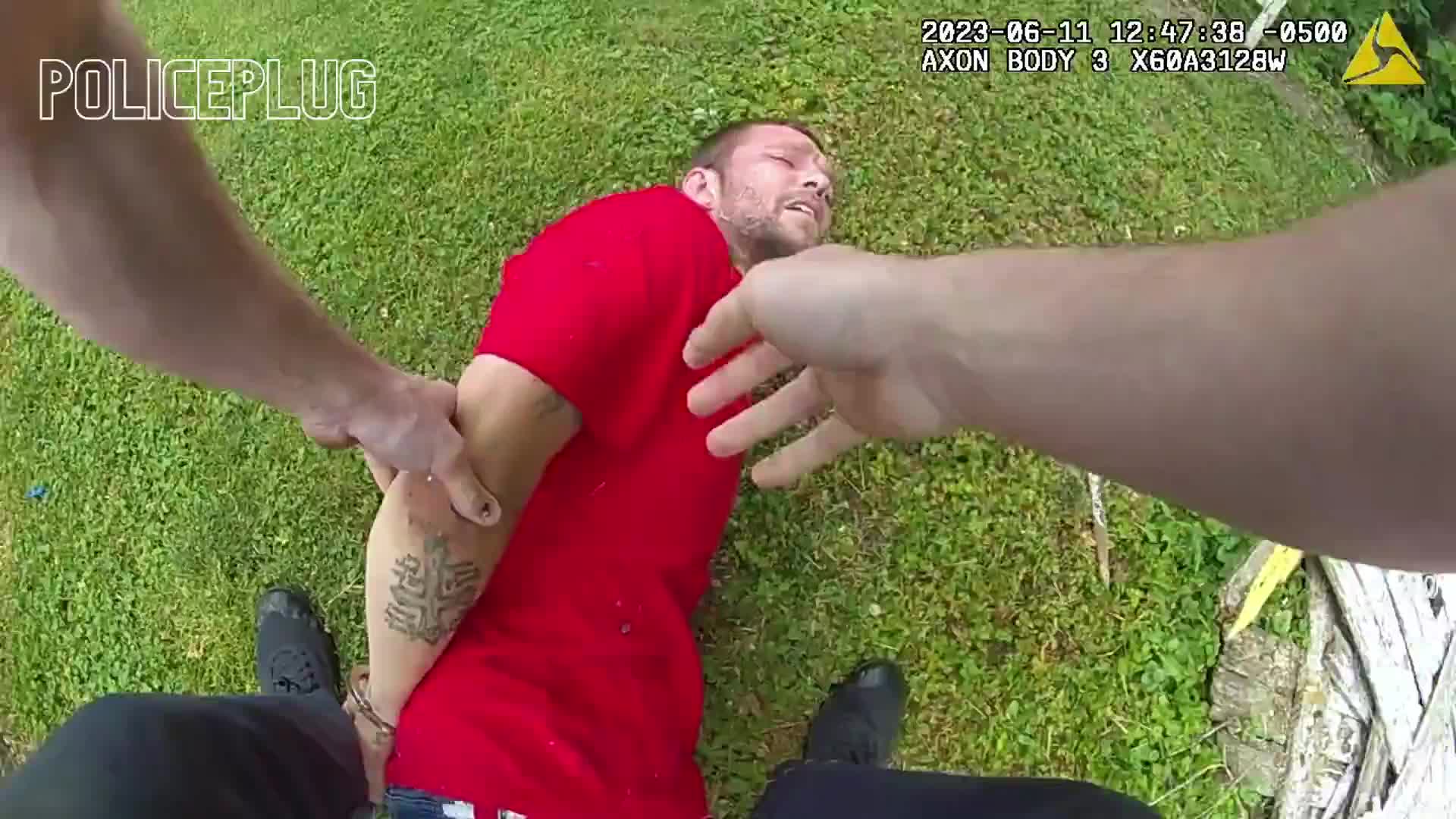
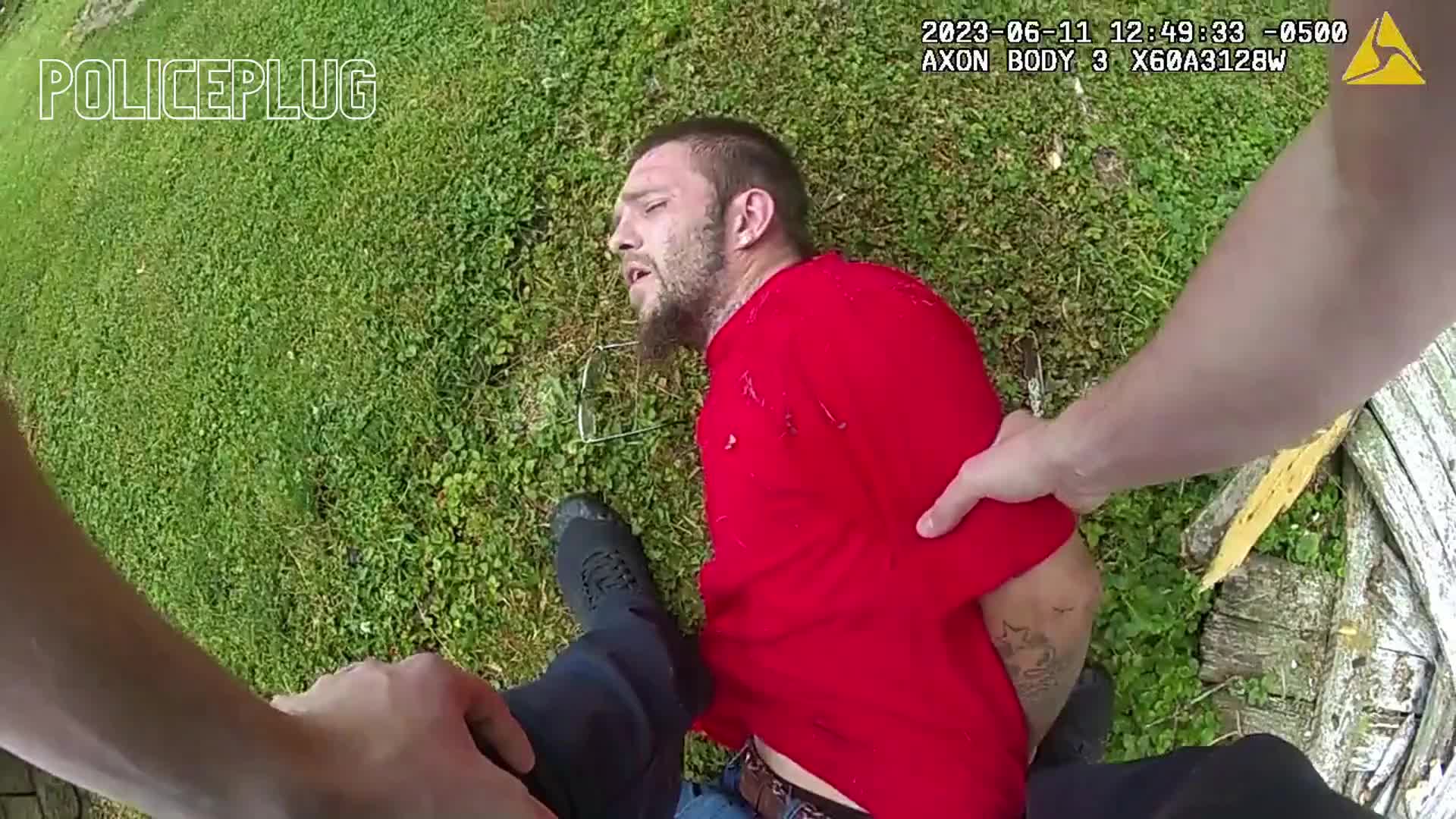
In this case, police said the Taser allowed officers to subdue Long and take him into custody. The body-camera footage shows the arrest phase becoming a close-range, hands-on event as officers move in to control and restrain him.
A Taser Deployment Ends the Attempt to Escape
The Taser deployment is the climax of the encounter, but the sequence leading to it matters. Long was not approached at random in the backyard. Officers had recognized him as a person wanted on a warrant, attempted to stop the vehicle, watched him run and then searched the surrounding neighborhood before finding him again.
That chronology is why a short clip beginning with the Taser would provide an incomplete picture. A viewer seeing only the final seconds might not know that officers had already attempted to make an arrest at the vehicle or that Long had fled from them. Conversely, the existence of a warrant and a foot chase does not mean every later police action is beyond scrutiny. Both context and proportionality matter.
After Long was subdued, police and medical personnel shifted to the next phase of the response. Joliet police said the Joliet Fire Department transported him to Silver Cross Hospital after the Taser deployment. He was treated and released a short time later before being taken to the Will County Jail.
Medical evaluation after a force incident is an important part of custody procedure. Conducted-energy weapons, falls during a pursuit and physical restraint can all create injuries that may not be obvious at first glance. Transporting someone for evaluation allows medical personnel to assess those risks before jail intake.
The Warrant Was Only Part of the Final Case
The original reason officers wanted Long was the Grundy County warrant. According to police, that warrant was connected to a missed court appearance. But his decision to flee and his conduct during the attempted arrest led to additional allegations in Joliet.
Patch reported that Long was arrested on charges of obstructing a peace officer, aggravated resisting a peace officer and obstructing justice, in addition to the outstanding Grundy County warrant. These are charges and allegations associated with the arrest, not findings of guilt. A criminal charge describes what authorities accuse a person of doing; guilt is determined through the court process.
At the time of the June 13 report, Long was being held in the Will County Jail with bail reported at $28,000. That figure reflects the reporting available immediately after the incident and should not be treated as a statement about any later case outcome unless supported by subsequent court records.
The footage itself cannot establish every legal element of those charges. What it can establish is the physical sequence: officers are looking for Long, the contact becomes a foot pursuit, the search moves into a residential area, police locate him again and the encounter ends with officers taking him into custody.
Why Running From a Warrant Makes the Situation Worse
From a practical standpoint, the case is an example of how an arrest that might have occurred beside a stopped car can become significantly more complicated once someone runs. The outstanding warrant does not disappear because the person leaves the immediate scene. Instead, more officers may become involved, a neighborhood search may begin and additional allegations can arise from the flight or resistance.
For officers, the risk also increases. Foot pursuits are unpredictable. An officer can trip, become separated from partners or suddenly encounter the fleeing person in a confined space. Residential searches introduce fences, animals, sheds, vehicles and uninvolved residents. Every additional minute gives the situation more opportunities to change.
For the person being pursued, running can also transform the legal consequences. In Long's case, police already had a warrant that required them to arrest him. According to the reported charges, the conduct after officers attempted that arrest became a separate part of the case.
None of this means that viewers should assume guilt simply because someone runs. Flight can be evidence relevant to an investigation, but courts determine the legal significance of conduct in context. The responsible way to describe this incident is to separate what is visible from what police alleged and what a court may later decide.
The Body Camera Adds Context a Headline Cannot
The original title, “Man With Warrant Tried to Outrun Police,” captures the basic idea but not the full progression. The footage shows a sequence of decisions rather than one isolated act. Officers identify a wanted man. The vehicle stops. Long runs. Officers search. They locate him in a backyard. Commands continue. A Taser is deployed. Medical evaluation follows, and Long is booked into jail.
The AXON timestamp is especially useful for verification. The video shows June 11, 2023 at approximately 12:47 p.m., while Joliet police said officers attempted the stop at about 12:45 p.m. that same Sunday. The video identifies Corey Long as 29, matching the age and name in the local arrest report. Those independent details make this a much stronger identification than simply matching a generic foot chase.
The location details also fit. Reporting places the initial stop near Elgin Avenue and Harwood Street and the later arrest in the 400 block of Mohawk Avenue. The body-camera footage shows the movement from a roadway encounter into a residential search, consistent with that account.
This cross-checking is essential for body-camera research because many police videos look superficially similar. A man running from a car, officers moving between houses and a Taser deployment could describe hundreds of incidents. Date, age, name, neighborhood, warrant status and outcome provide the specific combination needed to identify this one confidently.
A Short Run Ends With a Much Longer List of Problems
The most striking feature of the incident is how quickly the situation expands. At the beginning, officers are trying to execute an existing arrest warrant. If Long had remained at the vehicle and complied, the encounter could have ended there. Instead, the arrest becomes a foot pursuit and neighborhood search.
Police eventually find him, but according to the department he still does not comply. Officers use a Taser, Long receives medical evaluation, and he is taken to jail facing the original warrant plus new allegations arising from the encounter.
For viewers, the complete footage provides the context needed to understand why several officers are moving through residential property and why the final arrest becomes physical. It also shows the value and limitation of body-camera evidence. The camera captures what the officer sees and hears, but verified reporting is still needed to establish the warrant, charges, addresses and booking information.
The case does not need embellishment to be compelling. A wanted man is spotted in a car, makes a run for it, disappears into a neighborhood and is found in a backyard. The attempt to create distance from police ultimately ends with officers much closer than before and with additional legal problems attached to the arrest.
Comments (0)
Loading comments...
May You Like

911 Call Leads Police to a Disturbing Family Situation

Female Driver Destroys Three Lives in a Matter of Minutes

Woman Refuses Repeated Orders to Exit Her Car Before Officers Move In













