Wanted Felon’s High-Speed Chase Ends in a Felony Murder Conviction
Wanted Felon’s High-Speed Chase Ends in a Felony Murder Conviction
A Broken Brake Light Puts a Familiar Truck Back on Police Radar
On April 5, 2024, Atlanta police and Georgia State Patrol troopers were looking for a silver Dodge Ram connected to a pursuit two days earlier. The driver was Ryan Hicks, then 31, whose truck had first drawn police attention because of a broken brake light. The April 5 encounter would end very differently from the earlier attempt to stop him.
The supplied video matches the case closely. It uses Georgia State Patrol dash-camera footage, identifies the pursuing trooper as Trooper #771, follows a silver Ram through Atlanta and Interstate 285, and later reconstructs the fatal collision. Those details align with the evidence described in the Supreme Court of Georgia’s September 2026 decision in Hicks v. State.
According to the court, Atlanta Police Sergeant David Hollerman encountered the same truck on April 3. A tag check showed it was registered to Hicks, who was on felony probation. Hollerman attempted a traffic stop, but the truck fled onto I-285 at speeds up to about 100 mph. Hollerman eventually lost sight of it and ended that pursuit.
Two days later, license-plate-reader cameras detected the Ram again. Hollerman alerted Georgia State Patrol personnel, including Trooper Michael Tennant. When police attempted another stop for the still-broken brake light, Hicks fled again.
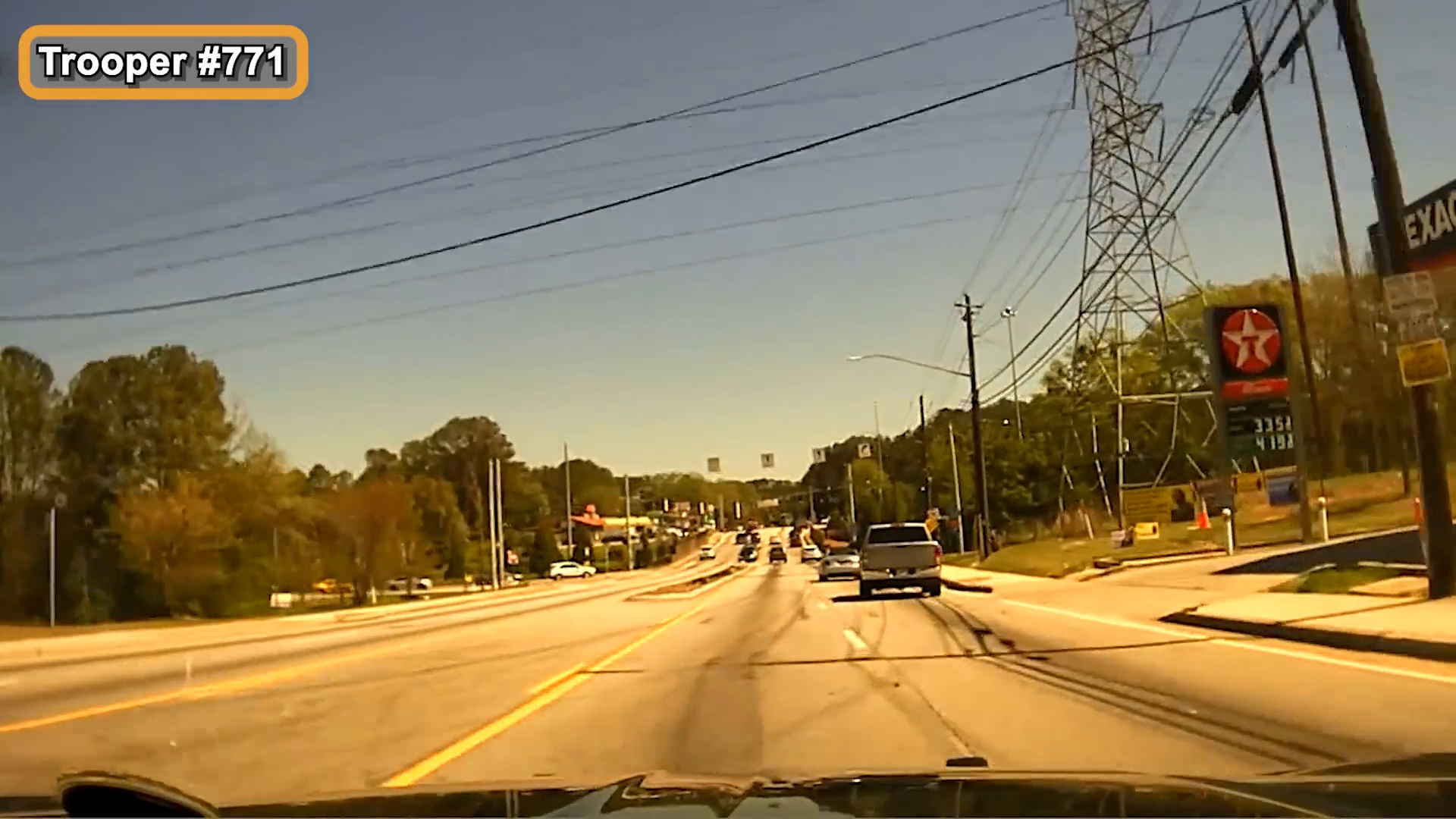
The Second Pursuit Moves Onto Interstate 285
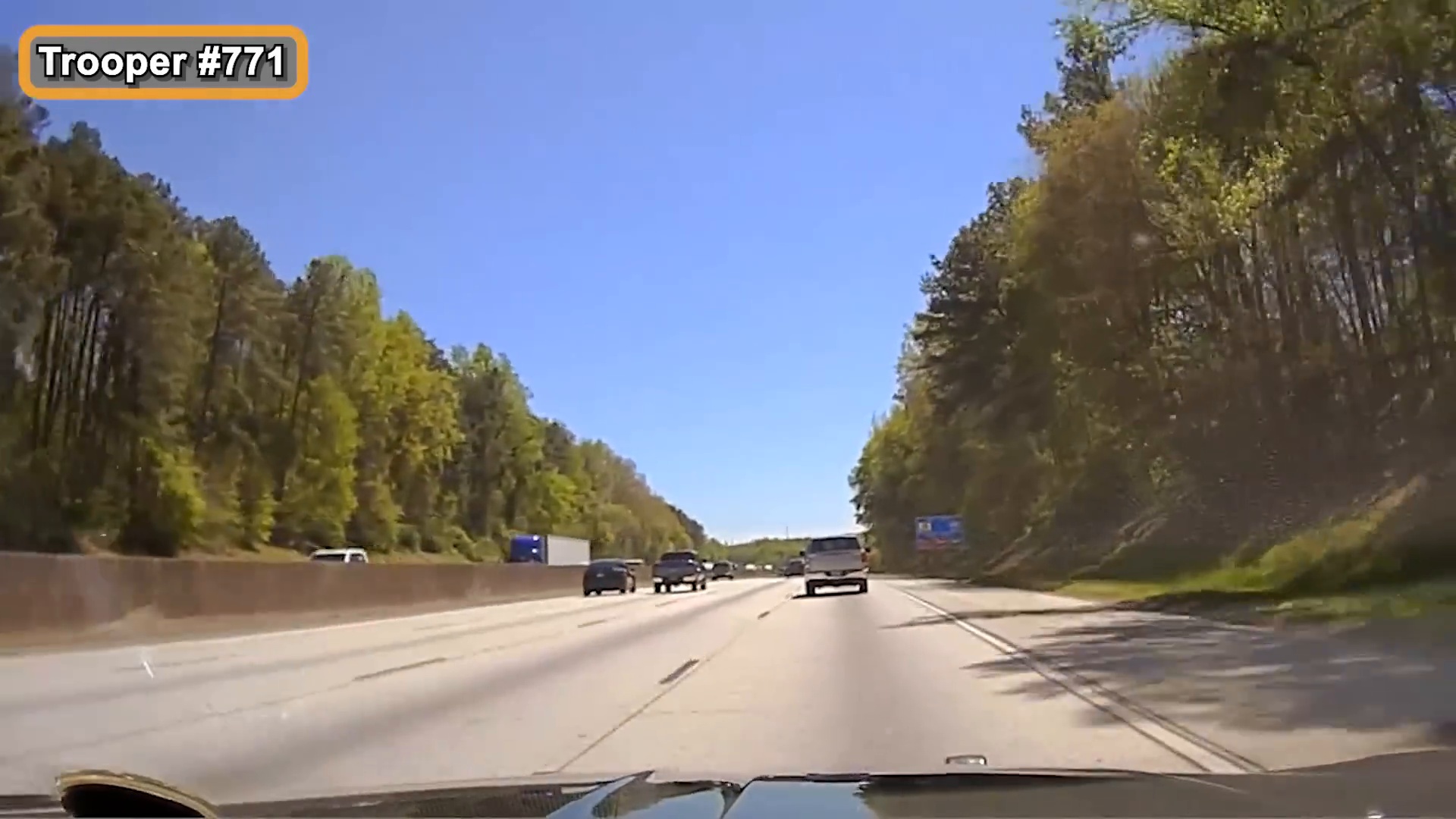
Once the Ram entered Interstate 285, Trooper Tennant became the primary pursuing officer. The dash-camera footage shows the pickup moving rapidly through traffic while the trooper follows from a controlled distance.
Tennant later testified that Hicks drove near or above 100 mph in a 65-mph zone, weaving across lanes, tailgating vehicles and using the shoulder to pass. The Supreme Court described the driving as reckless and noted that Tennant maintained space so he could react to sudden maneuvers.
The interstate environment mattered. Tennant testified that he preferred keeping the fleeing truck on the controlled-access highway, where there were no ordinary intersections or pedestrians. The pursuit was already dangerous, but surface streets would add cross traffic and traffic lights.
The footage conveys that tension. The trooper is trying to keep the Ram in sight without forcing an even more erratic response from Hicks.
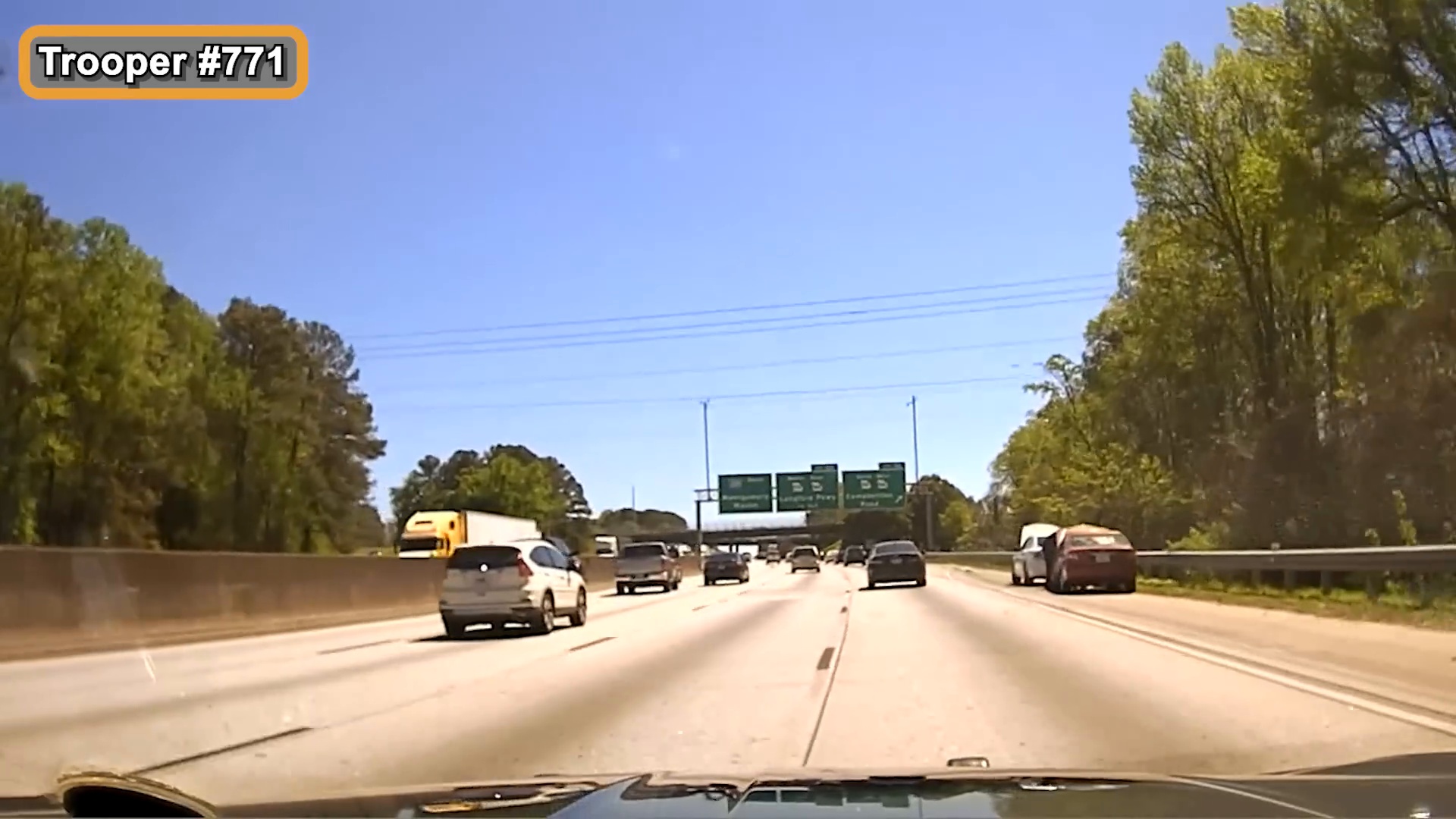
Hicks Cuts Across the Highway Toward Campbellton Road
The chase takes its decisive turn when Hicks abruptly moves across the interstate toward the Campbellton Road exit. The court described him as swerving hard across all lanes and driving through the gore and dirt median to make the exit.
That maneuver changes the risk profile immediately. The pursuit is leaving a divided interstate and entering surface streets where vehicles may be stopped at signals or crossing through intersections.
Tennant testified that he was preparing to terminate the pursuit because of those safety concerns. Before he could do so, the Ram reached the intersection of Campbellton Road and Barge Road.
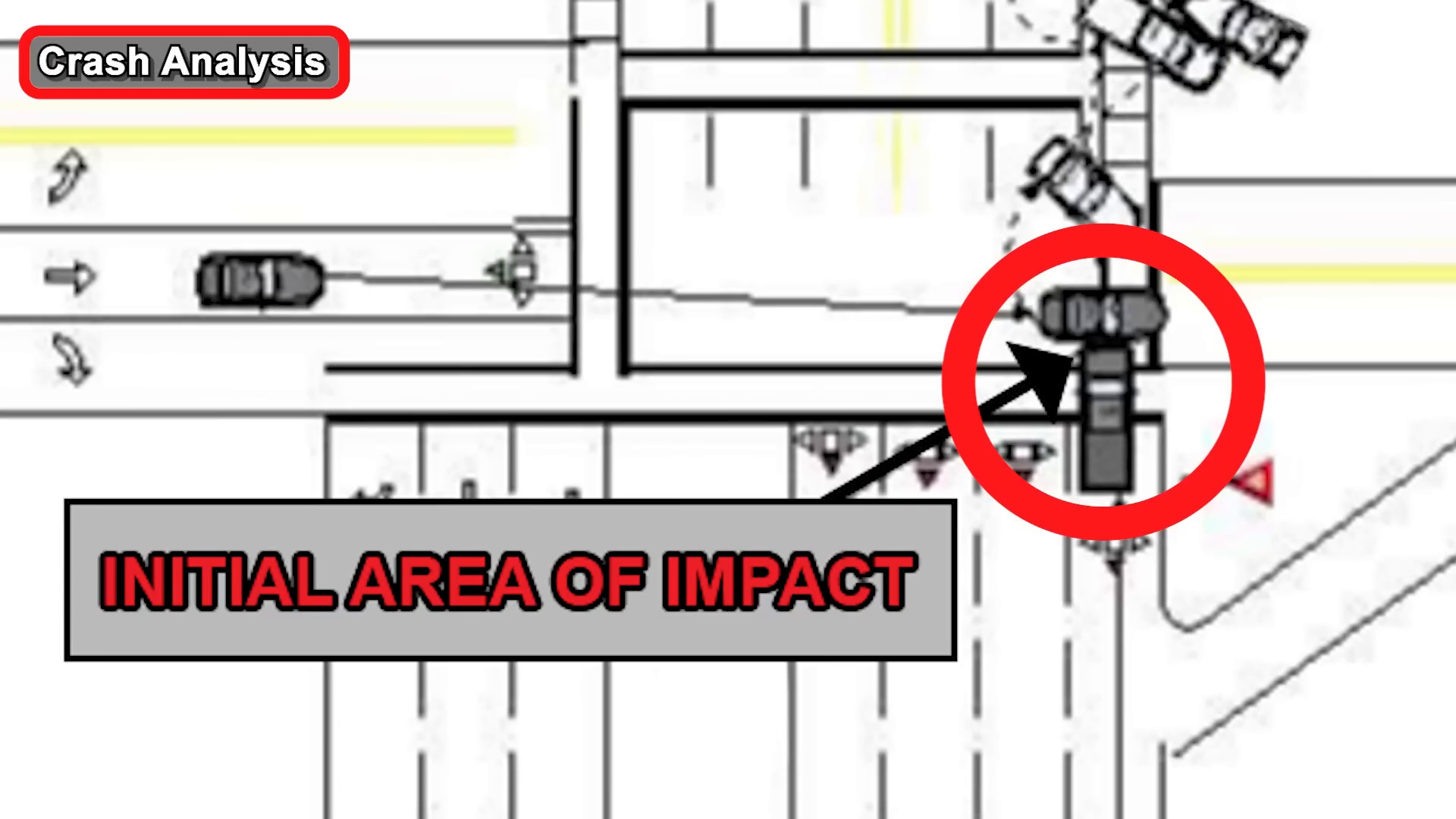
The video’s later crash-analysis graphics focus on this intersection because it is where the pursuit stops being only a dangerous chase and becomes a fatal criminal case.
The Ram Enters a Red Light at Nearly 100 Miles Per Hour
Evidence presented at trial went beyond the trooper’s visual estimate. Traffic-camera footage and crash data from the airbag control modules were used to reconstruct the Ram’s movement as it approached the intersection.
The Supreme Court of Georgia said the evidence showed Hicks was accelerating as he entered the intersection at approximately 97 mph. The traffic signal was red for his direction of travel.
A Dodge Challenger driven by 43-year-old Tamara Taylor was traveling through the intersection with the right of way. Hicks’s Ram struck Taylor’s car broadside, forcing the Challenger off the roadway and into a utility pole.
Taylor suffered catastrophic injuries and died almost immediately. The court said she was ejected from her vehicle. No police vehicle struck Hicks’s truck before the collision.
Troopers Move From Pursuit to Rescue and Arrest
After the collision, Tennant called for medical assistance and moved to secure Hicks, who was attempting to get out of the damaged Ram.
The scene was no longer about catching a fleeing truck. Officers now had a major crash, a severely injured uninvolved driver, a suspect vehicle and an active roadway to control.
Investigators later found more than an ounce of marijuana divided among multiple bags inside Hicks’s truck. That discovery became a separate felony count in the eventual prosecution.
Taylor’s death became the central issue. Prosecutors argued that Hicks’s decision to flee at extreme speed and run the red light directly caused the fatal collision.
A Fulton County Grand Jury Returns a Multi-Count Indictment
On June 28, 2024, a Fulton County grand jury indicted Hicks on felony murder predicated on fleeing or attempting to elude, first-degree homicide by vehicle, fleeing or attempting to elude, possession of more than an ounce of marijuana, reckless driving and several traffic offenses.
The indictment also included counts connected to the April 3 pursuit. An indictment is not a conviction; it states the allegations the State intends to prove.
Hicks’s case proceeded to a jury trial in April 2025 in Fulton County Superior Court. Prosecutors had dash-camera recordings from Tennant and Hollerman, traffic cameras, vehicle crash data, pursuit testimony and physical evidence recovered from the Ram.
That combination allowed jurors to compare officer testimony with objective speed and crash information rather than relying on a single account.
The Jury Separates the Earlier Pursuit From the Fatal Chase
The jury did not accept every allegation. Jurors found Hicks not guilty of the counts tied specifically to the April 3 pursuit.
They did convict him on the charges arising from the April 5 chase, including felony murder. The split verdict shows the jury evaluated the two incidents separately.
For the fatal chase, the evidence was direct. Video documented the pursuit, crash data established the Ram’s speed, and traffic evidence showed Taylor had the right of way.
The felony-murder theory did not require proof that Hicks intended to kill Taylor. The State argued that her death occurred during the felony of fleeing or attempting to elude under the circumstances proven at trial.
Hicks Receives a Life Sentence
After the guilty verdicts, the trial court sentenced Hicks to life in prison for felony murder. Fulton County District Attorney materials describe the sentence as life with the possibility of parole.
The court also imposed a concurrent ten-year sentence for possession of more than an ounce of marijuana. Several traffic and fleeing counts merged for sentencing purposes.
The sentence gave the original video title its final meaning. This was no longer merely a chase followed by murder charges. A jury had convicted Hicks, and a judge had imposed a life sentence.
Hicks appealed to the Supreme Court of Georgia, challenging evidentiary rulings, jury instructions and other aspects of the trial.
The Pursuit Policy Becomes a Major Issue on Appeal
One of Hicks’s principal appellate arguments concerned the Georgia State Patrol pursuit policy. His defense argued that the written policy was relevant to causation and whether the trooper’s decisions contributed to Taylor’s death.
The trial judge did not send the written policy itself to the jury, although the defense was permitted to question Tennant extensively about pursuit procedures and whether he followed them.
On redirect, Tennant testified that his superiors reviewed the pursuit and determined that he followed applicable policy and state law.
The Supreme Court rejected Hicks’s appellate argument, concluding in part that he had not shown that admission of the document probably would have changed the trial outcome. The court characterized the evidence of guilt as overwhelming.
The Supreme Court of Georgia Affirms the Conviction
On September 9, 2026, the Supreme Court of Georgia issued its decision in Hicks v. State and affirmed Hicks’s convictions.
The justices emphasized the undisputed core of the case: Hicks was fleeing law enforcement when his truck entered the intersection at extreme speed and struck Taylor’s vehicle. Crash evidence showed him accelerating into the intersection at approximately 97 mph.
The court also rejected challenges concerning evidence that Hicks was on felony probation. Prosecutors used that fact to help explain a possible motive for fleeing, and the court found no reversible error.
Other arguments involving causation instructions and cumulative prejudice also failed. The felony-murder conviction and life sentence remained intact.
Why This Case Became More Than a Debate About Police Pursuits
Fatal police pursuits often generate difficult questions about when officers should continue chasing and when they should disengage. Hicks’s defense attempted to bring those questions directly into the criminal trial through the Georgia State Patrol pursuit policy.
The court record shows Tennant was aware of the changing danger. He testified that he was preparing to terminate the chase after Hicks left the interstate. The fatal collision happened before that termination could occur.
For the jury and the Supreme Court, the decisive evidence remained Hicks’s driving. He crossed the interstate aggressively, entered the surface-street intersection against a red light and struck Taylor’s vehicle at enormous speed.
Policy debates remain important, but the criminal case asked whether the evidence proved Hicks committed the charged crimes. The jury said yes, and Georgia’s highest court found no reversible error.
Tamara Taylor Was the Person Who Paid the Price
Dash-camera footage naturally focuses attention on the fleeing driver and the pursuing trooper. The legal case exists because Tamara Taylor happened to be traveling through the intersection when the Ram arrived.
Taylor was 43 and had the right of way. Nothing in the court record suggests she had any connection to Hicks, the earlier pursuit or the police effort to stop him.
That fact matters when presenting pursuit footage. The dramatic visual may be a vehicle weaving through traffic at triple-digit speed, but the risk is carried by everyone nearby. An uninvolved driver may have only a fraction of a second to react to a vehicle entering an intersection at nearly 100 mph.
Taylor’s death is why the final legal consequence was far more serious than a fleeing charge. The chase ended with the loss of an uninvolved motorist and, ultimately, a felony-murder conviction.
From a BOLO Alert to a Life Sentence
The timeline spans more than two years. On April 3, 2024, police first attempt to stop the silver Ram and the driver escapes. On April 5, license-plate readers help officers locate it again. Hicks flees a second time, and Trooper Tennant takes over the pursuit on I-285.
At Campbellton Road and Barge Road, Hicks runs the red light at approximately 97 mph and crashes into Taylor’s Dodge Challenger. Taylor dies at the scene. Hicks is arrested, and investigators recover more than an ounce of marijuana from his truck.
A Fulton County grand jury indicts him in June 2024. A jury hears the case in April 2025, acquits him of the counts tied to the earlier pursuit but convicts him of the crimes arising from the fatal April 5 chase. The judge sentences him to life with the possibility of parole, plus a concurrent ten-year drug sentence.
On September 9, 2026, the Supreme Court of Georgia affirms the conviction, rejecting his arguments about the pursuit policy, probation evidence, causation instructions and cumulative error.
The verified legal ending makes the case unusually complete for a police-pursuit video. The footage shows the dangerous driving, crash evidence establishes the speed, trial records show what the jury decided, and the state’s highest court has now reviewed and upheld the result.
The original title is therefore accurate, but the complete story is more precise: a wanted driver fled police at extreme speed, ran a red light and killed an uninvolved motorist, leading to a felony-murder conviction and a life sentence that survived appeal.
Comments (0)
Loading comments...
May You Like

Entitled Driver Learns Why You Must Obey Lawful Orders During Traffic Stop

Police Follow the Driver Until His Escape Route Runs Out