Van Blocks a Florida Road, Then the Driver Turns His Anger on a Deputy
A Van in the Road Turns Into Something Much More Serious
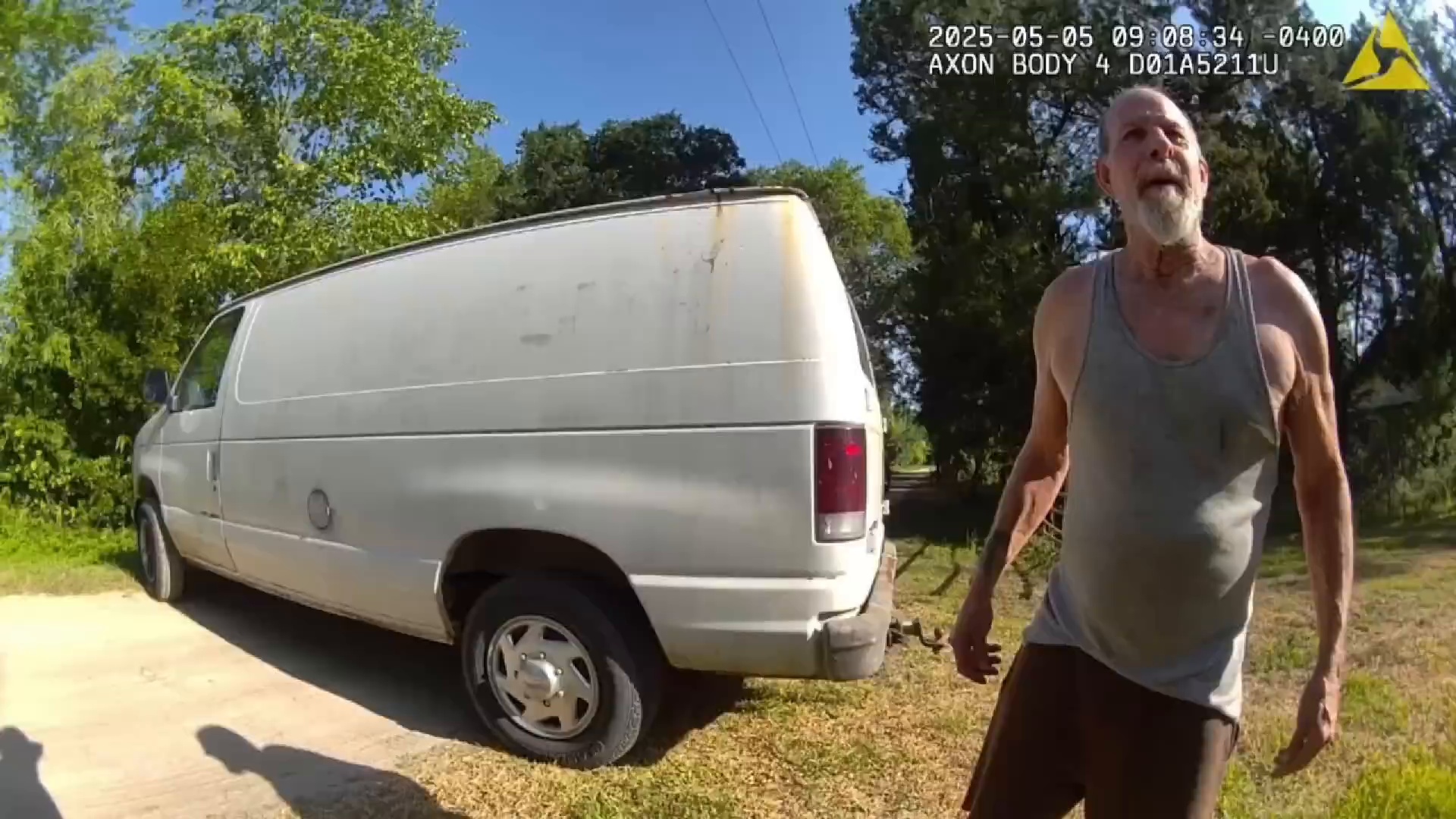
Frame from the supplied body-camera footage.
A white cargo van sitting across a narrow Florida roadway does not initially look like the beginning of a confrontation. Yet the body-camera footage recorded on May 5, 2025 shows how quickly an apparently straightforward call can become unpredictable when a deputy tries to determine why a vehicle is obstructing the road and the person connected to it refuses to let the encounter stay simple. The first moments are almost deceptively calm. It is daylight, the road is bordered by grass and trees, and the van is easy to see. Then a man in a gray tank top approaches the deputy and the tone changes. The video was uploaded under a title describing a Florida man blocking a road with a van and then threatening an officer. The upload identifies the agency as the Flagler County Sheriff's Office, and that identification is consistent with the footage. The AXON overlay visible in the recording shows May 5, 2025. Those details provide a useful foundation, but they do not justify filling in information that the footage and available reporting do not establish. For that reason, this account does not assign the man a name, list criminal charges, or claim a court outcome that could not be independently verified. What can be examined closely is the encounter itself: the obstruction, the deputy's effort to investigate it, the man's escalating language and behavior, the decision to take control of the situation, and the practical safety issues created when an officer has to deal with both a person and a vehicle occupying a roadway.
Why a Blocked Road Gets Police Attention Fast
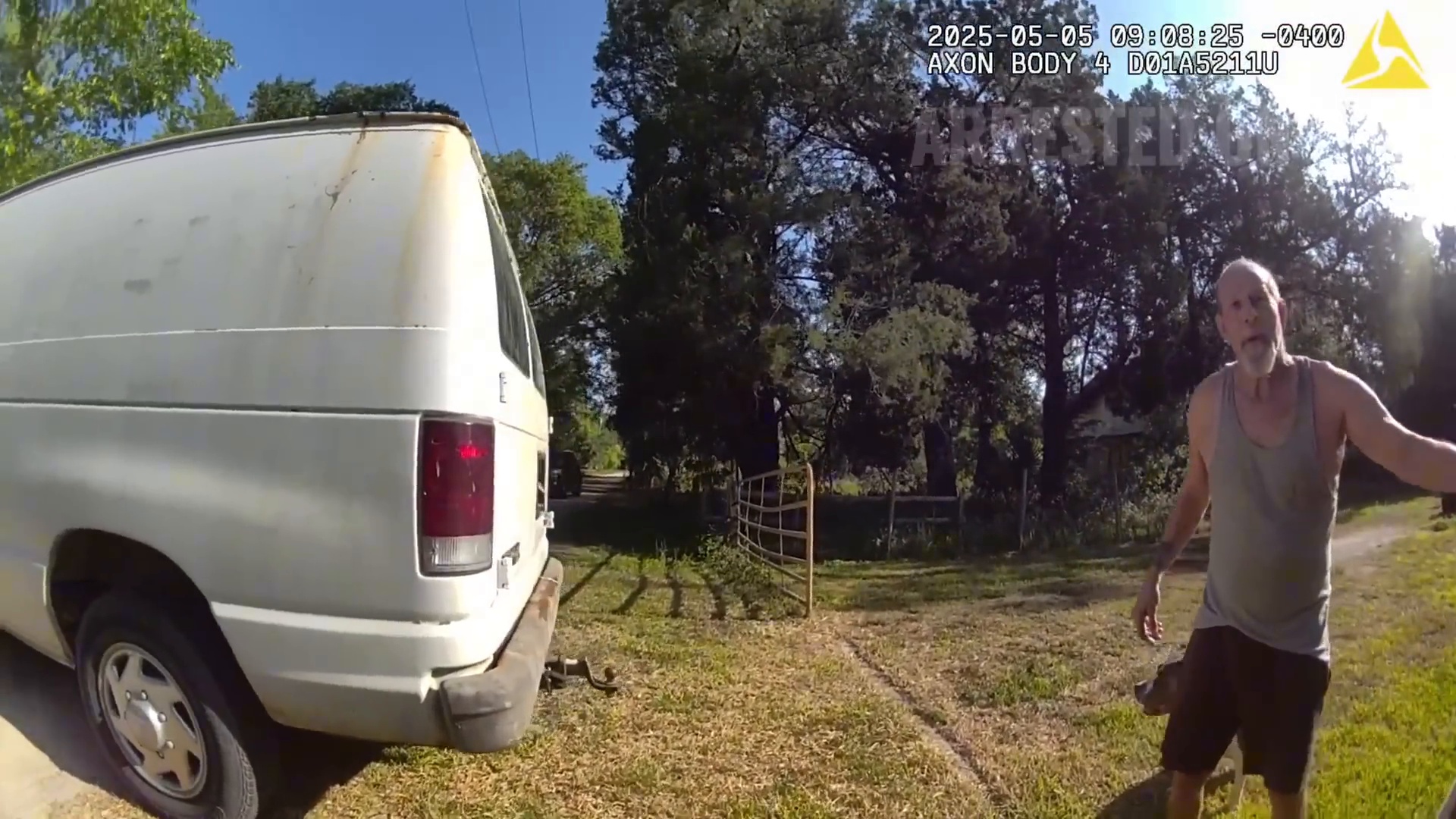
Frame from the supplied body-camera footage.
A vehicle that obstructs a public roadway creates more than an inconvenience. It can force approaching drivers to stop unexpectedly, cross into an unsafe position, or enter private property to get around it. On a narrow road, even a stationary van can become a traffic hazard. Officers arriving at such a scene therefore have two problems at once: they need to find out why the vehicle is there, and they need to restore safe movement through the area. The footage makes the physical setting important. The white cargo van is large relative to the roadway and is positioned where its presence cannot simply be ignored. The deputy must stay aware of the vehicle, the surrounding property and the man approaching him. This is one reason routine calls can become tense even before anyone commits an obvious act of violence. An officer's attention is divided between conversation and scene safety. The man, meanwhile, does not behave like someone interested only in quickly moving the van and ending the contact. His posture and repeated engagement with the deputy keep the encounter active. A disagreement with an officer is not automatically a crime, and people retain the right to question police conduct. But from an operational standpoint, the critical issue is whether the person's conduct prevents the officer from safely completing a lawful investigation or creates a credible safety concern.
The Conversation Becomes the Center of the Encounter
As the deputy continues speaking with the man, the bodycam captures the kind of escalation that often matters more than any single sentence. Tone, distance, gestures and willingness to follow simple directions all affect how an officer evaluates risk. The man moves around the van and repeatedly addresses the deputy. At points, his body language becomes more animated, and the officer has to manage the conversation while maintaining space. This is where body-camera footage provides context that a short headline cannot. A headline can summarize the result in a few words, but video shows the accumulation of small decisions. The deputy does not experience the final moment in isolation; he experiences everything that happened before it. Likewise, the viewer can see that the scene develops over minutes rather than instantly jumping from a parked van to an arrest. The distinction matters legally and practically. Police encounters are evaluated under the totality of the circumstances. That does not mean every officer decision is automatically justified. It means individual actions should be assessed in context: what the officer knew at that moment, what the person was doing, how close they were, whether commands were being followed, whether traffic remained obstructed and whether the situation appeared to be stabilizing or deteriorating.
When Words Begin to Carry a Safety Consequence
Frame from the supplied body-camera footage.
The most important change in the encounter is not simply that the man is angry. Anger by itself does not establish a crime. The concern grows when hostile language is combined with physical proximity, gestures and behavior that the deputy may reasonably interpret as escalating. The original upload characterizes part of the exchange as a threat toward the officer. The footage should therefore be viewed carefully rather than turning that characterization into a broader claim about intent. Officers routinely hear insults and criticism. American constitutional law gives substantial protection to speech directed at police, including speech that is rude or confrontational. But speech can become relevant when it forms part of a true threat, accompanies conduct that creates an immediate danger, or is intertwined with obstruction or another offense. The exact legal line depends on the words, context and applicable law. That is why it would be misleading to claim that the man was arrested merely for being disrespectful without a verified arrest report explaining the basis for the detention. From the deputy's perspective, however, waiting until a person actually attacks is not the only option. Officers are trained to recognize changes in behavior and to control distance. When a person repeatedly closes space, refuses directions or behaves in a way that suggests the encounter is moving toward physical resistance, an officer may decide that allowing the confrontation to continue unchanged creates unnecessary risk.
The Encounter Turns Physical
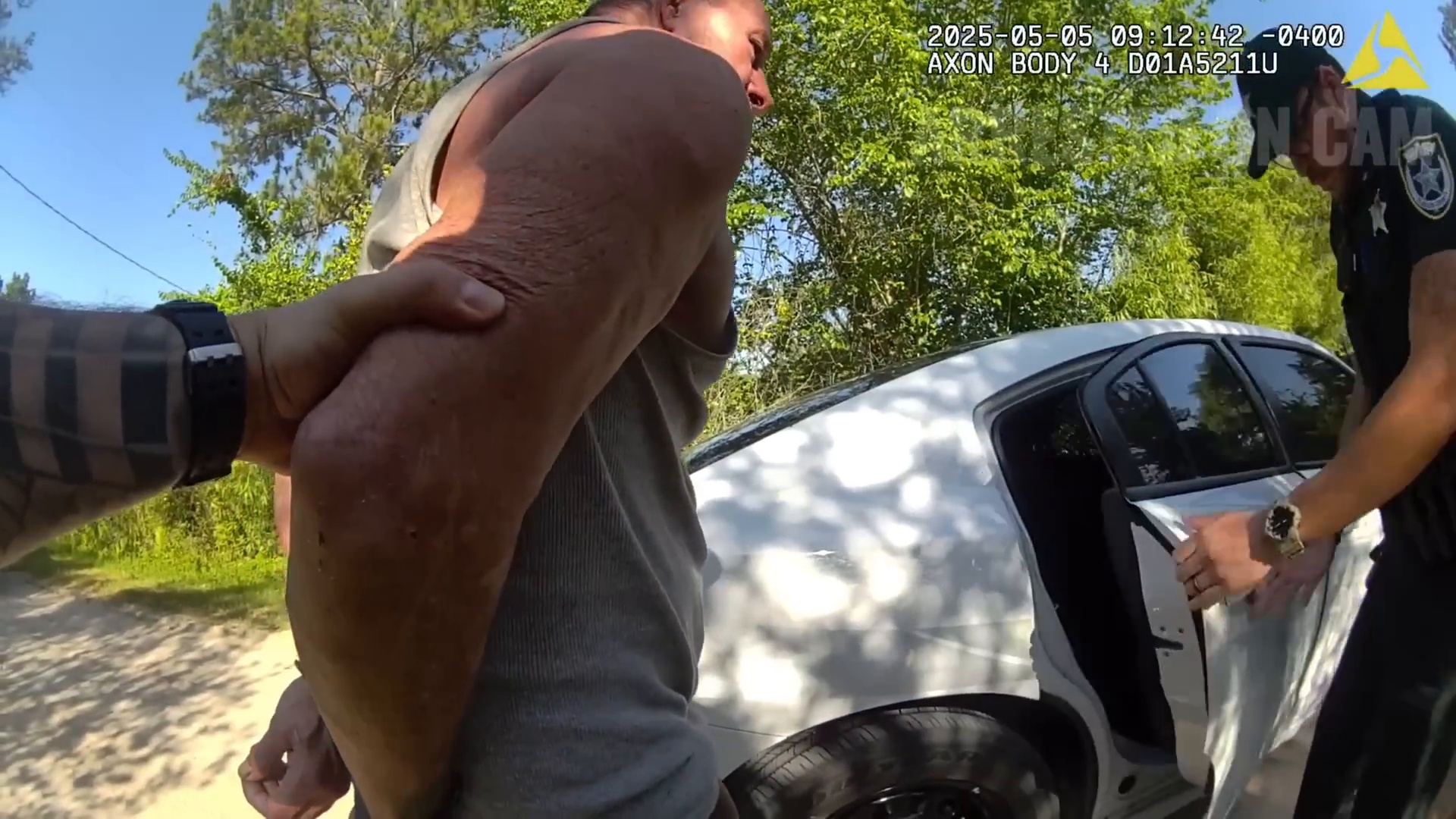
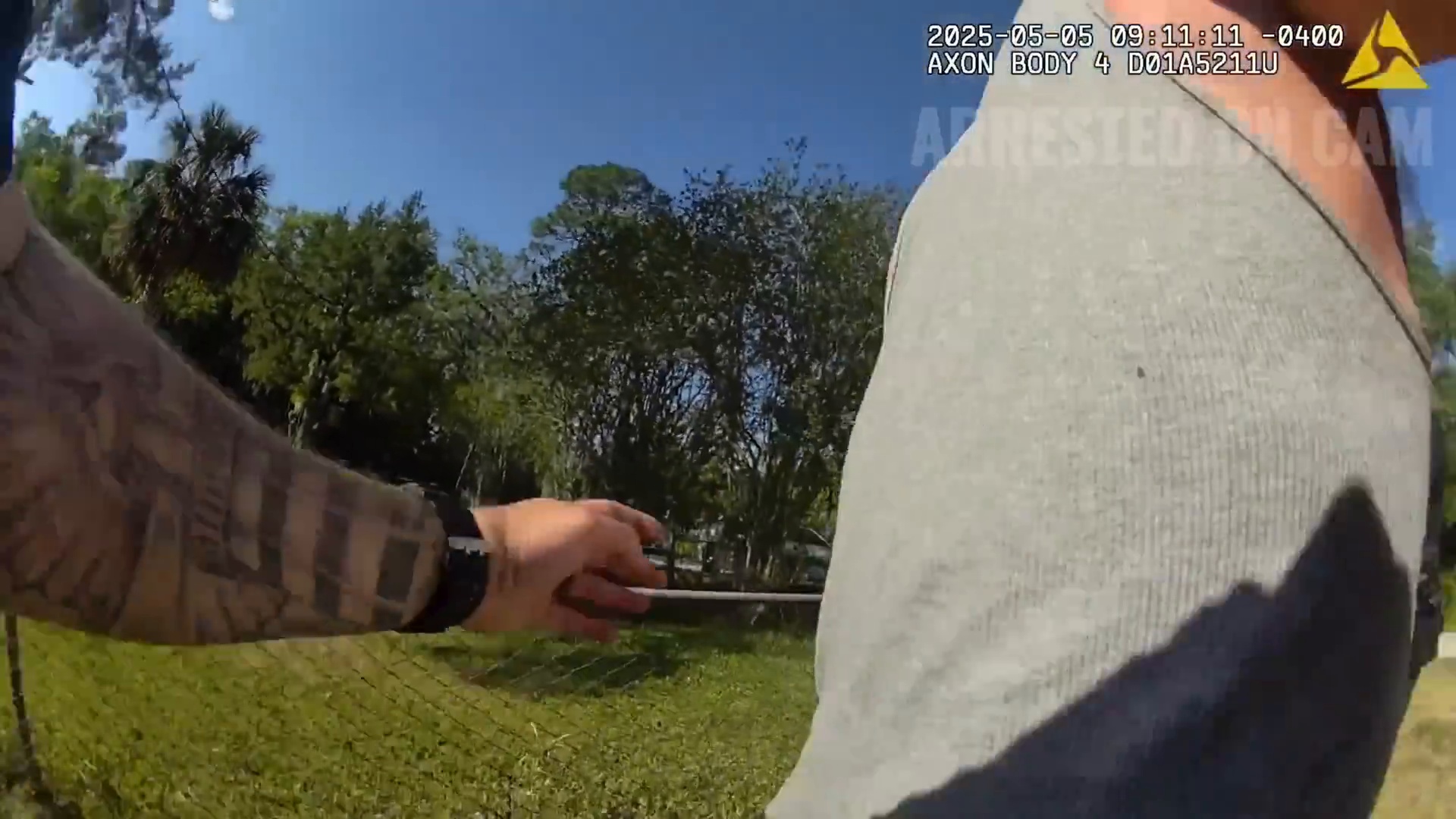
Frame from the supplied body-camera footage.
Later in the recording, additional law-enforcement personnel are present and the interaction becomes physical. The man is brought under control near the van. The bodycam view becomes tighter and less stable, which is typical when an officer is directly involved in restraining someone. What had begun as an investigation around an obstructing vehicle has now become a detention requiring hands-on control. This portion of the footage is also a reminder that body cameras are not cinematic cameras. During physical contact, the lens can be blocked by arms, uniforms or the person being restrained. Audio can become more useful than the picture. A responsible account should therefore avoid claiming that every movement is perfectly visible. What the recording clearly supports is the broader sequence: deputies move from verbal management to physical control, the man is restrained, and the immediate confrontation is brought to an end. Use of force in the United States is generally judged by objective reasonableness under the circumstances rather than by whether a cleaner alternative can be imagined afterward. Factors can include the seriousness of the suspected offense, whether the person appears to pose an immediate threat and whether the person is actively resisting or attempting to flee. The precise legal assessment of this incident would require records beyond the edited public video, including reports and any complete unedited recordings.
After Control Is Established
Once the man is restrained, the energy of the scene changes. The immediate question is no longer whether the deputy can safely continue the roadside investigation. Officers can separate the person from the vehicle, assess the scene and deal with the practical problem that originally brought them there. The footage later shows the man seated in a law-enforcement vehicle while personnel continue working around the white van. That sequence is significant because it illustrates the difference between the climax of an encounter and its administrative aftermath. Viral clips often end at the handcuffing because that is visually dramatic. Police work does not. Officers still have to document what occurred, determine what to do with a vehicle, identify witnesses or property issues, and decide what enforcement action is supported. Medical evaluation may also be required depending on the circumstances. The available public upload does not provide enough independently verified information to state the man's final charges or the ultimate disposition of any case. Those details should come from an arrest affidavit, booking record, court docket or official release, not from inference. Keeping that boundary clear is especially important with bodycam content, where a compelling visual sequence can make unverified assumptions feel more certain than they are.
What the Footage Actually Establishes
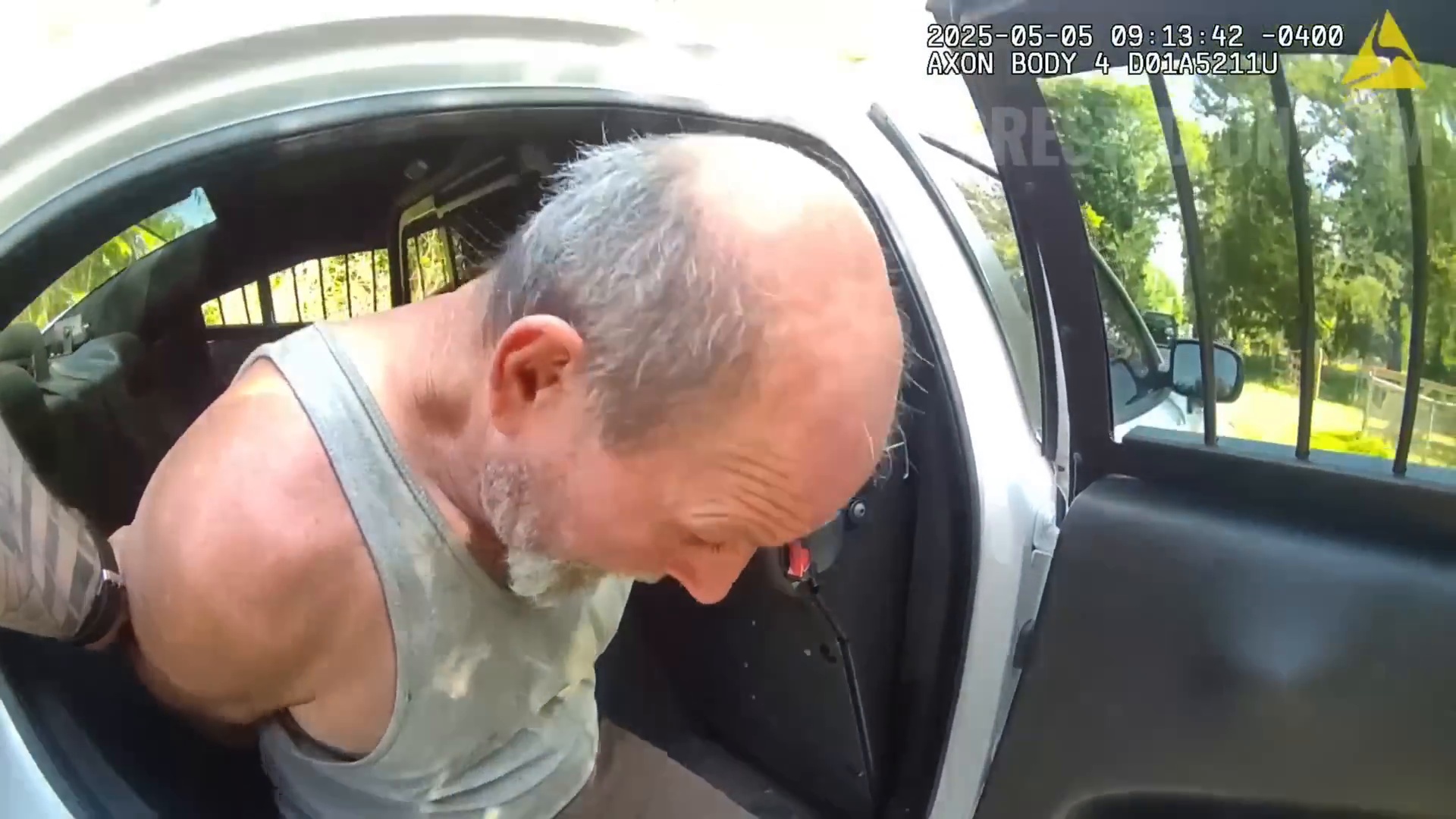
Frame from the supplied body-camera footage.
Several facts are grounded directly in the recording and the source information accompanying it. The encounter occurred on May 5, 2025, according to the AXON timestamp. A white cargo van is positioned on a narrow road. A man in a gray sleeveless shirt interacts with a deputy in an increasingly confrontational exchange. The video source identifies the agency as the Flagler County Sheriff's Office. Additional officers eventually assist, the man is physically restrained, and he is later shown in a law-enforcement vehicle. Beyond those points, caution is necessary. The man's identity, the precise wording and classification of every alleged threat, the complete probable cause for arrest, the filed charges and the court outcome were not independently confirmed in the sources located for this article. That does not diminish what the footage shows. It simply prevents the story from becoming more specific than the evidence allows. The source upload itself, published by Arrested on Cam on May 29, 2025, labels the agency as the Flagler County Sheriff's Office and dates the event to May 5. Those details align with the visible body-camera date. That cross-check is useful, but a video description is not a substitute for an official incident report. Where an official record is unavailable, the most defensible approach is to describe observable actions rather than invent missing biographical or legal details.
A Routine Road Obstruction That Refused to Stay Routine
This encounter is compelling because its beginning is so ordinary. There is no high-speed pursuit and no dramatic emergency visible when the deputy first approaches. There is simply a van in a place where it should not remain and a need to determine what is happening. The tension comes from the human interaction that follows. For viewers, the footage offers a useful lesson in how rapidly the purpose of a police contact can change. An officer may arrive to solve a traffic or property problem and, within minutes, find that the primary concern has become officer safety and control of a resistant or confrontational person. For the person being investigated, the same footage demonstrates how repeated escalation can make a simple encounter longer and more consequential. None of that means viewers should treat every police command as beyond scrutiny. Bodycam footage is valuable precisely because it allows conduct on both sides to be examined. The strongest analysis avoids reflexively taking either side and instead asks what each person did, when they did it, what information was available at the time and which claims are actually supported by evidence. Here, the video documents an encounter that begins with a blocked road and ends with the man restrained as officers continue dealing with the scene.
Watch the Full Encounter
The short summary cannot reproduce the pacing of the original bodycam recording: the initial obstruction, the repeated verbal exchanges, the shift in the deputy’s posture, the arrival of assistance and the moment the encounter becomes physical. Watching the complete sequence provides the context needed to judge how the situation developed.
FULL VIDEO:
See how a blocked roadway turns into a tense confrontation by following the link and watching the full encounter from start to finish.
Comments (0)
Loading comments...
May You Like

Neighborhood Grocery Store Suddenly Erupts Into Chaos

UCF Student’s Pronoun Dispute With Campus Police Escalates Into an Arrest
Police Pull Over Paralyzed Driver With Blind Passenger