Uncooperative Driver With a HORRIBLE Attitude Meets a No- Nonsense Cop
When a Routine Traffic Stop Turns Into a Test of Patience
A traffic stop does not need a dramatic pursuit, a major collision, or a dangerous weapon to become tense. Sometimes the most revealing police encounters begin with something far more ordinary: a vehicle, a suspected traffic violation, a request for identification, and two people who immediately disagree about how the encounter should proceed.
The supplied body-camera footage follows exactly that kind of confrontation. What begins beside a sedan at a gas station quickly becomes a prolonged argument over instructions, identification, movement around the vehicle, and the limits of what a driver can do while an officer is conducting a stop. The tension is not created by a single explosive moment. Instead, it accumulates. Every refusal, repeated instruction, interruption, and change in position adds another layer until the original reason for the stop almost becomes secondary to the behavior occurring during it.
That is what makes the footage compelling. The viewer can see how an encounter that appears manageable at the beginning can become substantially more complicated when communication breaks down. The officer repeatedly attempts to control the scene, while the driver continues to challenge the process. Eventually, the focus moves away from the initial traffic matter and toward whether the driver will follow the officer's directions at all.
There is also an important verification issue surrounding this particular clip. A YouTube upload carrying the same title identifies the encounter as an Oak Lawn, Illinois traffic stop and describes the underlying violations as a missing rear registration plate and heavily tinted windows. It says the driver was ultimately arrested for obstructing a peace officer. However, the visible date overlay in the supplied footage appears inconsistent with the date stated in that upload's description. Because of that discrepancy, this article does not treat every date or biographical detail in the repost description as independently established. Instead, it separates what can be observed in the footage from contextual information attributed to the publishing source.
A Stop That Becomes About Cooperation
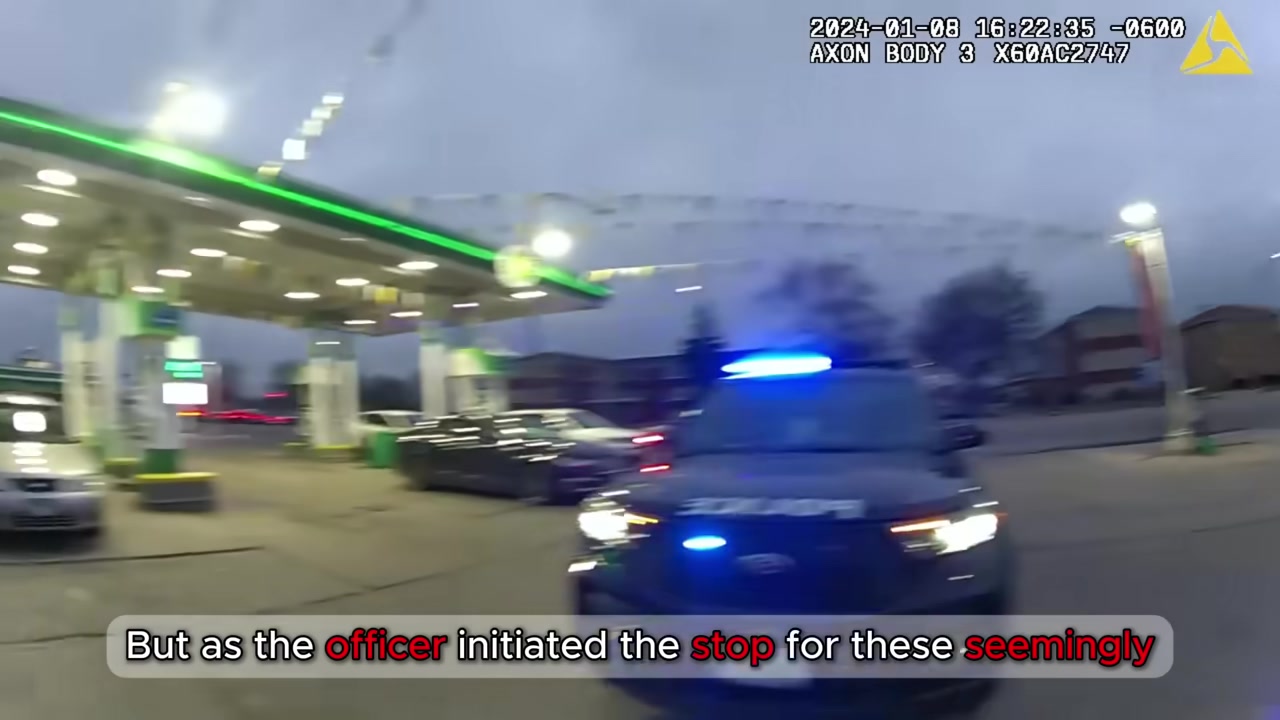
The footage opens in an everyday setting rather than a scene that immediately signals danger. Police vehicles are positioned around a gas station, and a light-colored sedan is stopped near the pumps and convenience-store area. The environment matters because it reinforces how quickly a normal public setting can become the backdrop for a police detention. Cars continue moving nearby, the station remains visible, and the interaction unfolds in an exposed area where officers must pay attention not only to the occupants but also to traffic, bystanders, and the vehicle itself.
According to the description attached to the matching Strange Bodycam upload, an Oak Lawn police officer had initiated the stop after observing a vehicle without a rear registration plate and with extremely dark window tint. The same description says the driver reacted angrily, repeatedly spoke over the officer, used a phone during the encounter, and did not promptly provide the requested driver's license. Those claims provide useful context, but the strongest basis for understanding the confrontation remains the video itself: an officer is attempting to complete a traffic investigation while the driver's conduct repeatedly forces attention back to basic instructions.
Traffic stops depend on a surprisingly simple sequence. An officer identifies a suspected violation, establishes who is operating the vehicle, checks licensing and registration information, assesses immediate safety concerns, and decides whether the encounter will end with a warning, citation, arrest, or some other lawful disposition. Most of those steps require the driver to remain in a predictable location long enough for the officer to complete the investigation.
That predictability is one of the central themes of the footage. From an officer-safety perspective, a driver unexpectedly opening a door, stepping out, moving the vehicle, or reaching around the passenger compartment changes the risk calculation. None of those movements automatically means that a person intends violence. But an officer cannot know a person's intention with certainty in real time. The practical response is therefore usually to issue clear instructions intended to reduce uncertainty: remain in the vehicle, turn it off, keep hands visible, provide requested documents, or wait while records are checked.
The driver's apparent frustration clashes directly with that process. Rather than allowing the stop to proceed as a short administrative interaction, the conversation becomes adversarial. The more the driver argues about what is happening, the more time is spent repeating instructions. The more instructions have to be repeated, the less the encounter resembles an ordinary citation stop.
This dynamic is important because many viewers focus only on the original violation. A missing plate, window tint, or another equipment issue may appear minor. But the legal and practical character of a stop can change after the officer makes contact. A person who might originally have faced only traffic citations can create a separate issue through conduct that allegedly interferes with the officer's attempt to complete the detention.
The Moment the Encounter Starts to Escalate
One of the most noticeable features of the footage is the contrast between the physical setting and the emotional temperature of the conversation. Nothing about the gas station itself is chaotic. Yet the interaction becomes increasingly difficult because neither the original explanation nor repeated commands bring the stop to a quick conclusion.
The officer's challenge is not merely to answer the driver's questions. He also has to maintain control of a roadside detention. Police officers generally cannot conduct traffic stops as open-ended debates in which every instruction is suspended until both sides agree. At the same time, drivers retain legal rights and may ask questions, decline consent to searches when consent is legally required, document an encounter, and later challenge citations or police conduct through courts and complaint procedures. The critical distinction is that disagreement with an officer does not necessarily cancel lawful instructions given during a detention.
The matching upload's description states that the driver was told to turn off the vehicle and remain inside. It further alleges that the driver exited despite those instructions, was warned about obstruction, later moved the car, and exited again while the officer was preparing citations. In the video, the repeated attention to the driver's location and behavior supports the broader point: the officer is no longer dealing only with the original traffic issue. He is managing an evolving compliance problem.
For viewers, this is where the encounter becomes more than another traffic-stop clip. It illustrates escalation through accumulation. There is no requirement that escalation begin with a punch, a chase, or a weapon. It can begin with a sequence of small decisions that repeatedly increase uncertainty. A door opens. An instruction is challenged. A person changes position. An officer repeats himself. Voices become sharper. Another officer arrives. Each development makes it harder to return to the low-intensity interaction that existed at the beginning.
The arrival or presence of additional officers can also change how a driver interprets the scene. From the driver's perspective, more police vehicles may feel like an excessive response to a minor violation. From the officers' perspective, however, additional personnel can be a response to behavior occurring after the stop began. Without that context, a short clip showing several officers around one vehicle can create a misleading impression about why they are there.
That is one reason full-length footage is valuable. It preserves sequence. Sequence allows viewers to distinguish between what caused the stop and what caused the response to intensify.
Why the Original Violation Stops Being the Main Story
Once a driver repeatedly disregards instructions, the central question can shift from “What traffic law was allegedly violated?” to “Is the officer being prevented from carrying out the stop?” That distinction matters in Illinois law. Obstructing or resisting a peace officer is a separate legal concept from the traffic violation that may have triggered the encounter.
Illinois law, like the law in many states, does not give motorists unlimited freedom to physically interfere with an officer simply because they disagree with the reason for a detention. At the same time, whether specific conduct legally constitutes obstruction depends on the facts, the officer's lawful authority, and how prosecutors and courts apply the statute. A viral-video title cannot decide that question on its own.
The Strange Bodycam description says the driver was arrested for obstructing a peace officer after exiting the vehicle again. It also says officers conducted an inventory search after the arrest and discovered an improvised electrical switch involving a piece of wood, a screw, and partially exposed wiring near a child safety seat. That detail is unusual enough to attract attention, but it should not be allowed to rewrite the earlier portion of the encounter. The alleged electrical device was not described as the reason the vehicle was initially stopped. It was reportedly found later during the post-arrest inventory process.
This distinction is essential when reconstructing incidents from body-camera footage. Later discoveries often become the most sensational part of a video title, but they do not retroactively justify every earlier decision. The legality of a traffic stop is generally evaluated from the information available when the stop was made, not from something discovered afterward. Likewise, the legality of an arrest depends on the facts known at the relevant moment.
Keeping the timeline straight makes the story more accurate and more interesting. The viewer can follow the officer's information changing in real time. First there is an observed traffic issue. Then there is a difficult interaction. Then there are repeated instructions. Then the officer reaches an arrest decision. Only afterward does the investigation move into the vehicle itself.
That progression is also why body-camera video can be more informative than a brief written summary. A police report may state that a driver “refused commands” or “became argumentative.” Video allows the public to examine how many commands were given, how they were phrased, what happened between them, and whether the officer's response changed gradually or abruptly.
The Arrest Changes the Entire Encounter
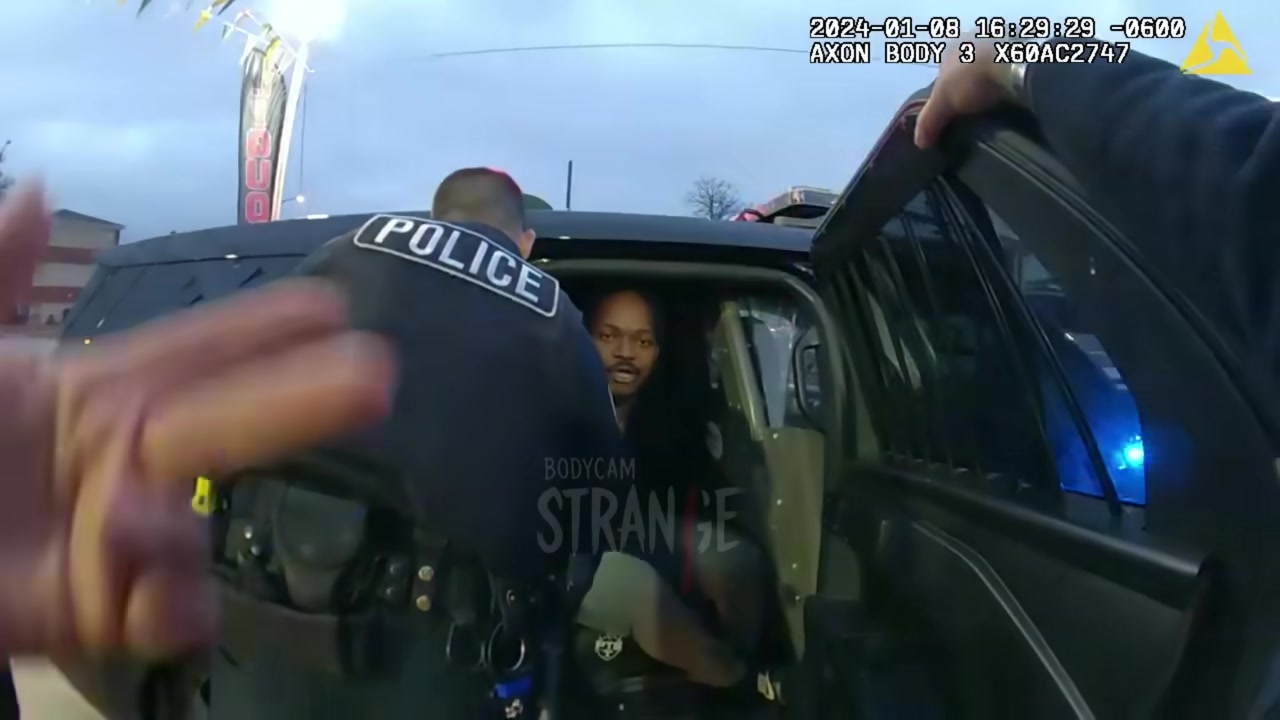
By the later portion of the footage, the scene has clearly moved beyond a routine roadside conversation. Police presence is more visible, the driver is no longer simply sitting through a traffic investigation, and the officer's attention has shifted toward taking control of the situation.
Arrest is a major threshold because it changes both the driver's status and the officers' responsibilities. Officers must secure the person, manage the vehicle, document property, determine whether towing is necessary, and account for anything discovered during a lawful inventory or other authorized search. What began as a few minutes beside a car can therefore turn into a much longer process.
The supplied footage captures that change in atmosphere. The interaction becomes procedural again, but it is a different procedure. Instead of asking for documents and explaining traffic issues, officers are now managing custody and the aftermath of the arrest.
This is also the point where viral summaries can become unreliable if they compress the entire incident into a moral lesson about “attitude.” Attitude alone is not a criminal offense. A person can be rude, irritated, sarcastic, or verbally critical of police without automatically committing obstruction. The legally important questions concern conduct: what the officer lawfully required, what the driver actually did, whether those actions materially interfered with official duties, and what facts supported the arrest.
That distinction makes the footage more useful rather than less dramatic. It invites the viewer to separate emotional reactions from legal analysis. The driver's tone may make the encounter unpleasant, but the arrest must stand on conduct and law, not merely on whether the officer felt disrespected.
Similarly, an officer's calm demeanor does not automatically prove that every decision is legally correct. Professional communication is valuable because it reduces confusion and creates a clearer record, but legality still depends on authority and facts. Body-camera footage is most useful when viewers resist choosing a “hero” and “villain” in the first thirty seconds and instead follow the sequence carefully.
What the Footage Teaches About Traffic Stops
The strongest lesson from this encounter is how quickly control of time can be lost. A traffic stop that might have ended with paperwork can become a prolonged detention when basic steps are repeatedly interrupted. For the motorist, arguing on the roadside rarely provides the same protection as documenting the disagreement and contesting it later through the proper legal process. For officers, clear explanations and consistent commands can prevent an already frustrated driver from becoming even more confused about what is expected.
There is also a broader lesson about video literacy. Police footage looks objective because it records real events, but a camera still has limitations. The lens points in one direction. Audio can be blocked by movement, wind, radio traffic, or overlapping voices. The video may begin after the officer has already observed the suspected violation. Editing by a YouTube publisher can remove context. Titles may contain loaded language designed to attract clicks.
For this reason, responsible reporting should distinguish among three layers of information. The first is what the supplied footage visibly and audibly shows. The second is what the publishing channel says happened. The third is what can be independently confirmed through police records, court records, statutes, or established news organizations. When those layers do not perfectly align, the discrepancy should be acknowledged rather than quietly filled with assumptions.
That issue is especially relevant here because the date visible in the supplied footage appears different from the date stated in the matching online video's description. The online description identifies January 8, 2024, while the supplied video's body-camera overlay appears to display a January 2023 date. Without an original agency release or case report conclusively resolving that conflict, assigning a precise date as unquestioned fact would go beyond the available evidence.
The incident itself, however, remains clear enough to analyze. A traffic stop occurs. The driver challenges the officer's handling of the stop. Instructions have to be repeated. The driver's movements and refusal to simply remain where directed become increasingly important. The encounter culminates in an arrest, after which officers turn to processing the vehicle and the scene.
Why These Encounters Become Viral
Videos like this routinely attract large audiences because they create an immediate conflict that anyone who drives can understand. Almost every motorist can imagine being pulled over. That familiarity gives the viewer an instant point of entry into the story.
Then the video adds uncertainty. Will the officer issue a ticket? Will the driver calm down? Will someone step out? Will another officer arrive? Will the encounter end with everyone driving away, or will someone be placed in handcuffs? Those unresolved questions create natural retention without requiring exaggerated narration.
The best way to tell such a story is therefore not to reveal the outcome immediately. Instead, the narrative should preserve cause and effect. Show the ordinary beginning. Explain the officer's objective. Identify the first point of disagreement. Follow each escalation. Only then explain why the final outcome became possible.
That structure also prevents sensationalism. Rather than telling readers that the driver “got what was coming,” a responsible article allows them to see how decisions changed the encounter. The reader remains engaged because each stage answers one question while creating another.
There is an additional reason these videos matter. Body cameras were adopted in part to create records of police-public encounters that previously depended heavily on competing recollections. They do not eliminate disputes, but they provide evidence that can be replayed, slowed down, compared with reports, and evaluated by supervisors, attorneys, courts, journalists, and the public.
In this footage, the camera preserves the repetitive nature of the interaction. That repetition may seem tedious, but it is evidentially important. It demonstrates that the confrontation did not consist of a single command followed immediately by an arrest. Viewers can see the stop developing over time.
A Minor Stop With a Much Larger Outcome
The enduring point of this incident is not that every argumentative motorist will be arrested. Nor is it that officers should be immune from questions or criticism. The more useful conclusion is that roadside encounters operate under a different set of practical constraints than ordinary disagreements.
A driver can believe a citation is unfair and still comply with a lawful instruction. A motorist can record an officer while still allowing the officer to complete the stop. A person can later challenge the reason for a detention, the validity of a ticket, the legality of a search, or the conduct of an officer through legal channels designed to resolve those disputes with more information than is available beside a roadway.
Officers, meanwhile, benefit from keeping instructions specific and tied to a clear safety or investigative purpose. Commands such as remaining in the vehicle, shutting off the engine, or providing identification are easier to evaluate later when the footage shows why they were given and how the driver responded.
In this case, the encounter's most striking feature is how the original reason for police contact gradually fades into the background. By the end, the story is no longer primarily about a plate or tinted windows. It is about what happened after the stop began.
That transformation is what makes the footage worth watching from beginning to end. The outcome is not created in a single second. It is built through a chain of choices, warnings, responses, and repeated attempts to move the encounter forward.
Watch the Full Encounter
Short clips can make a police encounter appear simpler than it really was. The complete footage provides the sequence needed to understand how an ordinary traffic investigation became an arrest and why the interaction continued escalating instead of ending with routine paperwork.
Comments (0)
Loading comments...
May You Like

MERIDEN POLICE OFFICER SHOOTS MAN BEATING FATHER WITH A BASEBALL BAT

Chrysler 300 Gapped Cops at 150+ MPH | Police Dashcam

Stolen Charger Flees Police During Highway Traffic Stop