Two Sisters Kept Challenging Police—Until Both Ended Up in Handcuffs
Two Sisters Kept Challenging Police—Until Both Ended Up in Handcuffs
Two sisters keep arguing as Key West officers repeatedly try to create distance around an active scene. The warnings continue—until police decide the conversation is over.
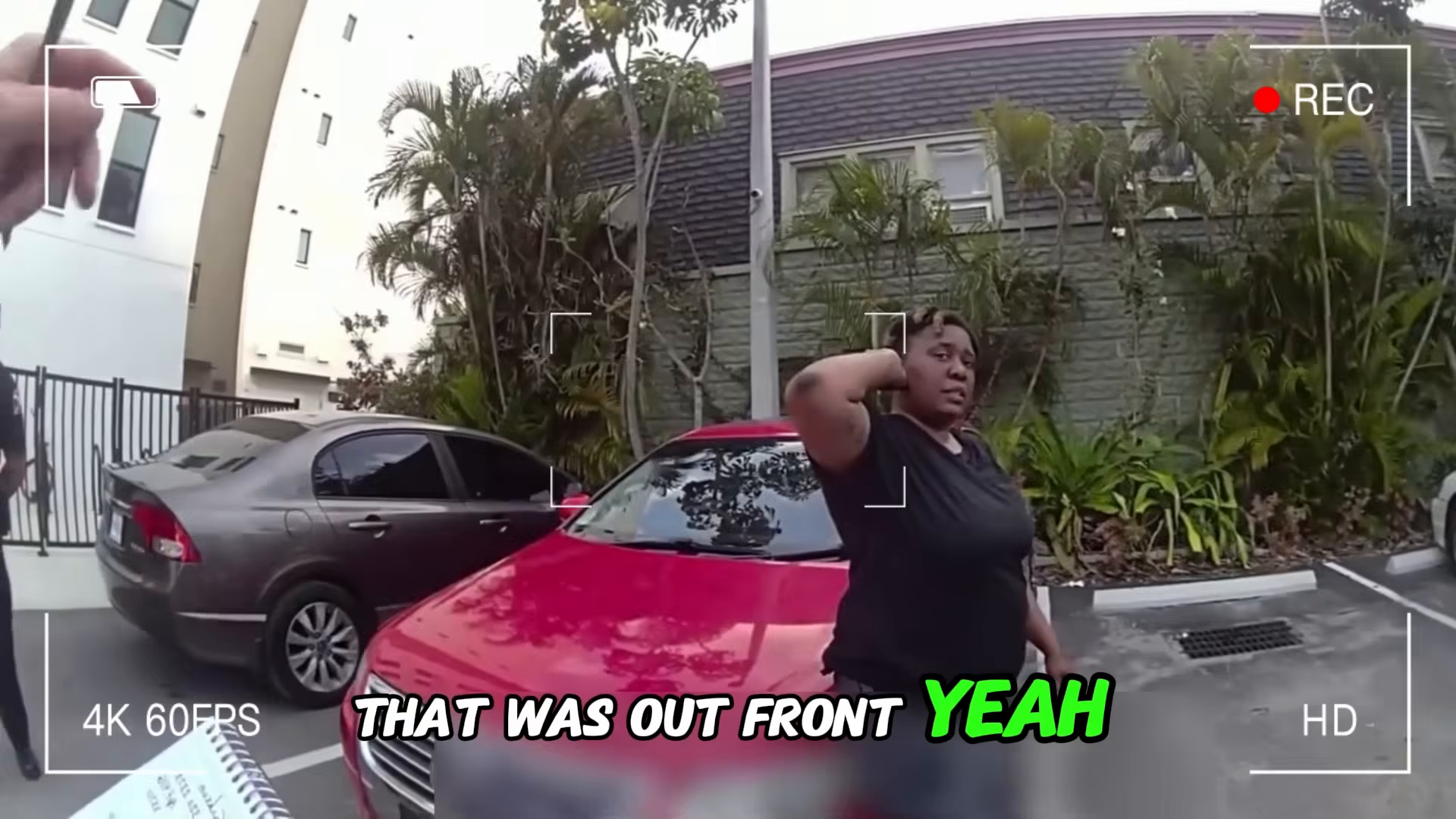
A Late-Night Police Call Turns Into a Family Meltdown
What begins as a police response outside a Key West business quickly becomes a confrontation involving two sisters, repeated warnings and an increasingly frustrated group of officers. The supplied footage shows the women arguing with police in and around a parking area while officers attempt to control an active scene.
Public reporting that matches the footage identifies the sisters as Haleigh Lynn Thigpen, 25, and Chelsea Ann Thigpen, 23. Both were arrested by Key West Police on May 14, 2026. The case later gained wider attention after body-camera footage circulated online.
The video is compelling because the escalation is incremental. One argument leads to another. An officer tells one of the women to move away. She continues questioning the instruction. The sisters talk over officers and, at times, over each other. What could have remained a limited police contact gradually expands until both women are in custody.
The central tension is therefore not a spectacular crime or a chase. It is whether the women will stop escalating a situation that officers repeatedly try to contain.

Officers Draw a Boundary Around the Active Scene
One of the clearest recurring themes in the footage is distance. Officers repeatedly tell one of the sisters to back away from the active police interaction. Public reporting on the case says officers instructed her to remain at least 25 feet away.
That distance is significant in Florida because of a law that took effect in 2025 and is often described as the state's “Halo Law.” The statute allows officers, after giving a warning, to direct a person to remain a specified distance away when the person is interfering with, threatening or harassing a first responder performing lawful duties.
The footage demonstrates why such instructions can become a flashpoint. From the sister’s perspective, she wants answers and wants to remain close to what is happening. From the officers’ perspective, they are trying to create enough space to safely deal with the original subject without another person repeatedly entering the working area.
Instead of resolving that disagreement by simply stepping back, the conversation continues. The longer it continues, the more the encounter shifts from explanation toward enforcement.
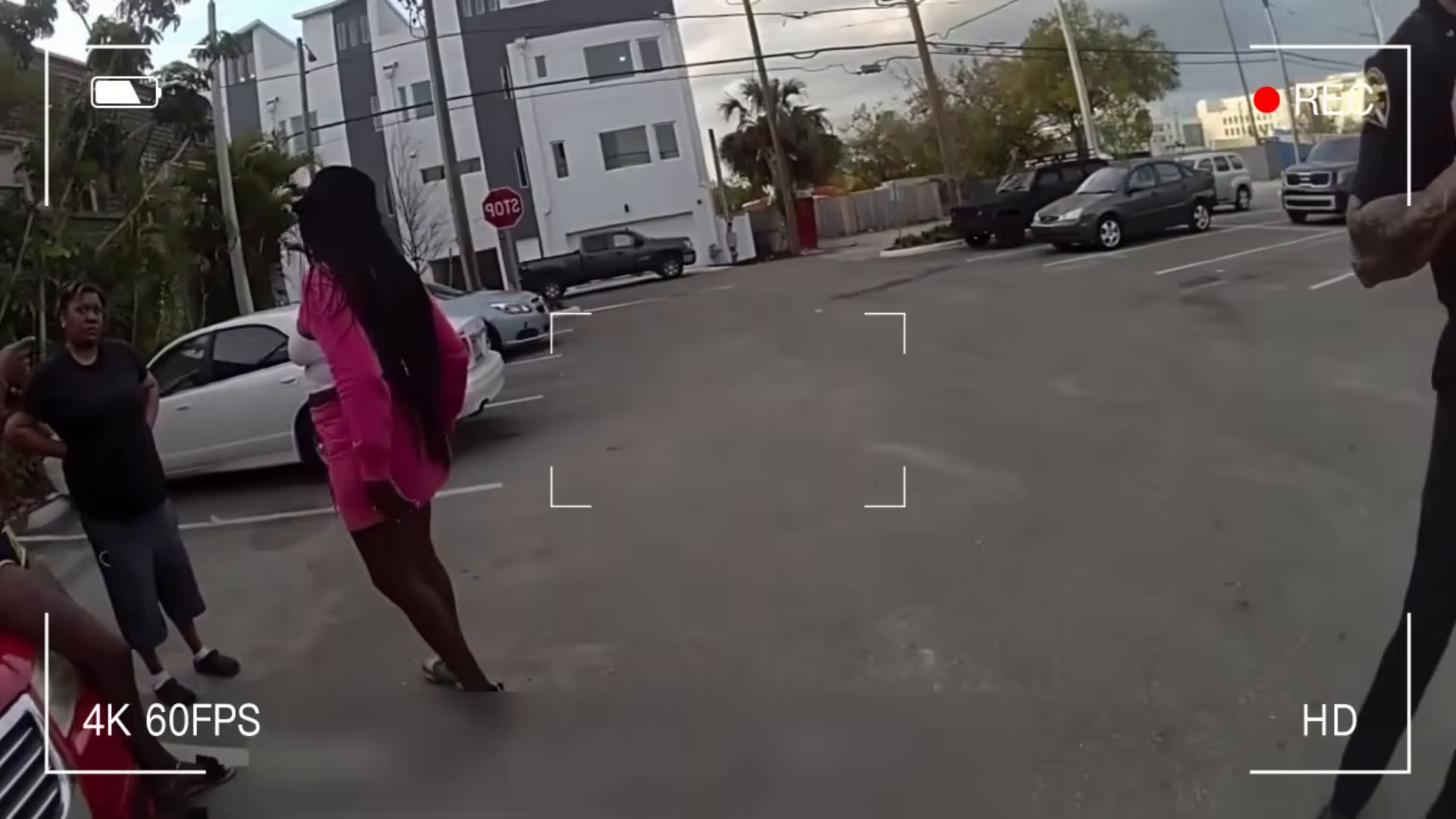
The Sisters Keep the Argument Alive
Body-camera encounters often escalate because people begin arguing about the command instead of deciding whether to comply with it. That pattern appears repeatedly here.
The sisters remain vocal, question officers and react strongly to what is happening. At points, the scene feels less like one police interaction and more like several conversations occurring simultaneously. One woman speaks to an officer while the other calls out from nearby. Officers have to repeat themselves while also tracking where each person is standing.
This creates a feedback loop. The women appear increasingly frustrated because officers will not engage with every argument. Officers become increasingly direct because previous instructions have not ended the interference. The louder the exchange becomes, the harder it is for either side to communicate clearly.
For viewers, this is where the full bodycam provides more context than a viral excerpt. The arrests do not appear as isolated moments. They come after repeated exchanges in which officers attempt to establish boundaries around the scene.

Warnings Eventually Turn Into Handcuffs
The turning point arrives when verbal warnings stop producing the result officers want. Public reporting says one sister continued approaching or arguing after being told to remain back and was warned that failure to comply could lead to arrest.
Moments later, the possibility becomes reality.
The physical arrest is chaotic in the way body-camera footage often is. The camera moves close to bodies, arms block the lens, voices overlap and the viewer loses the wide perspective that existed moments earlier. But the basic progression remains visible: repeated commands, continued resistance to the officers’ direction, and then handcuffs.
Booking information cited in reporting identifies Haleigh Thigpen as facing three counts of resisting or obstructing an officer without violence and one count of obstructing or interfering with a first responder on duty. Chelsea Thigpen was reported as facing trespassing on property other than a structure or conveyance and resisting or obstructing an officer without violence.
Those are allegations associated with the arrests, not proof of guilt by themselves. They do, however, help explain why officers treated the continued conduct as more than a verbal disagreement.
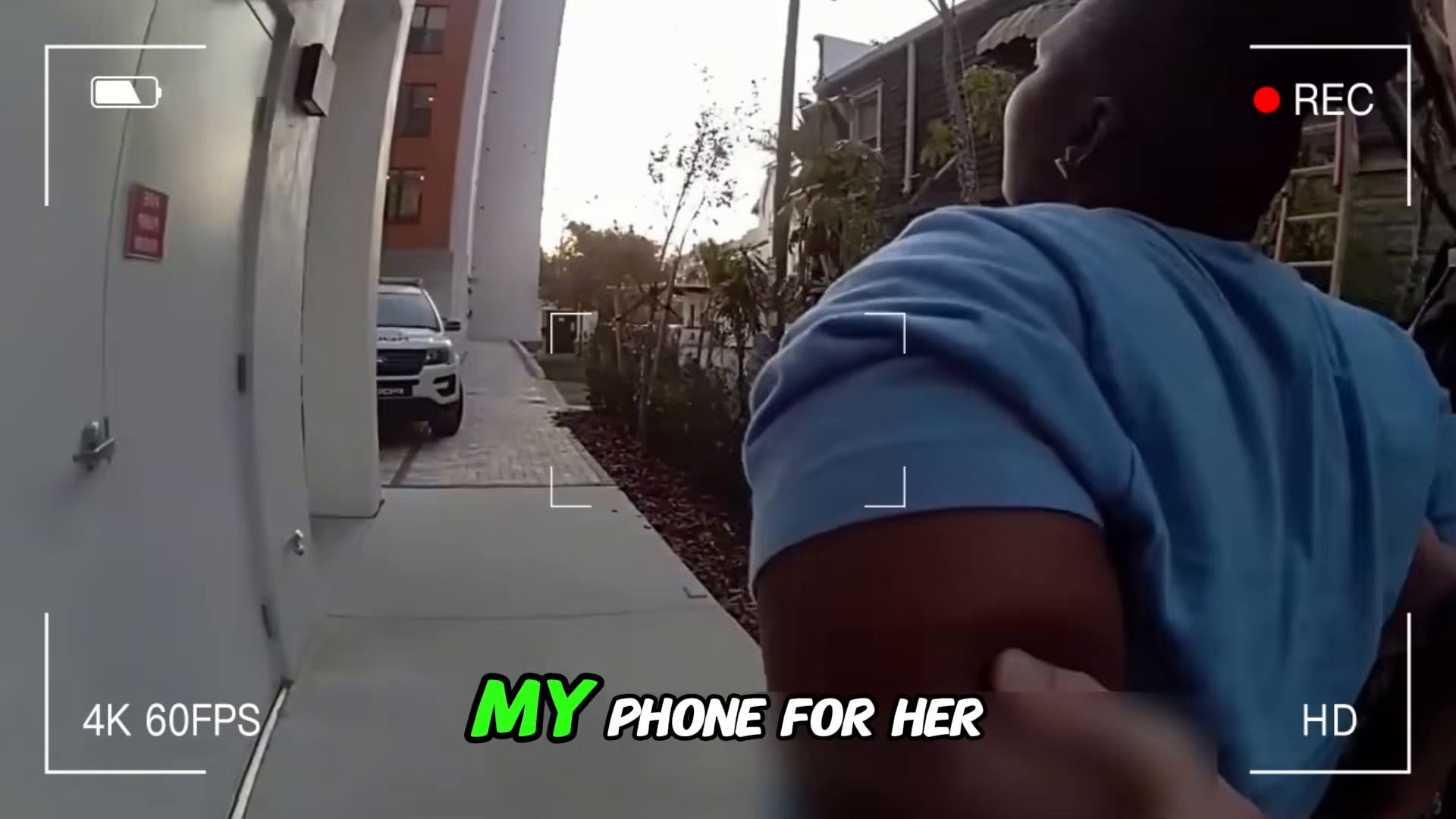
The Patrol Car Does Not End the Drama
In many police videos, the moment a person is placed in a patrol vehicle marks the end of the conflict. Here, custody does not immediately bring silence.
The footage continues to capture emotional exchanges, questions and arguments after the sisters are separated from the original scene. This later portion is important because it shows how long adrenaline can remain elevated after an arrest. A person can be physically secured while still emotionally engaged in the confrontation.
Public discussion of the video focused heavily on the sisters’ comments after arrest, including references to family and money. Those moments helped the footage spread online, but they are less important legally than the conduct that preceded the arrests.
The distinction matters. Viral bodycam videos are often remembered for their funniest or most outrageous quote. Police reports and court records focus instead on specific actions: whether someone trespassed, interfered with officers, resisted, or failed to obey a lawful direction.
The body camera contains both layers—the viral personality-driven moments and the procedural sequence that produced the charges.

Why This Case Spread Online
The footage has many of the ingredients that make police bodycam videos travel quickly online: recognizable personalities, escalating arguments, repeated warnings, family members amplifying one another and officers visibly losing patience.
But the video also illustrates the danger of reducing a case to a mocking headline. Calling the women “disorderly sisters” captures the chaotic tone but does not explain why police were there, what officers ordered them to do, or what offenses were ultimately alleged.
A more useful way to watch the footage is to track the escalation points. When is the first clear instruction given? How many times is it repeated? Does the person move farther away or closer? When does the officer warn that arrest is possible? What happens immediately before handcuffs are applied?
Those questions turn the clip from spectacle into a timeline.
They also make the officers’ frustration easier to understand without assuming that frustration alone justified an arrest. Police authority must still be tied to law and specific conduct. The reporting on this case provides that missing legal context through the charges and the repeated 25-foot instruction described in the footage.
Florida’s 25-Foot Rule Adds Important Context
Florida’s first-responder buffer law became a major point of discussion after it took effect because it creates a specific offense connected to remaining too close after an officer gives a warning under qualifying circumstances.
The law does not simply prohibit people from filming police from within 25 feet in every situation. The statutory language is more specific and involves approaching or remaining within the specified area after receiving a warning while interfering with, threatening or harassing a first responder engaged in lawful duties.
That nuance matters in interpreting this video. A viewer might hear “25 feet” and assume officers can automatically order any observer away. The legal question depends on the circumstances and the conduct surrounding the warning.
In the sisters’ encounter, public reporting specifically links the repeated distance command to officers’ effort to keep one woman away from the active scene. That makes the bodycam useful as a real-world example of how the law can arise during a messy police interaction rather than as an abstract rule on paper.
The Charges Tell a More Precise Story Than the Viral Title
According to reporting based on Monroe County booking and court records, Haleigh and Chelsea Thigpen were both arrested by Key West Police on May 14, 2026.
Haleigh was reported as being charged with three counts of resisting or obstructing an officer without violence and one count involving obstruction or interference with a first responder. Chelsea was reported as being charged with trespass on property other than a structure or conveyance and resisting or obstructing an officer without violence.
That information provides a more precise description of the incident than simply saying police “lost patience.” Officers’ patience is part of the human drama visible on camera, but criminal charges are based on alleged conduct rather than an officer’s emotional state.
The distinction is important for responsible reporting. A dramatic title can draw readers into the story, but the body of the article should return to verifiable facts: who was arrested, when the incident occurred, which agency made the arrests and what allegations were recorded.
A Case Where De-Escalation Required Cooperation From Everyone
Police de-escalation is sometimes described as something officers do to a passive subject. In reality, successful de-escalation often depends on participation from everyone involved.
Officers can lower their voices, explain commands, create distance and provide opportunities for voluntary compliance. But if a person repeatedly re-enters a restricted area or continues conduct officers believe is interfering with their work, the available options narrow.
At the same time, police must avoid turning irritation into enforcement. People have broad rights to criticize officers, ask questions and record police activity in public. The legal issue is not whether the speech is annoying. It is whether the person’s conduct crosses into an independently enforceable violation.
That tension is visible throughout this video. The sisters’ words create much of the spectacle, but the arrests are tied in reporting to alleged interference, resistance and trespass.
Watching the entire sequence makes that distinction easier to see.
The Full Video Shows How Quickly a Small Dispute Can Grow
By the end, both sisters have become part of the police incident. That outcome feels dramatic, but the path to it is made up of small decisions.
A warning is questioned. A boundary is challenged. An officer repeats an instruction. Another argument begins. The possibility of arrest is stated. The behavior continues. Handcuffs follow.
This incremental escalation is why the footage is more useful in full than as a collection of viral quotes. It allows viewers to see that police encounters rarely jump from calm to custody without intermediate steps.
It also leaves room for viewers to evaluate those steps themselves. Were the officers’ instructions clear? Did the women have enough opportunity to comply? Did the sisters’ conduct interfere with the scene? Could the confrontation have ended earlier if everyone had communicated differently?
Those are more meaningful questions than simply deciding which person was the loudest.
The verified reporting gives the footage a clear factual foundation: Key West Police arrested sisters Haleigh Lynn Thigpen and Chelsea Ann Thigpen on May 14, 2026, after an encounter that included repeated police instructions and allegations of obstruction, resistance and trespass. The body camera supplies the human reality around those dry legal terms—frustration, confusion, defiance and the moment officers finally decide the warnings are over.
The handcuffs are only the payoff to a much longer confrontation. The full recording shows each warning, argument and decision that pushed the encounter closer to arrest.
Want to see exactly where the sisters crossed the line with officers? Follow the link and watch the entire encounter play out for yourself: https://www.youtube.com/watch?v=rlPZ5V_7C0Y
Comments (0)
Loading comments...
May You Like

💨 High-Speed Police Pursuits Caught on Dashcam | Intense Moments Across the USA 🇺🇸

Cops Arrive for a Medical Emergency and Walk Into Drunken Chaos

911 Call Leads Police to a Disturbing Family Situation