
Two Officers Struggle to Make an Arrest Until Backup Arrives
Two Officers Struggle to Make an Arrest Until Backup Arrives
A Morning Call Begins With Little Sign of What Is Coming
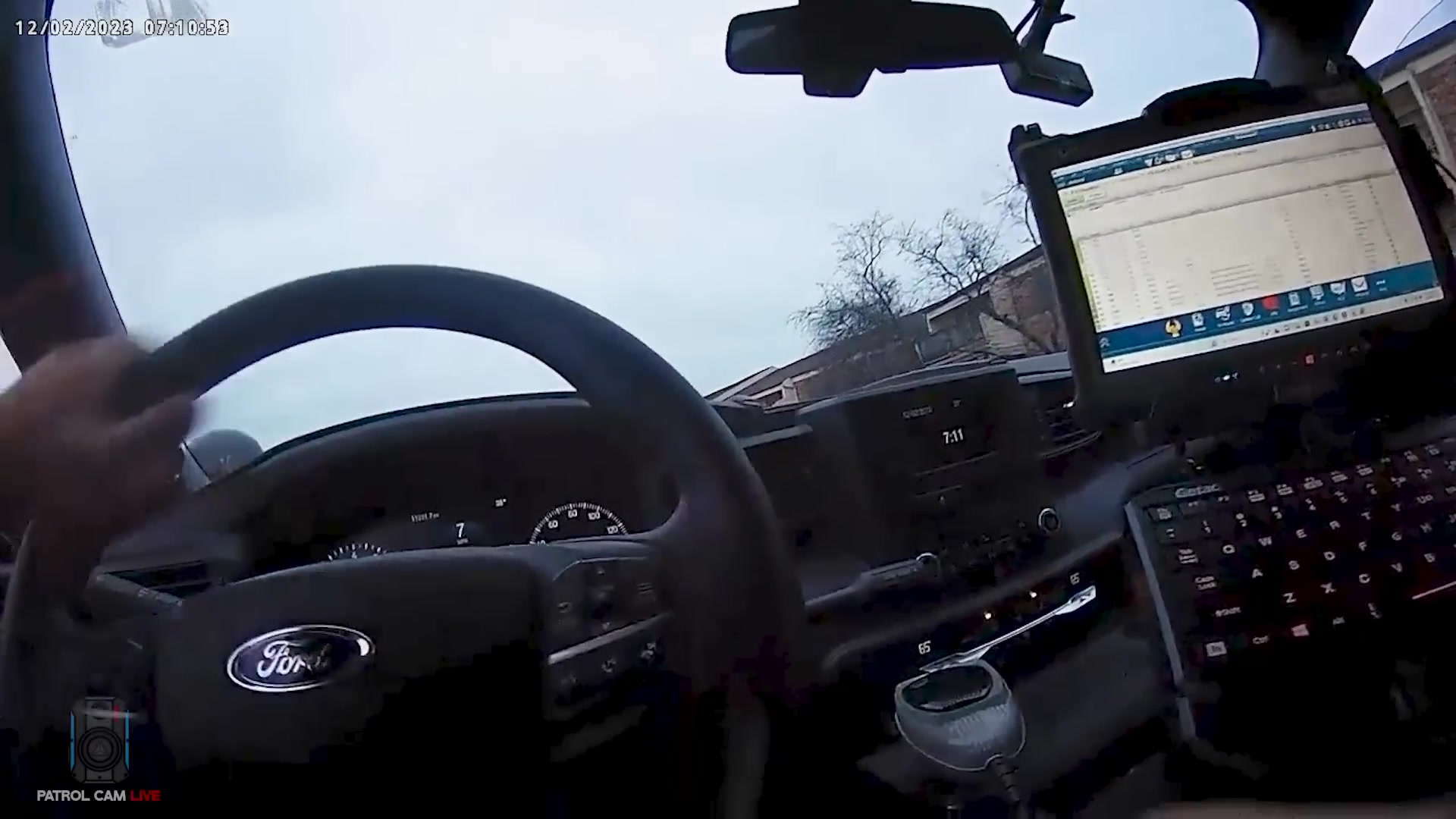
The supplied patrol-camera footage opens shortly after 7:10 a.m. on December 2, 2023. An officer is seated inside a marked police vehicle, checking information on the in-car computer before moving toward a residential building. At this point, the scene is quiet. There are no flashing lights filling the hallway, no crowd of officers and no obvious indication that the call will soon require several people to bring one man under control.
The date and time are clearly visible in the video overlay, but the footage does not provide enough independently verifiable information to confidently identify the exact department, city, suspect or police report. Web research found several unrelated police incidents from December 2, 2023, but none could be matched to this footage using the full combination of location, officer, building, dialogue and outcome. For that reason, this article does not attach a name, charge sheet or location to the people shown.
That limitation is important. Police videos are frequently reposted with new titles and without their original descriptions. A date alone is not enough to identify an arrest. The responsible approach is to use the footage for what it clearly establishes and avoid turning a similar news story into a false match.
What the video does establish is a rapidly escalating attempt to take a man into custody inside a residential building. Two officers initially try to manage the encounter. The man resists their efforts, the struggle moves through a narrow interior space, and the balance changes only after additional officers arrive.
The Hallway Gives Officers Almost No Room to Work
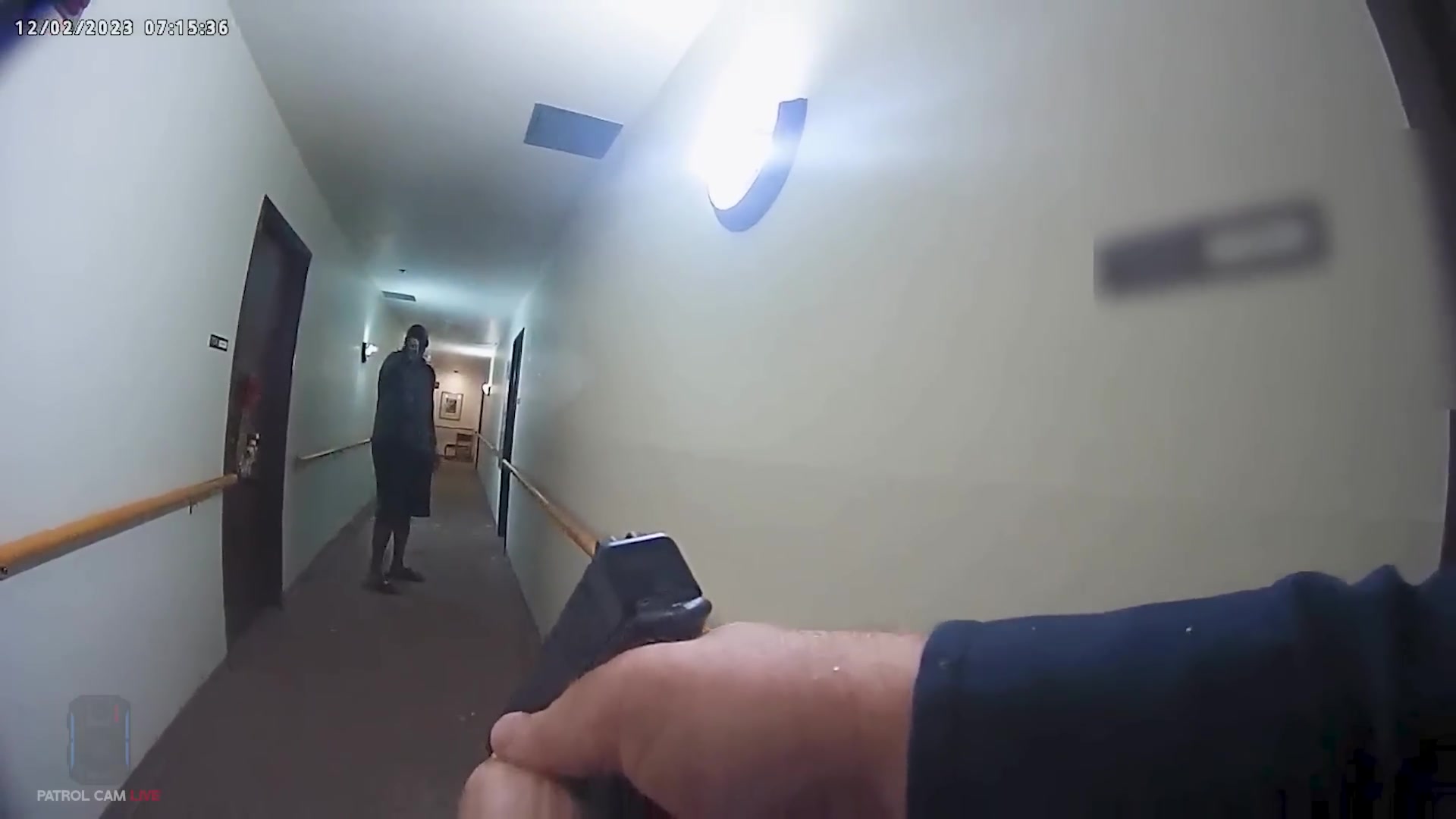
The officers enter a building with narrow corridors and apartment doors positioned close together. This environment matters because physical-control tactics that might be easier in an open parking lot become far more difficult in a confined hallway. Walls, door frames, furniture and other people can limit movement on every side.
One officer can be seen moving cautiously through the corridor while another remains nearby. Their attention is directed toward a man inside the building. The initial approach does not look like a large tactical operation. There are only a small number of officers present, and they are trying to communicate while maintaining enough distance to react if the encounter changes.
Confined spaces create a particular problem during an arrest. Officers cannot easily spread out around a person. If one officer is directly in front, a second officer may have difficulty reaching an arm or moving behind the person. If the individual suddenly pushes forward, everyone can be driven into a wall or doorway.
The body-worn perspective makes those limitations obvious. The camera repeatedly loses a clean view as bodies fill the frame. That is not a defect unique to this recording. During close physical encounters, body cameras often capture fragments of an event rather than a perfect wide shot. Investigators and viewers therefore have to use the full sequence, audio and multiple perspectives where available.
Commands Give Way to Hands-On Control
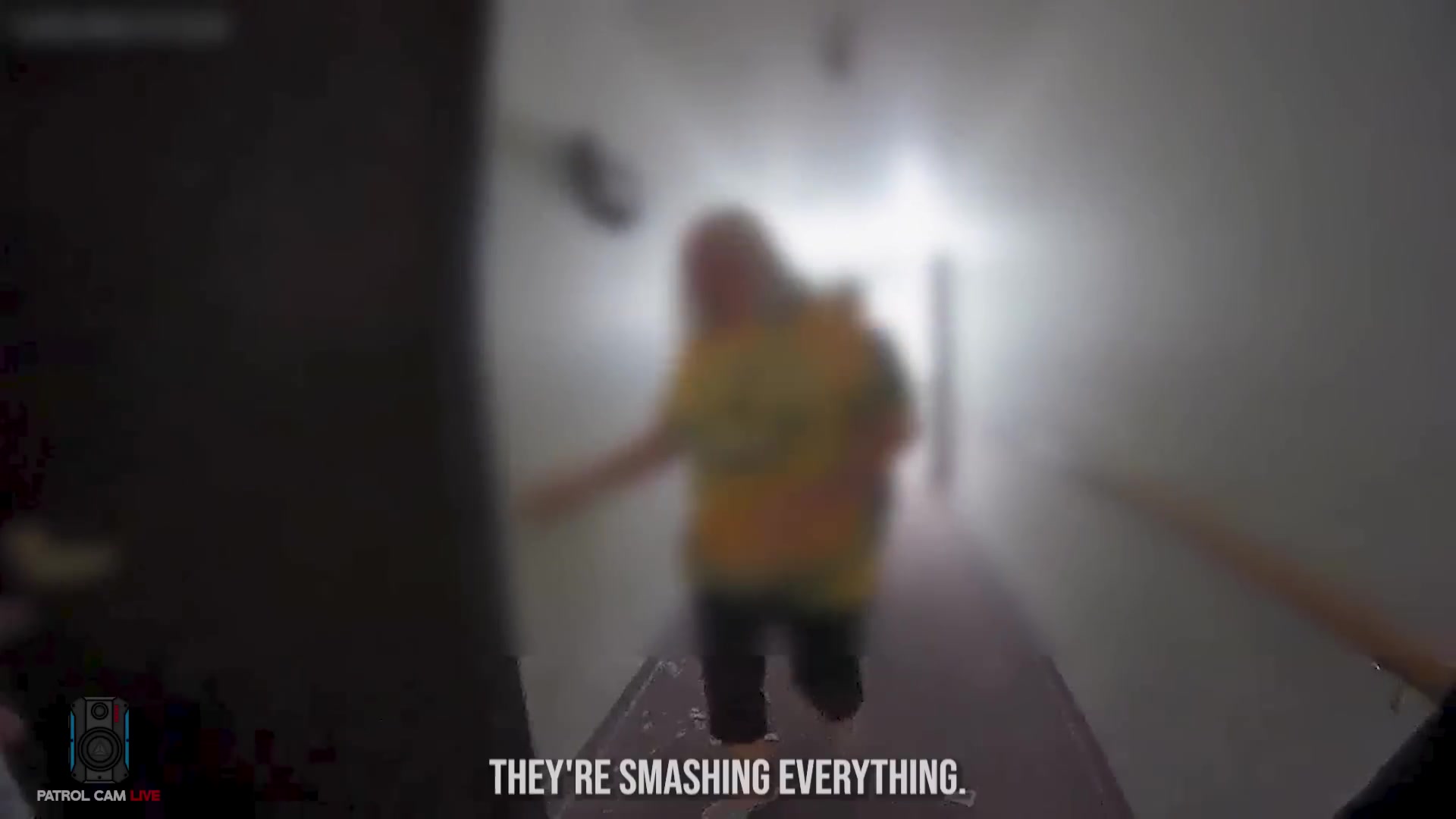
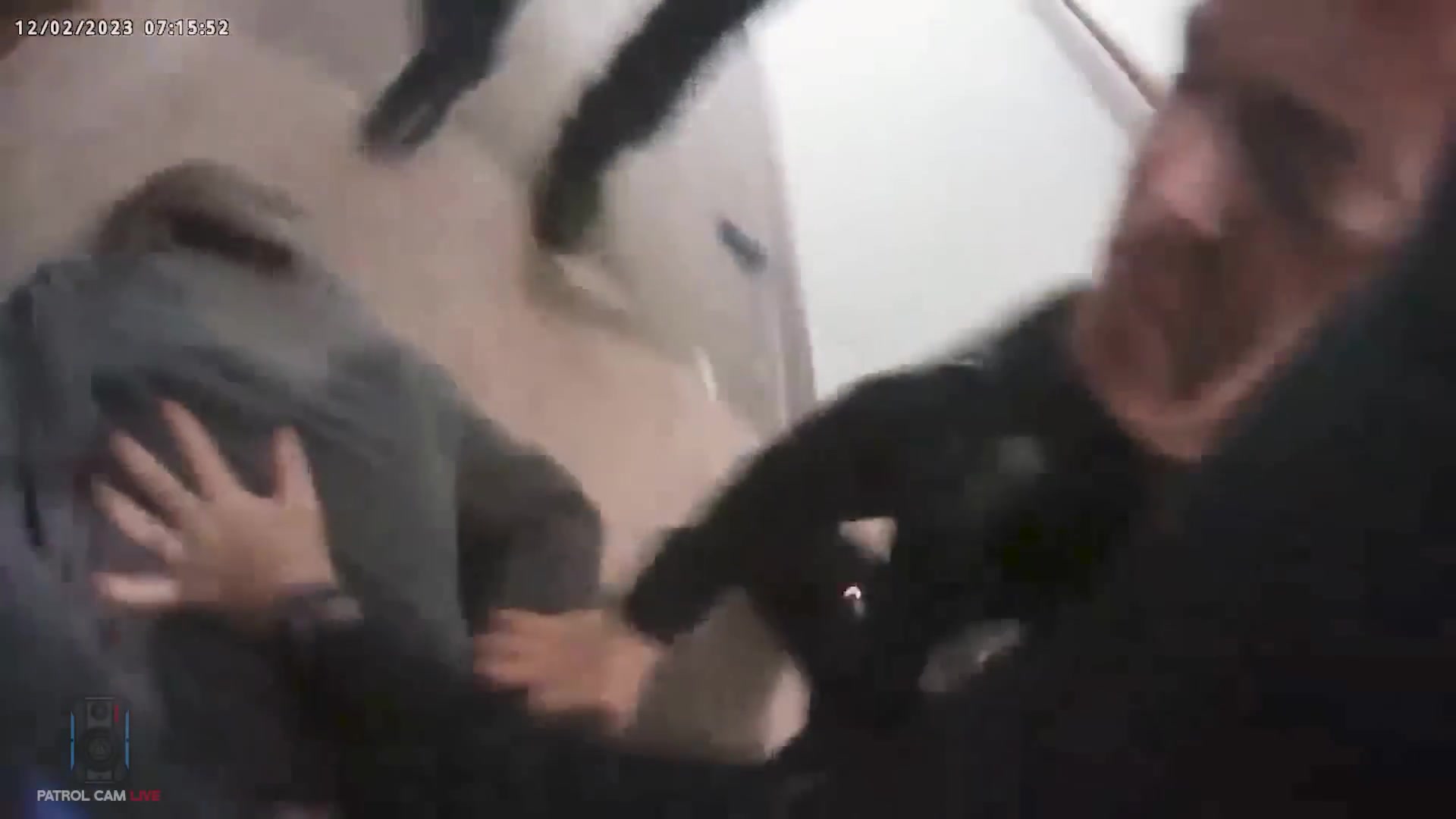
As the interaction continues, the officers move from verbal direction toward physical control. The man does not simply place his hands behind his back and allow the arrest to proceed. Instead, the encounter becomes a struggle in which the officers are trying to control his arms and body position while preventing him from breaking away.
This is the point where the original title, “Two Officers Get SAVED by Their Backup,” begins to make sense. The two officers are not necessarily helpless, but they are operating at a clear numerical and positional disadvantage once the man actively resists. A single strong movement can force one officer off balance while the second officer tries to compensate.
Police training generally emphasizes control of the hands because hands can strike, grab equipment, reach into clothing or prevent handcuffing. But controlling both arms of a resisting person is physically demanding. One officer may secure one side only to lose control of the other. The problem becomes even more difficult when everyone is standing rather than grounded in a stable position.
The footage shows exactly that kind of unstable contest. The officers repeatedly reposition. The man turns and shifts his weight. The hallway restricts where everyone can move. The situation does not resolve quickly, and the longer a physical struggle continues, the more fatigue becomes a factor for everyone involved.
Why Prolonged Resistance Creates New Risks
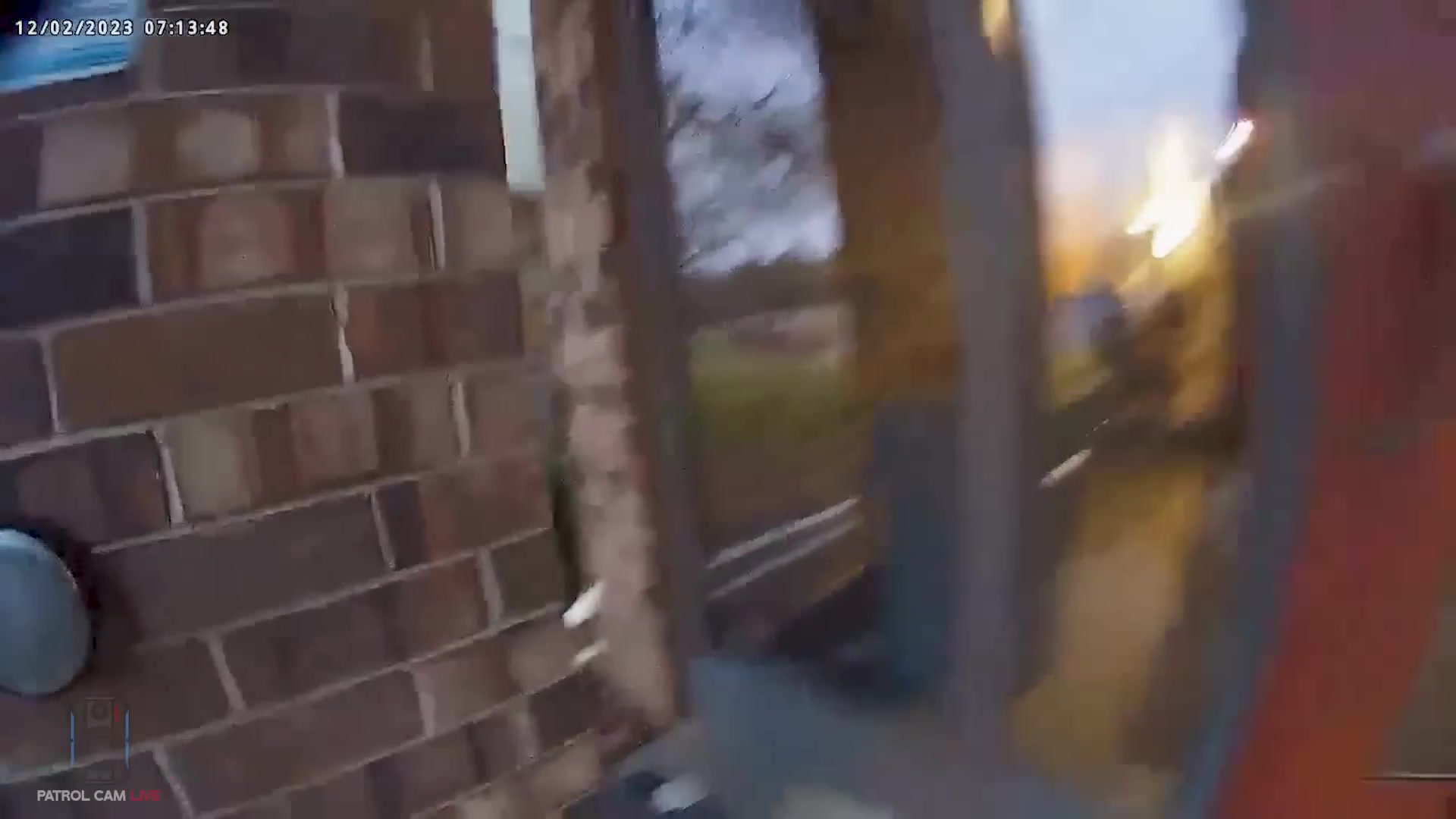
A prolonged arrest struggle is dangerous even when no weapon is visible. Officers can suffer injuries to hands, shoulders, knees or backs. A person resisting arrest can fall against a wall, strike the floor or become injured during restraint. Equipment carried on an officer's belt can also become exposed during close contact.
That equipment issue is particularly important. A patrol officer may carry a firearm, conducted-energy weapon, radio, handcuffs and other tools. During a wrestling-style struggle, an officer has to control the person while also remaining aware of equipment that may now be within reach. This is one reason backup is requested early when an officer believes a routine arrest is becoming physically difficult.
The narrow building interior compounds those risks. There is no broad safety zone. The officers cannot simply step several yards away without potentially allowing the man to retreat into another room or move toward other residents. They must maintain enough control to prevent escape while trying not to create unnecessary injury.
The footage also demonstrates how quickly an officer's breathing and movement change during a physical confrontation. Even a relatively short struggle can be exhausting. Fine motor skills become harder to maintain, communication becomes shorter and louder, and officers may need another person simply to stabilize an arm long enough for handcuffs to be applied.
Backup Changes the Balance of the Encounter
The turning point comes when additional officers arrive. The effect is immediate. Instead of two officers trying to manage every part of the resistance, several officers can divide the task. One can control an arm, another can manage the opposite side, and another can help stabilize the man's torso or legs.
This is the practical meaning of backup in a hands-on arrest. The purpose is not necessarily to overwhelm someone with unnecessary force. Additional officers can actually reduce the need for more severe force because several people may be able to physically control a resisting person without relying on strikes or other tools.
The video shows the encounter becoming more manageable once more officers are present. The man is pressed into a position where his movement is increasingly restricted. Officers communicate with each other while trying to bring his hands into a position where restraints can be applied.
From the camera's perspective, this phase is visually chaotic. Uniforms and bodies fill almost the entire frame. But the larger sequence is clear: the first two officers have difficulty completing the arrest, backup enters the hallway, and the combined effort eventually allows officers to gain control.
This is also why a short clip of the final restraint can be misleading. If a viewer begins only when several officers are already surrounding the man, it may appear that a large group was present from the beginning. The full footage shows that the additional officers arrive because the initial attempt by two officers has become a sustained physical struggle.
Numbers Can Reduce the Need for Higher Force
It can seem counterintuitive that adding more officers might make an arrest safer. Visually, five officers around one person can look more aggressive than two. Tactically, however, more officers can provide more control with less reliance on any single officer's strength.
Imagine one officer trying to control a resisting person's right arm while the person is simultaneously twisting away. The officer may have to use substantial force simply to maintain grip. Add another officer who can stabilize the torso, and the first officer may no longer need to pull as hard. Add a third who can control the opposite arm, and the person's ability to rotate decreases further.
This does not mean that any amount of force becomes appropriate merely because multiple officers are involved. Force still has to correspond to the circumstances. But coordinated team control can provide an alternative to escalation when a person is physically resisting but does not present a threat requiring a higher level of force.
The footage appears to illustrate that principle. The arrival of backup changes the mechanics of the struggle. Officers gain enough control to move from an open-ended wrestling match toward a structured restraint process.
The Body Camera Shows Only One Piece of the Incident
One of the challenges in analyzing this video is that the camera is often inches from the struggle. At several points, the viewer sees a shoulder, wall or piece of clothing rather than the entire group. This is common in body-camera footage and is one reason a single camera should not be treated as a complete reconstruction.
A body camera is attached to a moving person. When that officer turns, falls, reaches or is pushed, the lens moves too. The camera may record excellent audio while providing almost no useful visual angle. Conversely, it may show a person's hands clearly while missing what another person is doing several feet away.
That limitation is especially relevant when judging individual uses of force. A viewer should avoid claiming that an officer struck, grabbed or threatened someone unless the footage clearly supports that conclusion. Likewise, a movement that is hidden from the camera should not automatically be assumed not to have happened.
In this case, the safest description is straightforward: officers attempt to control a man inside a residential building, the man physically resists, the initial officers struggle to complete the arrest, additional officers arrive, and the group eventually gains control.
What Could Not Be Independently Verified
The footage provides a clear date and approximate time, but those details did not lead to a reliable exact incident match in available public sources. Searches for police arrests and officer-assistance incidents on December 2, 2023 returned multiple unrelated cases in different cities. None matched the residential interior, timeline and physical sequence well enough to use as the factual basis for this article.
That means several details remain intentionally unspecified: the department, city, man's identity, reason officers initially sought him, charges filed after the arrest and any later court outcome. Those facts may exist in the original uploader's source material or police records, but they cannot responsibly be inferred from the title alone.
This distinction protects the accuracy of the story. It would be easy to find an arrest on the same date involving resisting police and assume it is the same event. But a correct match requires more: agency markings, location, dialogue, names, case numbers or a distinctive sequence that independently lines up with the video.
Until those elements are available, the article remains anchored to observable footage. That approach may provide fewer dramatic details, but it prevents an unrelated person's criminal allegations from being attached to the wrong video.
The Arrest Finally Comes Under Control
Once backup is fully involved, the struggle gradually loses momentum. The officers are able to keep the man from freely turning or pulling away. Hands that were difficult to control during the earlier phase can now be managed by separate officers.
This is the moment the incident moves from active resistance toward custody. The visual chaos does not disappear instantly, but the purpose of each officer's position becomes clearer. The group is no longer chasing movement around the hallway. They are concentrating on restraint and stabilization.
After any intense physical arrest, officers typically have additional responsibilities. They must confirm that restraints are secure, check the person's condition, account for equipment and document what occurred. Depending on the force used and the person's condition, medical evaluation may also be required. The exact post-arrest procedures in this case cannot be established from the sampled footage alone, so no specific medical outcome is asserted here.
What is visible is enough to explain why backup mattered. Two officers were dealing with a physical problem that was not resolving. Additional personnel gave them the ability to divide that problem into manageable pieces and bring the confrontation to an end.
Why the Full Sequence Matters More Than the Viral Title
“Two Officers Get SAVED by Their Backup” is designed to make viewers curious, but the full video provides a more useful story. Backup does not arrive in a cinematic last-second rescue from an obvious lethal threat. Instead, additional officers change a difficult physical-control situation that has been exhausting and unpredictable for the first officers on scene.
That difference matters. The footage is compelling without exaggerating it. Two officers enter a residential building expecting to complete a police contact. The encounter becomes physical. The man resists their attempts to control him. Space is limited, the officers struggle to gain leverage, and the arrest remains unresolved until more officers reach the hallway.
The video also provides a practical lesson about why police frequently call for another unit before an encounter has reached its worst point. Backup takes time to arrive. Waiting until an officer is already completely overwhelmed can leave too little margin for a safe response. Early assistance gives officers more options.
At the same time, the footage reminds viewers to separate what they see from what a dramatic title implies. There is no need to claim that the two officers would certainly have been seriously injured without backup. The camera cannot prove a hypothetical outcome. What it does show is that the arrest becomes significantly more controlled after additional officers arrive.
That is the strongest conclusion supported by the evidence. The first officers are engaged in a sustained struggle. Backup enters. The numerical balance changes. Officers gain control. The arrest moves toward completion.
For anyone interested in how real police encounters develop, those minutes before backup arrives are the most revealing part. They show the physical limitations of two officers in a confined environment and why coordinated assistance can be so important during an arrest that refuses to stay routine.
Comments (0)
Loading comments...
May You Like

Female Driver Destroys Three Lives in a Matter of Minutes

West Virginia Man Laughs at Police Officer and Ends Up Arrested

Her Dad Is a Lawyer — Then He Shows Up After Her Arrest | Bodycam US














