
Trying to Outsmart Police in a Stolen Car Goes Wrong
Driver Tries to Talk His Way Through a Stolen-Car Stop Before Police Make the Arrest
A Stolen-Car Investigation That Starts With Conversation
The most revealing police encounters are not always the ones built around a high-speed chase. Sometimes the tension comes from watching an officer ask a simple question and hearing the explanation become more complicated with every answer.
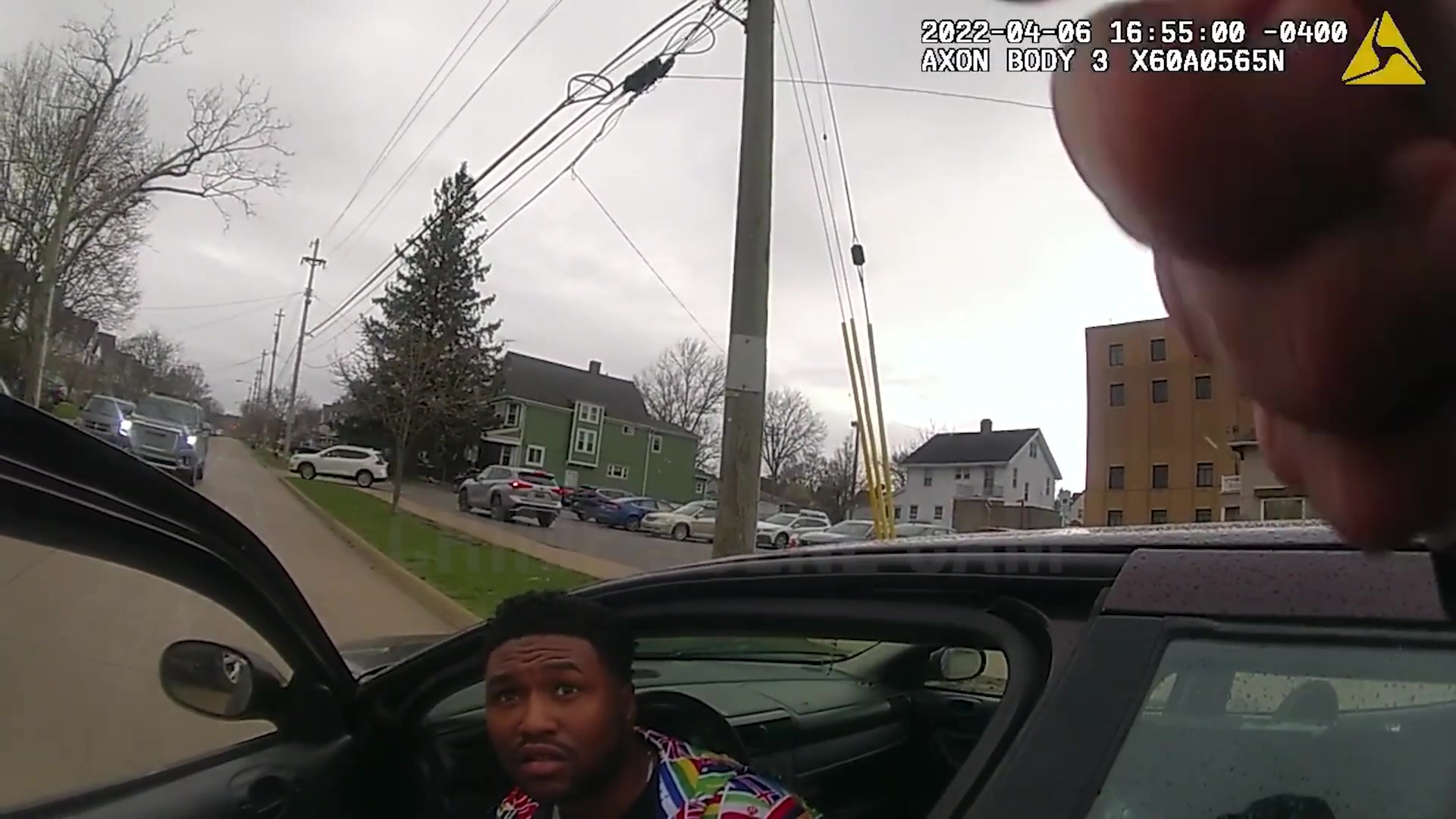
That is what happens in this Lynn, Massachusetts body-camera footage recorded on April 6, 2022. Officers are dealing with a dark sedan that they believe is stolen. A man associated with the vehicle remains at the center of the investigation while police work through his account, check information and decide whether the story in front of them matches what they know about the car.
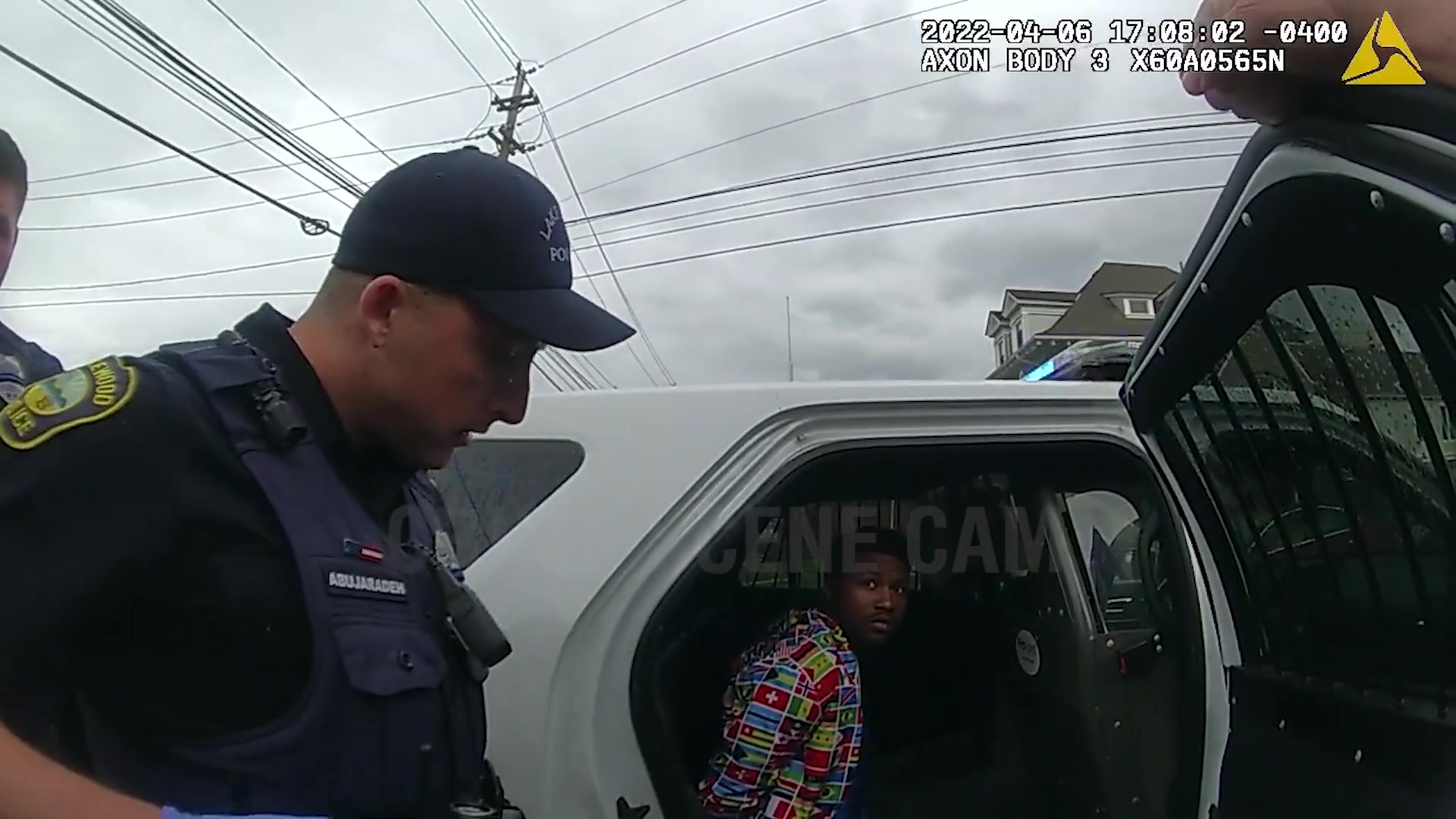
The supplied video is titled “Trying to Outsmart Police in a Stolen Car Goes Wrong.” Its Axon Body 3 overlay gives a precise date and afternoon timestamp. More importantly, a later frame provides a strong jurisdictional identifier: the shoulder patch and cap of one of the responding officers clearly read “Lynn Police.”
That visual clue allows the incident to be placed confidently in Lynn rather than guessed from architecture or street signs.
What the available public record does not provide is equally important. Searches of Lynn Police material, local news archives and web-indexed court reporting did not uncover a sufficiently reliable release matching this exact April 6 stop to a named defendant and final court disposition. The department’s 2022 annual report contains extensive information about its work that year, but the searchable material reviewed does not identify this particular stop in enough detail to safely attach a name.
For that reason, this article does not invent the driver’s identity, the owner of the car, a docket number or a sentence.
Instead, the body-camera footage is treated as the primary record of the encounter, while official Lynn Police sources establish the department and broader law-enforcement context. That approach keeps the most interesting part of the story intact: officers gradually testing a man’s explanation while the stolen vehicle sits only a few feet away.
The Axon Timestamp Fixes the Encounter in April 2022
The body-camera overlay places the incident on April 6, 2022.
The recording is from an Axon Body 3 camera and shows officers working in daylight on a cloudy afternoon.
That timestamp matters because the edited video now circulating online can appear much newer than the event itself. Police footage is frequently obtained through public-record requests and republished long after an arrest.
The original camera date is therefore the best chronological evidence.
By approximately 5 p.m., several Lynn officers are visible around the suspect and a police transport vehicle, showing that the encounter has moved from initial investigation to custody.
The Department Can Be Identified From the Uniform
A particularly clear late-stage frame removes much of the uncertainty about location.
One officer’s shoulder patch reads “LYNN POLICE,” and his cap carries the same department identification.
The uniform is far more reliable than trying to identify a city from houses, utility poles or road layout.
Lynn is a city north of Boston with its own municipal police department. The City of Lynn describes the department as responsible for crime deterrence, investigation, arrests and motor-vehicle enforcement.
That official mission fits the kind of work visible in the footage: officers investigating a vehicle, identifying the person connected to it and determining whether an arrest is appropriate.
The Sedan Becomes the Center of the Investigation
The dark sedan is present throughout much of the footage.
Rather than immediately treating the encounter as finished once they have the man outside the car, officers continue examining the circumstances around the vehicle.
In a stolen-car case, the physical automobile is evidence.
Its registration, vehicle identification number, plates, keys, condition and contents can all help establish how it came to be where officers found it.
The person standing beside it may have a story about borrowing it, buying it, receiving permission to use it or not knowing it was stolen.
Police then have to compare that explanation with dispatch records and whatever the registered owner has reported.
The Man Tries to Explain His Connection to the Car
Much of the tension in the footage comes from conversation rather than force.
The man speaks with officers and appears to offer an explanation for why he is with the vehicle.
This is the moment where a stolen-car investigation can become complicated.
Possession of a stolen vehicle and theft of the vehicle are not automatically the same allegation.
Someone can physically possess a car without being the person who originally took it.
That is why investigators care about knowledge, statements, timing and corroborating evidence.
The bodycam shows officers allowing the man to talk while they continue working through the facts.
Why a Detailed Story Can Help or Hurt
When a person gives police an explanation, every specific detail creates something that can potentially be checked.
Who provided the car?
When?
Where?
Was permission given?
Does the registered owner know the person?
Are there messages or calls that support the story?
Does the key match the vehicle?
Do police records show the car was reported stolen before the person says he received it?
A truthful account can become stronger as details are verified.
An inaccurate account can do the opposite.
The more details investigators can disprove, the harder it becomes for the explanation to resolve the stop.
Police Do Not Need to Argue With Every Claim Immediately
An officer does not have to challenge every questionable statement the moment it is spoken.
Sometimes the more effective investigative approach is to listen.
Allow the person to finish.
Clarify the timeline.
Then compare the account with information already available through dispatch or another officer.
The footage has that feel.
The suspect is given room to speak, while officers maintain control of the scene and continue gathering information.
That makes the encounter less visually dramatic than a pursuit but more interesting as an example of real-time police investigation.
The Scene Remains Controlled
The body-camera footage shows several officers in the area, but the scene is generally controlled.
There is no visible foot chase in the sampled sequence.
There is no collision.
There is no weapon displayed.
The suspect is not surrounded by a chaotic crowd.
That relative calm allows officers to focus on the evidentiary problem rather than an immediate physical threat.
For the viewer, it also makes the suspect’s statements more central to the story.
The question is not whether police can catch him.
The question is whether his explanation can survive verification.
Why Stolen-Vehicle Cases Are Not Always Simple
A car can be reported stolen under many circumstances.
Some are straightforward thefts from a driveway or parking space.
Others involve carjacking, fraudulent purchases, borrowed vehicles that are never returned, rental vehicles, disputes between acquaintances or vehicles passed among several people after the original theft.
The person police eventually find behind the wheel may therefore be several steps removed from the initial taking.
That does not automatically eliminate criminal liability, but it changes what investigators need to prove.
The bodycam encounter is compelling precisely because officers appear to be sorting through that distinction.
The Vehicle’s Status Comes From Police Records
When officers say a car is stolen, that conclusion usually begins with a database entry generated from a prior report.
The registered owner reports the vehicle missing.
Police enter identifying information.
Later, an officer runs a plate or vehicle identification number and receives an alert.
That information can transform an ordinary traffic or street contact into a stolen-vehicle investigation within seconds.
The camera itself cannot display the entire database process, but the officers’ conduct makes clear that the vehicle’s status is driving the encounter.
The Man Is Eventually Placed in Custody
As the investigation progresses, the outcome becomes clearer.
The man is detained and ultimately moved to a police transport vehicle.
A late body-camera frame shows him seated behind the partition while a Lynn officer stands at the open rear door.
That image provides the clearest visual endpoint of the encounter.
Whatever explanation was offered at the roadside did not persuade officers to release him at the scene.
The investigative phase has become an arrest phase.
The Patrol Wagon Changes the Meaning of the Scene
Once a person is inside a caged police vehicle, the encounter has passed an important threshold.
The suspect is no longer simply being asked questions beside a car.
Police have taken physical control of his movement.
Officers can now secure the original vehicle, complete reports and begin the booking process.
The footage captures that transition without needing dramatic narration.
The contrast between the man speaking beside the sedan and later sitting behind the transport partition tells the story visually.
An Arrest Does Not Tell Us the Final Charge
It is tempting to look at a stolen car and an arrest and immediately write that the person was convicted of motor-vehicle theft.
That would go beyond the evidence available here.
Massachusetts law distinguishes among different vehicle-related offenses, and prosecutors decide what charge is supported by the evidence.
Receiving a stolen motor vehicle, larceny of a motor vehicle, unauthorized use and other offenses are not interchangeable labels.
Without the verified complaint from this exact case, this article does not select one and present it as a proven final charge.
The Exact Defendant Has Not Been Reliably Identified
The man’s face is visible in the footage, but facial visibility is not a substitute for documentary identification.
No name should be assigned merely because an arrest log from the same week describes another stolen-car case.
Lynn is a city of more than 100,000 residents and its police department handles many incidents.
A date match alone is insufficient.
A proper identification would require a police report, booking record, court file or official release that also matches the circumstances visible in the video.
That level of corroboration was not found in the public sources reviewed.
Why Nearby Lynn Cases Cannot Be Mixed Into This One
Lynn Police dealt with other serious vehicle incidents during 2022.
For example, later that same month the department pursued an armed suspect from Lynn into Swampscott after officers said the suspect struck officers and police vehicles. Local news outlets reported that April 29 case extensively.
That incident is not this incident.
The dates, behavior and circumstances are different.
This distinction illustrates an important research rule: finding a dramatic news story from the same department and month does not make it the correct match for a supplied video.
The Lynn Police Annual Report Confirms a Busy Year
The department’s 2022 annual report documents a broad range of police activity, investigations, arrests and commendations.
It provides useful institutional context and confirms the uniforms, department identity and active investigative work visible in the supplied footage.
But an annual report is not a substitute for an incident report.
Unless a specific event is highlighted, individual street-level arrests may never appear in the narrative sections.
That appears to be the limitation here.
The department can be verified; the precise defendant and court outcome cannot.
Local News Archives Were Also Checked
Searches of Boston-area outlets and North Shore reporting were conducted using combinations of the date, Lynn Police, stolen vehicle, arrest and body-camera terms.
Those searches returned unrelated vehicle cases and later Lynn pursuits, but nothing that matched the April 6 footage strongly enough to use as the factual backbone of this article.
That negative result is worth explaining.
It prevents a common error in true-crime and bodycam blogging: attaching a real person’s name from an unrelated story simply because the general facts sound similar.
Not Every Arrest Becomes a News Story
A routine stolen-vehicle arrest can be important to the people involved without becoming headline news.
Local television stations are more likely to cover cases involving a violent carjacking, major crash, long pursuit, firearm or serious injury.
An arrest in which officers calmly identify a stolen car and take one person into custody may remain in police and court records without ever receiving a standalone article.
That likely explains why the bodycam can exist even when the incident is difficult to find in newspaper archives.
Bodycam Channels Often Surface Otherwise Unreported Cases
Public-record laws have created an entire ecosystem of police-footage channels.
Creators request body-camera video from agencies, edit the footage and publish encounters that were never covered by traditional media.
That can give the public access to incidents it would otherwise never see.
But it creates a research challenge.
The edited upload may contain a catchy title while omitting the police report number, defendant name or court docket.
A responsible article must resist the temptation to manufacture those missing pieces.
The Viral Title Frames the Suspect as Trying to Outsmart Police
The supplied file’s title says the man tried to “outsmart” police.
That is an editorial interpretation.
What the footage more safely establishes is that he gives officers an explanation while they investigate a vehicle believed to be stolen.
Whether his statements were deliberately deceptive is a conclusion that would ideally be supported by the report or court record.
The title is effective for attracting attention, but the article should use more precise language.
Readers can watch the explanation develop and decide for themselves how convincing it sounds.
Why the Conversation Is the Real Hook
The strongest retention device in this story is uncertainty.
Police believe the car is stolen.
The man is standing right beside it.
But the viewer still does not know exactly how he will explain being there.
Every answer creates another question.
Will officers accept the story?
Can he provide something that verifies it?
Will another person confirm his account?
Will police find evidence that contradicts him?
The bodycam naturally creates those questions without fabricated suspense.
A Strong Article Reveals the Evidence Gradually
Dumping the ending into the first paragraph would weaken the narrative.
The more effective structure begins with the stolen vehicle and the man’s attempt to explain his connection to it.
Then it introduces the date and department.
Next comes the investigative process.
Only after the reader understands why officers are skeptical does the story move toward custody.
Finally, the article explains the limits of the public record.
That structure mirrors how the officers themselves experience the incident: observation, questions, verification and decision.
What the Camera Proves
The supplied footage directly supports several facts.
The incident was recorded on April 6, 2022.
It was captured on an Axon Body 3 camera.
Lynn Police officers were involved.
A dark sedan was central to the investigation.
A male suspect spoke with officers near the vehicle.
Multiple officers participated.
The man was ultimately placed in a police transport vehicle.
Those points do not depend on a later social-media caption. They are visible in the recording.
What Requires More Caution
The footage alone does not establish who originally stole the vehicle.
It does not establish whether the arrested man was the original thief.
It does not provide a final conviction.
It does not prove a sentence.
It does not justify adding a criminal history from another person with a similar arrest date.
Those are exactly the details that should come from external records.
Because the matching records were not located with sufficient confidence, they remain intentionally absent.
Possession and Original Theft Are Different Questions
This distinction is one of the most important legal ideas in the story.
A person found with stolen property may be investigated for knowingly possessing or receiving it even when police cannot prove that person committed the original theft.
Conversely, mere physical proximity to stolen property does not automatically prove knowledge.
Investigators therefore look for surrounding evidence.
Statements, keys, control of the vehicle, timing, behavior, communications and the circumstances of acquisition can all matter.
That is why the roadside conversation is not filler. It can become evidence.
A False Explanation Can Create Investigative Problems
If a person gives officers information that is demonstrably false, the inconsistency can affect how police evaluate the rest of the story.
One false detail does not magically prove every suspected offense.
But it can give investigators a reason to look more closely.
The same principle applies in the opposite direction.
Details that can be independently verified may support an innocent explanation.
The bodycam shows why officers keep asking questions rather than relying only on first impressions.
The Officers Maintain a Methodical Pace
The encounter is notable for its lack of frantic movement.
Officers do not need to chase the man through traffic.
They do not need to force a fleeing vehicle off the road.
Instead, they maintain control while information is checked.
That slower pace gives viewers a clearer look at investigative policing.
Much of police work consists not of dramatic takedowns but of confirming identity, checking records, comparing stories and deciding whether probable cause exists.
The Car Remains Silent Evidence
While the suspect talks, the sedan remains in the background.
It cannot explain how it arrived there.
Its records can.
Its owner can.
Its keys, plates and identification numbers can.
The contrast is useful for storytelling.
The human side of the case is verbal and flexible.
The physical evidence is comparatively fixed.
Investigators are trying to determine whether the two versions of events can coexist.
Why the Lynn Identification Matters
Accurately identifying the department changes the quality of the article.
Without the uniform patch, the footage could be placed almost anywhere in the northeastern United States.
With it, the encounter can be tied to Lynn Police and compared against that department’s official materials and regional reporting.
This is a good example of how small visual clues can guide responsible research.
A shoulder patch can be more valuable than an attention-grabbing title.
Research Should Stop Before Speculation Begins
There is always pressure to make a story feel complete.
Readers want a name.
They want charges.
They want to know what happened in court.
But a complete-looking article built on the wrong defendant is worse than an article that clearly states its limits.
The correct approach is to follow the evidence as far as it goes and stop there.
In this case, the department, date and observable arrest are well supported.
The exact identity and final disposition are not.
The Arrest Is the Practical Ending
By the final phase of the video, officers have reached their decision.
The suspect is seated in the rear of the police vehicle.
An officer stands at the open door.
The street investigation has effectively ended.
The stolen sedan can now be processed separately, and the suspect can be taken through booking.
Whatever legal arguments come later will occur away from the curb.
For the body-camera narrative, this is the point where the man’s roadside explanation has failed to prevent custody.
Why This Incident Works Without a Chase
Many stolen-car videos rely on speed.
This one relies on contradiction and uncertainty.
The car is already stopped.
The suspect is already present.
Police do not need to catch him.
They need to understand why he is connected to a vehicle that their information says should not be in his possession.
That creates a different kind of tension.
The viewer is waiting not for a crash, but for the moment the explanation either works or falls apart.
The Most Reliable Timeline
On April 6, 2022, Lynn Police officers investigated a dark sedan believed to be stolen.
The Axon Body 3 footage records the encounter during the afternoon.
A male suspect speaks with officers near the vehicle and offers information about his connection to it.
Police continue checking the circumstances rather than releasing him immediately.
Multiple Lynn officers become involved.
Later footage shows the man in the rear compartment of a police transport vehicle, confirming that the encounter ended in custody.
Publicly accessible searches did not produce a sufficiently reliable exact-match police release or court record establishing his identity and final case outcome, so those details are not added.
The Larger Lesson Is About Verification
The video’s title suggests someone believed he could talk his way out of a stolen-car investigation.
The broader lesson is about verification.
A story told to police is not evaluated only by how confidently it is delivered.
Officers can compare it with vehicle records, owner statements, identification, dispatch information and physical evidence.
The same principle should govern reporting about the encounter.
A dramatic claim should not be published merely because it sounds plausible.
It should be checked.
That is why this article identifies Lynn Police from the footage but refuses to invent the defendant’s name from an unrelated arrest record.
Watch the Full Encounter
The complete body-camera footage shows the suspect’s interaction with Lynn officers, the stolen-car investigation developing in real time, and the point at which the roadside conversation finally becomes an arrest.
Comments (0)
Loading comments...
May You Like

UCF Student’s Pronoun Dispute With Campus Police Escalates Into an Arrest

West Virginia Man Laughs at Police Officer and Ends Up Arrested
Police Pull Over Paralyzed Driver With Blind Passenger













