
Traffic Stop Turns Into Gunfire After Passenger Points a Weapon at Police
Traffic Stop Turns Into Gunfire After Passenger Points a Weapon at Police
A Defective Tag Light Leads to a Late-Night Stop
At approximately 9:20 p.m. on August 26, 2024, a Muskogee Police officer stopped a vehicle in the 1700 block of North York Street in Muskogee, Oklahoma. The reason was initially routine: police said the vehicle had a defective tag light. Nothing about that reason suggested that the stop would soon become an officer-involved shooting.
The supplied body-camera footage matches the publicly documented incident in several important ways. The AXON overlay shows August 26, 2024 shortly after 9:20 p.m. The video shows four occupants inside the vehicle, a second officer arriving as backup, and the confrontation involving a rear passenger. Those details align with reporting based on information released by the Muskogee Police Department.
The passenger at the center of the incident was identified as 23-year-old Jordan Pierce. Officers did not initially stop the vehicle because of Pierce or because they knew a gun was inside. According to police, the situation changed after officers ran identifying information for the occupants and dispatch advised that Pierce had felony warrants.
That distinction matters because the first several minutes of the footage look like an ordinary nighttime traffic stop. Officers speak with the people inside the vehicle, gather information and wait for records checks. The danger that eventually defines the encounter is not obvious at the beginning.
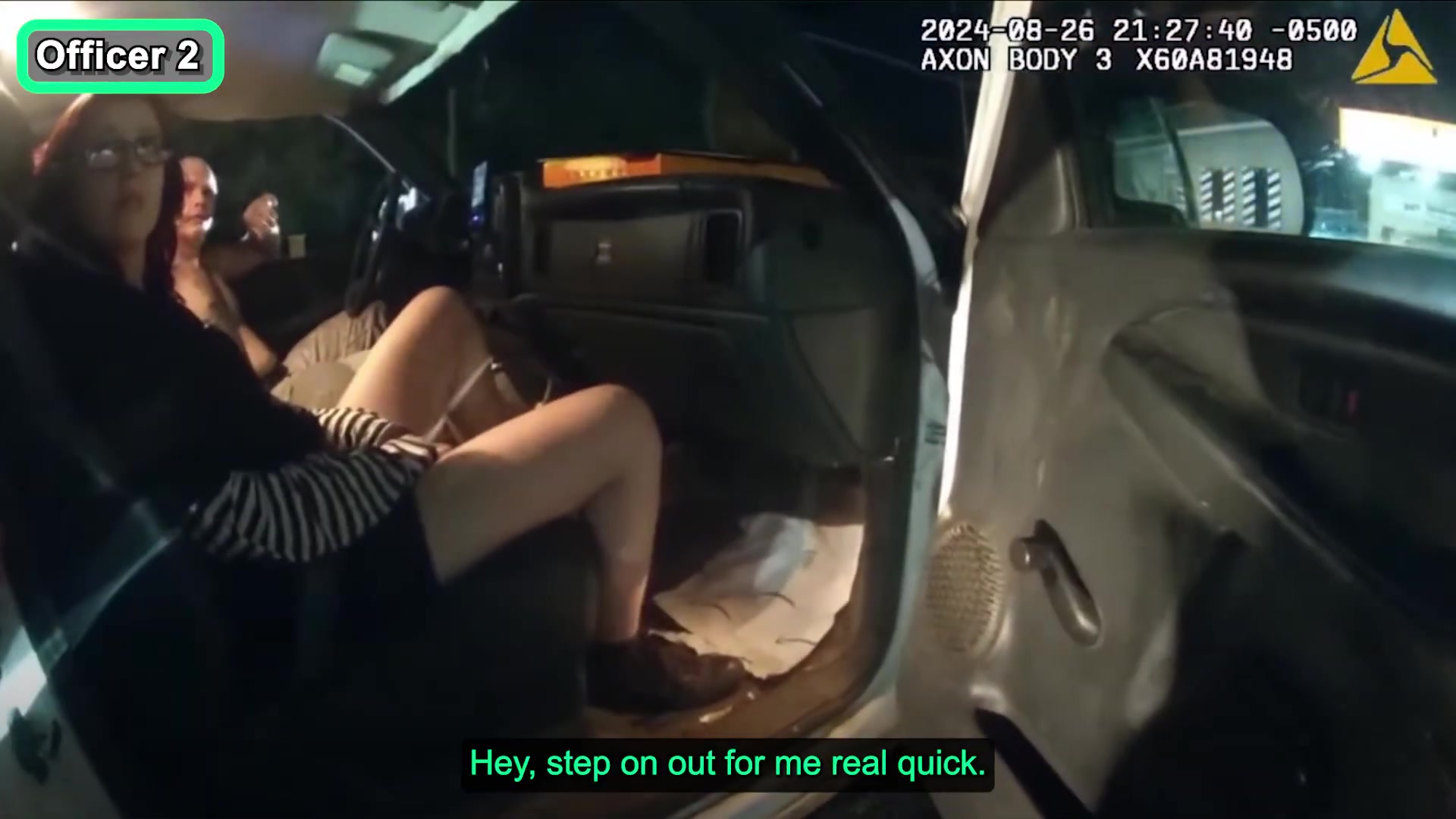
A Records Check Changes the Direction of the Stop
Once dispatch reported the felony warrants, the officers had a new task: remove Pierce from the vehicle and take him into custody. A backup officer arrived, giving the first officer additional support before approaching the rear passenger area.
The body-camera footage shows how quickly the atmosphere changes once officers begin focusing on Pierce. The other occupants remain inside the vehicle while officers move toward the rear door and tell Pierce to step out. The commands are direct, but the officers have not yet begun using physical force.
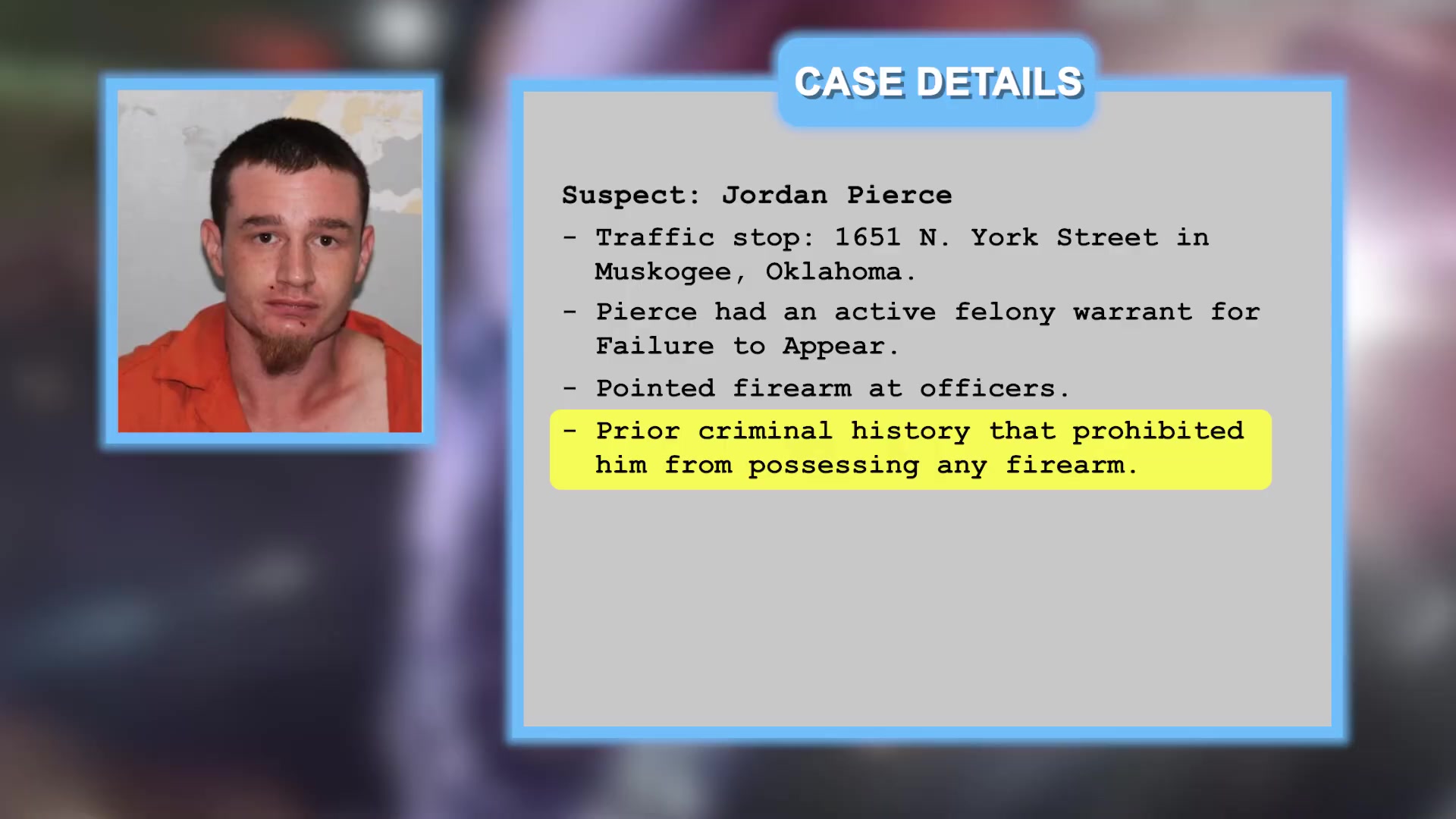
Police said Pierce had an active felony warrant. Contemporary reporting described the warrant as connected to a controlled-substance case. The video itself also contains a later graphic identifying Pierce and stating that he had a felony failure-to-appear warrant. Because public accounts vary in the shorthand used to describe the warrant, the safest description is that officers learned he was wanted on felony process and moved to arrest him.
For officers, removing a wanted passenger from a crowded vehicle creates practical risks. Visibility is limited, hands can disappear below seats or behind other occupants, and officers may not know whether weapons are present. Backup can help cover different angles and reduce the chance that one officer has to control several people at once.
Pierce Refuses to Leave the Vehicle
The encounter becomes more tense when Pierce does not simply step out. Officers continue directing him to exit. The footage shows Pierce seated in the rear area while officers remain close to the open door, trying to move the arrest forward.
This is an important point in the sequence because the officers are now operating with two pieces of information: Pierce is wanted on felony process, and he is resisting the straightforward instruction to come out of the vehicle. Neither fact alone reveals what he is about to do, but together they increase the officers' attention to his movements.
The vehicle itself makes the situation more difficult. Pierce is seated among other occupants, and the interior is dark. Officers cannot see every part of his body at every moment. When a person inside a vehicle refuses to exit, officers must decide whether to continue verbal commands, open the door, reach inside or use another method to gain control.
The video shows officers continuing the verbal approach before the decisive moment. Their goal is still to remove Pierce and place him under arrest. Within seconds, however, the encounter stops being primarily about the warrant.
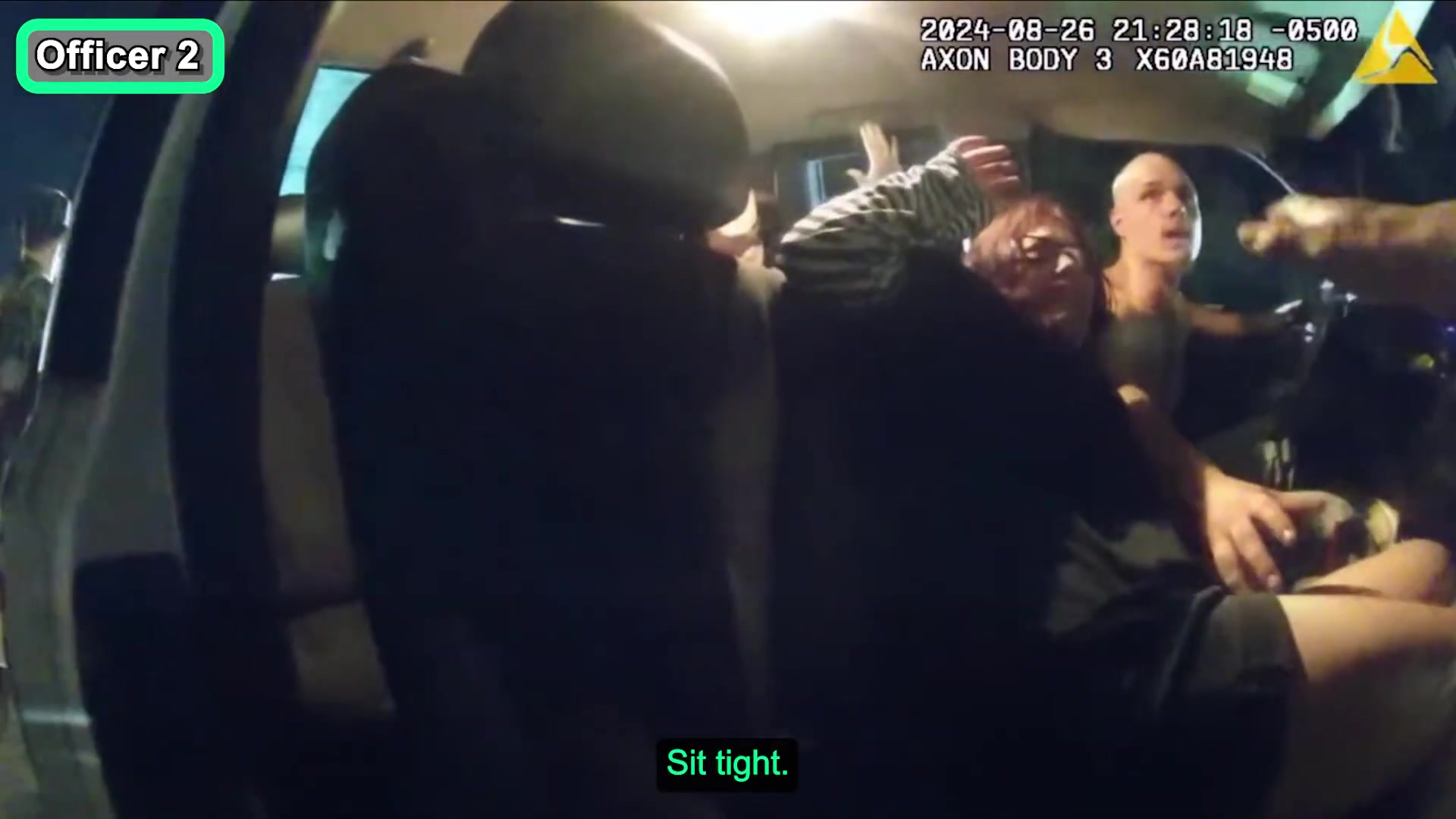
The Rear Door Opens and a Gun Appears
According to the Muskogee Police Department, when the backing officer approached the rear passenger side and the door was opened, Pierce turned toward the officers and pointed a firearm at them. The body-camera footage captures the sudden movement at extremely close range.
This is the critical moment behind the original title, “This Is What Happens When You Pull a Gun on Police.” The title is dramatic, but the underlying event is supported by the police account and the released video: officers said Pierce presented a handgun toward them while they were attempting to remove him from the vehicle.
The officers immediately fired. KJRH reported that police said seven shots were fired at Pierce. The exchange happens so quickly that a viewer watching in real time may have difficulty tracking the gun, the officers' movements and the positions of the other occupants simultaneously.
Police said Pierce did not fire his weapon. That fact is important. The officers' shooting was a response to what they said was the presentation and pointing of the gun, not an exchange in which Pierce successfully fired rounds back at them.
The close quarters also created obvious danger for everyone else in the vehicle. Three other people were sitting only feet away from Pierce when officers opened fire. Police later said none of those three occupants was struck by gunfire.
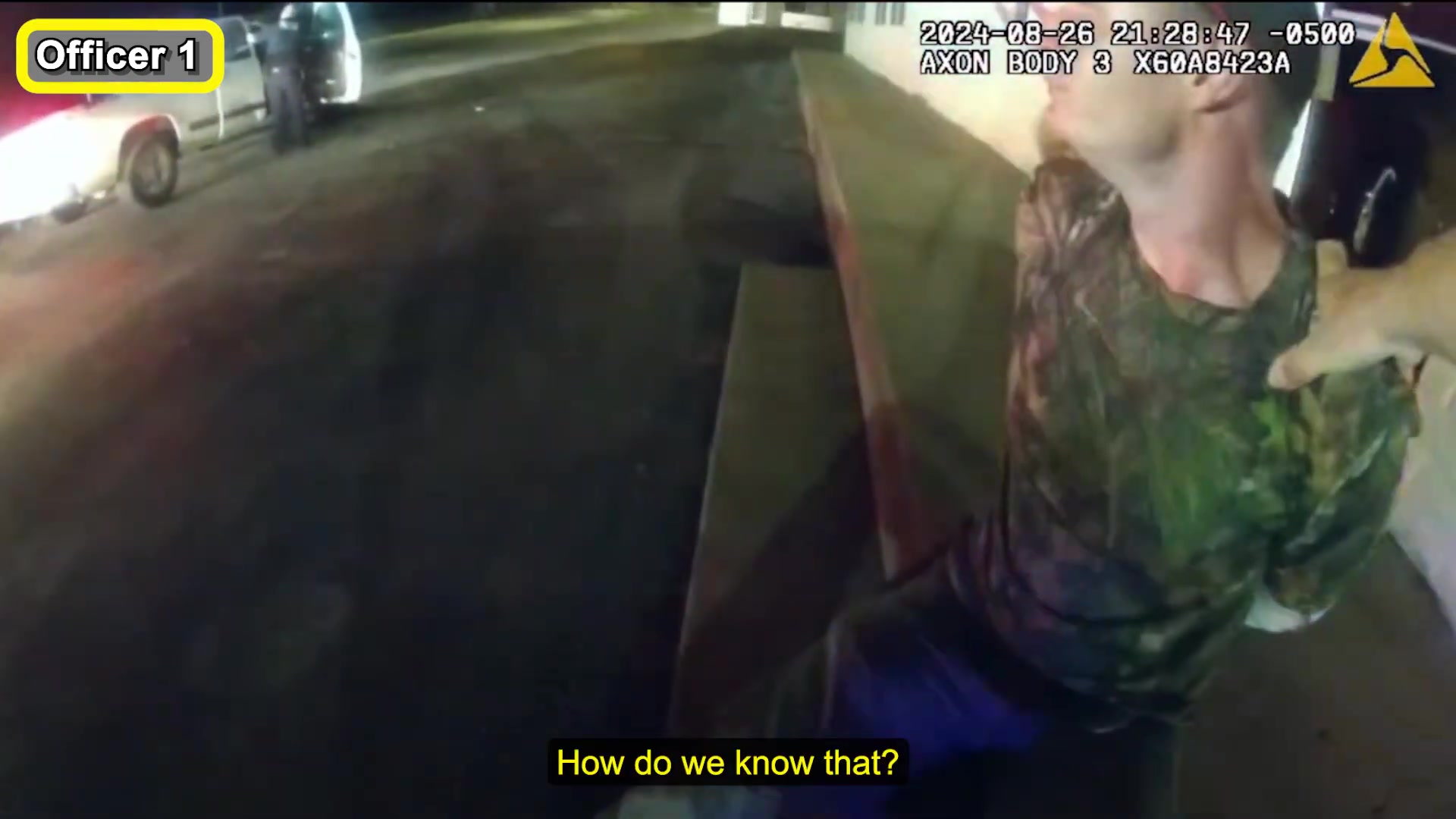
A Few Seconds Transform the Entire Scene
Immediately after the shots, the officers' priorities change again. What began as a traffic stop, became a warrant arrest and then became an armed confrontation is now also a medical and scene-security emergency.
Pierce was struck at least once. Later reporting said the injury was to his hand or finger. Officers continued issuing commands while trying to determine whether the firearm was secure and whether Pierce remained a threat.
The footage is chaotic for a reason. Officers have just fired in close proximity to a vehicle containing several people. They need to control Pierce, keep the other occupants from making unexpected movements, locate the gun, check for injuries and summon appropriate medical assistance.
One of the other occupants was reported to have suffered a minor injury and was taken to Saint Francis Muskogee. Police said that person later declined treatment. The other occupants were not reported as having been hit by the officers' gunfire.
The two officers involved were not injured. As is common after an officer-involved shooting, both were placed on routine paid administrative leave while the shooting was investigated.
Pierce Survives and Is Taken Into Custody
Pierce survived the shooting. Police transported him to a Tulsa hospital, where he was treated before being released back into law-enforcement custody. He was then taken to the Muskogee County jail.
The survival outcome is worth stating clearly because a headline about police firing multiple rounds can easily leave readers assuming the person was killed. In this case, public reporting consistently states that Pierce survived and was medically cleared before being booked.
KJRH reported that Pierce was charged with feloniously pointing a firearm and was being held without bond at the time of its report. Other reporting based on the initial police release listed complaints including assault and battery with a deadly weapon and possession of a controlled dangerous substance with intent to distribute. Those differences reflect different stages or descriptions of the case, so this article does not collapse every early allegation into a single final court outcome.
An arrest complaint or initial charge is not the same thing as a conviction. The body-camera video verifies the confrontation, and police reporting verifies the arrest and immediate allegations. A final sentence or conviction should only be added when a reliable court record establishes it.
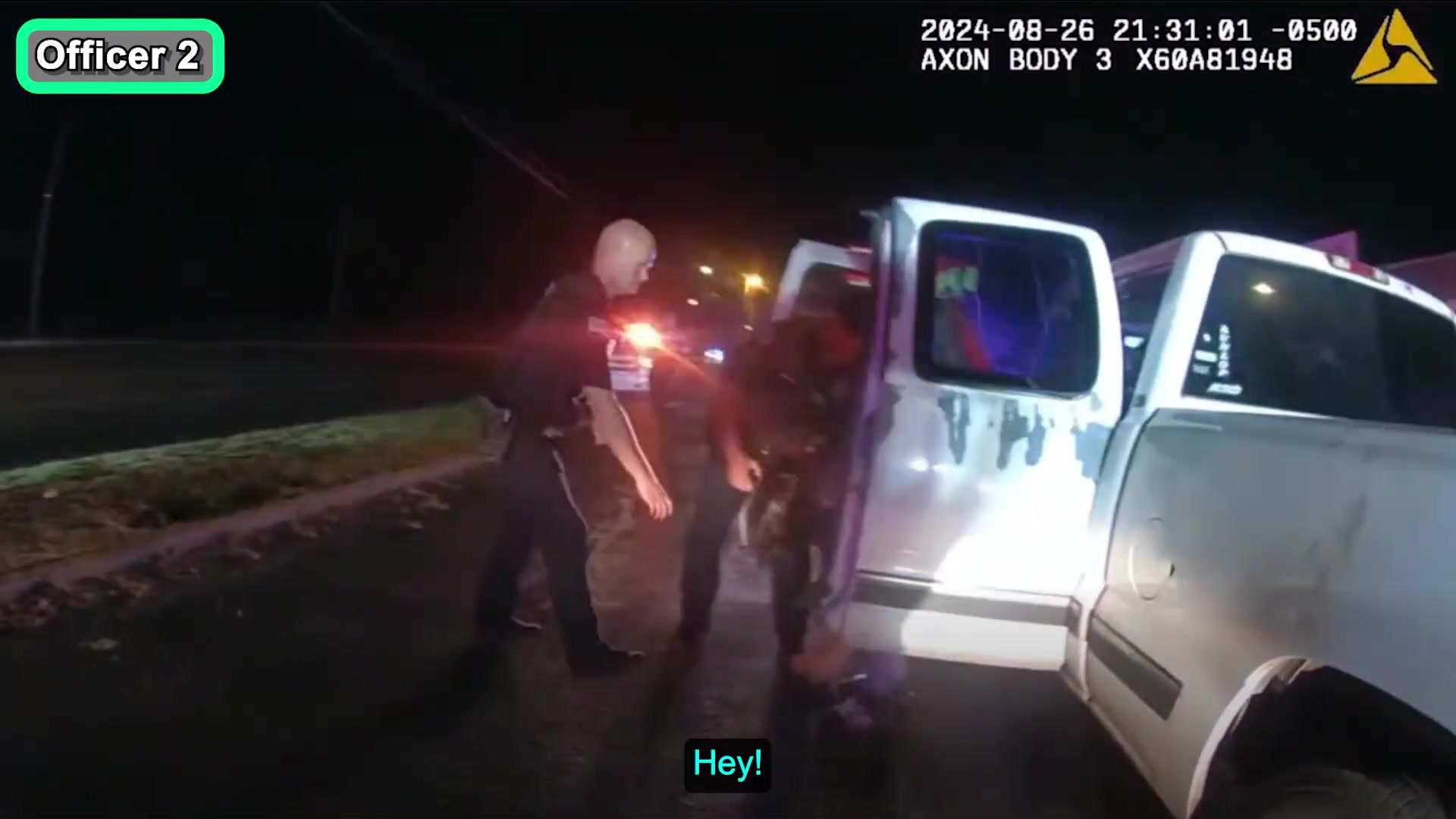
Investigators Say More Guns Were Found in the Vehicle
The investigation did not end with the handgun associated with Pierce. Muskogee police said additional firearms were found inside the vehicle. KJRH reported that police described two other guns as stolen.
A later account of the department's presentation said investigators recovered another stolen gun and a sawed-off shotgun from the vehicle. Those discoveries gave detectives additional questions about who possessed the weapons and whether other occupants could face charges.
Police said they were investigating possible charges involving the other people in the vehicle. At the time of the initial reports, however, the other passengers had not necessarily been charged simply because firearms were found nearby.
That distinction is important in a vehicle with several occupants. Physical proximity to contraband does not automatically establish legal possession by every person inside. Investigators typically look at ownership, statements, fingerprints, location of the item and other evidence before determining who can be charged.
The footage itself should therefore not be used to assign ownership of every recovered weapon to a particular passenger unless police or court records establish that connection.
Police Reject Pierce's Explanation for the Gun Movement
One of the most unusual details emerged after the shooting. According to reporting on the police department's presentation, Pierce told investigators that he had been trying to hand the firearm to officers rather than threaten them with it.
Muskogee Deputy Chief Chad Farmer publicly rejected that explanation. He pointed to the way the handgun was presented and the condition of the weapon, arguing that a loaded pistol with the hammer cocked back would not reasonably be handed barrel-first toward officers.
That disagreement highlights why body-camera footage becomes central evidence. Pierce's explanation describes his claimed intent, while the officers' video records his physical movement from their perspective. Investigators and, if necessary, a court must evaluate those pieces of evidence together.
It is also important to separate intent from immediate threat assessment. Officers facing the muzzle of a firearm at close range do not have the luxury of waiting for a later explanation before deciding whether they believe they are in danger. Their decision occurs in the seconds captured on camera.
At the same time, a responsible account should report Pierce's claimed explanation when it is part of the public record rather than pretending no competing account exists.
Why the Officers' Reaction Happened So Quickly
Police shootings involving a displayed firearm often unfold faster than viewers expect. At close range, the time required to recognize a weapon, decide that it is being pointed and respond can be measured in fractions of seconds.
In this incident, officers were standing directly beside the rear passenger door. They were not observing Pierce from across a parking lot or behind substantial cover. Once the gun appeared, the distance between the muzzle and the officers was extremely short.
The other occupants also complicated the officers' options. Moving backward, changing angles or attempting to physically grab the gun could expose both officers and passengers to additional danger. The video shows why the shooting cannot be understood as a decision made after a long standoff. It happens during a sudden transition from arrest commands to an apparent firearm threat.
This does not mean body-camera footage answers every legal question automatically. Officer-involved shootings are reviewed using the totality of circumstances, including what officers knew beforehand, what they perceived at the moment force was used and what other evidence establishes. But the short distance and rapid presentation of the firearm are central facts in understanding the officers' response.
Muskogee Police Use the Video as Part of a Transparency Process
After the shooting, the Muskogee Police Department released the body-camera footage and presented the incident to community leaders. KJRH reported that the department first showed the material internally and then shared it with city officials and community representatives before broader public release.
Police Chief Johnny Teehee described that approach as part of what the department calls the “Muskogee model,” a process intended to explain officer-involved shootings and allow community leaders to see the evidence surrounding them.
Among those attending the presentation was Dr. Rodger Cutler, a local pastor and president of the Muskogee NAACP branch. KJRH reported that Cutler emphasized the value of the department's established relationships and its willingness to show community representatives the footage.
Transparency does not eliminate the need for an investigation, and releasing video does not itself determine whether every action was lawful. It does, however, allow the public to compare official descriptions with the recorded sequence rather than relying only on a written statement.
In this case, the footage provides unusually direct evidence of how a minor equipment violation developed into a confrontation involving a wanted passenger and a handgun.
The Traffic Violation Was Minor, but the Warrant Was Not
The contrast between the beginning and the end of this incident is striking. A defective tag light is a small vehicle-equipment issue. Had the occupants' records checks revealed nothing significant, the stop might have ended with a warning or citation.
Instead, the records check identified Pierce as wanted on felony process. That discovery changed the officers' legal and tactical responsibilities. They could no longer treat him as simply another passenger who would leave once the traffic matter was complete.
The warrant led officers to attempt an arrest. Pierce's refusal to exit prolonged that process. The presentation of the firearm then transformed the encounter into an immediate deadly-force situation from the officers' perspective.
This sequence is a reminder that the seriousness of a police encounter is not always determined by the reason the vehicle was first stopped. A minor traffic violation can reveal a warrant, a stolen vehicle, contraband or another issue that officers could not have known about before making contact.
It also demonstrates why titles should not imply that police fired simply because someone possessed a gun. According to the department, the decisive action was that Pierce pointed the weapon toward the officers at close range.
What the Video and Reporting Establish With Confidence
Several facts can be stated with strong confidence because the supplied video and public reporting align. The stop occurred in Muskogee, Oklahoma, on August 26, 2024 at about 9:20 p.m. It began because of a defective tag light. Four people were inside the vehicle. Officers learned that rear passenger Jordan Pierce, 23, was wanted on felony process.
When officers attempted to remove Pierce, police said he turned toward them and pointed a handgun. The officers fired multiple rounds. Pierce did not fire the weapon. He was wounded but survived, received hospital treatment and was booked into jail.
The other three occupants were not struck by gunfire, although one reportedly had a minor injury and declined treatment after being taken to a hospital. Neither officer was injured. Additional firearms were recovered from the vehicle, and police said at least some of those guns were stolen.
The footage also contains a later case-summary graphic naming Pierce and describing the traffic-stop location as 1651 N. York Street. Contemporary police reporting more broadly described the stop as occurring in the 1700 block of North York Street. Those descriptions are geographically consistent rather than evidence of two different incidents.
What should not be invented is a later conviction, sentence or final disposition unless supported by court records. The available sources strongly verify the incident and immediate charges, but this article keeps later legal outcomes separate from the documented body-camera sequence.
A Routine Stop Becomes a Life-or-Death Decision in Seconds
The most compelling part of the footage is not the number of shots or the dramatic title. It is the speed of the transition. For several minutes, officers are handling a traffic stop. Then dispatch information turns one passenger into a wanted person. Officers move to arrest him. A handgun appears, and the entire scene changes almost instantly.
Pierce survived, and the officers survived. The other passengers were also spared gunshot injuries despite being only feet from the confrontation. Given the confined space and the number of rounds fired, that outcome could have been very different.
The full video also provides context that a short viral clip cannot. Viewers can see that officers did not begin the stop knowing they would encounter an armed wanted passenger. They can see the effort to remove Pierce, the cramped interior of the vehicle and the sudden movement that prompted gunfire.
At the same time, later reporting adds details the camera alone cannot establish: Pierce's identity, his warrant status, the additional firearms recovered, his hospital treatment, the charges announced by police and his later claim that he was trying to hand over the gun.
Taken together, the footage and verified reporting tell a more precise story than the original headline. This was not simply a generic example of what happens when someone “pulls a gun on police.” It was a specific Muskogee traffic stop in which officers attempted to arrest a wanted passenger and, according to police, suddenly found a loaded firearm pointed toward them at close range.
The encounter is a strong reminder of how quickly the risk level of a traffic stop can change. A broken tag light brought the vehicle to the roadside. A records check uncovered a warrant. A refusal complicated the arrest. And one movement with a handgun turned an otherwise routine stop into an officer-involved shooting.
Comments (0)
Loading comments...
May You Like

Traffic Stop Turns Deadly After Man Steps Out of Stolen Car

COP SLAMS INTO PULLED OVER TRUCK

MERIDEN POLICE OFFICER SHOOTS MAN BEATING FATHER WITH A BASEBALL BAT













