Traffic Stop Erupts Into Gunfire After Armed Robbery Suspect Flees Police
Traffic Stop Erupts Into Gunfire After Armed Robbery Suspect Flees Police
A High-Risk Stop Begins in Downtown San Francisco
Late on May 31, 2026, San Francisco police officers were not approaching an ordinary traffic violation. According to the San Francisco Police Department, a license-plate reader had alerted officers to a vehicle associated with an armed robbery entering San Francisco from the Bay Bridge. At approximately 10:29 p.m., that information was broadcast to patrol units. Officers later located the vehicle, occupied by two people, traveling near Fifth and Folsom streets.
The supplied body-camera footage aligns closely with the official timeline. Its AXON overlay shows May 31, 2026, and the recording reaches approximately 10:46 p.m. during the most intense portion of the encounter. Those details match SFPD's account of an officer-involved shooting at about 10:46 p.m. on Bayshore Boulevard near Jerrold Avenue.
Police did not immediately rush the vehicle. SFPD said units followed while officers coordinated resources, including a drone, and developed a plan for a high-risk vehicle stop. At about 10:40 p.m., officers initiated that stop around Mission and First streets. In the footage, officers can be heard issuing commands from positions of cover. The approach reflects the information they had received: the car was believed to be connected to an armed robbery, so officers had reason to treat its occupants as potentially armed.
The distinction matters. A high-risk stop is designed to create distance, control movement and reduce the need for officers to walk directly up to a vehicle whose occupants may pose a serious threat. Commands are typically used to have occupants exit in a controlled sequence. Here, however, the plan did not produce a peaceful detention. The driver failed to yield to those commands and drove away.
The Driver Flees and the Encounter Becomes a Pursuit
Once the vehicle left the attempted stop, the incident changed immediately. SFPD said several units pursued it through multiple police districts. The footage captures the urgency of that transition: officers who had been holding positions during the stop are suddenly moving, communicating and trying to maintain awareness of a fleeing vehicle in a dense city environment.
A pursuit is never simply a matter of following the car in front. Officers have to communicate direction of travel, traffic conditions, speed, hazards and changes in the suspect vehicle's behavior. Supervisors and pursuing officers also have to weigh the danger of allowing a potentially armed robbery suspect to escape against the risks created by a pursuit itself.
The pursuit eventually moved toward Bayshore Boulevard. According to SFPD's June 9 presentation, the suspect vehicle came from Potrero Avenue onto Bayshore Boulevard and collided with the left-side concrete median. The crash disabled the vehicle south of Jerrold Avenue. That collision gave officers another opportunity to contain the occupants, but it also created an unpredictable situation: officers knew the people inside had just fled a high-risk stop and were associated with an armed-robbery investigation.
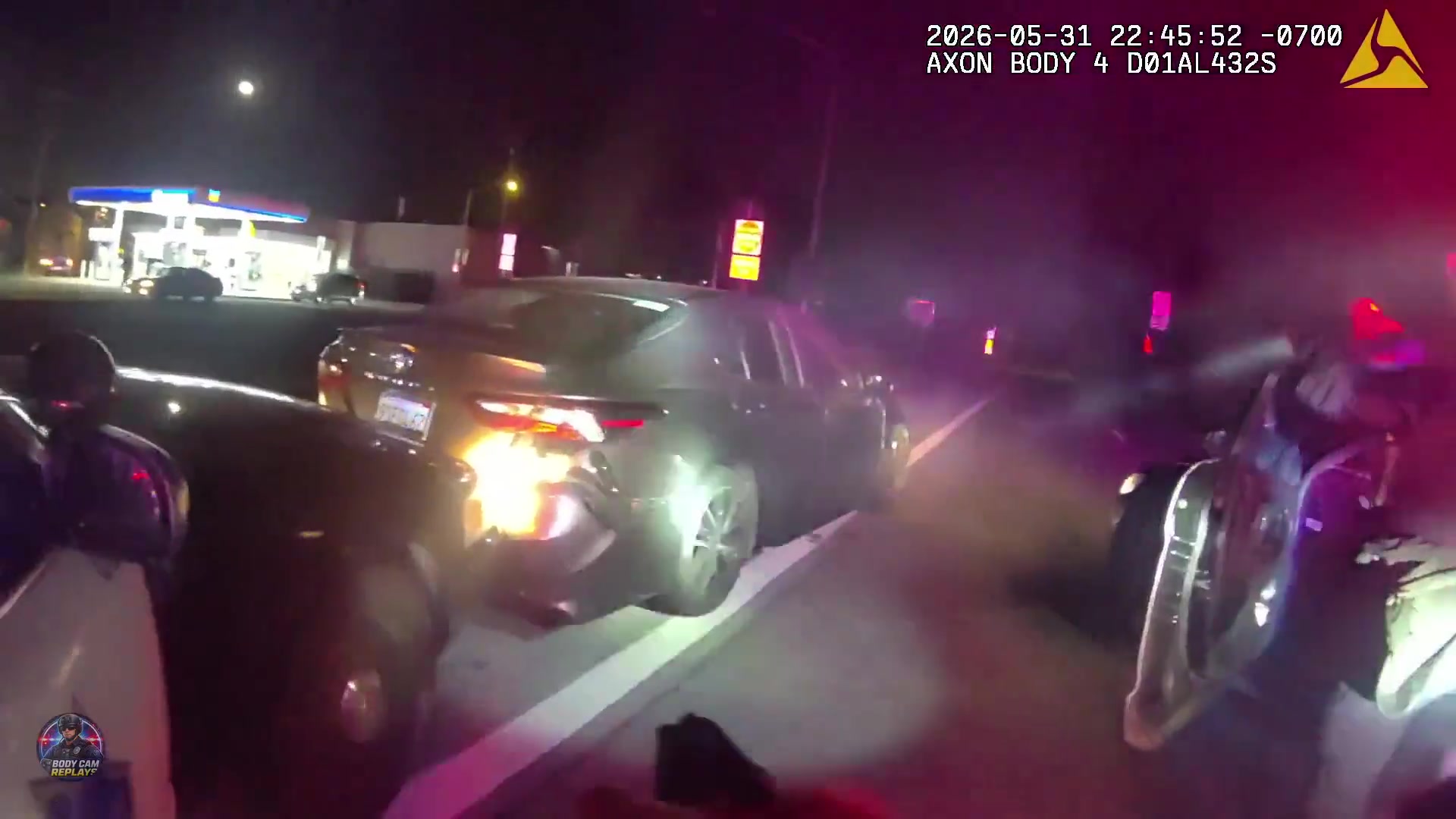
The body-camera footage shows patrol cars arriving and officers establishing positions around the disabled vehicle. Their commands are direct and repeated. At this stage, the objective is visible even without knowing the later outcome: keep distance, control the occupants' movements and bring them out of the vehicle without forcing officers into a close-range confrontation.
Seconds After the Crash, Gunfire Breaks Out
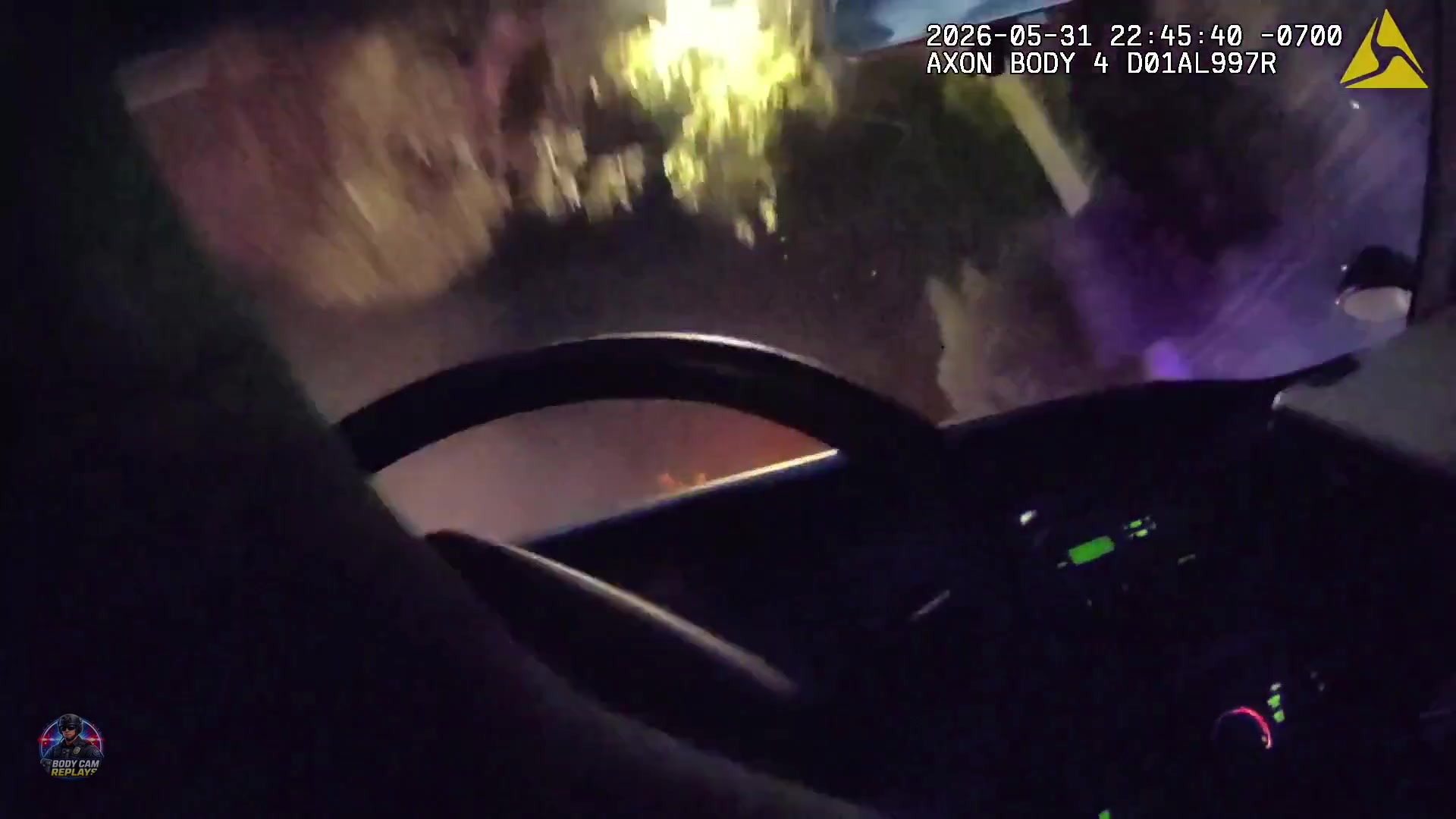
The encounter then changes with extraordinary speed. SFPD's official account says officers instructed the occupants to come out with their hands raised. Seconds later, the driver emerged and immediately fired at officers. Police returned fire.
This is the moment that transforms the incident from a pursuit and high-risk stop into an officer-involved shooting. The footage is chaotic. Body-worn cameras move with the officers wearing them, so the view is not a fixed surveillance angle. Lights flash across the roadway, commands overlap, and officers react to a threat unfolding only yards away.
SFPD said one officer was struck by gunfire. Later reporting identified that officer as Brittany Taylor. CBS San Francisco reported that Taylor was struck multiple times and was hospitalized with serious injuries. The department's presentation also identified three officers who discharged their weapons during the exchange: Rachel Carranza, Jeremmy Catiller and Angela Maniego.
A passenger in the suspect vehicle was also struck during the exchange. SFPD later identified that injured passenger as Ariunsanaa Dolgorsun. The precise path of every round and the complete chronology were still under investigation when the department held its public town hall, and SFPD explicitly cautioned that its understanding could change as evidence was analyzed.
That caution is important when interpreting body-camera video. The footage provides a powerful view of what individual officers experienced, but no single body camera necessarily captures every shooter, every round or every movement. Investigators typically combine body-camera footage with physical evidence, firearm examinations, scene mapping, witness accounts and other recordings before reaching detailed conclusions.
Officers Switch From a Gunfight to Emergency Medical Aid
One of the most striking parts of the incident comes immediately after the gunfire. The same officers who have just been involved in a lethal-force encounter have to change roles almost instantly. The immediate priorities become locating the fleeing driver, securing weapons, protecting the scene and treating the wounded.
SFPD said officers rendered emergency medical aid to both the wounded officer and the injured passenger. A tourniquet was applied to the officer, while a chest seal was used on the passenger. Rather than waiting for the scene to become completely static, officers transported both injured people to a hospital in police vehicles.
That response illustrates an important part of modern police critical-incident procedure. Once an immediate threat is controlled or separated from injured people, preserving life becomes a priority regardless of whether the injured person is an officer, a suspect or another occupant. Tourniquets can be crucial for severe extremity bleeding, while chest seals are used for certain penetrating injuries to the chest. The footage's frantic movement after the exchange reflects how quickly officers must transition from threat response to trauma care.
CBS reported that Officer Taylor was expected to survive after undergoing treatment. The passenger was also hospitalized with life-threatening injuries according to the initial police account. Those medical outcomes are part of the verified reporting; the body-camera footage itself cannot establish the full extent of either person's injuries.
The Driver Runs and a Search Spreads Through the Area
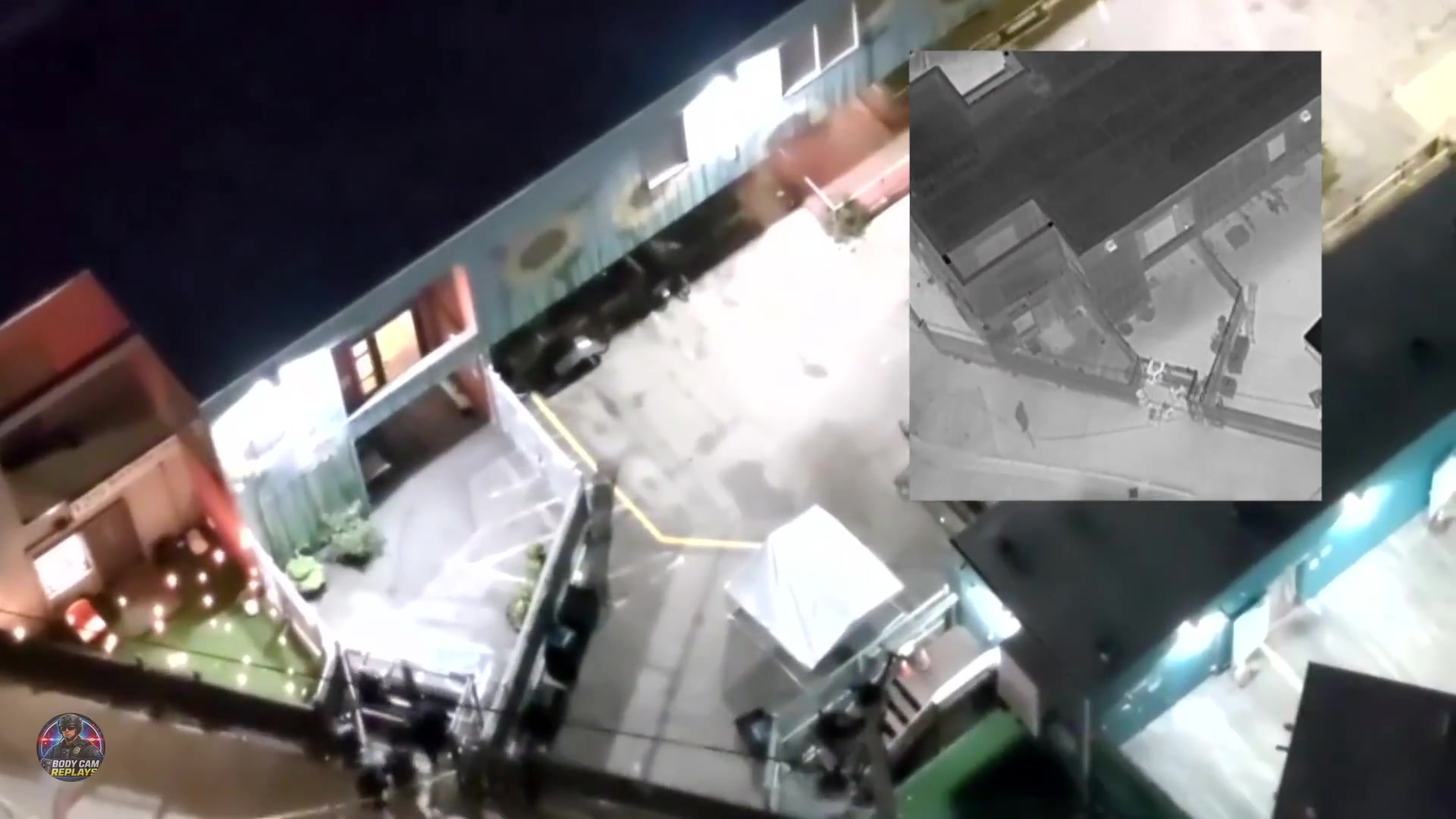
The shooting did not end the incident. SFPD said the driver fled on foot across Bayshore Boulevard, moved through a Chevron station parking lot and continued eastbound on Jerrold Avenue. Officers therefore faced a second major problem: an armed suspect who had allegedly just fired at police was now moving through the surrounding area.
Additional officers responded and began searching. The department later identified the driver as 36-year-old Norris Reed III. He was found in the area of Bayshore Boulevard and Costa Street and taken into custody without further gunfire. Police said two firearms were recovered in connection with the incident.
The search phase is less visually dramatic than the exchange of gunfire, but operationally it is critical. Officers cannot assume a fleeing armed person has discarded a weapon, and they have to consider nearby residents, businesses, passing drivers and other officers entering the search area. Establishing a perimeter and communicating an accurate description can prevent both escape and mistaken identification.
The fact that Reed was ultimately arrested without another violent confrontation also matters. The force used during one moment of an incident does not dictate what must happen later. Once circumstances change, officers are expected to reassess the threat in front of them. According to SFPD, Reed's eventual arrest occurred without incident.
What the Footage Shows and What the Investigation Must Decide
The supplied video strongly matches the May 31 San Francisco incident because multiple independent details line up: the AXON date, the approximately 10:46 p.m. timestamp at the critical moment, the nighttime urban setting, the high-risk vehicle stop, the pursuit, the disabled suspect vehicle, the gunfire and the subsequent search. SFPD's official release and public town-hall presentation provide the most authoritative account available for the broader sequence.
Still, there is a difference between identifying an incident and declaring every legal or factual question resolved. SFPD described its information as preliminary and said the shooting was being investigated by several entities, including the San Francisco District Attorney's Office, the department's Investigative Services Division and Internal Affairs Division, as well as the Department of Police Accountability.
That multi-layer review is significant because an officer-involved shooting involves more than determining whether a firearm was discharged. Investigators examine what officers knew before the encounter, what commands were given, when the threat emerged, which officers fired, the direction and timing of gunfire, and whether each use of force complied with law and policy.
The footage provides unusually direct evidence of the danger officers faced when the driver exited the disabled vehicle. But responsible analysis should remain tied to verified facts. The official account says the driver fired first and struck an officer, while officers returned fire and a passenger was also hit. Those are the facts publicly reported by SFPD at the time of its June briefing; any later judicial findings should be treated separately from the initial police narrative.
A Traffic Stop That Became a Fight for Survival
Viewed from beginning to end, this incident is not simply a traffic stop that unexpectedly became violent. Officers were already dealing with a vehicle associated with an armed robbery, which is why they attempted a high-risk stop rather than a routine roadside approach. The driver then fled, the car crashed and officers tried once again to bring the occupants out under controlled commands.
The decisive moment came when the driver exited and, according to SFPD, immediately opened fire. One officer was critically wounded. Police returned fire, an occupant of the vehicle was wounded, and the driver escaped on foot before being captured nearby.
What makes the footage so intense is the speed of those transitions. Officers move from surveillance to a high-risk stop, from a stop to a pursuit, from a crash to shouted commands, from commands to gunfire, and from gunfire to emergency medicine and a manhunt. Each phase creates a different tactical problem, and each arrives before the previous one has fully settled.
The incident also shows why a short clip of the shooting cannot tell the entire story. The information officers received before the stop explains their initial caution. The flight explains the pursuit. The crash explains the second containment attempt. The driver's alleged gunfire explains the officers' immediate response. And the medical treatment and later arrest show how quickly the mission changes once the immediate threat moves away.
SFPD's release of body-camera footage and a detailed public presentation gives viewers a chance to compare what individual cameras recorded with the department's preliminary reconstruction. That transparency does not replace an independent investigation, but it gives the public more evidence with which to understand an encounter that unfolded in seconds and left two people seriously injured.
For anyone watching only the moment shots are fired, the encounter can seem sudden and almost impossible to follow. Watching the full sequence makes the progression clearer: officers identify a robbery-linked vehicle, attempt a controlled stop, pursue it after the driver flees, surround it after a crash, and then face gunfire when the driver emerges.
The final arrest ends the immediate danger, but the official reviews continue beyond the last frame of body-camera video. That is where policy, forensic evidence and legal standards are applied to the split-second decisions captured on camera.
Comments (0)
Loading comments...
May You Like

🚨⛽ Man Caught in a Disturbing Incident at a Gas Station | Police Respond US

Neighborhood Grocery Store Suddenly Erupts Into Chaos
Entitled Teen REFUSES To Exit Vehicle, Takes Off On Police Instead