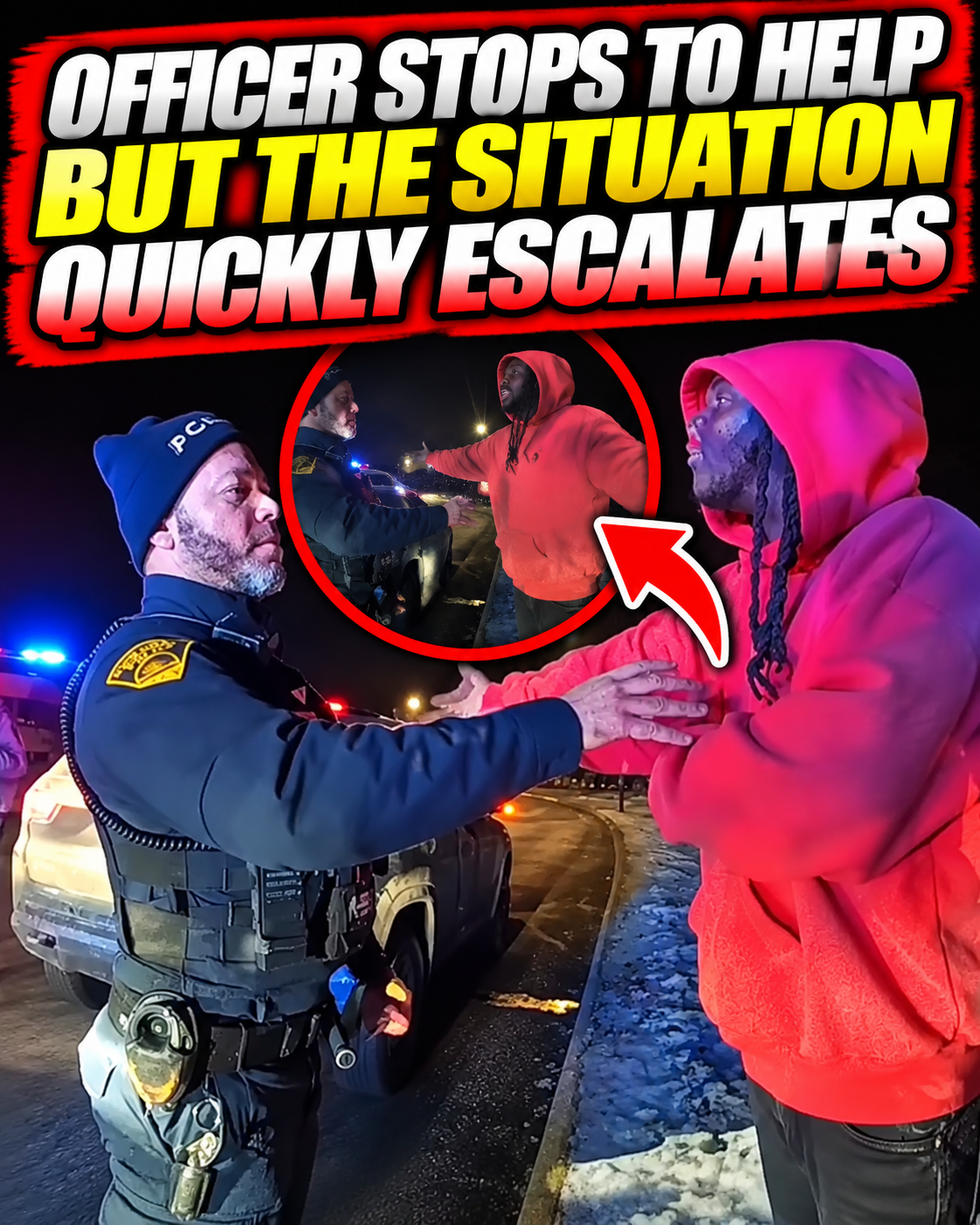
TikTok Video Frames Ex-Confrontation Near Police Bodycam
A TikTok post from @luck11235 presents a tense encounter involving a man in red clothing, a silver sedan and police body-camera footage. The clip is labeled “Part 1” and offers little verified context beyond its date and setting.

What the post presents
A TikTok video from @luck11235 centers on a man wearing a red tracksuit as he stands beside a silver sedan in a residential complex. Text attached to the post describes the scene as an “Angry Ex” snapping in front of police and calls the decision a “BAD Idea.” The video is labeled “Part 1,” signaling that the account intends the clip to be the opening segment of a longer account.
The footage is presented as police body-camera video rather than ordinary phone video. Its on-screen recording data identifies an Axon Body 3 camera and marks the recording April 25, 2025, at 10:18:20 a.m. Central time. The visible setting includes low-rise homes, parked vehicles and a paved residential roadway.
Why the encounter matters
The post’s central premise is that a dispute involving former partners is unfolding while officers are present. The frame does not establish what led officers to the location, whether the man was speaking to someone inside the sedan or what happened after the recording began. It also does not identify the people involved or indicate whether anyone was arrested, cited or injured.
That missing context is important. A short body-camera excerpt can capture only one moment in a larger call for service, and captions added by social-media accounts may emphasize conflict without supplying the underlying police report or court record. The available material supports describing the encounter as a tense domestic or relationship-related scene, but not drawing conclusions about alleged conduct.
How body-camera footage is used
Police body cameras are designed to document officers’ interactions during calls, investigations and arrests. The recordings can preserve statements, movements and environmental details that may later be reviewed by supervisors, prosecutors, defense attorneys or courts. They can also be released publicly under state open-records laws, although access rules differ widely across the country.
A body-camera timestamp can help establish when a recording was made, but it does not by itself prove that every moment of an encounter was captured. Cameras may begin recording after officers arrive, stop for technical or policy reasons, or omit events outside the camera’s field of view. Audio, when available, is also essential to understanding what people said and why officers responded as they did.
What viewers should keep in mind
The clip appears aimed at viewers who follow police encounters, relationship disputes and serialized social-media video. Its “Part 1” format encourages viewers to continue to later installments, but no additional events are established in the material available for this report. The account does not provide, in the supplied post information, a case number, police agency, location or official explanation.
For that reason, the video is best treated as an excerpt framed by the account’s own caption, not as a complete account of the incident. Determining what happened would require the full recording and, if one exists, an incident report or court filing. Until those records are available, the identities of the people involved and the consequences of the encounter remain unverified.
Comments (0)
Loading comments...
May You Like
After Dad’s Arrest, One Emotional Moment With an Officer Stands Out

Female Driver Destroys Three Lives in a Matter of Minutes