This Woman Made 'Deborah' the New Karen 2
Scroll down to watch the full video
She Said She Couldn’t Breathe. But That Wasn’t the First Thing I Noticed.
The first thing I noticed was the driving. Not the shouting, not the accusations, not the story she would later tell about cancer, her followers, and the people trying to hurt her. It was the way her car moved through the Florida Keys. Multiple callers had reported the same thing: a red vehicle drifting in and out of its lane, taking too long to signal, making an unusually wide turn. When I finally got behind her, I saw enough to understand why people were concerned. I approached and asked if she was okay. She said she was. I asked for her license, registration, and insurance. Then, almost immediately, she started questioning why I was there. I explained that we were investigating a possible DUI and that she was being lawfully detained. That was when the encounter changed. She didn't simply disagree with us. She refused to get out of the vehicle, repeatedly demanded to record everything, and tried to keep control of the situation from the driver's seat. And somewhere in the middle of all that resistance, she told us something that made me pause: she had breast cancer and had just undergone her third treatment.
Her name was Deborah Odum, and she was sixty years old. She said she had a lot of people watching her online and seemed convinced that if she could just call someone important, the whole situation would disappear. At one point she wanted to call Rick, someone she said she had known for ten years and who she believed could explain who she really was. But the problem was that we weren't deciding whether Deborah was a good person, or whether she was sick, or whether she had followers who would defend her. We were dealing with what was happening right in front of us. I could smell alcohol on her breath. She was swaying while standing. Several people had already called about her driving, and one deputy explained that callers had reported she nearly hit them. We asked whether she would participate in field sobriety exercises. She initially agreed, then became distracted and emotional, repeatedly asking to record us and refusing to follow simple instructions. At one point she tried to take her license back. That was when I knew the conversation was no longer going anywhere.
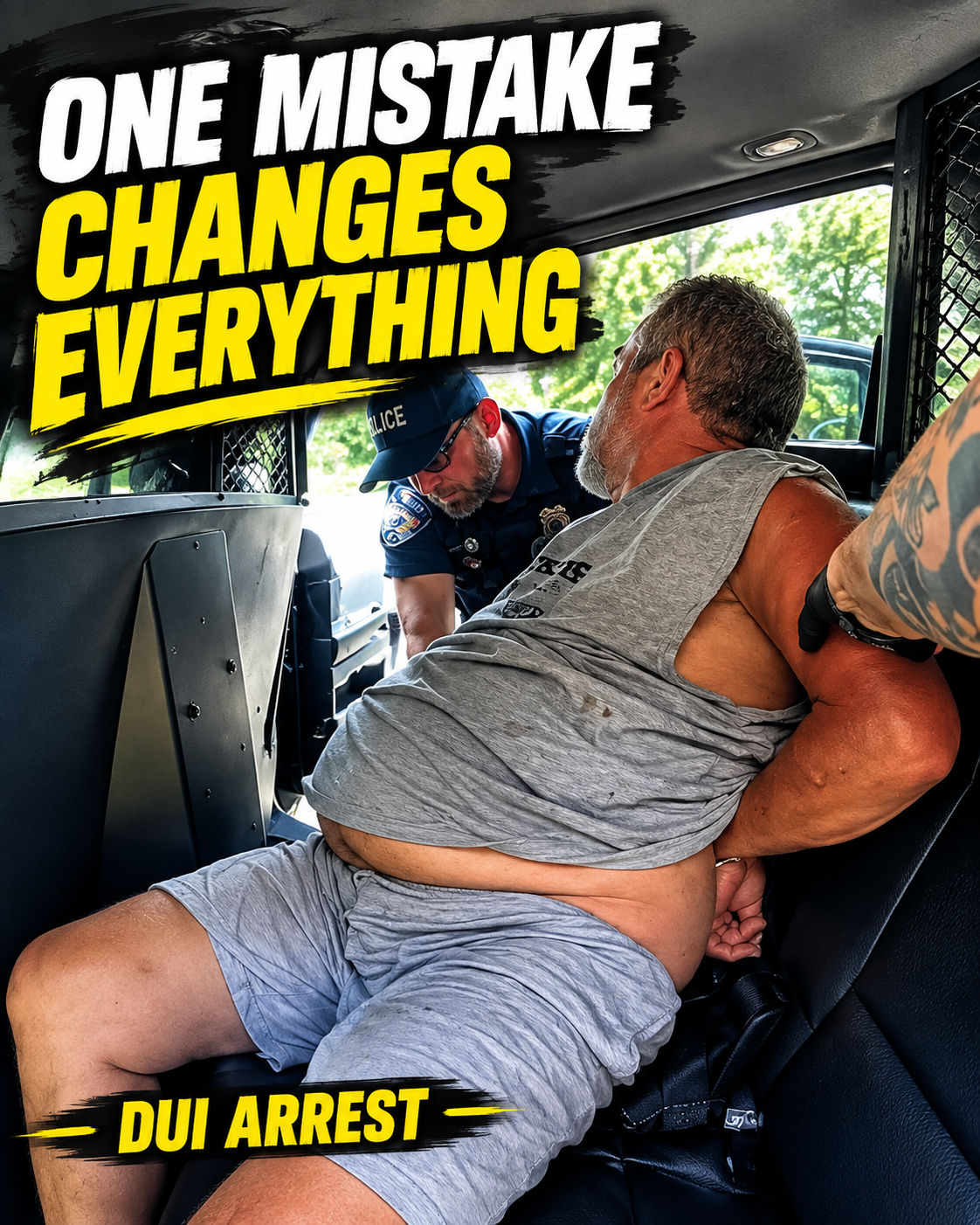
We placed her in handcuffs. She immediately began saying we were hurting her. She said we were hurting her arms, her body, and eventually that she couldn't breathe. We called for medical assistance because when someone says they cannot breathe, you don't simply dismiss it. You take it seriously. Deborah was placed on her side while deputies waited for medical personnel, and she continued repeating that she couldn't breathe and asking someone to help her. But then something happened that made the situation even more complicated. Once other deputies and medics arrived, her condition appeared to change. She was able to speak, move, and eventually stand with assistance. One deputy told her that they were trying to help her, and she continued insisting that officers had injured her. At that point, the investigation wasn't just about what she had said. It was also about what officers had observed, what the medical personnel found, and what the evidence from the vehicle would show.
That vehicle answered some questions for us. During the search, deputies found wine. Then more wine. There were two empty bottles, another bottle that was partially full, and another that had not been opened. The bottles were cold, according to the deputies, and they documented what they found. That didn't by itself establish exactly how much Deborah had consumed or when, but combined with the reported driving, the smell of alcohol, and her behavior during the stop, it became part of the DUI investigation. She was eventually taken toward the station for further testing. And that should have been the quiet part of the story—the part where the roadside confrontation ends and the paperwork begins. Instead, Deborah continued resisting. She accused deputies of choking her. One deputy pointed out that a camera was recording and that he was nowhere near her neck. She continued making accusations, struggling, and refusing to cooperate. At one point, deputies warned her that continued behavior could result in additional charges.
Then came another accusation, another struggle, and eventually another escalation. Deborah appeared to bite toward an officer, and deputies repeatedly told her to relax. She continued saying she was being choked even while officers insisted nobody was choking her. The scene became a cycle: she accused them of hurting her, they told her to stop resisting, she fought against them, and they restrained her again. At one point she began making racial accusations toward the deputies, accusing one officer of treating another person differently because of race. Then, almost abruptly, she claimed she needed an interpreter and said she didn't speak English. The deputies continued trying to process her while keeping the situation under control. By then, whatever might have been happening emotionally inside Deborah had become almost impossible to separate from her physical resistance. The deputies still had a responsibility to get her safely into custody.
The hardest part came at the jail. Deborah was asked to remove her jewelry as part of the booking process. She refused. Deputies tried to explain what they needed her to do, but she continued struggling and shouting that they were hurting her. Eventually they had to restrain her in a chair. Even then, she continued pulling away and yelling for them to get off her. She repeatedly claimed that officers were breaking her arm and hurting her. The deputies kept telling her to calm down and cooperate. When she continued fighting the restraints and spitting or threatening to spit, they placed a spit mask over her head. Watching that escalation, I kept thinking about how different the entire encounter might have looked if the first five minutes had gone differently. A traffic stop can begin with something as ordinary as a lane violation. But once someone refuses lawful commands, reaches for their belongings, fights handcuffs, or attempts to bite an officer, every decision after that becomes more complicated.
And yet, there was one thing I didn't want to lose sight of: Deborah's medical history. She had repeatedly told officers she had breast cancer and had recently undergone treatment. That did not erase the driving complaints, the alcohol evidence, or the resistance. But it mattered. A person's medical condition can explain why they behave or move a certain way without automatically excusing everything they do. That's an important distinction, especially when an encounter becomes chaotic. The deputies still called an ambulance when she said she couldn't breathe. They still allowed her to be evaluated. They still had to document what happened. And the court would ultimately have to deal with the legal questions separately from the emotional ones. According to the transcript, Deborah later pleaded no contest to DUI and resisting arrest and received probation, a suspended license, and fines.
I think what stayed with me was how quickly the original problem disappeared underneath everything else. At the beginning, the question was simple: Why was this woman driving like that? By the end, nobody was talking about a wide turn anymore. They were talking about handcuffs, medical complaints, resistance, accusations, wine bottles, and the struggle inside the jail. The road had brought us to the car, but the car had brought us into something much bigger. That's how these encounters can unfold. The first mistake isn't always the thing that determines where the story ends.
I also remember one phrase because it seemed to follow the entire encounter: “I can't breathe.” Whether those words came from genuine distress, panic, or the chaos of the struggle, they forced everyone to stop and pay attention. And maybe that's the uncomfortable lesson in a case like this. Two things can be true at the same time. Someone can be genuinely dealing with something serious in their personal life, and they can still be held responsible for dangerous decisions. Someone can be sick, frightened, angry, or overwhelmed, and officers can still have a duty to enforce the law. Compassion doesn't require pretending the evidence isn't there. Accountability doesn't require forgetting that there is a human being underneath the handcuffs. That morning in the Florida Keys began with a car drifting across a lane. By the time it ended, everyone involved had been reminded how quickly one moment on the road can become something much harder to control.
Comments (0)
Loading comments...
May You Like

West Virginia Man Laughs at Police Officer and Ends Up Arrested

Cops Arrive for a Medical Emergency and Walk Into Drunken Chaos