
SUV Crosses the Median and Slams Into a Tulsa Police Cruiser
SUV Crosses the Median and Slams Into a Tulsa Police Cruiser
A routine evening drive in Tulsa suddenly became the kind of incident that shows why police dashcams can be so revealing. The August 15, 2019 footage begins quietly, with the patrol cruiser moving along the roadway and traffic appearing normal. Within seconds, however, a dark SUV moves across the median and into the cruiser’s path.
A Routine Drive Changes in Seconds
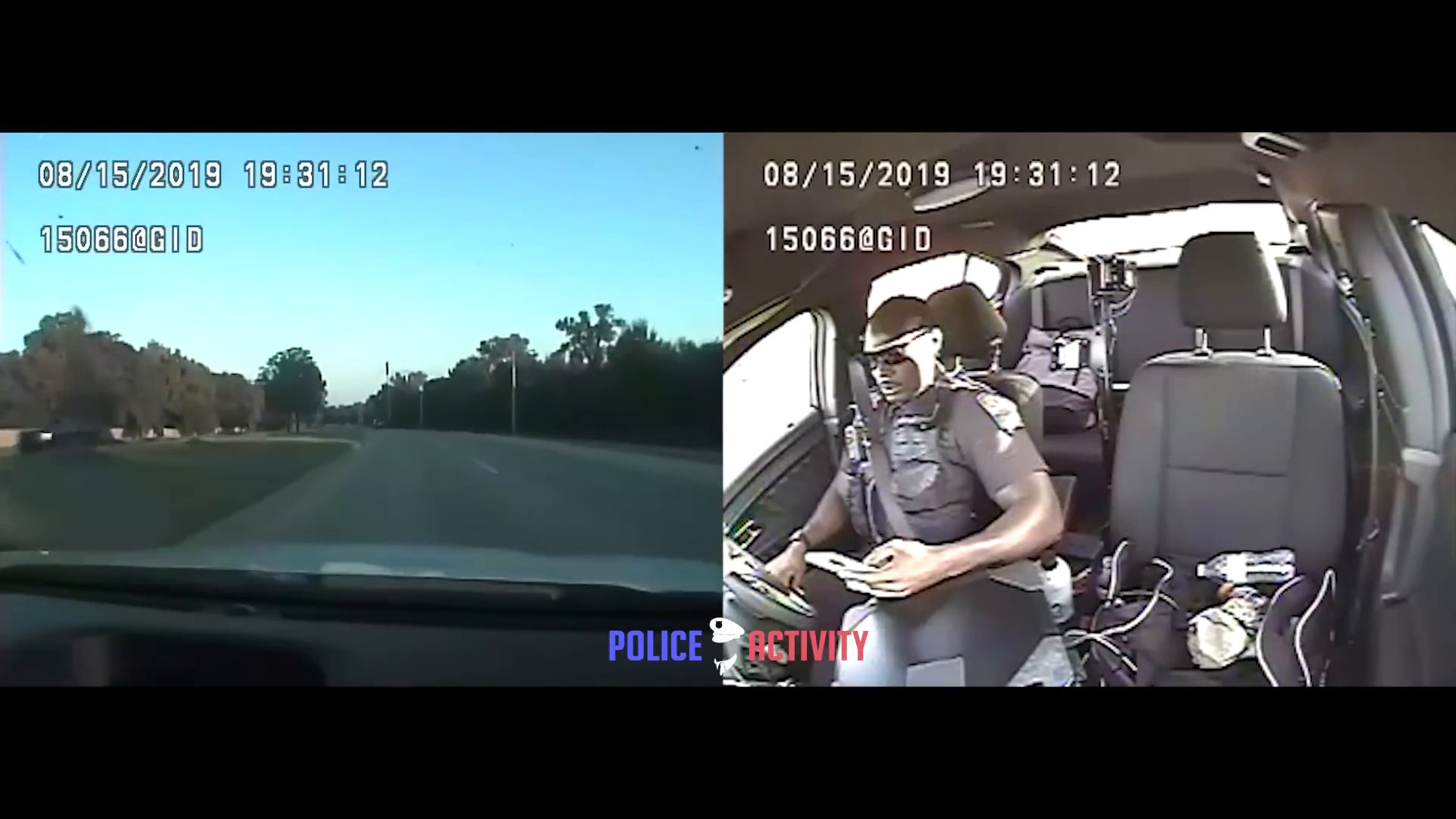
On August 15, 2019, a Tulsa police officer was traveling through the city during the evening when an otherwise ordinary drive abruptly became a serious traffic collision. The dashcam timestamp places the key sequence at about 7:31 p.m. Traffic ahead appears manageable and nothing in the opening moments suggests what is about to happen. The value of the recording is that it preserves both the roadway and the officer inside the cruiser, allowing the same few seconds to be examined from two perspectives.
The sudden transition is what makes the sequence so compelling. There is no pursuit or prolonged warning before the danger arrives; the roadway changes almost instantly.
The SUV Crosses the Median
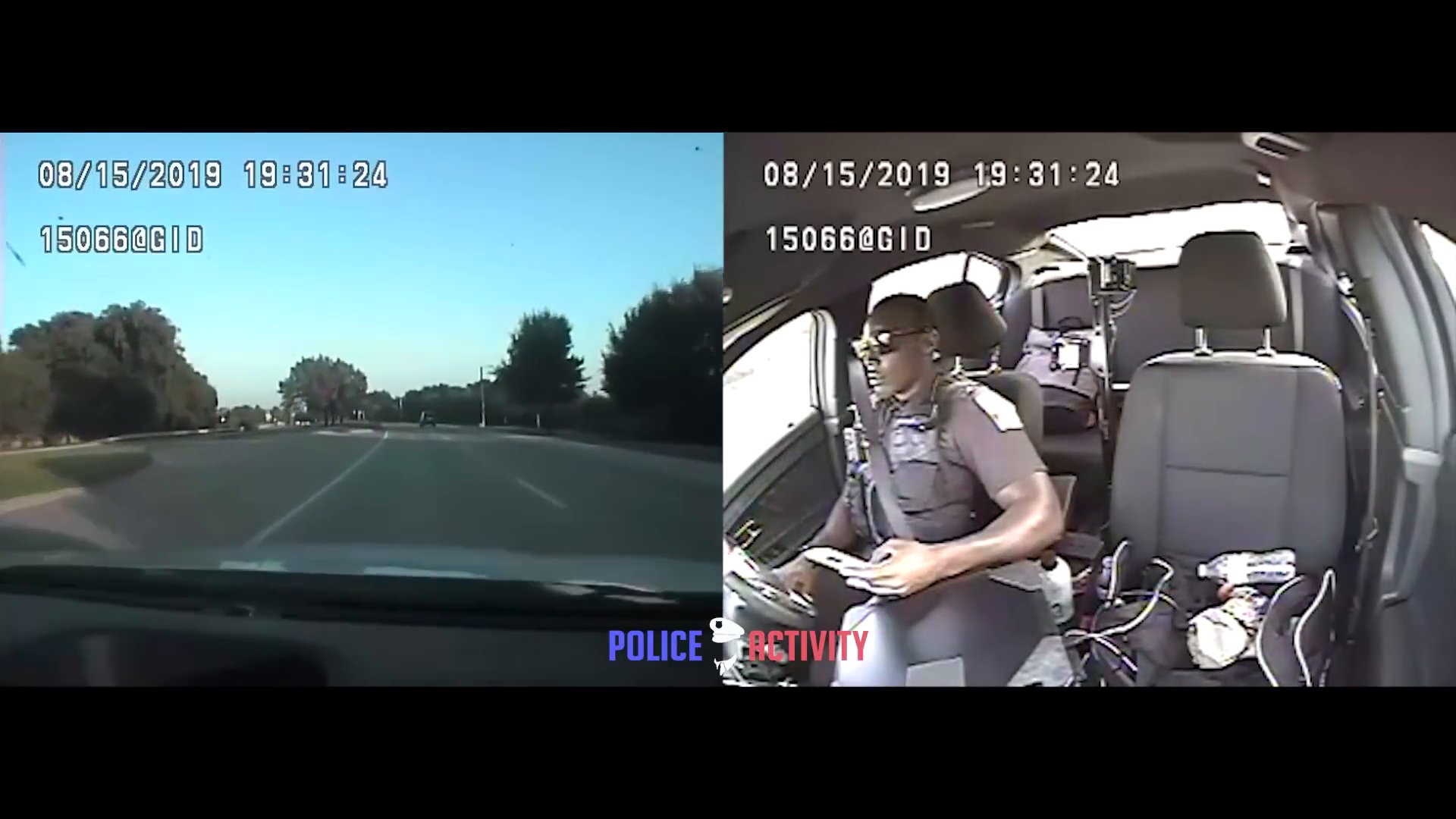
The exterior view captures the central event clearly. A dark SUV approaches from the opposite side and moves across the median into the patrol car’s path. The distance disappears quickly. There is little buildup and almost no time between the vehicle entering the danger zone and the collision. The camera shakes violently at impact, turning a calm roadway scene into an accident scene in an instant.
The footage is especially useful because the vehicle movement is recorded directly rather than reconstructed afterward. Viewers can see the developing conflict for themselves.
The Interior Camera Adds Context
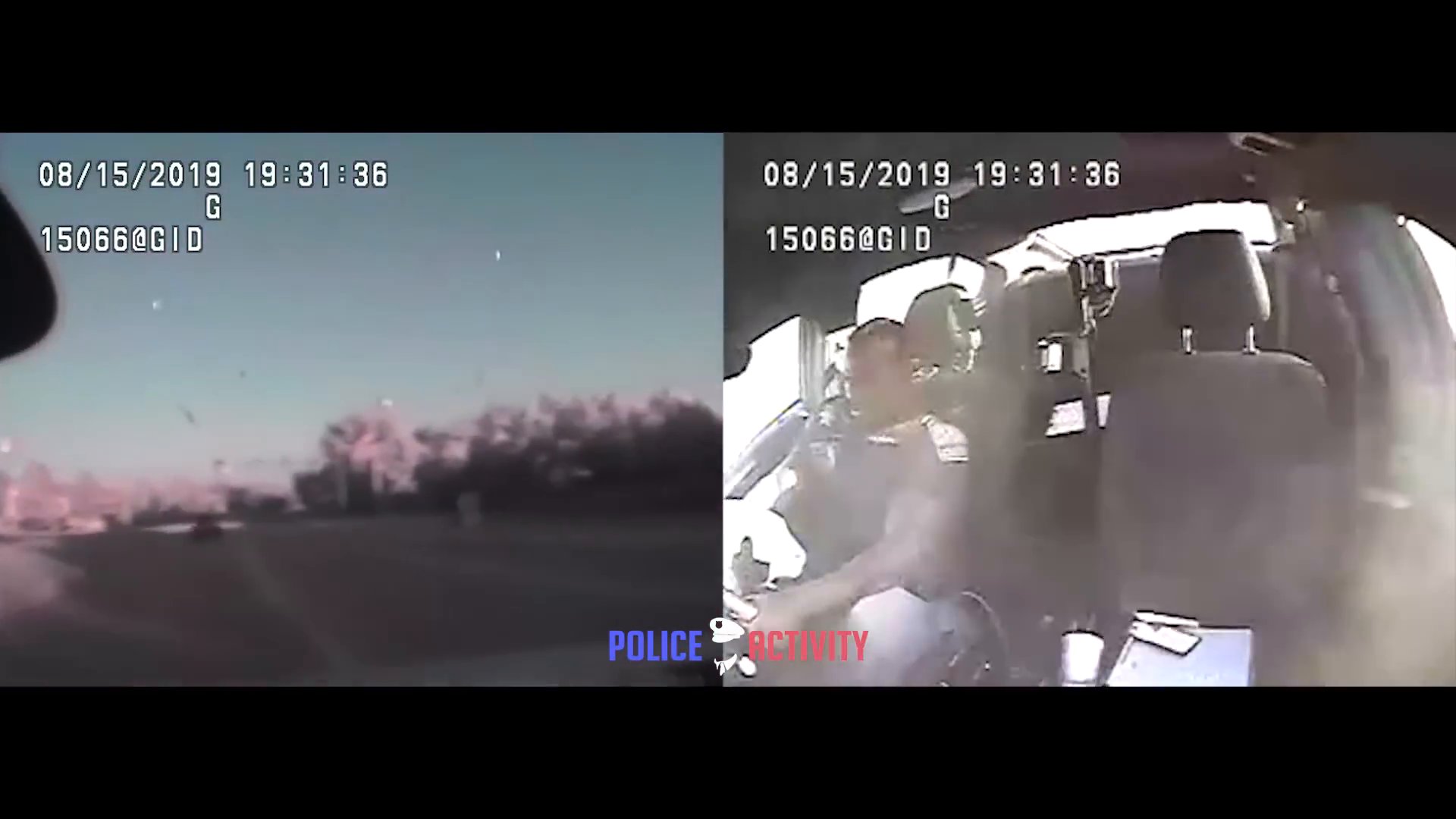
The cabin camera makes the footage more complicated. Before impact, the officer can be seen directing attention toward a mobile device. That detail attracted substantial attention after the footage was released. It should not be confused, however, with the separate question of what created the immediate collision path. The recording shows the SUV crossing the median while the cruiser continues in its lane. The two observations can be considered together without assuming facts that the cameras do not establish.
That dual-camera perspective is unusual and important. It allows the public to examine both the external hazard and what was happening inside the patrol vehicle at the same moment.
Reaction Time and an Unexpected Hazard
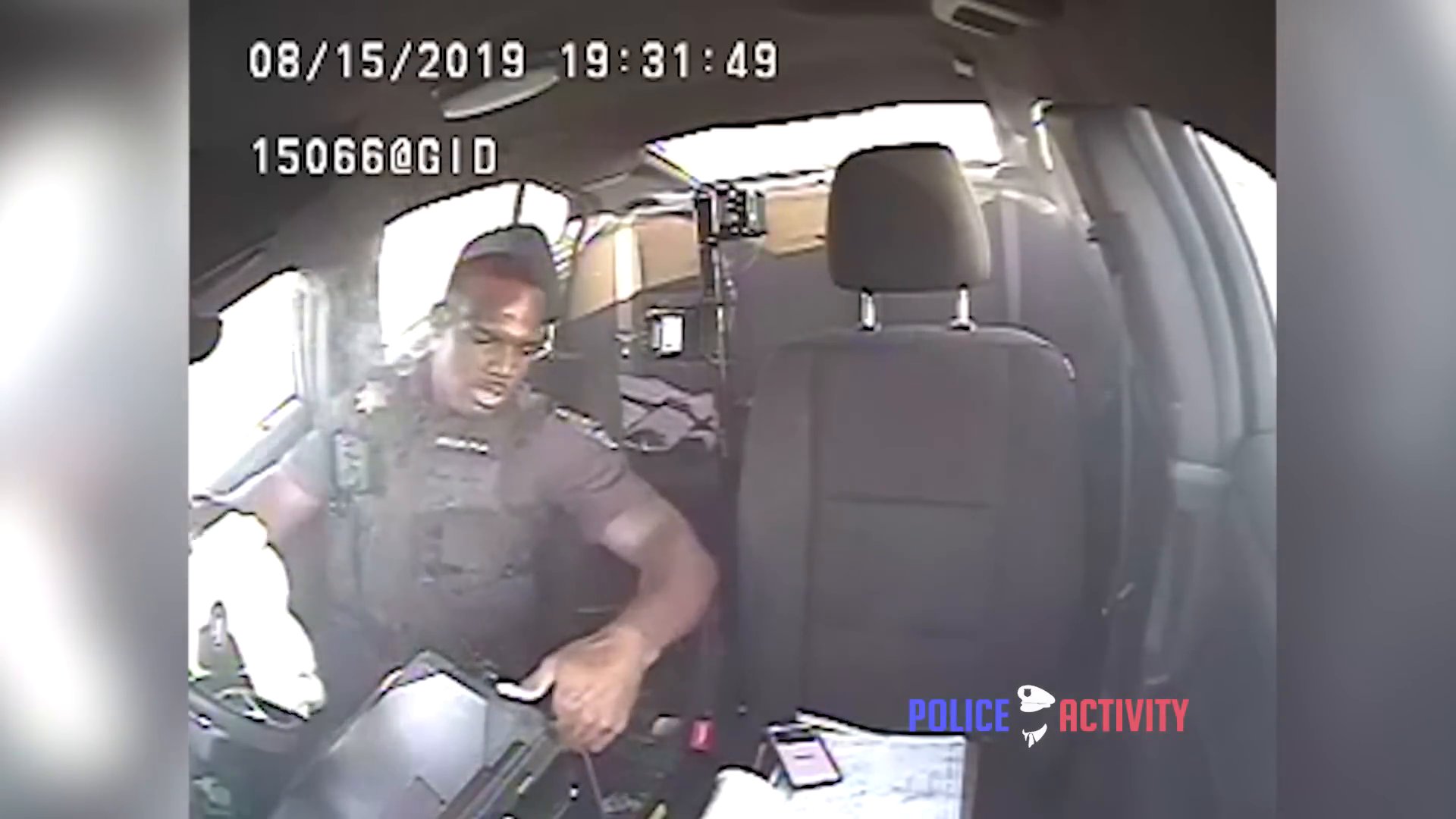
Repeated viewing can make the approaching SUV seem easier to anticipate than it would have been in real time. At normal speed, the situation develops within seconds. A driver would have to recognize the movement, determine a safe evasive direction and act before the vehicles converged. The recording cannot establish with certainty whether a different reaction would have prevented the crash, but it vividly demonstrates how quickly an unexpected vehicle movement can eliminate available space and time.
Dashcam video can encourage hindsight, but real-world driving decisions happen at full speed. This sequence is a useful example of the difference between reviewing an event and experiencing it.
Why This Dashcam Footage Matters
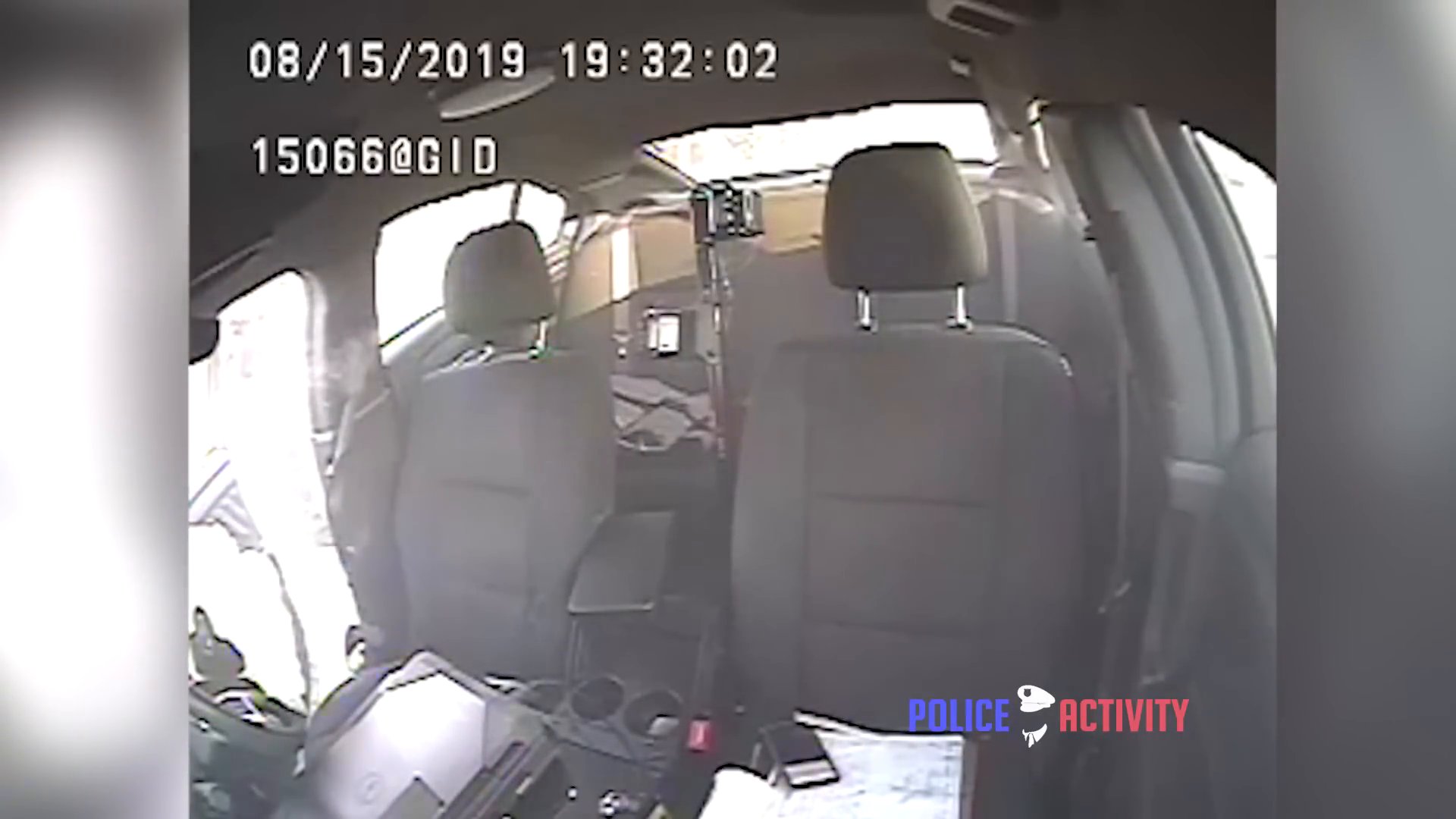
Police cameras are often associated with arrests and pursuits, but traffic incidents show another reason they matter. Physical evidence after a crash can document damage and final positions; video can preserve the movement immediately before impact. Here, the outward camera records the SUV’s path while the interior camera records the officer. Together they provide context that a single still image or later description could not.
The cameras therefore function as more than dramatic recording devices. They preserve timing, movement and context that can become important when an incident is later reviewed.
A Video That Resists a Simple Narrative
The footage became widely discussed because it contains more than one noteworthy detail. The SUV’s movement across the median is plainly visible, while the officer’s interaction with a device is also visible. A careful account does not need to erase either fact. The strongest reading is the simplest one: an ordinary drive changed suddenly, the cameras captured the critical seconds, and the resulting recording gave the public an unusually complete view of how the collision unfolded.
That complexity is also why complete footage matters. Short excerpts can emphasize one detail while leaving another outside the frame; the broader sequence gives viewers a better basis for understanding the event.
The Lasting Lesson
The sequence is a compact reminder of two basic roadway risks: unexpected lane movement and divided attention. Crossing into opposing traffic can create danger immediately, while sustained attention gives a driver the best chance to recognize a hazard. The Tulsa recording remains striking because both issues appear within the same short span. There is no need to exaggerate the event; the video itself shows how quickly routine driving can become an emergency.
Ultimately, the recording’s impact comes from its simplicity: a normal road, an unexpected movement and a collision that unfolds in only moments.
Comments (0)
Loading comments...
May You Like

What Happens when you get Caught Shoplifter Stealing Local Store

Karen Entitled’ Woman Gets Tased After Allegedly Ramming Police Cars

Stolen Charger Flees Police During Highway Traffic Stop












