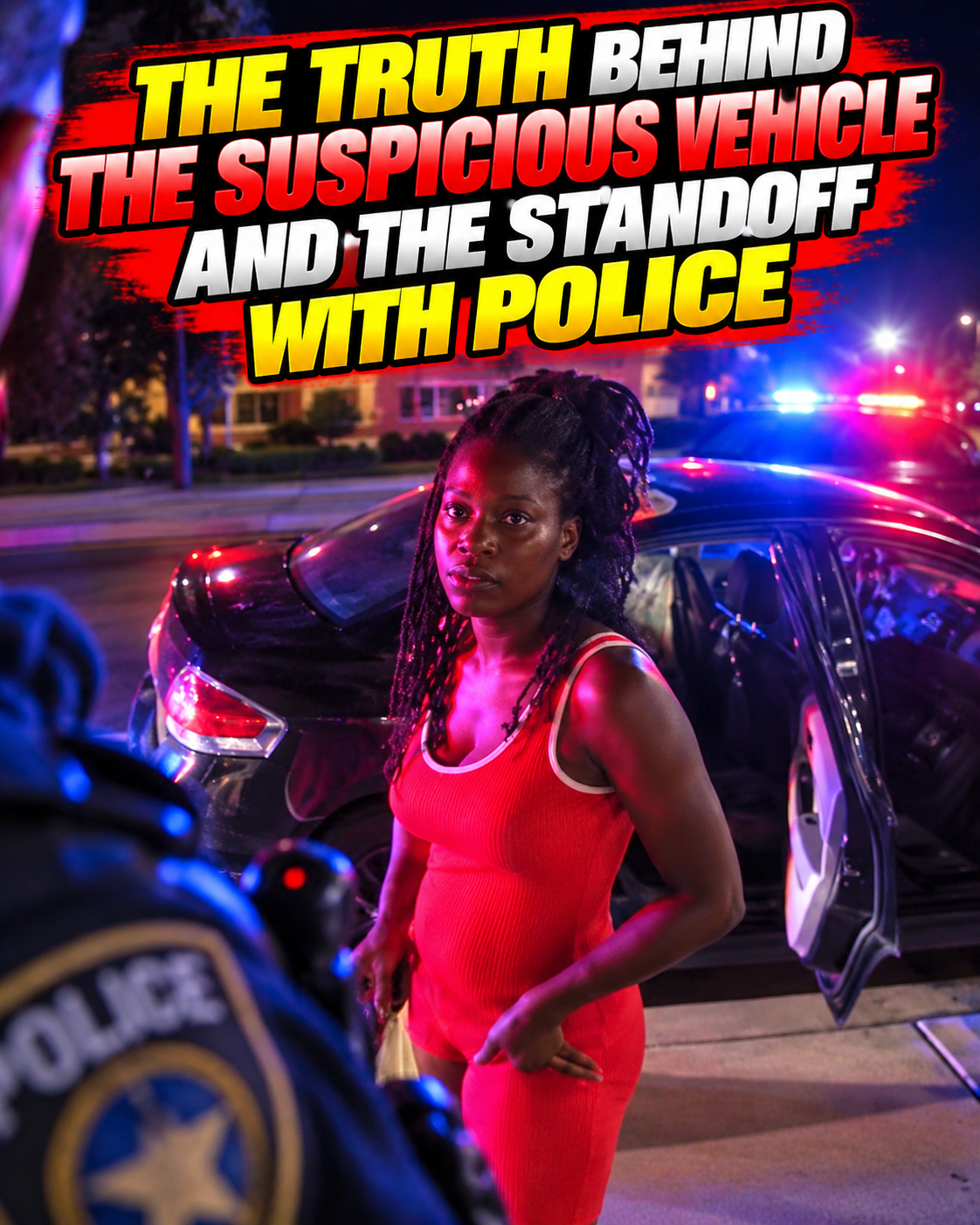
Suspect Steals Police Cruiser and Leaves Seven Officers Injured
SUSPECT STEALS DAYTON POLICE CRUISER — THEN DRIVES STRAIGHT THROUGH AN OCCUPIED HOME
HOOK — THE FIRST CHASE WAS ALREADY OVER. THEN THE SUSPECT CAME BACK.
For Dayton police officers working late on September 3, 2026, the night was already busy.
Officers were dealing with an unrelated crash near West Third Street and Gettysburg Avenue when another vehicle suddenly entered the scene.
It was a Toyota SUV.
According to Dayton Police, the SUV came through the intersection at high speed, crossed left of center, struck a street sign and continued driving erratically. Officers believed the vehicle represented an immediate danger and began pursuing it.
The chase didn't last long.
Police successfully stopped the SUV, and the driver jumped out.
He ran.
Officers followed him through a residential area but eventually lost sight of him.
At that point, the first pursuit appeared to be over.
It wasn't.
Because instead of continuing to run away from the officers, the suspect did something far less predictable.
HE CIRCLED BACK.
And when he returned to the scene, he found something that would turn an already dangerous incident into an extraordinary sequence of events:
an unattended Dayton police cruiser.
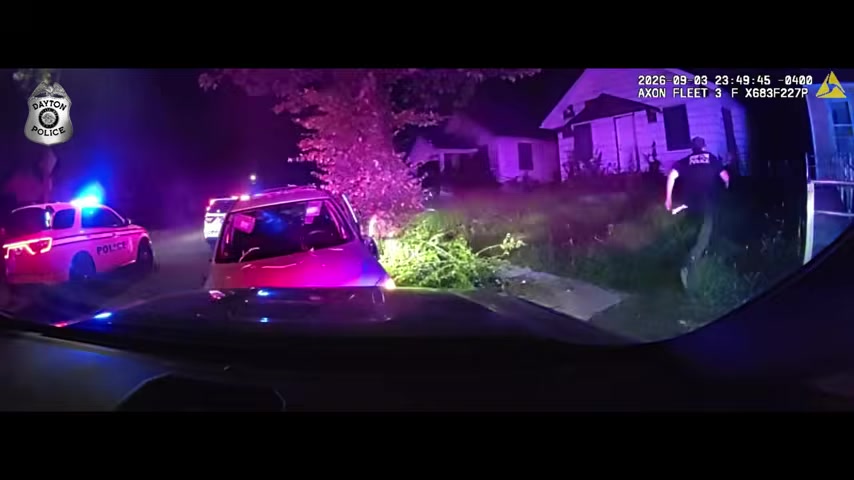
Within moments, the suspect was inside it.
Officers realized what was happening and ordered him to get out.
He didn't.
The stolen police vehicle began moving.
It struck another cruiser as it escaped.
Then the second pursuit began.
What happened next was captured from a perspective rarely seen in police footage — the dashboard camera inside the police cruiser the suspect had just stolen.
OPENING — A STOLEN SUV ENTERS AN ACTIVE POLICE SCENE
The extraordinary sequence began shortly before midnight.
Dayton officers were working near West Third Street and Gettysburg Avenue when the Toyota SUV entered the area.
WHIO reported that officers saw it moving at high speed through the intersection. Dayton Police later said it went left of center, drove erratically and struck a street sign.
Officers went after it.
This wasn't a long pursuit.
Police used a pursuit intervention technique to bring the SUV to a stop in less than two minutes, according to subsequent reports based on the department's account.
But stopping the vehicle did not stop its driver.
He got out and ran into a residential area.
Officers pursued him on foot.
Bodycam footage shows the difficulty immediately: darkness, houses, yards and multiple possible escape routes.
Eventually officers lost sight of him.
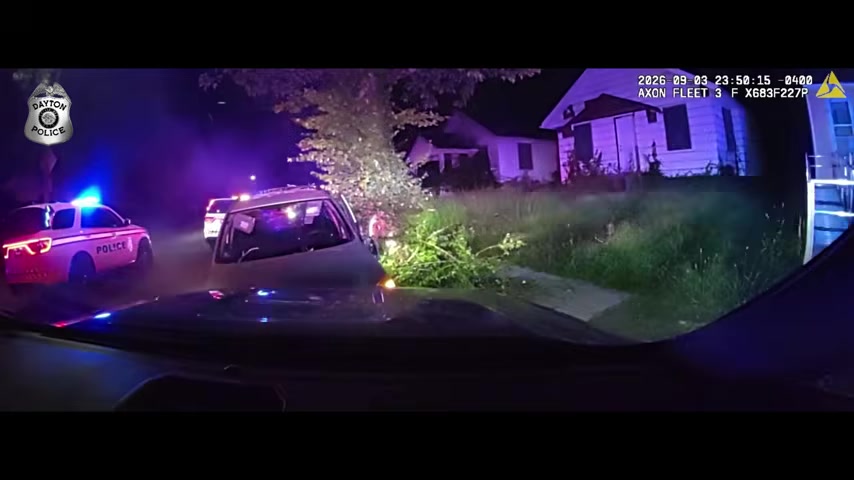
The logical assumption might have been that the suspect would continue putting as much distance as possible between himself and police.
Instead, he doubled back.
That decision created the video's first major reversal.
The suspect returned toward the area where police had stopped the SUV.
And there was a police cruiser waiting there.
DEVELOPMENT — HE COMES BACK FOR THE POLICE CAR
The footage becomes especially unusual at this point.
Police suddenly realize the person they were searching for has returned.
But now he is getting into one of their own vehicles.
Officers shout commands for him to get out.
The suspect ignores them.
According to Dayton Police, he drove away and struck another cruiser in the process.
THE FUGITIVE IS NO LONGER RUNNING FROM THE POLICE ON FOOT.
HE IS RUNNING FROM THEM IN A POLICE CAR.
That distinction makes the second pursuit especially dangerous.
A stolen marked cruiser can create problems beyond speed alone. Other drivers may not immediately understand that the person operating it is not a police officer.
The vehicle also gives the suspect something he did not have while running through backyards: speed.
Officers pursue again.
And once again, the chase is remarkably short.
Reports say the second pursuit lasted roughly two minutes.
But the ending was dramatically more destructive.
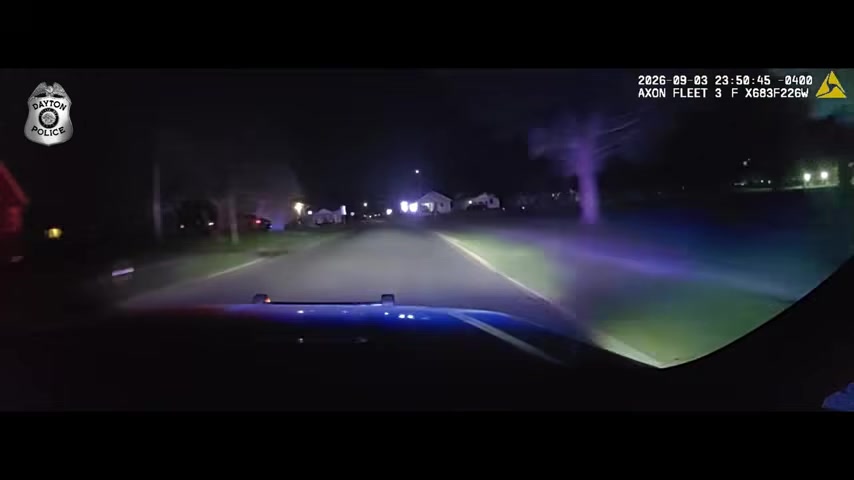
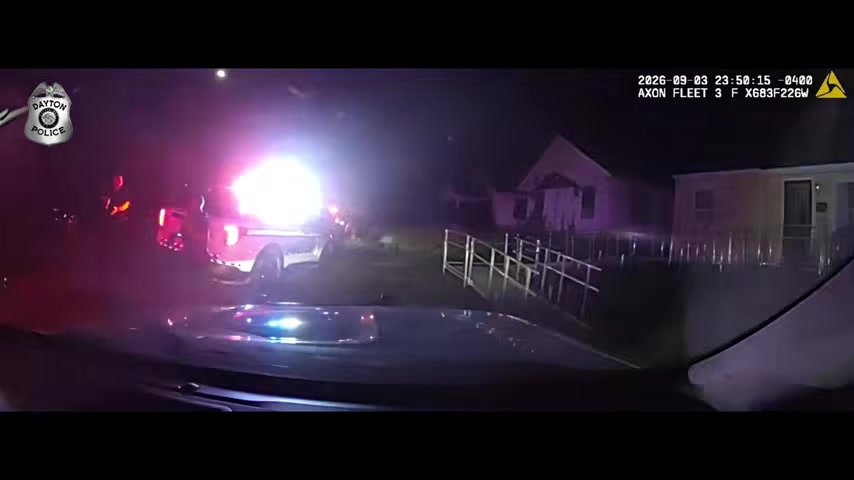
The cruiser races through the dark streets.
The dashcam continues recording.
There is little indication from inside the vehicle of exactly how this pursuit is going to end.
Then a house appears directly ahead.
There is almost no time between recognizing the danger and impact.
The police cruiser does not simply strike the outside wall.
IT GOES THROUGH THE HOUSE.
THE STOLEN CRUISER PLOWS THROUGH AN OCCUPIED HOME
This is the defining visual moment of the entire incident.
According to Dayton Police and multiple subsequent reports, the stolen cruiser crashed into a residence in the 2300 block of Greenway Street. Video from the cruiser provides a first-person perspective of the impact.
The vehicle drove through the structure with enormous force.
WHIO's initial reporting from the scene described the cruiser as going through the house and emerging toward the rear of the residence.
And the house wasn't empty.
Two people were inside.
Both were taken to the hospital.
Fortunately, police described their injuries as non-life-threatening.
For those residents, this was not a police chase they were watching on television or hearing somewhere in the distance.
The chase literally entered their home.
That fact changes the emotional scale of the incident.
Police pursuits are often discussed in terms of the fleeing driver and pursuing officers.
But innocent people can become involved without making a single decision connected to the pursuit.
Here, two people were simply inside their residence when a stolen police cruiser came through it.
DEVELOPMENT — THE CRASH DOESN'T END THE FIGHT
A collision of this magnitude might seem like the natural endpoint.
The cruiser is disabled.
The suspect has nowhere to drive.
Officers arrive.
But the incident still isn't finished.
Police say that when an officer attempted to apprehend the suspect, he attacked.
The struggle becomes another major escalation.
According to Dayton Police, the suspect attempted to take an officer's firearm and bit an officer while continuing to resist arrest.
Officers use force to get him under control.
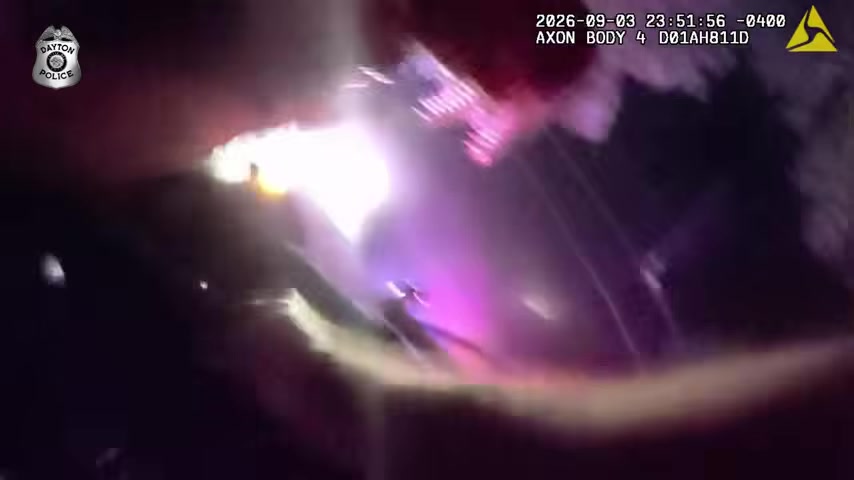
The footage becomes chaotic here.
Multiple officers are working in a confined area.
Emergency lights flash across the scene.
Commands overlap.
The camera moves rapidly.
Unlike the pursuit footage, which allows viewers to understand the direction of travel relatively easily, the arrest is messy and close-range.
And it has consequences.
SEVEN DAYTON POLICE OFFICERS WERE INJURED WHILE TAKING THE SUSPECT INTO CUSTODY.
Six were taken to a hospital and subsequently released.
The suspect was also transported to a hospital.
What had begun with an SUV driving through a blocked intersection had now resulted in two vehicle pursuits, a stolen police cruiser, a severely damaged home, two injured residents and seven injured officers.
But investigators were about to discover that the story stretched beyond Dayton.
THE STOLEN SUV WAS ANOTHER PIECE OF THE PUZZLE
Once police began identifying the suspect and tracing the vehicle involved in the first pursuit, another sequence of events came into focus.
The Toyota SUV was itself reportedly stolen.
WHIO reported that Moraine police had responded to incidents along Interstate 75 earlier that night.
A semi-truck driver told police a man had assaulted him during an attempted carjacking.
Two additional people reported being assaulted, and their SUV was taken.
Police believed that was the same SUV that later drove through the Dayton crash scene.
Suddenly the Dayton pursuit was no longer an isolated event.
It appeared to be part of a wider series of alleged crimes unfolding across neighboring jurisdictions.
 Then investigators found another connection.
And this one was considerably more serious.
POLICE LINK THE SUSPECT TO A HOMICIDE INVESTIGATION
On the morning after the pursuit, Miami Township police went to an apartment in the 7300 block of Cold Water Court for a welfare check.
The resident had failed to show up for work.
Officers entered.
Inside, they found a woman who had died from a gunshot wound.
Her vehicle was missing.
The Ohio Bureau of Criminal Investigation became involved, and authorities subsequently connected the suspect from the Dayton incident to that homicide investigation.
Days later, authorities publicly identified the man arrested after the cruiser crash as 27-year-old Tywon Stephens.
WHIO reported on September 8 that Stephens had been booked into the Montgomery County Jail and was being held on a $500,000 bond. The jail information cited by the outlet listed numerous pending charges, including murder, felonious assault, robbery, theft of a motor vehicle and other offenses.
These are accusations and pending criminal matters; they should not be described as convictions.
But the new information fundamentally changed the context surrounding the pursuit footage.
Officers initially saw a recklessly driven SUV entering a crash scene.
They could not necessarily have known the broader sequence investigators would later piece together.
A HOUSE BECOMES THE FINAL CRASH SCENE
The aftermath footage tells another part of the story.
Once the suspect is under control, attention turns to the residence.
The damage is significant.
Officers also have to determine who is inside and whether anyone is trapped or seriously injured.
Police helped the occupants from the house.
Two residents ultimately required hospital treatment but suffered injuries that authorities characterized as non-life-threatening.
The human consequences are easy to overlook when watching the pursuit itself.
The stolen cruiser lasts only a few minutes in the suspect's possession.
The damage to a home can last far longer.
Walls, rooms and belongings can be destroyed instantly.
For the occupants, the sound of a vehicle coming through the building would have arrived with virtually no warning.
This is one of the strongest reasons the footage should not simply be presented as a spectacular "crazy police chase."
There were real people inside that house.
The dramatic dashcam image is also the moment two uninvolved residents suddenly became part of the incident.
ENDING — SEVEN OFFICERS HURT, TWO RESIDENTS HOSPITALIZED
By the time the scene is finally under control, the scale of what happened is extraordinary.
The suspect is in custody.
The stolen cruiser is wrecked.
An occupied residence has been heavily damaged.
Two residents have been transported to the hospital.
Seven Dayton officers have been injured.
Six officers required hospital evaluation but were later released.
And several jurisdictions are now examining what police say is a much larger series of crimes.
 Subsequent reporting identified Stephens as a suspect not only in the Dayton pursuit but also in the Moraine aggravated-robbery investigation and the Miami Township homicide case.
The most remarkable part of the Dayton footage, however, may still be its sequence.
At almost every point where the incident appears capable of ending, something else happens.
Police stop the SUV.
The driver runs.
Officers lose him.
He comes back.
He returns to the original scene.
He steals a cruiser.
Police pursue him again.
He drives through a house.
The vehicle can go no farther.
He allegedly attacks the officers trying to arrest him.
Only after that struggle is the sequence finally over.
That repeated escalation creates the natural suspense that makes the video difficult to stop watching.
WHY THIS FOOTAGE HOLDS ATTENTION SO EFFECTIVELY
From a storytelling perspective, this incident has an unusually powerful structure because the stakes continuously rise.
It begins with a mystery:
Why is this SUV driving recklessly through an active police scene?
Then comes the first chase.
Police stop the vehicle, creating what feels like a resolution.
But the driver runs.
That creates a second question:
Where did he go?
Then comes the biggest surprise.
Instead of disappearing, he circles back and steals a police car.
Now the story changes again.
Can officers stop their own cruiser?
Then comes the visual payoff: the cruiser goes directly through a house.
But even the crash doesn't end the story.
The suspect allegedly fights with officers, attempts to take a firearm and bites one of them.
Then the wider investigation reveals alleged connections to other serious crimes.
The retention structure therefore looks like this:
RECKLESS SUV → POLICE PURSUIT → PIT → FOOT CHASE → SUSPECT DISAPPEARS → SUSPECT RETURNS → CRUISER STOLEN → SECOND PURSUIT → HOUSE CRASH → VIOLENT ARREST → SEVEN OFFICERS INJURED → WIDER CRIME INVESTIGATION.
That is why the article does not need exaggerated language.
The verified sequence is dramatic enough.
It is also why the strongest hook is not simply:
"Man steals police cruiser."
A stronger hook is:
POLICE THOUGHT THE FIRST CHASE WAS OVER — UNTIL THE SUSPECT CAME BACK AND STOLE THEIR CRUISER.
That introduces the central surprise without giving away the spectacular ending.
CTA — THE FIRST PURSUIT WAS ONLY THE BEGINNING
What happened in Dayton on September 3 demonstrates how quickly a police incident can expand beyond anything officers initially expect.
The officers did not begin the night searching for a man who would steal one of their cruisers.
They were working an unrelated crash scene.
Then a Toyota SUV came through the intersection.
Minutes later, police had stopped it.
The driver disappeared on foot.
And just when the immediate pursuit appeared to have ended, he returned.
From there, the situation escalated again and again until a Dayton police cruiser had been driven through an occupied home and officers were fighting to take the suspect into custody.
Seven officers were injured.
Two residents were hospitalized.
And investigators subsequently connected the arrested suspect to additional serious cases in surrounding jurisdictions.
The dashcam and bodycam footage make one aspect especially clear:
THE MOMENT POLICE STOPPED THE FIRST VEHICLE WASN'T THE END OF THE CHASE. IT WAS ONLY THE BEGINNING OF THE MOST UNPREDICTABLE PART.
Click here to watch the full incident unfold — from the first pursuit to the moment the stolen police cruiser crashes straight through the occupied home: https://www.youtube.com/watch?v=MVdqupXqKL8
Comments (0)
Loading comments...
May You Like

Chrysler 300 Gapped Cops at 150+ MPH | Police Dashcam

A Late-Night Escape Attempt Ends With Officers Making an Arrest

Police vs Chevy Impala High-Speed Pursuit Ends in TVI