Suspect Loses His Temper and Unleashes a Stream of Insults at Officers
Suspect Loses His Temper and Unleashes a Stream of Insults at Officers
A Parking-Lot Dispute Draws Police Attention
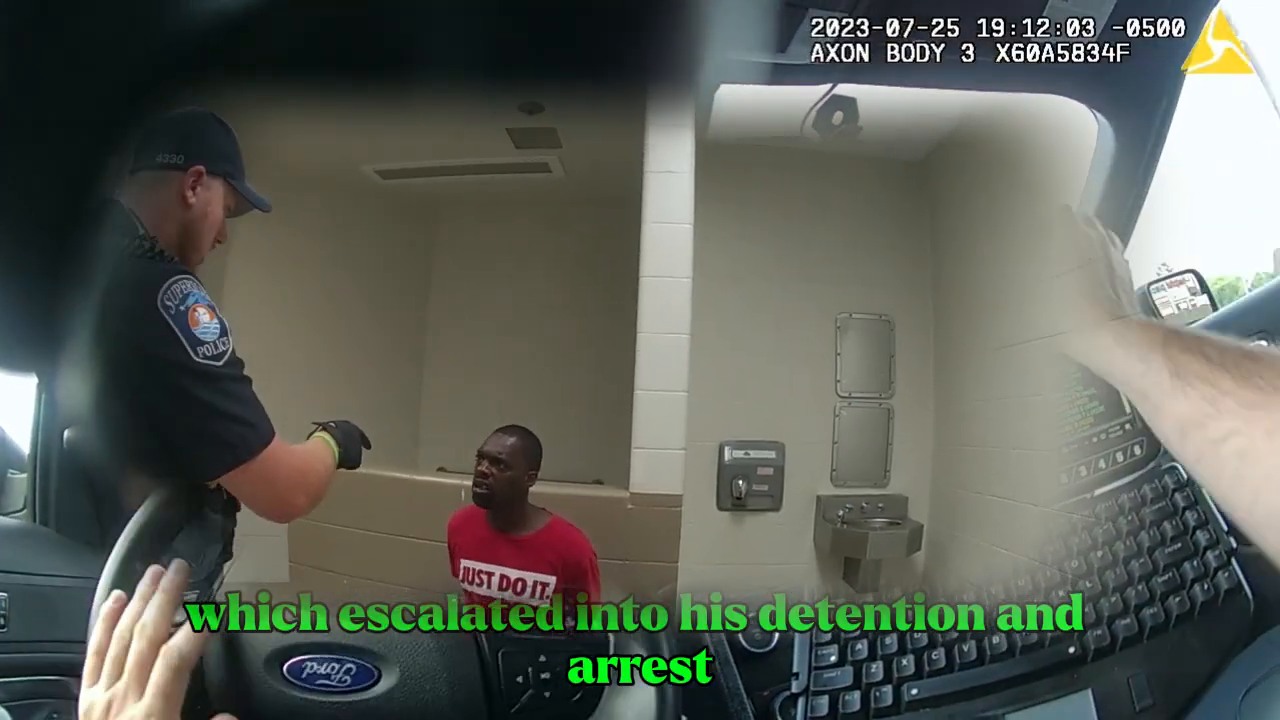
The encounter captured in the supplied body-camera footage begins outside a Super One Foods location on July 25, 2023. The AXON overlay places the recording shortly after 7:12 p.m. local time. Officers are already dealing with a confrontation involving a man in a bright red shirt, another man nearby, and several witnesses in the parking lot.
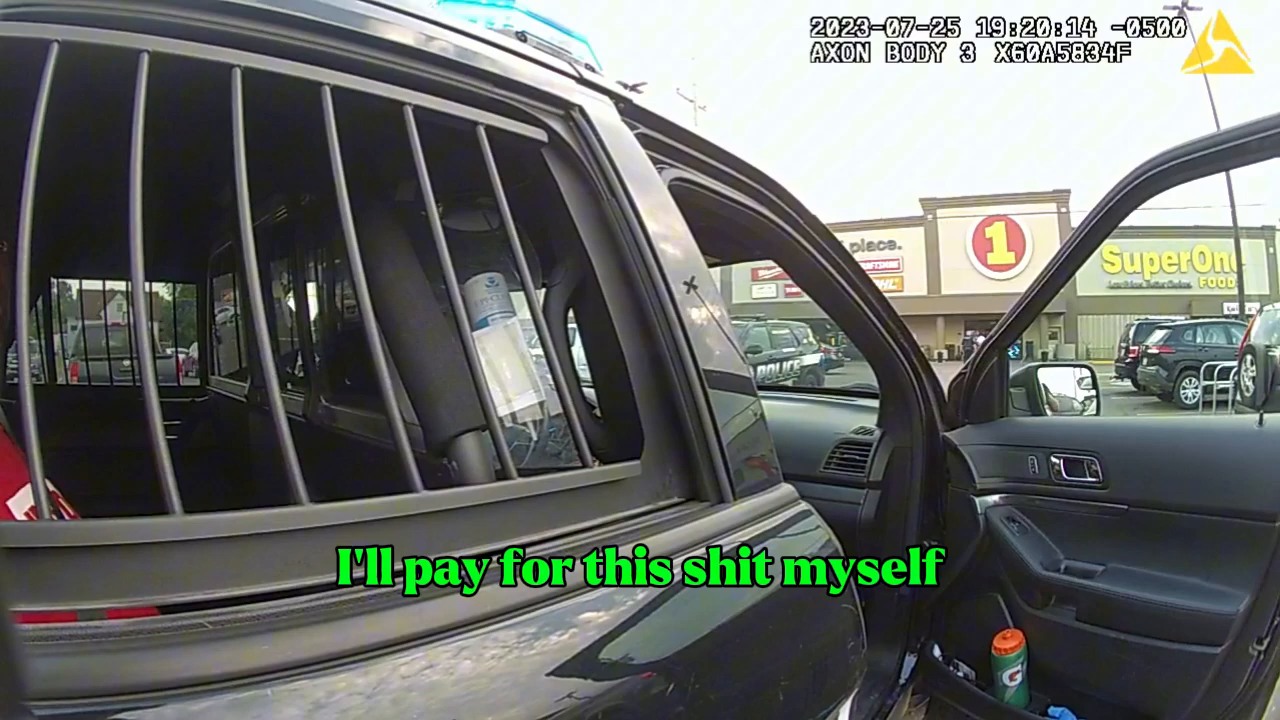
The footage strongly indicates that the responding agency is the Superior Police Department in Wisconsin. The patrol vehicles and shoulder patches display Superior markings, while the retail setting and regional details are consistent with the Superior area. However, because no public police release or local news report could be matched conclusively to this exact encounter, this article does not assign a name, booking charge, case number, or court outcome to the detained man.
That distinction is important. The video itself provides a detailed record of the officers' interaction, but a body-camera timestamp and uniform patch are not substitutes for a complete arrest report. The safest approach is to describe what the footage establishes directly and avoid turning a likely identification into an unsupported legal claim.
What the camera does establish is that officers are investigating a reported physical confrontation. The man in red quickly becomes the focus of the police response, and his frustration rises as officers attempt to separate the people involved and determine what happened.
Officers Try to Sort Out Conflicting Accounts
The early minutes show a familiar challenge in disturbance calls: officers arrive after much of the underlying event has already happened. They did not personally witness the entire argument or fight, so they have to reconstruct it from the people who were there.
The man in red wants his version heard immediately. He repeatedly talks over the process, challenges what officers are telling him, and reacts strongly when he believes they are not listening. Another man later tells an officer that there had been a physical confrontation between them.
For responding officers, separating the parties is often the first practical step. It reduces the chance of another fight and allows each person to give an account without the other interrupting or escalating the argument. The footage shows officers moving between people and asking direct questions while maintaining control of the parking-lot scene.
The tension grows because the detained man appears to interpret that control as proof that officers have already chosen a side. The officers, meanwhile, continue treating the scene as an active investigation rather than a debate that has to be won in the parking lot.
The Man's Frustration Builds as He Is Detained
The tone changes noticeably once the man realizes he is not free to simply walk away. He becomes louder, more confrontational, and increasingly focused on the officers themselves rather than the original dispute.
At one point, he protests that officers are not listening. His language becomes sharper as he challenges their decisions and questions why he is being restrained. The footage does not show officers responding to every insult. Instead, they repeatedly return to instructions about where he needs to stand, how he should position himself, and what they need from him.
This is an important part of the encounter because verbal hostility alone does not necessarily require officers to answer in kind. Police routinely encounter people who are angry, intoxicated, frightened, or convinced they are being treated unfairly. The operational priority is usually compliance and scene safety, not winning the argument.
The man's anger, however, keeps expanding. What begins as frustration over the underlying incident becomes a sustained verbal confrontation with the officers handling him.
A Hands-On Detention Changes the Dynamic
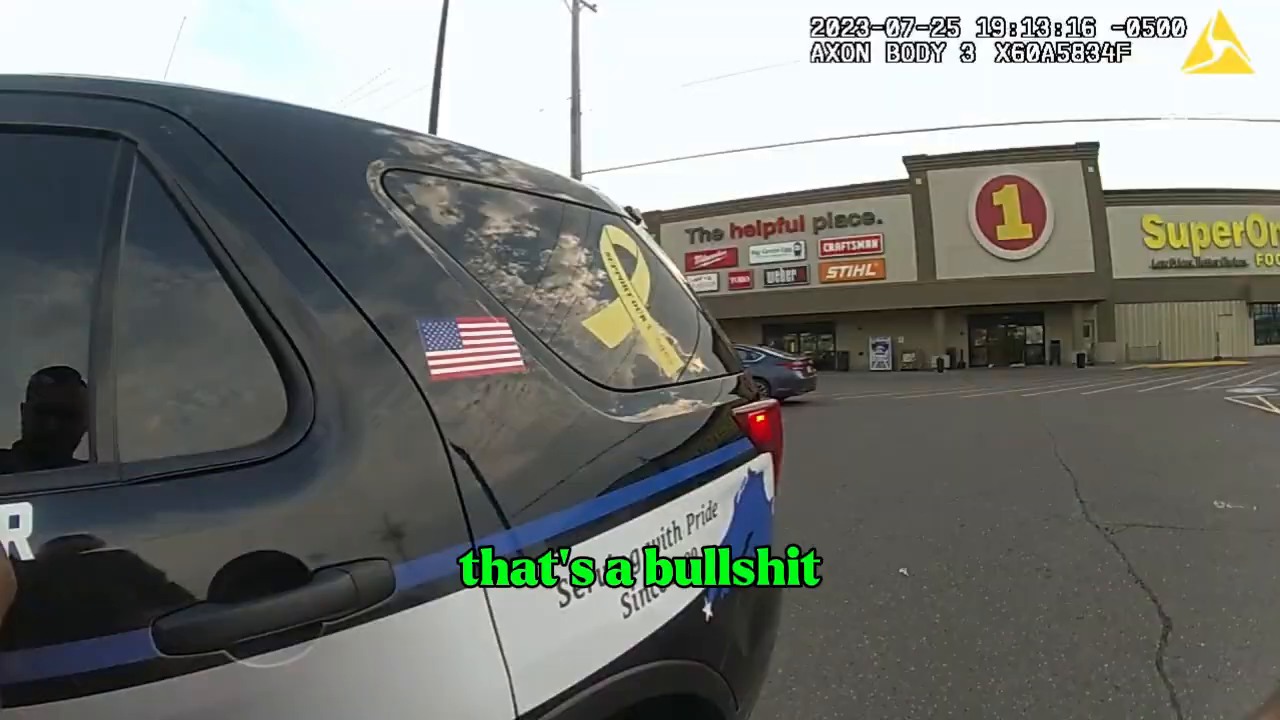
As officers move to restrain the man, the body-camera perspective becomes much tighter. Hands, uniforms, the patrol vehicle, and the suspect's red shirt fill the frame. The camera records the physical proximity of the detention in a way that a fixed surveillance camera would not.
The man continues talking throughout the process. He objects to the officers' actions and insists that his account is being ignored. At moments, the footage becomes difficult to interpret visually because the camera is pressed close to the people involved, but the audio preserves the continuing argument.
This is one reason full-length body-camera footage matters. A short clip of the man's loudest comments could make the confrontation appear to begin with the insults. The longer recording shows that the verbal outburst develops during an investigation and detention that has already been underway.
It also shows that officers are managing more than one person. They still need to speak with witnesses, understand the earlier confrontation, and determine whether anyone was injured or committed an offense before they arrived.
The Other Man Describes a Physical Confrontation
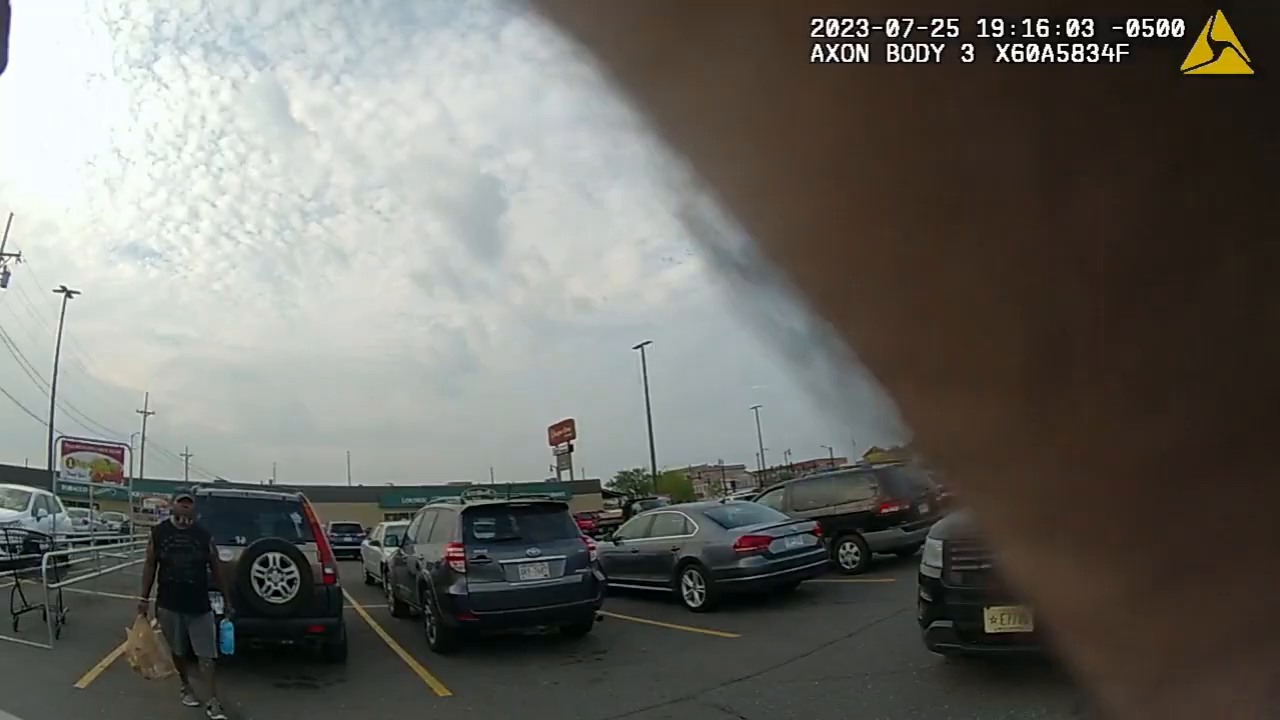
Later in the footage, an officer speaks with another man in the parking lot. Behind him, the Super One Foods storefront and neighboring retail signs provide a clear view of the setting. The man describes a confrontation and indicates that the detained man had been fighting with him.
That statement provides context for why officers are not treating the event as a purely verbal disagreement. A witness or participant's statement can contribute to probable cause, but it is still only one piece of an investigation. Officers may compare it with injuries, surveillance footage, other witnesses, and the detained person's account.
The supplied edit does not provide every piece of evidence that may have been available to police. It does, however, show officers actively gathering information rather than relying only on the detained man's demeanor.
This distinction matters because anger after detention is not proof of what happened beforehand. The reason for police action has to come from the reported incident and evidence, not simply from the fact that someone becomes difficult once officers arrive.
The Insults Become the Center of the Encounter
As the interaction continues, the detained man's language becomes increasingly personal. He directs insults and hostile remarks toward officers and repeatedly challenges their competence, motives, and authority.
This is the portion reflected most directly in the original title. The man does not merely disagree with police procedure; he launches into an extended angry tirade. Yet the officers largely avoid turning the exchange into a reciprocal shouting match.
That restraint is operationally useful. When a detained person is already emotionally escalated, matching that intensity can make compliance harder. Short instructions, clear boundaries, and repetition are often more effective than responding to every provocation.
The video therefore becomes less about the content of each insult and more about the contrast in behavior. The man tries to pull officers into an argument while they continue moving through the practical steps of detention and investigation.
Why Officers Can Ignore Verbal Provocation
In the United States, harsh criticism of police can be constitutionally protected speech. A person does not automatically commit a crime simply by insulting an officer, using profanity, or expressing anger. The legal line depends on conduct and context, not whether an officer finds the words offensive.
That is why a careful account of this footage should not imply that the man is arrested merely because he insults officers. The camera shows an investigation into an earlier confrontation and a detention already underway before the most sustained verbal outburst.
Police can still impose reasonable commands related to safety and custody. A person who is detained may be required to keep hands visible, remain in a designated location, or stop physically interfering with an investigation. Refusing lawful commands or physically resisting can create separate legal issues even when the person's speech itself remains protected.
Without the exact police report, however, it would be inappropriate to state which statute officers ultimately relied on or whether prosecutors later pursued a charge. The footage supports describing the conduct, not inventing the final paperwork.
Body-Camera Footage Shows How Quickly Perception Can Split
One striking feature of the video is that the detained man and the officers appear to understand the same scene in completely different ways. He repeatedly suggests that officers are refusing to hear him. The officers behave as though they are trying to control an unstable scene first and gather statements in an orderly sequence.
Both perspectives can exist at the same time. A detained person may genuinely feel unheard because officers are not allowing him to dominate the conversation. Officers may genuinely believe they are listening while also limiting interruptions so they can speak with everyone involved.
Body-camera footage gives viewers unusual access to that mismatch. It records not only commands and physical actions but also the rhythm of the conversation: who interrupts, when officers redirect the discussion, and how the emotional temperature changes.
That is more useful than reducing the incident to a single viral quote. The full encounter shows how frustration compounds when one person wants immediate validation while police are operating according to a slower investigative process.
The Scene Gradually Comes Under Control
Despite the man's continued verbal hostility, the parking-lot scene becomes more controlled as time passes. Officers have separated the principal people involved, secured the detained man, and gathered additional information.
There is no high-speed pursuit or dramatic use of force in the supplied footage. The tension comes from the sustained interpersonal conflict. The man remains angry and vocal while officers continue working through the incident.
For viewers, that can be revealing in a different way. Many police calls do not revolve around spectacular action. They involve patience, repeated instructions, conflicting stories, and the difficult task of deciding what happened after arriving in the middle of a dispute.
The footage captures exactly that kind of call, with the added complication of a detainee who keeps escalating verbally even after officers have made clear that arguing will not immediately change the situation.
What Could Be Verified and What Remains Unconfirmed
The strongest verifiable details come directly from the supplied recording. The AXON overlay shows July 25, 2023. The scene is outside a Super One Foods store. Police vehicles and uniforms show Superior markings, and the encounter involves an investigation into a reported confrontation between the detained man and another individual.
Public-source research was conducted using the date, store, apparent Superior Police identification, and the visible sequence. No police press release, court document, or reliable local article could be matched to the exact encounter with enough confidence to identify the man or state his final charges.
That means the article deliberately avoids a suspect name, age, criminal history, bond amount, or court result. It also avoids claiming that every accusation made by another person in the parking lot was ultimately proven.
This is the difference between verification and guesswork. A similar arrest from the same city and date is not enough. For a case to be treated as an exact match, the location, people, timing, agency, conduct, and outcome need to line up convincingly.
An Argument With Officers Does Not Rewrite the Evidence
By the end of the footage, the most memorable element is the man's anger. His insults are loud, direct, and persistent. They naturally dominate a short-form edit because they provide the most dramatic audio.
But the full encounter tells a broader story. Police are responding to a reported conflict. They separate people, detain one participant, listen to another account, and try to manage a man who becomes increasingly hostile toward them.
His anger does not establish guilt, just as his insistence that officers are wrong does not automatically establish innocence. Those questions depend on evidence from the original confrontation and whatever police documented after the video ended.
The officers' refusal to debate every insult also does not mean they are ignoring the investigation. Much of police work in a disturbance call involves deciding which information is relevant while preventing the people involved from restarting the conflict.
Because the exact public case record could not be conclusively located, the responsible endpoint is the footage itself. It shows a suspect whose frustration grows into a prolonged tirade while officers maintain the detention and continue sorting through the competing accounts.
The incident is a useful example of why a dramatic title should never replace the underlying sequence. The outburst is real and visible, but it occurs within a larger investigation that began before the insults and continued after them.
Comments (0)
Loading comments...
May You Like
Entitled Driver Skips the Line and Gets Instant Karma3

UCF Student’s Pronoun Dispute With Campus Police Escalates Into an Arrest

💨 High-Speed Police Pursuits Caught on Dashcam | Intense Moments Across the USA 🇺🇸