
Suspect Intentionally Grabs Police Officer's Gun Right on the Street
Speeding Stop Explodes Into a Struggle After Driver Allegedly Reaches for VCU Officer’s Gun
HOOK: A Traffic Stop Changes in Seconds
A traffic stop for speeding is one of the most routine encounters in American policing.
But on a Saturday morning in Richmond, Virginia, what began with an officer watching traffic would turn into a physical confrontation beside a red car, leaving both the driver and the officer with injuries and producing body-camera footage that would soon spread far beyond the streets surrounding Virginia Commonwealth University.
The date was February 4, 2023.
Shortly before 11 a.m., a Virginia Commonwealth University Police officer was conducting traffic enforcement around the 300 block of West Main Street.
According to VCU Police, a vehicle passed through the area traveling approximately 50 mph in a 25 mph zone.
The officer attempted to stop it.
But police said the driver didn't immediately pull over.
The vehicle continued until reaching the 400 block of North Belvidere Street, where it finally stopped.
What happened after that is captured in unusually close detail by the officer's Axon body camera.
The driver gets out.
The officer tells him to get back inside.
Commands are repeated.
The two men begin arguing.
Physical contact follows.
Then, during the struggle, the officer suddenly shouts:
“He's trying to grab my gun.”
Within seconds, a speeding investigation has become a fight over control.
OPENING: The Stop Begins With a Car Traveling Twice the Speed Limit
The driver was later identified as Paul Willis IV, 31, of Richmond.
VCU Police said Willis was not affiliated with Virginia Commonwealth University.
The bodycam timestamp closely matches the department's account. It shows the encounter unfolding shortly before 11 a.m. on February 4.
According to the university, the officer had observed the vehicle traveling 50 mph in a 25 mph zone.
Rather than stopping immediately, the vehicle continued to North Belvidere Street.
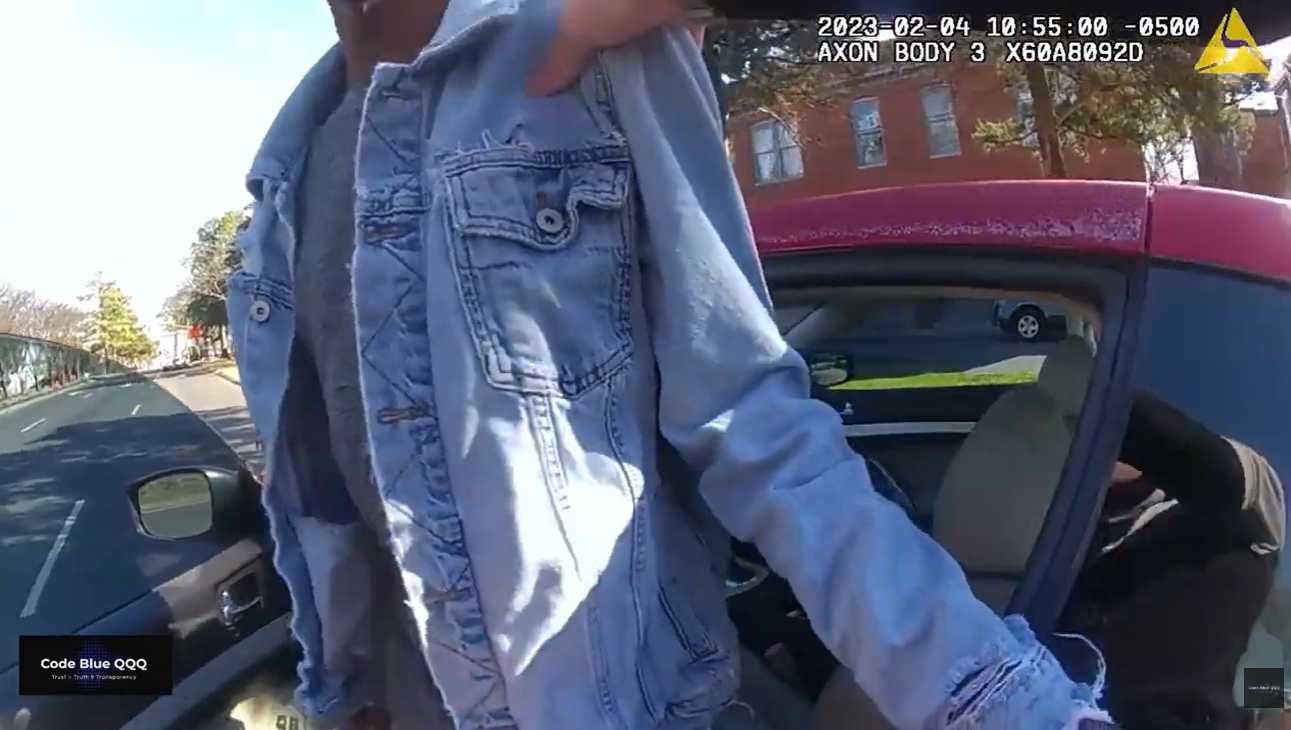
When the officer approached, Willis exited the car.
That decision immediately became a point of contention.
The officer instructed Willis to get back into the vehicle.
Willis did not immediately comply.
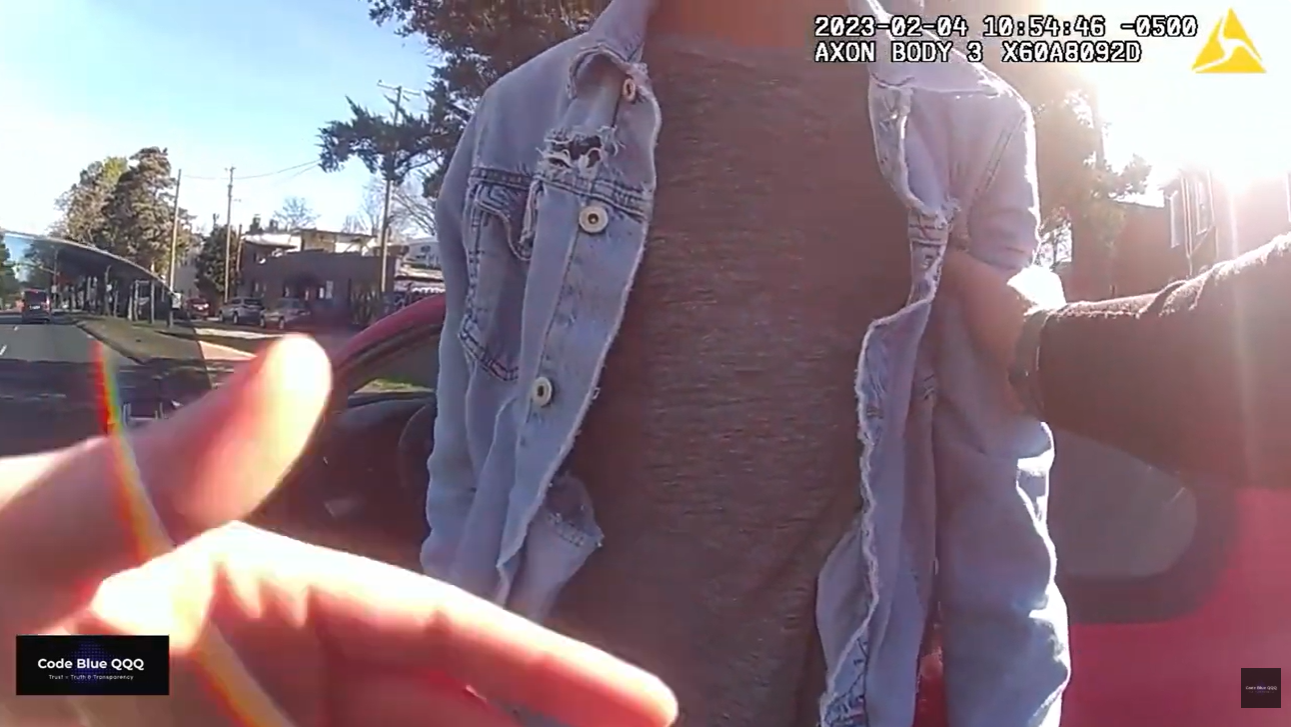
Bodycam footage shows the two standing extremely close together beside the driver's side of the red vehicle.
The officer repeatedly tells Willis to sit down.
Willis questions what the officer is doing and why he is being grabbed.
The exchange is tense but initially remains verbal.
That doesn't last.
The officer eventually takes hold of Willis.
The encounter begins shifting from conversation to physical control.
And this is where the footage becomes particularly important.
There were ultimately two different visual perspectives of the incident: the officer's body camera and cellphone footage recorded by a bystander.
VCU Police later said it released its body-camera recording after video of the officer using force began circulating on social media.
The department argued that the longer bodycam recording provided context missing from the shorter footage.
That context would become central to the public discussion surrounding the encounter.
Repeated Commands Turn Into Physical Resistance
According to accounts of the footage, the officer repeatedly instructs Willis to sit down.
At one point Willis can be heard questioning why the officer is grabbing him.
The officer attempts to physically move Willis back toward the vehicle.
Eventually Willis indicates that he will comply.
For a moment, it appears the confrontation might de-escalate.
Then comes the pivotal movement.
Police say Willis suddenly lunged toward the officer and reached for his firearm.
The officer immediately reacts.
Police1, reporting on the released footage, described the officer shouting that Willis was attempting to grab his gun before striking him and eventually bringing him to the ground.
VCU's account was unequivocal: the department said Willis “lunged forward, and grabbed the gun of the VCU Police officer.”
The officer then used physical force to maintain possession of his firearm and subdue Willis, according to the university.
That moment fundamentally changes the stakes of the encounter.
A fight over an officer's holstered firearm is different from ordinary physical resistance because losing control of the weapon could immediately create a deadly-force situation.
The bodycam becomes chaotic.
The camera moves violently as the officer struggles with Willis.
Commands, shouting and physical movement overlap.
The clean, relatively stable perspective visible seconds earlier disappears.
This is one reason bodycam footage can be both valuable and imperfect.
It records the incident from extremely close range, but during a physical struggle the camera often shows only fragments of what is happening.
DEVELOPMENT: “HE'S TRYING TO GRAB MY GUN”
The most consequential part of the encounter occurs rapidly.
According to VCU Police, Willis reaches toward the officer's firearm.
The officer begins using physical strikes while attempting to retain control.
Accounts of the video describe approximately five strikes before the officer takes Willis to the ground.
What began as a speeding stop is now a full physical confrontation.
But unlike many dramatic bodycam incidents, this encounter does not end with gunfire.
The officer retains possession of the weapon.
Willis is eventually subdued.
Additional assistance arrives.
The confrontation ends with Willis under arrest.
Both men suffered injuries described as minor.
VCU Police said both Willis and the officer were treated at a local hospital.
Willis subsequently faced two significant allegations.
He was charged with obstruction of justice and felony assault and battery on a law-enforcement officer.
At the time of the initial reporting, authorities said additional charges remained possible.
Those were allegations arising from the arrest, not proof of guilt by themselves.
But the arrest wasn't the end of the controversy.
Once video of the encounter reached social media, people began debating not only Willis' actions but also the officer's decisions.
Why the Bodycam Was Released
The public didn't initially encounter the incident through a complete police video.
Instead, cellphone footage showing the officer using force circulated online.
VCU subsequently released the body-camera footage.
NBC12 reported that Virginia Commonwealth University made the recording public on February 7, three days after the encounter, following circulation of the social-media video.
This is an increasingly familiar pattern in modern policing.
A witness records part of an encounter.
The clip reaches social media.
Viewers form opinions based on that perspective.
Police then release bodycam or dashcam footage providing another angle.
Sometimes the additional footage supports the initial interpretation.
Sometimes it substantially changes it.
And sometimes both recordings reveal different but important aspects of the same event.
The Willis case demonstrates precisely why the seconds before force is used can become so important.
A clip beginning when the officer is already striking Willis would show something very different from footage beginning with the original commands beside the car.
The bodycam provides a longer chronology.
But it also raised questions of its own.
Community Reaction Was Far From Unanimous
Not everyone who watched the recording interpreted the encounter in the same way.
The Commonwealth Times, Virginia Commonwealth University's independent student newspaper, later examined the incident and spoke with community activists about what they saw.
Some criticized the officer's decisions before the alleged attempt to grab the firearm.
One community activist questioned why the traffic stop had escalated to a physical confrontation.
A VCU NAACP representative interviewed by the newspaper focused on another issue: distance.
He argued that the officer had allowed the interaction to become dangerously close, creating a situation in which Willis could potentially reach the firearm at all.
That criticism highlights an important distinction.
It is possible to believe that reaching for an officer's weapon presents an extreme danger while separately questioning whether earlier tactical choices contributed to the situation becoming physically unstable.
The Commonwealth Times article also raised broader questions about VCU Police operating in areas frequented by Richmond residents who have no connection to the university.
VCU Police confirmed that Willis himself was unaffiliated with VCU.
Those concerns transformed what could have remained a relatively straightforward traffic-arrest story into a larger debate over campus policing, community relations and use of force.
The Traffic Enforcement Context Matters
There was another important element surrounding the incident.
VCU Police were intensifying traffic enforcement around campus during this period.
Just days after the Willis encounter, the university publicly described a broader pedestrian, cyclist and driver safety campaign.
VCU said the initiative followed the death of student Mahrokh Khan, who had been killed in a traffic collision while crossing a street the previous month.
Police planned increased enforcement, educational outreach and targeted operations around the university's campuses.
VCU Police Chief John Venuti said officers were paying closer attention to dangerous driving behavior and emphasized the responsibility of drivers to obey posted speeds and protect pedestrians.
That context helps explain why officers were conducting concentrated speed enforcement when Willis' vehicle was observed.
According to VCU, the speed limit in many parts of its campus area is 25 mph.
The department alleged Willis was traveling at twice that speed.
From the department's perspective, therefore, this was not merely enforcement for a minor technical violation.
Speeding around dense university streets filled with pedestrians and cyclists was a specific safety concern officers were actively targeting.
A THREE-MINUTE VIDEO WITH MULTIPLE PERSPECTIVES
The most interesting aspect of this incident may be how differently it can appear depending on where the viewer starts watching.
Start with the speed enforcement and the story is about a driver allegedly traveling twice the posted limit.
Start when Willis exits the car and it becomes a story about refusal to follow an officer's instructions.
Start when physical contact begins and the focus becomes police use of force.
Start when the officer shouts about his firearm and it becomes an officer-safety incident.
Start with the bystander's social-media clip and the context may look different again.
None of those individual moments tells the entire story.
Together, they demonstrate why bodycam footage has become such an important but complicated form of evidence.
It provides something written reports cannot: sound, timing, movement and perspective.
But a body camera is not an all-seeing observer.
Its field of view is limited.
During physical contact it can become obstructed.
Movements occurring inches from an officer's body can happen outside the lens.
And the camera cannot independently explain a person's intentions.
That's why responsible reconstruction requires comparing the video with police statements, independent reporting and other available footage.
ENDING: A Speeding Stop That Could Have Ended Very Differently
By the time the encounter ended, both Willis and the officer needed medical treatment.
Willis had been arrested.
The officer still had possession of his firearm.
No shots had been fired.
That final detail is significant.
The allegation that someone attempted to take an officer's firearm introduces the possibility of an extraordinarily dangerous outcome.
Instead, the confrontation ended with relatively minor reported injuries.
The subsequent debate, however, illustrates that avoiding a catastrophic ending does not eliminate questions about what happened before it.
VCU Police maintained that the officer's bodycam corroborated its account that Willis lunged forward and grabbed at the officer's gun.
Community critics questioned earlier tactical decisions, the escalation to physical contact and the relationship between university police and Richmond residents outside the VCU community.
Those perspectives are not identical questions.
One concerns the immediate threat during the struggle.
The other concerns whether different decisions earlier in the encounter might have reduced the chance of that struggle occurring.
The footage leaves viewers with both.
What is clear is how quickly the encounter changed.
At 10:53 a.m., the underlying issue was speeding.
Minutes later, an officer was fighting to maintain control of his firearm.
That transition is what makes the footage so striking.
There is no lengthy pursuit.
No SWAT standoff.
No elaborate investigation unfolding on camera.
Instead, it demonstrates how an apparently ordinary traffic stop can move from conversation to physical confrontation in seconds.
CTA: WATCH THE FULL BODYCAM BEFORE JUDGING THE FINAL MOMENTS
Short clips capture the most dramatic seconds, but this encounter is best understood from the beginning.
Watch the complete bodycam footage to see how a 50-in-a-25 speeding stop progressed from repeated commands beside the vehicle to a struggle over the officer's firearm and the eventual arrest. https://www.youtube.com/watch?v=qFLlvcgp8v4
Comments (0)
Loading comments...
May You Like

MERIDEN POLICE OFFICER SHOOTS MAN BEATING FATHER WITH A BASEBALL BAT

A Suspicious Vehicle Leads Officers Into an Unexpected Chase

[DASHCAM] Drunk Driver Leads Trooper on High-Speed Pursuit Through City Streets













