Store Dispute Escalates After Employee Says Customer Made a Racist Remark
Store Dispute Escalates After Employee Says Customer Made a Racist Remark
A February 2024 disagreement inside a family-run store escalated into a physical confrontation after a 19-year-old employee said she interpreted a customer's remark as racist.
A Routine Shopping Trip Turns Into a Police Call
On February 4, 2024, officers responded to a family-owned store after a physical confrontation between a customer and a 19-year-old employee. The supplied video combines police body-worn-camera footage, interviews with the people involved and surveillance video from inside the business.
The first minutes establish two sharply different accounts. The customer tells officers she had just entered the store and was looking at merchandise near a Hello Kitty display when the employee approached and asked whether she needed help. According to the customer, the conversation quickly became hostile even though she had only begun browsing.
The employee later gives officers a different explanation for why the encounter became personal. She says the customer made a remark about Chinese people not giving others a chance to shop around. The employee tells police she interpreted the comment as racist and that it affected her strongly because of experiences involving her family.
That distinction matters. The available footage establishes that the employee reported perceiving the comment as racist. It does not justify converting every disputed statement made during the argument into an independently verified fact.
What is much clearer is what happened next. The verbal dispute escalated into physical contact, police were called, officers reviewed store surveillance footage and the employee ultimately acknowledged losing control during the confrontation.

Two Accounts of the Argument
The customer's interview is detailed. She tells the officer she entered the store and immediately looked at merchandise. An employee approached and asked whether she was looking for something. The customer says she responded that she had just walked in and had only started browsing.
According to her account, the employee returned and accused her of being rude. The exchange then became increasingly personal. The customer recalls remarks about her lipstick and appearance before she turned away.
She tells police that her back was turned when the employee came from behind, grabbed her hair and pulled her toward the ground. She says she was then struck in the face during the confrontation.
The employee's later statement supplies the missing perspective. She tells officers that the customer's earlier comment about Chinese people angered her. She says she is not Chinese herself but regarded the statement as racist and connected it to painful experiences involving her mother.
The employee describes the incident as something that escalated after she continued thinking about the remark. Her explanation is important because it provides a claimed motive for confronting the customer again. But motive and legal justification are different questions. Feeling insulted or confronting discriminatory speech does not automatically authorize physical force.
Police therefore had to separate the verbal dispute from the physical conduct captured on the store's cameras.

Surveillance Footage Gives Officers Another Source of Evidence
Rather than relying solely on two conflicting statements, officers returned to the store's surveillance system.
The supplied video shows police reviewing the recording with people inside the business. The camera covers the area around the registers and merchandise displays, giving officers a wider perspective than either participant's recollection.
Surveillance footage can be especially important in a battery investigation because witnesses may remember a chaotic confrontation differently. A fixed camera can help establish who moved toward whom, whether someone was walking away, how quickly the physical encounter began and how long it lasted.
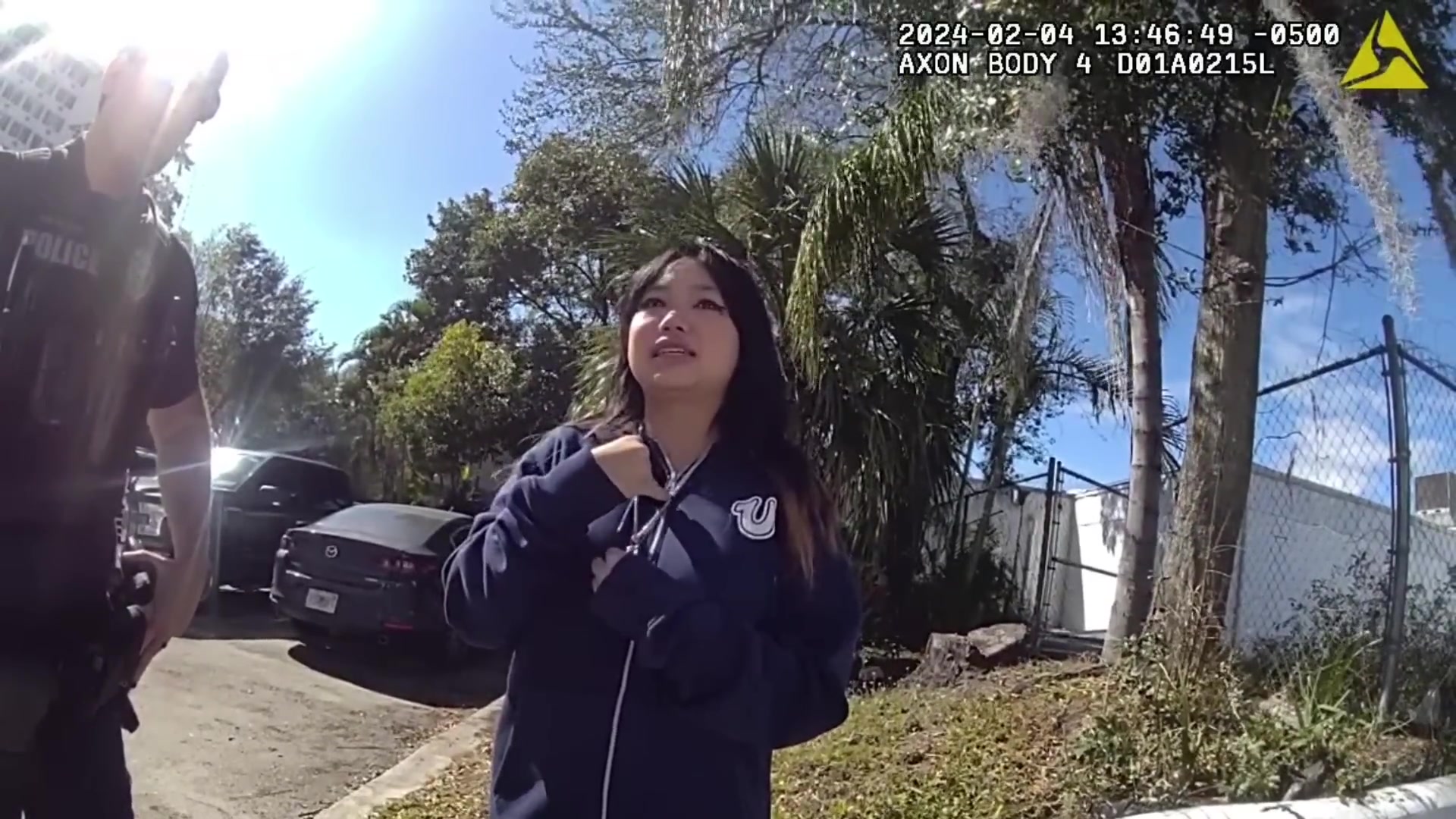
The recording in this case was significant enough that officers continued the investigation after watching it. The 19-year-old employee was then asked to step outside and explain what had happened.
Her interview is one of the most revealing portions of the supplied footage. She does not simply deny that an altercation occurred. Instead, she describes becoming angry over what she perceived as racism and says the situation escalated.
That admission, combined with the surveillance recording and the customer's complaint, gave officers a clearer evidentiary picture than they had when they first arrived.

The Employee Explains Why She Lost Her Temper
During the body-camera interview, the employee speaks emotionally about the alleged comment. She says she does not tolerate racism because of how it affected her family, particularly her mother.
She explains that she approached the customer again after thinking about the exchange. From her perspective, the comment was not simply rude customer behavior. She interpreted it as an attack connected to race and family history.
This is where the original title's word “snaps” comes from, but that wording compresses a longer process. The employee describes hearing a comment, becoming increasingly upset, confronting the customer and then allowing the dispute to become physical.
The officer listening to her does not dismiss the emotional impact of the alleged remark. At the same time, he explains that the legal issue concerns the physical contact.
That distinction is useful beyond this specific case. Offensive or discriminatory speech can be deeply upsetting, but criminal statutes generally treat speech and physical assault as separate questions. A person may have legitimate reasons to condemn what was said while still being legally responsible for initiating unwanted physical contact.
The employee appears to understand that distinction as the conversation continues. Her demeanor becomes increasingly emotional as she realizes the encounter may result in arrest.
Police Move From Investigation to Arrest
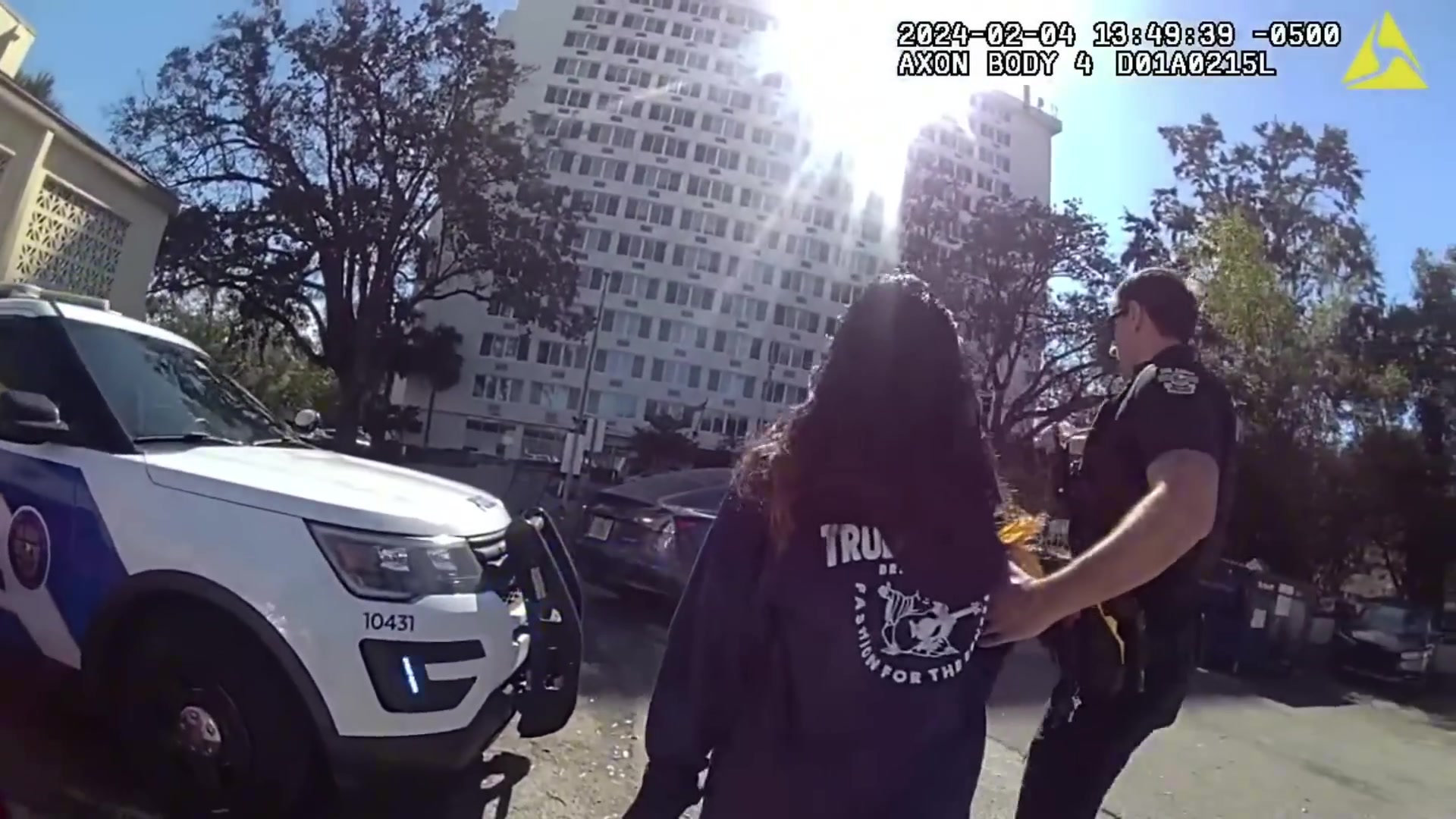
After interviewing the parties and reviewing the surveillance footage, officers decided they had probable cause for an arrest.
The supplied video shows the officer explaining the situation to the employee and her family. The conversation is noticeably calmer than the confrontation that brought police to the store. Officers discuss the charge, the booking process and the possibility of release.
The employee is visibly upset. She cries and apologizes while officers prepare to take her into custody.
The arrest should not be confused with a conviction. The footage documents the officer's probable-cause decision at the scene. Without a verified court disposition from a reliable public source, it would be inappropriate to claim a later conviction, sentence or final case outcome.
This is one area where online summaries of body-camera videos often go too far. An arrest video may identify what police believed occurred, but it does not automatically reveal how prosecutors handled the case months later.
For this incident, the safest verified conclusion from the available material is that officers investigated a reported battery, reviewed surveillance footage, interviewed the 19-year-old employee and arrested her after determining that the physical confrontation supported a battery allegation.
Why the Alleged Racist Remark Needs Careful Wording
The racial component is central to the employee's explanation, but it needs to be described precisely.
The employee told officers that the customer made a remark about Chinese people and shopping. She interpreted it as racist. That statement is captured in the supplied video and repeated in available transcripts of the encounter.
The customer and employee clearly disagreed about how the interaction began and what each person's tone meant. Because the footage does not provide a perfect independent recording of every word spoken before the physical confrontation, an article should avoid presenting the employee's interpretation as though a court or independent investigation formally established the customer's intent.
The accurate formulation is straightforward: the employee said she believed the customer made a racist remark, and she told police that the perceived racism contributed to her anger.
This preserves the employee's account without inventing certainty that the evidence does not provide.
It also prevents the story from becoming a simplistic argument over which participant was morally right. Police were investigating physical conduct. Whatever words preceded the confrontation, officers still had to determine whether an unlawful battery occurred.
Bodycam Shows More Than the Moment of Conflict
The most useful feature of the supplied video is that it does not stop with the surveillance clip.
Body-camera footage captures the customer explaining what she says happened. It captures the store owner or family members helping officers locate the relevant surveillance recording. It captures officers reviewing the video. And it captures the employee explaining her own reasoning.
That sequence allows viewers to see how officers move from an initial allegation to an arrest decision.
Police investigations at businesses frequently depend on exactly this combination of evidence: statements from participants, statements from witnesses and surveillance video. None is automatically perfect. A customer may be angry. An employee may be defensive. A witness may have seen only part of the event. A camera may lack audio or have a blind spot.
The investigator's task is to compare those sources and look for points of agreement.
Here, the participants disagree about the verbal exchange, but the physical confrontation and the employee's emotional explanation give officers evidence they can evaluate independently of the argument over tone.
A Brief Argument Creates Consequences Far Beyond the Store
The incident illustrates how quickly a minor customer-service interaction can become a criminal matter.
At the beginning, the disagreement appears to concern whether the employee's offer of assistance was welcomed and how the customer responded. Within minutes, both women were exchanging personal remarks. The employee says a comment involving Chinese people crossed a line for her. The customer says she was walking away when the employee attacked.
Once physical force entered the encounter, the consequences changed dramatically. Police were called. Surveillance footage became evidence. The employee was interviewed and then taken into custody.
The story is compelling without exaggerating either side. There is no need to describe the customer as definitively racist when the strongest verified evidence is that the employee perceived her comment that way. There is also no need to reduce the 19-year-old employee to a caricature. Her interview shows exactly why she became angry, even while officers explain why that anger did not excuse the alleged battery.
That tension is what makes the complete footage more informative than a short fight clip.
The body cameras show an officer trying to acknowledge the employee's feelings while still enforcing the law. The employee's remorse becomes increasingly visible as the reality of the arrest sets in.
The final result is a cautionary example of how quickly words, assumptions and anger can escalate when neither side disengages early enough.
Comments (0)
Loading comments...
May You Like

Woman Refuses Repeated Orders to Exit Her Car Before Officers Move In

911 Call Leads Police to a Disturbing Family Situation

Female Driver Destroys Three Lives in a Matter of Minutes