Sovereign Citizen Meets The Ashaphlt When He Runs From The WRONG Ohio Trooper
Sovereign Citizen Meets The Ashaphlt When He Runs From The WRONG Ohio Trooper
A Missed Turn Signal Starts the Stop
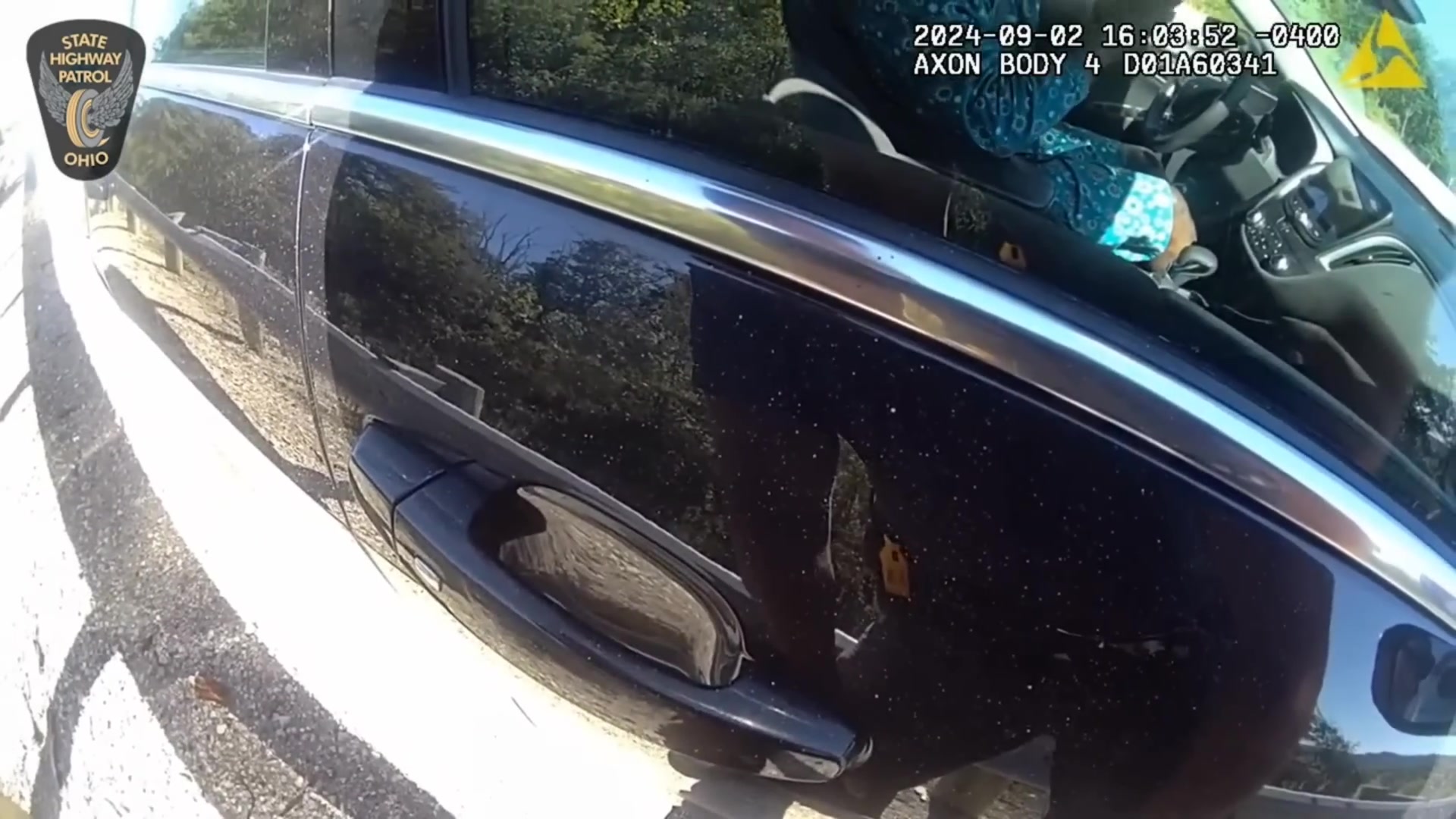
Just after 4 p.m. on September 2, 2024, an Ohio State Highway Patrol trooper stopped a Chevrolet passenger car after observing the driver fail to signal. The supplied body-camera footage shows an AXON timestamp of September 2, 2024 shortly after 4:08 p.m., along with unmistakable Ohio State Highway Patrol branding. Those details match public reporting and later Ohio court records involving Edwin L. Prude.
The initial reason for the stop was minor. The trooper approached the driver's window, explained the traffic violation and requested a driver's license. Instead of producing one, Prude began making arguments associated with the sovereign-citizen movement. He insisted that he was not “driving” in the legal sense and described himself as “traveling.”
This distinction has become familiar in sovereign-citizen traffic encounters, but Ohio courts have repeatedly rejected the idea that calling the operation of a motor vehicle “traveling” removes a driver from licensing and traffic laws. The trooper did not accept Prude's terminology as a substitute for identification.
What follows is a striking example of how a simple traffic stop can become far more serious when a driver decides that his personal interpretation of the law overrides an officer's instructions.

The Trooper Gives Prude a Clear Choice
For several minutes, the trooper tries to obtain basic identifying information. Prude continues arguing that the officer does not have the authority he claims. The conversation is not initially physical, and the trooper repeatedly explains the consequences of refusing to identify himself.
The body camera shows the trooper remaining beside the driver's door while Prude talks from inside the Chevrolet. The trooper eventually makes the situation explicit: Prude can provide his license or face arrest for refusing to cooperate with the lawful stop.
This is where sovereign-citizen rhetoric collides with ordinary traffic enforcement. A person may disagree with a statute or believe a court lacks jurisdiction, but that disagreement does not allow the person to cancel a roadside detention by declaration. Challenges to a citation or arrest are normally made later in court.
Prude does not choose either of the options the trooper presents. Instead, as the trooper moves to open the driver's door and take him into custody, Prude shifts the Chevrolet into drive.
The Chevrolet Suddenly Pulls Away
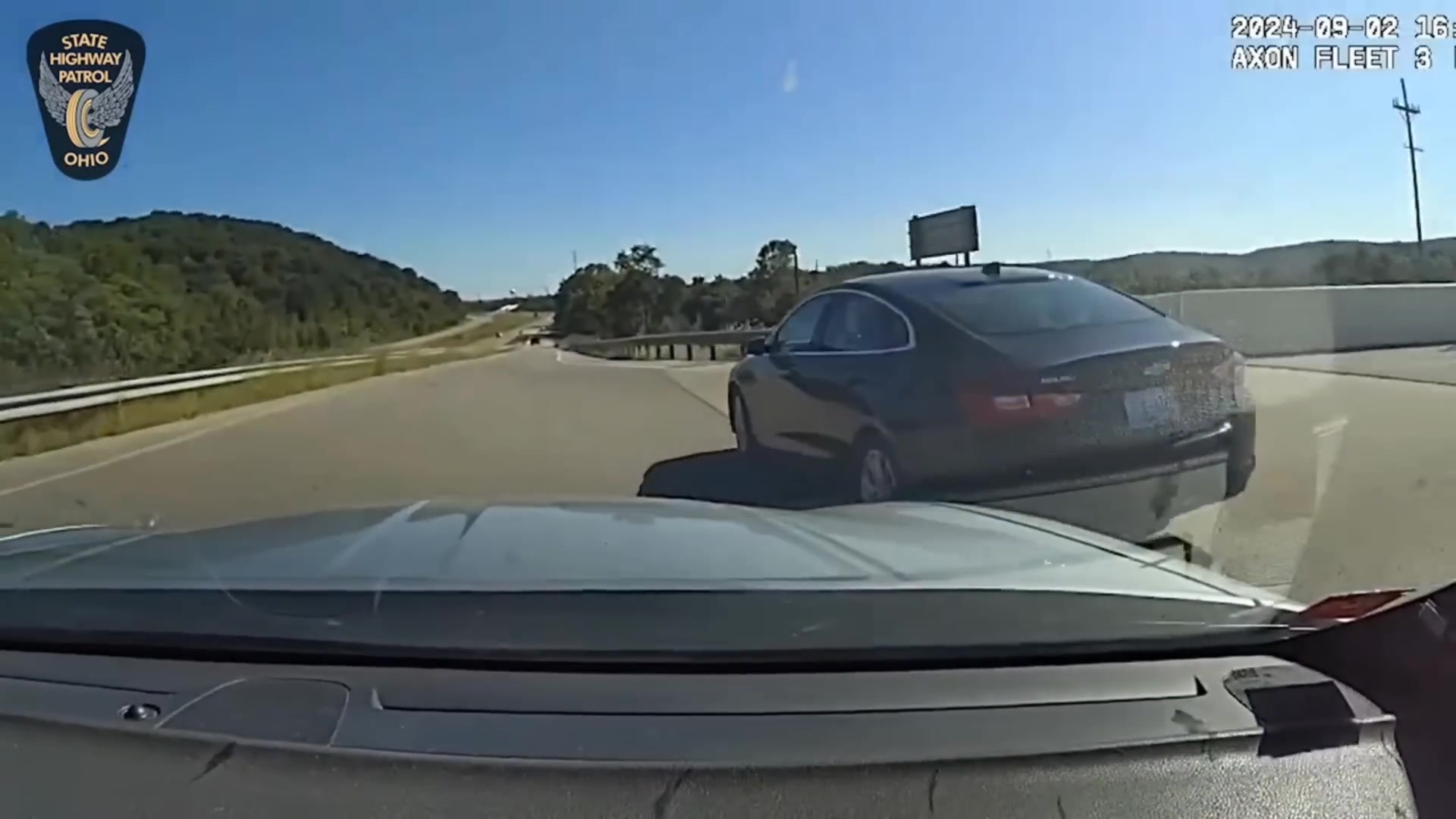
The transition from legal argument to pursuit happens in seconds. Prude accelerates away while the trooper is standing beside the car. The officer immediately returns to his cruiser and begins following.
According to contemporary local reporting, the pursuit moved south on State Route 823 and reached extremely high speeds, reportedly as high as approximately 130 mph. The trooper at one point lost or broke off close contact because of the speed before later regaining visual contact.
That decision highlights a fundamental problem in police pursuits. Officers are trying to apprehend a fleeing driver, but the pursuit itself can create danger for everyone on the road. Speed, traffic density, road design and the seriousness of the underlying offense all influence whether officers continue close pursuit.
Once Prude fled, however, the legal stakes were no longer limited to a turn-signal violation or refusal to produce a license. Ohio law separately criminalizes knowingly failing to comply with an officer's signal to stop, and a high-speed flight can elevate the seriousness of that offense.
The Chase Moves at Dangerous Speeds
Dash and body-camera footage shows the trooper following the Chevrolet along divided roadway while Prude attempts to create distance. Traffic is relatively light in portions of the chase, but the speeds make even ordinary lane changes dangerous.
The Chevrolet passes other vehicles and continues south. At several points, Prude's driving forces the trooper to make rapid decisions about distance and positioning. A pursuit at triple-digit speed leaves little margin for an unexpected vehicle, debris or a driver entering from a side road.
Local reporting from Scioto County described the chase as moving along State Route 823 before Prude exited toward U.S. 52. The later appellate decision confirms the essential sequence: Prude refused to provide his driver's license, fled at a high rate of speed and was eventually apprehended.
The footage is more informative than a short compilation because it shows the pursuit as a continuous process rather than only the final crash. The trooper has to regain ground, monitor Prude's movements and wait for an opportunity to end the chase without simply striking the vehicle at the first possible moment.
A PIT Maneuver Finally Ends the Flight
Near the ramp connecting Galli Pike and State Route 52, the trooper closes the distance. Prude slows and changes direction, creating an opportunity for the trooper to use a Precision Immobilization Technique, commonly called a PIT maneuver.
The first contact rotates the Chevrolet, but Prude attempts to continue. The trooper follows with another forceful maneuver, and the car is driven into the guardrail. The pursuit that began with a failed turn signal is finally over.
This is the “meets the asphalt” moment emphasized by the original title, although the more precise description is that the fleeing Chevrolet is PITed and ends against the roadside barrier. The body-camera footage shows the trooper immediately transitioning from pursuit driving to a high-risk arrest.
A PIT maneuver is intended to rotate a fleeing vehicle and bring it to a stop, but it is not risk-free. Speed, roadway geometry, nearby traffic and the type of vehicle can affect the outcome. Here, the maneuver successfully immobilized Prude's Chevrolet sufficiently for officers to move in.
Prude Is Ordered Out at Gunpoint
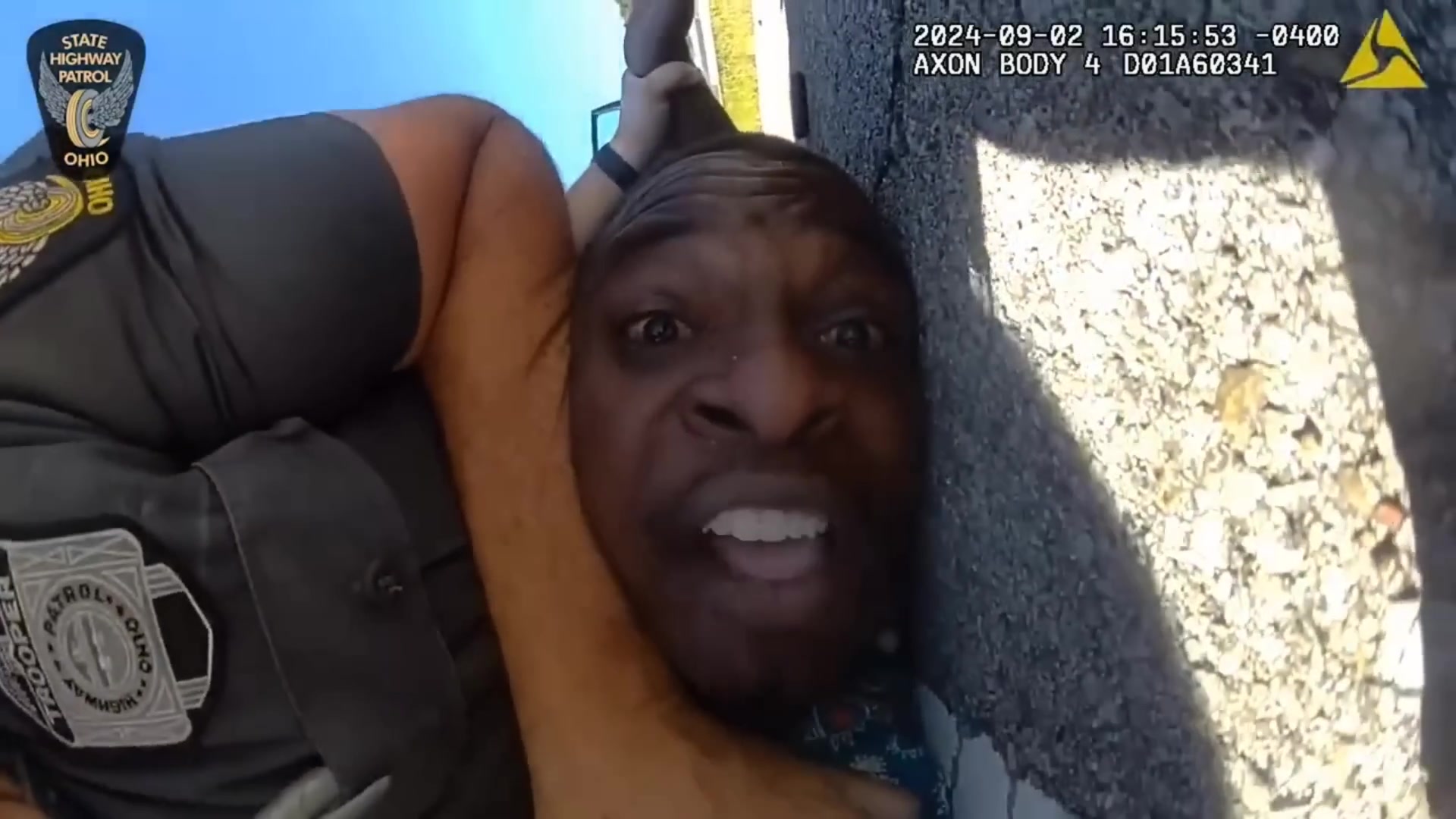
After the Chevrolet stops, the trooper exits with his firearm drawn and repeatedly orders Prude to show his hands and get onto the ground. The tone is dramatically different from the conversation at the beginning of the stop.
That difference reflects what officers now know. Prude has fled at high speed, ignored repeated police signals and forced a pursuit that ended with vehicle contact. Officers cannot assume that a driver who has just taken those risks will suddenly cooperate once the car stops.
Prude eventually comes out and is taken into custody. The arrest ends without the trooper shooting him. The video shows officers maintaining control while checking the vehicle and securing the scene.
The full sequence is important because the forceful arrest posture does not appear out of nowhere. It follows several miles of flight and a PIT maneuver, circumstances that give officers reason to approach the stopped car cautiously.
A Loaded Firearm Is Found Under the Seat
The case becomes more serious again when officers search the Chevrolet. Contemporary reporting says a loaded firearm was discovered under the driver's seat. Prude's legal status made that discovery significant because authorities alleged he was prohibited from possessing a firearm.
Initial reports therefore described charges including failure to comply and having a weapon while under disability. The later grand-jury indictment was broader. According to the Ohio Fourth District Court of Appeals, Prude was indicted in October 2024 on eight counts.
Those counts included two charges of obstructing official business, failure to comply with an order or signal of a police officer, improperly handling a firearm in a motor vehicle, two counts of having weapons while under disability and additional drug-related counts documented in the appellate record.
An indictment represents accusations, not convictions. The final case outcome was narrower because Prude later entered a negotiated guilty plea to selected counts.
The Court Case Produces a 57-Month Prison Sentence
The legal story did not end with the roadside arrest. Court records now provide a verified outcome that was not available when many of the original videos about the chase were published.
According to the Ohio Fourth District Court of Appeals' August 2026 decision in State v. Prude, Prude pleaded guilty to two counts of obstructing official business, both fifth-degree felonies, and one count of failure to comply with an order or signal of a police officer, a third-degree felony.
The Scioto County Court of Common Pleas imposed a jointly recommended aggregate prison sentence of 57 months. Prude later appealed, challenging aspects of his guilty plea and sentence.
On August 10, 2026, the Fourth District Court of Appeals rejected his arguments and affirmed the judgment. The appellate decision is especially useful because it provides an authoritative record of both the September 2024 conduct and the ultimate convictions.
This means the case can now be described more precisely than the original viral footage allowed. Prude was not merely arrested after the chase; he ultimately pleaded guilty to three felony counts arising from the incident and received a 57-month aggregate prison term.
Why the Sovereign-Citizen Argument Did Not Change Ohio Law
Prude's insistence that he was “traveling” rather than driving fits a recurring sovereign-citizen theory: that ordinary licensing and traffic statutes apply only to commercial drivers or to people who voluntarily accept government jurisdiction.
Ohio courts have repeatedly rejected versions of that argument. State appellate decisions explain that people operating motor vehicles on public roads remain subject to the state's driver's-license and traffic requirements regardless of sovereign-citizen terminology.
The important distinction is between a constitutional right to interstate movement and the regulation of operating a motor vehicle on public roads. States can impose licensing, registration and traffic-safety requirements on drivers. Calling the activity “traveling” does not eliminate those requirements.
Prude was free to contest the original turn-signal stop through legal channels. Fleeing from the trooper instead created a new and much more serious criminal issue, one that ultimately became the centerpiece of his conviction and prison sentence.
A Minor Traffic Violation Becomes a Multi-Year Criminal Case
The contrast between the beginning and the final outcome is dramatic. The trooper initially wants to address a failure to signal and verify the driver's identity. Had Prude produced his license and handled any disagreement through court, the roadside contact could have remained a routine traffic matter.
Instead, he refuses to identify himself, insists that the law does not apply in the way the trooper says it does and drives away as the officer attempts to arrest him. The flight leads to a high-speed pursuit, multiple PIT contacts, a crash into a guardrail and the discovery of a loaded firearm.
The criminal case then continues for nearly two years. An eight-count indictment is filed, a plea agreement narrows the convictions, the trial court imposes a 57-month sentence and an appellate court ultimately affirms that judgment in 2026.
That verified timeline gives the footage more significance than a simple “sovereign citizen gets PITed” compilation. It shows the first minutes of conduct that eventually became part of a felony prosecution and appellate decision.
The Full Footage Shows Exactly Where the Encounter Changed
The strongest moment in the video is not necessarily the PIT maneuver. It is the instant Prude decides to put the Chevrolet in drive while the trooper is standing beside him. Until then, the encounter is still a legal argument at the side of the road.
Once the car moves, the debate about “traveling” becomes secondary. The trooper is now dealing with a driver fleeing a lawful stop. Every subsequent mile increases the risk to Prude, the trooper and uninvolved motorists.
The chase eventually ends against a guardrail, but the consequences continue far beyond the roadway. The firearm recovered from the vehicle expands the investigation, the grand jury returns multiple felony counts, and Prude ultimately accepts a plea that results in years of incarceration.
The case is also a useful reminder to distinguish internet labels from court findings. “Sovereign citizen” describes the style of argument Prude uses in the footage; the convictions themselves are for specific Ohio criminal offenses, not for holding an unconventional political or legal belief.
By 2026, the appellate record gives this story a definitive legal endpoint. The court affirmed the convictions and the 57-month aggregate sentence, rejecting Prude's challenges to the plea and sentencing process.
Comments (0)
Loading comments...
May You Like
Everything Changed When Cops Asked About Weapons

911 Call Leads Police to a Disturbing Family Situation