Sovereign Citizen Challenges an Officer Until the Traffic Stop Turns Serious
Sovereign Citizen Challenges an Officer Until the Traffic Stop Turns Serious
A Rainy Parking-Lot Stop Starts With a Legal Argument
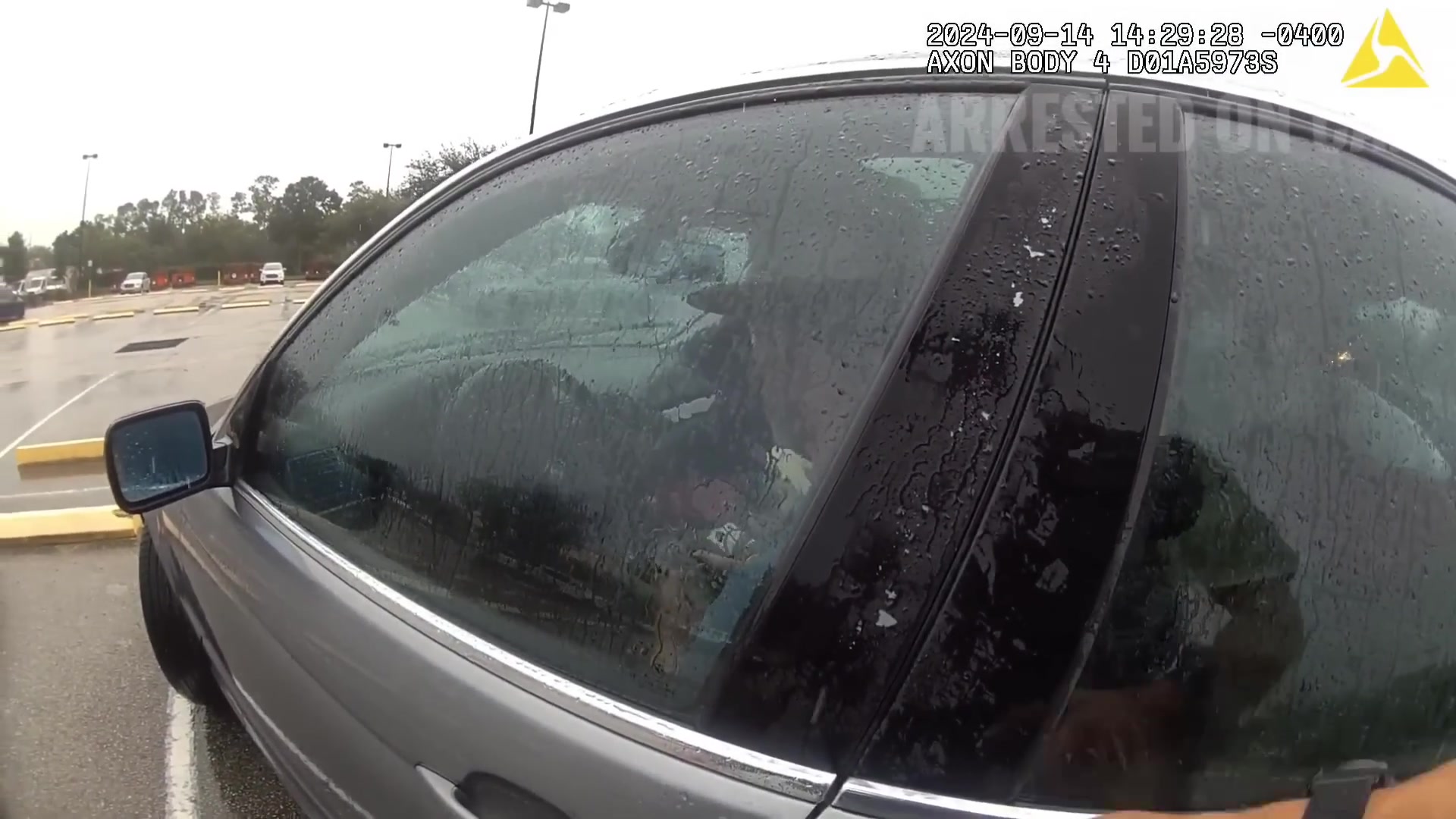
The supplied body-camera footage records an encounter on September 14, 2024. The AXON overlay places the interaction in the early afternoon, and rain covers the windows of the vehicle as an officer speaks with the driver in a large parking lot. From the beginning, the encounter is less about a conventional explanation for a traffic violation and more about the driver's belief that the officer lacks authority over him.
That is the central idea behind the original title. The driver uses arguments commonly associated with the so-called sovereign-citizen movement, a loose collection of beliefs in which people claim that particular wording, documents or interpretations of law place them outside ordinary government jurisdiction. Courts do not generally accept those theories as a way to avoid traffic and licensing laws.
The footage itself is the primary source for this article because public-source research did not uncover a police report or local news story that could be matched to this exact September 14 encounter with sufficient confidence. Several well-publicized sovereign-citizen arrests occurred in 2024, but their dates, vehicles and circumstances do not match this recording. No unrelated incident has therefore been substituted for this one.
That means the driver's identity, the exact department, the original violation, the final charges and any court outcome remain unverified here. What the camera does document clearly is the progression from argument, to repeated instructions, to an increasingly serious confrontation over whether the driver will comply.
The Driver Tries to Redefine the Encounter
A recurring feature of sovereign-citizen encounters is an attempt to replace ordinary legal terminology with a private interpretation. Drivers may insist that they are “traveling” rather than driving, claim that licensing rules apply only to commercial activity, or argue that an officer must prove jurisdiction before requesting identification. These claims can make a simple stop last far longer than necessary.
In the supplied footage, the driver repeatedly engages the officer in that type of argument. He records the encounter from inside the vehicle and appears focused on challenging the officer's authority rather than moving the stop toward a normal conclusion.
For an officer, the practical question is narrower. If a vehicle has been lawfully stopped, the officer generally needs to establish who is operating it and address the reason for the detention. A roadside disagreement over legal philosophy does not itself terminate the stop.
The officer therefore continues giving instructions instead of accepting the driver's interpretation as controlling. The tone remains relatively measured for a significant portion of the video, but the disagreement does not resolve itself.
Recording Police Does Not End the Obligation to Comply
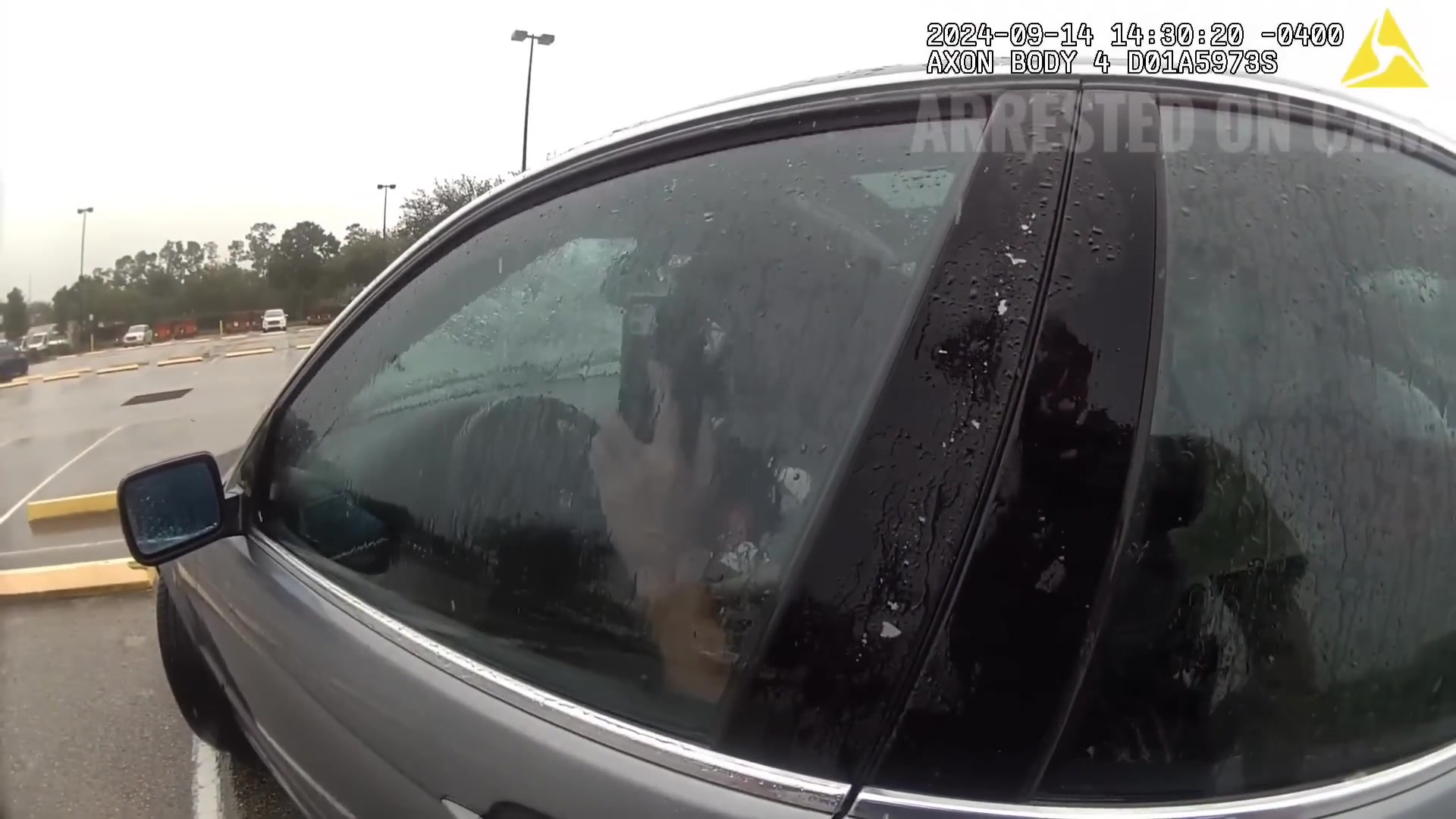
The driver is visibly holding a phone and recording through the rain-covered window. Recording police in public can be lawful in many circumstances, provided the recording does not unlawfully interfere with officers. But a camera does not transform an otherwise lawful detention into a voluntary encounter.
This distinction is important because videos of sovereign-citizen stops often blend two separate issues: a person's right to document government activity and the person's obligation to follow lawful orders. A motorist may record an officer while still being required to provide legally required information or exit a vehicle when the law permits the officer to order that action.
The body camera provides the other side of the recording. Instead of seeing only the driver's phone perspective, viewers can observe where the officer is standing, how often instructions are repeated and how much time passes while the driver continues debating.
That broader context is one reason complete footage is more useful than a short viral clip. A few seconds of an officer raising his voice may look abrupt if the preceding minutes of repeated instructions have been removed.
The Conversation Stops Going in Circles
Eventually, an officer has to decide whether continued discussion is accomplishing anything. Police cannot keep a traffic stop open indefinitely merely to debate unconventional theories. If the information needed to complete the stop is still being withheld, the encounter can move from persuasion toward enforcement.
The supplied footage captures that transition. The officer's instructions become firmer, and the possibility of physical removal or arrest becomes increasingly real. The driver continues to challenge the officer rather than simply resolving the identification and compliance issues.
This is the point where the title's “dose of reality” framing comes from. The driver's theory may tell him that the officer has no legitimate power over him, but the officer is operating under actual state law and department authority. The disagreement cannot be settled merely by repeating a personal interpretation.
That does not mean officers have unlimited authority. Police actions remain subject to constitutional limits, state law and department policy. But those disputes are ordinarily challenged through courts, complaints and attorneys, not by unilaterally declaring a roadside detention invalid.
The Vehicle Becomes a Barrier Between the Two Sides
For much of the encounter, the closed vehicle separates the driver from the officer. That barrier gives the driver a sense of control: he can remain seated, keep the window mostly closed and continue speaking through the glass. From the officer's perspective, however, the same barrier can prevent the stop from progressing.
Vehicle-removal orders are consequential because once an officer decides a driver must exit, refusal can create a new confrontation independent of the original traffic issue. Officers may repeat the order several times before taking physical action, particularly when there is no immediate violent threat.
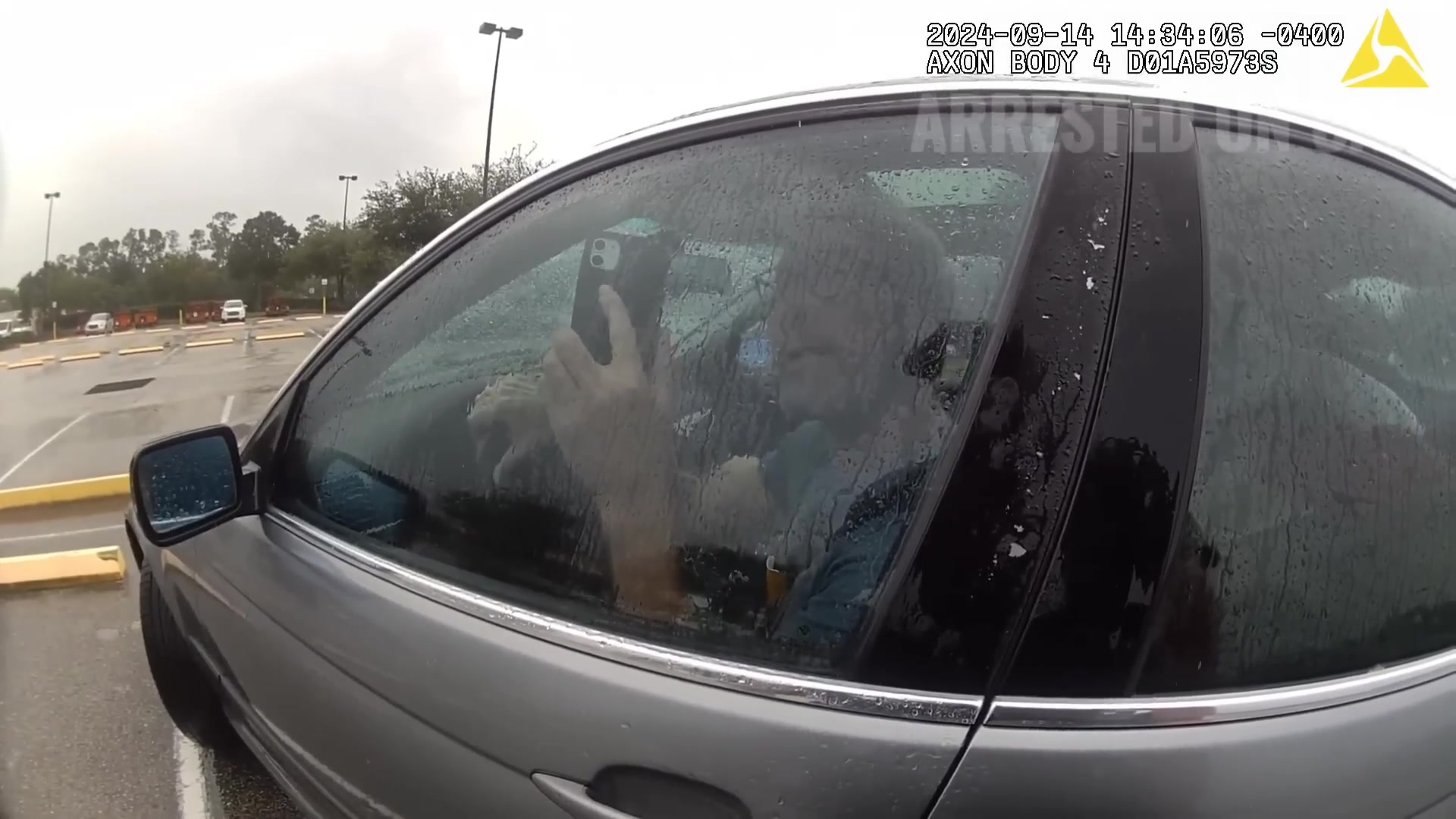
The rain adds another layer to the scene. Visibility through the windows is reduced, and both the officer's camera and the driver's windows are wet. Nevertheless, the driver's phone, posture and continued engagement are visible enough to show that he understands an interaction with police is ongoing.
What cannot responsibly be inferred from the video alone is the exact statutory basis for every order. Without the underlying report, citation or agency documentation, this article does not invent a specific traffic code section.
Sovereign-Citizen Arguments Have a Long Track Record in Traffic Stops
The encounter fits a broader pattern documented in police and court reporting across the United States. People identifying with sovereign-citizen ideas have repeatedly argued that driver's licenses, registration requirements and traffic laws do not apply to them because they are “traveling,” operating private property or outside government jurisdiction.
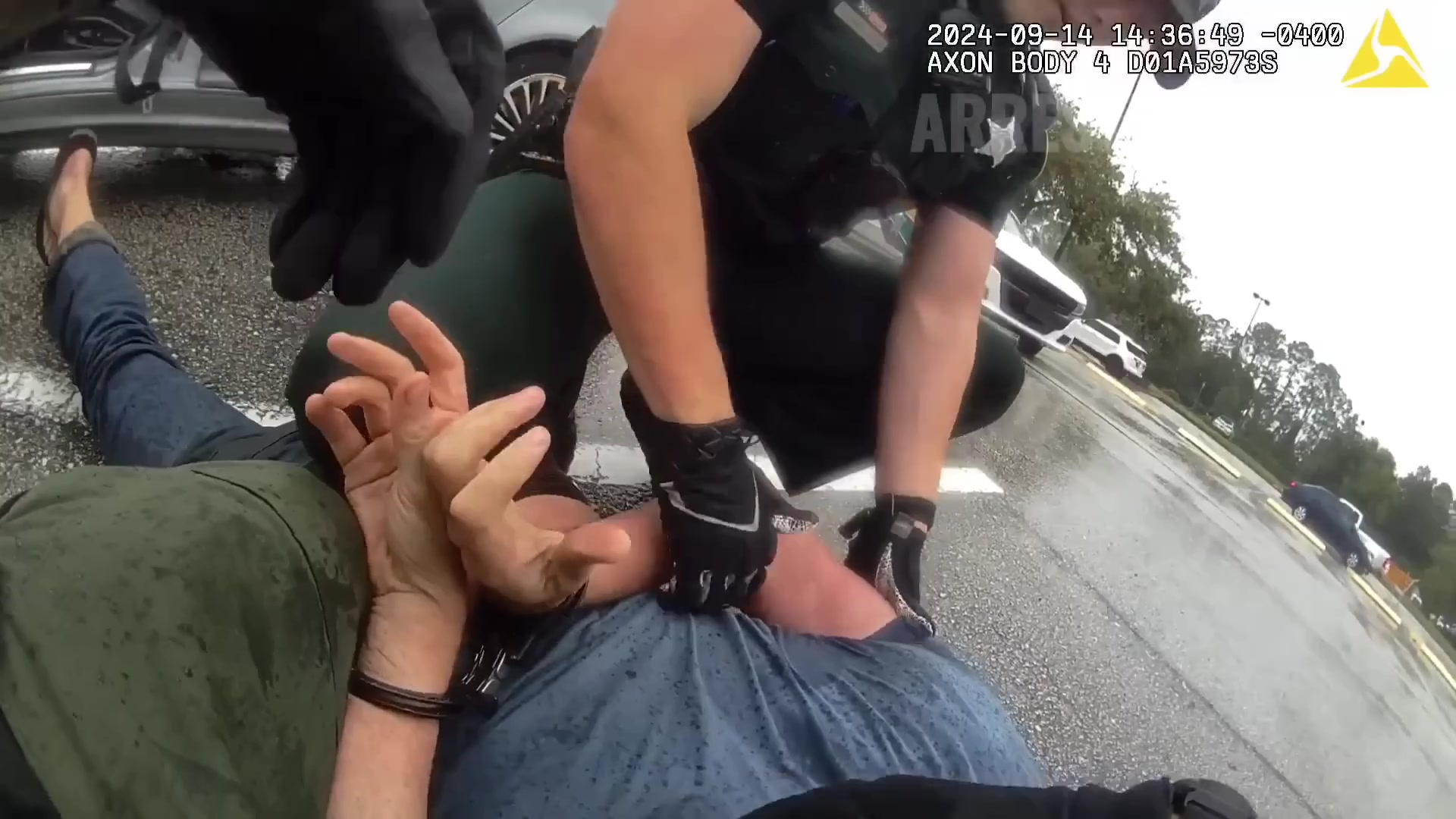
Those theories have repeatedly failed when tested against ordinary traffic law. In a 2024 Florida case, for example, an Edgewater officer arrested a motorcyclist after police said he refused to provide required information and insisted the stop was illegal. Reporting on that case quoted legal experts explaining that traffic laws still apply despite sovereign-citizen claims.
That separate Florida case is useful only as legal and cultural context. It is not presented as the incident in the supplied footage. The dates and circumstances are different, and responsible research requires keeping them separate.
The same caution applies to other viral sovereign-citizen videos. Similar phrases can make two encounters sound identical even when they occurred in different states, years and departments. Exact identification requires matching the timestamp, agency, vehicle, people, location, dialogue and outcome.
The Officer's Patience Becomes Part of the Story
One of the most revealing aspects of the footage is how long verbal communication continues. The officer does not appear to treat the first unconventional legal claim as an immediate reason for force. Instead, the driver is given repeated opportunities to respond and comply.
That patience serves a practical purpose. Voluntary compliance is usually safer than physically removing someone from a vehicle. Every additional person involved in a hands-on arrest increases the possibility of falls, injuries, damaged property or escalation.
At the same time, patience has limits. If a driver learns that repeating the same argument indefinitely prevents enforcement, a lawful stop becomes impossible to complete. Officers therefore have to establish a point at which instructions are no longer merely requests.
The tension in this video comes from watching that boundary approach. The driver appears convinced that his reasoning changes the officer's legal authority. The officer appears equally clear that it does not.
What Can Be Verified and What Remains Unknown
The strongest directly verifiable detail is the body-camera timestamp: September 14, 2024. The footage also clearly shows a male driver seated in a gray vehicle in a wet parking lot, filming the encounter while officers repeatedly engage him.
The video's sovereign-citizen framing is consistent with the driver's style of argument, but a complete official report was not located during research. For that reason, no name is attached to him here and no final criminal charge is stated as fact.
This limitation is deliberate. Search results include other 2024 sovereign-citizen encounters in Florida, California and elsewhere, including cases involving traffic violations, resisting arrest and disputes over identification. None matched this video's September 14 timestamp and visual sequence closely enough to justify claiming it was the same case.
When exact verification fails, footage-based reporting is preferable to filling gaps with a more searchable but unrelated arrest. The result may contain fewer names and charges, but it remains faithful to the evidence.
The Real Conflict Is Between Belief and Enforceable Law
The encounter is compelling because both sides appear to be operating from completely different assumptions. The driver behaves as though the words he uses determine whether police authority exists. The officer treats the stop as an ordinary legal process that cannot be canceled by personal declaration.
That gap explains why sovereign-citizen traffic stops so often become prolonged. If one side believes compliance is legally required and the other believes compliance would concede a jurisdiction that does not exist, even a simple request for identification can become a fundamental dispute.
But the roadside is a poor place to resolve abstract legal arguments. Police enforce statutes and court decisions currently in effect. A driver who believes those laws were misapplied can challenge the stop afterward through established legal processes.
The footage therefore provides a useful example without requiring ridicule or exaggeration. The driver's arguments do not persuade the officer to end the stop, and continued refusal only makes the encounter more serious.
A Simple Stop Becomes Much Harder Than It Needed to Be
The original title presents the officer as the “wrong cop” for a sovereign citizen to challenge. A more precise reading is that the driver encounters an officer who does not allow the legal debate to replace the practical requirements of the stop.
The camera records a familiar escalation pattern: an initial police contact, a refusal to accept the officer's authority, repeated arguments, increasingly direct instructions and a point where the encounter can no longer remain a conversation through a closed window.
There is no need to invent a dramatic criminal history or court result to make that sequence interesting. The conflict is already visible. One person believes a particular legal theory places him beyond the officer's authority; the officer continues acting under the law as he understands and enforces it.
The complete footage also offers something short social-media clips often remove: time. Viewers can see how many opportunities exist for the encounter to end more simply and how repeated refusal gradually narrows those options.
Until an official report or court record can be confidently matched to this exact September 14, 2024 footage, the responsible account ends with what the recording establishes rather than a guessed identity or outcome.
Comments (0)
Loading comments...
May You Like

911 Call Leads Police to a Disturbing Family Situation
Officer Stops to Help but the Situation Quickly Escalates

West Virginia Man Laughs at Police Officer and Ends Up Arrested