
Sidney Police Engage Active Shooter In Intense Showdown
Active Shooter Opens Fire Inside an Ohio Grocery Store Before Police Rush In
HOOK: OFFICERS HAD NO IDEA WHERE THE SHOOTER WAS
It was just after 8 a.m., four days before Christmas.
Customers and employees inside Sidney Foodtown were beginning what should have been an ordinary Wednesday morning when a man carrying a handgun entered the grocery store.
Seconds earlier, he had already fired a shot outside.
Inside, people saw the weapon and began running.
Then another shot rang out.
A woman near the registers became the apparent focus of the gunman. She ran for cover as he fired in her direction. Other customers fled down an aisle while the shooter moved through the store looking for people.
Someone called 911.
“We’re trying to barricade ourselves,” one caller told dispatchers, according to audio obtained by WHIO. The caller said the gunman had also fired toward him outside.
At 8:03 a.m., the first Sidney police officer arrived.
He didn't wait outside.
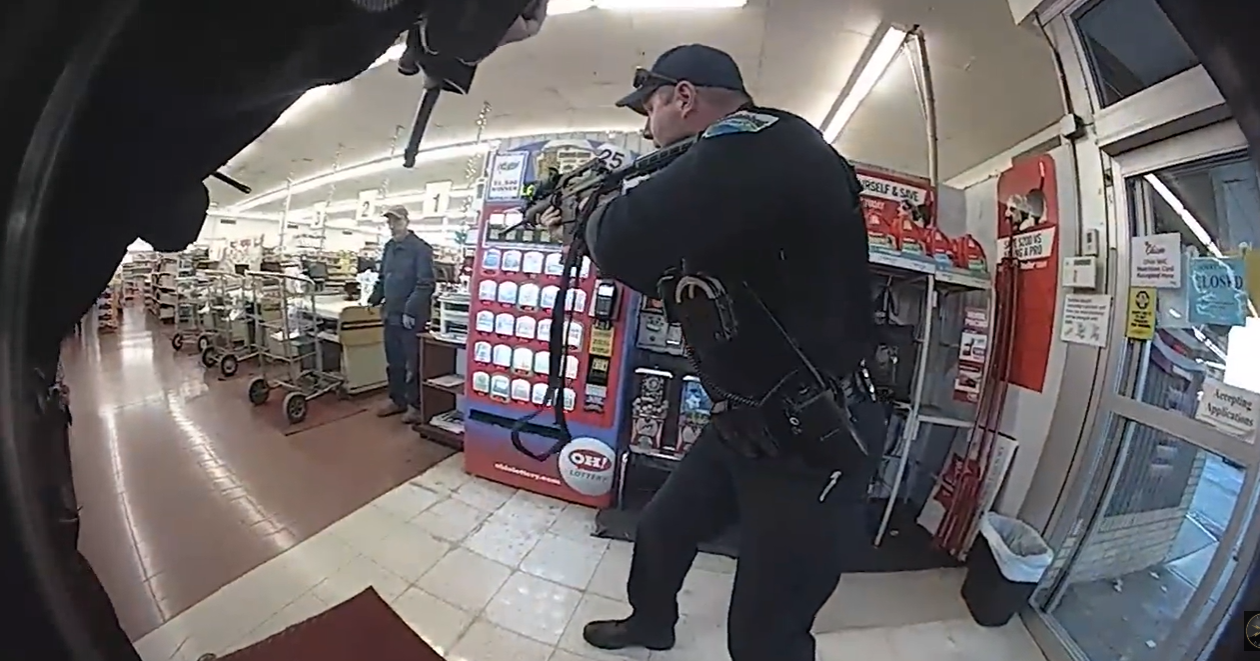
Armed with a patrol rifle, the officer entered through the front doors and began searching a grocery store where an armed man had already fired multiple rounds.
About one minute later, three more officers rushed through those same doors.
Almost immediately, they found him.
The suspect initially raised his hands.
Officers shouted for him to get on the floor.
For roughly 13 seconds, it appeared that the incident might end with a surrender.
Then his right hand moved toward his jacket.
He pulled out a handgun.
Four officers opened fire.
The entire final confrontation lasted only seconds, but the events leading to it reveal how quickly an ordinary grocery store became an active-shooter scene and how little time responding officers had to find and stop the threat.
OPENING: A WEDNESDAY MORNING AT SIDNEY FOODTOWN
The incident occurred at Sidney Foodtown, 1010 Wapakoneta Avenue, in Sidney, Ohio.
At approximately 8:01 a.m. on December 21, 2022, the Sidney 911 Center began receiving calls reporting an active shooter inside the grocery store.
The man was later identified as Todd I. Jordan of Sidney.
Investigators eventually recovered surveillance footage that allowed the Ohio Bureau of Criminal Investigation to reconstruct his movements with extraordinary precision.
According to BCI's review, at approximately 8:01:26 a.m., Jordan got out of his vehicle and walked toward the grocery store with a handgun visibly displayed.
Customers immediately began reacting.
By 8:01:48, surveillance footage showed patrons running for safety as Jordan entered.
Twelve seconds later, the situation escalated further.
Investigators said Jordan spotted a woman near the cash registers.
She was later identified in the BCI report as Annette Wooddell.
Jordan began following her.
Then he fired.
Wooddell ran through a doorway and took cover.
The shot missed.
Jordan apparently lost sight of her.
But the shooting was not over.
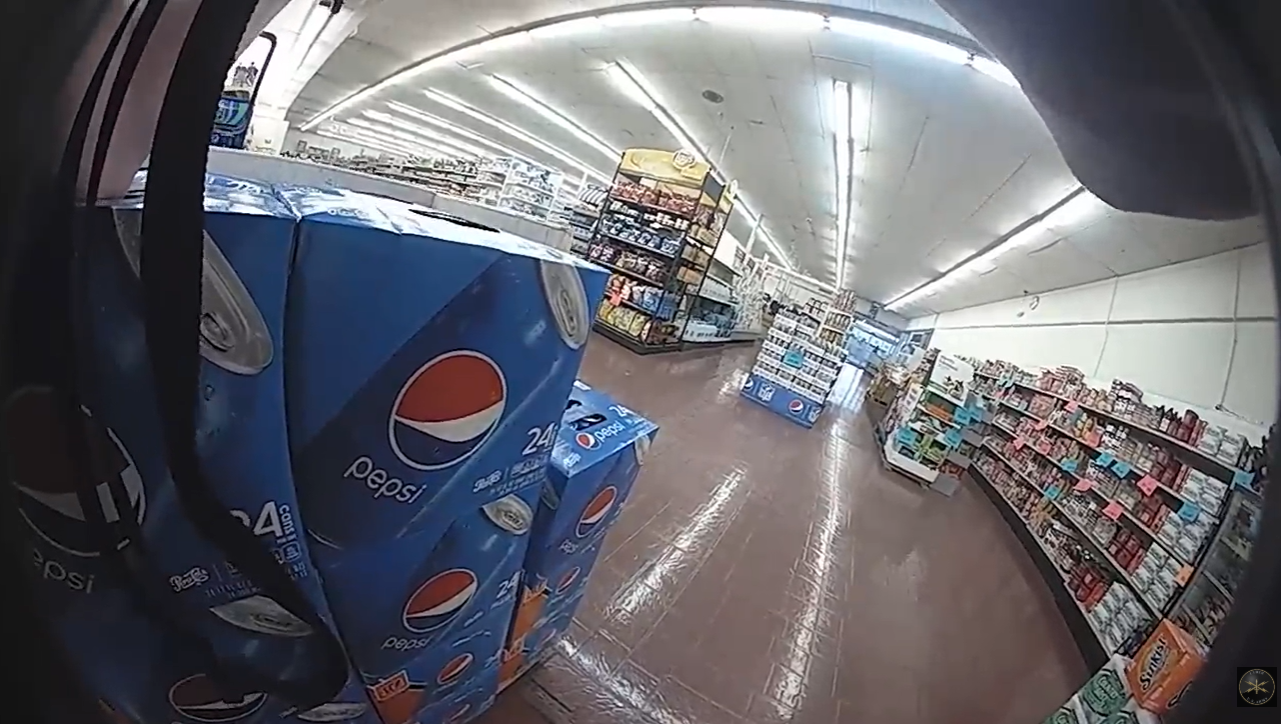
At approximately 8:02:17, investigators said Jordan fired toward customers who were retreating through aisle one.
He then began moving throughout the grocery store, including the rear dock area.
According to BCI, he appeared to be searching for customers and for the woman he had previously targeted.
That is the situation officers were entering.
They did not arrive at a store where someone had merely displayed a firearm.
Shots had already been fired.
People were hiding.
Customers had been running through the aisles.
And the gunman was still somewhere inside.
DEVELOPMENT: THE FIRST OFFICER GOES INSIDE
Sidney Police said its first officer reached Foodtown at approximately 8:03 a.m., only around two minutes after the first emergency calls.
The officer entered through the front doors carrying a tactical rifle.
The bodycam video you provided captures this phase clearly.
The officer moves through the entrance and begins scanning the store.
A grocery store creates a particularly difficult environment for locating an armed person.
Long aisles provide sightlines in one direction but obstruct visibility across the rest of the building.
Tall shelves conceal people.
Coolers and back rooms create additional hiding areas.
Customers may still be inside.
Employees may be sheltering behind counters or in storage areas.
And officers responding to an active shooter cannot assume the person they see around the next corner is the gunman.
They must identify the threat while moving quickly enough to prevent further attacks.
The first officer began searching.
Meanwhile, three more Sidney officers were approaching.
WHIO's review of the bodycam footage reported that the first officer moved toward the rear of the store while searching for Jordan.
Then something remarkable happened.
The suspect began moving back toward the front.
At almost exactly the same moment, the other officers entered.
The two paths were about to intersect.
FOUR OFFICERS COME FACE TO FACE WITH THE GUNMAN
The surveillance timeline places the confrontation at approximately 8:04:36 a.m.
Jordan was near the cash registers.
The first officer had returned toward the front.
Three additional Sidney officers had just entered.
Suddenly, all four were facing the suspect.
The responding officers were later identified as:
Officer Jason Viapiano
Officer Andrew Shappie
Officer Aaron Wesbecher
Sergeant Chris Burmeister.
All four were armed with patrol rifles.
Jordan initially raised his hands.
For a moment, the situation looked dramatically different from what had happened only minutes earlier.
A man who had allegedly fired several shots inside and outside the grocery store was standing in front of four armed police officers with his hands in the air.
Officers immediately began issuing commands.
They told him to keep his hands up.
They ordered him onto the floor.
They warned him not to reach for anything.
The bodycam footage captures the intensity of those commands.
There is no uncertainty about what officers want him to do.
Get down.
Keep your hands visible.
Do not reach.
This could have been the end of the encounter.
Instead, according to investigators, Jordan made one final movement.
8:04:49 A.M.
The BCI surveillance analysis gives an unusually precise timestamp for what happened next.
At 8:04:49, Jordan reached toward his front-right jacket pocket.
He produced a firearm.
Police said he began raising it toward the officers.
All four officers fired.
The difference between the moment Jordan first encountered police and the moment officers opened fire was approximately 13 seconds.
That short period is critical to understanding the footage.
Jordan was not shot immediately upon being seen.
According to the surveillance review, he initially raised his hands.
Officers issued repeated commands.
Then he reached into his clothing and produced the handgun.
The shooting followed.
The suddenness of that movement is one reason the bodycam footage is so powerful.
A written report can describe Jordan “brandishing a handgun.”
Video shows what that phrase means in real time.
Officers have only moments to recognize that his hand is moving toward his pocket, identify what comes out and react.
According to Sidney Police, all four officers discharged their firearms.
Jordan went down.
The active threat was over.
THE TARGET APPEARS TO HAVE BEEN A FOODTOWN EMPLOYEE
Investigators did not believe the attack was completely random.
Sidney Police said evidence indicated Jordan's primary target was a female Foodtown employee.
The BCI surveillance analysis provides additional detail supporting that conclusion.
Jordan entered with his handgun already visible.
He located Wooddell near the registers.
He tracked her movements.
Then he fired toward her.
She escaped through a doorway and hid.
Jordan could no longer see where she had gone.
Afterward, he continued moving through the store.
This makes the event simultaneously a workplace-violence incident and an active-shooter response.
Sidney Police themselves described it as a “work place violence event.”
But once Jordan allegedly began firing in the direction of other customers, the danger extended far beyond the intended target.
BCI's review says that at 8:02:17, he fired toward retreating customers in aisle one.
That meant anyone still inside potentially faced danger.
The police response therefore had to focus on stopping the ongoing threat rather than simply locating one particular victim.
CUSTOMERS HID WHILE OFFICERS SEARCHED
One of the most important parts of the incident occurred outside the bodycam's immediate field of view.
Customers and employees were hiding.
Sergeant Burmeister later told BCI investigators that after Jordan was down, officers began searching the store for additional shooters and victims.
He found employees and customers sheltering in the rear coolers and helped escort them outside.
That detail illustrates why the response could not simply end when Jordan fell.
Officers did not necessarily know there was only one shooter.
They needed to clear the building.
They needed to locate injured people.
They needed to identify everyone who had been hiding.
And they needed to ensure there were no additional threats.
Fortunately, Sidney Police reported that no one other than Jordan was physically injured during the incident.
Considering that shots had been fired both outside and inside a functioning grocery store, that outcome was remarkable.
THE 911 CALL SHOWS WHAT PEOPLE INSIDE EXPERIENCED
Police bodycam provides the officers' perspective.
The 911 calls reveal another.
One caller told dispatchers that people were attempting to barricade themselves.
He also said the gunman had fired toward him outside as he was walking into the store.
That testimony aligns with Sidney Police's later reconstruction.
Investigators said Jordan fired one shot outside from his vehicle before entering Foodtown.
Once inside, police believed he fired three additional rounds in the direction of his intended victim and other people.
The surveillance footage helps establish how compressed the entire sequence was.
Jordan entered at approximately 8:01.
The confrontation with officers occurred shortly after 8:04.
In only about three minutes, he had entered with a weapon, caused customers to flee, fired at his apparent target, fired toward other people, moved through the store and encountered responding police.
Three minutes.
That is all.
WHY THE RESPONSE WAS SO FAST
Active-shooter tactics have evolved substantially over the past several decades.
Modern police doctrine generally emphasizes rapid movement toward an ongoing lethal threat rather than waiting for a large tactical team to assemble when people are actively being attacked.
The Sidney response illustrates that approach.
The first officer arrived at 8:03.
He entered alone with a rifle.
Three additional officers arrived roughly a minute later.
By 8:04:49, the confrontation had already ended.
That timeline is extraordinary.
Less than four minutes passed between the initial surveillance timestamp showing Jordan exiting his vehicle and the police gunfire.
The speed matters because every additional minute during an active-shooter event can create opportunities for more victims.
Here, the officers entered while the threat was still active.
Jordan was transported by Sidney medics to Wilson Health.
He was pronounced dead.
Because officers had fired the fatal shots, the investigation was turned over to the Ohio Bureau of Criminal Investigation.
The four officers were placed on administrative leave pending review.
WHIO reported when the bodycam footage became public in January 2023 that all four officers had subsequently returned to duty while BCI's investigation remained ongoing at that point.
THE SURVEILLANCE VIDEO FILLS IN WHAT BODYCAM CANNOT
This case provides an unusually good example of why multiple camera perspectives matter.
Bodycam shows the officers entering.
It shows their search.
It shows Jordan appearing near the front.
It captures the commands.
And it records the final shooting.
But the officers' cameras cannot show everything Jordan did before police arrived.
The Foodtown surveillance system fills that gap.
BCI investigators reviewed approximately 10 minutes and 24 seconds of store footage.
That footage established the sequence leading up to the confrontation.
Jordan enters visibly armed.
Customers run.
He sees Wooddell.
He follows her.
He shoots toward her.
She escapes.
He fires toward retreating customers.
He searches through the store.
Police arrive.
Jordan returns toward the registers.
He encounters officers.
He raises his hands.
Then he retrieves his firearm.
Those cameras transform the case from a few seconds of police gunfire into a much more complete narrative.
Without surveillance footage, someone watching only the ending might ask why four officers were pointing rifles at one man inside a grocery store.
The preceding minutes provide the answer.
THE FINAL 13 SECONDS
Perhaps the most revealing part of the entire incident is the final 13 seconds.
At approximately 8:04:36, Jordan encounters police.
His hands go up.
There is still an opportunity for surrender.
Officers give commands.
He remains standing.
Commands continue.
Then his right hand moves.
At approximately 8:04:49, investigators say he retrieves the gun.
The officers fire.
The difference between surrender and deadly confrontation was one decision made in a matter of seconds.
That is why the bodycam footage is so difficult to watch without imagining the alternative.
If Jordan had simply remained with his hands raised and gone to the floor, the final outcome could have been completely different.
Instead, investigators say he chose to reach for the same type of weapon that had already turned the grocery store into an active-shooter scene.
The officers responded immediately.
ENDING: THREE MINUTES THAT CHANGED AN ORDINARY MORNING
The December 21 attack began almost without warning.
A man arrived at a neighborhood grocery store.
He got out of his vehicle with a handgun.
He fired outside.
He walked through the doors.
Customers saw the weapon and ran.
He identified the woman investigators believe he intended to target.
He fired toward her.
She escaped.
He fired toward other fleeing people.
Then he began moving through the store.
At the same time, someone was already calling 911.
Sidney Police responded.
The first officer entered alone.
Three more followed.
Then, near the cash registers, the paths of the gunman and the responding officers finally crossed.
Jordan initially put his hands up.
For a few seconds, surrender remained possible.
Then his hand moved toward his jacket.
The gun came out.
Four officers fired.
And at approximately 8:04:49 in the morning, the active-shooter threat was over.
No customer was shot.
No employee was physically injured.
No officer was injured.
Todd Jordan died after being transported to the hospital.
The incident demonstrates why active-shooter calls create a fundamentally different type of police response.
There was no time for a lengthy perimeter.
No time to wait outside and determine exactly where everyone was.
People inside the building were reporting gunfire.
Officers went in.
The bodycam footage shows what happened from there.
But perhaps the most important thing the footage reveals is not the gunfire itself.
It is the speed.
From the moment Jordan entered the store to the moment officers stopped him, only a few minutes had passed.
For the customers hiding behind doors and inside coolers, those minutes must have felt considerably longer.
CTA: WATCH THE FULL ACTIVE-SHOOTER RESPONSE
The final confrontation lasts only seconds, but the bodycam shows how officers reached that moment. Watch the full footage to see the first Sidney officer enter the grocery store alone, search aisle by aisle for the gunman, and then suddenly encounter him just as three additional officers rush through the front doors: https://www.youtube.com/watch?v=bjVmlVsEBko&rco=1
Comments (0)
Loading comments...
May You Like

🚔⚠️ 911 Call Comes Hours Later After a Troubling Bath Incident | Ohio, USA
Police Pull Over Paralyzed Driver With Blind Passenger

Her Dad Is a Lawyer — Then He Shows Up After Her Arrest | Bodycam US















