Shoplifter Gets Tough With Cops — Then Reality Hits Hard
SHOPLIFTING CALL TURNS INTO A TENSE POLICE ENCOUNTER: WHAT THE BODYCAM REALLY SHOWS
A SIMPLE RETAIL CALL THAT QUICKLY BECAME SOMETHING MORE
A police officer walks toward the entrance of a busy retail store as daylight begins to fade.
Nothing about the scene initially looks extraordinary.
Customers are still coming and going. The lights inside the store are bright. Cars continue moving through the parking lot. An employee waits near the entrance as police arrive.
But only minutes later, a woman will be detained, placed in handcuffs and escorted toward a waiting Palm Springs Police vehicle.
What began as an apparent retail theft investigation has become a tense confrontation recorded almost entirely from an officer's body-worn camera.
AND THE MOST INTERESTING PART OF THE VIDEO IS HOW QUICKLY AN ORDINARY SHOPLIFTING CALL CHANGES ONCE POLICE MAKE CONTACT WITH THE SUSPECT.
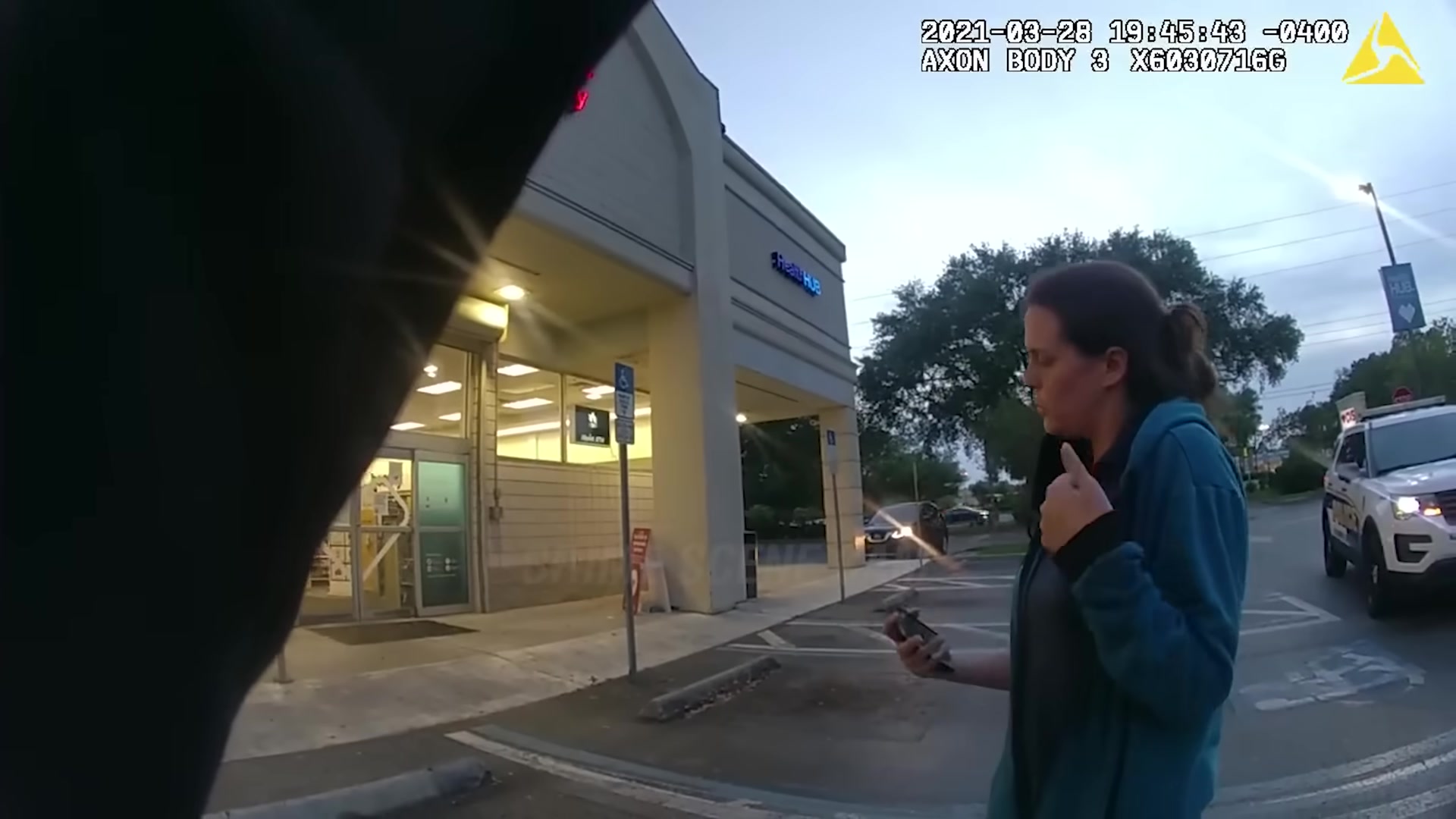
The footage is dated March 28, 2021. The body-camera timestamp places the beginning of the visible police encounter at approximately 7:45 p.m.
Unlike a short viral clip, the roughly 14-minute video provides something more useful: context.
We see officers arrive.
We see their interaction with store personnel.
We see the suspect being detained.
And, importantly, we see what happens after the confrontation—when the suspect is sitting inside the police vehicle and officers begin dealing with the practical consequences of the arrest.
That progression makes the footage a useful example of how seemingly routine retail calls can become complicated police encounters within minutes.
POLICE ARRIVE AT THE STORE
The opening moments are relatively calm.
The officer approaches what appears from the footage to be a Marshalls/HomeGoods location. A woman outside the entrance appears to communicate with police while another marked patrol vehicle is already nearby.
At this stage there is no dramatic chase.
No weapons are visible.
There is no crowd surrounding officers.
Instead, police appear to be gathering information and trying to determine exactly what happened inside the business.
That distinction matters.
BODYCAM FOOTAGE OFTEN BEGINS AFTER VIEWERS ALREADY KNOW THE TITLE OF THE VIDEO. OFFICERS AT THE SCENE DO NOT HAVE THAT ADVANTAGE.
They have to establish who is involved, what store employees witnessed and whether the person accused of wrongdoing is still at the location.
The footage therefore begins with one of the least dramatic but most important parts of policing: information gathering.
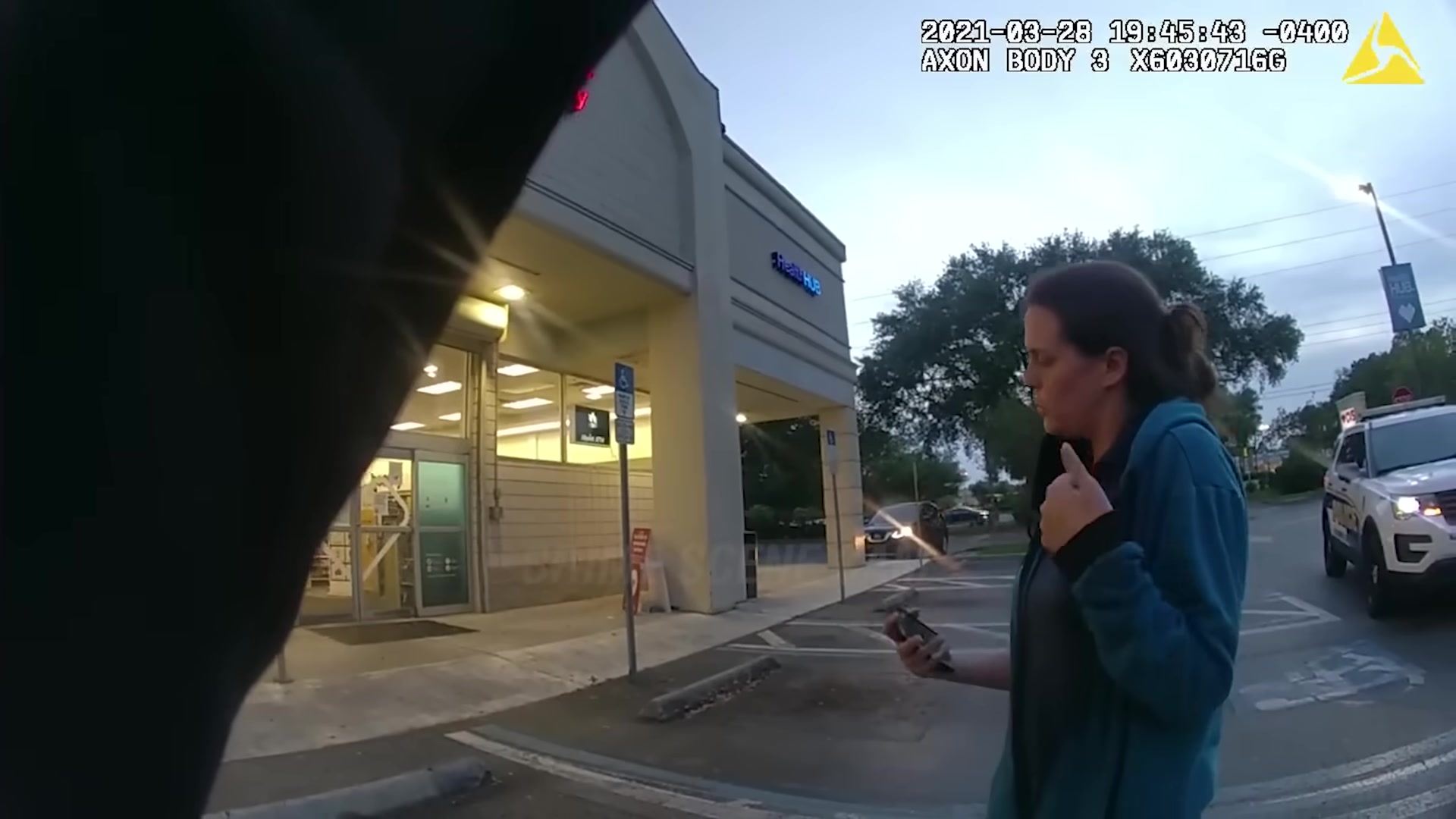
Retail theft calls can look straightforward from the outside.
A store reports suspected theft. Police identify the suspected shoplifter. An arrest follows.
Real encounters are rarely that simple.
Officers have to establish what employees saw, what merchandise is involved, whether the store wants prosecution, whether the person will cooperate and whether any additional offense occurs during the encounter.
Every one of those factors can change the outcome.
And in this video, cooperation soon becomes a central issue.
THE ENCOUNTER SHIFTS FROM INVESTIGATION TO DETENTION
Approximately two minutes into the footage, the atmosphere is dramatically different.
The officer is now physically controlling a woman wearing a blue sleeveless shirt.
Her arm is being held behind her as police work to restrain her.
The relaxed atmosphere from outside the store is gone.
THIS IS THE MOMENT THE VIDEO CHANGES FROM A RETAIL INVESTIGATION INTO A PHYSICAL ARREST SCENE.
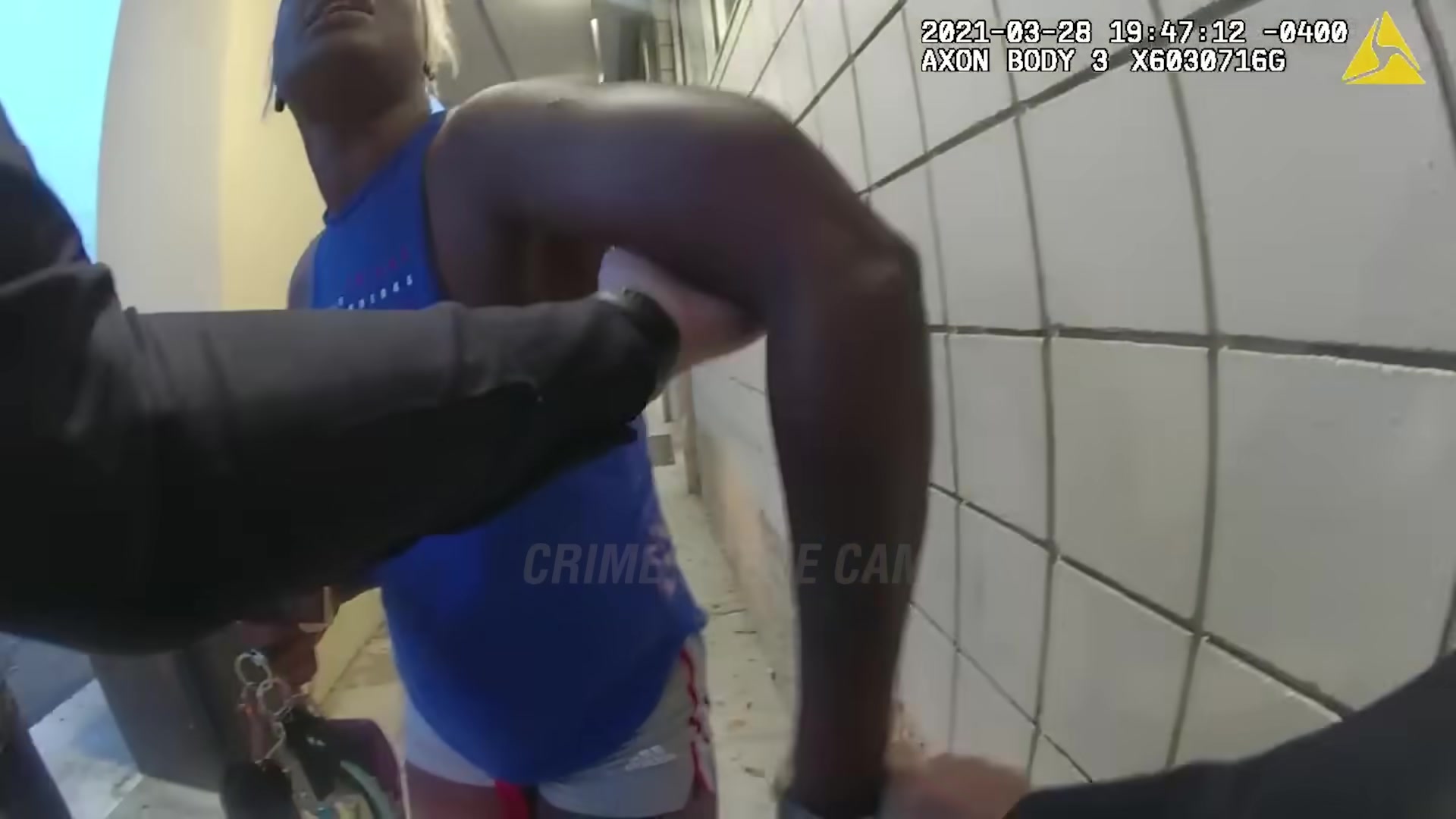
The bodycam perspective is particularly important here.
Unlike surveillance footage positioned above a store aisle or a cellphone recording captured from across a parking lot, bodycam places the viewer only inches away from the physical struggle.
That proximity changes how the encounter feels.
The camera moves with the officer.
The suspect fills most of the frame.
Commands, movements and attempts to establish control happen quickly.
There is very little visual distance between the viewer and the confrontation.
It also illustrates something that frequently determines whether an arrest remains relatively uneventful: WHAT HAPPENS AFTER AN OFFICER ANNOUNCES OR ATTEMPTS A DETENTION.
A shoplifting allegation and resisting an officer are not the same thing. Nor should every movement during an arrest automatically be interpreted as resistance.
The bodycam needs to be viewed as a sequence rather than reduced to one screenshot.
Here, however, the footage clearly shows officers physically controlling the woman's arms and moving her into custody.
At that point, the original reason for the police call is no longer the only thing officers have to manage.
They now have a detainee who has to be secured and transported.
HANDCUFFS CHANGE THE DIRECTION OF THE ENCOUNTER
Once a person is handcuffed, viewers sometimes assume the difficult part of an arrest is over.
Bodycam footage frequently demonstrates otherwise.
Officers still have to search the detainee where legally appropriate, determine whether property or evidence needs to be recovered, communicate with witnesses, check identifying information and place the detainee safely into a patrol vehicle.
Meanwhile, the detained person may continue questioning the arrest or arguing about what occurred.
The footage from this incident follows that familiar pattern.
The woman is moved away from the immediate store entrance toward the police vehicles.
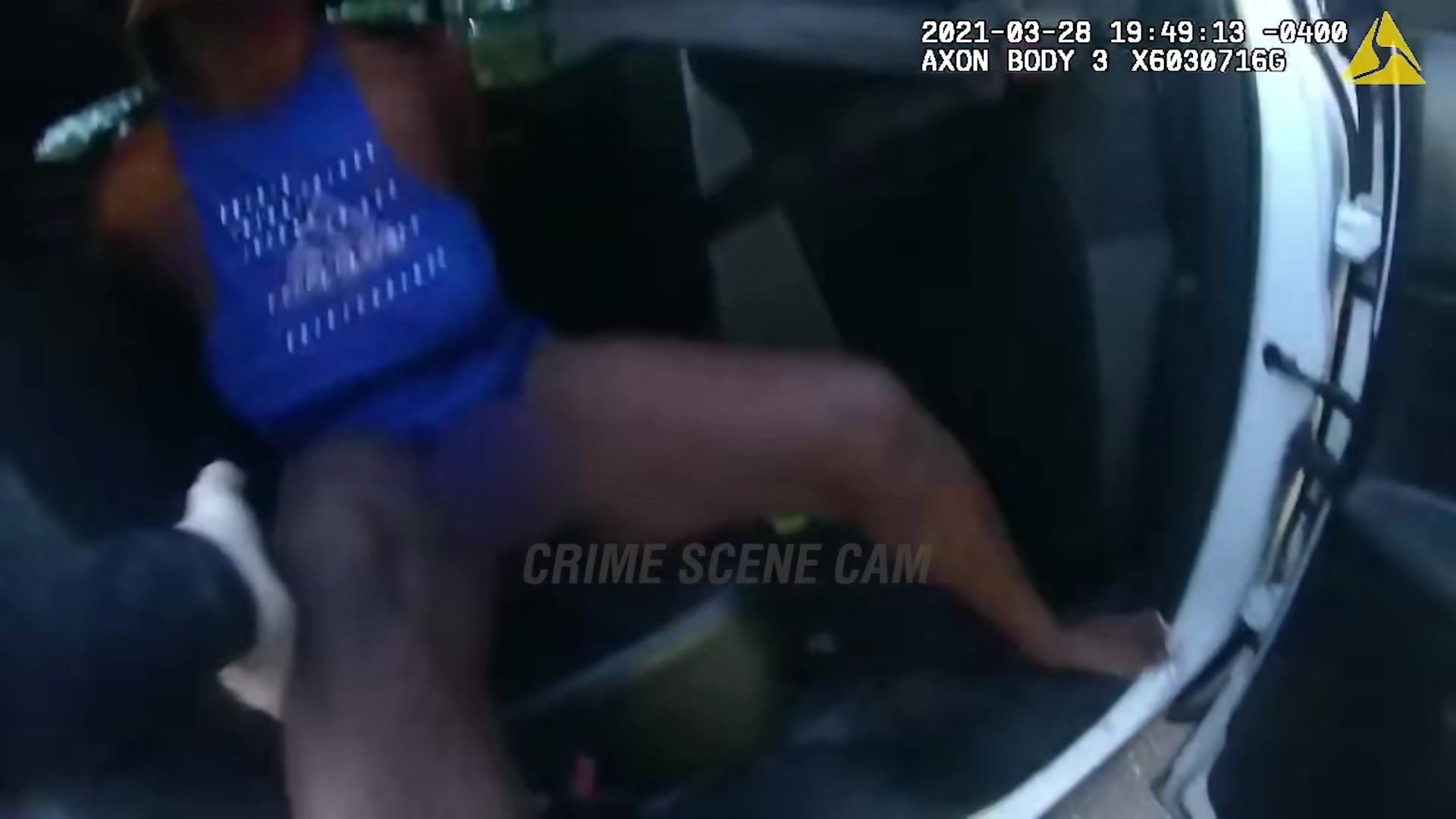
By approximately four minutes into the recording, she is being placed into the rear of a police SUV.
The visual transition is significant.
Only minutes earlier she was standing near the store.
Now she is inside a police vehicle.
THE ENCOUNTER HAS MOVED FROM QUESTIONING TO CUSTODY.
This is one reason bodycam videos involving shoplifting can be more revealing than their titles suggest.
The alleged theft itself may have happened before the camera started recording.
What bodycam captures is often the aftermath: the employee's report, the suspect's reaction and the decisions officers make once they arrive.
That is exactly what viewers are seeing here.
MULTIPLE OFFICERS BECOME INVOLVED
Once the suspect is secured, another phase begins.
Officers communicate with one another and continue working around the scene.
The parking lot has grown darker as the encounter progresses.
Marked Palm Springs Police vehicles remain close to the store while officers deal with the detainee.
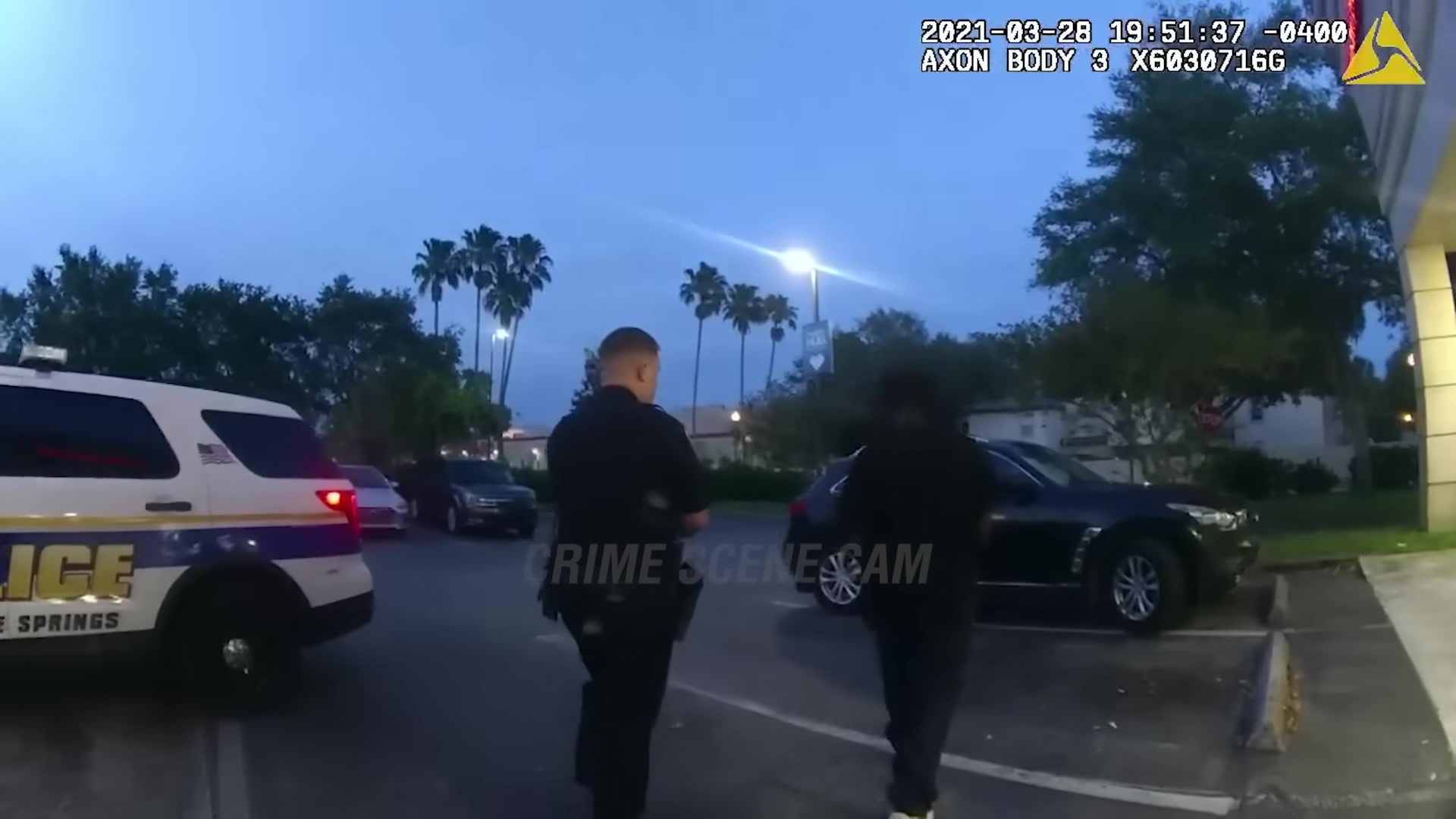
This frame provides one of the clearest visual confirmations of the agency involved.
The patrol vehicle carries Palm Springs Police markings, while the body-camera timestamp continues to show March 28, 2021.
That is significant because it allows the footage to be geographically grounded without relying solely on the title added by a later YouTube uploader.
The video itself provides the evidence.
What also stands out is how ordinary the surroundings remain.
Cars are parked nearby.
Palm trees rise behind the shopping center.
The store remains illuminated.
There is nothing about the environment itself that resembles the dramatic setting viewers might associate with a serious police confrontation.
Yet an arrest is unfolding only feet away.
POLICE ENCOUNTERS DO NOT NEED A DRAMATIC LOCATION TO BECOME UNPREDICTABLE.
A retail store parking lot can change from an everyday public space into an arrest scene almost instantly.
THE BODYCAM KEEPS RECORDING AFTER THE HANDCUFFS GO ON
This is where longer police videos become particularly useful.
A short social-media edit might end as soon as the suspect enters the patrol vehicle.
The original encounter does not.
Officers still have work to do.
The bodycam remains active while the officer sits inside the vehicle and continues interacting with the detained woman.
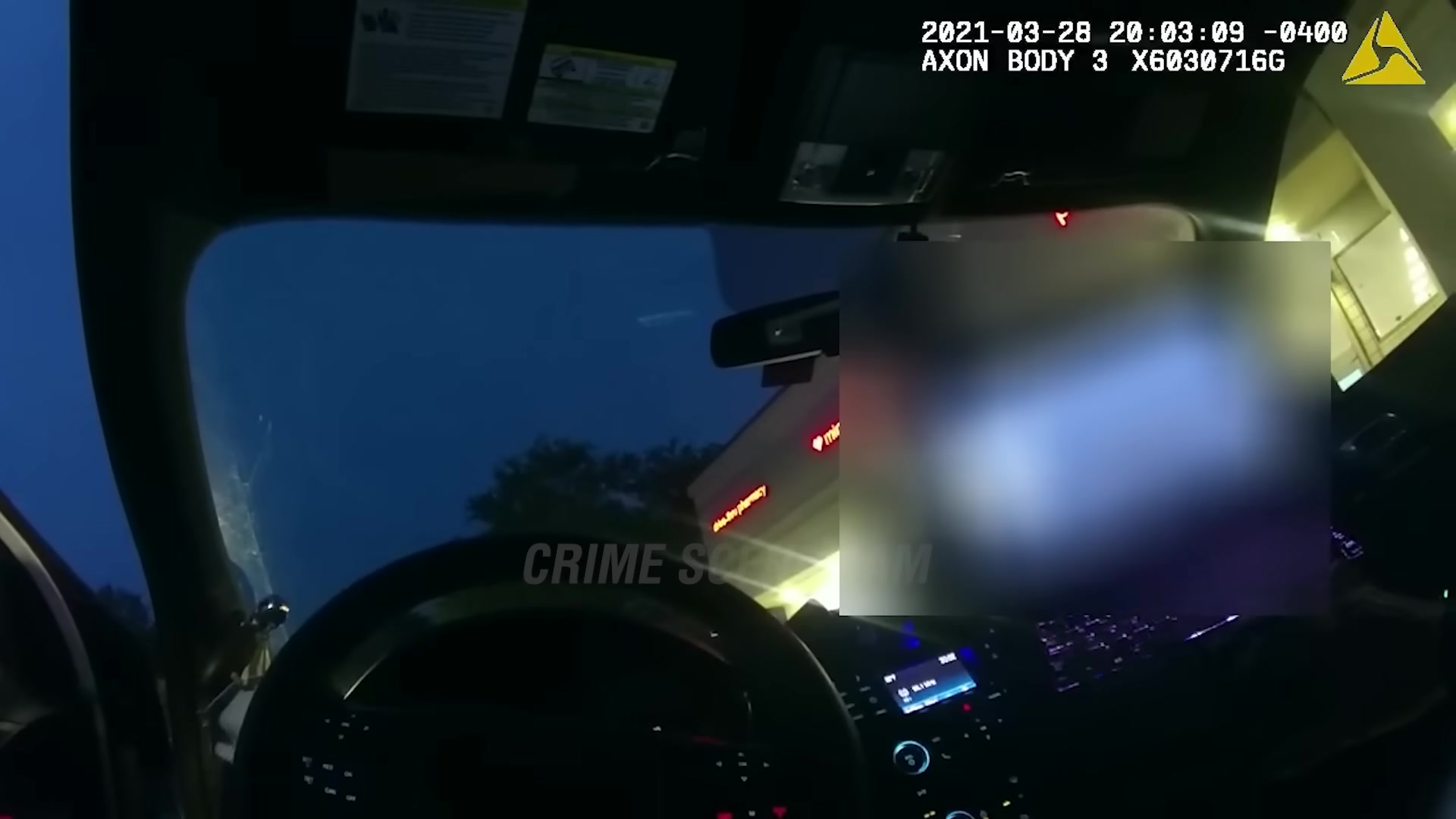
Parts of the image have been deliberately blurred in the published footage, apparently protecting identifying or sensitive information.
That is another important reminder about interpreting publicly released police video.
What viewers receive is not always completely raw footage.
Faces, computer screens, personal information and other sensitive material may be redacted before publication.
The underlying encounter nevertheless continues.
The woman remains inside the vehicle while the officer handles the next stages of the investigation.
From a storytelling perspective, the scene is less visually dramatic than the physical detention.
But it is essential.
AN ARREST DOES NOT END WHEN HANDCUFFS CLICK INTO PLACE.
Officers still need to document what occurred and determine what happens next.
WHY A SHOPLIFTING CALL CAN ESCALATE SO QUICKLY
The central lesson from this footage is not that every shoplifting call becomes physical.
Most do not.
The more useful observation is that the behavior of everyone involved after police arrive can significantly influence how the encounter develops.
A retail theft investigation can remain largely conversational.
An officer may speak with store employees, identify a suspect and issue a citation or make an arrest depending on the evidence, applicable law and circumstances.
But once physical resistance or refusal to comply enters the situation, officers may have to shift their attention.
The priority becomes establishing control.
That transition can occur incredibly quickly.
One second an officer is asking questions.
Seconds later the same officer may be attempting to secure someone's hands.
THE BODYCAM MAKES THAT TRANSITION VISIBLE IN A WAY A WRITTEN POLICE SUMMARY CANNOT.
This does not mean bodycam automatically tells us everything.
It does not.
The camera points wherever the officer's torso is facing. Hands can disappear outside the frame. Other officers may see things the recording officer cannot. Events preceding activation may also be missing.
But it provides a valuable contemporaneous record.
And in this case, it allows viewers to see the encounter develop rather than simply being told that an arrest occurred.
THE SUSPECT REMAINS IN THE PATROL VEHICLE
As darkness settles over the shopping center, the encounter becomes much less visually active.
The woman remains seated in the police vehicle.
The officer stays nearby.
Conversation continues while the administrative portion of the incident appears to move forward.
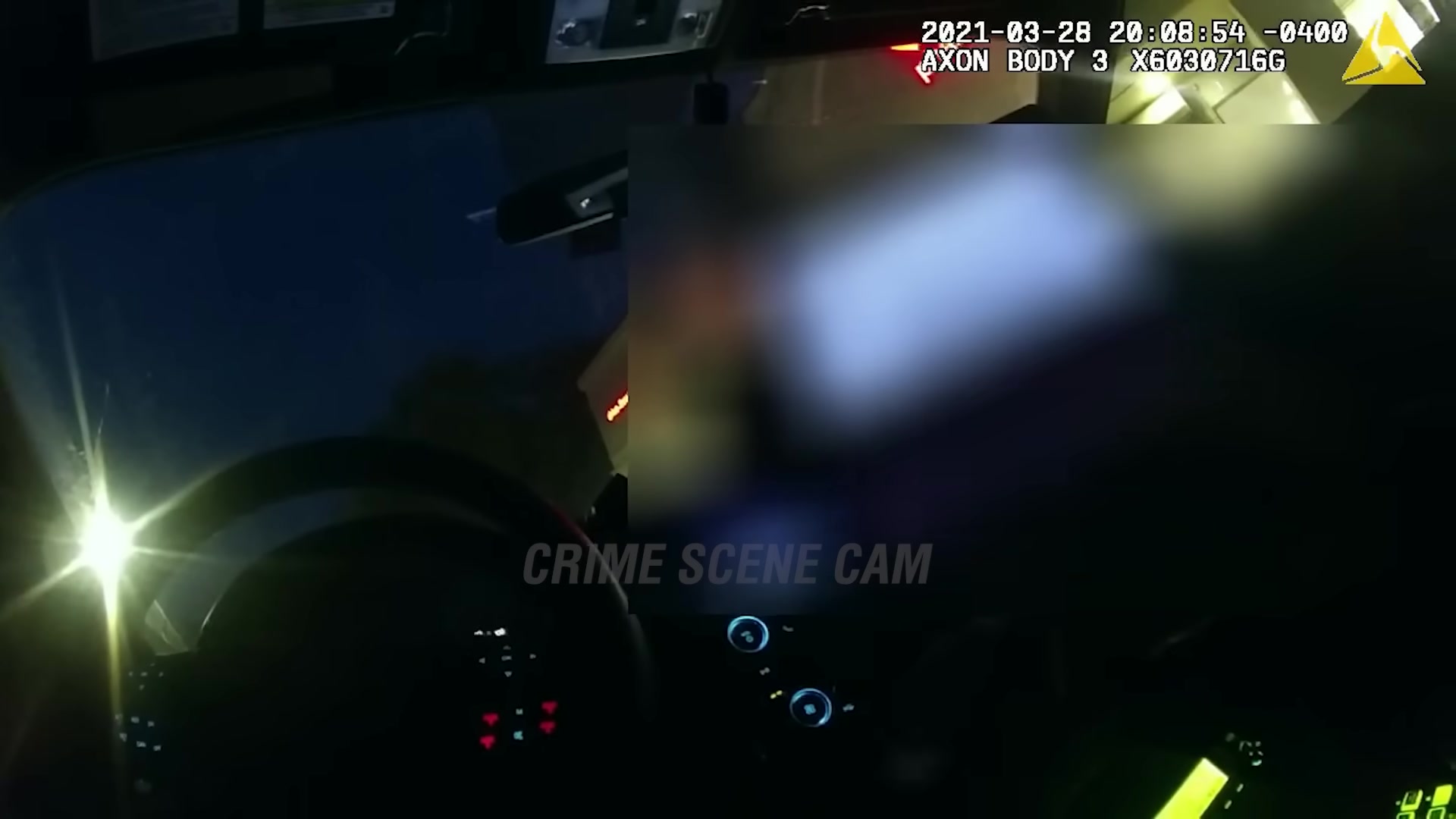
These quieter minutes might appear unimportant compared with the earlier physical confrontation.
They are not.
They demonstrate the amount of time police encounters can continue after the moment most likely to become a viral clip.
A 20-second video might show someone being handcuffed.
A 14-minute bodycam recording shows that the handcuffing is merely one stage of a much longer process.
The distinction is important when consuming police footage online.
THE MOST DRAMATIC MOMENT IS NOT NECESSARILY THE WHOLE STORY.
Context exists before and after it.
That is why watching longer bodycam sequences is often more informative than relying on short compilations.
FROM PUBLIC CONFRONTATION TO POLICE CUSTODY
Near the later portion of the recording, the environment is almost completely dark.
The bright storefront is now seen primarily through the patrol vehicle.
The detainee remains inside.
The contrast with the beginning is striking.
At approximately 7:45 p.m., officers were approaching a brightly illuminated store and talking to people outside.
Roughly 25 minutes later according to the embedded bodycam clock—with edited portions of the released video compressing that span—the suspect is sitting inside a police vehicle at night.
The visual progression tells the story almost by itself:
STORE CALL → POLICE CONTACT → PHYSICAL DETENTION → HANDCUFFS → PATROL VEHICLE → CONTINUED INVESTIGATION.
That progression is what makes this footage compelling.
There is no elaborate pursuit.
There is no spectacular tactical operation.
Instead, viewers see how an everyday call can move through several levels of police involvement in a remarkably short period.
BODYCAM SHOWS WHAT A VIRAL TITLE CANNOT
The video circulating online carries the provocative title “Shoplifter Acts Tough With Police, Gets Reality Check.”
That title is designed to attract attention.
The bodycam itself provides something more useful.
It provides sequence.
The first officers do not arrive in the middle of a dramatic fight.
They approach a retail business.
Information is gathered.
Contact is made.
The woman is detained.
Physical control becomes necessary during the encounter.
She is handcuffed.
She is placed inside a marked Palm Springs Police vehicle.
Officers continue dealing with the case afterward.
That sequence is important because online police videos are frequently consumed backwards.
People see the arrest first and then decide what they believe must have happened before it.
BODYCAM ALLOWS VIEWERS TO WATCH CAUSE AND EFFECT DEVELOP IN SOMETHING MUCH CLOSER TO REAL TIME.
It still requires careful interpretation.
But it is considerably more informative than a screenshot or a sensational caption.
WHAT MAKES THIS VIDEO EFFECTIVE AS A POLICE-ENCOUNTER STORY?
From a storytelling perspective, the footage works because it contains escalation.
The opening gives viewers a question:
Why are police at this store?
The next stage provides tension:
Who are they looking for, and what will happen when they find that person?
Then comes the turning point:
The encounter becomes physical.
After that, viewers want resolution:
Will the suspect cooperate? Will anyone be injured? Will she be arrested? What happens next?
Those questions naturally pull viewers through the footage.
This is also the structure that works best for a blog based on police bodycam.
Do not reveal every important detail in the first paragraph.
Establish the location.
Explain what officers are walking into.
Allow the encounter to develop chronologically.
Place the strongest visual around the point where the situation changes.
Then explain the outcome.
THE GOAL IS NOT TO EXAGGERATE THE EVENT. THE GOAL IS TO LET THE ESCALATION ALREADY PRESENT IN THE FOOTAGE CREATE THE TENSION.
That produces a stronger article because the reader does not feel manipulated.
THE ENDING IS VERY DIFFERENT FROM THE BEGINNING
By the final minutes, the confrontation outside the store is over.
The suspect is no longer standing near the entrance.
She is no longer physically struggling with officers.
She is sitting inside the police vehicle while the officer continues processing the situation.
That quieter ending creates an effective contrast with the middle of the encounter.
A situation that began as a reported retail incident became physical, required multiple officers and resulted in the woman being taken into custody.
Regardless of how dramatic a title makes the incident sound, the bodycam's strongest contribution is straightforward:
IT SHOWS THE TRANSFORMATION OF A ROUTINE RETAIL CALL INTO AN ARREST FROM THE OFFICER'S POINT OF VIEW.
It also demonstrates why complete police footage deserves more attention than isolated viral moments.
The physical detention is certainly the video's most immediate moment.
But without the arrival, the conversations outside the store and the later scenes inside the police vehicle, viewers would have only a fraction of the story.
Bodycam provides that missing timeline.
And sometimes the difference between understanding a police encounter and merely reacting to one is simply being willing to watch what happened before—and what happened afterward.
WANT TO SEE EXACTLY HOW THE ENCOUNTER ESCALATED?
The arrest is only one part of what happened. Watch the full bodycam footage to see how the officers first approached the store, what happened when they confronted the suspected shoplifter, and how the encounter ultimately ended.
👉 CLICK THE LINK BELOW TO WATCH THE FULL ENCOUNTER FROM THE OFFICER'S BODYCAM AND SEE THE MOMENT EVERYTHING CHANGED:
https://www.youtube.com/watch?v=UZaICfuv-xk
Comments (0)
Loading comments...
May You Like
Officer Stops to Help but the Situation Quickly Escalates

🚔⚠️ 911 Call Comes Hours Later After a Troubling Bath Incident | Ohio, USA