She Thought Her Dad’s Badge Would Save Her—Police Had Other Plans
She Thought Her Dad’s Badge Would Save Her—Police Had Other Plans
A roadside reckless-driving investigation takes an unusual turn when a young woman repeatedly invokes her father’s law-enforcement status. The officers’ response makes one thing clear: the badge she is talking about is not going to decide what happens next.
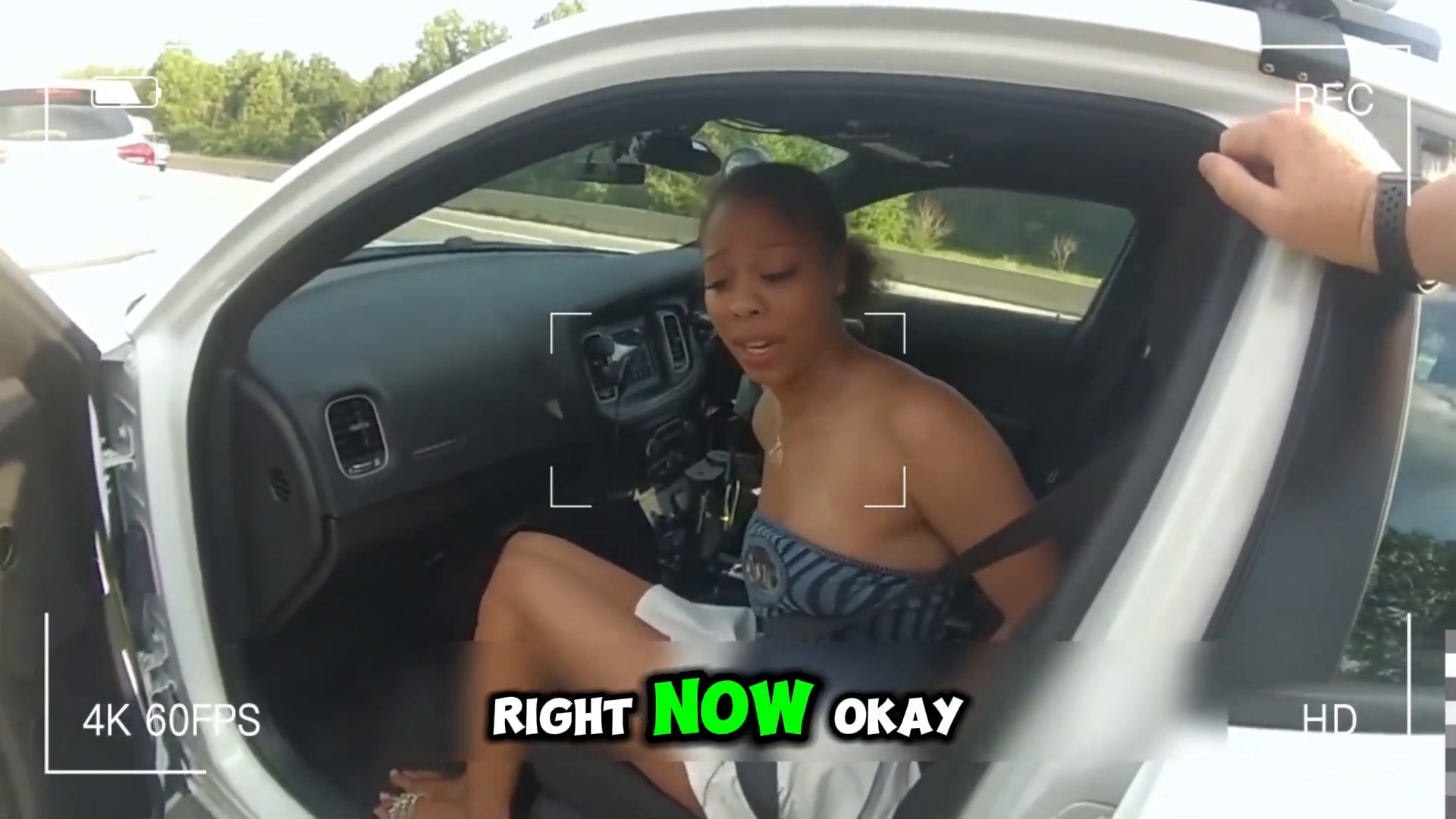
A Traffic Stop Turns Into a Test of Influence
The encounter begins on the shoulder of a busy multi-lane road, where officers have stopped a white Dodge. A young woman is seated in the passenger area while police question the occupants about what officers describe as reckless driving. Within minutes, the roadside conversation stops being only about how the vehicle was driven. It becomes a dispute over authority, consequences, and whether a family connection to law enforcement is going to change anything.
The woman repeatedly emphasizes that her father works in law enforcement. In the logic of the moment, that fact appears to be offered as something officers should consider before taking further action. But the officers do not treat it as a shortcut out of the investigation.
That is what makes the footage compelling. The title promises a familiar viral-bodycam theme: someone invokes a relative’s badge and expects professional courtesy. The camera then records the opposite response. The officers continue with the stop, separate the occupants, issue instructions, and eventually move from conversation to detention.
The incident is less about who the woman’s father may be than about what happens when a personal connection collides with the officer’s responsibility to handle the scene in front of him.
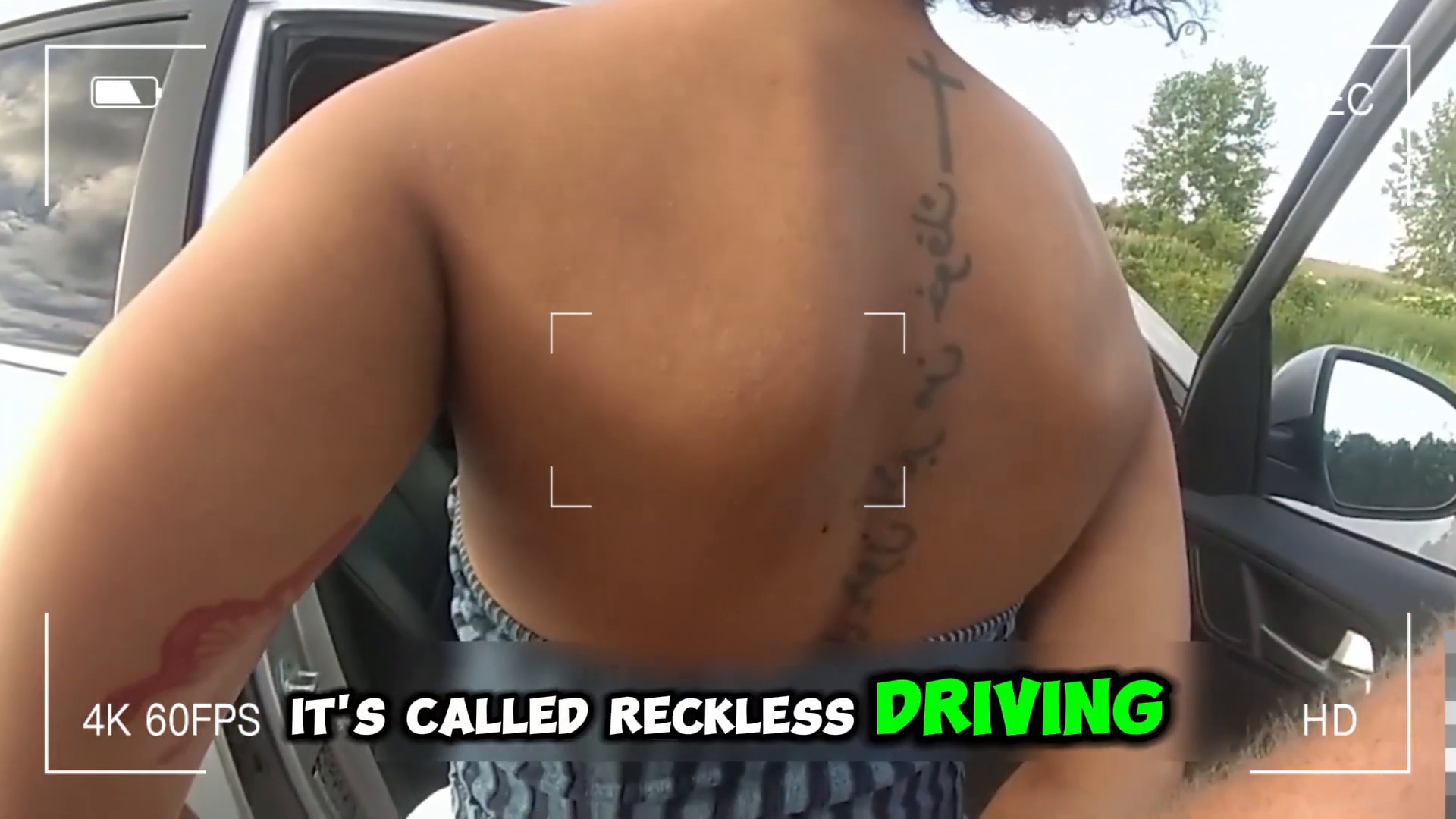
Reckless Driving Is More Than a Simple Speeding Ticket
One of the clearest lines heard early in the footage is an officer describing the conduct as reckless driving. That distinction matters. Speeding generally concerns how fast a vehicle was traveling relative to the posted limit. Reckless-driving statutes typically focus more broadly on driving behavior that demonstrates a serious disregard for safety.
Depending on the jurisdiction, aggressive lane changes, extreme speed, racing, weaving through traffic, or other dangerous maneuvers can move a stop beyond an ordinary citation.
The bodycam does not provide enough independently verified information for this article to state the exact statute or final charge. But the officer’s characterization explains why the roadside encounter is treated seriously. The vehicle is stopped along a divided roadway with other traffic moving nearby, and the officers appear focused on establishing what happened before the car came to a stop.
The woman’s family connection does not answer any of those factual questions. Whether her father carries a badge has nothing to do with how the vehicle was being operated moments earlier.
That gap between what she wants officers to consider and what they are actually investigating drives much of the confrontation.

Invoking a Police Relative Does Not End the Investigation
There is a reason “my dad is a cop” has become such a recognizable line in bodycam videos. People sometimes believe a personal connection to law enforcement will cause officers to exercise discretion differently.
Professional discretion does exist. Officers routinely make judgment calls about warnings, citations, arrests, towing, and how to handle minor violations. But discretion is not supposed to function as a private benefit reserved for relatives of police officers.
In fact, invoking a police relative can create an awkward situation for everyone involved. The officer on scene now knows that any unusual leniency could be interpreted as favoritism. The relative being invoked may want no part of the attempt. And the person making the claim may discover that the name-drop creates more scrutiny rather than less.
The supplied footage captures that uncomfortable dynamic. The woman appears convinced that her father’s occupation is relevant. Officers continue to insist that she follow their directions.
The result is a lesson that applies far beyond this particular stop: knowing someone in law enforcement does not create a separate set of roadside rules.

The Roadside Argument Begins to Replace the Original Stop
As the video continues, the tone becomes more emotional. The woman does not simply provide information and wait for the officers’ decision. She argues, questions what is happening, and repeatedly seeks another person who might intervene.
This is where traffic stops often become much more complicated than the original violation.
Officers still have to complete the investigation that caused the stop, but now they must also manage a person who is increasingly upset. The focus expands from driving behavior to hands, movement, access to the vehicle, and whether instructions are being followed.
From the woman’s perspective, continuing to explain herself may feel like the only way to prevent an unfair outcome. From the officers’ perspective, every additional refusal or attempt to redirect the encounter can look like a reason to tighten control.
Those two interpretations feed each other. The more firmly officers give instructions, the more urgently the woman protests. The more she protests and resists the structure of the stop, the more direct the officers become.
The bodycam allows viewers to see that escalation develop instead of reducing the entire encounter to the moment handcuffs appear.
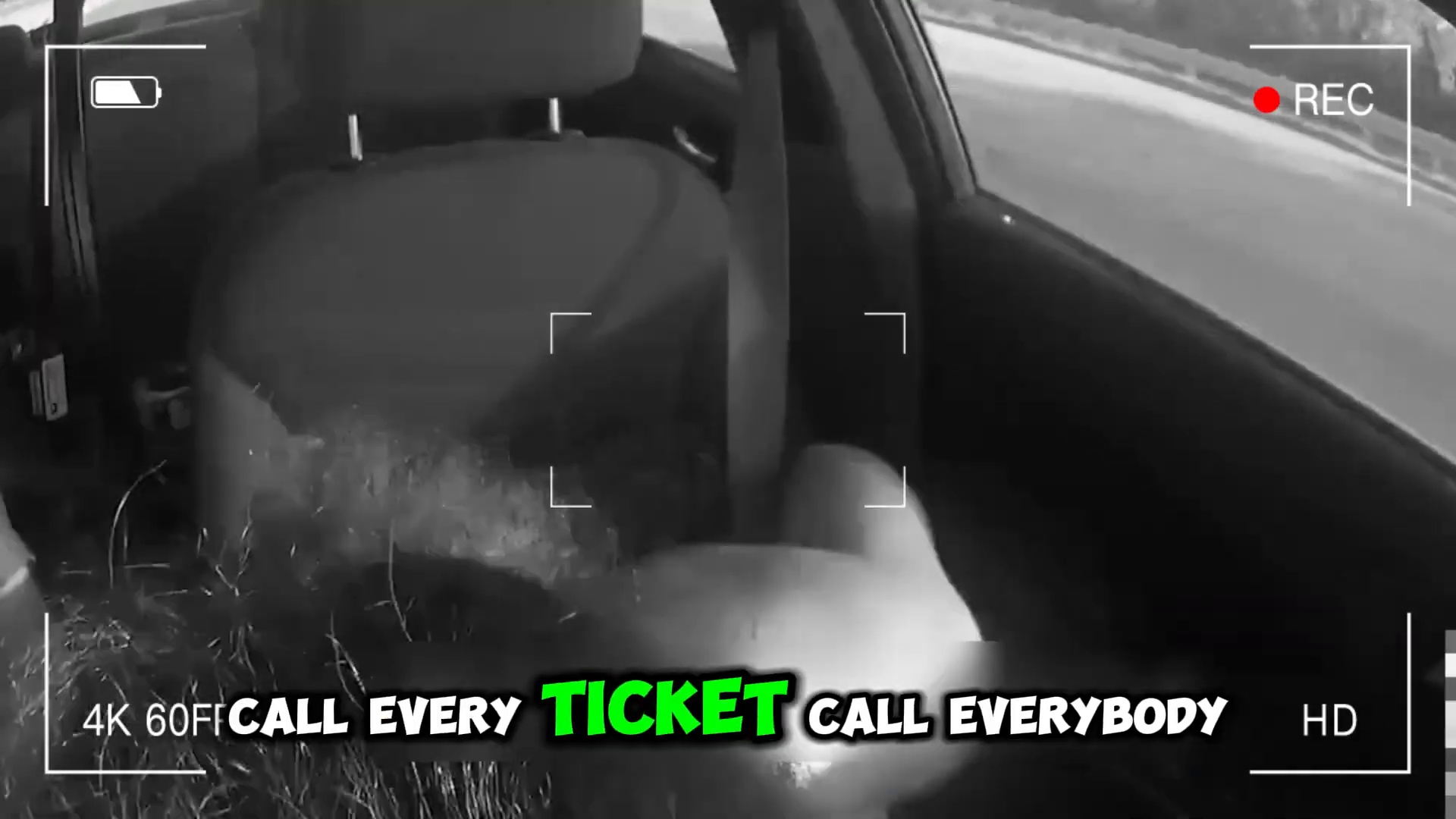
The Badge on Her Father’s Chest Cannot Replace Her Own Choices
The most revealing theme in the footage is personal responsibility.
A relative can provide advice, hire an attorney, pick someone up from a police station, or offer emotional support. What a relative cannot do is retroactively change what happened on the road.
That remains true even when the relative works in law enforcement.
If an officer has probable cause or another lawful basis to take enforcement action, the identity of a suspect’s parent is not supposed to erase it. Likewise, if the evidence does not support enforcement, a family connection should not be necessary to obtain fair treatment.
The woman’s repeated reliance on her father therefore becomes less persuasive as the encounter continues. Officers are focused on what she and the other occupant are doing now.
That contrast gives the video its strongest narrative hook. She appears to believe the most important badge belongs to someone who is not at the scene. The officers make clear that the authority governing the encounter belongs to the people actually conducting the stop.
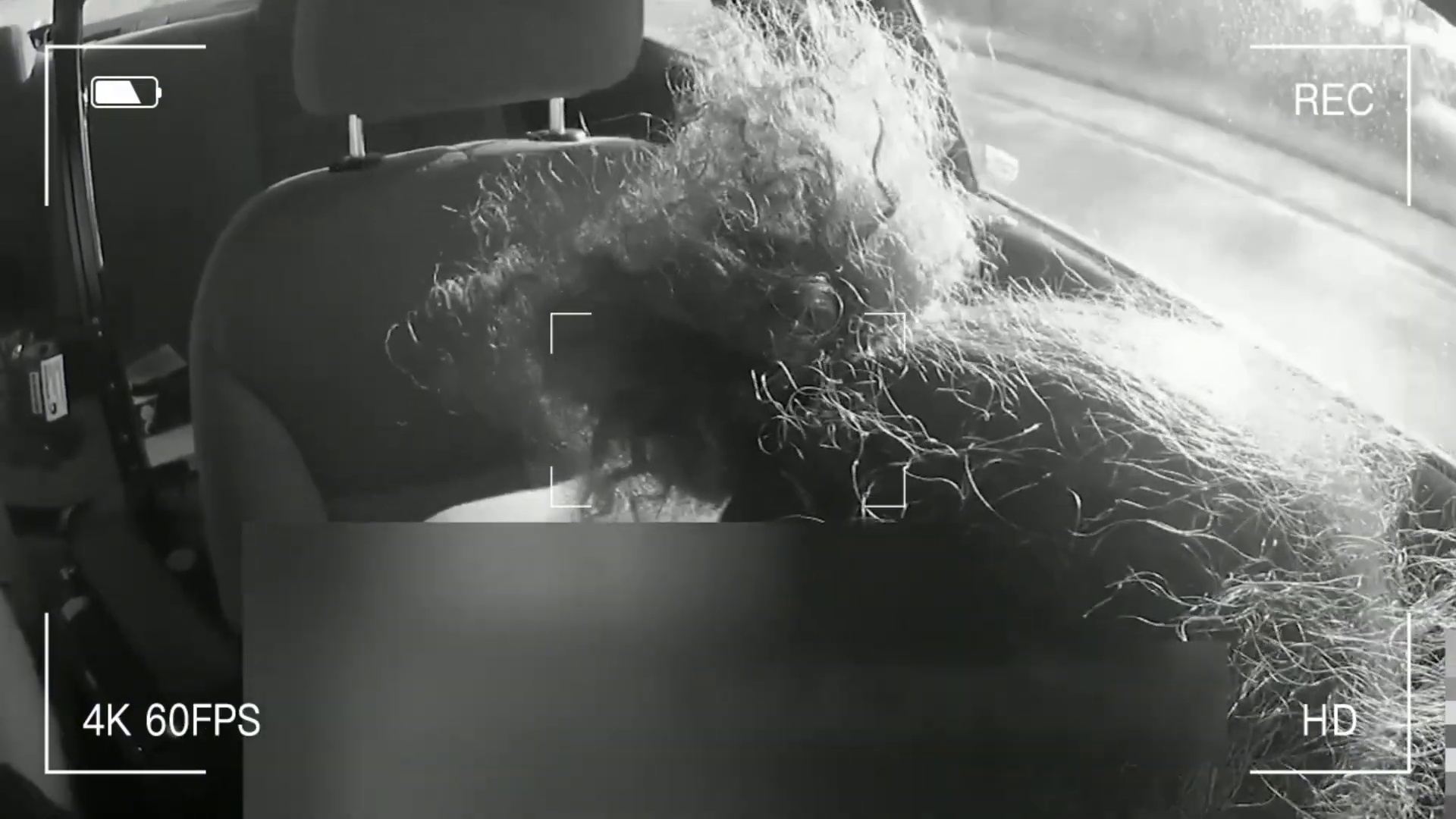
Once Handcuffs Appear, the Conversation Changes
The footage eventually moves into a physical detention. The woman is restrained while officers work around the vehicle, and the camera angle becomes tighter and more chaotic.
This is a major turning point because handcuffing changes both the practical and emotional reality of the encounter. The woman is no longer trying only to persuade officers not to take action. She is now reacting to the fact that officers have already decided greater control is necessary.
The video shows why these moments can become loud even without a major use of force. A person who believed she would be released may suddenly panic when her hands are placed behind her back. Officers, meanwhile, have to maintain control while continuing to communicate.
At one point, the woman asks for someone to come and help her. The request reflects the same pattern seen earlier: she keeps looking outside the immediate encounter for a person who can change its direction.
But once an arrest or detention process is underway, roadside negotiation has very limited power. The legal system—not a phone call to a relative—is where disputed charges are ultimately challenged.
The Car Becomes Evidence as Well as Transportation
After the occupants are controlled, officers continue working around the Dodge. The camera captures views inside the vehicle, showing that the stop has moved beyond a simple conversation at the window.
Vehicles can become important evidence in traffic-related arrests. Officers may document the interior, identify ownership, arrange towing, conduct inventories under department policy, or search when a lawful basis exists. The exact justification depends on the circumstances and jurisdiction.
The footage alone does not establish the legal basis for every action around this particular car, so this article does not speculate beyond what is visible.
What matters narratively is the change in status. At the beginning, the Dodge is simply the vehicle being stopped. Later, it becomes part of an active police scene while the occupants are separated and restrained.
That visual transformation mirrors the larger story. A driving encounter that might have ended with paperwork has developed into something far more consequential.
Why This Case Is Difficult to Match to a Public News Report
The uploaded video contains several useful clues, including a uniform shoulder patch that appears to reference a Miami-area police agency, the roadside environment, the white Dodge, and the woman’s repeated references to her father being in law enforcement.
I searched combinations of the original title, “my dad is a cop” language, reckless-driving descriptions, Miami-area police terms, and bodycam reporting. Public search results produced several unrelated cases in which drivers invoked police relatives, including a 2025 Naperville incident and other viral traffic stops.
None matched this woman, vehicle, road environment, and full bodycam sequence closely enough for responsible identification.
That matters because these videos are frequently reposted under new titles. A title may describe the personality conflict accurately while omitting the city, date, names, and case number needed to verify the underlying arrest.
Rather than attach the wrong person’s name or charges, this article keeps those details unassigned. The images and narrative come directly from the supplied footage; outside research is used only to understand the broader law-enforcement context.
A Police Connection Can Actually Make Favoritism Harder
There is another reason the woman’s strategy may be ineffective: officers know how bad preferential treatment can look.
Public confidence depends on the idea that traffic laws apply regardless of family connections. If bodycam footage showed officers immediately releasing someone solely because her father was an officer, the resulting controversy could extend far beyond the original stop.
Body cameras make that accountability especially visible. Every request for special consideration, every response, and every enforcement decision can later be reviewed.
That transparency can discourage the very kind of informal favoritism a person might hope to receive.
For a police parent, the situation can be equally uncomfortable. Most officers understand that a child invoking their position during a traffic stop can reflect badly on the family and the agency. A parent may be far more interested in making the child accept responsibility than in attempting to interfere.
The footage does not provide a verified record of what the woman’s father ultimately did or said. But the officers at the scene clearly do not allow the claimed relationship to dictate their immediate decisions.
The Full Video Is Really About Consequences
The viral hook is the badge. The deeper story is consequences.
The woman appears to believe that who she knows should matter. Officers repeatedly bring the encounter back to what happened, what they are instructing her to do, and how she is responding.
That difference explains the escalation from beginning to end.
A traffic stop offers many moments where the temperature can fall. An occupant can answer a question, comply with a lawful instruction, preserve objections for later, and allow the officer to finish. Officers can explain what they are doing, avoid unnecessary argument, and give clear choices.
When those opportunities are missed, a simple roadside encounter can become an arrest scene.
The new title—“She Thought Her Dad’s Badge Would Save Her—Police Had Other Plans”—captures the irony without pretending that family status is itself an offense. The issue is not that she mentioned her father. The issue is that the officers do not allow that claim to replace the enforcement process already underway.
By the final portion of the footage, the contrast is unmistakable. The woman who began the encounter invoking someone else’s authority is now dealing directly with the authority of the officers on scene.
That is why the complete recording is more useful than the short viral premise. It shows the repeated choices between the first mention of her father and the moment the situation becomes a detention. It gives viewers enough context to understand that the badge reference is only one part of a longer escalation.
Most importantly, it demonstrates a basic principle that should apply to every traffic stop: the identity of a person’s parent should neither create guilt nor provide immunity.
What matters is the evidence, the law, and what happens during the encounter itself.
Her father’s badge becomes the line everyone remembers, but the full encounter shows why the officers refuse to let a family connection replace the decisions being made at the roadside.
Want to see the moment she realizes her father’s position won’t change the outcome? Follow the link and watch the entire encounter unfold from the first roadside argument to the final police action.
Comments (0)
Loading comments...
May You Like

Her Dad Is a Lawyer — Then He Shows Up After Her Arrest | Bodycam US

Entitled Teen REFUSES To Exit Vehicle, Takes Off On Police Instead

Everything Changed When Cops Asked About Weapons