
She Refused a Simple Traffic Stop—Then Deputies Put Her in Handcuffs
She Refused a Simple Traffic Stop—Then Deputies Put Her in Handcuffs
What starts as an ordinary late-afternoon traffic stop on Old Kings Road turns into a prolonged confrontation, repeated commands and a physical arrest—all captured by a deputy’s body camera.
A Routine Stop Unravels in Minutes
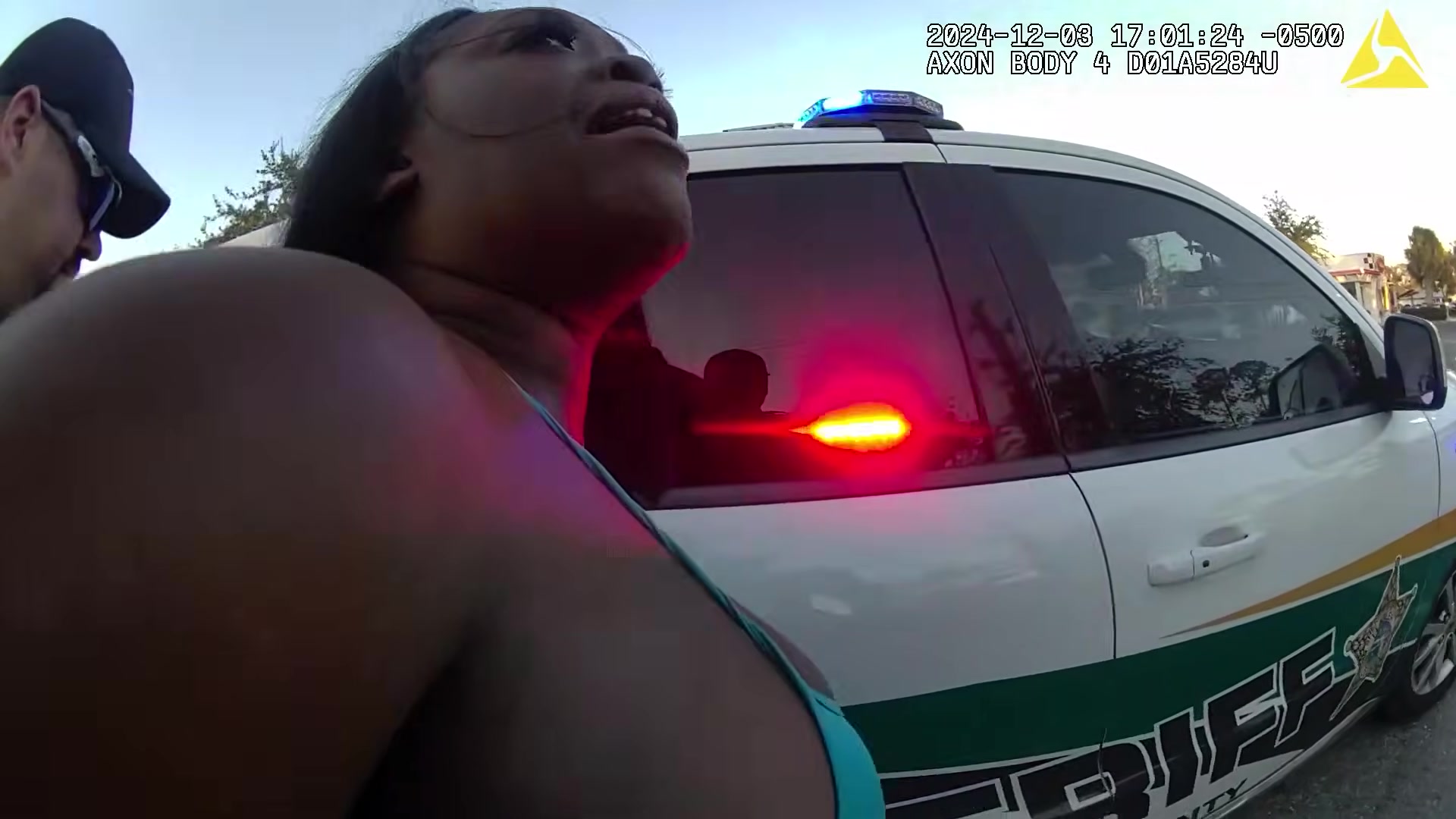
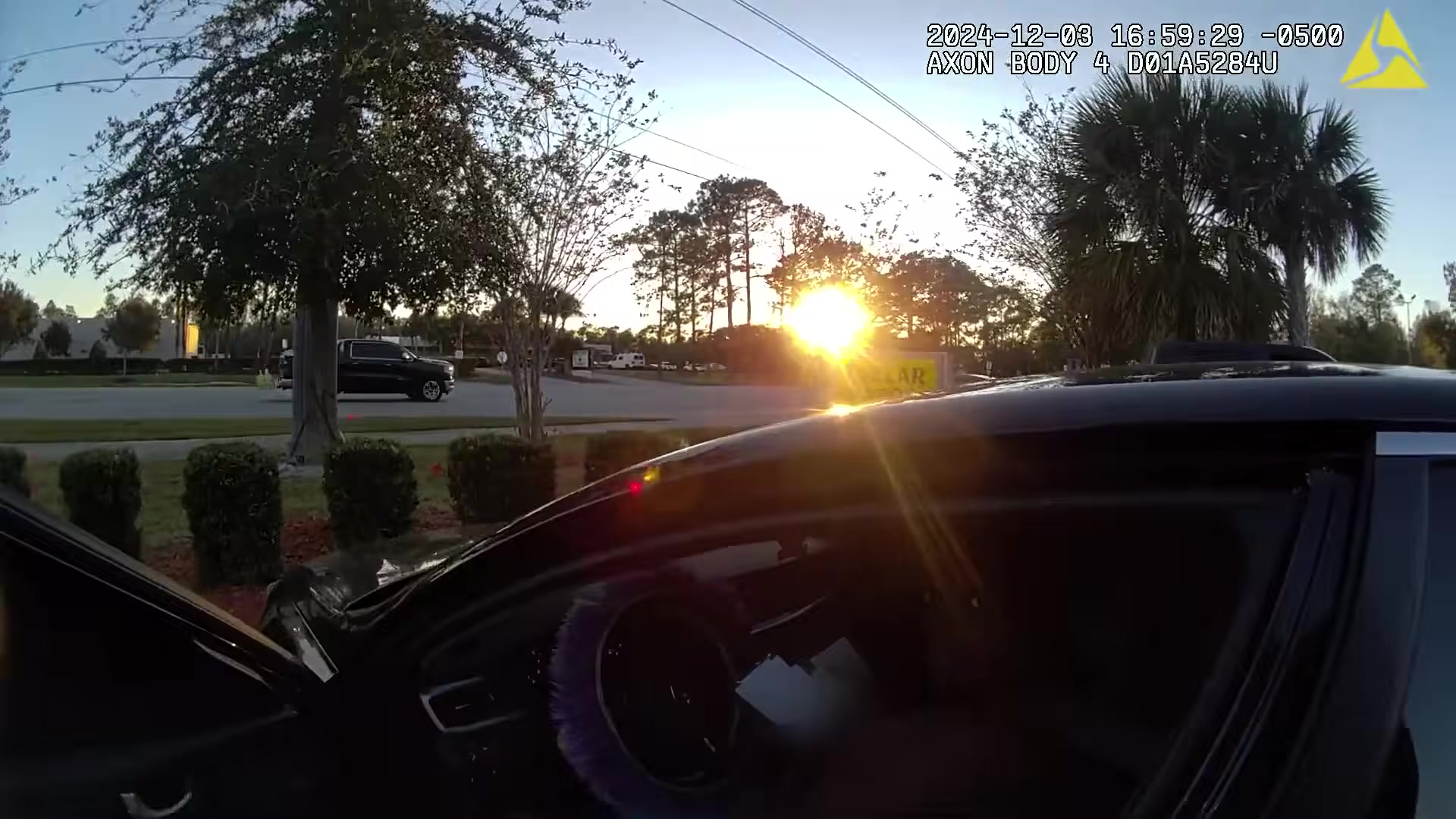
The encounter begins with almost nothing that suggests a major police incident is about to unfold. It is late afternoon in Flagler County, Florida, and a deputy has stopped a vehicle on December 3, 2024. The body-camera timestamp reads just before 5 p.m. Traffic continues moving nearby, businesses line the roadway, and the initial setting looks like countless ordinary stops conducted every day.
But the conversation does not remain ordinary. The driver, later identified in official Flagler County Sheriff’s Office records as Ebony Rochelle McGlocking, becomes increasingly unwilling to follow the deputy’s directions. What might have ended with a roadside explanation instead develops into a prolonged argument, repeated commands and eventually a physical arrest.
The most revealing part of the footage is not a single shout or dramatic movement. It is the escalation itself. Each stage appears preventable in isolation: a question, a command, a refusal, another warning. Together they form a chain in which a relatively minor encounter becomes much more serious.
Official Flagler County records provide an unusually useful anchor for the video. The Sheriff’s Office daily briefing for December 3 lists case 24-103955, identifies Ebony Rochelle McGlocking, gives the location as Old Kings Road and lists the arrest-related offenses as failure to obey and resisting without violence. Those details align with the date, agency markings and sequence visible in the supplied body-camera footage.
The Deputy Tries to Keep the Encounter Procedural
Traffic stops are structured around simple tasks: the officer explains the reason for the stop, identifies the driver, checks licensing and vehicle information, and decides whether the encounter ends with a warning, citation or further investigation. The process can feel intrusive to a driver, but it is designed to give both sides a predictable framework.
In the footage, that framework begins to break down as the discussion becomes increasingly argumentative. Instead of moving cleanly from identification to resolution, the deputy has to repeat directions and respond to challenges. The driver’s attention appears focused on disputing the deputy’s authority and the circumstances of the stop rather than completing the requested steps.
This is where routine stops can become deceptively complicated. A driver does not have to agree with an officer’s interpretation of events in order to preserve a legal challenge later. Disagreement can be documented, citations can be contested in court, and complaints can be filed through formal channels. The roadside, however, is a poor place to litigate every issue in real time.
That does not mean every police command is automatically lawful. It means that the legality of a command and the wisdom of physically resisting it are separate questions. The video demonstrates how quickly those questions become entangled once communication collapses.
Repeated Commands Change the Stakes
As the encounter continues, the deputy’s instructions become more direct. The atmosphere changes from discussion to enforcement. The woman’s responses remain emotional and confrontational, and additional law-enforcement presence becomes part of the scene.
The arrival or presence of another officer often marks an important turning point in body-camera footage. What began as a one-on-one conversation is now being evaluated by multiple officers. The subject may feel surrounded, while officers may interpret the continued refusal as evidence that the situation is becoming harder to control.
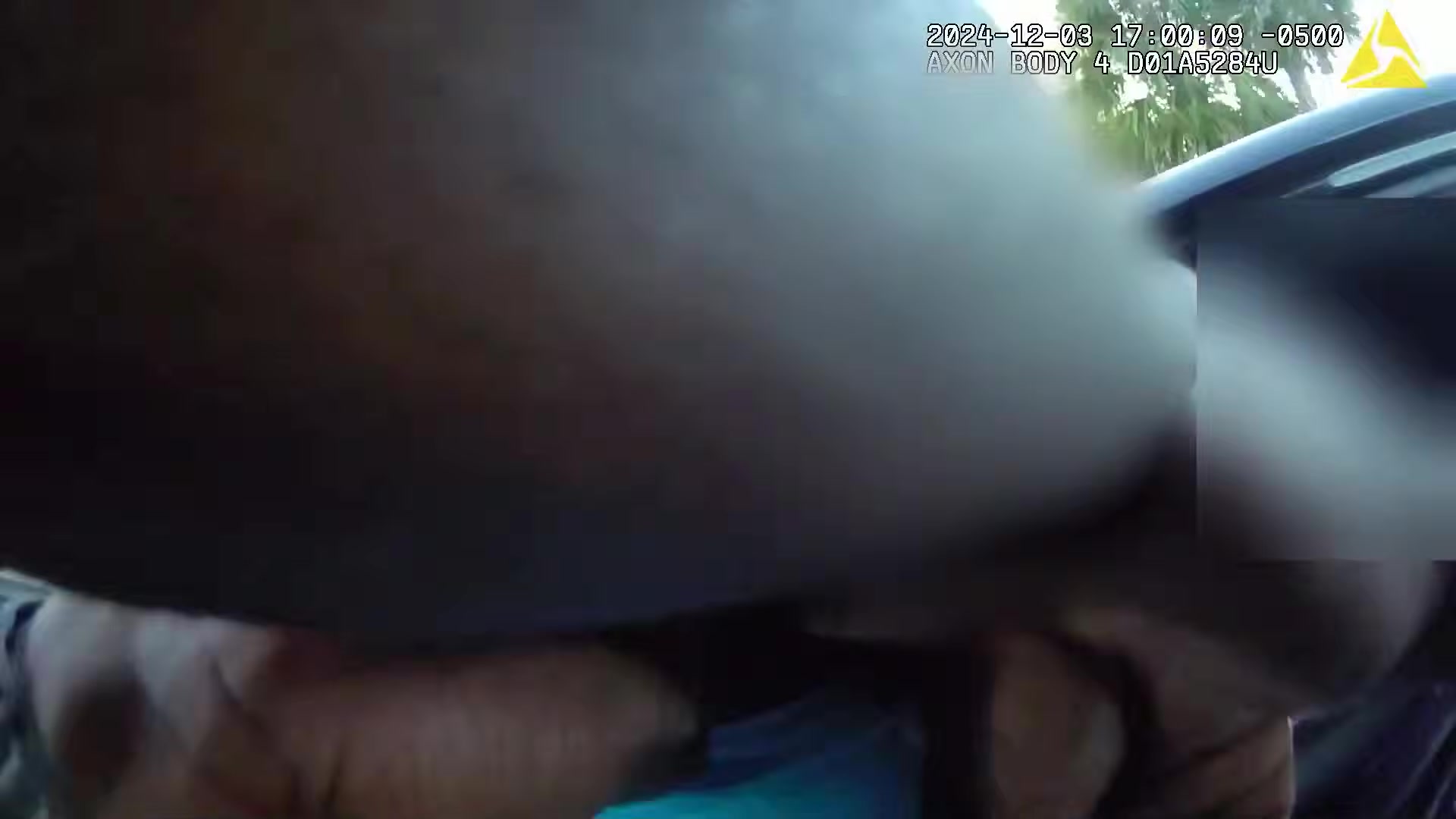
The footage shows the practical consequences of that shift. Once officers decide the woman is not going to comply voluntarily, they move from persuasion toward physical control. The camera closes in, voices overlap and the clean visual perspective disappears. This is common with chest-mounted body cameras: the most important physical moments are often the hardest to see because the camera is inches away from the people involved.
Yet the broader sequence remains clear. The stop did not begin with handcuffs. It reached that point after an extended exchange in which the deputy repeatedly attempted to direct the encounter.
The Arrest Becomes the Moment Everyone Will Remember
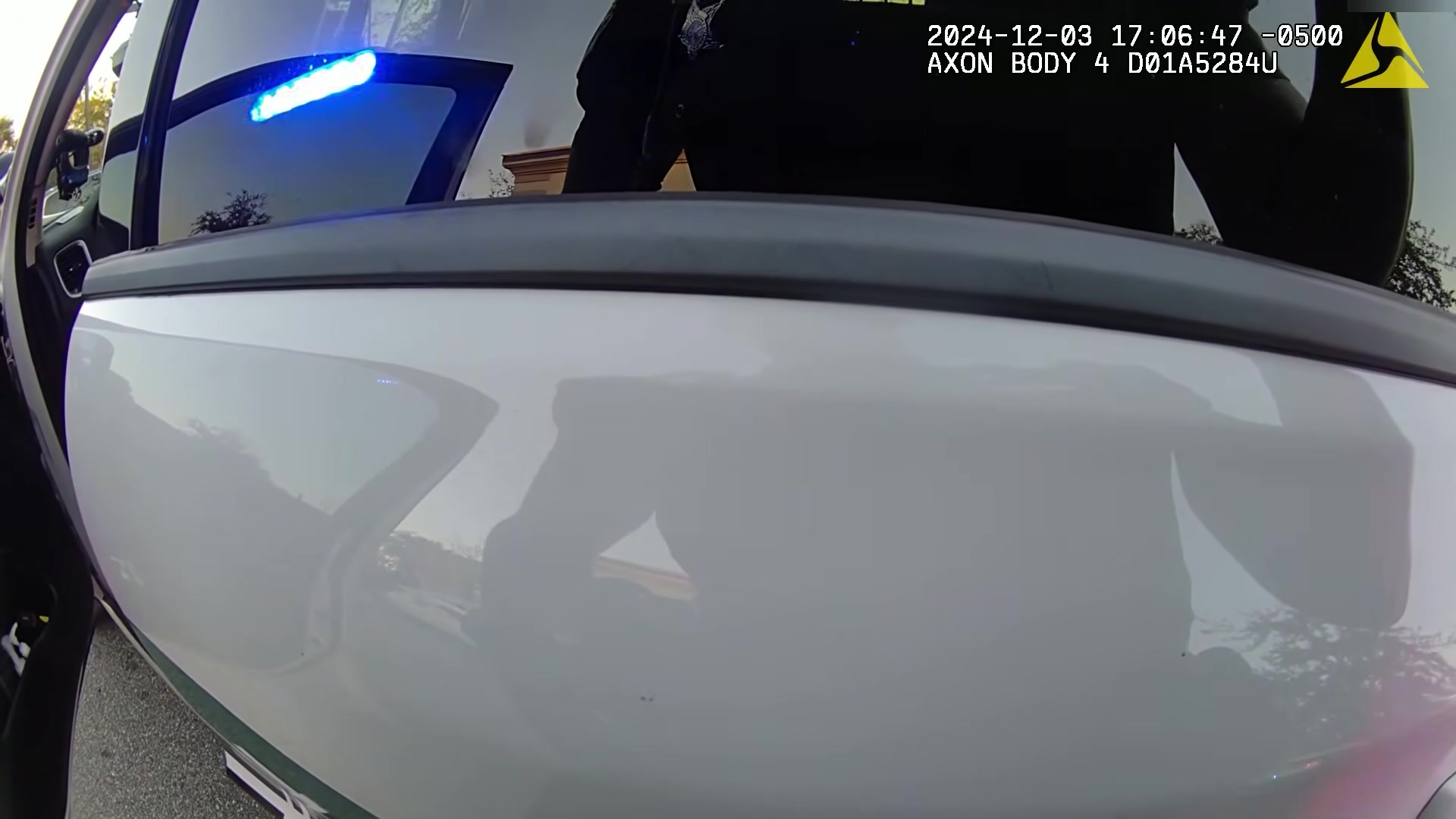
When the physical arrest begins, the tone changes instantly. The woman is moved toward a marked sheriff’s vehicle while officers work to secure her. Her voice rises, and the body camera captures the confusion and intensity that often accompany a resisting-without-violence arrest.
The official daily briefing matters here because it prevents the video from being overstated. Flagler County’s record lists “Failure to obey” and “Resisting w/o violence.” It does not describe a violent assault on deputies in this entry. That distinction should remain intact when the footage is summarized.
“Resisting without violence” can cover conduct that obstructs or opposes an officer without the use or threat of physical violence. The precise legal sufficiency of any charge is ultimately a matter for the justice system, not a social-media caption. But the terminology helps explain why the encounter can look physically chaotic while the listed offense still specifies that the resistance was nonviolent.
For viewers, this is also the point where short edits can distort the story. A clip beginning with officers grabbing the woman might create the impression that the physical arrest appeared from nowhere. Watching the preceding conversation shows the buildup and gives the arrest context, even if viewers still disagree about individual decisions.
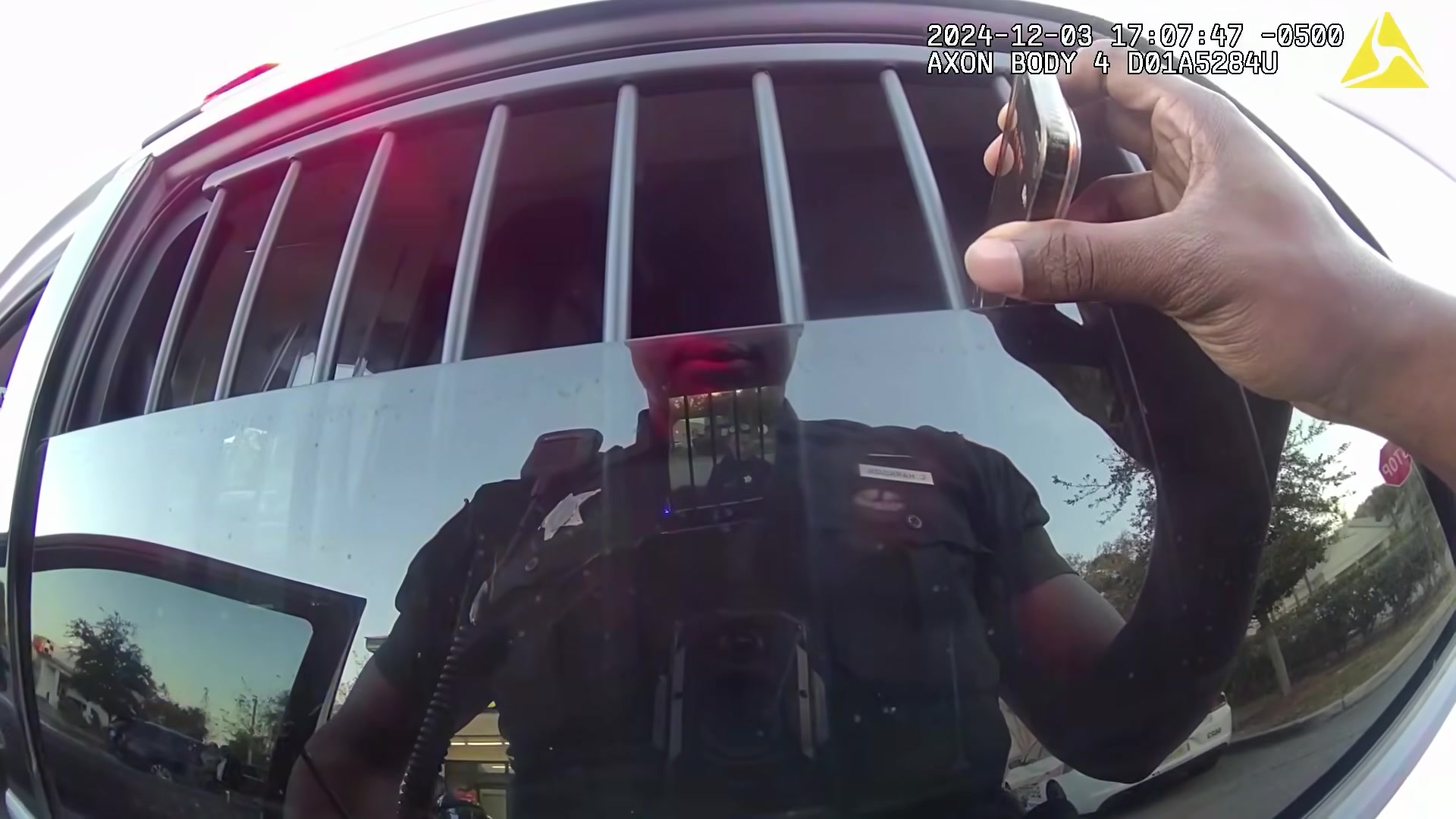
The Patrol SUV Becomes the End Point of the Argument
Once the woman is restrained beside the Flagler County Sheriff’s Office vehicle, the roadside debate has effectively ended. The balance of the encounter has changed. Officers are no longer attempting to persuade a driver to cooperate with a stop; they are managing a person in custody.
This is one of the clearest visual turning points in the supplied video. Emergency lights reflect across the scene while the woman continues speaking and reacting. The marked sheriff’s vehicle makes the agency identification unmistakable and helps connect the footage to the Flagler County record for that date.
The transition also illustrates a broader reality of police encounters: the consequences of refusing commands can become much larger than the original reason for contact. A person may begin by disputing a traffic matter and end up facing an additional arrest-related allegation based on what happens after the stop begins.
That is not an argument that citizens should surrender legal rights. It is an argument for separating immediate safety and compliance decisions from later legal challenges. Courts, attorneys, agency complaint systems and body-camera review exist precisely because roadside confrontations are a poor environment for careful legal analysis.
Official Records Confirm the Core of the Incident
The strongest source for this article is not a viral repost or commentary channel. It is the Flagler County Sheriff’s Office daily activity report dated December 3, 2024.
That document records 164 calls for service, seven reports written and 42 traffic stops during the day shift. Under “Other Arrests,” it lists case number 24-103955 and identifies Ebony Rochelle McGlocking, a Black female born March 22, 1994. The listed location is Old Kings Road. The charges summarized in the daily briefing are failure to obey and resisting without violence.
A separate Flagler County inmate-search result also contains an entry for McGlocking, further supporting the identity associated with the official incident record.
Those records allow the article to go beyond visual guesswork while still avoiding claims that are not supported. The available official summary does not provide a detailed narrative of why the vehicle was initially stopped, every command given, or the final disposition of the criminal case. Therefore, those details should not be invented.
This is an important standard for body-camera reporting. Video is powerful evidence, but it does not automatically supply names, statutes, case outcomes or the officer’s complete legal reasoning. Official records can fill some gaps. When they cannot, the gap should remain a gap rather than becoming speculation.
Why a Simple Traffic Stop Can Become So Difficult
Traffic stops are one of the most common points of contact between police and the public, but their routine nature can be misleading. Officers approach vehicles without knowing who is inside, whether weapons are present, whether the driver is wanted, or whether the vehicle will suddenly move. Drivers, meanwhile, may be anxious, angry, confused about the reason for the stop or fearful about what will happen next.
Communication is therefore the main tool preventing a minor encounter from escalating. Clear instructions matter. So does the ability to distinguish a question from a refusal and frustration from a physical threat.
The footage in this case shows what happens when that communication loop stops functioning. The deputy gives directions; the woman disputes or resists the process; the deputy repeats the instructions; the woman becomes more upset; and eventually the encounter moves into physical enforcement.
Once that transition occurs, both sides lose options. Officers must control the arrest safely. The person being arrested has less freedom to negotiate what happens next. Bystanders may begin recording. Adrenaline rises. Statements become louder and less precise.
The simplest moment to prevent escalation is usually earlier—before the argument becomes a contest over who will yield.
Bodycam Footage Gives the Argument a Timeline
One of the most valuable features of body-camera evidence is chronology. Human memory after a stressful confrontation can be incomplete or selective. A camera preserves the order in which commands, responses and physical actions occurred.
That does not make the camera infallible. A chest-mounted lens can be blocked. It cannot show exactly where an officer is looking. Audio may capture words from people outside the frame. Lighting and movement can make gestures ambiguous. But the timestamped sequence provides a shared record that neither side could create afterward.
In this video, the timestamp also helps identify the event independently. December 3, 2024 matches the date of the Flagler County Sheriff’s Office report containing McGlocking’s arrest. The marked green-and-white sheriff’s vehicle and the Old Kings Road entry provide additional contextual alignment.
That combination—video plus official records—is much stronger than identifying a case from a title alone. Online police videos are frequently retitled, shortened and reposted months or years after the original incident. A dramatic headline may tell viewers almost nothing about when or where the encounter actually happened.
For that reason, the body-camera overlay, agency markings and official daily report are more important to this article than the viral wording attached to the upload.
The Real Lesson Is in the Escalation, Not the Insult
Calling someone a “difficult woman” may make an effective viral title, but it is not a legal description and it does not explain the incident. A better account focuses on behavior and sequence: a traffic stop occurred; the interaction became argumentative; deputies issued directions; the woman did not comply as officers expected; the encounter became physical; and the Sheriff’s Office recorded an arrest for failure to obey and resisting without violence.
That description is less sensational, but it is more useful.
It also explains why the new title—“She Refused a Simple Traffic Stop—Then Deputies Put Her in Handcuffs”—fits the footage more closely. It creates curiosity without pretending that the encounter involved violence, a chase or a more serious crime that the official summary does not support.
The full video is valuable precisely because it lets viewers decide how they interpret the behavior while keeping the basic facts anchored to a timestamp and an official record. Some viewers may believe the deputy showed considerable patience. Others may question whether every command or tactical choice was necessary. Those debates are possible because the camera preserves far more than a short description.
What should not be debated are facts that can be checked. The encounter took place on December 3, 2024. The footage shows a Flagler County Sheriff’s Office vehicle. The agency’s report lists Ebony Rochelle McGlocking in case 24-103955 on Old Kings Road and summarizes the arrest as failure to obey and resisting without violence.
A Stop That Could Have Ended Very Differently
By the final minutes, the original simplicity of the encounter is gone. The woman is in custody, deputies are completing the aftermath, and the roadside argument has produced consequences far beyond an ordinary warning or citation.
That ending is what gives the footage its staying power. It is easy to watch the final arrest and assume the outcome was inevitable. The earlier minutes show otherwise. The escalation is incremental. At multiple points, the scene still looks capable of ending quietly.
This is why the most effective body-camera stories are not always those involving spectacular force or high-speed pursuits. Sometimes the compelling question is much smaller: how did a routine stop get from point A to point B?
Here, the answer is visible in the accumulated friction between instruction and refusal. No single second tells the whole story. The sequence does.
For viewers interested in policing, the footage offers a practical case study in command presence, roadside communication, nonviolent resistance and the limits of arguing a stop in real time. For everyone else, it is a reminder that a routine interaction with law enforcement can change quickly once cooperation breaks down.
The body camera gives us something a headline cannot: the opportunity to watch that change happen in real time, from the first conversation beside the car to the moment the handcuffs come out and the encounter becomes an arrest.
The arrest is only the final chapter. The full footage shows the decisions, arguments and repeated commands that turned an ordinary stop into a much larger encounter.
Click here to watch the full incident unfold from beginning to end:
Comments (0)
Loading comments...
May You Like

Couple Arrested for leaving 10 Dogs and Cats in Hot car in Florida

MERIDEN POLICE OFFICER SHOOTS MAN BEATING FATHER WITH A BASEBALL BAT

Police Chase Ends as Driver Hits Stoplight, Crashes Into West Towne Mall













