Pregnant Woman Tries to Leave Twice as Officers Explain Her Warrant
Pregnant Woman Tries to Leave Twice as Officers Explain Her Warrant
A residential warrant encounter turns tense when a woman repeatedly questions why officers are there, moves away from their control, and is ultimately placed in custody. The body-worn footage captures the gap that can exist between what a person believes a warrant means and what officers are required to do once they have confirmed one.
A Routine Arrival Becomes a Warrant Arrest
The encounter begins in daylight in a residential neighborhood. Body-worn footage shows officers arriving around a home and making contact with a woman near a vehicle. The date visible on the recording is August 18, 2025. From the opening minutes, the situation does not resemble a high-speed pursuit or an armed standoff. Instead, the tension comes from uncertainty, repeated questions, movement around the property, and the officers’ insistence that the woman cannot simply end the contact by walking away.
The woman appears confused about why the officers are focused on her. She asks questions and continues talking while officers work through the situation. At several points, the interaction shifts quickly between conversation and physical control. The most important fact visible in the footage is straightforward: officers treat the woman as a person who is subject to an active warrant, and they repeatedly communicate that she is not free to leave.
That distinction matters. A person may disagree with the reason for a warrant, believe the underlying case has already been handled, or think that a court issue is too minor to result in an arrest. None of those beliefs, by themselves, cancel a warrant that officers have confirmed as active. The validity of the warrant and the merits of the underlying case are questions for the court system. The officers at the scene are dealing with the immediate question of custody.
The footage also shows why warrant encounters can become confusing for viewers. The original offense or court matter may have happened days, weeks, or months earlier. The officer making the arrest may have had nothing to do with the underlying case. The person being arrested may therefore feel as though a new confrontation has appeared out of nowhere, while the officer sees a much simpler sequence: identify the person, confirm the warrant, and take the person into custody according to agency procedure.
What the Footage Actually Shows
The recording is approximately fourteen minutes long and includes several officers moving around the residence, vehicles, and front yard. The woman is seen beside a car, speaking with officers, and later inside a patrol vehicle. The footage contains edited subtitles and explanatory text added by the publisher, so those graphics should not be confused with original police records. The body-camera overlay itself shows an August 18, 2025 date and an Eastern Time offset.
Early in the encounter, the woman remains close to the vehicle while an officer directs her movements. One clear moment captures an officer telling her to get out of the car. The exchange is not calm in the sense of everyone agreeing about what should happen next, but it is initially dominated by verbal commands rather than force. The woman continues to question the officers and appears reluctant to accept that the warrant requires her to remain with them.
As the interaction develops, the woman moves away from where officers want her to stay. The source title characterizes this as fleeing twice. The video does show repeated attempts to create distance or leave the officers’ immediate control, followed by officers stopping or redirecting her. Because the footage is edited and does not include every piece of dispatch or database information available to the officers, it would be irresponsible to infer a separate criminal charge from those movements alone. What can be said from the recording is that officers repeatedly prevent her from leaving once they have treated the warrant as confirmed.
At another point, the woman refers to the property and continues disputing the officers’ authority to control the encounter there. That argument does not resolve the practical problem she faces. A home or private yard is not automatically a shield against a lawful arrest. The precise legal authority for entry into a residence can depend on the warrant, the location, consent, exigent circumstances, and other facts. But this encounter is largely visible outside, where officers are already in direct contact with the woman.
Why a Warrant Changes the Encounter
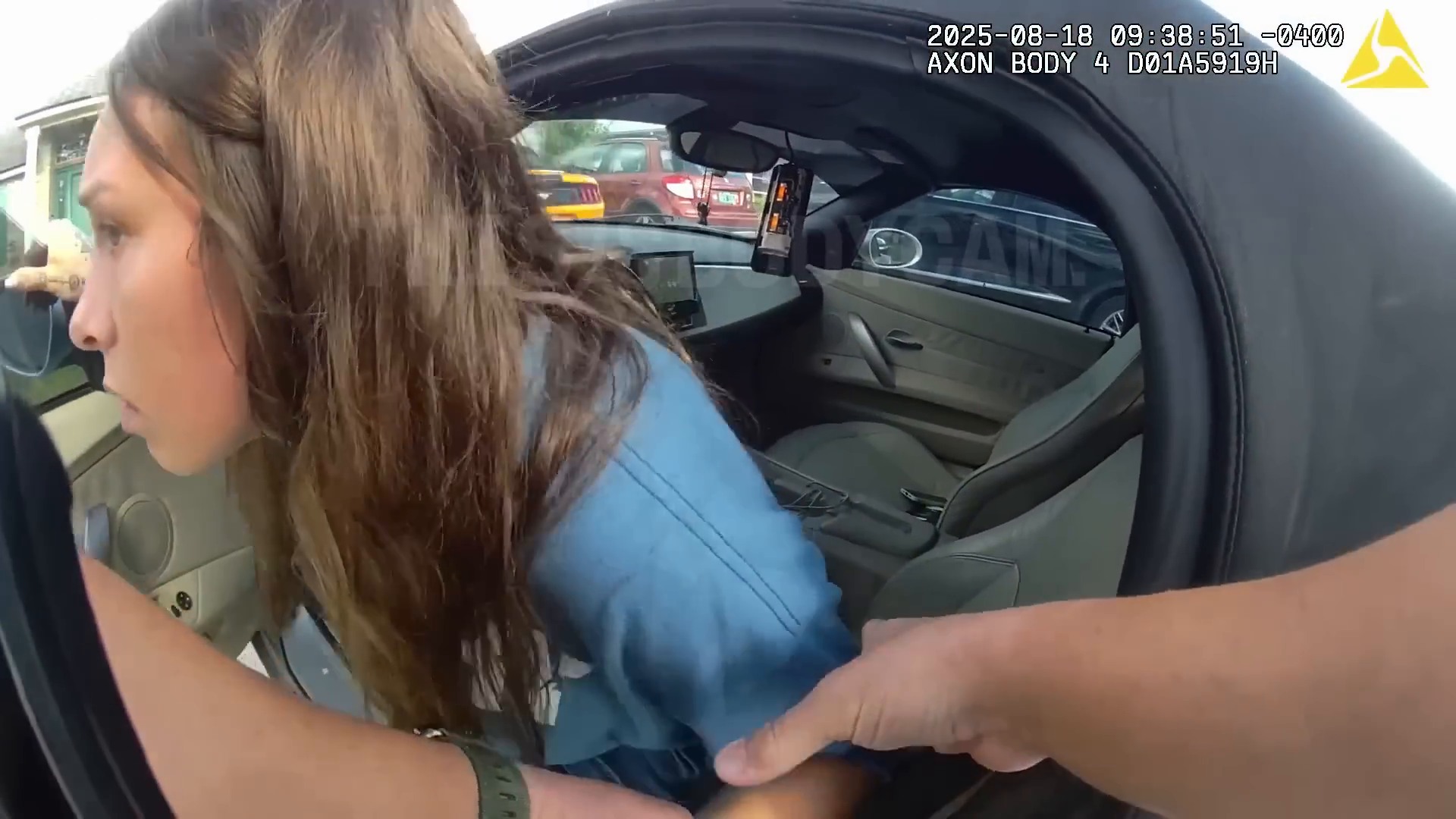
A warrant is not the same thing as an officer merely wanting to ask questions. In a consensual police encounter, a person may often be free to decline questions and leave. A confirmed arrest warrant changes that relationship because it is a judicial command authorizing law enforcement to take the named person into custody. Once officers have reasonably identified the person named in the warrant, the encounter is no longer simply voluntary conversation.
This is one reason the repeated questions in the footage do not produce the result the woman appears to want. Officers can explain what they know, but they generally cannot litigate the warrant on the front lawn. They are not the judge who issued it, the clerk who processed it, or the attorney who may later challenge it. If there is an error, mistaken identity, recall that has not been properly entered, or another defect, those issues can be raised through the legal process. At the scene, however, officers usually act on the information available to them through dispatch and law-enforcement databases.
The body-camera video provides only one side of that information system. Viewers hear portions of radio traffic and conversation, but they do not see the full database return, warrant paperwork, court docket, or dispatch notes. That is why the article does not assign a specific underlying offense, bond amount, case number, or charge to the woman. Public searching did not produce a sufficiently reliable police report or local-news record that could be matched to this footage with confidence. Attaching a name or criminal history from a merely similar case would create a false identification.
That limitation is important because viral body-camera videos often circulate under rewritten titles. A clip may be reposted several times, trimmed, captioned, or given a more dramatic description. The footage remains useful for understanding the visible interaction, but a title alone is not proof of a person’s identity or the details of a court case.
The First Attempt to Break Away
The tension rises when the woman no longer remains where officers are directing her. From an officer-safety perspective, movement during an arrest can immediately change the problem. An officer who is still confirming information or positioning handcuffs now has to decide whether the person is simply confused, intentionally resisting control, attempting to enter a vehicle, trying to reach the house, or preparing to run.
Body-worn video can make those seconds look deceptively simple. The viewer already knows the clip will end in an arrest and can replay the scene. Officers do not have that advantage. They must react in real time while watching the person’s hands, nearby vehicles, doors, other people on the property, and each other’s positions. This helps explain why commands often become shorter and more repetitive as a subject continues moving.
The woman’s apparent pregnancy adds another layer of concern, but it does not make an active warrant disappear. Pregnancy can affect how officers evaluate physical tactics, restraints, transportation, and medical needs. The exact policy depends on the agency and circumstances. The footage does not provide enough verified information to state what stage of pregnancy she was in, whether officers had medical confirmation, or whether any special medical procedure was later required. Those details should not be invented from appearance or from the source title.
What is visible is that officers continue trying to gain control without turning the scene into a prolonged physical struggle. They close distance when she moves, direct her back, and maintain enough personnel nearby to prevent the encounter from becoming a chase through the neighborhood. The first attempt to leave therefore becomes a warning of what could happen next: every additional movement reduces the amount of discretion officers have to keep the contact conversational.
A Second Movement Raises the Stakes
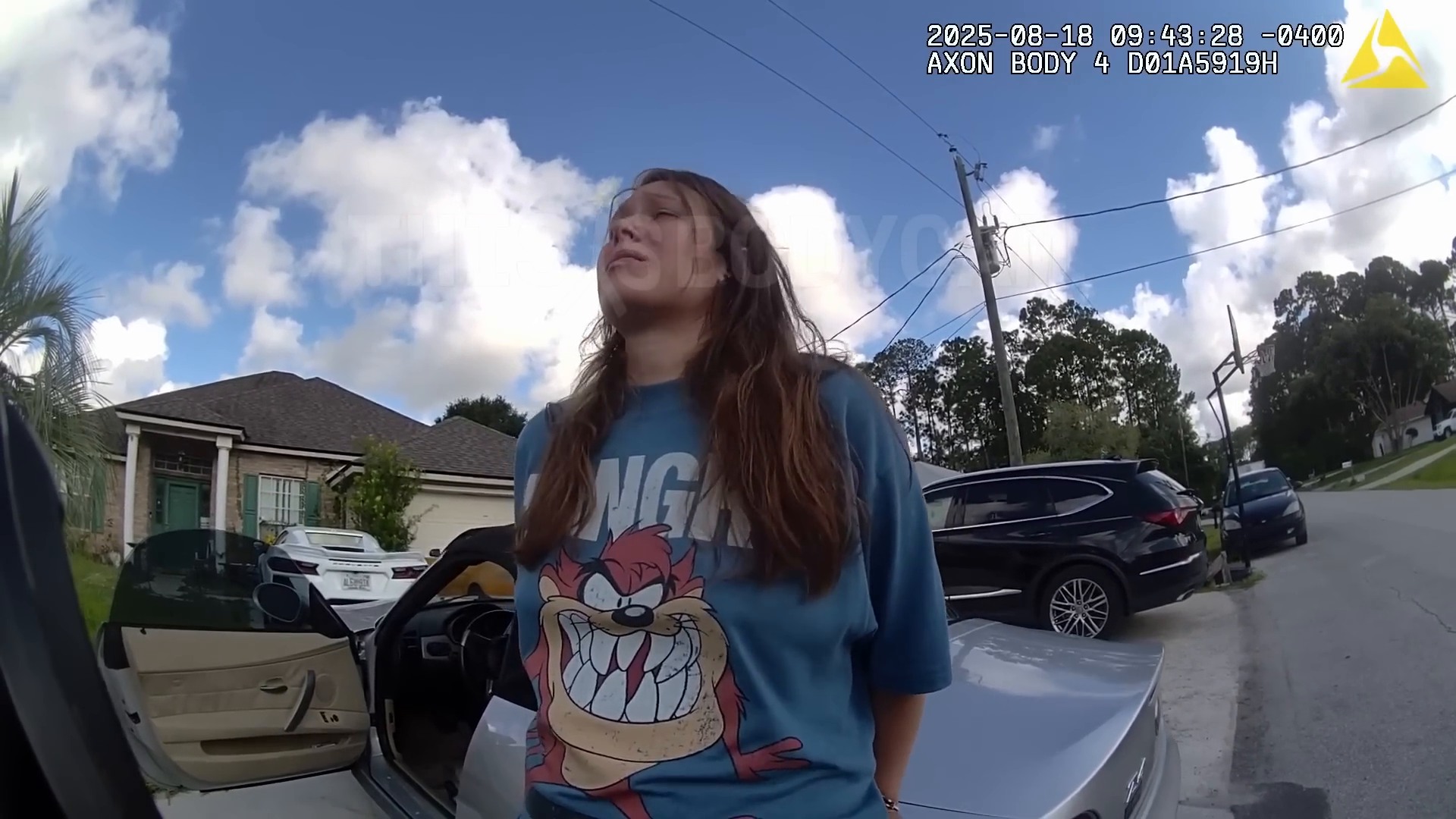
The encounter does not immediately settle after the first intervention. The woman continues to dispute what is happening, and the footage later shows another moment in which officers have to stop her from leaving their control. This repetition is the central reason the video feels more tense than a typical warrant service. The problem is no longer merely misunderstanding. Officers have already made clear that she must stay, yet the same basic conflict returns.
For the person being arrested, the instinct to walk away may feel like an attempt to regain control of a confusing situation. For officers, the same movement can look like an escape attempt. Those two perspectives collide quickly. Once officers believe a person is attempting to flee, they may move from verbal persuasion to hands-on control because allowing additional distance can create a foot pursuit, traffic hazard, or confrontation at another location.
The footage illustrates a practical point that is easy to miss in edited online discussions: arguing about the warrant and physically leaving are not equivalent actions. A person can verbally state that the warrant is wrong, ask for information, request an attorney, or challenge the case later. Physically defeating an arrest is a different issue and can create new legal exposure depending on the jurisdiction and the conduct involved. Because the exact jurisdiction and resulting charges have not been independently verified here, no claim is made that the woman in this video received an additional resisting or fleeing charge.
That distinction keeps the story grounded. The dramatic element is already present in the video. There is no need to add an invented felony, a fabricated bond amount, or a claim about what a prosecutor eventually did. The footage shows officers repeatedly trying to keep a warrant arrest from becoming a larger incident, and that is enough to explain the escalation.
Inside the Patrol Vehicle, the Argument Changes
Later footage shows the woman seated in the rear of a patrol vehicle. The physical question of whether she can leave has largely been resolved. The conversation shifts toward what happened and why the officers reacted the way they did. One subtitle captures an officer telling her, in substance, that her own actions did not improve the situation.
This stage of an arrest often feels anticlimactic compared with the moment of physical control, but it is revealing. Once someone is secured, officers can return to explanation. The person in custody may still disagree, but the immediate risk of a sudden departure is lower. The tone can therefore change from commands to discussion.
The video also includes a publisher-added explanation about kratom. That editing choice suggests the substance came up somewhere in the broader interaction, but the clip by itself does not establish possession, impairment, illegality, or a drug charge. Kratom laws vary by jurisdiction and product type, and a text overlay inserted by a video publisher is not equivalent to a laboratory result or charging document. For that reason, the presence of that explanatory graphic should not be used to build a drug allegation that the verified record does not support.
This is an example of why separating raw footage from editorial additions matters. Body-camera date stamps, officer speech, and visible actions are direct evidence of what the recording captured. Added subtitles can help viewers follow dialogue, but they may paraphrase. Added informational boxes are commentary. A careful reconstruction treats those categories differently rather than blending them into one supposedly official narrative.
What Viewers Can Learn From the Encounter
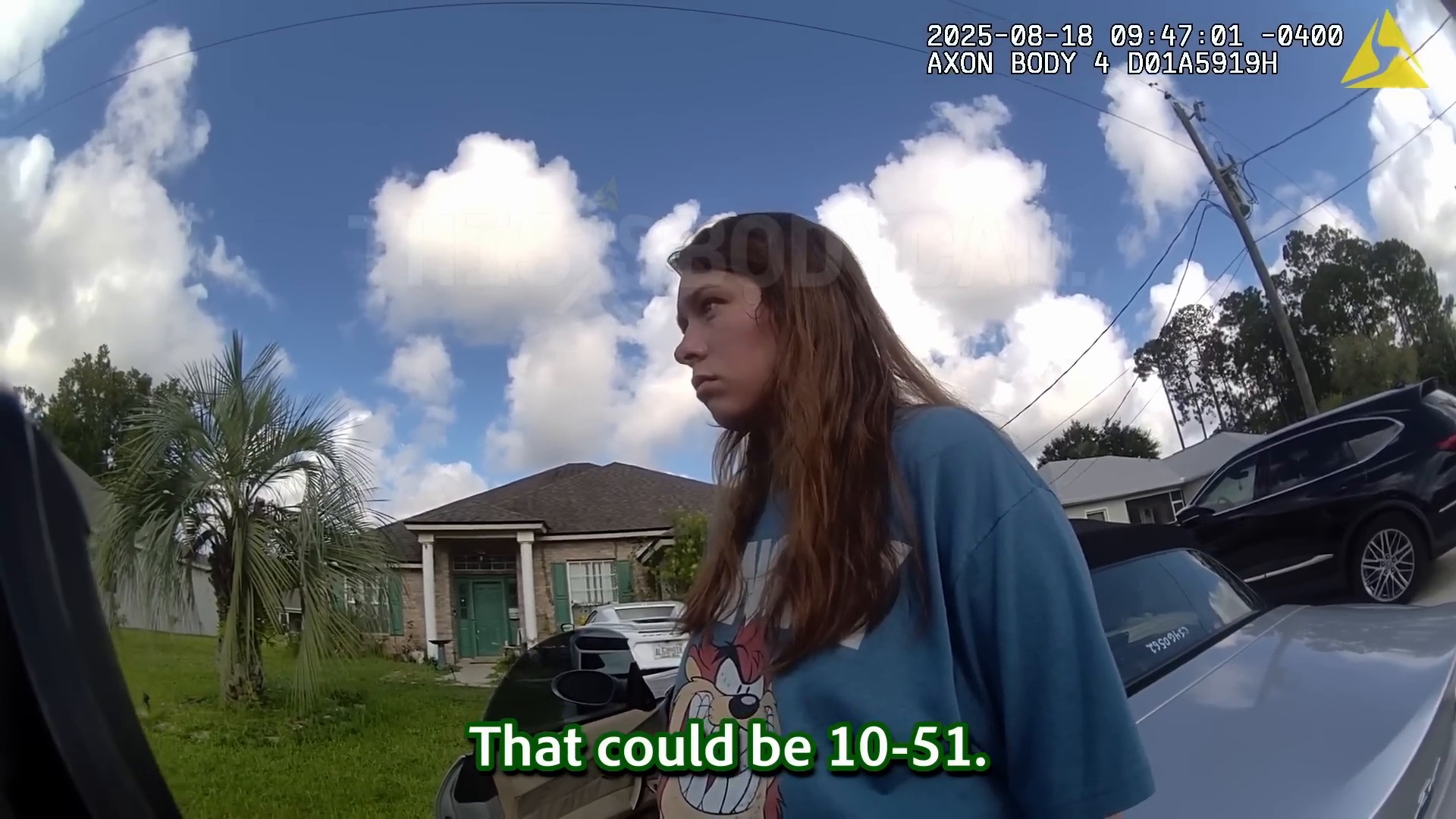
The strongest lesson is not that asking questions is wrong. People have legitimate reasons to want to know why they are being arrested, what warrant officers are talking about, and what happens next. The lesson is that the roadside or front yard is usually not where a confirmed warrant is finally adjudicated. Once custody is required, trying to physically leave can make an already difficult situation more dangerous and complicated.
For officers, the footage also demonstrates the value of clear communication. Repeating that a person is not free to leave, explaining that the warrant has been confirmed, and separating the arrest decision from the underlying court dispute can reduce ambiguity. It may not persuade someone who strongly believes the system is wrong, but it creates a clearer record of what the person was told before officers use physical control.
Body cameras are especially useful in encounters like this because the most important dispute is often about sequence. Who said the person was under arrest? When did the person begin moving away? How many warnings were given? Did officers immediately use force, or did they first attempt verbal direction? A continuous recording can answer some of those questions more reliably than memory alone, although even body-camera footage has limitations such as lens position, obstructed views, missing context, and edits in publicly posted versions.
The recording here shows multiple officers, changing positions, and moments when the camera wearer’s view is partially blocked. That means viewers should resist treating a single frame as the whole incident. The value comes from watching the sequence: initial contact, explanation, disagreement, movement, intervention, renewed disagreement, another attempt to leave, and eventual transport.
Why the Exact Case Remains Unconfirmed
The visible timestamp provides a useful starting point, and the uniforms and patrol equipment provide additional clues. Even so, those details were not enough to match the video with confidence to a specific public police release or local-news article. Search results produced other warrant and fugitive cases from the same general period, but none matched the woman, residence, sequence, and body-camera footage closely enough to use as the factual foundation for this story.
That means several details remain deliberately unstated: the woman’s name, the department, the city or county, the offense underlying the warrant, whether the warrant was for failure to appear or another matter, any bond amount, and the final court outcome. The footage may contain clues that could eventually lead to those records, but a responsible account should not fill gaps with guesses.
This approach can feel less sensational than many reposted body-camera descriptions, but it is more useful. It allows the video to show what it actually shows. The woman appears to believe there is room to debate or delay the warrant arrest. Officers repeatedly communicate, through words and actions, that there is not. Her attempts to move away then become the central conflict of the encounter.
From Confusion to Custody
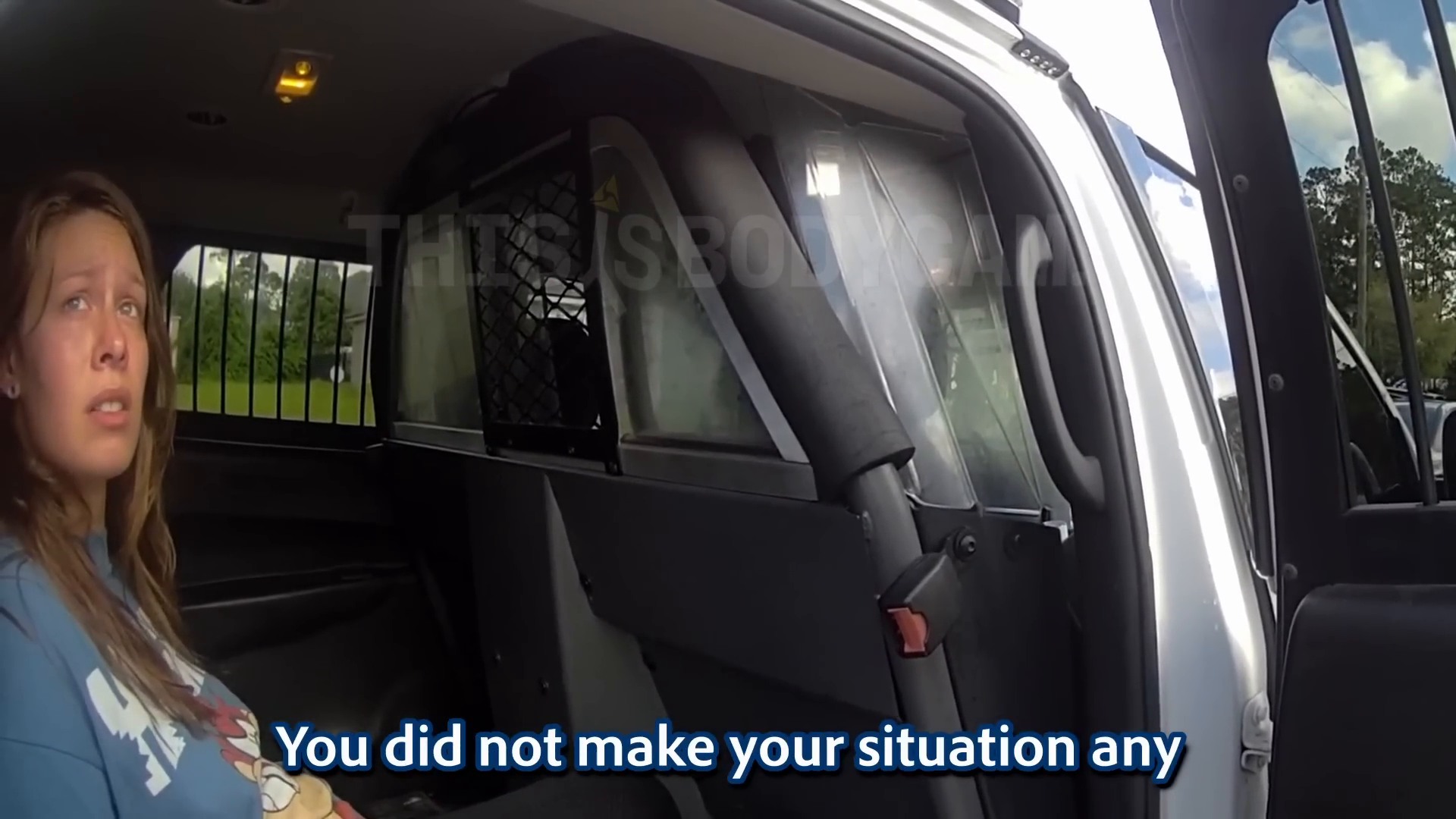
By the end of the recording, the uncertainty of the opening minutes is gone. The woman is in police custody, and officers remain at the property discussing the incident. There is no need for the story to manufacture a more dramatic ending. The consequence visible on camera is already significant: a conversation that might have ended with a straightforward warrant arrest becomes a longer, more tense encounter because the woman repeatedly resists the practical reality that she cannot simply leave.
The footage also shows how quickly ordinary surroundings can become the setting for a consequential legal moment. There are no flashing city lights or dramatic nighttime pursuit scenes. It is a bright day outside a home, with cars parked nearby and officers standing in a yard. That normal setting makes the misunderstanding about the warrant stand out even more.
For viewers, the most useful way to watch the video is to focus on the sequence rather than the viral framing. Notice when the officers’ instructions change, when the woman moves, when additional officers position themselves nearby, and when the conversation resumes after she is secured. Those transitions explain the escalation better than any sensational label could.
Until an official report or court record can be reliably matched to the footage, the precise legal aftermath should remain an open question. What the body-camera recording establishes is narrower but still compelling: officers arrived, treated the woman as wanted on an active warrant, repeatedly prevented her from leaving, and ultimately transported her in custody after an encounter that became more difficult than it needed to be.
Watch the Full Sequence for Yourself
Short clips can make an arrest look like a single explosive moment, but this encounter is built from a series of smaller decisions. Watching the full footage provides the context needed to see how the officers’ commands, the woman’s questions, and her repeated movements away from their control changed the tone of the scene.
Comments (0)
Loading comments...
May You Like

Her Dad Is a Lawyer — Then He Shows Up After Her Arrest | Bodycam US
Officer Stops to Help but the Situation Quickly Escalates
Police Pull Over Paralyzed Driver With Blind Passenger