
Predator Realizes Police Have Finally Caught Up With Him
Predator Realizes Police Have Finally Caught Up With Him
Verification note: The police footage is dated March 8, 2023 and the video's chronology reaches back to allegations beginning decades earlier. An exact official case-file match could not be independently confirmed, so identities and legal outcomes not established by the footage have not been invented.
A Case That Reaches Back Decades
The supplied video is built around a disturbing allegation that reaches far beyond the day police finally confront the man at the center of the investigation. Its opening chronology takes viewers back to 2002, describing a report involving a young victim who was allegedly left in severe physical distress. The video then moves forward through years of allegations before arriving at a modern police investigation and an arrest captured on body-worn camera.
That time gap is what makes the footage unusual. The man is not confronted immediately after the earliest alleged conduct. Instead, investigators are dealing with accusations whose roots stretch back decades. By the time the body-camera sequence begins, the suspect is an older adult and the alleged victims are no longer the same age they were when the conduct is said to have occurred.
The original title calls him a “child predator.” Because that label can imply a legal conclusion, the safest way to describe the video is to distinguish between what the edited narrative alleges, what the police footage shows, and what could be independently verified. The supplied file clearly shows officers taking the man into custody and questioning him. It also contains a Motorola Solutions body-camera timestamp of March 8, 2023 at approximately 12:44 p.m.
Public-source searches located the widely circulated video under essentially the same title, but they did not yield an official case record that could be matched to every detail in the supplied edit with enough certainty to publish the man's identity or a final court disposition. Rather than connect an unrelated sex-offense case to similar-looking footage, this article keeps those details unverified.
Police Arrive With a Plan
The arrest portion of the footage is notably controlled. Officers are not shown rushing into a chaotic scene or responding to an emergency in progress. They appear to know whom they are looking for and approach the encounter as a planned custody operation.
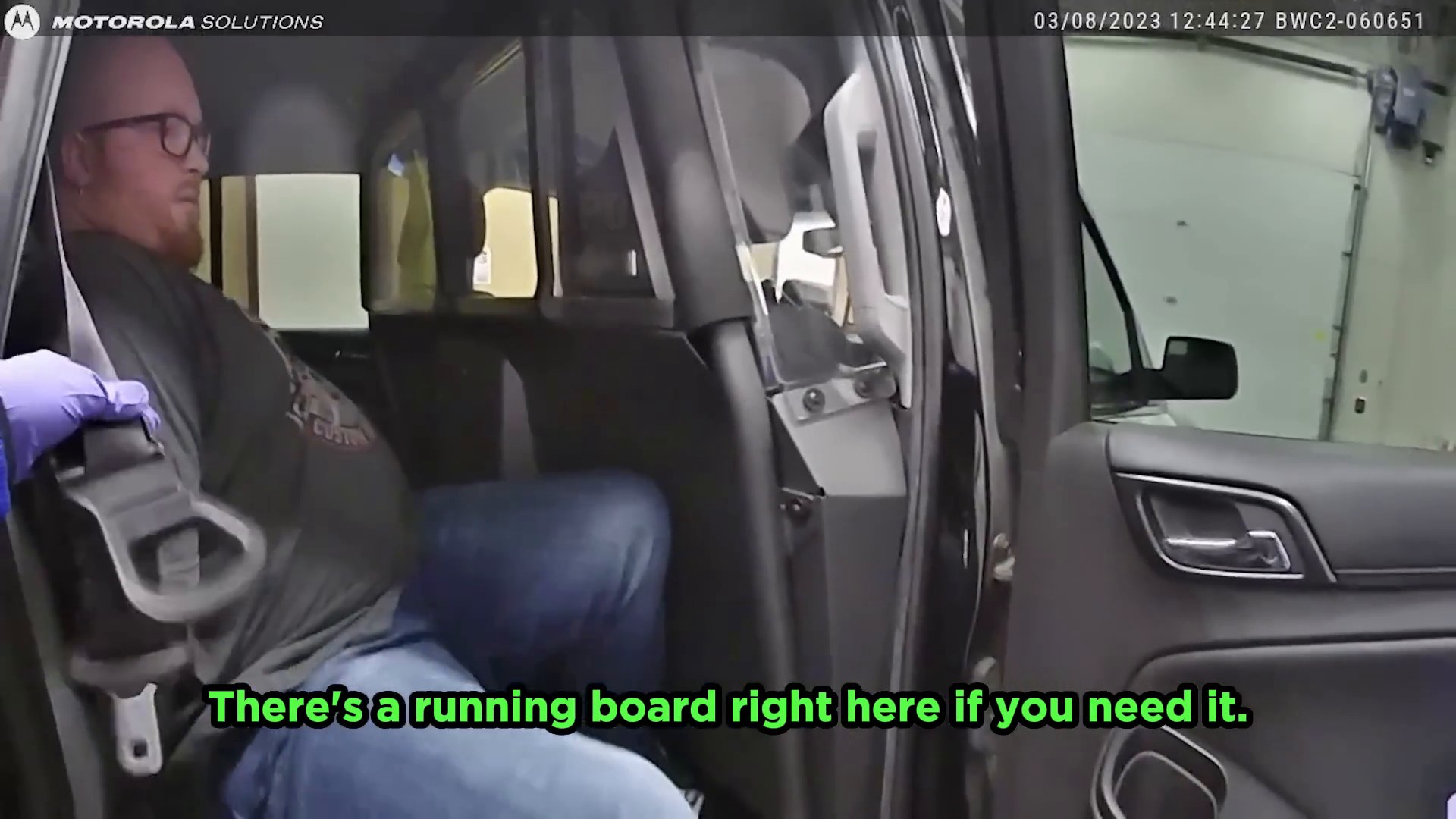
The man is eventually seated in the rear of a police vehicle. He wears glasses and speaks with officers while they manage the practical details of the arrest. The body-camera perspective is steady enough to show that the immediate physical confrontation is limited. There is no prolonged fight in the frames reviewed for this article.
That calm exterior contrasts with the seriousness of the allegations described in the video's narration. This is common in cold or delayed-report investigations. The most serious conduct may have occurred years earlier, while the arrest itself can look routine. The evidentiary work has already taken place through interviews, records, witness accounts and investigative review.
For viewers accustomed to body-camera videos built around pursuits or violent arrests, the tension here comes from recognition rather than action. The man appears to understand that the officers are not there for a casual conversation. The questions become increasingly specific, and the historical allegations move from something buried in the past to an immediate legal problem.

The Body Camera Dates the Arrest to March 8, 2023
One of the strongest verifiable details in the supplied footage is the body-camera overlay. Motorola Solutions branding appears at the top of the frame, together with a date of March 8, 2023 and a midday timestamp.
That detail is important because the edited video also uses reconstructed imagery, narration and text to explain earlier events. Those editorial elements help tell the story, but they are not the same as original evidence. The body-camera material, by contrast, documents the actual police contact.
The arrest sequence shows the suspect seated in a law-enforcement vehicle while officers speak with him. He is not portrayed as unaware that something serious is happening. His responses suggest that he is trying to understand the scope of what investigators know and how far back their inquiry reaches.
A video like this can create the impression that the arrest itself solves the entire case. In reality, an arrest is only one stage. Investigators still have to document evidence, prosecutors must decide what charges can be proved, defense attorneys can challenge the state's case, and a court ultimately determines guilt unless a plea resolves the matter.
Because the exact matching docket was not independently located during research, this article does not convert the edited video's allegations into an invented conviction.
Investigators Focus on the Historical Allegations
As the video progresses, the police questioning turns toward conduct alleged to have occurred many years earlier. The suspect's answers become central because investigators are not simply asking where he was that morning. They are asking him to account for relationships and events from the past.
Delayed-report sexual-abuse cases create particular investigative challenges. Memories can fade. People move. Records disappear. Physical evidence may no longer exist. At the same time, survivors sometimes do not disclose abuse until years later, particularly when the alleged offender was an adult they knew, trusted or depended upon.
Investigators therefore look for corroboration that does not depend on a single memory. They may compare accounts from different people, search old medical or school records, examine previous reports, identify patterns and confront a suspect with details that investigators believe only the people involved would know.
The supplied edit presents the case as involving more than one allegation over a long period. That framing is important, but without the complete police file it should not be expanded into claims about specific victims, dates or charges beyond what reliable records can support.
The Suspect Tries to Explain the Past
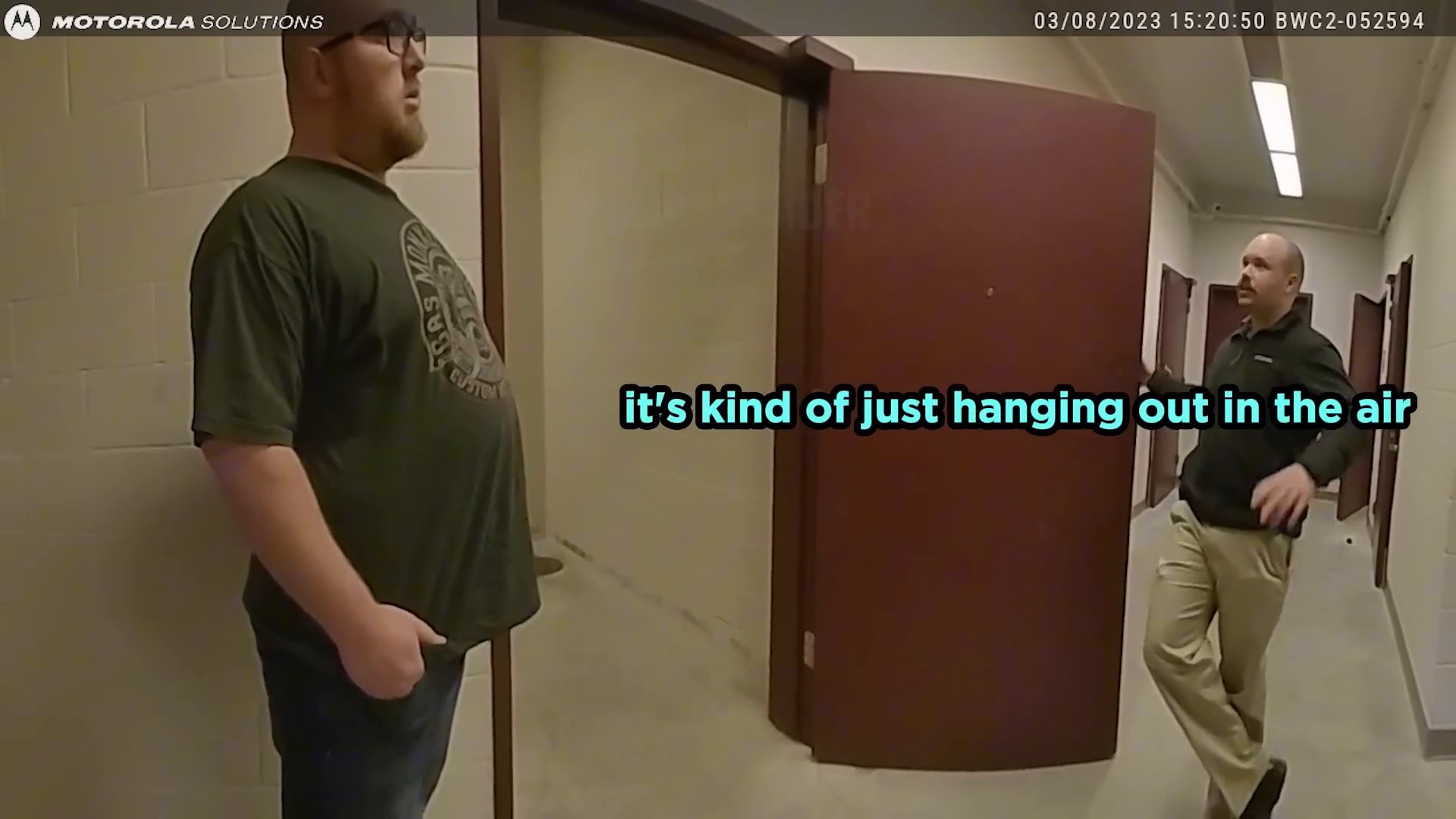
The later interview footage is heavily blurred by the police department, and the edit adds subtitles so viewers can follow portions of the conversation. In one exchange, the suspect characterizes an encounter as being “more of a mutual decision.”
That kind of statement is legally and ethically significant when an allegation involves someone who was below the age at which the law recognizes consent to the conduct at issue. A suspect's belief that an encounter was mutual does not automatically answer whether the law permitted it.
Consent laws vary by jurisdiction and by the age difference between the people involved. Some statutes also create separate offenses based on positions of authority, custodial relationships or particular sexual conduct. The precise statute matters, which is another reason not to guess the jurisdiction or charging theory from an edited video alone.
From an investigative perspective, however, the statement is revealing because it shows the suspect engaging with the substance of the historical allegation rather than simply saying he has no idea what detectives are talking about. Exactly how prosecutors used that statement would require the actual case file or court record.
Why Decades-Old Allegations Can Still Lead to Arrest
Viewers often assume that an old allegation must be legally impossible to prosecute. Statutes of limitation make the reality much more complicated.
Every state has its own rules. Legislatures have repeatedly amended limitation periods for sexual offenses, especially crimes involving minors. Some serious offenses have no limitation period. Others have extended deadlines tied to the victim's age, discovery of DNA evidence or changes in law.
Whether an old allegation can be charged depends on the statute that existed when the conduct allegedly occurred, later legislative changes and constitutional limits on retroactively reviving expired criminal liability. Prosecutors therefore have to perform a careful legal analysis before filing a decades-old case.
The fact that officers arrest someone years later does not itself prove that every allegation described in an online video remains chargeable. It means investigators believe they have a lawful basis for the arrest they are making. The charging document and subsequent court proceedings determine which accusations actually become criminal counts.
The Difference Between an Allegation and a Conviction
This distinction is especially important in cases involving sexual abuse. The allegations are serious enough that readers may instinctively treat arrest as proof. American criminal procedure does not work that way.
An arrest requires probable cause. A criminal conviction generally requires proof beyond a reasonable doubt unless the defendant enters a guilty or no-contest plea. Between those stages, prosecutors may amend or dismiss charges, judges may suppress evidence and plea negotiations can substantially change the final case.
That is why this article does not call the man a convicted offender when the matching court outcome has not been independently verified. The original title's use of “predator” reflects the creator's framing. A current factual article should use the strongest legal status that can actually be supported.
The video itself remains valuable evidence of one thing beyond dispute: police confronted and detained the man on March 8, 2023 in connection with serious historical allegations, and investigators questioned him about conduct reaching far into the past.
The Arrest Is Quiet, but the Implications Are Not
There is no dramatic chase in the body-camera sequence. The suspect does not sprint from officers. No vehicle is rammed. No weapon is displayed in the frames used here.
Instead, the tension is conversational. Officers know why they are there. The suspect gradually realizes how serious the investigation is. The gap between the calm setting and the allegations gives the footage its unsettling quality.
This is also why the title's phrase “realizes he's been caught” resonates with viewers. The video is less about the mechanics of handcuffing someone than about the moment a person understands that events from years earlier have become the subject of an active police case.
That interpretation should still be kept within the evidence. A camera can show facial expressions, pauses and answers. It cannot directly reveal a person's thoughts. Saying that the suspect “realizes” what is happening is a narrative description of the exchange, not a psychological fact.
Police Blur Portions of the Released Footage
Large portions of the later footage are intentionally blurred. The video itself labels those segments as having been blurred by the police department.
Law-enforcement agencies commonly redact released recordings to protect victims, witnesses, personal identifying information, medical details, private interiors or material exempt from public-record disclosure. In a case involving sexual allegations, those privacy concerns can be especially significant.
The blur limits what an outside viewer can independently inspect. Faces, documents and surroundings may be hidden, and an editor's subtitles become more influential because the audience cannot always see the original context.
For that reason, the article does not use the blurred material to infer identities that the police release appears designed to conceal. The footage can still be discussed at the level of the investigative exchange without defeating the purpose of the redaction.

Why the Earliest Allegation Matters to the Narrative
The video deliberately opens its chronology in 2002. That choice tells viewers immediately that the case is not about a newly discovered incident. Investigators are looking backward.
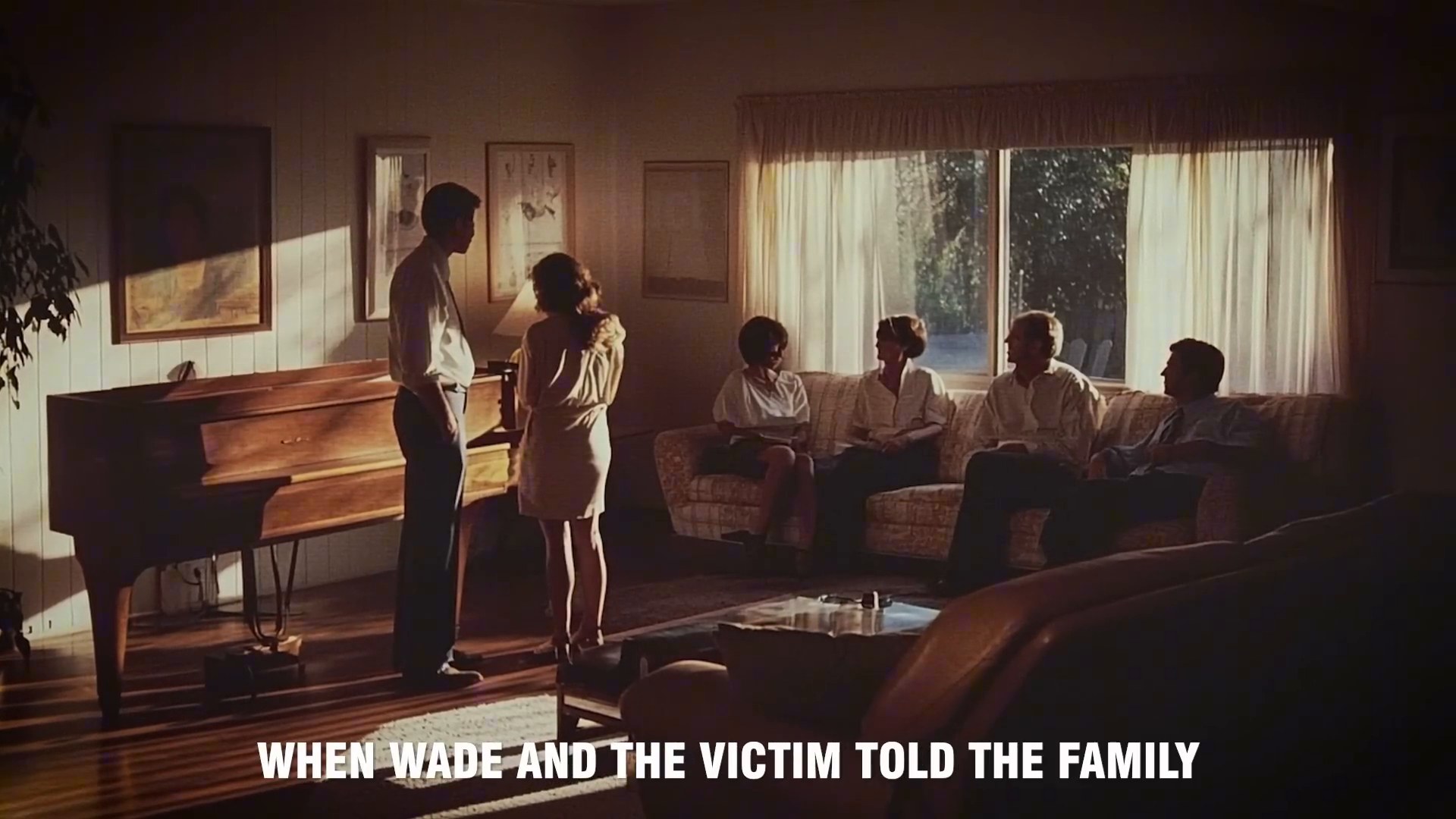
The opening narration describes a young victim in severe distress after an alleged encounter. It then uses that early event as the starting point for a longer history. Those claims are part of the video's presentation, but the recreated visual used during the narration is not an authentic photograph of the incident and is not treated as one in this article.
This difference between reconstruction and evidence is easy to lose in modern true-crime editing. Cinematic images can make an event feel documented even when the picture is illustrative. The actual body-camera footage begins much later in the chronology.
For the HTML article, the embedded images are therefore taken directly from the supplied video and identified as frames from that source. They are not presented as independent crime-scene photographs.
Research Did Not Produce a Safe Identity Match
The research stage produced several superficially similar cases from March 2023 involving historical sexual allegations. None could be matched to the supplied footage using enough independent identifiers to responsibly declare it the same case.
That is exactly the situation in which a writer should resist filling the gap. Matching only an arrest date is not enough. Matching an older male suspect is not enough. Even matching a broad allegation involving a young person is not enough.
A reliable identification would ideally connect the body-camera date, police agency, suspect appearance, historical timeline, interview language, charges and location. Without that chain, attaching a name risks falsely accusing a real person of conduct shown in someone else's video.
Accordingly, this article leaves the suspect unnamed and does not state a sentence or conviction that could belong to a different defendant. The absence of a name is a verification decision, not an omission caused by the footage being ignored.
What the Full Video Adds
The complete video gives viewers three layers of information. First is the historical narrative explaining why police are interested in the suspect. Second is the actual March 2023 body-camera footage documenting the arrest. Third is the blurred investigative interview in which detectives confront him with past allegations.
Watching only the arrest would remove the historical significance. Watching only the narration would remove the strongest primary-source material. The combination is what makes the video compelling.
It also demonstrates why body-camera reporting benefits from external research. A creator can summarize a case in minutes, but a publication needs to know which statements are police allegations, which are established court facts and which are editorial interpretation.
Where that verification cannot be completed, the correct approach is to say so. Serious accusations should not become more definite simply because they appear in a viral title.
A Long Delay Does Not Necessarily End an Investigation
The broader lesson of the footage is that the passage of time does not always prevent investigators from revisiting serious allegations.
Cold and delayed-report cases can be reopened because a new witness comes forward, an old report is rediscovered, another alleged victim provides corroboration, technology changes or prosecutors reassess evidence under current law. The exact trigger in this case should come from the underlying police file rather than speculation.
For alleged victims, the delay can also reflect the difficulty of disclosure. Research on child sexual abuse has long documented that many victims delay telling authorities, family members or other adults about what happened. Fear, shame, manipulation, dependence on an adult and uncertainty about whether they will be believed can all affect disclosure.
None of those general patterns proves a particular allegation. They explain why investigators do not automatically dismiss a report simply because years have passed.
The Moment the Past Becomes Immediate
By the end of the supplied footage, the story has moved far from the reconstructed opening chronology. The man is no longer a distant figure in allegations from decades earlier. He is sitting with police, answering questions while officers control the setting around him.
That is the transformation the original title is trying to capture. Whatever the suspect may have believed about the passage of time, police are now asking direct questions about events he may have thought were long behind him.
The footage does not need exaggerated language to make that moment significant. A planned arrest, a body-camera date, a police vehicle and a careful interview can be more revealing than a chaotic confrontation.
The final legal outcome, however, should come from a verified court record. Until that record can be confidently matched, the article stops at the boundary of what the footage and public research can support.
The result is a story about an old allegation becoming a present-day police investigation, the suspect's attempt to explain the past, and the importance of distinguishing a dramatic online title from the evidentiary standards required in a criminal case.
Watch the full footage to follow how investigators bring decades-old allegations into the present and confront the suspect with the questions he can no longer avoid:https://www.youtube.com/watch?v=eUPT-AQiYEI
Comments (0)
Loading comments...
May You Like

Four Suspects Try Killing a Cop After Police Chase

West Virginia Man Laughs at Police Officer and Ends Up Arrested














