
Police Surround the Wrong Driver Before Realizing Their Mistake
Police Surround the Wrong Driver Before Realizing Their Mistake
A Drive Home From Costco Suddenly Becomes a Felony Stop
On the afternoon of January 19, 2024, Derrick House was driving home through Woodridge, Illinois, in his silver 2021 Volkswagen Atlas. According to the federal complaint he later filed, House had been shopping at Costco and was heading home to make dinner with his family. He was not expecting any contact with police.
That changed when an unmarked police vehicle moved rapidly toward him and then cut across his path, forcing his SUV toward the curb. Within moments, several Woodridge police officers were surrounding the Volkswagen with firearms drawn. The body-camera footage supplied with this article matches the incident precisely: its timestamp shows January 19, 2024 at about 3:35 p.m., House is driving a gray or silver Volkswagen Atlas, snow covers the surrounding neighborhood, and the commands heard in the video correspond with the footage later released by House's attorneys.
The officers believed they were stopping people connected to a shooting investigation in nearby Oswego. The problem was that House was not one of those people. His SUV was not the vehicle police were actually seeking, his license plate did not match, and he was alone rather than traveling with the two occupants reportedly associated with the suspect vehicle.
None of that was apparent to House as officers took positions around his vehicle. From his perspective, an ordinary drive home had transformed without warning into a high-risk police stop.
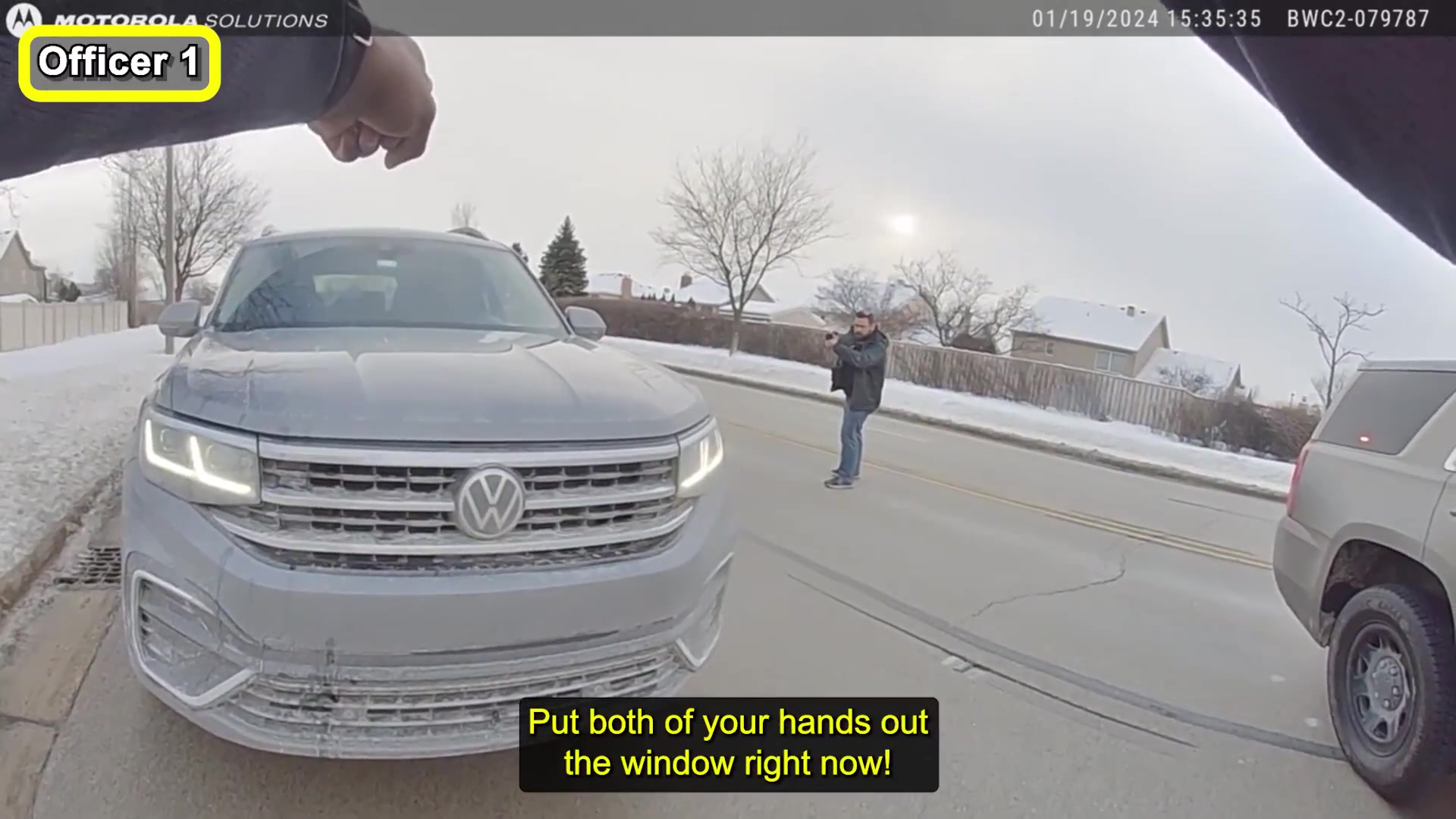
Officers Approach With Guns Drawn
The opening seconds of the body-camera footage are intense. Officers use the Volkswagen and their own vehicles for positioning while shouting commands toward House. He is ordered to show his hands and move carefully.
According to House's later lawsuit, officers were looking for a black Volkswagen Tiguan connected to an Oswego shooting. House was driving a silver Volkswagen Atlas. The suspect vehicle reportedly carried a Black man and a Black woman, while House was the only person inside his SUV. The license plates also differed.
Yet the tactical response unfolding around House was based on the assumption that he could be connected to an armed and dangerous incident. That explains why the officers approached as a high-risk stop, but it also became central to the later lawsuit: House argued that police had enough information available to recognize that his vehicle did not match the one they were seeking.
The Village of Woodridge later said officers had been responding to a volatile situation involving suspects believed to possess firearms and accused of slashing tires and discharging a weapon. The Village said officers acted on information available at the time and stopped a vehicle that unfortunately was not the vehicle they were specifically looking for.
Conflicting Commands Raise the Tension
Body-camera footage shows House trying to follow shouted instructions while several officers are positioned around him. At different moments he is told to keep his hands visible, lower or open the window, place the vehicle in park and exit slowly.
House's federal complaint characterized some of the instructions as confusing and contradictory. The footage also captures threatening language from officers, including warnings that he could be shot if he made the wrong movement. Those words became a major part of the civil-rights allegations filed the following year.
A high-risk vehicle stop is inherently tense because officers may believe an occupant is armed. Commands are often designed to keep a person's hands visible and limit sudden movements. But when the person being stopped is not the suspect, the same tactics can be terrifying because he does not understand why police are treating him as an immediate threat.
House repeatedly tries to communicate that he has no weapon and has simply come from Costco. Eventually he exits the Atlas with his hands raised. Officers move in, place him in handcuffs and search him.
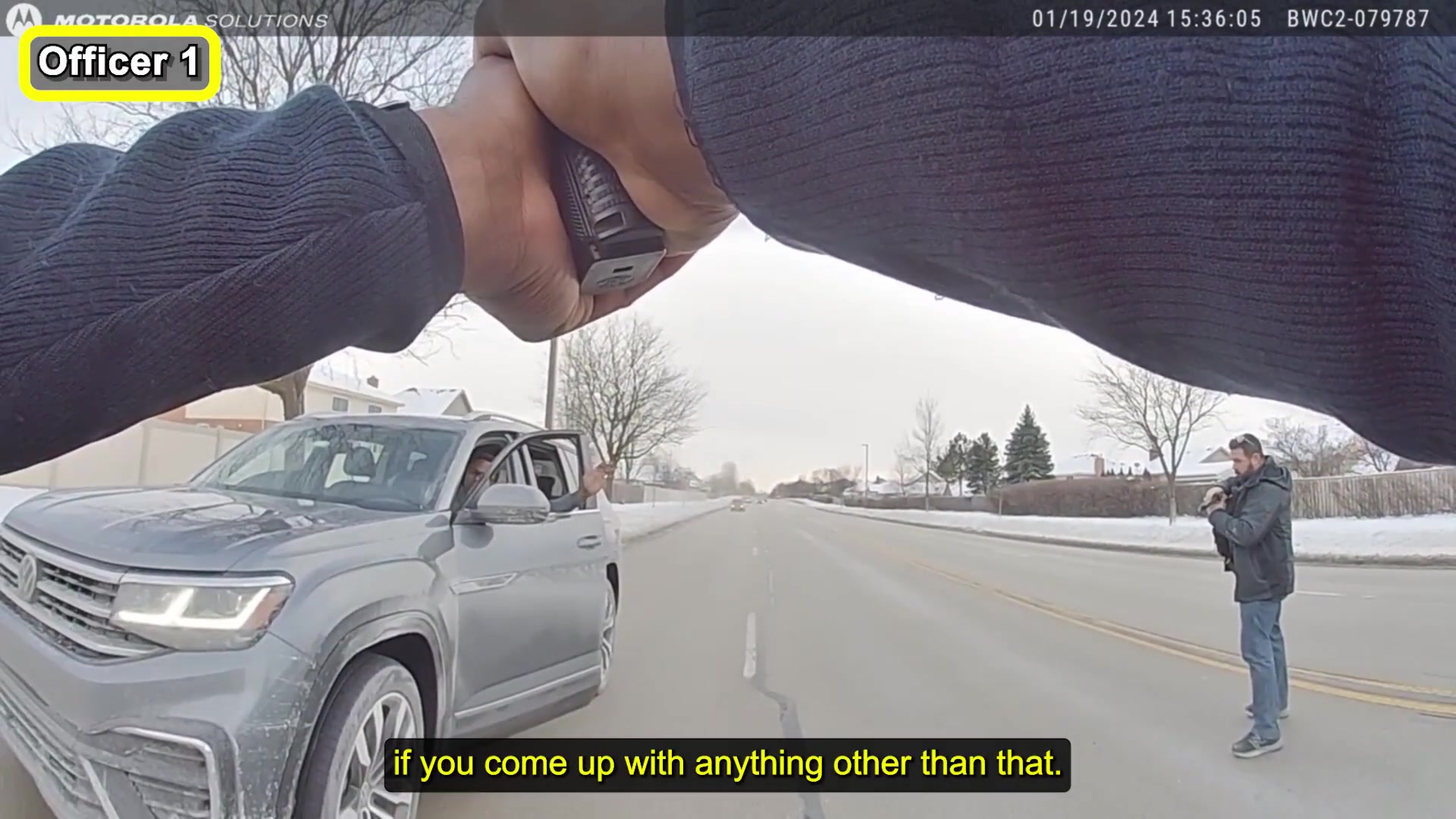
House Is Handcuffed Even Though the Vehicle Details Do Not Match
Once House is outside the SUV, officers gain physical control and place him into custody while they continue checking information. The footage shows him surrounded by multiple officers on the snowy roadway.
This is the point at which the differences between House's vehicle and the suspect vehicle become impossible to ignore. The lawsuit later emphasized the color, model, number of occupants and license plate as separate indicators that police had stopped the wrong person.
House's Atlas carried Illinois plate CN 49263, according to the complaint and subsequent reporting. The vehicle police were seeking had a different plate. Reports also describe the wanted vehicle as a black Volkswagen Tiguan rather than House's silver Atlas.
The similarity was therefore broad rather than exact: both were Volkswagen SUVs, and House was a Black male. House's attorneys later alleged that race played a central role in why officers disregarded the discrepancies. The Village disputed the characterization of the officers' actions and said they had acted in good faith during an emergency.
Those competing positions later became part of federal litigation. The body-camera footage itself establishes the immediate sequence, but allegations about unconstitutional conduct and racial profiling belong to the legal claims rather than being presented here as adjudicated facts.
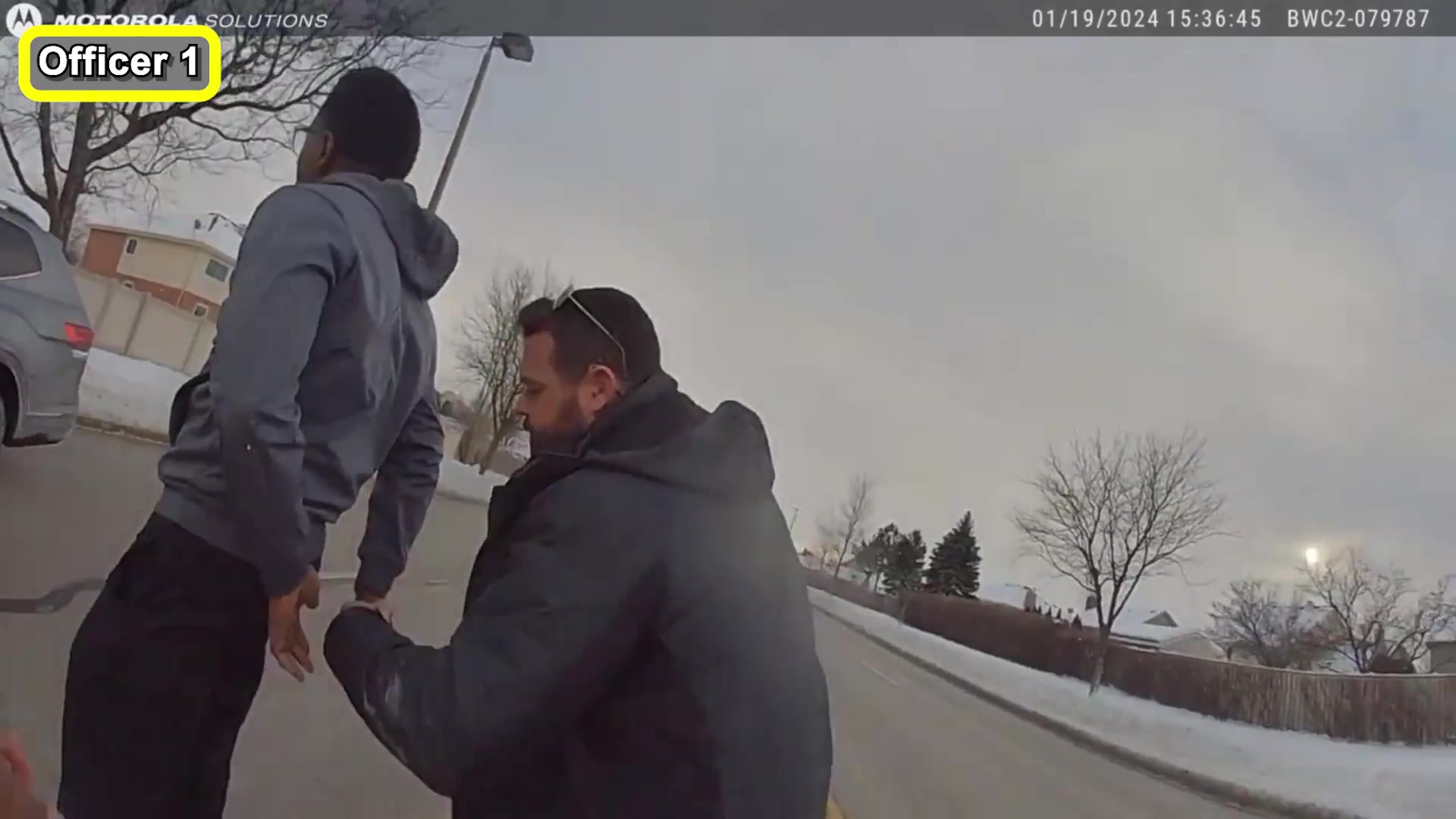
One Officer Finally Checks the Plate Against His Notes
The turning point comes after House has already been handcuffed. An officer checks the license plate information against what police are actually looking for and realizes something is wrong.
The footage captures the recognition spreading among the officers. One officer says that this is the wrong car. Another initially questions that conclusion, but the mismatch is confirmed. The entire premise of the high-risk detention begins to collapse.
According to House's complaint, it took approximately 78 seconds after he was placed in handcuffs for officers to recognize that he had nothing to do with the Oswego shooting. That is a short period on a clock, but it is a very different experience for a person standing in handcuffs after having multiple guns pointed toward him.
The mistake was not discovered because House suddenly provided an alibi for the shooting. It was discovered by comparing the vehicle information police already had with the vehicle directly in front of them.
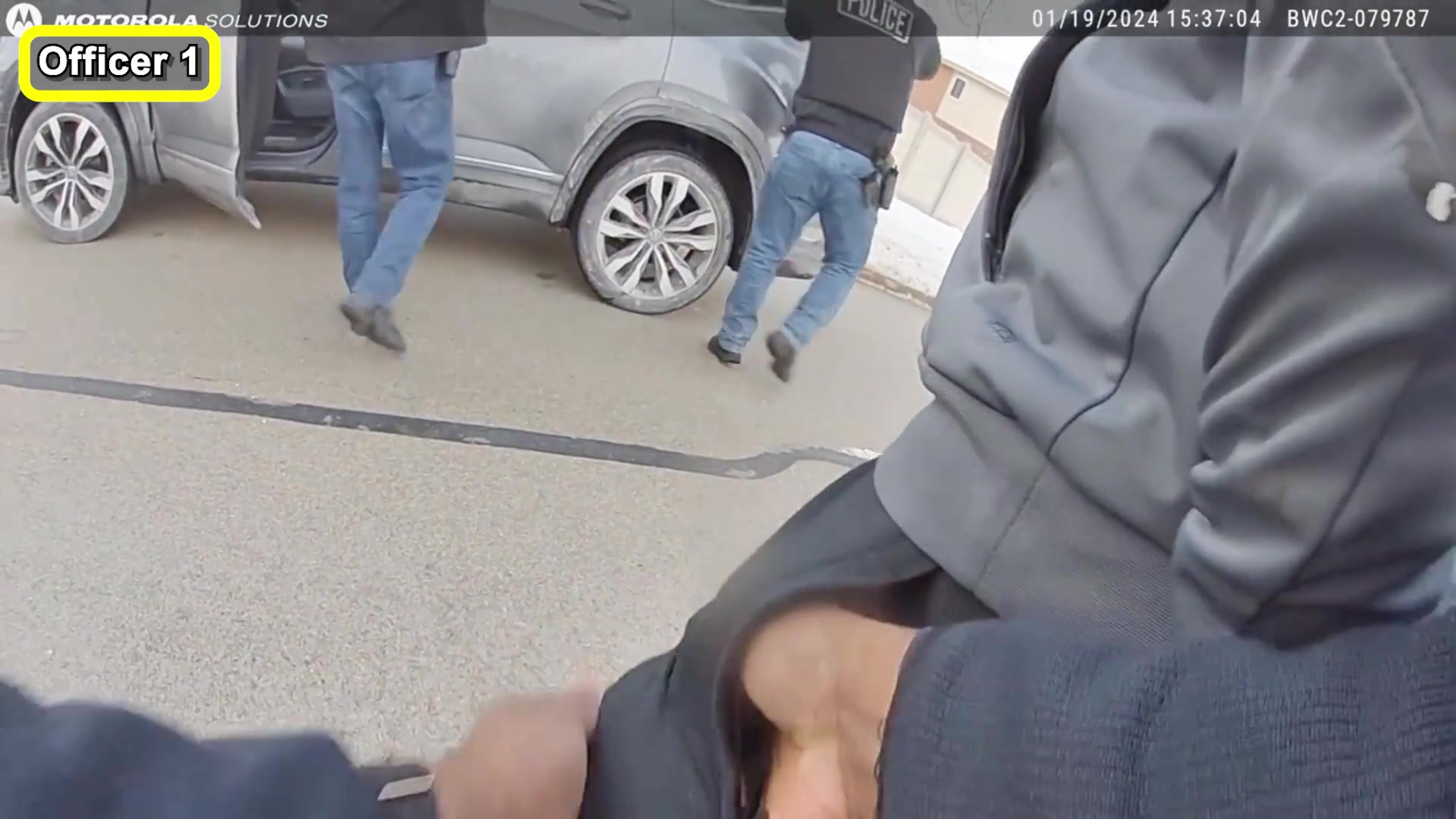
An Officer Admits the Stop Was His Mistake
Once the error is confirmed, the tone changes sharply. Officers begin removing House from custody and explaining why he had been stopped. One officer, Daniel Murray, takes responsibility in unusually direct language, telling House that he had made the mistake and that it was on him.
That admission is one of the most important moments in the footage because there is no lingering ambiguity about whether House was the person police wanted. Officers themselves acknowledge at the scene that they have stopped the wrong vehicle.
House is understandably angry. He tells officers that he has lived in the area for years, describes himself as an upstanding citizen and says his children attend school there. The encounter has gone from armed commands to an apology in only a matter of minutes.
The Village of Woodridge later publicly expressed regret for the distress caused to House. In its January 2025 statement responding to the lawsuit, the Village said the stop occurred while officers were trying to locate people suspected in a dangerous incident and maintained that the decision was made in good faith with public safety in mind.
The Wrong Volkswagen Becomes the Center of a Federal Lawsuit
Almost one year later, on January 17, 2025, House filed a federal civil-rights lawsuit in the U.S. District Court for the Northern District of Illinois. The complaint named the Village of Woodridge and officers Daniel Murray, Zachary Harvey, Brett Kielbasa, Tom Cybulski and Patrick Prendergast.
The seven-count complaint alleged violations including false arrest, excessive force and other constitutional claims arising from the mistaken stop. House's attorneys released body-camera footage alongside the filing, bringing national attention to an encounter that had occurred a year earlier.
The complaint argued that the differences between House and the wanted suspects were so substantial that the officers' actions could not be justified merely as an understandable vehicle mix-up. His attorneys highlighted the different model, different color, different plate and different number of occupants.
The Village responded that the officers were dealing with a rapidly developing and dangerous investigation. Its official statement acknowledged that House's vehicle was not the one police were specifically seeking and expressed regret for his distress, while also stating that the Village intended to defend the lawsuit.
Those positions are important to keep separate. House's claims describe why he believes the detention violated his rights. The Village's response describes why it believes officers acted reasonably under emergency circumstances. A blog about the footage should not convert either side's litigation position into a final judicial finding.
Why Vehicle Identification Matters in a High-Risk Stop
Police routinely rely on vehicle descriptions, registration information and license plates to locate suspects. In urgent cases, officers may have to make decisions quickly while coordinating information from dispatch, witnesses and other agencies.
But the more intrusive the stop, the more consequential identification errors become. A felony-style stop can involve drawn firearms, shouted commands, handcuffing and searches. If the wrong vehicle is selected, an uninvolved driver can suddenly be exposed to a level of force intended for an armed suspect.
This incident illustrates why multiple identifying details matter. Make and general vehicle type can narrow a search, but color, exact model, plate and occupants can distinguish one vehicle from another. House's Atlas and the wanted Tiguan shared a manufacturer and SUV body style, but the later complaint emphasized that several more specific details did not align.
The footage also demonstrates why verification should continue throughout a stop. Even if officers initially believe they have the correct vehicle, new information can require them to reassess. Here, the reassessment ultimately happened when the plate was checked closely enough to reveal the mismatch.
The Video Shows Both the Error and the Immediate Correction
There are two realities visible in the body-camera footage. The first is the seriousness with which officers approach House because they believe they may have found people connected to an armed incident. The second is how quickly that belief falls apart once the identifying information is properly compared.
The officers do not continue pretending House is a suspect after recognizing the mismatch. They release him, explain the mistake and one officer accepts responsibility. That immediate correction is significant, but it does not erase what House experienced before the error was discovered.
House's lawsuit says the encounter caused lasting psychological and emotional harm. Those allegations help explain why an incident lasting only minutes became the basis of federal litigation a year later.
At the same time, the Village's response emphasizes the dangerous context surrounding the search. According to its statement, police were responding to people suspected of possessing firearms, damaging property and firing a weapon. That context helps explain the officers' tactical posture even as the central question remains whether they had enough information to avoid stopping House in the first place.
A Few Digits Turn an Armed Stop Into an Apology
The title “When Cops Surround the Wrong Man” captures the core of the footage, but the details make the story more striking. House was not stopped because officers discovered evidence connecting him to the shooting. He was stopped because they believed his Volkswagen was the suspect vehicle.
Once the plate and vehicle details were checked against the actual information, that belief proved incorrect. The armed stop ended not with evidence being found, but with police removing the handcuffs and acknowledging the mistake.
The footage is a strong example of why context before and after a viral moment matters. A short clip of officers pointing weapons does not explain the dangerous incident they believed they were investigating. A short clip of the apology does not communicate what House experienced moments earlier. The full sequence shows both.
It also allows the facts to be separated from later legal arguments. It is verified that House was stopped at gunpoint, handcuffed and released after officers determined they had the wrong vehicle. It is verified that he later filed a federal lawsuit. Claims of racial profiling, excessive force and constitutional violations were allegations made in that litigation and should be described as such unless supported by a final adjudication.
The most revealing line may be the officer's own acknowledgment that he got it wrong. In an encounter built around mistaken identification, that admission marks the exact moment the situation changes from a suspected felony stop to an effort to undo a serious error.
Comments (0)
Loading comments...
May You Like
🚔⚠️ 911 Call Comes Hours Later After a Troubling Bath Incident | Ohio, USA
High-Speed CHP Chase Ends When Spike Strips Stop Suspect

Cops Arrive for a Medical Emergency and Walk Into Drunken Chaos















