
Police stopped a woman carrying a gun without a CPL.
Federal Way Traffic Stop Takes a Turn When Officer Learns the Driver Has a Gun but No CPL
What Looks Like a Minor Stop Suddenly Becomes Much More Complicated
A routine traffic stop can change completely with a single answer.
The officer may initially be concerned about a license plate, registration problem or another ordinary traffic violation. The driver may expect nothing more serious than a warning or citation.
Then the officer asks a question.
Is there a firearm in the vehicle?
Yes.
Do you have a concealed pistol license?
No.
That was essentially the turning point during a May 14, 2026 encounter in Federal Way, Washington, captured on police body-worn cameras and later released publicly.
Washington State Bodycam published the footage on May 26 under the title “No license, No CPL but has a firearm.” Its description states that Federal Way police officers stopped a vehicle for a traffic violation and learned that the female driver had no license and possessed a firearm.
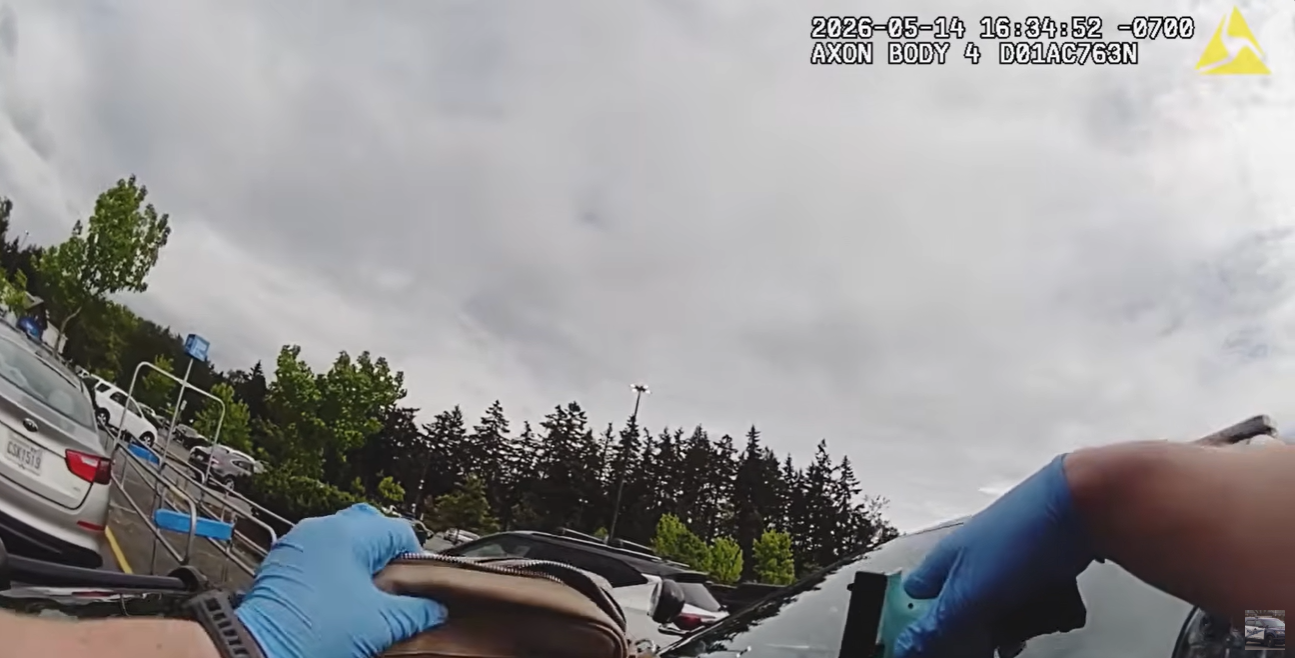
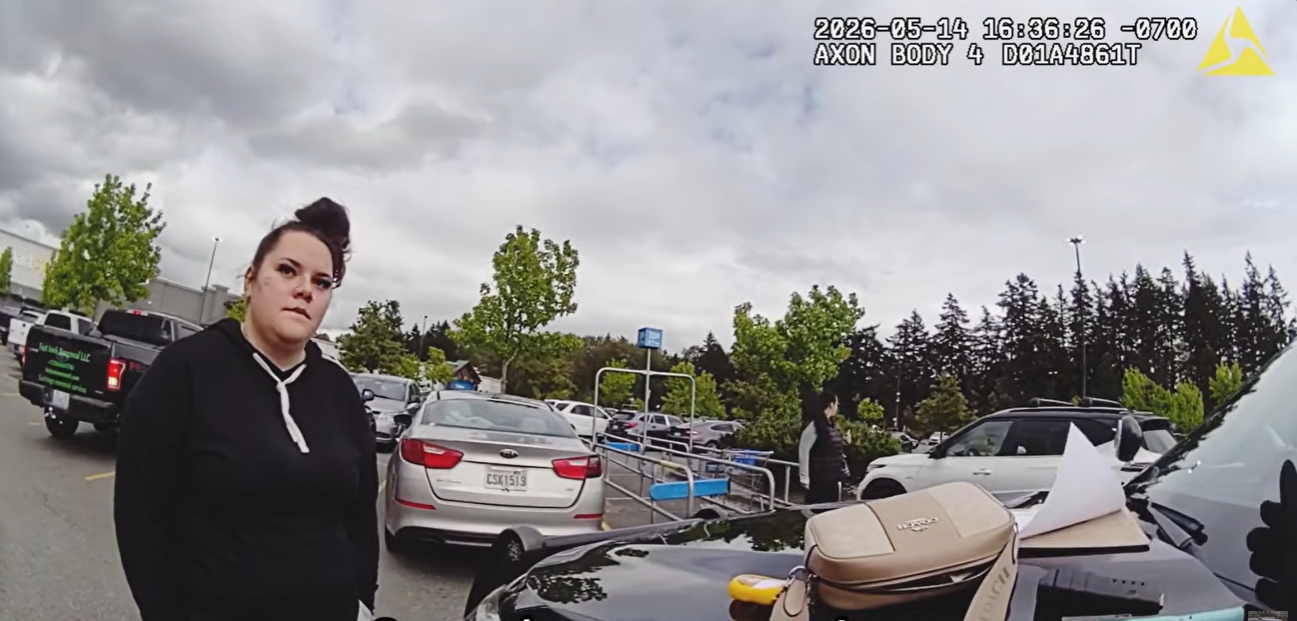
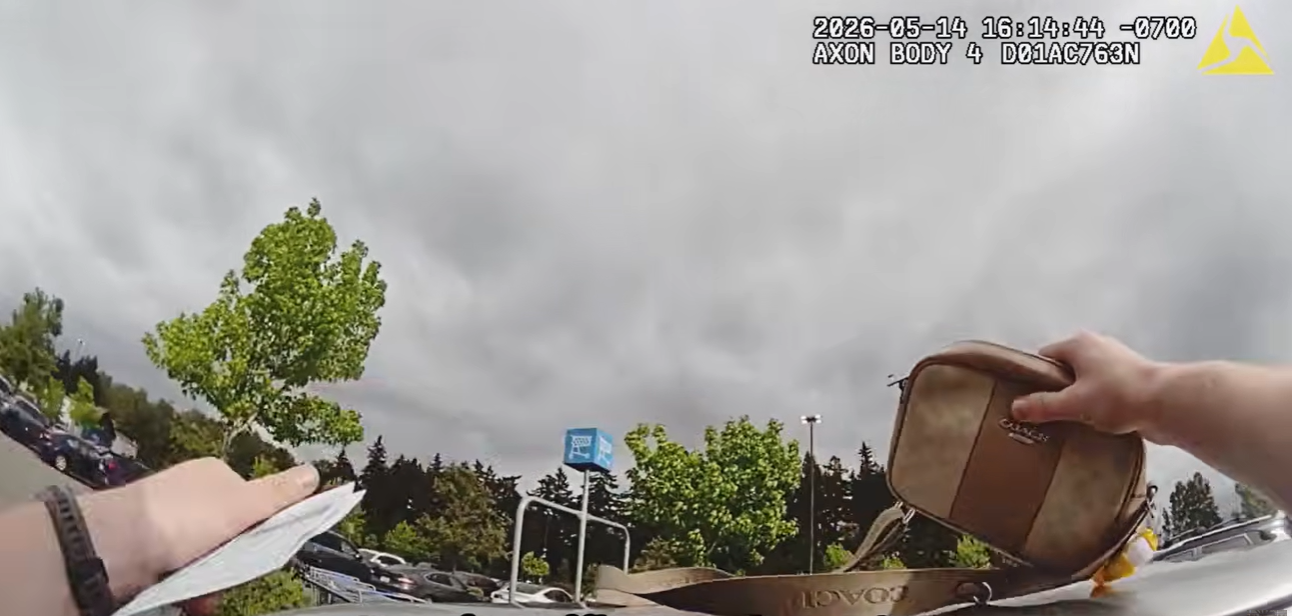
The bodycam supplied for this article independently confirms several important details.
Its AXON BODY 4 overlay shows May 14, 2026, during the afternoon. The vehicle has a Washington license plate, and the interaction takes place in a busy commercial parking area in Federal Way.
At first, there is little indication that the stop is going to become particularly complicated.
The woman talks openly with the officer.
She does not immediately run.
She does not attempt to drive away.
There is no violent confrontation.
Then the conversation turns toward the firearm.
What follows is an interesting example of how the legal status of a gun can depend not simply on ownership, but on where and how it is being carried.
And for the driver, another problem is already developing at the same time.
She does not have a valid driver's license.
The Officer Learns There Is a Firearm in the Vehicle
One of the most striking things about the footage is the woman's attitude toward the firearm itself.
She does not appear to treat the gun as something she needs to hide from police.
During the conversation, she openly discusses possessing it.
At one point she makes clear that she supports having a firearm.
That statement is important because it separates two very different issues that viewers often combine.
Owning a firearm and legally carrying or transporting one are not necessarily the same question.
Washington law recognizes firearm ownership while also imposing rules governing concealed pistols and loaded pistols in vehicles.
Under Washington's concealed-pistol statute, a person generally may not carry a concealed pistol without a license, subject to statutory exceptions. Washington law also specifically regulates carrying or placing a loaded pistol in a vehicle.
The Federal Way officer therefore needs more information.
Does she have a CPL?
The answer is no.
That answer changes the nature of the contact.
The officer now has to determine exactly where the gun is, its condition and whether the circumstances comply with Washington law.
This is also why traffic stops involving firearms can suddenly become much more deliberate even when the person being stopped remains calm.
The officer has to think about two issues simultaneously.
There is a legal investigation involving the weapon.
There is also an immediate officer-safety concern because a firearm is physically present.
Those two considerations do not mean that the driver is assumed to be violent.
They mean that officers need to know where the weapon is while they sort out the situation.
That distinction is visible in this footage.
The encounter does not explode into a high-risk felony stop.
Instead, the officer methodically works through the problem.
The woman talks.
The officer asks questions.
Information is checked.
And the consequences gradually become clearer.
Then Comes the Driver's License Problem
The gun is not the only issue.
According to the public description accompanying the original footage, officers also determine that the woman does not have a driver's license.
That creates an independent problem.
Even if the firearm issue disappeared completely, the officer still has to deal with an unlicensed driver.
The vehicle cannot simply be released back onto the road under exactly the same circumstances.
This is what makes seemingly simple traffic stops expand.
One issue leads to a records check.
The records check reveals another.
A question about the vehicle leads to a question about the driver.
A question about weapons reveals the presence of a firearm.
Then the CPL question introduces another legal consideration.
Within minutes, the officer is no longer dealing with the same situation that existed at the beginning.
The bodycam captures that progression unusually well.
There is no single spectacular moment.
The tension comes from accumulating information.
First one problem.
Then another.
Then the realization that police cannot simply say “have a nice day” and walk away.
Having a Gun Does Not Automatically Mean Someone Is Committing a Crime
This is where the footage benefits from careful interpretation.
Seeing a firearm during a police stop can encourage viewers to jump immediately to one of two conclusions.
Some assume that the gun itself must be illegal.
Others assume that because firearm ownership is constitutionally protected, no licensing or vehicle-carry rules can apply.
Neither approach accurately captures the complexity of state firearm law.
Washington allows lawful firearm possession in many circumstances, but state law regulates concealed carry and loaded pistols in vehicles.
A Concealed Pistol License, commonly abbreviated CPL, plays an important role in that framework.
The distinction matters because this woman does not appear to be accused of threatening the officer with the gun.
The firearm becomes relevant because of how it is being possessed or transported and the absence of a CPL, according to the premise documented by the released footage.
That is very different from an armed robbery, brandishing incident or assault.
The officer's behavior reflects that difference.
The situation is taken seriously.
But it remains an investigation rather than an immediate armed confrontation.
This is one of the reasons the footage is useful.
Police bodycam videos involving guns are frequently dominated by the most extreme cases: suspects reaching for weapons, armed standoffs or officer-involved shootings.
This encounter shows the quieter legal side of firearm enforcement.
Nobody needs to fire the weapon for possession to raise legal questions.
Nobody needs to threaten anyone.
Sometimes the question is simply whether the person is legally carrying the weapon under the circumstances in which officers find it.
The image above comes from KOMO News coverage showing Federal Way Police officers and vehicles in a separate local police story. It is included only as a real contextual image of the department, not as an image of this woman or this traffic stop.
The Conversation Remains Surprisingly Calm
Another reason this video stands out is the absence of dramatic resistance.
The woman does not appear to react as though the discovery of the firearm automatically means the situation must become confrontational.
Instead, she continues talking with officers.
At points, the interaction even becomes conversational.
That creates an interesting contrast with the legal seriousness of what officers are investigating.
A gun is present.
There is no CPL.
There is a driver's-license issue.
Yet the roadside atmosphere remains relatively controlled.
This is exactly the kind of encounter where communication can make a major difference.
Once officers know a firearm is present, unexpected movements toward the vehicle or weapon can create enormous uncertainty.
A person who keeps communicating and follows instructions reduces that uncertainty.
The footage therefore demonstrates something that is often overshadowed by more dramatic bodycam videos.
A police encounter can involve a firearm without turning into a violent encounter.
The gun changes the officers' awareness.
It does not automatically determine the driver's behavior.
The driver's choices after the discovery still matter.
Here, the situation remains manageable.
Officers can talk through what happens next.
At one point in the footage, an officer can be heard explaining that they will “go through the process.”
That phrase summarizes the encounter surprisingly well.
There is a procedure.
The officers need to determine the woman's legal status.
They need to deal with the firearm.
They need to address the driving issue.
And they need to decide what happens to the vehicle and the people involved.
The woman may disagree with aspects of the situation, but there is no need for the disagreement to become physical.
That makes the video less spectacular than a pursuit or violent arrest.
It also makes it more representative of the enormous number of police encounters that are resolved through communication rather than force.
Why the CPL Question Matters in Washington
The initials CPL are easy to overlook if someone is unfamiliar with Washington firearm law.
They stand for Concealed Pistol License.
Washington's rules distinguish between general firearm possession and particular methods of carrying a pistol.
That is why an officer asking whether someone has a CPL is not necessarily questioning whether that person has any right to own a gun.
The officer is trying to determine whether the manner in which the pistol is being carried falls within state law.
This distinction has also appeared in court cases in other states with similarly named licensing systems. Michigan courts, for example, have addressed traffic stops where officers learned that a motorist had a loaded firearm in a vehicle but lacked a CPL. Those cases demonstrate the broader legal principle that firearm possession during a vehicle stop can raise questions beyond mere ownership.
The precise rules vary by state, which is why importing firearm law from Michigan, Florida or Texas into a Washington incident would be a mistake.
The location matters.
The circumstances matter.
The status of the firearm matters.
And exceptions can matter.
For that reason, the most responsible way to describe the Federal Way encounter is the way the publicly released video does:
Police stopped a woman, discovered she did not have a valid driver's license, and learned that she had a firearm without a CPL.
Anything beyond what the footage and reliable public information establish should be treated cautiously.
I did not locate a separately indexed Federal Way police press release naming the woman.
I also did not locate a court record that would justify declaring a final conviction.
Therefore, her name and a supposed final sentence should not be invented.
The footage is sufficient to tell the story without them.
A Simple Traffic Violation Opens the Door to a Larger Investigation
This incident illustrates why police traffic stops sometimes last considerably longer than drivers expect.
From the driver's perspective, the original violation may seem minor.
Why are we still here?
Why is another officer arriving?
Why are records being checked?
Why is the officer asking additional questions?
The answer is often that the information available to police has changed.
An officer begins with one reason for the stop.
Then discovers another issue.
That issue creates another lawful investigative question.
The scope of the encounter expands.
In this case, the public description says the initial contact began with a traffic violation.
Then came the license problem.
Then the firearm.
Then the CPL issue.
Each discovery changes what officers need to resolve before the encounter can end.
This does not mean every traffic stop gives police unlimited authority to investigate anything they want indefinitely.
Traffic stops remain subject to constitutional limitations.
But when officers discover evidence of additional potential violations during a lawful stop, the interaction can legitimately become more complicated.
That is essentially what viewers watch happen here.
The encounter grows without becoming chaotic.
And that may be its most interesting characteristic.
Federal Way Police Operate in a Busy South King County Environment
Federal Way is a significant suburban city between Seattle and Tacoma, and its officers deal with a wide range of traffic, property and violent-crime calls.
Recent public reporting provides some useful context.
In September 2025, Federal Way officials reported a 25 percent year-over-year decline in overall crime, including substantial declines in motor-vehicle theft, robbery and aggravated assault. The same reporting noted increased drug-related arrests and continued concerns surrounding serious violent crime.
That broader picture is not directly connected to this woman's traffic stop.
But it helps explain the policing environment surrounding the footage.
Officers working commercial areas and parking lots routinely encounter everything from simple traffic violations to stolen vehicles and weapons-related calls.
A firearm discovered during an otherwise routine stop therefore has to be evaluated carefully rather than treated casually.
Federal Way Police has also been involved in much more dangerous firearm incidents.
In June 2026, just over a month after this traffic stop, KOMO reported that Federal Way officers responded to an armed 19-year-old during a reported mental-health crisis. Less-lethal measures were attempted before that completely separate encounter ended in an officer-involved shooting.
The May traffic stop is not comparable in severity.
That is precisely the point.
A gun is present in both kinds of encounters, but human behavior determines whether the situation remains controlled or becomes immediately dangerous.
Here, the firearm investigation proceeds without gunfire.
This KOMO News photograph shows Federal Way Police at a separate June 2026 incident. It is included solely as a verified real image of the department and is not represented as a photograph of the May 14 traffic stop.
The Biggest Lesson Comes From What Does Not Happen
There is no chase.
There is no attempt to grab the firearm.
Nobody runs through the parking lot.
The driver does not suddenly accelerate away.
No officer fires a weapon.
No one gets injured.
That might sound like an uneventful ending.
In reality, it is probably the best possible ending to a police encounter involving an unlicensed driver and a firearm that raises additional legal questions.
The bodycam demonstrates how quickly an ordinary traffic contact can become more serious while still remaining controlled.
The officer begins with a vehicle violation.
Then discovers the driver's licensing problem.
The firearm enters the conversation.
The absence of a CPL becomes relevant.
And officers work through the consequences.
For viewers, the incident also offers an important reminder about firearm law.
The question is rarely as simple as:
“Is owning a gun legal?”
A more useful set of questions is:
Where is the gun?
Is it loaded?
How is it being carried?
Is it concealed?
Is it inside a vehicle?
Does the person possess the license required under the circumstances?
Do any statutory exceptions apply?
Those details can determine whether otherwise lawful firearm ownership becomes a legal problem during a traffic stop.
The woman in Federal Way appears comfortable telling the officer that she supports having a gun.
The officer does not appear interested in debating the philosophy of firearm ownership.
He has a much narrower task.
Determine whether the situation in front of him complies with Washington law.
That difference is what drives the entire encounter.
One Stop, Two Problems and No Need for Violence
The video was eventually published by Washington State Bodycam on May 26, twelve days after the encounter.
Its title captures the situation in just a few words:
No license, No CPL but has a firearm.
But the full footage is more interesting than the title.
It shows how those facts are discovered.
It shows the woman communicating with police.
It shows officers processing new information without immediately turning the encounter into a high-risk confrontation.
And most importantly, it shows how cooperation can keep an armed police encounter from becoming violent.
The woman has legal problems to address.
The absence of a driver's license does not disappear.
The firearm issue does not disappear.
But none of those problems require someone to get hurt.
That is an important contrast with many of the police videos that dominate social media.
The most dramatic bodycam footage often comes from people trying to escape the consequences of an encounter.
They run.
They fight.
They reach toward something officers cannot see.
They drive away.
Each decision introduces another layer of danger.
This woman does not take the encounter in that direction.
The officers do not have to chase her through the parking lot.
They do not have to wrestle her away from the firearm.
The investigation remains an investigation.
And that is ultimately why the footage is useful.
It demonstrates that discovering a gun during a traffic stop does not automatically have to produce panic.
It requires caution.
It requires communication.
It requires officers to understand the law.
And it requires the person being stopped to recognize that debating the underlying issue is very different from making sudden movements or resisting police.
On May 14, 2026, a Federal Way traffic stop began with an ordinary violation and uncovered two considerably more complicated issues.
An unlicensed driver.
A firearm without a CPL.
Yet the most significant part of the footage may be the thing viewers never see.
A crisis.
The encounter becomes more serious, but it never becomes violent.
And in police work, sometimes that is exactly what a successful ending looks like.
Watch the complete Federal Way bodycam encounter and see how an ordinary traffic stop changes once officers learn about the driver's license status and the firearm here: https://www.youtube.com/watch?v=9mJPsV57tsk
Comments (0)
Loading comments...
May You Like

Cop thinks sandwich is phone

Traffic Stop Turns Deadly After Man Steps Out of Stolen Car

[DASHCAM] Drunk Driver Leads Trooper on High-Speed Pursuit Through City Streets













