
Police Pursuit Ends in Dramatic Rollover Crash as Woman Is Arrested
SPEEDING DRIVER REFUSES TO STOP — THEN HER SUV FLIPS ACROSS I-75
A SIMPLE SPEEDING STOP TURNS INTO SOMETHING MUCH BIGGER
It begins with a number.
82 mph.
On the evening of May 29, 2025, Ohio State Highway Patrol troopers were monitoring traffic along Interstate 75 in Franklin Township when a red GMC Envoy passed through their enforcement area.
The posted speed limit was 65 mph.
According to accounts based on information released by the Ohio State Highway Patrol, the SUV was clocked traveling 17 miles per hour above that limit at approximately 6 p.m.
At that moment, nothing about the situation necessarily suggested that viewers would soon be watching a violent rollover crash.
A trooper simply needed the driver to pull over.
Emergency lights activated.
The GMC continued.
The driver, later identified by authorities as Jennifer Wilson, allegedly refused to stop.
And with that decision, what could have remained a routine speeding encounter became a police pursuit.
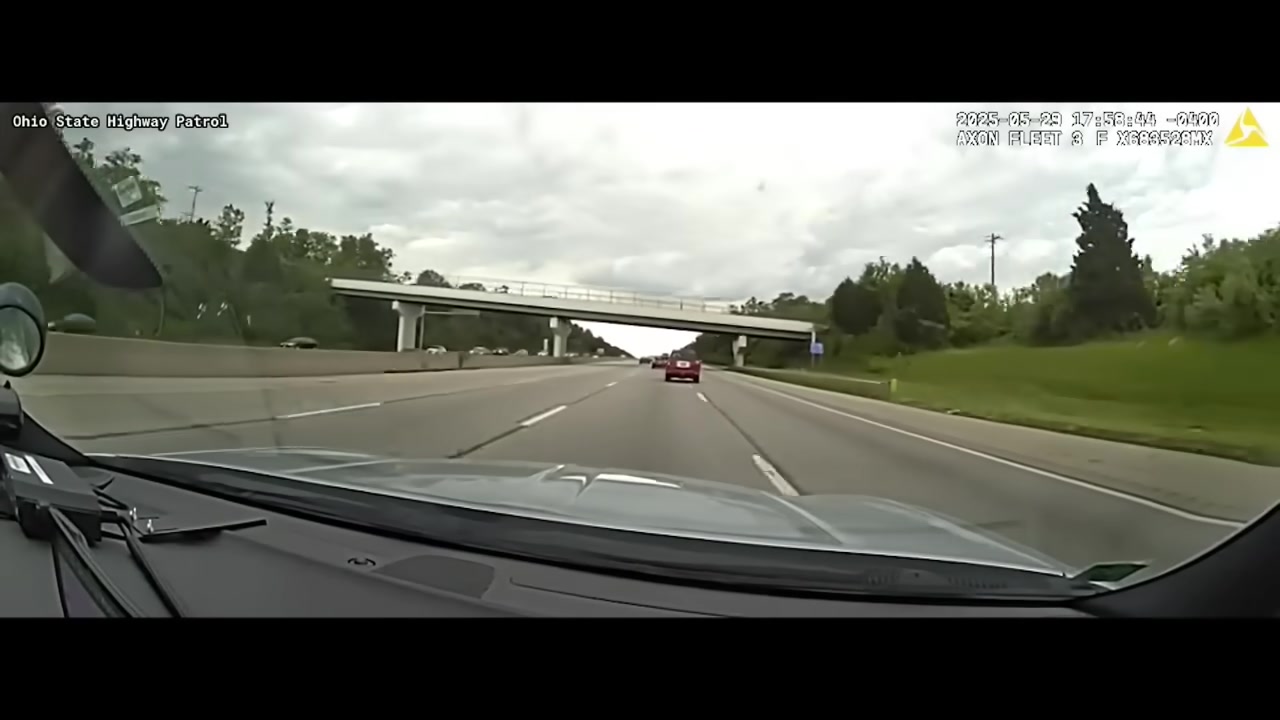
For the next several minutes, the trooper followed Wilson along I-75.
Traffic continued moving around them.
The red SUV remained ahead.
There was no immediate collision.
No PIT maneuver brought the chase to an end.
No roadblock suddenly appeared.
Instead, the danger accumulated gradually.
Every second Wilson continued driving at highway speed created another opportunity for something to go wrong.
Eventually, something did.
The GMC moved off the roadway.
Wilson apparently tried to bring it back under control.
The vehicle reacted violently.
THE SUV BEGAN TO ROLL.
Within seconds, the pursuit was finished.
THE STOP THAT NEVER HAPPENED
The beginning of this incident is important precisely because it is so ordinary.
Speed enforcement is among the most familiar forms of highway policing.
A trooper identifies a vehicle traveling above the limit, catches up, activates emergency equipment and expects the motorist to stop somewhere safe.
Had that happened here, the footage probably would never have attracted significant public attention.
But Wilson did not pull over, according to OSHP.
Instead, the Envoy continued down I-75.
Public reporting on the incident says the pursuit lasted several minutes before the crash.
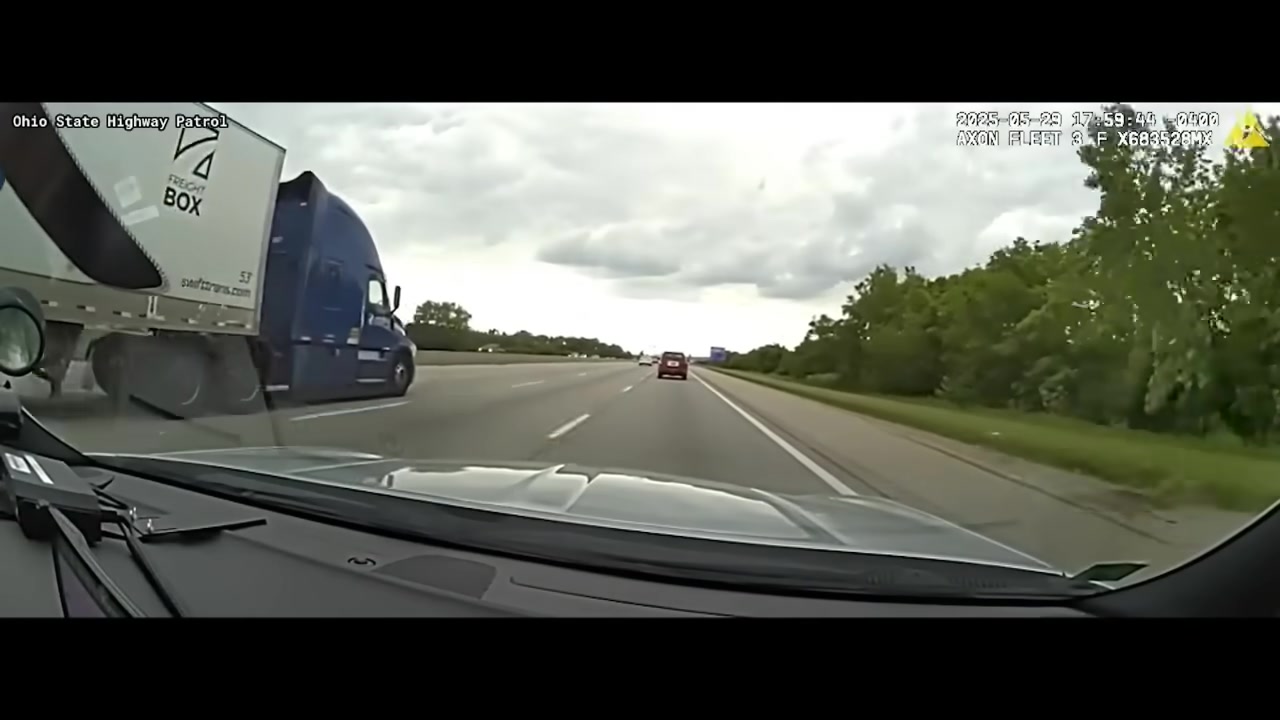
The dashcam perspective is particularly effective at conveying what makes a highway pursuit dangerous.
The fleeing vehicle is not operating on an empty track.
Other motorists are everywhere.
Some may see emergency lights approaching and immediately move over.
Others may not realize what is happening until the pursuit is already close.
A driver changing lanes normally can suddenly become an obstacle.
A vehicle entering from a ramp can unknowingly enter the path of the chase.
And at interstate speeds, the distance traveled during even a short reaction delay can be substantial.
That makes every additional minute consequential.
THE ORIGINAL PROBLEM WAS SPEEDING.
But once Wilson allegedly refused to stop, the central concern became something else entirely:
Could the pursuit continue without someone crashing?
For several minutes, the answer appeared to be yes.
Then the SUV moved toward the edge of the highway.
THE MOMENT CONTROL BEGINS TO DISAPPEAR
Dashcam footage creates an unusual kind of suspense.
Unlike body-camera video, the image remains comparatively stable.
The viewer can watch the roadway ahead.
You can see where the suspect vehicle is positioned.
You can see the shoulder.
You can see surrounding traffic.
And because of that perspective, the moment the GMC begins to lose control becomes particularly striking.
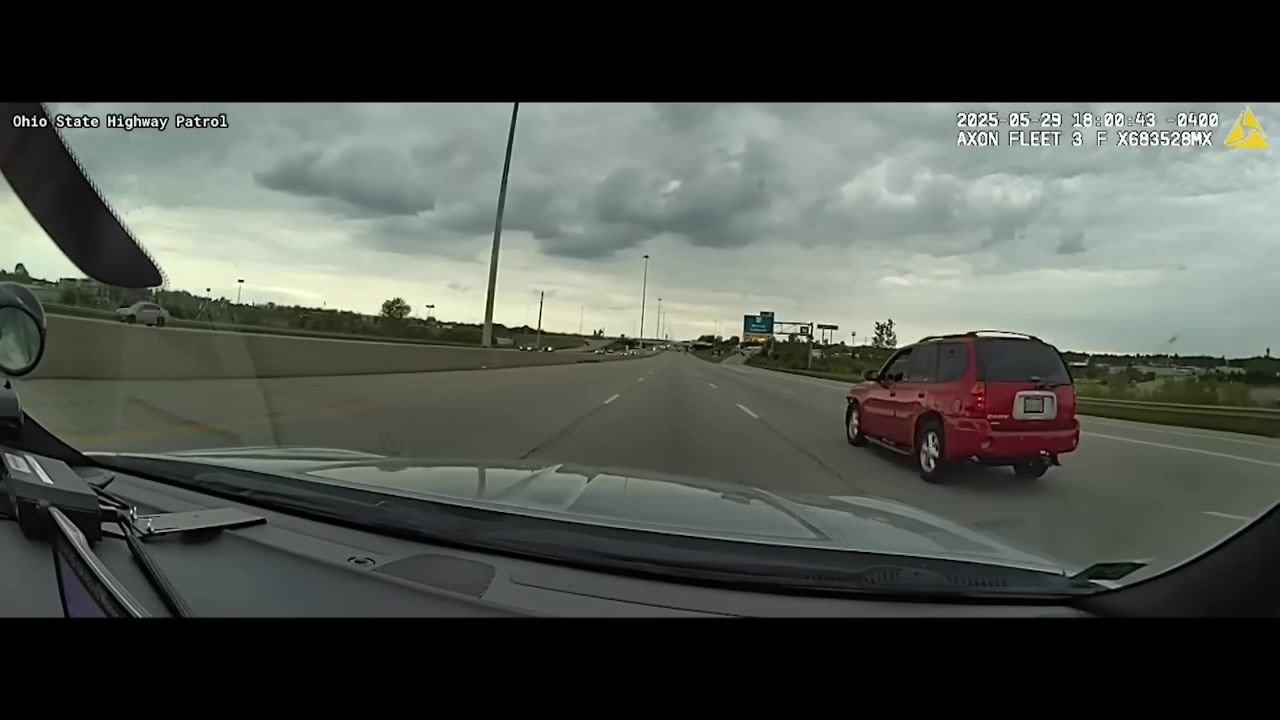
Wilson's SUV moves off the right side of the road.
That alone does not guarantee a crash.
Drivers sometimes leave the pavement briefly and recover.
But recovery at speed requires careful steering.
A sudden correction can create a new problem.
According to reports describing OSHP's account, Wilson overcorrected while attempting to regain control.
The SUV changes direction.
Weight transfers across the vehicle.
Its stability disappears.
Then comes the point of no return.
THE GMC ROLLS.
The transition happens with astonishing speed.
One moment, the trooper is pursuing an upright vehicle.
The next, the red SUV is tumbling.
This is the visual climax of the entire pursuit, but it also demonstrates something easy to forget when watching high-speed chase footage:
Once a vehicle loses control, neither the fleeing driver nor the pursuing officer controls what happens next.
Physics does.
THE GMC FLIPS MULTIPLE TIMES
The rollover itself lasts only seconds.
Yet it is the moment everything before it has been building toward.
Reports say the GMC rolled several times before eventually coming to rest in the median.
From the pursuing trooper's perspective, the situation changes immediately.
Seconds earlier, his job was to follow a fleeing driver.
Now there is a major crash directly ahead.
The pursuit is effectively over.
The emergency response begins.
There is no guarantee at that moment that the driver has survived.
A multiple-roll crash can produce catastrophic injuries even when the passenger compartment appears relatively intact from outside.
The trooper stops.
He gets out.
He approaches the wreck.
And the body-worn portion of the footage reveals just how violent the crash actually was.
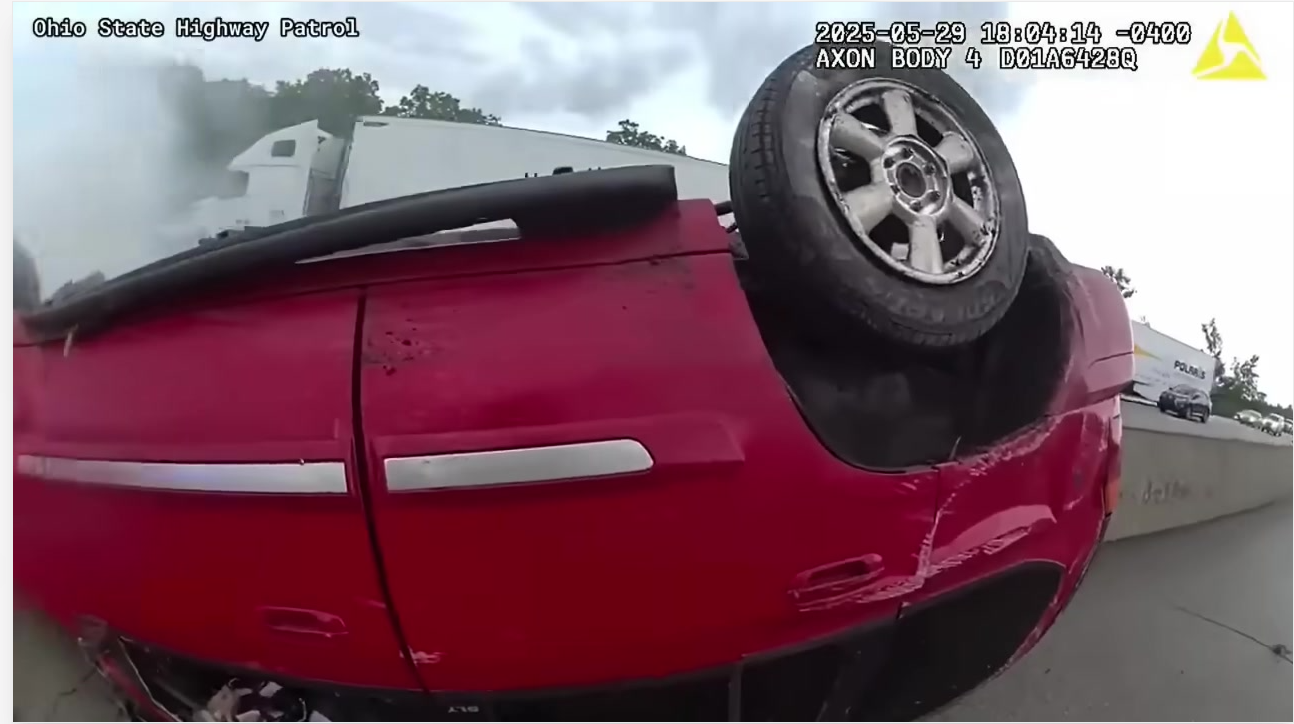
The red GMC Envoy is upside down.
Debris is scattered nearby.
Its wheels point toward the sky.
Traffic continues moving in the distance.
It is a dramatically different scene from the beginning of the video.
Minutes earlier, this was simply another SUV moving along I-75.
Now it is resting on its roof beside an interstate.
Yet the outcome for the driver is remarkably fortunate.
Wilson survived.
A PASSING NURSE STOPS TO HELP
The immediate aftermath contains another important detail.
A nurse passing the scene reportedly stopped and offered assistance while emergency medical personnel were still on their way.
That moment provides a striking contrast to the pursuit.
During a chase, surrounding motorists are primarily people officers want kept away from danger.
After a major crash, one of those motorists can suddenly become valuable help.
The nurse's intervention also highlights how quickly roles change after a pursuit ends.
Police are no longer trying to make the fleeing vehicle stop.
It has stopped.
Now they must determine:
Is anyone trapped?
Is the driver conscious?
Are there other occupants?
Is there a fire risk?
Does someone need immediate lifesaving care?
Are passing motorists safe?
The adrenaline of the chase gives way to emergency management.
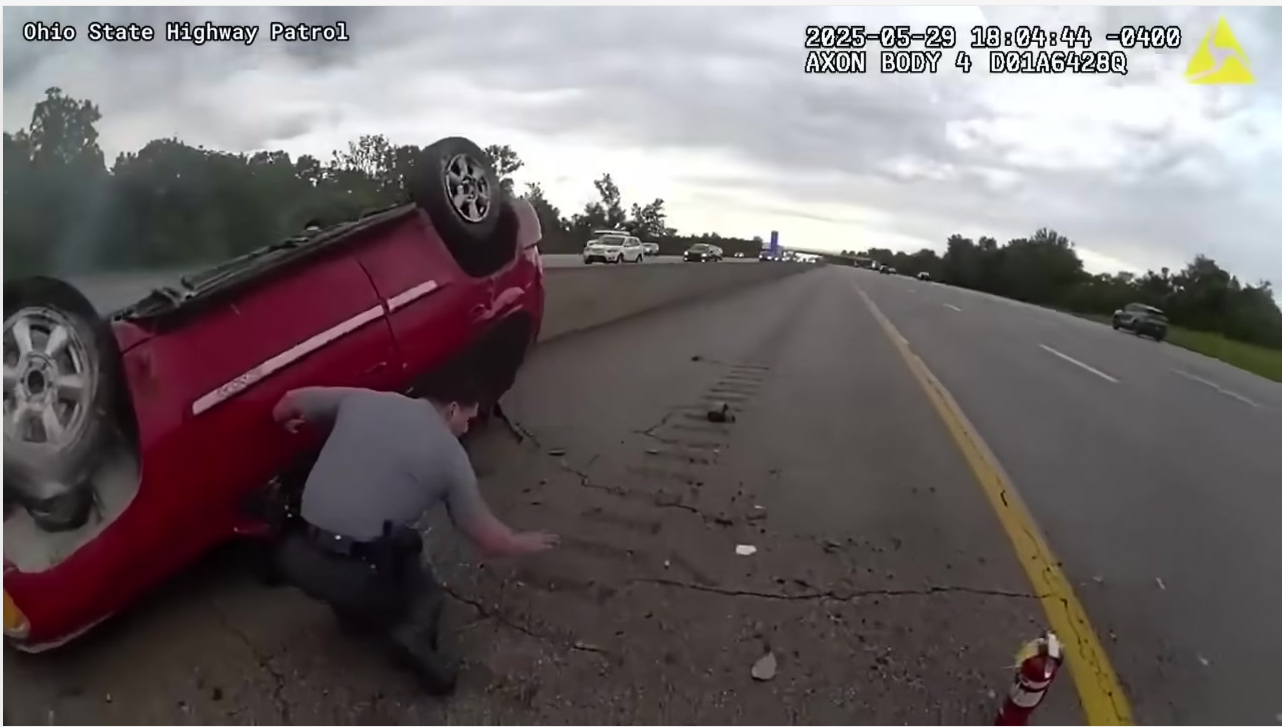
Despite the severity of the rollover, Wilson reportedly suffered only minor injuries.
She was transported to a nearby hospital for evaluation and treatment.
That is an extraordinary outcome considering what the footage shows.
But leaving the crash alive did not mean Wilson was simply going home.
The investigation had already expanded well beyond the original speeding violation.
POLICE SAY THE STORY STARTED BEFORE THE TROOPER SAW THE SUV
At first, the video appears to tell a very straightforward story:
A woman speeds.
Police attempt a stop.
She allegedly refuses.
A pursuit begins.
She crashes.
But OSHP's subsequent account added important context.
Authorities said Wilson was suspected of operating the vehicle while impaired.
They also linked her to an alleged hit-and-run incident earlier that day in Montgomery County.
That information potentially helps explain why the encounter escalated from speeding to flight, although it does not establish Wilson's motive for failing to stop.
And that distinction is important.
The dashcam tells us what happened on I-75.
It does not allow us to read the driver's mind.
What authorities could establish afterward, however, was that the traffic stop was apparently not the first incident involving the GMC that day.
THE TROOPER MAY HAVE STARTED WITH A SPEEDING VIOLATION, BUT THE INVESTIGATION DIDN'T END THERE.
Following hospital treatment, Wilson was taken to jail.
OSHP reported allegations including operating a vehicle under the influence, failure to comply with a lawful police order, and operating a vehicle without reasonable control.
These should be understood as reported charges/allegations arising from the incident, rather than automatically treated as final convictions.
That legal distinction matters.
But so does the enormous escalation visible on camera.
The first observable issue was traveling 82 mph in a 65-mph zone.
By the end, there was an overturned SUV, an ambulance response and an arrest.
THE OTHER PEOPLE ON I-75 NEVER CHOSE TO BE PART OF THIS
One of the most revealing things about dashcam footage is everything happening around the primary subject.
Look beyond the red GMC.
There are other vehicles.
Every one represents an uninvolved person.
Someone driving home.
Someone heading to work.
A family traveling.
A truck driver completing a route.
None of those motorists decided to participate in a police pursuit.
Yet once the chase entered their section of highway, they became part of the risk environment.
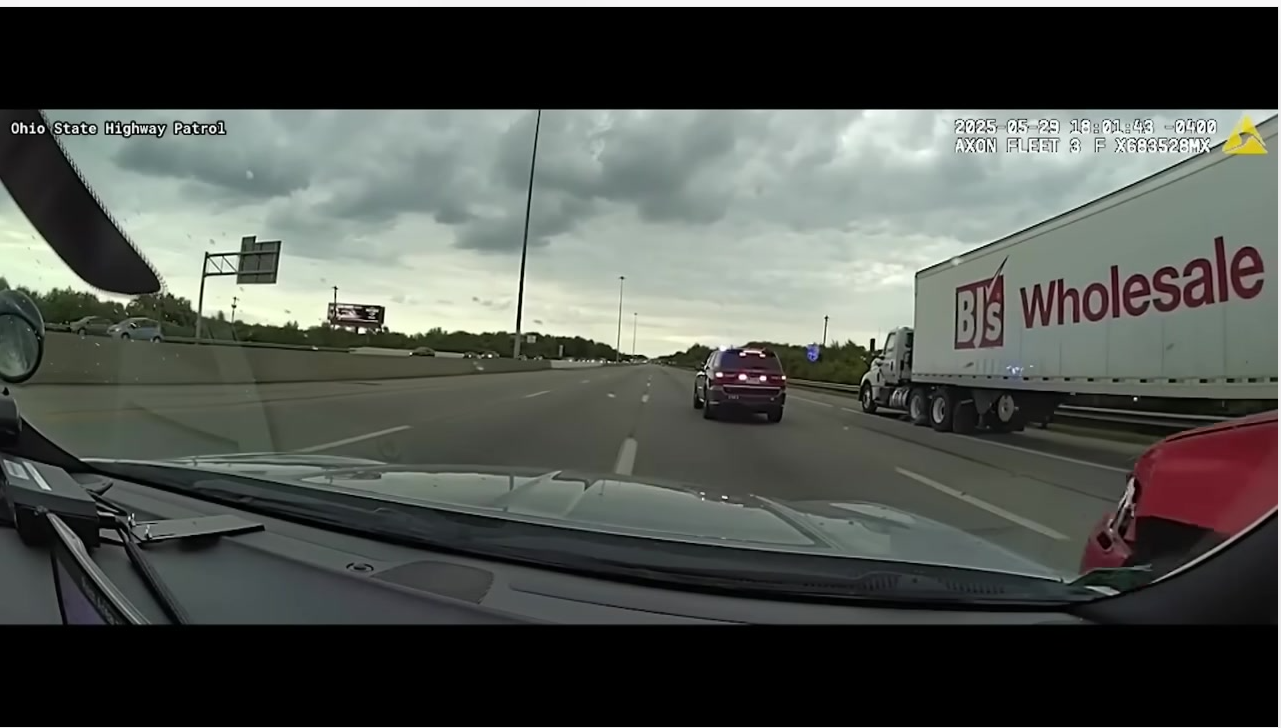
This is one reason high-speed pursuits generate difficult decisions for police agencies.
Officers must balance the reason for apprehending a fleeing driver against the danger created by continuing a chase.
The calculation can change rapidly depending on speed, traffic density, weather, road conditions, the suspected offense and the driver's behavior.
In this case, the pursuit ultimately ended without another vehicle being struck during the rollover, according to the accounts reviewed.
That outcome could easily have been different.
When the Envoy lost control, Wilson could no longer choose exactly where the SUV would travel.
A slightly different trajectory might have put another motorist in its path.
The fact that the vehicle came to rest without creating an even larger collision is one of the fortunate elements of an otherwise destructive ending.
THE OVERTURNED SUV TELLS THE STORY BETTER THAN ANY EXAGGERATED HEADLINE
After the crash, the bodycam footage shows the physical result.
The Envoy is upside down.
The roof is against the roadway.
Emergency vehicles surround the scene.
The image requires very little narration.
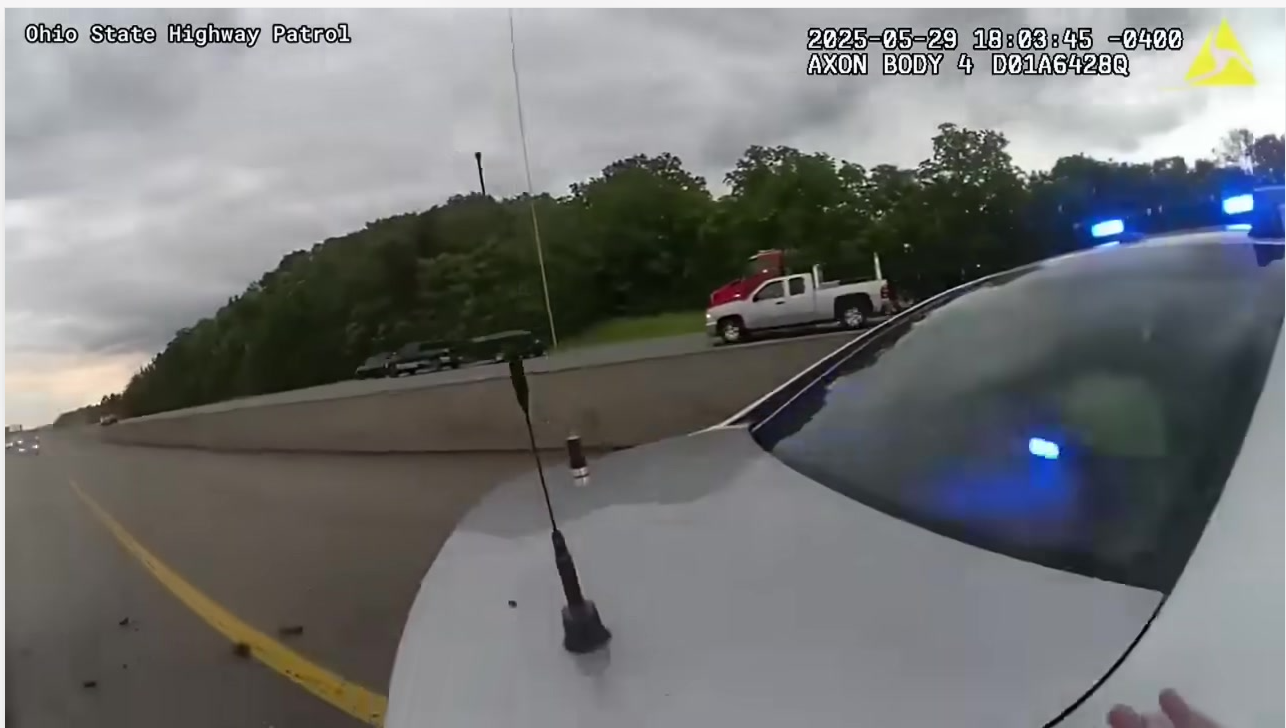
This is why the strongest way to tell the story is not to exaggerate it.
There is no need to call the pursuit the "most terrifying chase ever."
There is no need to claim the driver "miraculously cheated death."
Those descriptions go beyond what the evidence establishes.
The verified sequence is already compelling:
82 MPH IN A 65 → TROOPER ATTEMPTS STOP → DRIVER REFUSES → PURSUIT → SUV LEAVES ROADWAY → OVERCORRECTION → MULTIPLE ROLLOVERS → DRIVER SURVIVES → HOSPITAL → ARREST.
That is enough.
Good retention does not require misleading the audience.
It requires revealing accurate information in the right order.
WHY THE CRASH SHOULDN'T BE REVEALED TOO EARLY
From a storytelling perspective, the rollover is the video's obvious visual centerpiece.
But it should not dominate the first paragraph.
If the audience sees the complete crash immediately, one of the strongest unanswered questions disappears.
A better narrative gives readers enough information to understand the danger without immediately resolving it.
Start with:
82 mph.
Then introduce the lights.
She doesn't stop.
The trooper follows.
Traffic surrounds them.
The SUV continues.
Now the reader begins anticipating what might happen.
Then introduce the first sign of instability.
The GMC leaves the road.
At that moment, readers already understand the stakes.
Only then reveal the rollover.
This structure creates natural retention:
SPEEDING → REFUSAL → PURSUIT → RISK BUILDS → LOSS OF CONTROL → CRASH → SURVIVAL → BIGGER BACKSTORY.
Each stage creates the question that leads into the next one.
THE MOST CONSEQUENTIAL DECISION HAPPENED BEFORE THE ROLLOVER
The crash is visually dramatic.
But it isn't where the chain of events begins.
The most consequential moment may be much less spectacular.
The trooper activates his emergency lights.
The driver has an opportunity to stop.
According to OSHP, she doesn't.
Everything afterward follows from that decision.
Without the flight, there is no several-minute pursuit.
Without the pursuit, there is no high-speed attempt to maintain control while evading police.
Without the loss of control, there is no rollover.
The difference between the beginning and ending is therefore extraordinary.
At the start:
A trooper has a speeding motorist.
At the end:
The motorist is being evaluated after a rollover and faces multiple allegations.
That contrast is the core of the story.
THE AFTERMATH — FROM PURSUIT TO INVESTIGATION
Once Wilson is taken from the scene, the trooper's dashcam has already captured evidence investigators can examine later.
The timing of the pursuit.
Vehicle movements.
Traffic conditions.
The point where the SUV leaves the roadway.
The rollover itself.
The final resting position.
Those details matter because dashcam footage does more than provide dramatic video.
It creates a chronological record.
Investigators can compare that footage with radio traffic, crash evidence, medical information and officer reports.
In this incident, reporting based on OSHP's account states Wilson was taken to the hospital for minor injuries and subsequently booked into jail.
Authorities also said she was connected to the earlier Montgomery County hit-and-run investigation.
The full picture therefore emerges only after the chase has ended.
The trooper initially sees speed.
Then refusal to stop.
Later comes the wider context.
That progression is another reason this incident works so well as a long-form police story.
The crash isn't the only reveal.
ENDING — SHE SURVIVED A CRASH THAT COULD HAVE ENDED VERY DIFFERENTLY
The final images of the Envoy are difficult to reconcile with the relatively minor injuries reported afterward.
The vehicle has rolled repeatedly.
It is upside down.
Debris surrounds it.
Yet Wilson survived and was able to be transported for treatment before being taken to jail.
A passing nurse stopped.
First responders arrived.
The highway scene was secured.
And the pursuit that began with an 82-mph speed reading ended as a crash investigation.
There is an obvious temptation to treat survival as evidence that the risk wasn't as severe as it looked.
The footage suggests the opposite.
The outcome was fortunate precisely because the crash had the potential to produce far more serious consequences.
Wilson could have suffered catastrophic injuries.
Another motorist could have been struck.
The SUV could have rolled into active traffic.
Instead, the incident ended with minor reported injuries and no larger multi-vehicle catastrophe described in the sources reviewed.
That does not make the pursuit safe.
It makes the ending fortunate.
WHY THIS STORY HOLDS ATTENTION FROM BEGINNING TO END
This footage has a strong retention structure because its stakes rise in clear stages.
The audience immediately understands speeding.
Then comes the refusal.
That introduces conflict.
The pursuit introduces movement.
The surrounding interstate traffic creates danger.
The SUV leaving the roadway signals that control may be disappearing.
The rollover provides the visual climax.
Then survival creates surprise.
Finally, the reported impairment and earlier hit-and-run allegations provide additional context after viewers think they already understand the story.
That creates a remarkably clean narrative arc:
ROUTINE SPEED ENFORCEMENT
↓
DRIVER REFUSES TO STOP
↓
HIGHWAY PURSUIT
↓
SUV LEAVES THE ROAD
↓
DRIVER OVERCORRECTS
↓
MULTIPLE ROLLOVERS
↓
NURSE STOPS TO HELP
↓
DRIVER SURVIVES
↓
HOSPITAL AND ARREST
↓
EARLIER HIT-AND-RUN ALLEGATION EMERGES
The key is that each development should arrive only when the reader needs it.
Do not give away the entire incident in the opening.
Let the consequences grow.
That is how a factual police story can create suspense without sacrificing accuracy.
CTA — IT STARTED AT 82 MPH. MINUTES LATER, THE SUV WAS ON ITS ROOF.
The most unforgettable moment is the rollover.
But the most important moment happened earlier.
It happened when the trooper activated his emergency lights.
According to Ohio State Highway Patrol, Jennifer Wilson had been clocked traveling 82 mph in a 65-mph zone.
She allegedly refused to stop.
Minutes later, the GMC Envoy left the roadway, overcorrected and rolled multiple times before landing in the median. Wilson survived with minor injuries and was taken to a hospital before being booked into jail. Authorities also linked her to an earlier hit-and-run investigation and reported OVI and other allegations arising from the pursuit.
The dashcam footage makes the escalation impossible to miss.
One moment, the red SUV is simply another vehicle on I-75.
Minutes later, it is upside down beside the highway.
A TRAFFIC STOP THAT COULD HAVE ENDED ON THE SHOULDER INSTEAD ENDED WITH AN SUV ON ITS ROOF.
Click here to watch the full dashcam footage and see exactly how the I-75 pursuit goes from a speeding stop to a violent rollover in a matter of minutes: https://www.youtube.com/watch?v=nBXDzQ2S3xs
Comments (0)
Loading comments...
May You Like

MERIDEN POLICE OFFICER SHOOTS MAN BEATING FATHER WITH A BASEBALL BAT

Woman Tries to Stop Police From Arresting “Brother” — He Denies Knowing Her

Police Chase Ends as Driver Hits Stoplight, Crashes Into West Towne Mall












