
Police K9 Dogs Track Down Suspects With Their Incredible Sense of Smell
TWO SUSPECTS THOUGHT THEY HAD FOUND THE PERFECT HIDING SPOT. THEN K9 EDDIE PICKED UP THEIR TRAIL
A STOLEN WATER TRUCK, REPORTS OF GUNFIRE AND TWO MEN WHO VANISHED
By the time Pierce County sheriff's deputies arrived, the vehicle they were looking for was no longer moving.
A stolen water truck sat abandoned in the roadway.
The people who had been inside were gone.
And the information deputies had received before arriving made the search significantly more dangerous than an ordinary stolen-vehicle recovery.
The caller initially reported that the water truck had been stolen and that the owner's brother had followed it. During that confrontation, the brother believed one of the suspects had fired at him, and he fired back.
Now two people had fled from the stolen truck.
They were somewhere in a residential area of Pierce County, Washington.
And deputies had to treat the possibility that they might be armed seriously.
That was when another member of the Pierce County Sheriff's Office was brought into the search.
K9 EDDIE.
What followed demonstrates why police dogs can completely change a search.
The suspects jumped fences.
They moved through residential properties.
They disappeared from deputies' direct view.
Eventually, they found an old pickup truck and apparently decided it would make a good hiding place.
For human officers searching a neighborhood, it wasn't an obvious location.
For Eddie, it wasn't good enough.
THE SUSPECTS HAD DISAPPEARED FROM SIGHT. THEY HADN'T DISAPPEARED FROM THE SCENT TRAIL.
THE CALL THAT STARTED THE SEARCH
The incident unfolded around 162nd Street Court East and 66th Avenue East in Pierce County.
Pierce County Sheriff's Office later explained that deputies had initially been dispatched to what was being treated as an armed-robbery call involving a stolen water truck.
But this case had an unusual beginning.
The stolen truck reportedly contained an AirTag.
That meant the vehicle's location could be tracked.
Instead of simply waiting for law enforcement, however, the owner's brother followed the truck himself.
That decision would eventually create a dangerous confrontation.
According to PCSO, the brother watched the stolen vehicle make a U-turn in a driveway and decided to confront the people inside. During the encounter, the suspect driving the truck struck parked vehicles and then drove toward the brother.
The brother fired at the vehicle.
He also believed he heard gunfire coming from the suspects.
That information was relayed to law enforcement.
At this stage, deputies could not safely assume that the fleeing men were unarmed.
They had to search accordingly.
THE WATER TRUCK IS FOUND BUT THE SUSPECTS ARE GONE
When deputies reached the area, they found the stolen water truck abandoned in the roadway.
The vehicle was there.
The people they needed to find were not.
Witnesses provided the next critical information.
TWO SUSPECTS HAD RUN FROM THE TRUCK.
According to PCSO, witnesses had seen them jumping multiple fences while moving away from the vehicle.
That immediately created a difficult search problem.
A patrol vehicle can follow another vehicle.
An officer on foot can follow a suspect while visual contact remains intact.
But once someone clears several fences and disappears between residential properties, the search changes.
There may be sheds.
Vehicles.
Garages.
Bushes.
Fenced yards.
Narrow passages.
Every obstacle creates another possible hiding place.
And because deputies had been told that shots might have been fired earlier, simply rushing blindly through backyards would create additional risk.
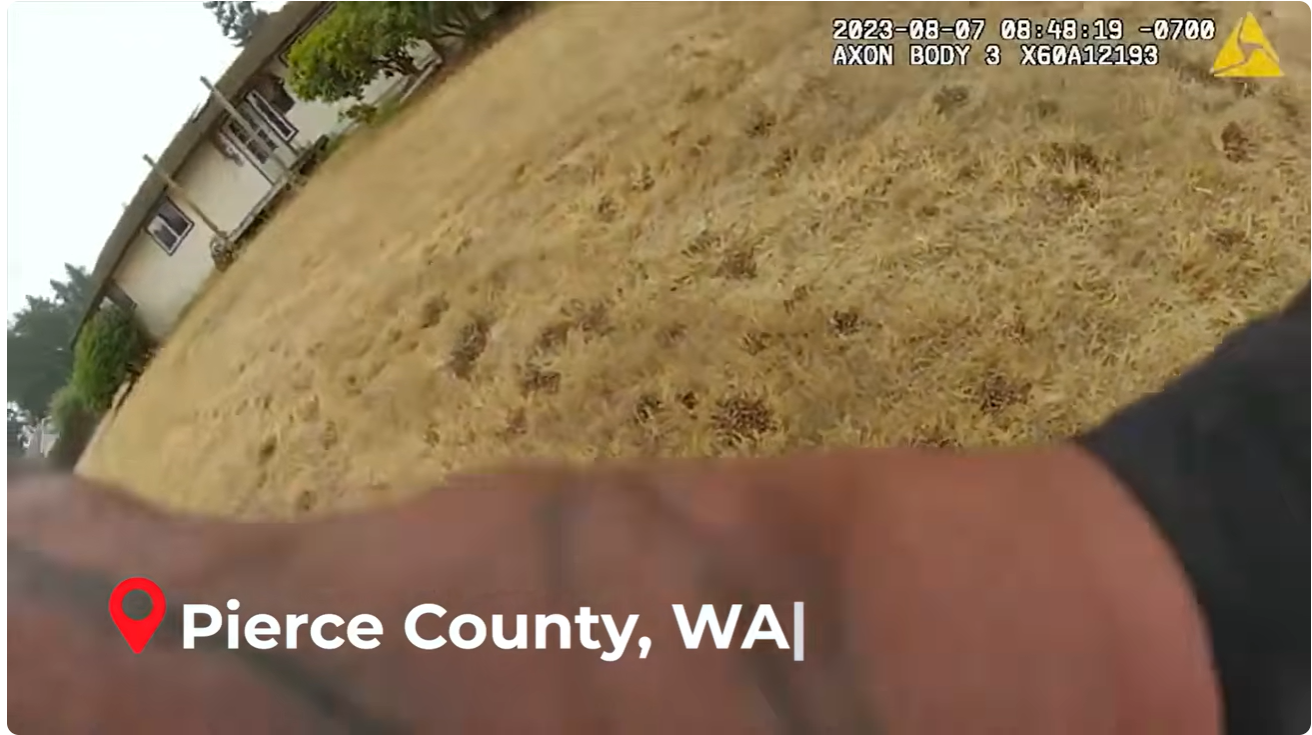
The bodycam footage captures that uncertainty well.
Deputies move through the neighborhood.
Their attention constantly shifts.
One officer watches ahead.
Another checks a different angle.
Vehicles and fences repeatedly interrupt their view.
The suspects could be close without being visible.
That is exactly the type of environment where a trained police dog can become particularly valuable.
WHY DEPUTIES CALLED K9 EDDIE
Pierce County Sheriff's Office already had an experienced tracking resource available.
Eddie.
The black German Shepherd served with the Pierce County Sheriff's Office and became a familiar presence in the department's public bodycam releases.
In this case, his task was straightforward in description but much more difficult in practice:
Find where the fleeing suspects went.
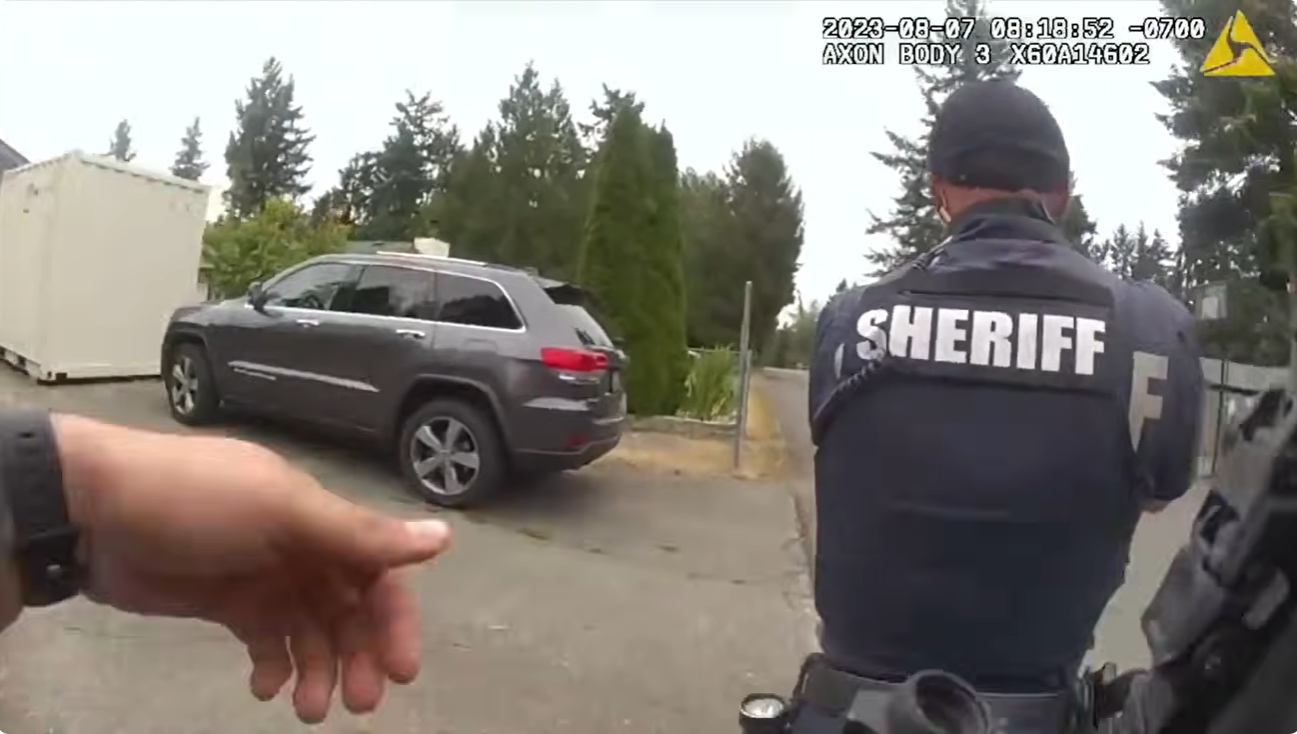
Police dogs used for tracking are valuable because a person does not need to remain visible for the dog to continue working.
The officers need information about the direction of travel and a usable starting point.
The K9 then works the scent trail while the handler interprets the dog's behavior.
That doesn't make the process automatic.
Environmental conditions matter.
Other people can cross the search area.
Wind can affect scent.
Hard surfaces can complicate tracking.
The trail can double back.
And the handler still has to protect both the dog and the officers following behind.
In this incident, there was another obstacle.
FENCES.
Witnesses said the suspects had repeatedly jumped them.
Ordinarily, deputies might attempt to follow a similar route or find passages through properties.
But PCSO said that because the suspects had been hopping several fences, the K9 team chose to work around them instead.
Eddie kept working.
THE SEARCH MOVES THROUGH THE NEIGHBORHOOD
The bodycam timestamp places the search in the morning.
Unlike a nighttime K9 track illuminated primarily by flashlights, deputies here can clearly see yards, vehicles and property boundaries.
That sounds like an advantage.
It is.
But daylight doesn't eliminate hiding places.
A person behind a fence is still invisible.
Someone crouched inside an old vehicle can be only yards away without being noticed.
And every parked truck, shed or overgrown corner must be considered.
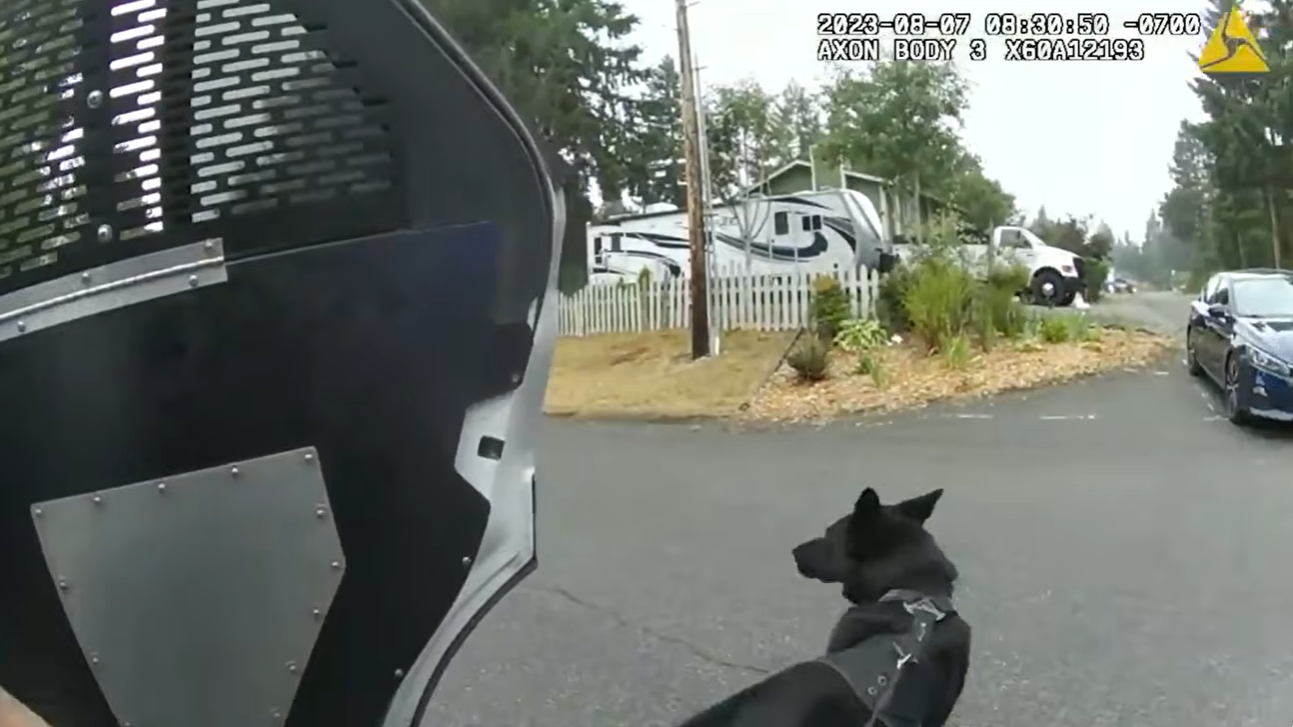
The footage also shows why this kind of search requires coordination.
The K9 handler cannot focus exclusively on Eddie.
Officers must remain aware of their surroundings.
Other deputies provide security.
Radio information continues to update the team.
And because the suspects were initially believed potentially armed, finding them is not the same thing as safely arresting them.
This creates the central tension of the video.
EDDIE MAY KNOW WHERE THEY WENT.
THE DEPUTIES DON'T YET KNOW WHAT WILL HAPPEN WHEN HE FINDS THEM.
EDDIE PICKS UP THE TRAIL
As the search progresses, Eddie's behavior becomes the center of attention.
The handler allows him enough lead to work.
Eddie pulls forward.
The deputies follow.
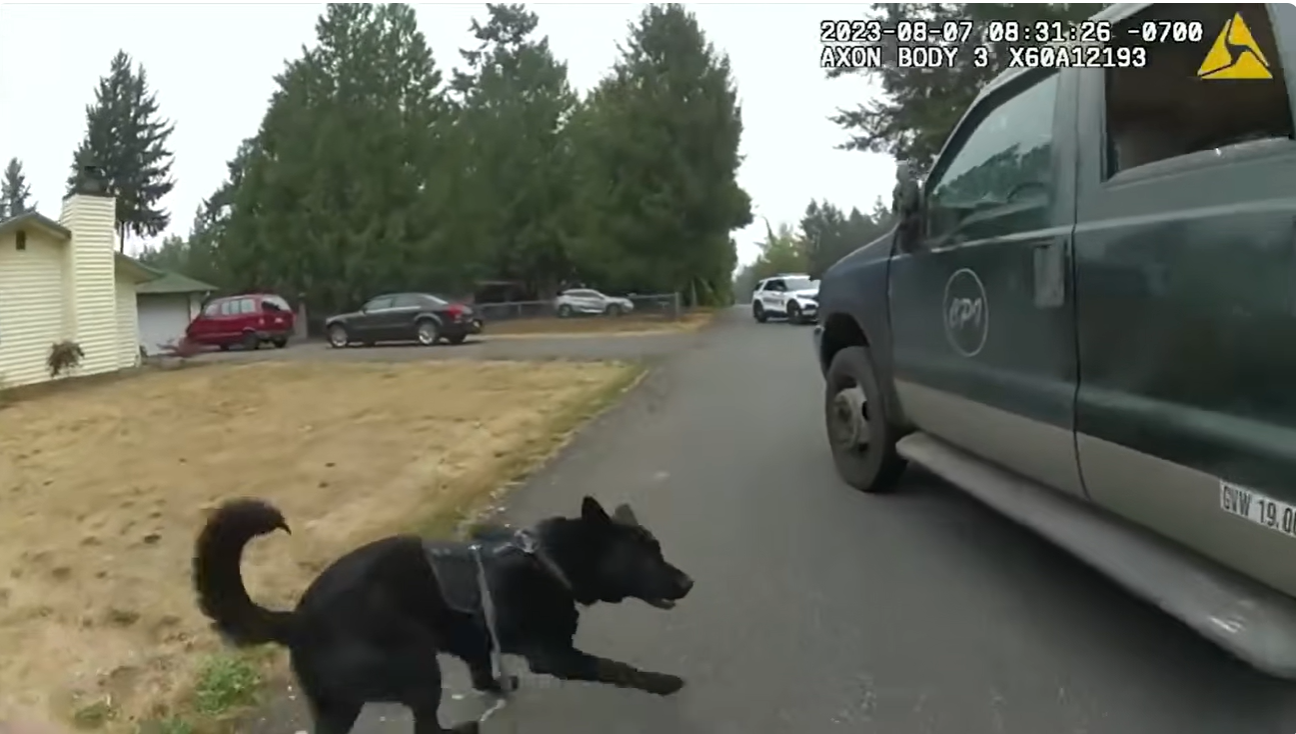
This is one of the strongest sequences for viewer retention because there is no need for exaggerated narration.
The audience already knows two people are hiding somewhere nearby.
The viewer can see Eddie working.
But the suspects themselves remain unseen.
That produces a simple question:
Where are they?
Each yard that Eddie passes eliminates one possibility.
Each turn creates another.
The police dog gradually converts a broad neighborhood search into a much smaller search area.
Then the team approaches an old pickup.
Suddenly, the track becomes much more interesting.
AN OLD PICKUP BECOMES THE FINAL HIDING PLACE
The two suspects had apparently chosen a location they believed would conceal them from deputies.
An old pickup truck.
Visually, that choice makes sense.
Residential properties often contain multiple vehicles.
Some may be unused.
Some may be parked for long periods.
From a distance, an old truck does not necessarily look suspicious.
A deputy conducting a purely visual search might have dozens of similar objects and locations to inspect.
But Eddie was not searching for something that looked suspicious.
He was following where the scent led him.
And according to PCSO, Eddie tracked the suspects directly to the old pickup where they were hiding.
That is the payoff to the entire search.
The suspects had successfully broken visual contact.
They had crossed fences.
They had moved away from the stolen water truck.
They had found cover.
Yet the K9 track continued all the way to them.
THE HIDING PLACE IS EXPOSED
Once Eddie identifies the area, deputies converge.
The bodycam footage changes instantly.
For much of the search, officers are moving.
Now they have a specific location.
Commands can be directed at the people inside.
Other deputies can position themselves.
The search becomes an arrest operation.
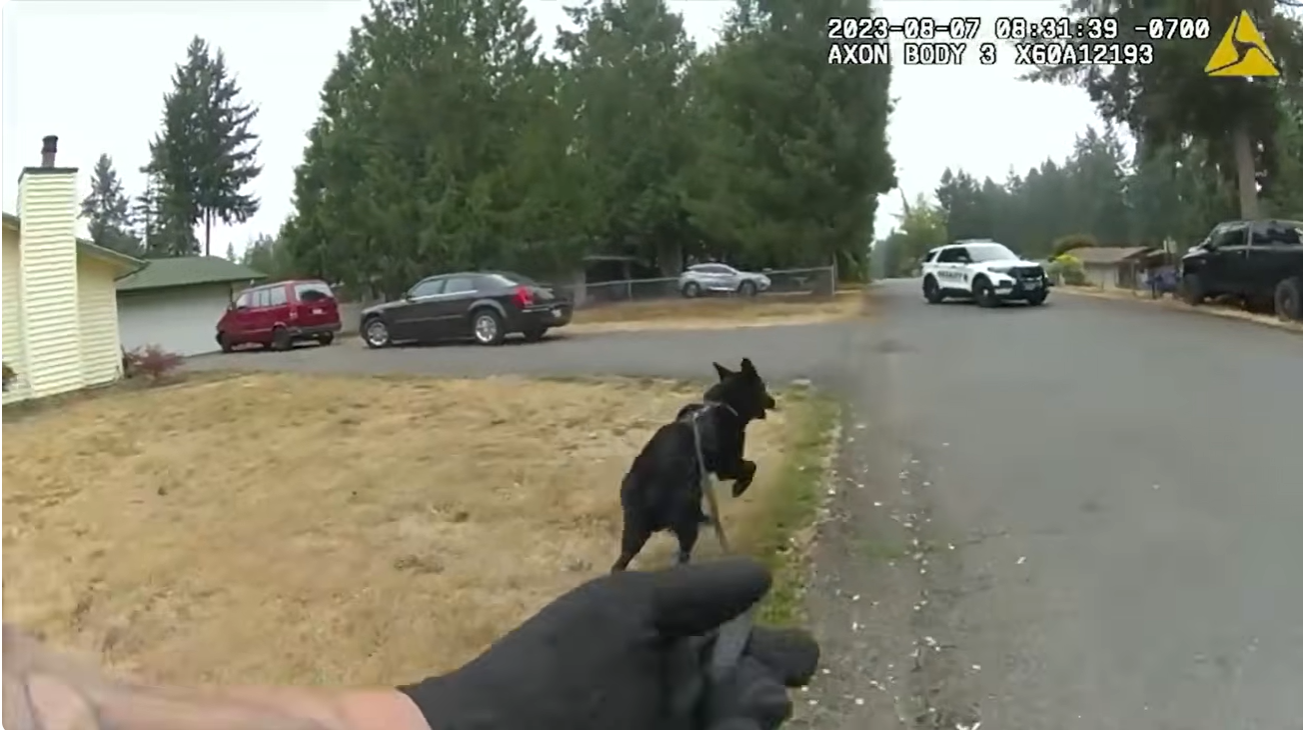
Both suspects were ultimately taken into custody.
Importantly, despite the original report that gunfire may have come from the stolen water truck, investigators later said they found no evidence that the suspects possessed a firearm.
That distinction matters.
At the beginning of the call, deputies had to respond to the information available at that time.
The owner's brother believed he had heard the suspects shoot.
Police therefore had reason to approach the search cautiously.
But an initial report is not the same thing as a final investigative conclusion.
After the arrests, investigators had more time to reconstruct what actually happened.
And the picture changed.
INVESTIGATORS RECONSTRUCT THE CONFRONTATION
With both suspects detained, deputies brought the victim to the location.
PCSO said the victim confirmed that the two people found in the pickup were the individuals involved in the stolen-truck incident.
Then investigators began piecing together what had happened before deputies arrived.
The AirTag became an important part of that story.
The device had allowed the truck owner's brother to follow the stolen vehicle.
He apparently tracked it until he saw the truck making a U-turn in a driveway.
Instead of waiting for deputies to handle the recovery, he confronted the suspects.
The driver then struck parked vehicles.
PCSO noted that footage showed a tow truck pushed into the side of a building during the incident.
When the stolen truck moved toward the brother, he fired.
He believed the suspects fired as well.
But investigators subsequently reported finding no evidence of a firearm belonging to them.
Everyone survived.
That outcome could easily have been different.
THE AIRTag HELPED FIND THE TRUCK BUT ALSO CREATED A DANGEROUS TEMPTATION
This is one of the most useful lessons in the entire incident.
Consumer tracking devices can provide valuable information after property is stolen.
An owner may be able to see that an item is moving.
They may even see approximately where it stops.
But knowing the location of stolen property does not make confronting whoever possesses it safe.
Pierce County Sheriff's Office explicitly used this incident to warn the public against personally tracking down and confronting suspected thieves. The department urged people to contact deputies and allow law enforcement to handle the recovery.
The reason becomes obvious when looking at this case.
The owner’s brother may have known where the truck was.
What he could not know was:
Who was inside?
Were they armed?
Would they flee?
Would they ram another vehicle?
Would they drive toward him?
Would someone panic?
Those uncertainties are exactly what turned a property crime into an encounter involving gunfire.
LOCATION INFORMATION IS NOT THE SAME THING AS CONTROL OF THE SITUATION.
That distinction is worth emphasizing.
A REPORT OF GUNFIRE CHANGES HOW DEPUTIES MUST SEARCH
The initial information also explains the way deputies move in the bodycam footage.
They are not casually walking through the neighborhood looking for two people who ran away.
They have been told the suspects may have fired a weapon.
Police1 similarly reported that deputies called Eddie because the suspects were potentially armed after the 911 caller described the exchange.
Even though investigators ultimately did not find evidence that the suspects had a gun, the officers conducting the search could not know that yet.
This creates an important difference between hindsight and real-time decision-making.
Afterward, investigators can examine:
the truck,
the scene,
spent casings,
witness accounts,
physical evidence,
and other available information.
During the search, officers have only what dispatch and witnesses have told them.
They must make decisions before the investigation is complete.
That is why the K9 becomes more than simply a fast way to find someone.
Eddie gives deputies another tool for locating suspects without forcing officers to blindly clear every possible hiding place themselves.
WHY THE FENCES MATTER MORE THAN THEY SEEM
One of the most visually ordinary details in the footage is also one of the most important.
The chain-link fences.
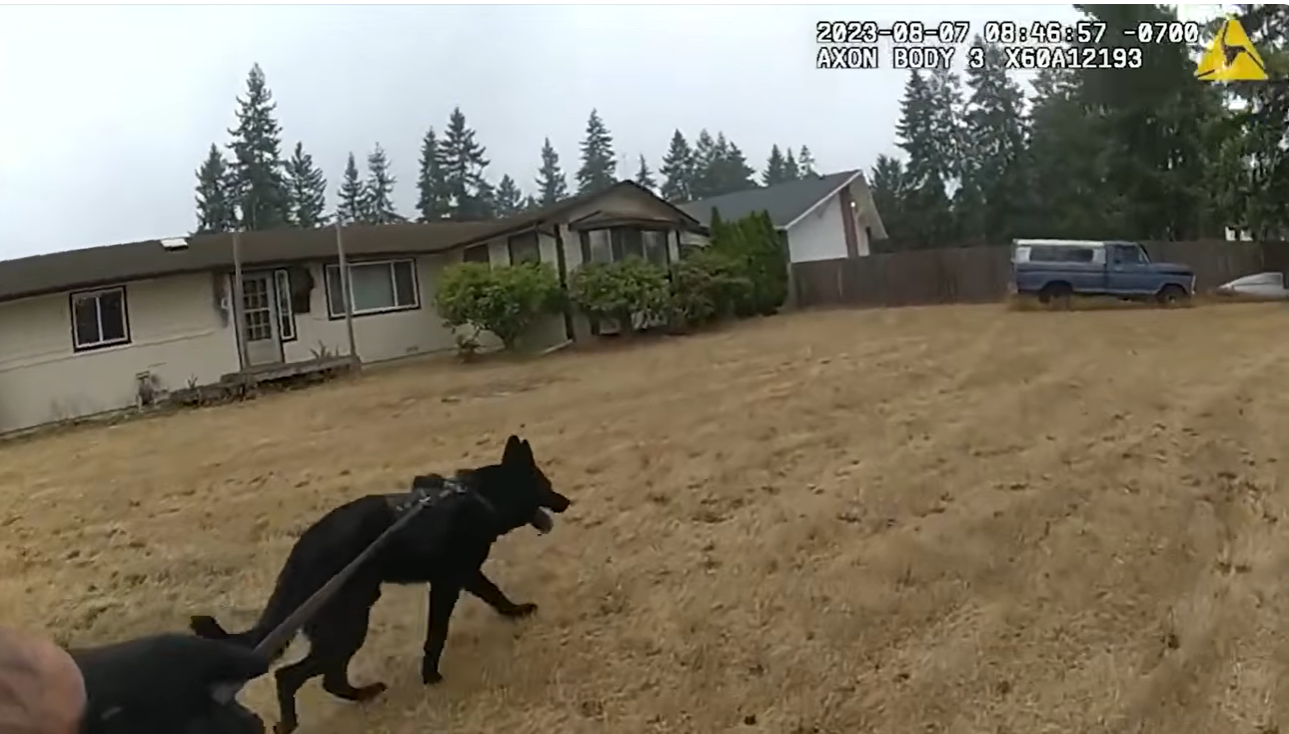
For a fleeing person, a fence can be useful.
Jump it.
Move through another yard.
Jump another.
Change direction.
Very quickly, an officer who originally saw you can lose all visual contact.
For a K9 team, fences create a different problem.
The scent trail may continue directly through them while the handler cannot.
That requires route decisions.
Pierce County Sheriff's Office specifically said witnesses reported the suspects jumping multiple fences and that deputies chose to work around those obstacles rather than continually trying to pass through them.
The footage therefore shows two different kinds of navigation happening simultaneously.
The suspects used physical obstacles to break visual pursuit.
Eddie worked the scent trail despite those obstacles.
The search becomes a contest between concealment and tracking.
Eventually, tracking wins.
WHY THE OLD TRUCK IS THE PERFECT ENDING
From a storytelling perspective, the final hiding place is unusually effective.
Imagine if the suspects had simply been standing behind a fence.
Eddie would find them.
Deputies would make the arrests.
The story would still be interesting.
But hiding inside an old pickup adds another layer.
The suspects have effectively returned to a vehicle after abandoning the stolen vehicle that began the entire incident.
They have found something that looks stationary and unremarkable.
They are no longer running.
They are trying to disappear.
And that's precisely when Eddie becomes most valuable.
The dog does not need them to move.
He does not need to see them.
He simply needs the trail.
That creates the story's strongest contrast:
THE SUSPECTS STOP MOVING BECAUSE THEY THINK HIDING WILL PROTECT THEM.
EDDIE FINDS THEM BECAUSE THE TRAIL DOESN'T END JUST BECAUSE THEY STOP.
THE ARREST ENDS WITHOUT ANOTHER SHOOTING
Given the information deputies initially received, this is an important part of the outcome.
No second exchange of gunfire occurs when the suspects are found.
Both are taken into custody.
PCSO said everyone involved was okay.
The investigation then shifts away from finding people and toward establishing responsibility.
Who took the truck?
What happened during the confrontation?
Did the suspects actually have a firearm?
Who fired?
What property was damaged?
How did the suspects move through the neighborhood?
Those questions are much easier to investigate once the immediate search is finished.
And Eddie's role in ending that search is why the department later highlighted the incident publicly.
Police1 likewise credited the K9 with leading deputies to the hiding location and enabling the arrests.
K9 EDDIE'S ROLE WASN'T JUST THE FINAL BITE OR ARREST
K9 footage is often edited around the most dramatic moment.
The dog runs.
The suspect is caught.
The video ends.
This incident is more interesting because Eddie's primary value is visible before the arrest.
He reduces uncertainty.
At first, deputies have an entire residential area.
Then they have witness information.
Then Eddie has a trail.
The search area narrows.
The dog continues.
Eventually, there is one old pickup.
Inside are the people deputies have been looking for.
This is why the best way to tell this story isn't:
"Police dog attacks suspects."
That would be both simplistic and inaccurate.
The stronger story is:
"Two fleeing suspects disappear into a neighborhood, but a police K9 follows the trail to the place they thought no one would check."
That captures what actually makes the footage compelling.
WHY THIS VIDEO HOLDS ATTENTION
The natural retention structure is extremely strong.
It begins with an unanswered question:
WHERE DID THE TWO SUSPECTS GO?
Then viewers learn that the men may be armed.
That increases the stakes.
Witnesses say they jumped fences.
That expands the search.
Eddie arrives.
Now the audience has a method for solving the problem.
The K9 begins tracking.
Every movement forward creates anticipation.
Then deputies approach vehicles and yards.
Still nothing.
Finally:
THE TRAIL LEADS TO AN OLD PICKUP.
That is the payoff.
After the arrest, however, the story has one final reveal:
The original assumption about the gunfire may have been wrong.
Investigators found no evidence the suspects possessed a firearm.
That means the story continues to provide new information even after the arrests.
For a blog, this is ideal.
You don't need exaggerated phrases or fake cliffhangers.
The verified facts already create a clean sequence:
STOLEN TRUCK
↓
AIRTag TRACKING
↓
PRIVATE CONFRONTATION
↓
GUNFIRE REPORTED
↓
TRUCK ABANDONED
↓
TWO SUSPECTS FLEE
↓
MULTIPLE FENCES
↓
K9 EDDIE DEPLOYED
↓
SCENT TRACK
↓
OLD PICKUP
↓
TWO SUSPECTS FOUND
↓
BOTH ARRESTED
↓
NO EVIDENCE THEY HAD A FIREARM
That final point also prevents the article from becoming misleading.
The initial armed-suspect information explains the deputies' caution.
The later evidence provides the more complete picture.
Both belong in the story.
THE INCIDENT ALSO CARRIES A WARNING FOR STOLEN-VEHICLE OWNERS
Modern tracking devices have changed stolen-property cases.
A person can sometimes watch the location of an item on a phone.
That creates an understandable urge:
"I know where my property is. Why should I wait?"
This case demonstrates the problem.
Tracking tells you where an object may be.
It does not tell you what the person possessing it will do when confronted.
PCSO's message after the incident was clear: don't personally track down and confront suspects; contact deputies so law enforcement can handle the recovery.
Here, the brother's confrontation was followed by vehicles being struck, the stolen truck moving toward him and shots being fired.
Whatever the value of the stolen property, that is an enormous escalation.
The truck can be replaced.
A life cannot.
ENDING — THE HIDING PLACE WAS GOOD ENOUGH FOR PEOPLE, NOT FOR EDDIE
By the time the incident ended, the stolen water truck had been recovered.
Both fleeing suspects had been located.
Nobody had been killed.
And investigators had begun separating the original reports from what the evidence ultimately showed.
The owner's brother believed the suspects fired at him.
Deputies therefore approached the search with the possibility of armed suspects in mind.
But after the arrests, PCSO said investigators found no evidence the suspects possessed a firearm.
What the department did establish was that two people fled the stolen truck and attempted to evade deputies through a neighborhood.
They crossed fences.
They broke visual contact.
Then they hid inside an old pickup.
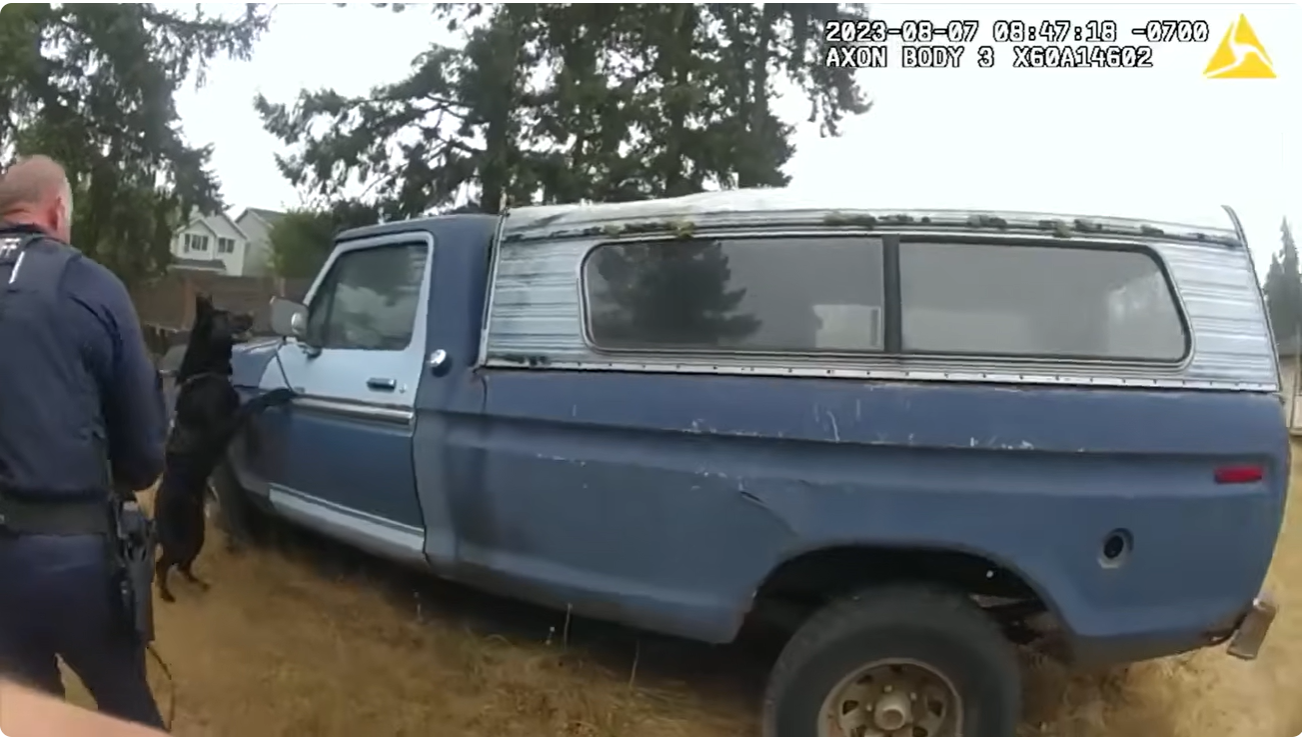
That strategy defeated human eyesight for a while.
It did not defeat Eddie.
The K9 followed the route through the neighborhood until deputies reached the truck.
Both suspects were taken into custody.
And a search that began with a broad question —
"Where did they go?"
— ended with Eddie providing the answer.
CTA — THEY GOT AWAY FROM THE STOLEN TRUCK. THEY DIDN'T GET AWAY FROM THE TRACK.
The most interesting part of this incident isn't a high-speed pursuit or a dramatic vehicle crash.
It is the search.
Two suspects abandon a stolen water truck and disappear through a Pierce County neighborhood after an encounter involving reported gunfire.
Witnesses see them crossing fences.
Deputies lose direct visual contact.
The search could expand across yard after yard.
Instead, K9 Eddie begins working the trail.
He moves through the neighborhood.
Past fences.
Past vehicles.
Toward an old pickup that looks like just another parked truck.
And that's where the search ends.
THE SUSPECTS FOUND A PLACE WHERE DEPUTIES COULDN'T SEE THEM. EDDIE DIDN'T NEED TO SEE THEM.
Click here to watch the full bodycam footage and follow K9 Eddie's track from the abandoned stolen truck all the way to the suspects' final hiding place: https://www.youtube.com/watch?v=16YCMQERQVQ
Comments (0)
Loading comments...
May You Like

Traffic Stop Turns Deadly After Man Steps Out of Stolen Car

Stolen Charger Flees Police During Highway Traffic Stop

Cop thinks sandwich is phone












