Police Have No Idea Three Family Members Are Dead Inside the Home
Police Have No Idea Three Family Members Are Dead Inside the Home
Verified incident: The footage matches the January 5, 2026 Piscataway, New Jersey incident involving Jordan Barnes, 29. Police found his mother Jeanmarie Barnes, 60, and grandparents Richard A. Barnes, 86, and Brenda F. Barnes, 84, dead inside the River Road home. Barnes was fatally shot by Officer John Ward after authorities say he advanced toward officers with a knife despite commands and three Taser deployments.
A Domestic Call With a Horrifying Reality Hidden Behind the Door
At about 5:30 p.m. on January 5, 2026, Piscataway Police officers were sent to a home on River Road in Piscataway, New Jersey. A relative had called 911 to report that 29-year-old Jordan Barnes was threatening family members inside the residence. What responding officers did not initially know was that three members of Barnes's family were already dead inside.
The supplied footage matches the incident precisely. Its AXON Body 4 overlay shows January 5, 2026, shortly after 5:30 p.m. The video identifies the location as the family's home on River Road, and officers can be heard trying to determine how many people are inside. Those clues align with the official account later released by the New Jersey Attorney General's Office.
The man officers were dealing with was Jordan Barnes, 29, of Piscataway. The three people later found dead inside were his mother, Jeanmarie Barnes, 60, and his grandparents, Richard A. Barnes, 86, and Brenda F. Barnes, 84. Authorities said all three had multiple suspected stab wounds.
The original title says police had no idea Barnes had killed three family members inside. That is close to the dramatic reality of the first minutes, although the official investigation has described Barnes as the person responsible while the deaths themselves remained part of an active Middlesex County Prosecutor's Office investigation. Barnes could never face criminal prosecution because he died during the police encounter that followed.
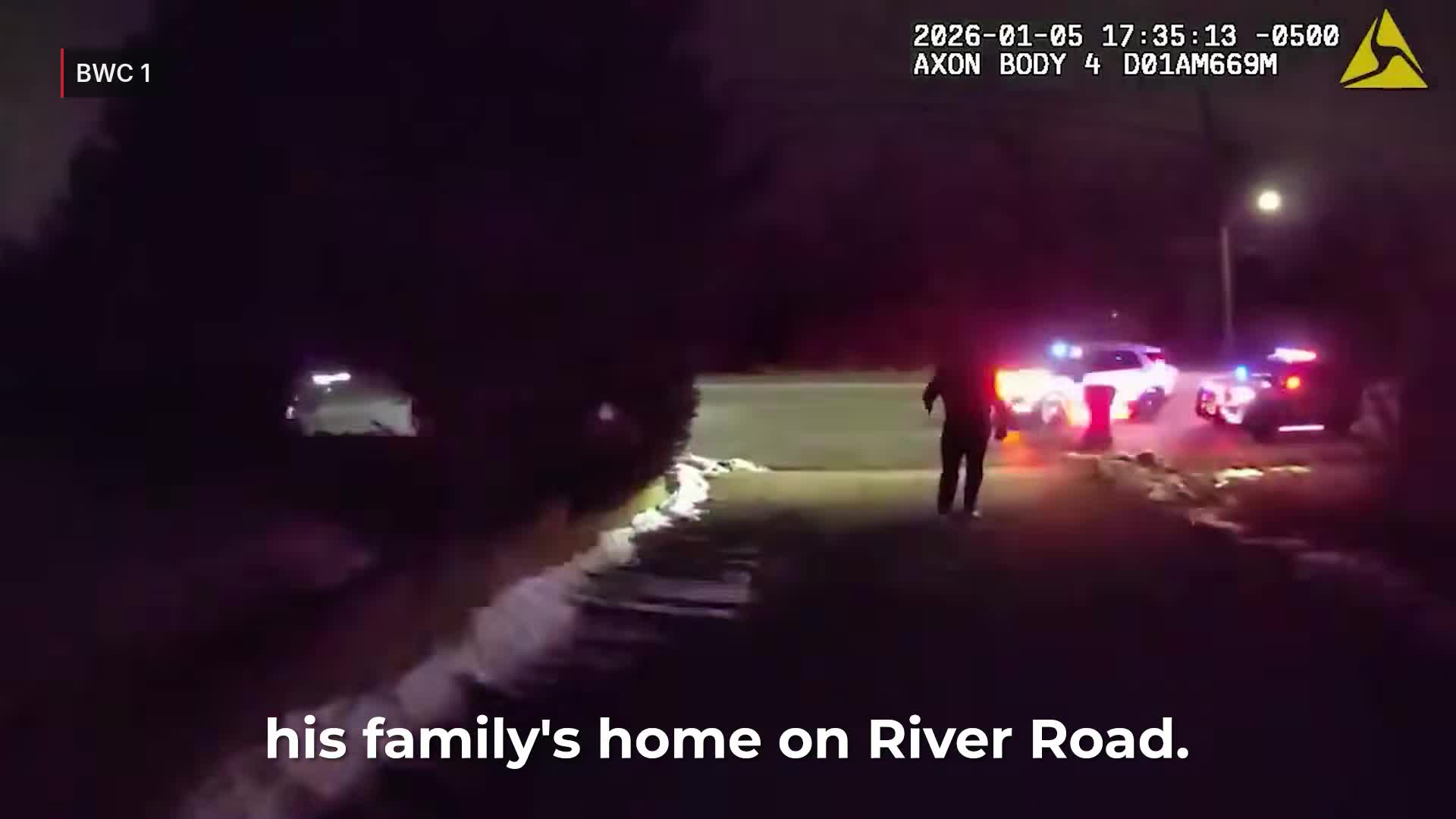
Officers Try to Understand Who Is Still Inside
The body-camera footage begins with uncertainty. Patrol vehicles are positioned outside the residence in the winter darkness. Snow remains along the edges of the property. Officers approach carefully because the 911 information indicates that a man inside may be armed with a knife and may be threatening relatives.
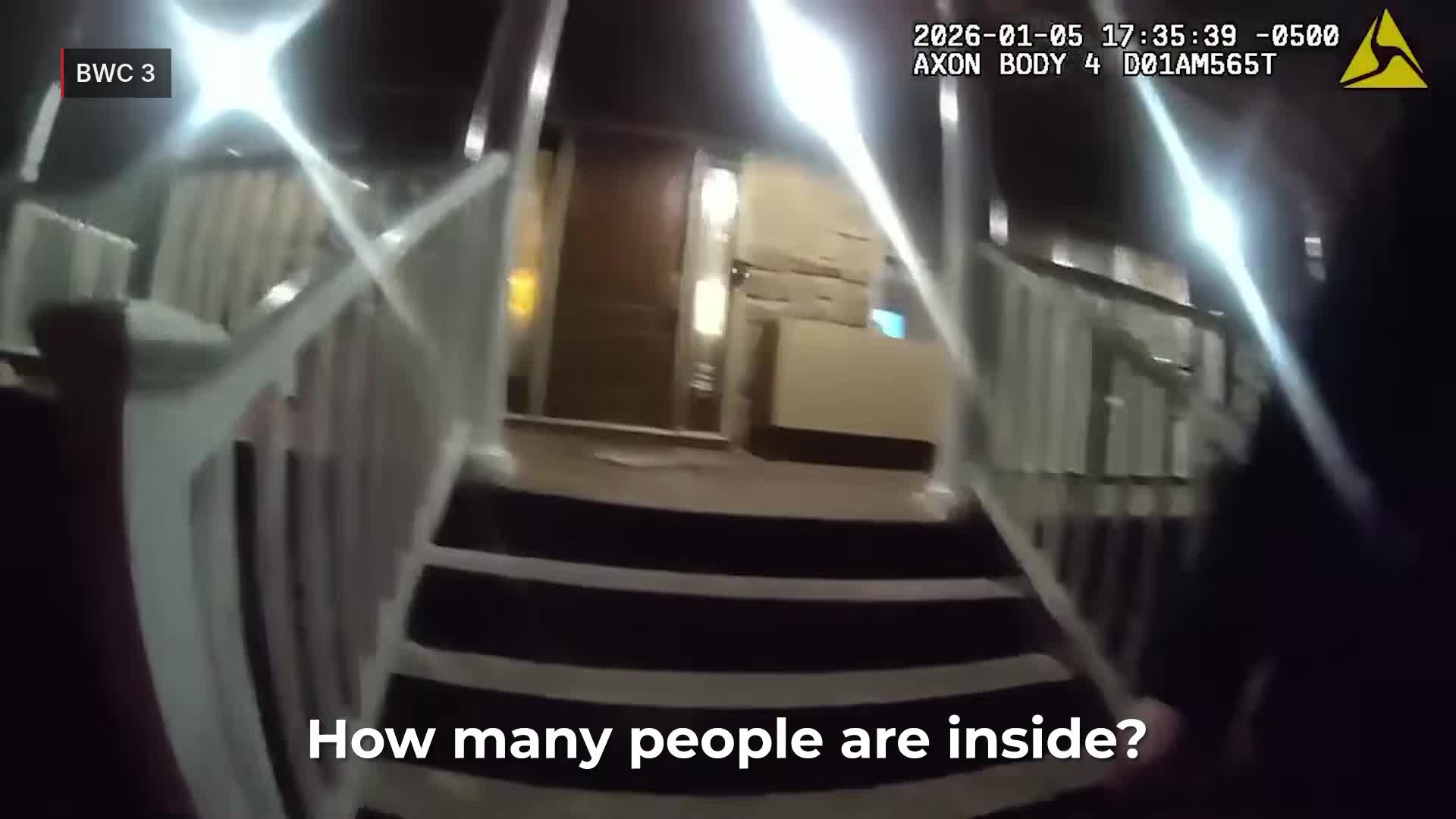
The questions officers ask are revealing. They are trying to establish who is inside, where people are located and whether anyone can safely come to the door. At one point, an officer asks how many people are inside. The question captures exactly how incomplete the picture still is.
This is an important difference between watching the footage after the facts are known and experiencing the event in real time. Viewers already know the title. The officers do not. They have a domestic-threat call, an armed man and family members who may need help. They do not yet know that the scene has become a triple homicide.
The uncertainty shapes their approach. They do not simply rush through the doorway. Officers attempt communication through the closed front door while other officers position themselves nearby. Their task is to obtain information, create an opportunity for compliance and avoid forcing an armed confrontation if the situation can still be de-escalated.
A Glimpse Through the Door Changes Everything
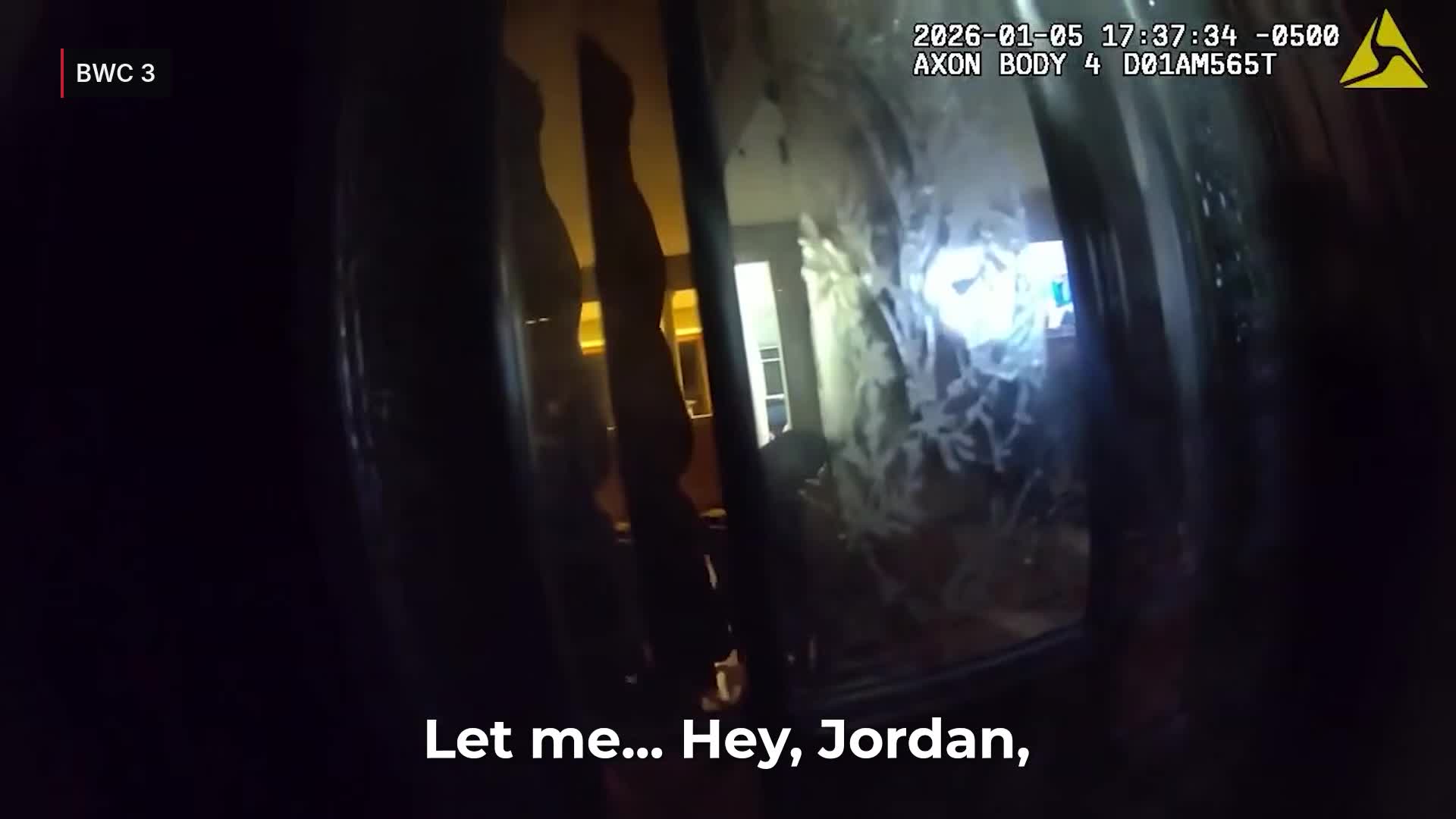
According to the New Jersey Attorney General's Office, one officer attempted to speak with Barnes through the closed front door while Officer John Ward looked through the door's sidelight. Ward saw two people lying unresponsive on the floor.
That observation fundamentally changed the police response. Until then, officers knew family members might be threatened. Seeing motionless people inside created an urgent possibility that victims were already seriously injured and needed immediate aid.
The supplied footage captures officers moving closer to the entrance and coordinating their next step. The porch and doorway become the focal point of the scene. Flashlights reflect off glass while officers try to see into the home.
Police responding to a barricaded or armed-person call face a difficult balance. Entering can expose officers to an ambush or force a confrontation. Waiting can cost injured people precious time. Once officers can see apparently unresponsive people inside, the urgency of checking their condition becomes much harder to ignore.
The Attorney General's preliminary account says officers then opened the front door. What they encountered next transformed the call again.
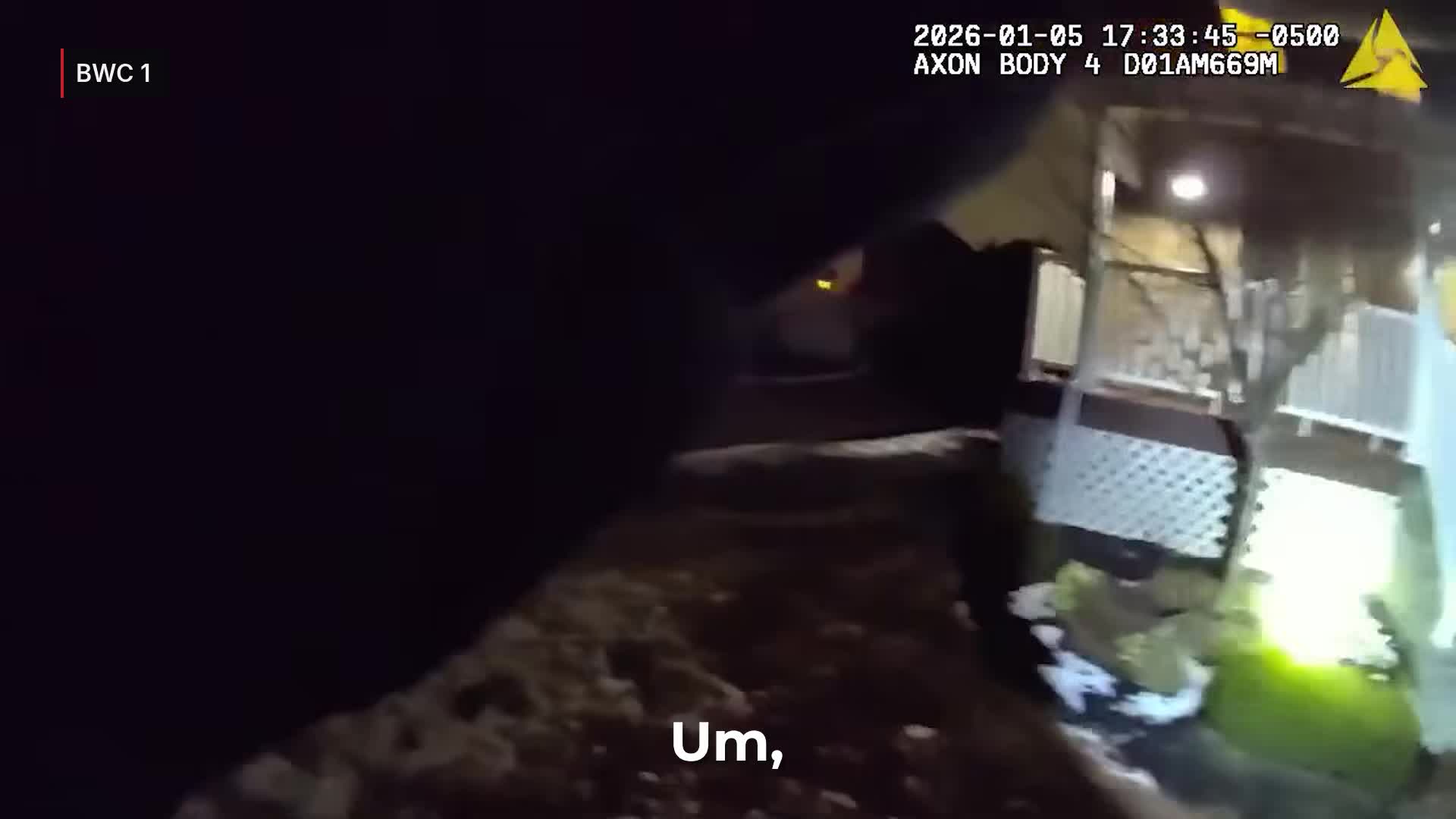
Jordan Barnes Appears With a Knife
When officers opened the door, authorities say Jordan Barnes was holding a kitchen knife. Officers immediately ordered him to put the knife down and get on the ground.
The body-camera footage shows the doorway illuminated by officers' lights. Commands become more urgent as Barnes remains inside. The scene is confined: officers are positioned outside and around the entrance while Barnes is within the home.
The New Jersey Attorney General's Office says Barnes did not drop the knife or comply with commands to get on the ground. Instead, he continued moving toward officers.
This is the point at which the event stops being only a rescue attempt and becomes an immediate deadly-force confrontation. Officers still have unresponsive people inside, but they also have an armed man approaching them from the doorway.
The footage should be understood from the officers' perspective at that moment. They know Barnes has been reported as threatening family members. They have now seen victims lying inside. They see a knife. They issue commands. The man does not disarm.
Three Tasers Fail to Stop the Advance
Authorities say three officers deployed Tasers as Barnes continued toward them. The electronic-control weapons did not stop his movement.
Tasers can be useful alternatives to firearms, but they are not guaranteed to incapacitate someone. Their effectiveness can depend on probe placement, clothing, distance, electrical contact and numerous other factors. An officer cannot assume that a Taser deployment will immediately end a threat.
The use of multiple Tasers is significant because it shows that officers attempted a less-lethal option before the fatal gunfire. According to the Attorney General's account, Barnes nevertheless continued walking toward officers.
The body-camera sequence is fast and chaotic. Officers are issuing commands, lights are moving across the doorway and multiple people are reacting at once. This is precisely why official investigations examine footage frame by frame rather than relying on a single screenshot.
The legal question in a police shooting is not simply whether a suspect possessed a weapon. Investigators examine the total circumstances, including distance, movement, commands, opportunities to retreat or reposition, the nature of the weapon and what a reasonable officer would have perceived at the instant force was used.
Officer John Ward Fires
After the Tasers failed to stop Barnes, Officer John Ward fired his service weapon, striking him. Officers then moved to provide medical aid until emergency medical services arrived.
Barnes was later pronounced dead.
Two knives were recovered near him, according to the Attorney General's Office. Early news reports sometimes described the weapon as a machete, while the state's official update described Barnes as holding a kitchen knife and said two knives were recovered. For accuracy, the official description is the stronger source.
The shooting itself is subject to a separate mandatory investigation. New Jersey law requires the Attorney General's Office to investigate deaths that occur during encounters with law-enforcement officers and to present the investigation to a grand jury to determine whether criminal charges against an officer are supported.
That process is separate from the investigation into the deaths inside the home. The fact that authorities believe Barnes killed his relatives does not eliminate the legal requirement to independently review the police shooting.
Inside the Home, Officers Find Three Family Members Dead
Only after the armed confrontation was over could officers fully confront what had happened inside the River Road residence.
Police found Jeanmarie Barnes, 60; Richard A. Barnes, 86; and Brenda F. Barnes, 84, dead inside. The Attorney General's Office said each had multiple suspected stab wounds.
Jeanmarie was Jordan Barnes's mother. Richard and Brenda were his grandparents. The deaths turned the incident into a family tragedy involving four people from the same household network: three homicide victims and Barnes, who died in the police shooting.
Local officials emphasized the scale of the loss. Piscataway Mayor Brian Wahler described the surviving father as a man facing the burial of his wife, his parents and his son. That detail underscores why the event cannot be reduced to the few seconds of the officer-involved shooting.
The Middlesex County Prosecutor's Office took responsibility for investigating the three deaths. Because Barnes was dead, there would be no conventional prosecution in which a jury could determine his guilt. Investigators instead had to reconstruct the killings through physical evidence, the 911 call, the scene and other available information.
The 911 Caller Was the Only Immediate Family Survivor
Local reporting identified the person who called 911 as Barnes's father. He was outside the home and reported that his son was threatening family members.
That call is the reason officers reached the River Road house when they did. It also means the caller was experiencing the event without knowing, at least initially, the full extent of what had already occurred inside.
News reports later described him as the only immediate survivor of the incident. The emotional consequences are difficult to overstate: his wife, both parents and son all died in the same event.
The footage's early uncertainty therefore has another dimension. Officers are not only trying to determine what Barnes is doing. They are also working with information from a relative who is himself caught inside a rapidly unfolding family catastrophe.
The 911 recording and body-camera footage later released by authorities preserve those moments before the full truth was known.
Bodycam Release Shows the De-Escalation Attempts
In March 2026, prosecutors released body-camera video from the Piscataway encounter. ABC7 New York reported that the footage shows officers trying to de-escalate the situation before Barnes advances with the knife.
The released material confirms the broad sequence already described by the Attorney General: officers arrive, communicate through the door, discover signs that people inside may be down, open the entrance, encounter Barnes armed with a knife, deploy Tasers and then use gunfire when the less-lethal attempts fail.
The video is difficult precisely because the audience knows what the officers do not know at the beginning. Every question about who is inside carries a grim answer that will only become clear minutes later.
Body cameras are especially valuable in incidents like this because they preserve the officers' information state. A later report can summarize that three people were dead inside. The footage shows the period when officers are still trying to figure that out.
That distinction matters whenever police decisions are judged after the fact. Officers can only act on the facts reasonably available to them at the time, not on information investigators discover later.
Why the Title Works, and Where It Needs Precision
“Police Have No Idea He Killed 3 Family Members Inside” is an effective title because it captures the central dramatic irony of the footage. Viewers know the ending while officers at the door are still asking basic questions.
But the wording should still be handled carefully in a factual article. Barnes did not go to trial for the three deaths because he was killed during the police encounter. There is therefore no murder conviction.
Official sources and multiple local reports identify Barnes as the person responsible for the deaths of his mother and grandparents. The Attorney General's release, however, formally states that the Middlesex County Prosecutor's Office was investigating those deaths. The distinction between investigative attribution and a criminal conviction should remain visible.
That is why the article can accurately describe the event as a triple homicide linked to Barnes without inventing a nonexistent court judgment.
The same precision applies to the police shooting. Officer Ward's gunfire was not automatically declared lawful simply because Barnes was armed. New Jersey's statutory process requires an independent investigation and grand-jury presentation.
A Family Home Becomes Two Investigations
The River Road scene generated two major investigations at once.
The first concerned the deaths of Jeanmarie, Richard and Brenda Barnes. Investigators had to determine when they were attacked, reconstruct the sequence inside the home and document the evidence linking Jordan Barnes to their deaths.
The second concerned the fatal police shooting of Barnes. The Attorney General's Office of Public Integrity and Accountability took responsibility for that review under New Jersey law.
These investigations ask different questions. The homicide investigation focuses on what happened to the three victims. The officer-involved-shooting investigation focuses on what Officer Ward and the other officers reasonably perceived and whether the use of deadly force complied with law.
Keeping those processes separate prevents a dangerous shortcut. Even when a person is suspected of an appalling crime, police force is still reviewed under the legal standards governing the moment it was used.
What Is Known About Motive
Public reporting in the immediate aftermath repeatedly noted that investigators had not disclosed a motive for the killings.
That absence is important. A triple homicide inside one family naturally generates questions about arguments, mental health, money, prior violence or other possible explanations. None should be inserted into the story without evidence.
Authorities also said there had been no previous incidents at the home known to police, according to reporting on the body-camera release. That makes the scale of the January 5 event even more difficult to reconcile with the limited public history.
A responsible article therefore does not attempt to diagnose Barnes or manufacture a reason for the killings. The known facts are already severe: a relative called 911 reporting threats, officers found Barnes armed, and three members of his family were discovered dead with suspected stab wounds.
The unanswered “why” remains part of the case rather than an invitation to speculation.
The Full Footage Reveals How Fast Knowledge Changes
At the beginning, officers have a threat call.
Then they learn that people may still be inside.
Then an officer sees two people lying unresponsive.
Then the door opens and Barnes appears armed.
Then Tasers fail.
Then Officer Ward fires.
Only afterward does the full scale of the scene become known: three family members are dead inside.
That progression is the core of the footage. Police work is often portrayed as though officers arrive with the entire story already established. In reality, emergency calls provide fragments. Officers assemble the facts while simultaneously managing risk.
The River Road body cameras show that process in its most extreme form. Information that would later fit neatly into a news headline arrives to officers one piece at a time, with life-or-death decisions occurring before the puzzle is complete.
A Tragedy With No Conventional Criminal Trial
Jordan Barnes's death means the triple homicide will never follow the usual path from arrest to indictment to trial.
There will be no plea from Barnes, no jury verdict on the killings and no sentence imposed for the deaths of Jeanmarie, Richard and Brenda. That legal absence does not erase the investigative findings, but it changes the language a careful publication should use.
The officer-involved shooting, meanwhile, continues through New Jersey's mandated review process. The body-camera release provides public evidence of the confrontation, but the grand-jury process is designed to make the formal criminal-law assessment of the officer's actions.
For the surviving family member, those procedural distinctions cannot change the immediate reality of January 5. Four relatives died within one event.
The footage is compelling because it captures the moment before police understand that reality. Officers arrive expecting to prevent threatened violence. Within minutes, they discover they are standing at the scene of a triple homicide and a fatal police shooting.
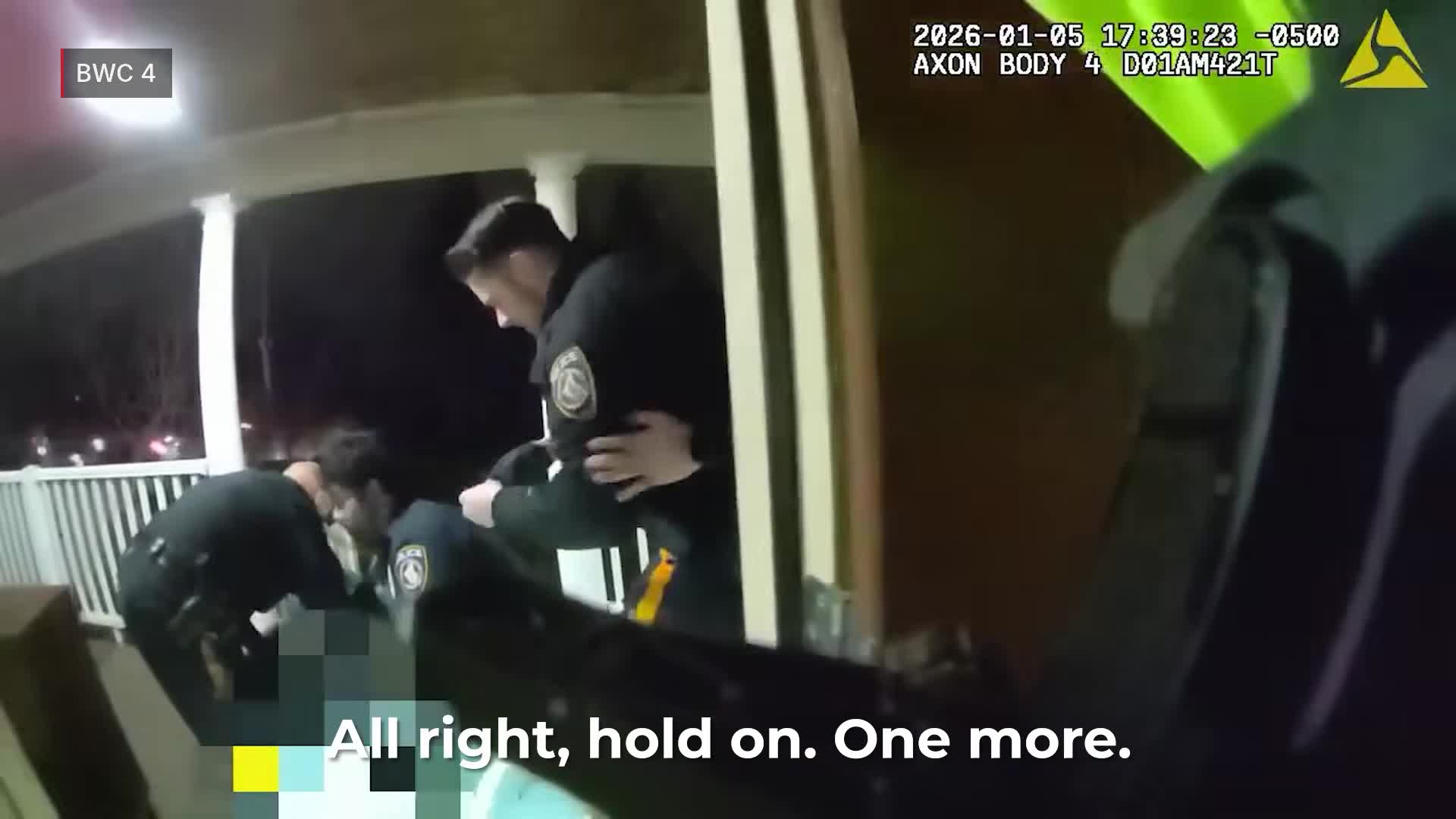
The Moment Officers Realize This Is Far Bigger Than the Call
The strongest part of the video is not simply the gunfire. It is the transition from uncertainty to recognition.
An officer asks how many people are inside. Another peers through the sidelight. The front door becomes the dividing line between what police know and what they are about to discover. Once the unresponsive figures are seen, the call can no longer be treated as an ordinary domestic disturbance.
The confrontation with Barnes then happens before officers can fully process the interior scene. They must deal with the immediate knife threat first. Only afterward can they move into the house and account for the victims.
That sequence explains why the original title resonates. Police truly are operating without the full picture in the opening minutes. The horrifying truth is only a few feet away, behind the door.
The complete footage is therefore more revealing than a short shooting clip. It shows the questions, the caution, the failed attempts to gain compliance and the moment a family emergency becomes one of Piscataway's most devastating recent crimes.
Comments (0)
Loading comments...
May You Like
Everything Changed When Cops Asked About Weapons

Woman Refuses Repeated Orders to Exit Her Car Before Officers Move In