
Police Drone Tracks Man Carrying Two Children Through a Florida Swamp
Police Drone Tracks Man Carrying Two Children Through a Florida Swamp
A rollover crash in Lakeland, Florida, became an urgent search for two very young children after officers arrived to find an abandoned vehicle with two empty child-safety seats. A police drone eventually located 27-year-old Isaac Kinsey moving through a dark, waterlogged swamp with a 2-year-old child and a 10-month-old infant. The footage released by Lakeland Police shows why the search quickly became a rescue operation rather than an ordinary attempt to locate a fleeing driver.
An Early-Morning Crash Raises an Immediate Alarm
The incident began during the early morning hours of September 9, 2026, on Highway 33 at North Combee Road in Lakeland. According to Lakeland Police, the vehicle went through a road-closure sign and sandbags, entered a construction area and came to rest against exposed tree roots. The damage was consistent with a rollover.
When officers reached the vehicle, the driver was gone. That alone would have prompted a search, but what officers saw inside changed the urgency of the call: two child-safety seats were still in the wreck. Police could not immediately determine whether children had been inside the vehicle, so they began searching the surrounding area.
The supplied video captures this shift in priorities. A crash investigation can normally begin with checking the vehicle, locating the driver and determining what caused the collision. Here, the possibility that a baby and toddler were missing meant officers had to assume the children could be injured, exposed to water or vegetation, or somewhere in the darkness without adult help.
A Drone Goes Up Over the Swamp
The terrain surrounding the crash made a normal ground search difficult. Dense vegetation, standing water and darkness limited what officers could see from roads and paths. Lakeland Police deployed a drone, giving the search team an aerial view of an area that would have been slow and hazardous to cover on foot.
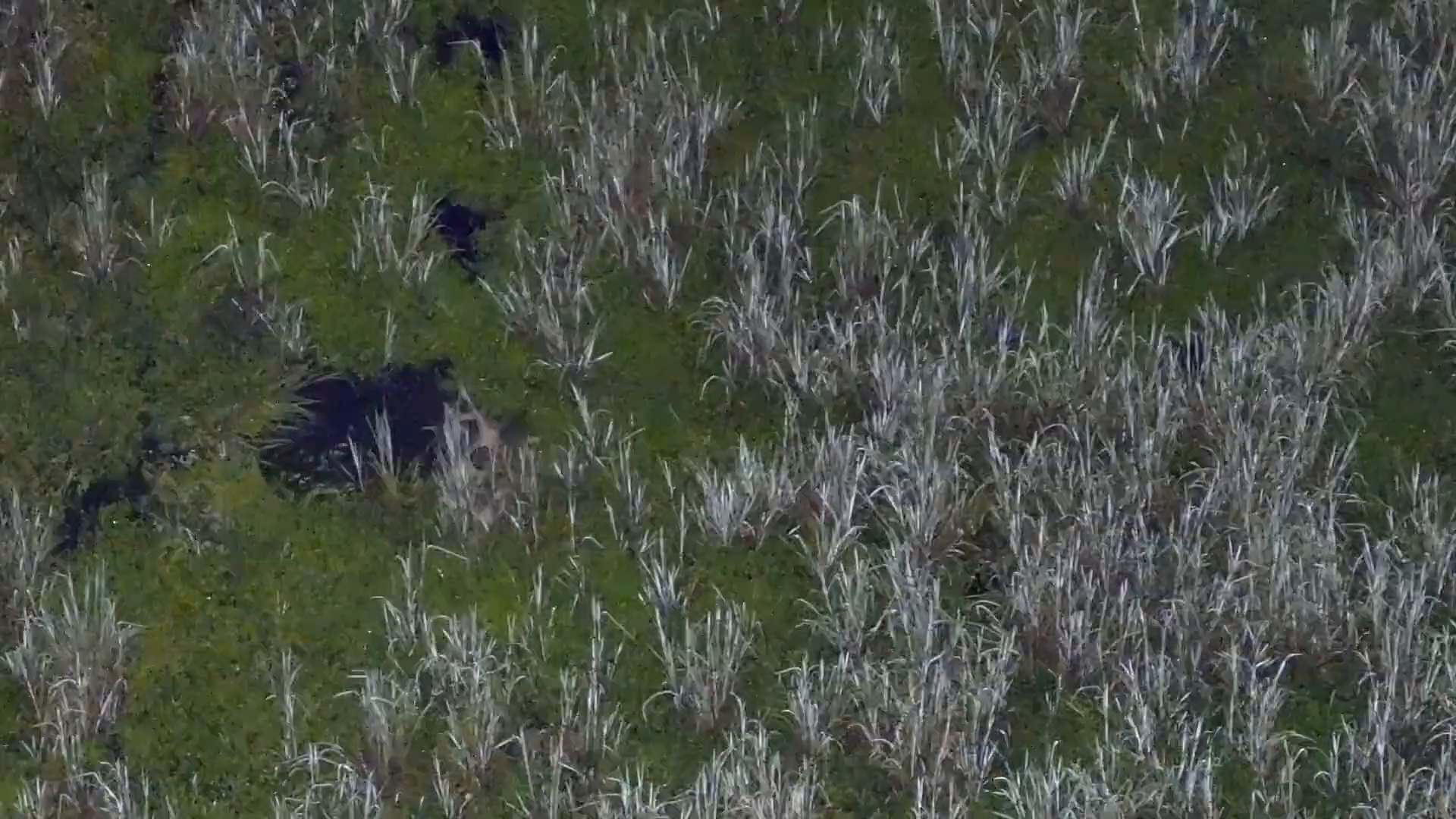
Approximately 30 minutes into the search, the drone operator located Kinsey in a wooded, swampy area south of the crash site. Police said he was carrying two children, ages 2 years and 10 months. The aerial footage provides one of the most striking perspectives in the entire incident: from above, the people are small figures moving through thick vegetation while officers on the ground attempt to reach them.
The drone was more than a camera for documentation. It became a search tool that allowed officers to maintain visual contact and direct ground personnel toward the group. In a dark wetland, that capability can dramatically reduce the amount of time rescuers spend moving blindly through difficult terrain.
The Footage Shows Repeated Falls in Standing Water
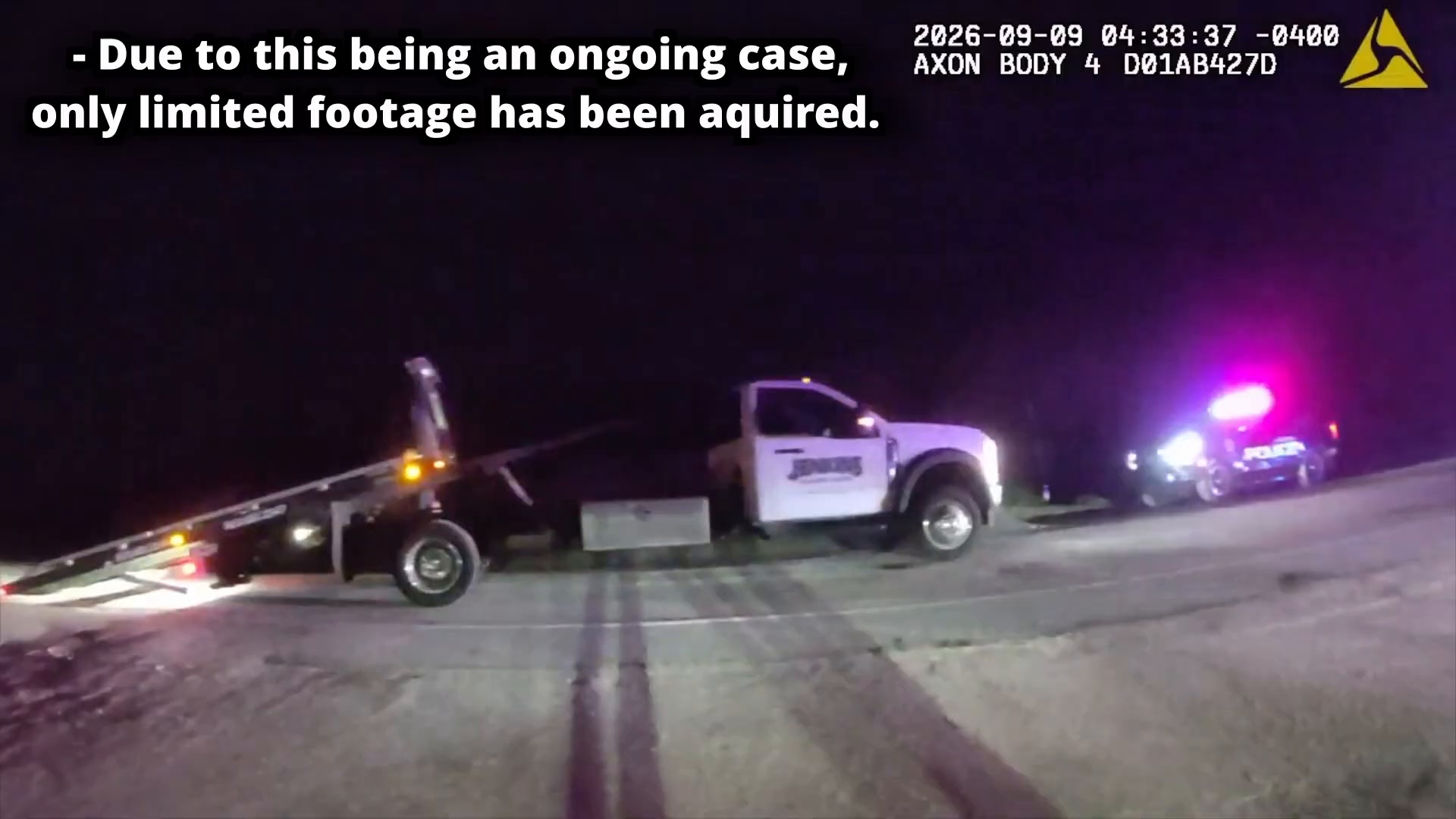
Police said Kinsey had significant difficulty moving through the swamp. The released drone footage shows him stumbling and falling as he attempts to cross the uneven, waterlogged terrain while carrying the children. According to the department, those falls caused the children to be submerged in standing water multiple times.
At one stage, police said Kinsey put the 2-year-old down and continued moving with the 10-month-old infant. The drone allows officers to keep track of both locations. That becomes especially important once the children are no longer together because rescuers now have to make sure neither child disappears into the vegetation.
Some online headlines describe the area as “alligator-infested.” Florida wetlands are known alligator habitat, and several news reports used that description. However, the available police-based reporting does not establish that an alligator actually approached Kinsey, the children or the officers during the rescue. The verified danger visible in the footage is already serious: darkness, water, thick brush, repeated falls and two extremely young children exposed to those conditions.
Officers Move From Pursuit to Child Rescue
As officers close in, the priorities are unmistakable. Body-camera audio captures police directing Kinsey toward them while attempting to reach the children. The situation is no longer simply about apprehending someone who left a crash scene. Officers are trying to physically remove a toddler and infant from a hazardous environment.
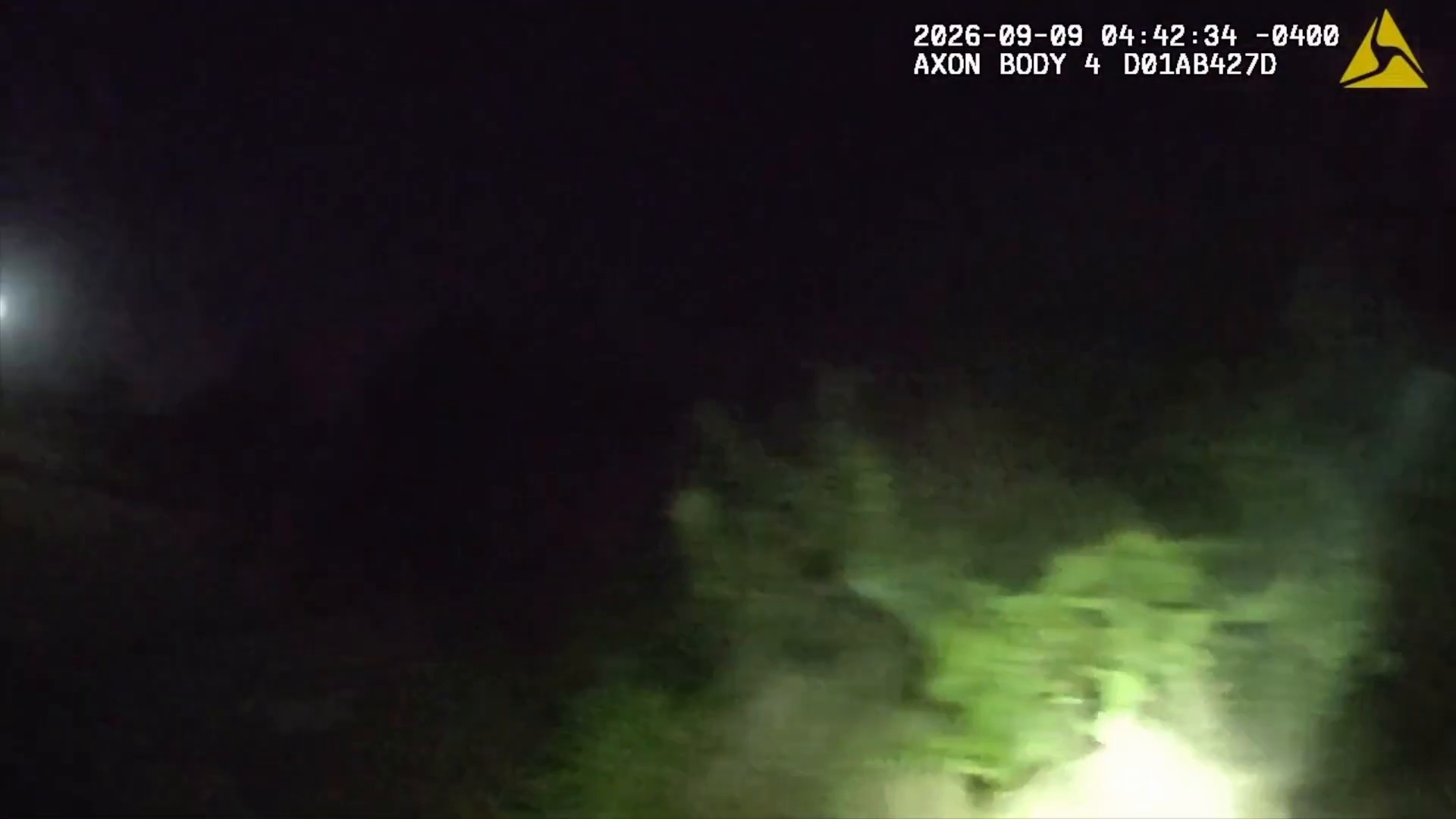
The body-camera footage complements the drone view. From the air, viewers can understand the geography and see how difficult the route is. From the officer's perspective, the vegetation fills the frame and visibility is dramatically reduced. Branches, mud and water interfere with movement, showing why aerial guidance was so valuable.
When officers finally reach the group, they take control of the children and place Kinsey under arrest. The rescue is physically demanding but relatively quick once ground officers make contact. The children are carried out of the swamp and taken for medical evaluation.
Both Children Are Taken to the Hospital
Lakeland Police said both children were transported to Lakeland Regional Health for treatment. They were later released. That outcome is significant considering the rollover crash and what followed in the swamp.
Young children are particularly vulnerable to water exposure, impact injuries and changes in body temperature. A 10-month-old infant cannot protect their airway or navigate deep vegetation independently, while a 2-year-old has limited ability to understand instructions or move safely through difficult terrain. That is why the discovery of empty child seats immediately transformed the officers' response.
Police Chief Sammy Taylor later emphasized how close the incident could have come to a much worse outcome. He credited the responding officers and rapid drone deployment with locating the children in an extremely difficult environment and getting them to medical care.
Police Say the Driver Showed Signs of Impairment
After Kinsey was taken into custody, police said he displayed signs of impairment and admitted that he was intoxicated. Authorities also said he had been driving on a suspended license. Kinsey was treated at Lakeland Regional Health as well.
The crash itself had already created a serious investigation. Police said the vehicle traveled through a road closure and sandbags before entering a construction area. The later discovery of the children and the circumstances of the swamp search added a far more serious dimension to the case.
It is important to describe these points as allegations and police findings rather than as a final judicial determination. An arrest and charging decision do not establish guilt. The criminal case determines whether prosecutors can prove each alleged offense.
Eleven Charges Follow the Rescue
Police said Kinsey faced eight misdemeanor offenses and three felony offenses. Among the felony allegations were two counts of negligent child abuse with great bodily harm. Public booking information also listed DUI-related allegations, leaving the scene of a crash involving injury, driving while license suspended and other crash-related counts.
The number of charges reflects how one event can generate separate legal issues. The alleged impaired driving is one matter. The crash and departure from the scene create additional questions. The decision to move into the swamp with two very young children creates another set of allegations focused on their safety.
Each count still has its own legal elements. Prosecutors must prove those elements in court, and the defense has the opportunity to challenge the state's evidence. The footage is dramatic, but it should not be treated as a substitute for the full criminal process.
Why the Drone Was Crucial
This incident is a clear example of how police drone technology can change a search. Traditional ground teams are constrained by what they can see and how quickly they can move. A drone can scan from above, maintain a view over vegetation and direct officers toward a moving person without requiring every searcher to follow the exact same path.
In this case, time mattered because police did not initially know the children's condition. They had evidence that children might have been in a rollover, but they did not know where those children were. Every minute spent searching the wrong area could have delayed medical care.
The drone also created a record of the search itself. Investigators and the public can see where Kinsey moved, how often he struggled with the terrain and why officers considered the children to be at risk. That visual record helps explain the urgency that might otherwise be difficult to convey in a written police report.
The Difference Between the Viral Headline and the Verified Facts
The original title describes a father running from police with children through an alligator-infested swamp. Several news outlets have referred to Kinsey as the children's father, while at least one police-based local report noted that authorities had not publicly specified his precise relationship to the children. The footage itself cannot prove the family relationship.
For that reason, the rewritten title focuses on what is directly established: police used a drone to track a man carrying two children through a Florida swamp. The location, ages, identity of Kinsey, crash circumstances, drone search and subsequent charges are all supported by police-based reporting.
The same caution applies to alligators. The environment was a Florida swamp where alligators may live, but no verified source establishes that the group encountered one. The danger does not need that additional detail to be compelling.
A Crash Scene Becomes a Missing-Children Search
One of the most striking aspects of the incident is how quickly the nature of the call changes. Officers arrive expecting to deal with a rollover and a driver who has left the vehicle. Then they see two empty child seats.
That discovery creates a series of unanswered questions. Were the children thrown from the vehicle? Had someone else taken them? Were they injured nearby? Had the driver carried them away? The officers cannot safely assume any answer, so the search has to begin immediately.
The drone eventually provides the answer by locating Kinsey with both children. From that moment forward, officers can focus their ground response instead of searching an enormous area without a target.
The Swamp Creates Its Own Hazards
Dense wetland terrain presents risks even for healthy adults carrying no additional weight. Footing can disappear beneath standing water. Vegetation can hide holes, roots and changes in depth. Darkness makes those hazards much harder to anticipate.
Carrying a toddler and an infant makes movement more difficult. A fall that might be minor for an adult can become dangerous when a child is being held. Police said the children were repeatedly submerged as Kinsey fell, and the drone footage shows the difficulty of maintaining balance.
Responding officers then had to enter the same environment. They needed to move quickly enough to reach the children while avoiding injuries that could create another emergency. The aerial operator could help guide them around obstacles and maintain awareness of where the children were located.
What the Body Camera Adds
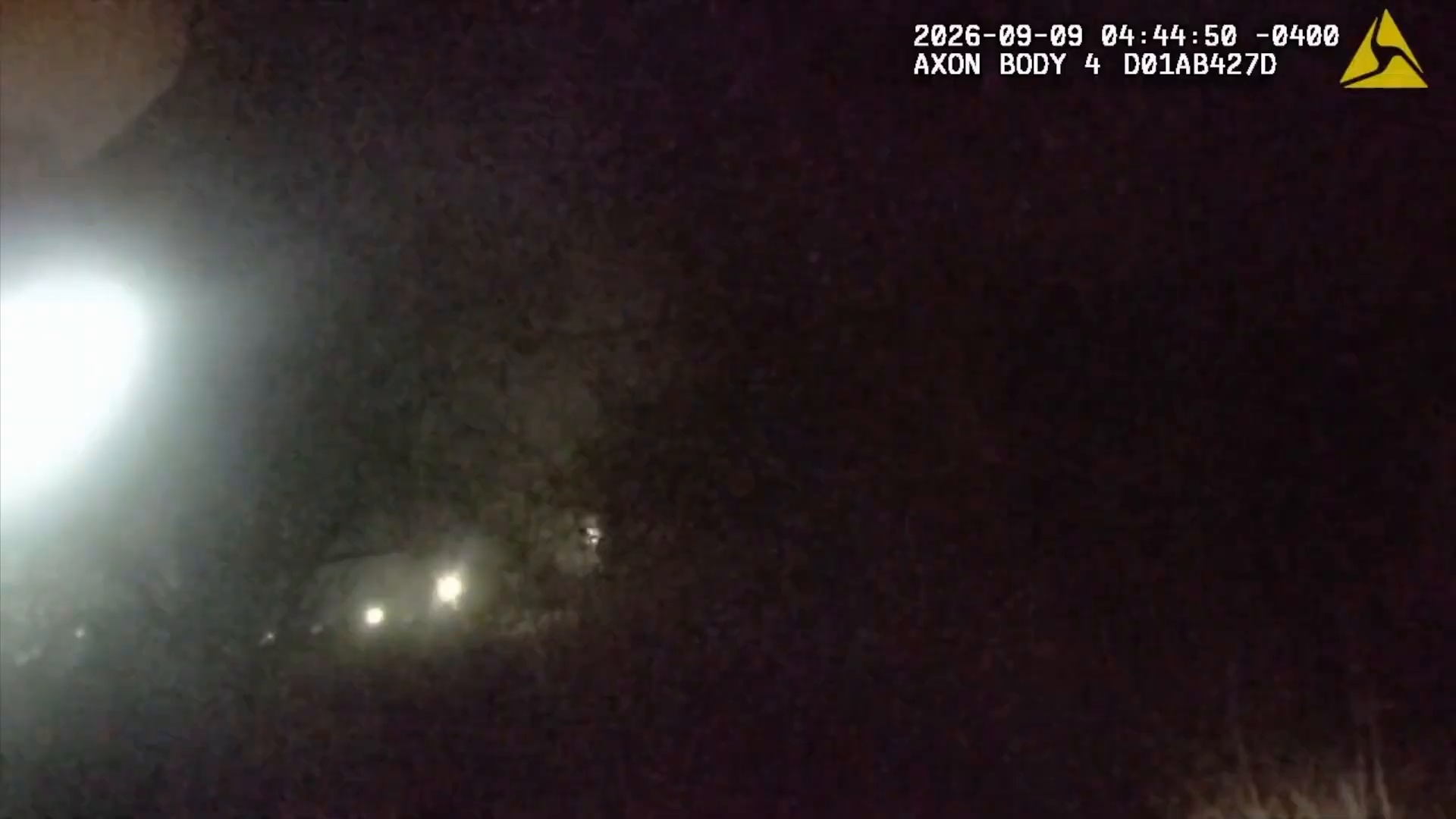
The drone footage is visually dramatic, but the body camera communicates the urgency in a different way. From the ground, officers cannot see the entire swamp. Their field of view is limited to the vegetation and water immediately around them.
The audio captures shouted directions as police try to guide Kinsey toward rescuers and secure the children. It also shows how difficult communication can be when officers are separated by brush and uneven ground.
Together, the drone and body-camera perspectives create a more complete account. The drone establishes position and movement. The body camera captures the physical effort and urgency at ground level.
The Children Survive a Chain of Risks
The two children were exposed to more than one dangerous event. Police said they were inside a vehicle involved in a rollover-type crash. They were then carried away from the crash scene into dark wetland terrain. During that movement, police said they were submerged in water when Kinsey fell.
Despite that sequence, both children survived and were eventually released from the hospital. Their survival is why police officials focused heavily on the effectiveness of the search response when discussing the case publicly.
The incident also illustrates why officers cannot treat empty child seats as an incidental detail at a crash. They can be the first clue that vulnerable passengers are missing and may need immediate medical assistance.
What Happens Next
Kinsey's arrest begins rather than ends the legal process. The charges reported by police are accusations that must move through the court system. Evidence may include crash-scene documentation, body-camera recordings, drone footage, medical records, statements and any chemical or field evidence related to the impairment investigation.
The public footage provides unusually strong visual context for the search and rescue, but it does not answer every legal question. Courts determine the admissibility and weight of evidence, and charging decisions can change as a case develops.
For the officers involved, the incident also becomes a record of how technology and rapid recognition of risk can influence an emergency response. The decision to launch a drone after finding the empty child seats appears to have dramatically shortened the search.
A Rescue Hidden Inside a Police Chase
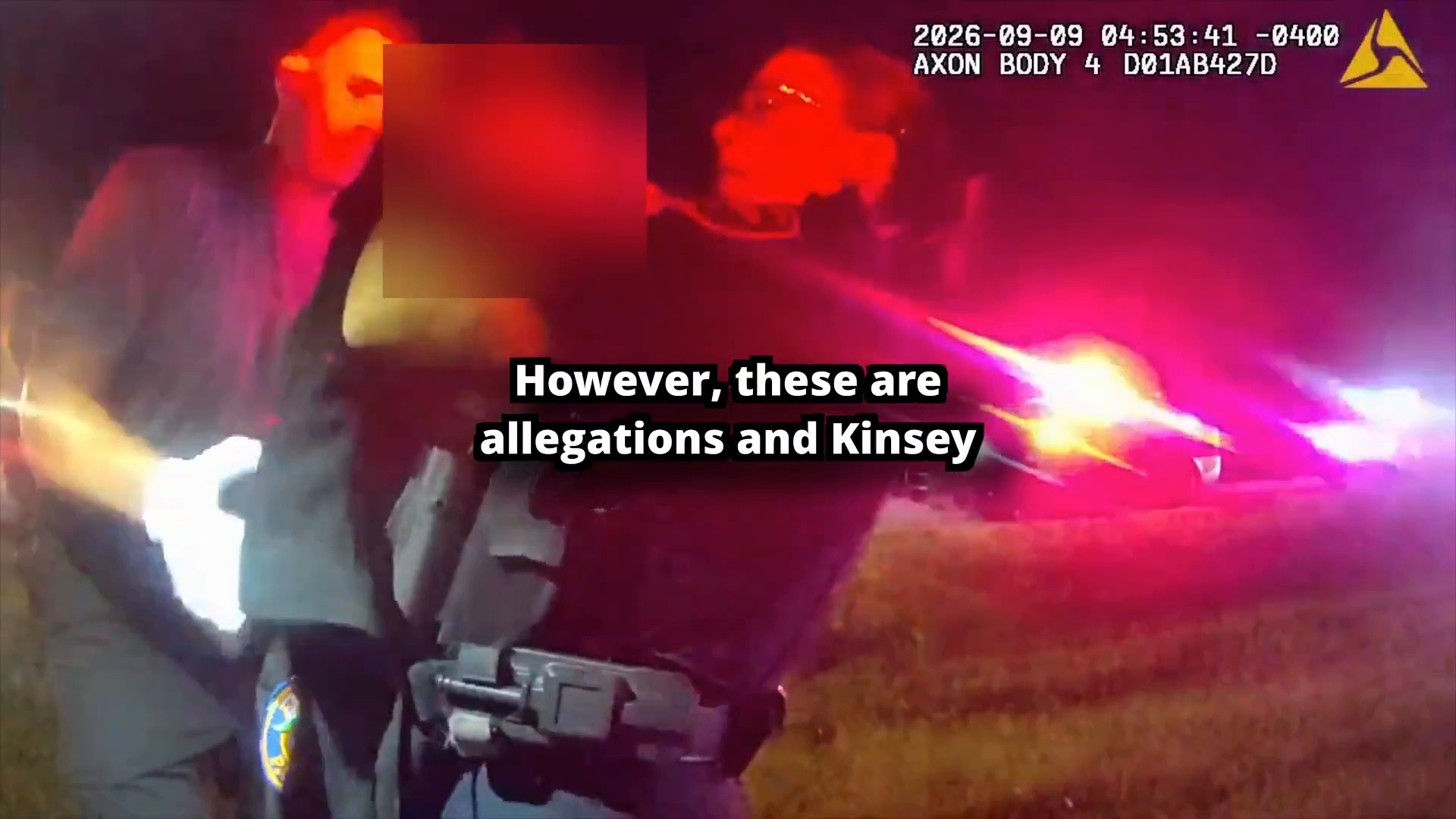
At first glance, the video looks like another story about someone trying to evade police. The more important story is the rescue that develops inside that pursuit. Two children who could not protect themselves were somewhere in a dark, flooded landscape after a serious crash, and officers did not know their location.
The drone found them. Ground officers reached them. Medical personnel evaluated them. Whatever happens in the criminal case, those facts explain why the footage has drawn so much attention.
The aerial images are especially memorable because they reduce the scene to its essentials: tiny human figures surrounded by a huge field of vegetation and water. They make the difficulty of the search immediately understandable.
Watch the Entire Search and Rescue
The aerial clip is dramatic on its own, but the full recording shows the chain of events that made the drone search necessary, from the abandoned crash to the discovery of the children and the officers' difficult movement through the swamp.
Comments (0)
Loading comments...
May You Like

Police Chase Ends as Driver Hits Stoplight, Crashes Into West Towne Mall

Chrysler 300 Gapped Cops at 150+ MPH | Police Dashcam

Traffic Stop Turns Deadly After Man Steps Out of Stolen Car













