
Police Chase Ends With 12 Year Old and 16 Year Old Arrested in Stolen Car
12- AND 16-YEAR-OLD FLEE POLICE IN STOLEN CAR — THEN OFFICERS MAKE A TROUBLING DISCOVERY
A SUSPICIOUS CAR, TWO JUVENILES, AND A NIGHT THAT QUICKLY SPIRALED OUT OF CONTROL
A suspicious vehicle sitting near a Dayton park might have resulted in nothing more than a brief police investigation.
Instead, within minutes, officers were chasing a stolen vehicle through the city at night.
Before the encounter was finished, one suspect would jump from the car and run. Police would say they discovered two firearms on a 12-year-old. The remaining driver would continue fleeing, survive an attempted PIT maneuver, collide with a parked trailer, abandon the still-moving vehicle and disappear into the darkness.
And the person allegedly behind the wheel?
He was only 16 years old.
That combination — a stolen vehicle, two extraordinarily young suspects, weapons and an increasingly unpredictable pursuit — makes the July 26, 2026 encounter in Dayton, Ohio far more complicated than an ordinary police chase.
Local reporting and footage released by Dayton Police provide a detailed timeline of how the encounter developed. WLWT reported that the chase began at approximately 9:30 p.m. after officers encountered a vehicle near Dona Avenue and Broadway Street. Police said the car drove across the grass as officers approached.
It was only the beginning.
WHAT OFFICERS DID NOT YET KNOW WAS THAT THE NIGHT WOULD END WITH TWO CHILDREN IN CUSTODY AND TWO GUNS RECOVERED.
Real image from the supplied Dayton Police footage
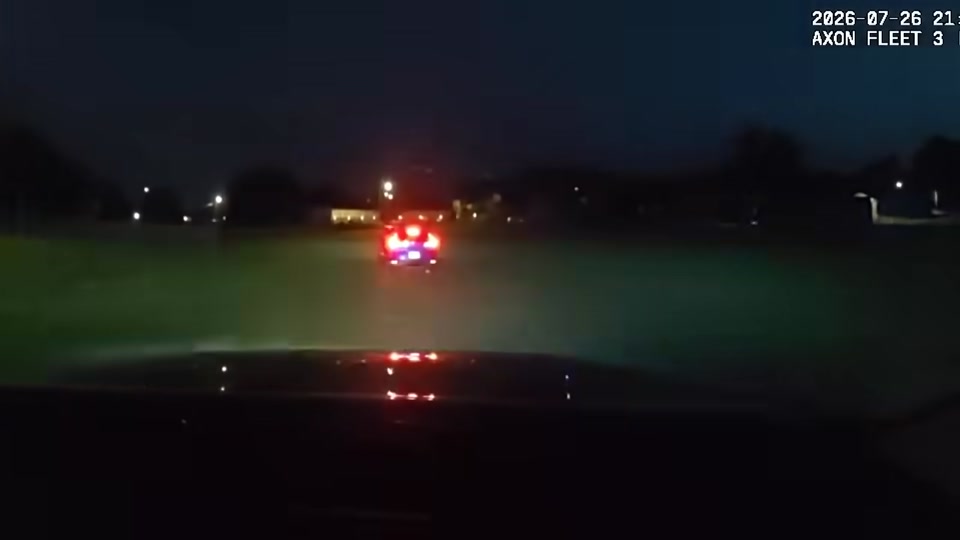
THE ENCOUNTER BEGINS NEAR A DAYTON PARK
According to the police account reported by local media, officers responded to a suspicious-vehicle call at approximately 9:30 p.m. on July 26.
They located a vehicle in a park near Dona Avenue and Broadway Street.
When officers moved closer, however, the vehicle did not remain where it was.
Police said it began driving away across the grass.
That detail matters because the opening seconds of an encounter often determine everything that follows. At this stage, officers were dealing with a suspicious vehicle. But after getting close enough to obtain identifying information, police learned that the vehicle had reportedly been stolen earlier that same night.
The circumstances surrounding the alleged theft made the situation considerably more serious.
According to Dayton Police's account, a victim had been dragged by the moving vehicle during the theft. Authorities said that fact could support a felonious-assault allegation.
Police attempted a traffic stop.
The driver did not stop.
The chase was on.
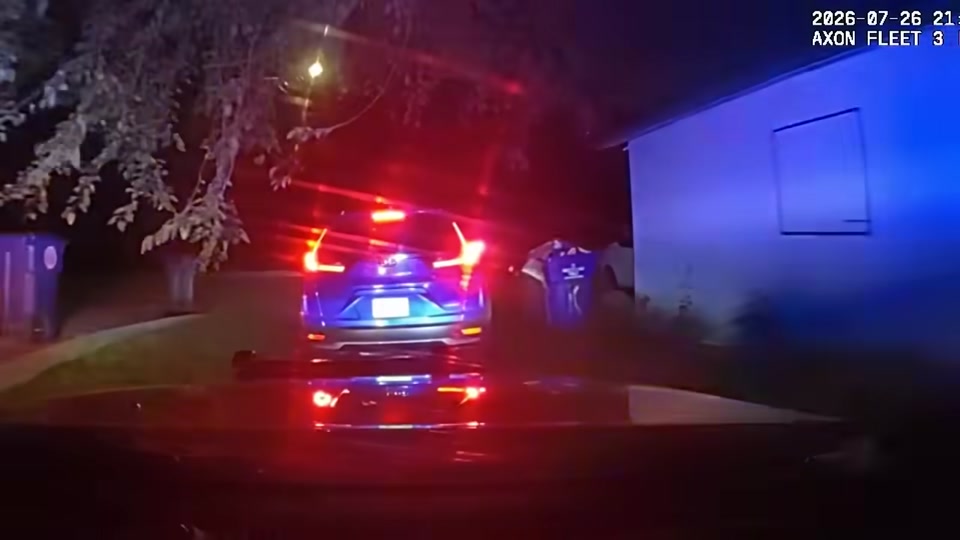
Real image from the pursuit
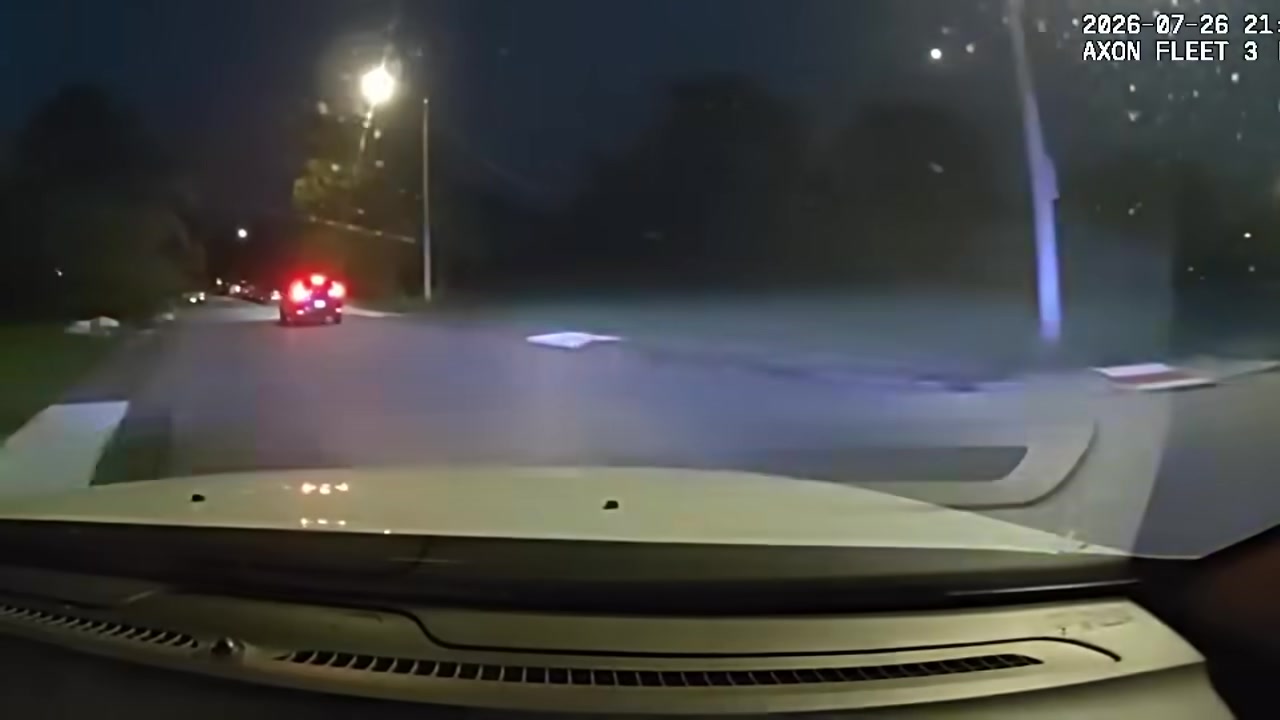
The dashcam footage gives the viewer a much different perspective from a written police summary.
It is dark. Visibility is limited. The fleeing vehicle is often identifiable primarily by its taillights. Police emergency lights illuminate houses, streets and surrounding objects as officers attempt to remain behind it.
That uncertainty is one reason the footage holds attention so effectively.
The viewer knows something is coming.
But it is impossible to know exactly what.
THE CHASE MOVES THROUGH DAYTON
As the pursuit continues, officers have to make decisions with incomplete information.
They know the vehicle is reportedly stolen.
They know the driver is refusing to stop.
And according to the subsequent police account, the vehicle is connected to an incident in which a victim had allegedly been dragged.
What officers cannot necessarily know at that moment is who exactly is inside — or what they may be carrying.
The video captures the police cruiser following the fleeing vehicle through the nighttime streets.
At several moments, the distance between the vehicles changes dramatically. The suspect vehicle disappears around turns and then comes back into view.
There is no controlled traffic stop anymore.
Every intersection introduces another variable.
Every turn creates another opportunity for a collision.
Every additional minute increases the possibility that someone who has nothing to do with the original incident could suddenly become part of it.
Then the pursuit changes.
The fleeing vehicle temporarily stops.
And one of its occupants gets out.
THE 12-YEAR-OLD PASSENGER RUNS
Police said the vehicle briefly stopped near West Stewart Street and Carver Place.
The front-seat passenger exited.
Instead of remaining at the vehicle, the passenger allegedly ran from officers.
An officer pursued him and ultimately made the arrest.
The suspect was just 12 years old.
But his age was not the only surprise.
DAYTON POLICE SAID THE 12-YEAR-OLD WAS FOUND WITH TWO GUNS.
That is the moment that completely changes the way the incident can be understood.
Until that point, someone watching only the chase might reasonably see the incident primarily as another stolen-car pursuit.
The firearm recovery adds another dimension.
Real image from the arrest sequence
According to reporting based on police information, the 12-year-old was accused of:
- carrying a concealed weapon,
- improperly handling a firearm in a motor vehicle,
- resisting arrest, and
- obstructing official business.
Because the suspect is a juvenile, those allegations need to be described carefully. Charges are not convictions, and the publicly available footage does not establish every element of every allegation.
But the reported firearm recovery is still extraordinary.
A police pursuit involving a 12-year-old is already unusual.
A pursuit in which police say that 12-year-old possessed two firearms raises much larger questions about how someone so young gained access to them in the first place.
Yet officers had no opportunity to answer those larger questions that night.
There was still another suspect to catch.
Because while the passenger had been detained, the driver had kept going.
ONE ARREST DOESN'T END THE PURSUIT
This is where the incident develops an unusual two-part structure.
Normally, the occupants leaving a fleeing vehicle can signal that the vehicle portion of a pursuit is over.
Not here.
The passenger exited.
The driver continued.
Police cruisers therefore resumed the pursuit of the remaining suspect.
The video once again moves from close-range police activity back into a nighttime vehicle chase.
Officers eventually attempted to use a Precision Immobilization Technique, or PIT maneuver, to stop the fleeing vehicle.
Police said the maneuver did not immediately end the pursuit.
The vehicle managed to continue.
Real image from the continuing pursuit
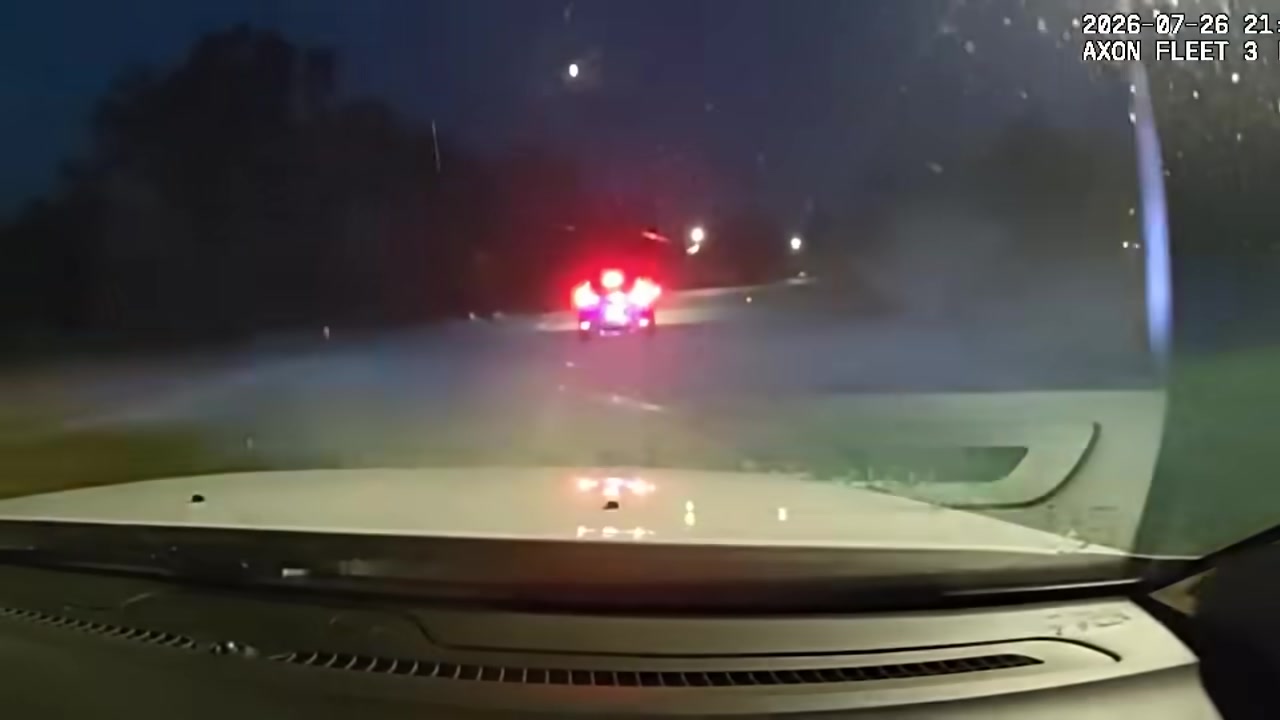
This creates another major escalation point for the story.
The driver has already refused to stop.
A passenger has already fled.
That passenger has allegedly been found carrying firearms.
And now officers have attempted to physically disable the fleeing vehicle — but it is still moving.
The tension comes not simply from speed.
It comes from uncertainty.
HOW DOES THIS END?
The answer arrives shortly afterward.
THE CAR HITS A PARKED TRAILER
According to the police account, the fleeing vehicle eventually struck the trailer of a parked truck.
At that point, the 16-year-old driver got out.
But the vehicle itself did something remarkable.
It continued rolling forward without the driver inside.
Police said it ultimately came to rest on railroad tracks.
Meanwhile, the teenage driver was not waiting beside the vehicle.
He allegedly ran into nearby bushes.
The police operation had transformed yet again.
What began as an investigation of a suspicious vehicle had become a car chase.
Then it became a foot pursuit involving the passenger.
Then another vehicle pursuit.
Now officers were conducting a second search on foot for the driver.
Real image as officers converge during the incident
Police eventually located and arrested the 16-year-old.
Both juveniles were subsequently booked into the Juvenile Justice Center, according to the reporting and Dayton 24/7 Now's description of the released police footage.
For officers, the active pursuit was finally over.
For the two juveniles, the legal process was only beginning.
THE ALLEGATIONS AFTER THE ARREST
The reported allegations against the 16-year-old were considerably broader than those against the younger passenger.
WLWT reported that the teenager was charged with offenses including felonious assault, aggravated robbery, felony theft, failure to comply, hit and run, obstructing official business, resisting arrest, carrying a concealed weapon and improper handling of a firearm in a motor vehicle.
Again, these are charges and allegations rather than findings of guilt.
But the list demonstrates how an incident that might initially appear to be a simple stolen-car chase can involve numerous distinct alleged acts.
The pursuit itself is only one piece.
There is the original alleged vehicle theft.
There is the reported dragging of a victim.
There is the refusal to stop.
There is the passenger's flight.
There is the alleged firearm possession.
There is the attempted PIT.
There is the collision.
There is the driver's flight on foot.
And finally, there are the arrests.
This layered structure is also why the raw police footage is more compelling when accompanied by verified context.
Without the reporting, viewers see a vehicle running from police.
With the reporting, they understand why officers were pursuing it and what authorities said they discovered afterward.
THE MOST UNSETTLING DETAIL ISN'T THE CHASE
Police pursuits are naturally dramatic.
The movement, sirens, emergency lights and unpredictability immediately attract attention.
But once this incident is over, the most striking fact is not how fast the vehicle traveled or how the pursuit ended.
It is the ages.
Twelve and sixteen.
The younger suspect had not even reached his teenage years by much.
Yet police say he was inside a stolen vehicle fleeing officers and was subsequently found with two firearms.
The alleged driver was 16.
Those facts create questions the footage cannot answer.
How did children this young become involved in such a serious incident?
Where did the firearms come from?
Who originally had access to them?
What circumstances preceded the alleged vehicle theft?
Could an earlier intervention have prevented the situation from reaching this point?
Responsible reporting has to recognize the limits of what is known.
The police video documents one night.
It does not document the juveniles' entire lives.
Nor does it establish why they allegedly made the decisions authorities attribute to them.
Real bodycam image from later in the encounter
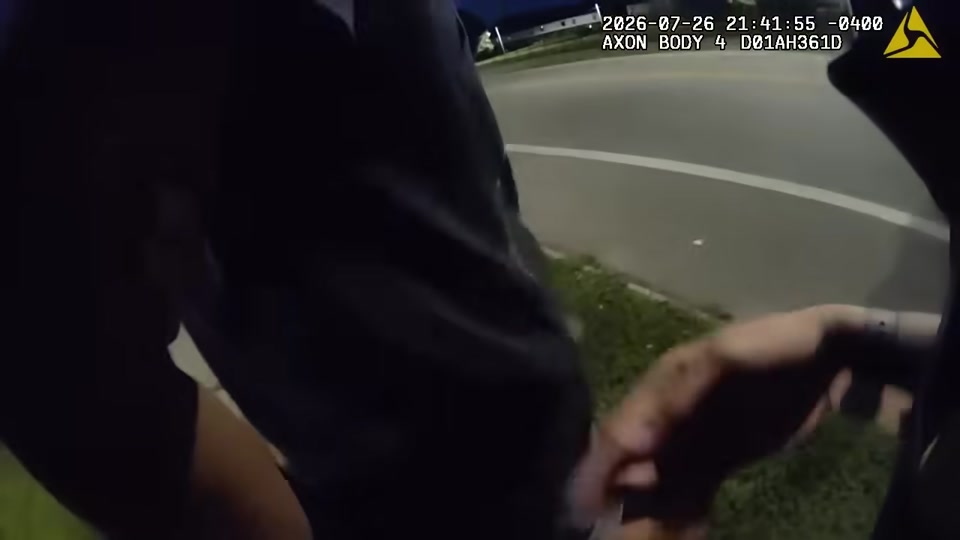 That distinction matters.
Bodycam and dashcam footage can create the impression that viewers are seeing everything.
They aren't.
They are seeing what happened within the camera's field of view during a particular period of time.
Context comes from combining that footage with police information, court proceedings and independent reporting.
And even then, unanswered questions remain.
WHAT THE FOOTAGE SHOWS ABOUT THE REALITY OF POLICE PURSUITS
There is another reason this video is valuable.
It demonstrates how quickly the nature of a police encounter can change.
Officers begin by approaching a suspicious vehicle.
Seconds later, it is moving.
Then officers learn it is allegedly stolen.
A traffic stop becomes a pursuit.
A pursuit becomes a foot chase.
A child is arrested.
Weapons are reportedly recovered.
The remaining driver keeps going.
Police attempt a PIT.
The vehicle crashes.
The driver runs.
Another search begins.
All of those transitions require officers to reassess what is happening.
The priorities can change within seconds.
During the chase, officers need to follow the vehicle while remaining aware of traffic and surrounding hazards.
Once someone exits, they have to decide how to handle the fleeing individual without losing awareness of the vehicle.
Once firearms enter the picture, the risk assessment changes again.
Once the driver abandons the vehicle, the focus shifts from pursuit driving to locating a person on foot.
Real image from the final police contact
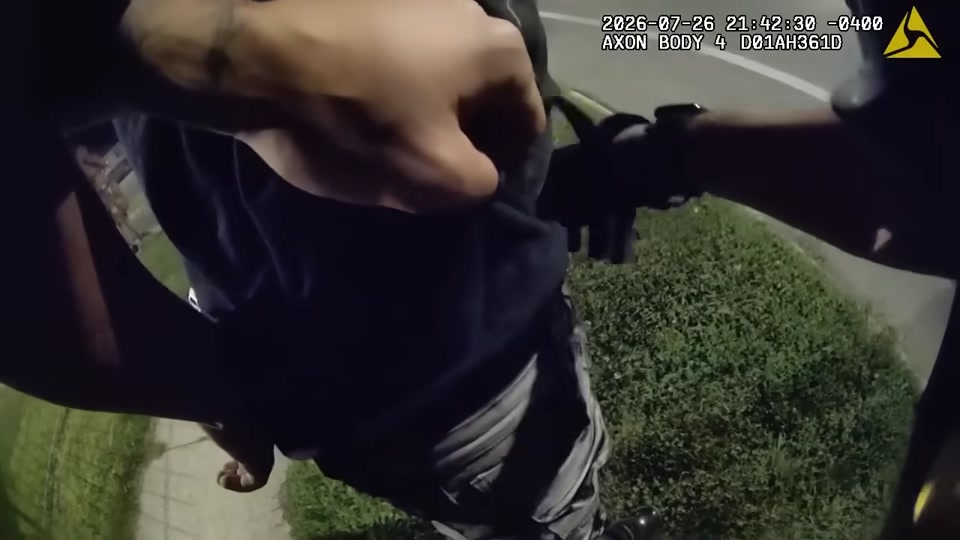
This is what a written description often fails to communicate.
A police incident is rarely experienced as a clean sequence of numbered events.
Officers do not receive the complete story beforehand.
They experience each development as it happens.
Viewers, by contrast, usually watch knowing the title and outcome.
That difference is important when evaluating police footage.
THE PURSUIT ENDS, BUT THE BIGGER QUESTIONS REMAIN
Eventually, both juveniles were in custody.
The stolen vehicle had been recovered.
The immediate danger had ended.
No further pursuit was necessary.
But that does not make the ending simple.
The ages of the suspects transform the case from merely another dramatic chase into a troubling example of juveniles allegedly becoming involved in serious criminal conduct.
The reported presence of firearms makes that concern even harder to ignore.
At the same time, their ages demand precision when discussing what happened.
They are juveniles.
The charges reported by police remain allegations unless established through the legal process.
That is why the strongest version of this story does not need exaggerated language.
The verified facts are striking enough.
A 12-YEAR-OLD AND A 16-YEAR-OLD WERE ARRESTED AFTER A STOLEN-VEHICLE PURSUIT. POLICE SAID THE 12-YEAR-OLD HAD TWO GUNS. THE DRIVER ALLEGEDLY CONTINUED FLEEING AFTER HIS PASSENGER RAN, SURVIVED AN ATTEMPT TO STOP THE VEHICLE, CRASHED AND THEN FLED ON FOOT.
Those facts explain why the footage attracted attention after Dayton Police released it.
They also leave a far more important question than who “won” the pursuit:
How did two children reach this situation in the first place?
That answer cannot be found in seven minutes of police video.
But the footage shows the consequences with remarkable clarity.
WATCH THE FULL INCIDENT UNFOLD
The dashcam and bodycam footage captures something a written timeline cannot: how rapidly the situation changes.
One moment officers are following a vehicle across an open area.
The next they are chasing a juvenile on foot.
Then another suspect is still driving away.
Minutes later, police are searching through darkness to bring the second chase to an end.
Watch the complete footage to see how the initial suspicious-vehicle encounter developed into a stolen-car pursuit, two separate attempts to flee and the arrests of two remarkably young suspects.
Click here to watch the full incident unfold — from the first encounter to the pursuit, foot chases and final arrests: https://www.youtube.com/watch?v=kFxqcvmMtGE
Comments (0)
Loading comments...
May You Like

Woman Tries to Stop Police From Arresting “Brother” — He Denies Knowing Her

Police Chase Ends as Driver Hits Stoplight, Crashes Into West Towne Mall

Traffic Stop Turns Deadly After Man Steps Out of Stolen Car













