
Police Catch Bank Thief Hiding in Garbage Can
ATM Theft Attempt Unravels as Police Find Suspect Hiding in a Garbage Can
At about 3:30 on a cold January morning in Las Cruces, New Mexico, a witness saw something that immediately looked wrong outside a downtown bank. Men were working around an ATM, vehicles were positioned nearby, and the machine was being violently attacked. The witness called 911. By the time patrol officers arrived, the attempted theft was collapsing into a series of foot chases, searches and arrests that would leave an ATM badly damaged and several young Texas men facing serious allegations.
The incident occurred on January 22, 2022, at the Sunflower Bank ATM on North Water Street. Contemporary reporting from the Las Cruces Sun-News identified three men charged after the attempted theft: Jacobei Deion Townsend of Humble, Eric Jamaile Adams of Houston and Victor Michael Charles of Katy. Police said the ATM contained more than $50,000.
The supplied body-camera compilation matches those reports in date and circumstances. Its AXON overlays show January 22, 2022, and the footage follows officers as they search the nighttime streets, detain suspects and investigate the damaged ATM scene. One of the most memorable moments comes when police discover a man concealed inside a garbage container, turning what began as an ambitious attempt to tear open a cash machine into an almost surreal arrest scene.
Yet the unusual hiding place is only the most visually memorable part of a larger story. Police alleged that a stolen vehicle was involved, that suspects tried to use vehicles to pull apart the ATM, and that the men scattered when officers arrived. The case also connects to a broader pattern of so-called “hook-and-chain” ATM attacks in which stolen trucks are used as tools to rip open machines or their enclosures.
Years later, one of the men named in the Las Cruces case, Jacobei Townsend, would appear in federal court in a separate prosecution involving a multi-state series of hook-and-chain bank thefts from 2020. In May 2026, federal prosecutors announced that Townsend had been sentenced to four years in federal prison after pleading guilty to conspiracy to commit bank theft in that earlier spree. That later conviction should not be confused with the January 2022 New Mexico charges, but it provides important context for the method investigators were confronting.
A Witness Spots an ATM Theft in Progress
The Las Cruces case began because someone nearby noticed the activity and called police. According to reporting based on a police affidavit, patrol officers were notified of an ATM theft in progress during the early hours of January 22.
The caller reported seeing three men trying to rip the Sunflower Bank ATM from the ground using a truck and another vehicle. That information gave responding officers something far more specific than a generic alarm. Police knew they were potentially approaching an active property crime involving multiple people and vehicles.
ATM attacks of this type can unfold extremely quickly. The goal is often not to defeat the machine's electronic security or pick apart the safe slowly. Instead, thieves use brute force. A stolen pickup or heavy-duty truck can be connected to part of the ATM with chains or straps. The vehicle then accelerates, attempting to tear doors, panels or the entire machine from its mounting.
The method is crude, noisy and destructive, but speed is the advantage. If the machine can be breached before officers arrive, suspects may be able to remove cash and leave within minutes.
That strategy also creates obvious vulnerabilities. The noise attracts attention. Vehicles can be identified. The damaged ATM leaves extensive physical evidence. And if police arrive while the attempt is still underway, the suspects may have little time to disappear.
Police Arrive Before the Job Is Finished
When Las Cruces officers reached the area, police said two men were actively prying at the ATM while another was nearby. The machine had been heavily damaged, but the attempt had not produced the clean escape the group apparently expected.
The footage shows the urgency of the response. Officers move through dark streets and parking areas illuminated by headlights, emergency lights and nearby businesses. Radio traffic helps coordinate positions as police try to determine where the fleeing people have gone.
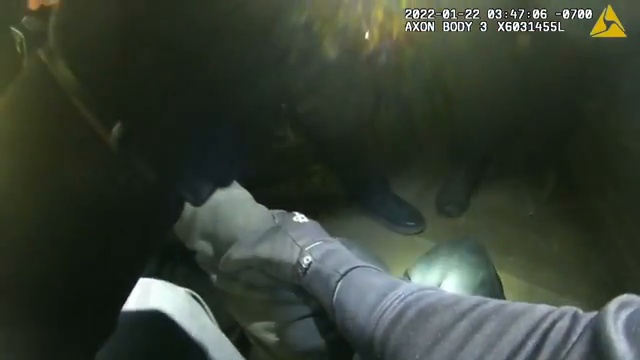
This is the stage at which an ATM burglary can rapidly become a wider police operation. Officers must secure the damaged bank property while simultaneously pursuing people who may be moving through alleys, parking lots or residential areas. Vehicles believed to have been used in the offense also need to be located and preserved as evidence.
Police cannot assume that everyone has fled in the same direction. Multiple suspects can split up intentionally, forcing officers to divide attention across a larger area.
That appears to be what happened in Las Cruces. The attempted theft quickly became a search for several individuals.
A Brief Foot Chase Leads to the First Arrests
The Las Cruces Sun-News reported that Townsend, then 20, and Adams, then 22, were among the men police said were working on the ATM. Charles, then 21, was allegedly nearby.
All three were arrested after what the newspaper described as a brief foot chase.
The body-camera compilation adds texture to that short description. Officers can be seen moving between locations, dealing with detainees and coordinating as additional people are located. The nighttime environment makes the search more difficult because shadows, parked vehicles and landscaping provide places to conceal movement.
Running also changes the nature of a police encounter. A suspect who remains at the scene can be identified and questioned. Once someone flees, officers must decide where that person is likely to go, whether a perimeter is needed and whether the individual may be hiding nearby.
That last possibility produced the most unusual discovery of the night.
One Search Ends at a Garbage Can
At one point in the footage, officers focus on a large garbage container. What might ordinarily be ignored as part of the background becomes a potential hiding place.
The sequence is memorable because it demonstrates the basic problem faced by someone trying to hide after fleeing police: concealment has to work against officers who already know a suspect is nearby.
A garbage can can block a person from casual view, especially at night. But it offers almost no escape route once police begin checking containers and enclosed spaces. Movement, breathing, displaced lids or information from other officers can quickly narrow the search.
The supplied video title emphasizes this moment, and understandably so. A complicated ATM theft involving vehicles, tools and multiple participants ends for one person in an ordinary trash container.
But the humor viewers may find in the hiding place should not obscure the seriousness of the allegations. Police were investigating extensive damage to a bank ATM that reportedly held more than $50,000, as well as the alleged use of a stolen vehicle.
The ATM Held More Than $50,000
According to the Las Cruces Sun-News, the Sunflower Bank ATM contained more than $50,000 when the group allegedly tried to break it open.
That amount matters because theft charges often depend partly on the value of property taken or targeted. New Mexico authorities initially accused the men of offenses that included larceny over $20,000 and criminal damage to property.
Police also alleged conspiracy, resisting arrest and unlawful taking of a motor vehicle. Those were accusations at the arrest stage, not findings of guilt, and a responsible account must keep that distinction clear.
The physical damage visible around an attacked ATM can be substantial even if no cash is successfully removed. Machines contain reinforced compartments, electronics, card readers and structural mounting systems. Pulling them apart with a vehicle can damage the bank building, surrounding concrete and any vehicle used in the attempt.
That means an unsuccessful theft can still create a very expensive crime scene.
Investigators Say a Stolen Vehicle Was Part of the Plan
The arrest allegations included unlawful taking of a motor vehicle and conspiracy to commit that offense. The presence of vehicle-theft allegations fits the broader mechanics of hook-and-chain ATM attacks.
Using a stolen truck provides two advantages to thieves. First, a heavy vehicle supplies the force needed to rip open reinforced equipment. Second, abandoning a stolen vehicle after the burglary can make it more difficult to trace the perpetrators through ownership records.
But stolen vehicles also generate additional investigative trails. Police can trace where the truck was taken, review surveillance from that location, recover fingerprints or DNA and examine license-plate-reader records showing its movement.
In other words, stealing a vehicle to facilitate an ATM theft may solve one problem for the offenders while creating several new forms of evidence for investigators.
Physical Evidence Strengthens the Case
The Sun-News reported that police said prints recovered at the scene matched Townsend, Adams and Charles. Investigators also said Townsend and Adams appeared on ATM security-camera footage.
Those allegations are important because they go beyond simple proximity. Being found near a crime scene does not automatically prove participation in the crime. Investigators normally look for evidence connecting an individual to the specific acts under investigation.
Fingerprints, surveillance video and the circumstances of an arrest can provide separate pieces of that connection.
Charles reportedly told police that he was not connected to the ATM theft and said he was in Las Cruces visiting his girlfriend. Townsend and Adams declined interviews at the scene, according to the affidavit account reported by the newspaper.
The competing positions would ultimately be matters for the court process rather than something body-camera footage alone could resolve.
The Camera Records the Human Side of a Chaotic Arrest
Police reports tend to compress an incident into a few sentences: officers arrived, suspects fled, arrests were made. Body-camera footage shows how much activity can sit behind those words.
Officers have to search, issue commands, handcuff detainees, determine identities, communicate with dispatch and transport people while other officers remain at the primary crime scene.
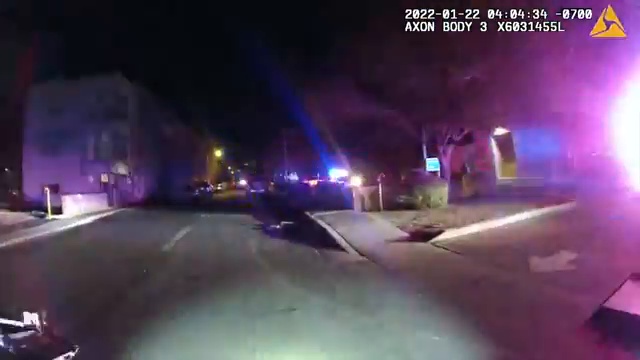
The video also preserves mundane moments after the adrenaline subsides. Suspects ask questions. Officers discuss where people were found. Patrol cars move between scenes. The investigation becomes less cinematic and more procedural.
Those quieter sections are useful because they show that an arrest is not the end of police work. Once everyone is detained, officers still need to determine who did what, document evidence and establish whether additional suspects remain outstanding.
The Charges Were Serious, but They Were Still Allegations
Contemporary reporting said Townsend, Adams and Charles faced allegations including larceny over $20,000, criminal damage to property, conspiracy to commit larceny, resisting arrest, unlawful taking of a motor vehicle and conspiracy to commit unlawful taking of a motor vehicle.
The Real World Police publication of the footage described additional suspected counts and firearm-related enhancements associated with the broader arrest record. Because charging documents can change and different defendants can face different counts, this article does not treat a video description as proof of final convictions.
At the time the Las Cruces Sun-News published its January 24 report, the three men were being held without bond and were expected to appear before a judge.
The difference between arrest allegations and a final disposition is essential. Police need probable cause to make an arrest. Prosecutors then decide which charges to pursue. Defendants may challenge evidence, enter pleas or proceed to trial. Some counts may be dismissed or amended.
A viral video normally captures only the first stage of that process.
Why ATM “Hook-and-Chain” Thefts Became a Multi-State Problem
The technique seen in cases like this is not unique to New Mexico. Federal prosecutors have described organized “hook-and-chain” burglary crews operating across state lines.
The basic method is consistent: steal a powerful truck, attach chains or hooks to an ATM or its enclosure, use the truck's torque to tear open the structure and remove the cash before police arrive.
The speed of the attack can make smaller banks and standalone ATMs attractive targets. A crew does not need to defeat sophisticated software if it can physically destroy the housing around the money.
But law enforcement has adapted as well. Surveillance cameras, automatic license-plate readers, cellphone evidence, fingerprints and travel records can connect incidents that initially appear isolated.
A group that moves between states may believe geographic distance makes the crimes harder to link. In practice, repeating a distinctive method can create a pattern investigators recognize.
Jacobei Townsend Later Appeared in a Federal Hook-and-Chain Case
A major later development adds context to the Las Cruces story.
In May 2026, the U.S. Attorney's Office for the Eastern District of Texas announced that Jacobei Townsend, then 24, had been sentenced to 48 months in federal prison after pleading guilty to conspiracy to commit bank theft.
The federal case concerned a separate series of ATM burglaries committed from August to September 2020, before the Las Cruces incident. Prosecutors said the spree involved financial institutions in Texas and Arizona, including banks in Prosper, Texas.
According to the Justice Department, the group used stolen trucks with hooks and chains to drag doors off ATMs and retrieve cash.
This later federal conviction should not be presented as the outcome of the January 2022 Las Cruces prosecution. They are separate matters. However, the federal case establishes that Townsend later admitted involvement in an earlier multi-state conspiracy using the same general style of ATM attack.
That distinction is important both legally and journalistically. Similarity can provide context, but it cannot substitute for proof in a separate criminal case.
The Federal Investigation Looked Back to 2020
The 2026 Justice Department announcement said Townsend participated in a crime spree that targeted multiple financial institutions during August and September 2020.
Federal prosecutors described stolen trucks being fitted with hooks and chains and then used to rip ATM doors open. The targeted institutions included Independent Bank on North Prosper Road and Texas Bank on South Preston Road in Prosper.
Townsend pleaded guilty to conspiracy to commit bank theft, and U.S. District Judge Sean D. Jordan sentenced him to four years in federal prison on May 26, 2026.
The federal prosecution demonstrates how ATM cases can take years to develop. Investigators may combine evidence from multiple jurisdictions, identify common participants and eventually bring a conspiracy case that covers a broader pattern than any single local arrest.
The Las Cruces Incident Shows Why Witnesses Matter
Technology played a major role in the investigation, but the case began with a person noticing suspicious activity.
The 911 caller reportedly saw the men attempting to tear the ATM from the ground and alerted police while the crime was still underway.
That timing may have made the difference between an investigation that began with an empty parking lot and one in which officers arrived while suspects were still nearby.
Surveillance video is excellent at documenting what already happened. A witness who calls during the event can change what happens next.
Officers reached the scene quickly enough to encounter the alleged participants, and the resulting foot chases ended in arrests rather than a long search for unknown suspects.
Why the Garbage-Can Moment Became the Video's Defining Image
The title “Police Catch Bank Thief Hiding in Garbage Can” reduces a complicated investigation to one unforgettable image.
That is how online video works. Viewers remember the surprising moment more easily than the legal details surrounding it.
A man hiding in a trash container creates an immediate visual contradiction. The alleged plan involved vehicles, a heavily reinforced ATM and tens of thousands of dollars. The escape ends in one of the least sophisticated hiding places imaginable.
Yet that contrast is exactly why the clip holds attention. The scale of the attempted crime and the simplicity of the failed concealment do not seem to belong in the same story.
For a long-form account, however, the garbage can works best as a turning point rather than the entire narrative. The real story includes the witness call, the damaged ATM, the vehicles, the foot pursuits, the forensic evidence and the charges that followed.
A Fast Crime Produces a Long Evidence Trail
ATM attacks are designed around speed, but speed does not necessarily mean anonymity.
The suspects may spend only minutes at the machine, yet every stage can leave evidence.
A stolen truck creates a theft report and a location where it was taken. Driving it through a city may trigger traffic cameras or license-plate readers. Arriving at the bank creates surveillance footage. Touching tools, doors and the ATM can leave prints or DNA. Fleeing on foot can lead officers toward discarded clothing or equipment.
If suspects travel from another state, airline, hotel, rental-car or cellphone records can potentially add another layer.
Investigators do not need every piece of evidence to be perfect. They build cases by combining independent facts that point in the same direction.
The Las Cruces affidavit, as summarized by local reporting, illustrates that approach through surveillance images and fingerprint evidence.
The Difference Between Getting the Cash and Getting Away
Property crimes often focus on the first objective: obtain the money.
But successful escape is a separate problem.
An ATM containing more than $50,000 is attractive because of the amount of cash concentrated in one place. At the same time, the machine is fixed to a highly monitored location. Banks use cameras. ATMs maintain transaction and security logs. Parking areas may be covered from multiple angles.
Even if thieves breach the machine, they still need to transport the cash, abandon incriminating vehicles and leave the area without attracting police attention.
In Las Cruces, the plan appears to have broken down before that stage. Police arrived while the attempt was still active, and the participants allegedly scattered.
Once officers were searching nearby, hiding became a temporary solution at best.
What the Video Can and Cannot Tell Us
The supplied footage is valuable because its date matches the January 22 incident and because it visually documents the police response and arrests. It also contains the garbage-can sequence highlighted in the Real World Police publication.
But video does not automatically answer every legal question.
Body cameras show what was in front of individual officers. They do not necessarily show the complete ATM attack, every participant's actions or all forensic evidence collected later.
That is why the footage must be paired with reporting based on the police affidavit and, where available, later court records.
The strongest version of the story is therefore not “the video proves everything.” It is that the video and documented reporting reinforce different parts of the same incident.
From a $50,000 ATM to a Failed Escape
The sequence began with an ambitious target.
Police said the Sunflower Bank ATM held more than $50,000. A witness saw men attempting to tear the machine apart using vehicles and called 911.
Officers arrived while the operation was still unfolding.
The suspects ran.
Police chased them through the dark streets and searched nearby hiding places. One of the night's most memorable arrests came when officers discovered a person concealed in a garbage container.
Townsend, Adams and Charles were identified in contemporary reporting as the three Texas men charged in connection with the attempted theft. Police said fingerprints connected them to the scene and that ATM surveillance showed Townsend and Adams.
The incident demonstrates the central weakness of a brute-force ATM attack: it can be fast, but it is difficult to make quiet. The destruction needed to reach the cash attracts attention, and the vehicles required to create that destruction can leave an extensive trail.
A Later Federal Case Adds a Broader Context
Four years after the Las Cruces arrests, federal prosecutors announced a significant development involving Townsend.
On May 26, 2026, he was sentenced to four years in federal prison after pleading guilty to conspiracy to commit bank theft in a separate 2020 hook-and-chain burglary spree.
Federal authorities said that earlier operation involved multiple financial institutions in Texas and Arizona and relied on stolen trucks, hooks and chains to tear open ATMs.
The later conviction does not establish the outcome of every allegation from Las Cruces. But it shows why law enforcement increasingly treats these crimes as potentially connected operations rather than isolated acts of vandalism.
A damaged ATM in one city can be part of a pattern extending hundreds of miles and involving repeated vehicle thefts, common tactics and overlapping participants.
An Elaborate Plan Ends in an Ordinary Container
The most striking contrast remains the simplest one.
The alleged plan required a bank ATM, vehicles powerful enough to damage it, tools, coordination among several people and a rapid escape.
Police said more than $50,000 was inside the machine.
Yet when officers arrived, the sophisticated part of the plan was over. The night became a foot search.
And for one person, that search ended at a garbage can.
It is the kind of moment that makes a police video memorable, but the verified background makes it more meaningful. The footage is not merely an amusing failed hiding attempt. It is the aftermath of a serious ATM theft investigation involving extensive property damage, alleged vehicle theft and multiple felony accusations.
The camera captures the collapse of the escape. The reporting explains what led to it.
Watch the Full Incident
The garbage-can arrest is only one part of the nearly 24-minute body-camera compilation. The full footage follows the initial response, searches, foot pursuits, arrests, witness interaction and the officers' efforts to account for the people involved after the Sunflower Bank ATM attack.
Comments (0)
Loading comments...
May You Like

Stolen Charger Flees Police During Highway Traffic Stop

COP SLAMS INTO PULLED OVER TRUCK

Cop thinks sandwich is phone













