Police Car Theft Turns Into a WRECK Within Seconds Later
WOMAN STEALS A DEPUTY’S PATROL SUV — MINUTES LATER, THE CHASE ENDS IN TRAGEDY
It began with a call that did not sound extraordinary.
A Marion County deputy was dispatched to a shopping plaza in Silver Springs, Florida, on the afternoon of February 1, 2024. A woman had reportedly been acting suspiciously and attempting to take an elderly woman's car keys.
The deputy arrived expecting to investigate the complaint.
Instead, within seconds, his own patrol SUV was disappearing from the parking lot.
The woman — later identified as 33-year-old Kendra Dalyn Boone — climbed through the open passenger-side window, moved into the driver's seat and accelerated away as the deputy desperately tried to stop her.
According to authorities, just 16 seconds separated the deputy getting out of the SUV and Boone driving away in it.
What followed was a pursuit reaching speeds above 100 mph, multiple U-turns, an attempt to pass traffic on the shoulder and finally a devastating head-on collision.
By the time the pursuit ended, three people were dead.
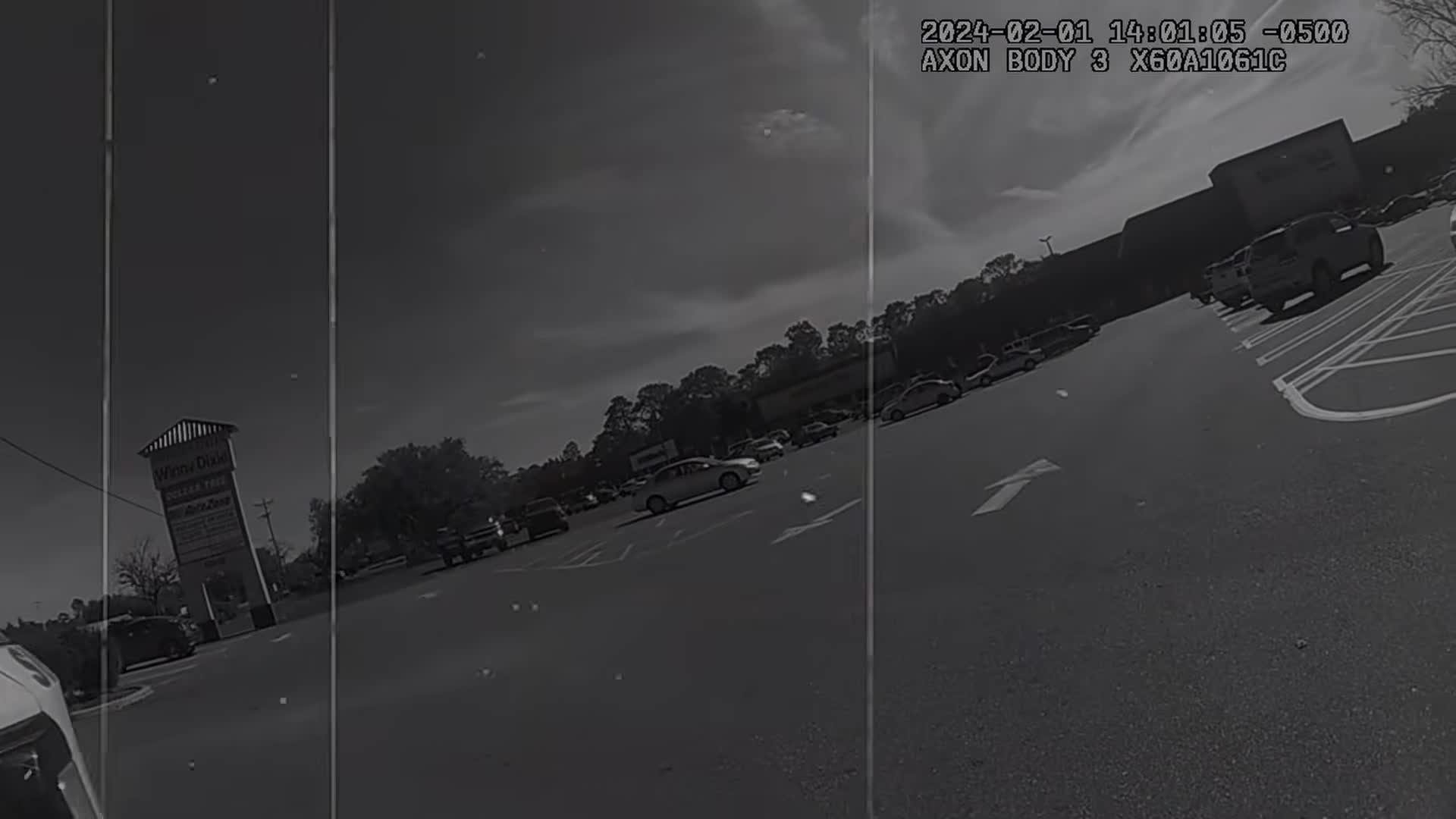
A SUSPICIOUS-PERSON CALL CHANGES ALMOST IMMEDIATELY
Deputies had been called to the Forest Plaza area along East Highway 40 after reports involving Boone and an elderly motorist.
Authorities said Boone had allegedly attempted to take the woman's keys and gain access to her vehicle. FOX 35 reported that a worker at a nearby business also described seeing Boone trying to enter other vehicles.
When the first deputy arrived, Boone approached his patrol SUV.
At that moment, he did not yet know exactly which person at the shopping center was the reported suspect.
He spoke with Boone and instructed her to move toward the rear of his vehicle so they could talk.
It looked like the beginning of an ordinary police contact.
Then the deputy stepped out.
Boone saw an opportunity.
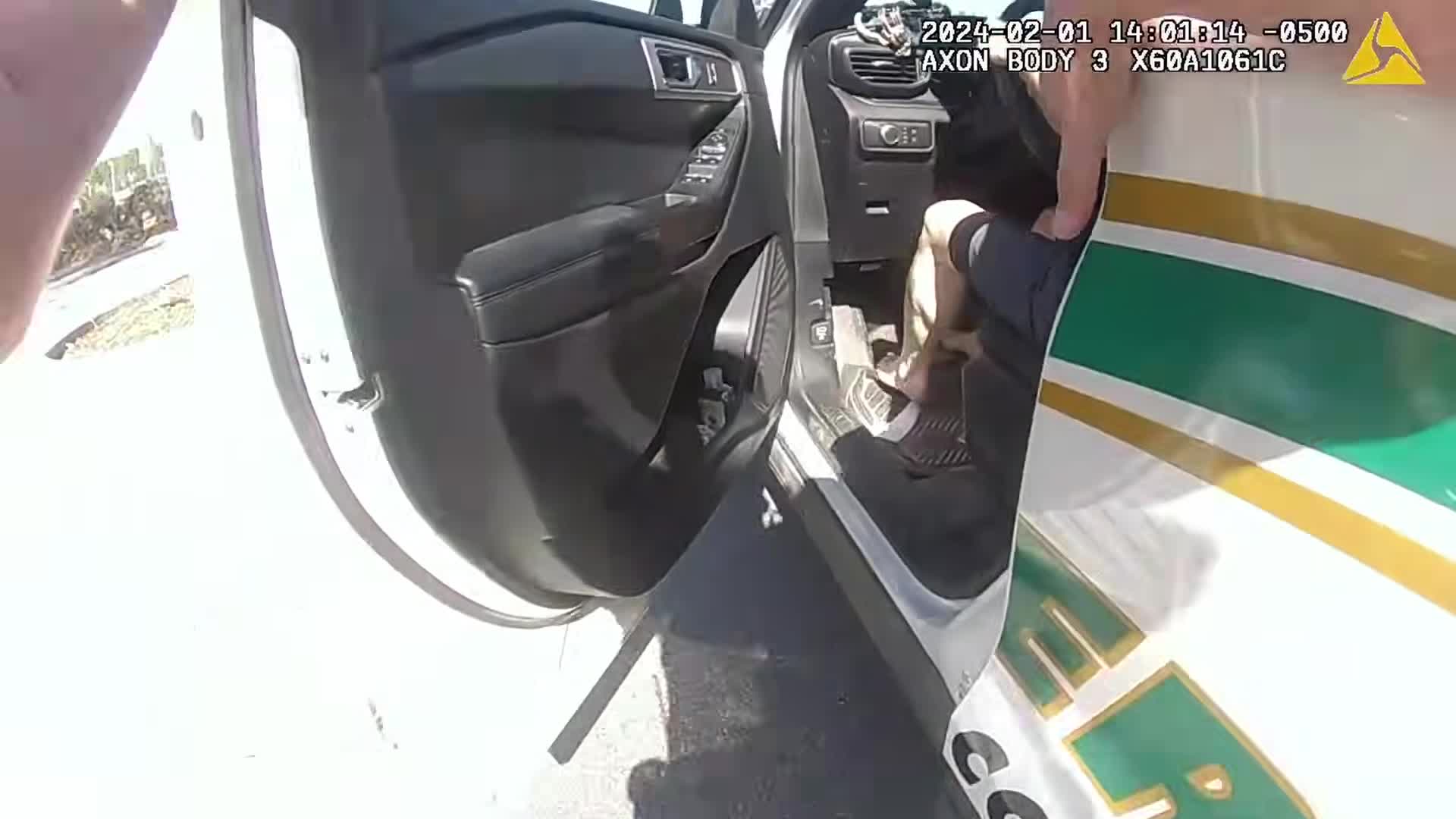
Instead of walking behind the SUV as instructed, she went through the open passenger-side window.
Within seconds, she was inside.
The deputy immediately realized what was happening and rushed toward the driver's side.
Bodycam captures him trying to pull Boone out.
He repeatedly orders her to stop.
But Boone manages to accelerate away.
A CALL ABOUT AN ATTEMPTED VEHICLE THEFT HAD JUST TURNED INTO THE THEFT OF A MARKED SHERIFF'S VEHICLE.
Marion County Sheriff Billy Woods later strongly defended the responding deputy.
Questions were raised about why the patrol vehicle had been running, but Woods emphasized how rapidly Boone acted and said the same situation could have caught even a highly experienced officer by surprise.
The sheriff pointed specifically to the few seconds visible in the bodycam footage.
There was also another immediate concern.
Authorities said a long gun was inside the patrol vehicle.
Once Boone escaped with the SUV, deputies therefore were not simply dealing with a stolen vehicle.
They had an uncontrolled person operating a marked police vehicle with access to police equipment while moving onto public roads.
THE PURSUIT MOVES ONTO STATE ROAD 40
Another deputy arrived as Boone escaped and began pursuing the stolen SUV.
The chase continued eastbound along East Highway 40.
Authorities said Boone traveled several miles before making a U-turn near a weigh station west of Highway 19.
Deputies attempted to get ahead of her.
Stop sticks were prepared.
But Boone changed direction again.
She accelerated away.
According to the Marion County Sheriff's Office, her speed climbed well above 100 mph.
The circumstances created an unusually dangerous pursuit.
To other motorists, the vehicle Boone was driving looked exactly like what it was:
a marked sheriff's patrol SUV.
Drivers encountering emergency lights normally assume the person behind the wheel is law enforcement.
Sheriff Woods specifically raised this concern afterward, arguing that Boone's possession of the vehicle itself created a threat to the public.
The pursuit continued.
At times, the pursuing deputy lost sight of Boone entirely because of her speed and erratic driving.
Deputies tried to anticipate where she was heading.
But Boone continued changing direction.
What had begun in a shopping plaza was now moving at highway speeds.
MORE THAN 100 MPH — AND STILL ACCELERATING
High-speed pursuits become increasingly unforgiving as speed rises.
At 100 mph, a vehicle covers approximately 147 feet every second.
A driver has dramatically less time to react to traffic, curves, intersections or unexpected movements.
A minor steering correction can become catastrophic.
And Boone was driving an unfamiliar law-enforcement SUV while trying to escape.
Authorities said she continued driving erratically as the pursuit moved along Highway 40.
The chase itself was only several miles long.
But the risk increased with almost every mile.
Deputies were attempting to stop her.
Traffic continued moving in both directions.
Large trucks occupied the highway.
Then, near the 26700 block of East Highway 40, the pursuit reached its final moments.
Boone came up behind a semi-truck.
Instead of slowing down, authorities said she drove onto the right shoulder in an attempt to pass it.
That decision changed everything.
ONE MANEUVER SENDS THE SUV INTO ONCOMING TRAFFIC
Boone passed along the shoulder at high speed.
Then she attempted to return to the roadway.
According to investigators, she lost control.
The stolen patrol SUV crossed into the opposite lane.
A 2016 GMC pickup truck was coming from the other direction.
There was almost no room left to avoid impact.
The vehicles collided head-on.
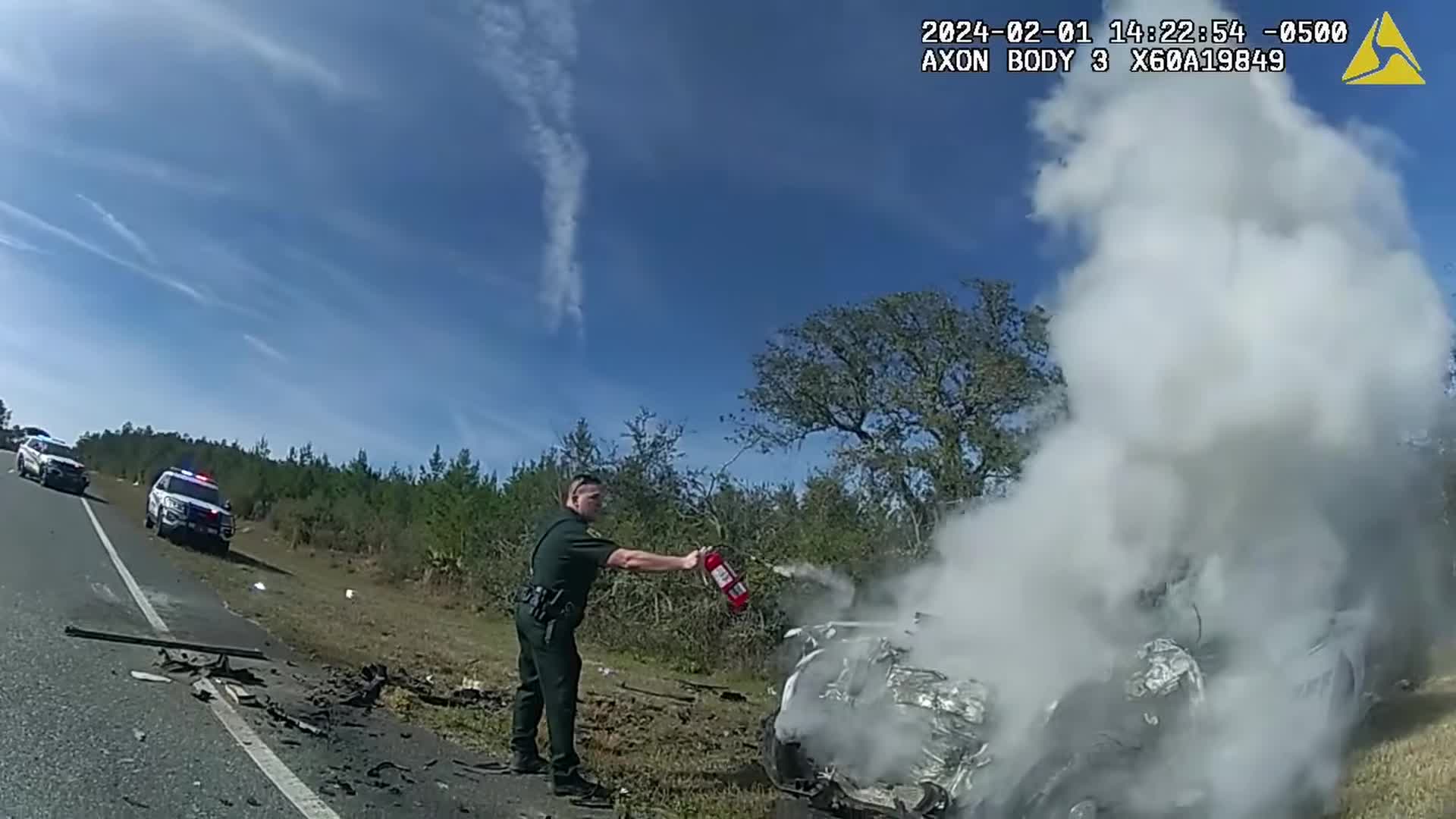
The bodycam footage changes instantly.
The pursuit is over.
Sirens and movement give way to wreckage.
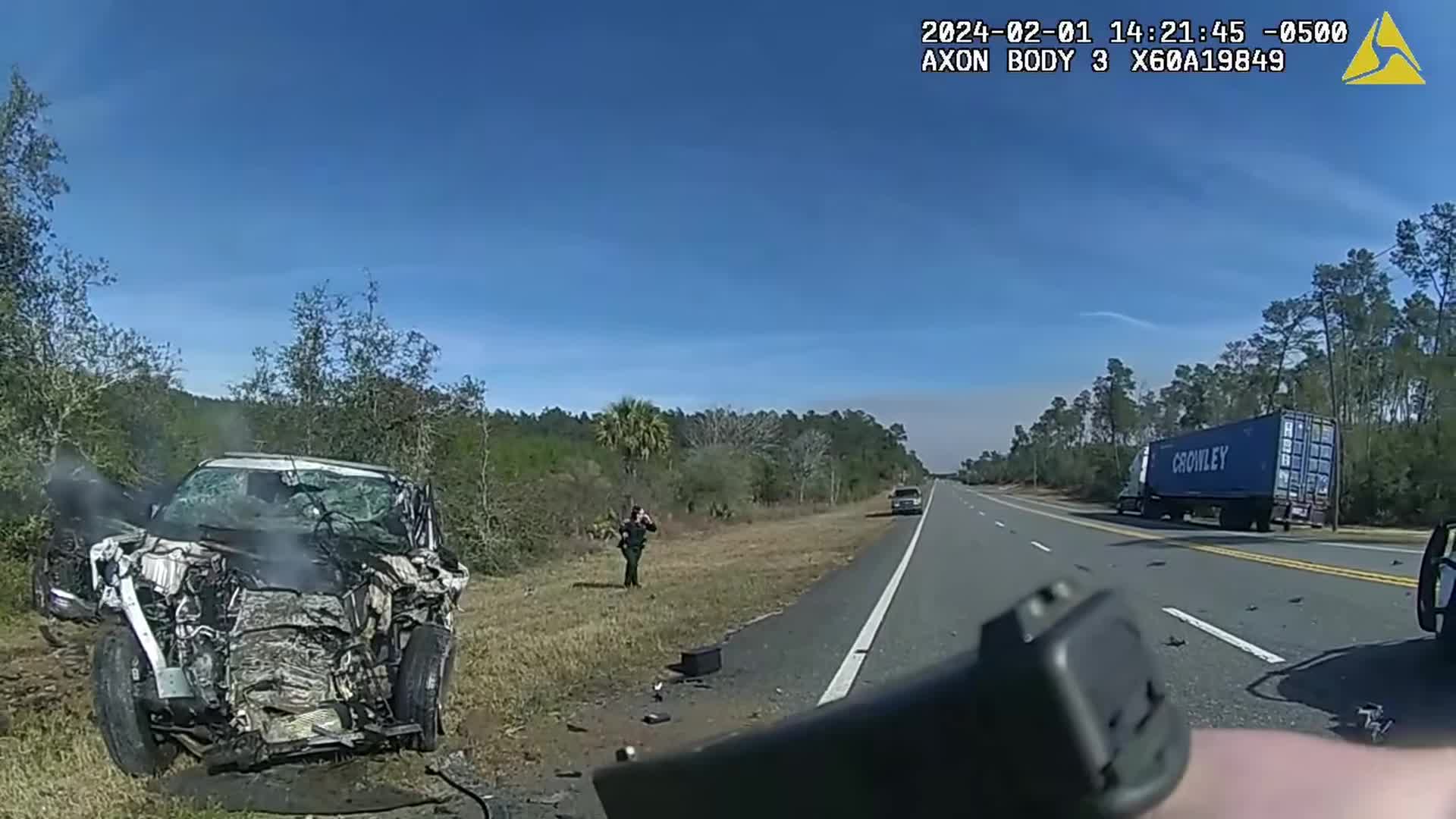
The patrol SUV is almost unrecognizable.
Large pieces of the vehicle have been torn apart.
Debris covers the roadway and shoulder.
Responding deputies immediately switch roles.
Seconds earlier, they were pursuing a fleeing driver.
Now they are confronting a mass-casualty crash.
THE PRIORITY IS NO LONGER CAPTURE. IT IS RESCUE.
THE STOLEN PATROL SUV IS DESTROYED
The severity of the impact is difficult to understand until the bodycam reaches the wreckage.
The sheriff's vehicle has suffered catastrophic damage.
Large sections of its body have been crushed or torn away.
Mechanical components are exposed.
Debris surrounds the vehicle.
Responders move around the wreck with extinguishers and emergency equipment.
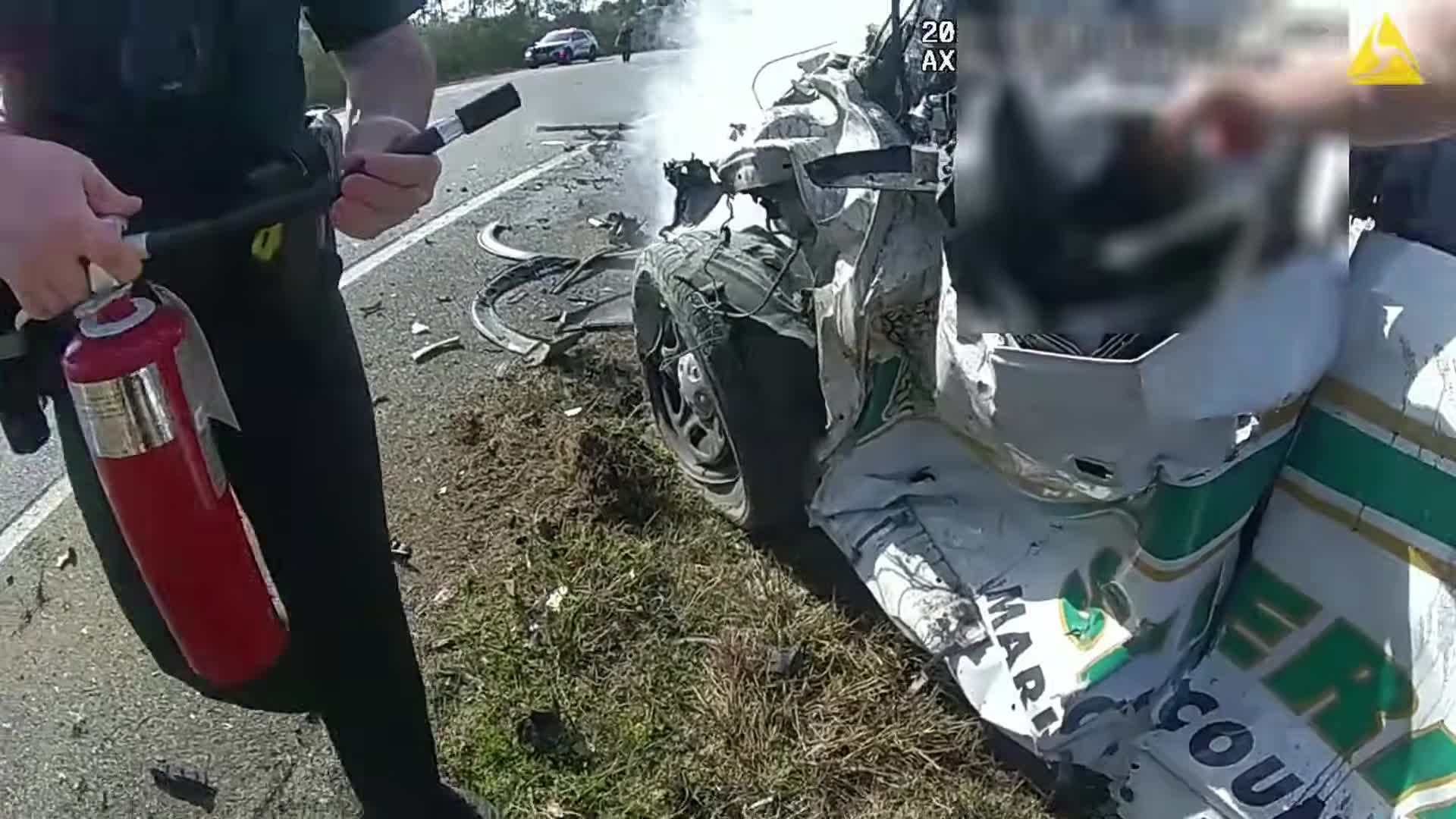
This is the frame I selected for the thumbnail because it immediately communicates the consequence of the pursuit without needing exaggerated text or an AI-generated image.
The vehicle Boone stole only minutes earlier is now almost completely destroyed.
The GMC pickup suffered devastating damage as well.
Inside were three people.
According to authorities, Boone and two occupants of the pickup were pronounced dead at the scene. A third occupant of the truck was transported to a hospital in critical condition.
Local reporting described the two people killed in the pickup as being in their 70s and from South Carolina.
They had not been part of the original police call.
They had not been involved in the theft.
They were simply traveling along the highway when the stolen patrol SUV entered their lane.
That fact transforms the incident from a bizarre stolen-police-car story into something much more serious.
THE PEOPLE IN THE PICKUP HAD NOTHING TO DO WITH THE CHASE
Police pursuit videos often focus heavily on the person fleeing.
The driver's actions dominate the footage.
The pursuing officers dominate the audio.
The speed creates the excitement.
But the consequences are frequently experienced by people who had no connection to the original incident.
That is exactly what happened here.
The occupants of the GMC pickup had no role in Boone's encounter with police.
They had no control over her decision to enter the patrol SUV.
They had no control over the pursuit.
And they had no meaningful opportunity to avoid a sheriff's vehicle suddenly crossing into their lane at extreme speed.
Two of them died.
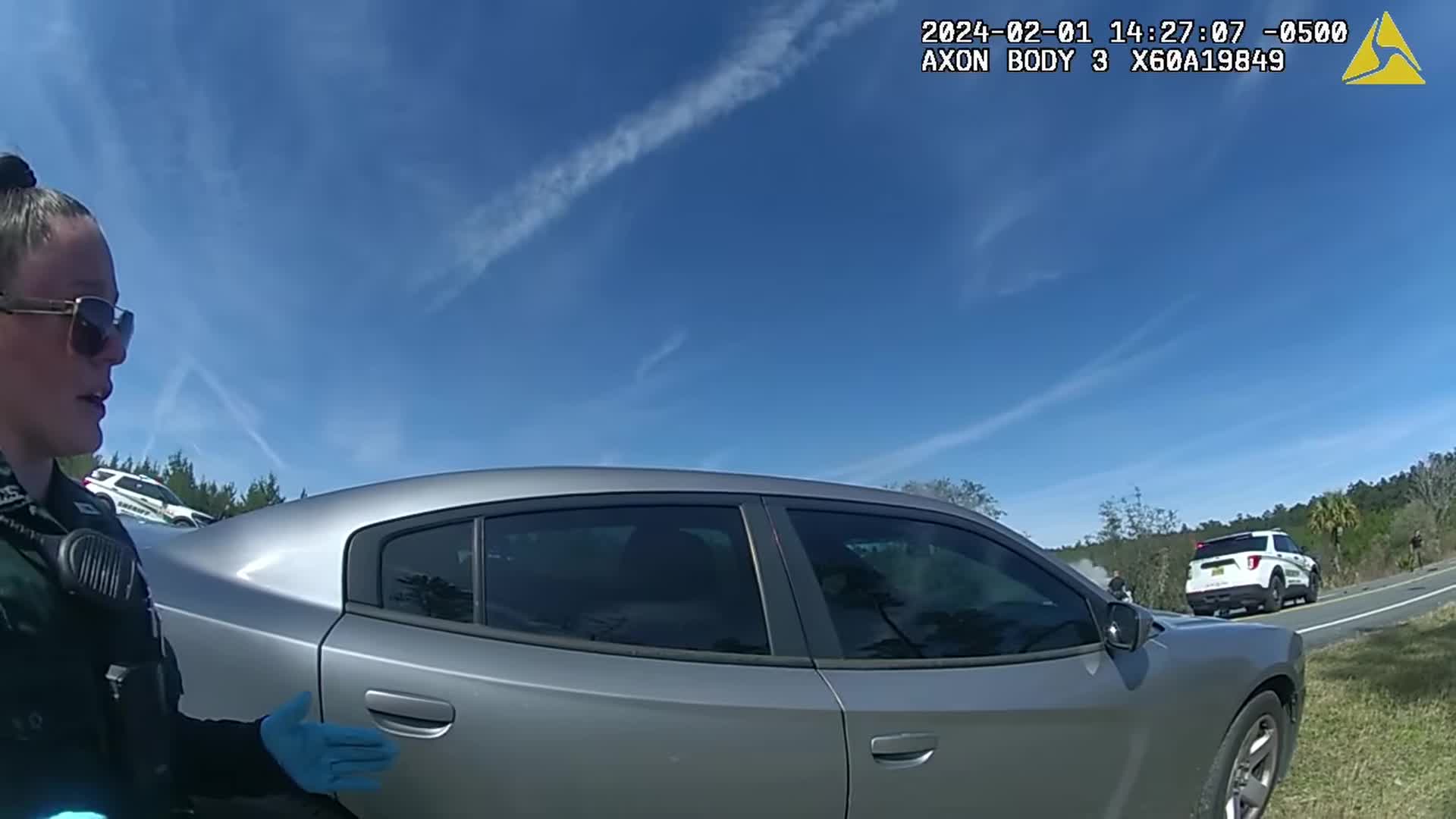
That is why the most important part of the footage comes after the chase.
The destroyed vehicles remove any sense that this was simply a dramatic escape attempt.
There are firefighters.
Deputies.
Medical responders.
Scattered debris.
A highway turned into a fatal crash scene.
Every piece of that scene exists because of decisions made only minutes earlier.
WHY DID DEPUTIES PURSUE?
After a fatal pursuit, one question almost always follows:
Should police have continued chasing?
Sheriff Woods addressed that issue directly.
His position was that Boone became an immediate threat after stealing the patrol SUV.
The vehicle contained law-enforcement equipment and a firearm, and members of the public could reasonably mistake the marked SUV for an actual deputy's vehicle.
That created a situation different from an ordinary stolen civilian car.
Allowing the vehicle to disappear would not necessarily have eliminated the danger.
At the same time, high-speed pursuits themselves carry obvious risks.
This incident demonstrates exactly why pursuit decisions are among the most difficult judgment calls in policing.
Stopping the fleeing driver may protect the public.
Pursuing that driver at extreme speed can also expose the public to danger.
There is rarely a simple answer available in real time.
Here, deputies attempted stop-stick deployment while Boone repeatedly changed direction. The pursuing deputy also lost visual contact with her on multiple occasions, according to the sheriff's account.
The fatal collision ultimately occurred as Boone attempted to pass the semi on the shoulder.
JUST 16 SECONDS CHANGED EVERYTHING
One detail from this case stands above almost everything else:
16 seconds.
That is approximately how long authorities said it took from the deputy opening his door to Boone driving away with his patrol vehicle.
Sixteen seconds is barely enough time to understand that something unexpected is happening.
Yet within that window, the entire incident changed direction.
The deputy arrived to investigate a suspicious-person call.
He instructed Boone where to stand.
He stepped from his SUV.
She entered through the passenger window.
He recognized what was happening.
He attempted to remove her.
She accelerated away.
The next several minutes were shaped by those seconds.
This is precisely what bodycam footage reveals better than a written summary.
A police report might reduce the sequence to one sentence:
The suspect entered the patrol vehicle and fled.
The video shows how unbelievably quickly it happened.
THE INVESTIGATION CONTINUED AFTER THE ROAD REOPENED
The Florida Highway Patrol took responsibility for investigating the fatal collision.
For crash investigators, the work after an incident like this involves much more than examining the final point of impact.
They can analyze vehicle damage, roadway evidence, speed information, witness accounts, pursuit footage and the sequence leading to the collision.
The bodycam and law-enforcement recordings also preserve critical evidence.
They document the original contact.
They show how Boone entered the patrol vehicle.
They capture the deputy's immediate reaction.
They preserve portions of the pursuit and its aftermath.
Together, those recordings create a timeline that would have been much harder to reconstruct decades ago.
THE BODYCAM CHANGES HOW THE STORY IS UNDERSTOOD
Without video, the headline itself sounds almost unbelievable:
Woman steals deputy's patrol SUV and causes fatal crash.
It would be easy to imagine a long struggle.
Perhaps the deputy was distracted for several minutes.
Perhaps the suspect somehow found an unattended patrol vehicle.
The bodycam shows something much different.
The opportunity lasts only seconds.
Boone moves suddenly.
The deputy reacts almost immediately.
He tries to pull her from the driver's seat.
And she manages to escape anyway.
That is why Sheriff Woods repeatedly defended the deputy when discussing the case publicly.
Whether viewers agree with every decision made afterward, the footage provides valuable context for the initial theft.
It shows rather than merely tells.
THE FINAL IMAGES ARE COMPLETELY DIFFERENT FROM THE FIRST
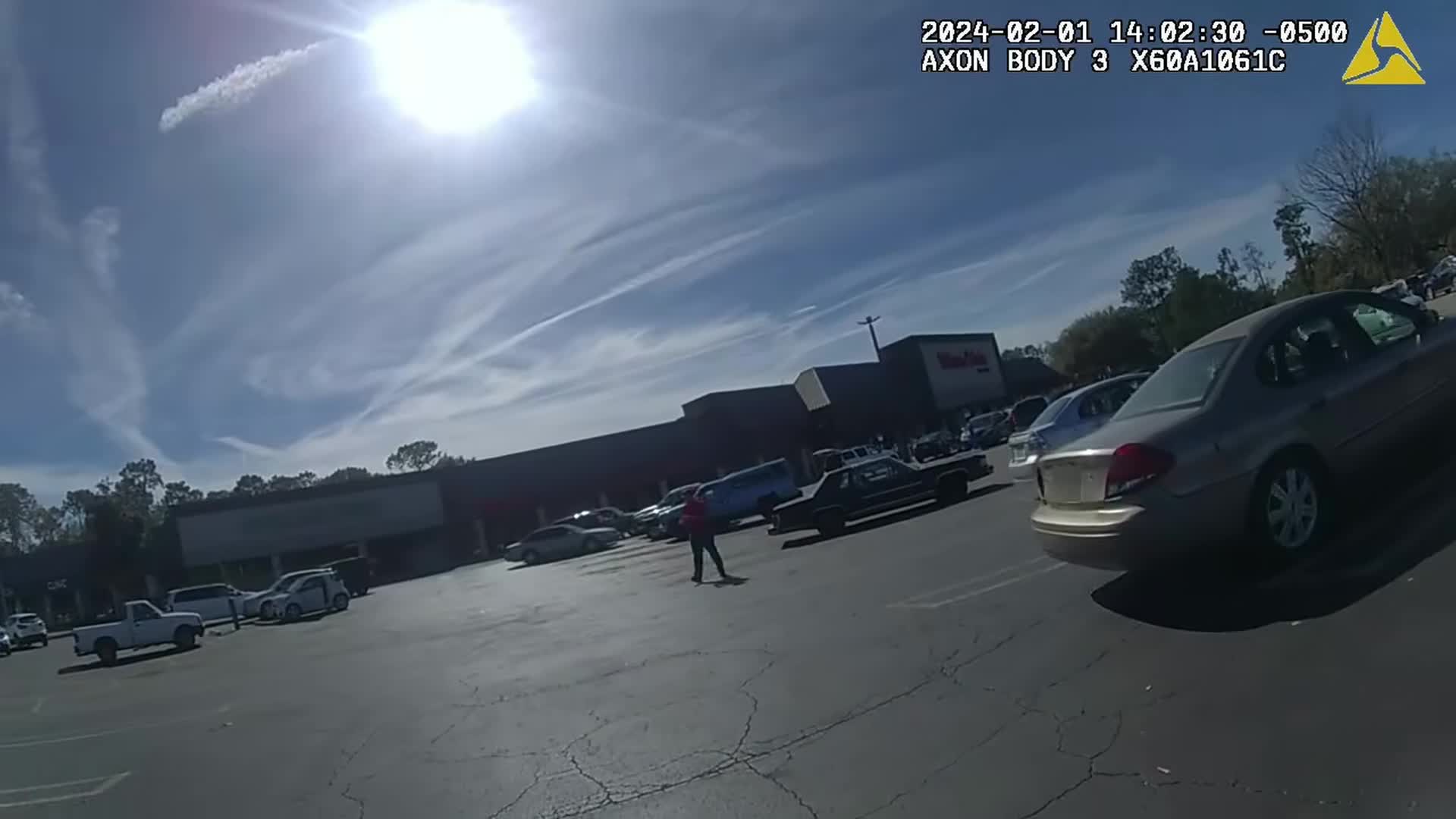
At the beginning of the video, the scene is mundane.
A shopping plaza.
A patrol SUV.
A deputy speaking with a woman.
Traffic moving nearby.
Nothing about the first moments suggests that three people will soon be dead.
Less than an hour later — and only minutes after the theft itself — the visual world has completely changed.
The sheriff's SUV is destroyed.
A pickup truck has been hit head-on.
First responders surround the wreckage.
The highway is covered in debris.
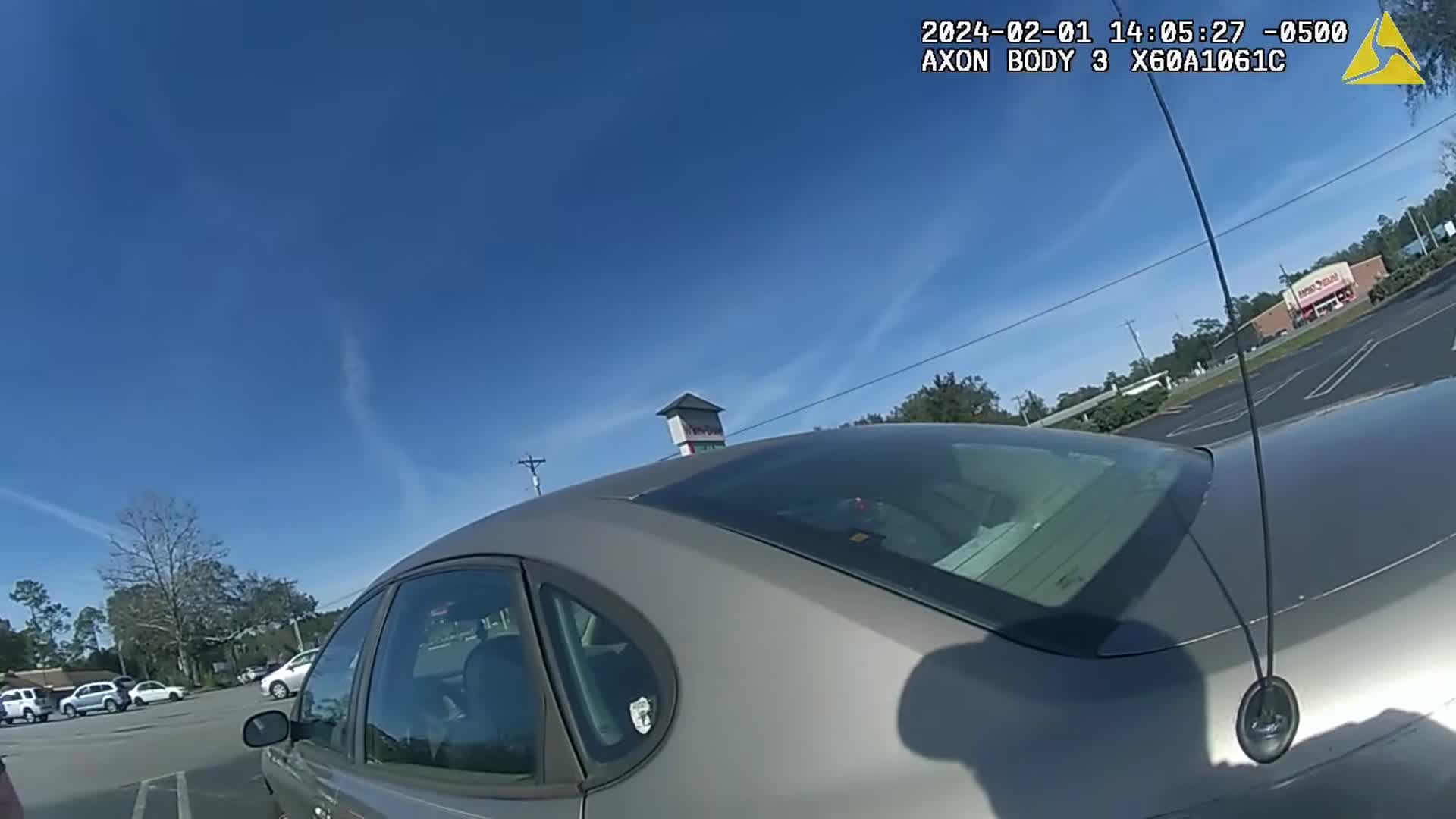
That contrast is the strongest reason this bodycam footage holds attention.
The audience already knows something is going to go wrong.
But the speed at which everything happens is difficult to anticipate.
A SUSPICIOUS-PERSON CALL BECOMES A STOLEN PATROL CAR.
THE THEFT BECOMES A HIGH-SPEED PURSUIT.
THE PURSUIT BECOMES A FATAL CRASH.
And the entire chain begins with a window left open for only a matter of seconds.
There is no victory at the end of this pursuit.
Boone does not escape.
Deputies do not get the opportunity to arrest her.
Two innocent motorists do not make it home.
Instead, officers who had been trying to stop a stolen patrol vehicle suddenly find themselves standing beside wreckage, trying to save lives.
That is the part of the story the headline alone cannot capture.
The theft may be the bizarre moment that attracts attention.
The crash is what gives the incident its real weight.
And the bodycam connects those two moments in a way that makes the consequences impossible to ignore.
It took only seconds for a routine police response to become a stolen patrol-car pursuit — and only minutes for that pursuit to end in a devastating head-on crash. Watch the full bodycam footage to see exactly how quickly the situation changed.
▶ WATCH THE FULL VIDEO HERE: https://www.youtube.com/watch?v=KlBmJrHIC_Q
Comments (0)
Loading comments...
May You Like

Woman Refuses Repeated Orders to Exit Her Car Before Officers Move In

911 Call Leads Police to a Disturbing Family Situation
Police Pull Over Paralyzed Driver With Blind Passenger