Police Bodycam: Armed Suspect Draws Weapon Leading to Officer-Involved Shooting
Officers Came to Make an Arrest Then a Gun Appeared
Two Milwaukee police officers arrived at a home on a cold January night expecting to locate a 19-year-old man wanted in connection with a serious investigation.
For several moments, nothing about the encounter suggested how violently it was about to change.
The officers stood near the entrance of the residence. They spoke with people inside. Eventually, they made contact with the man they had been looking for.
Then everything accelerated.
According to the Milwaukee Police Department, the suspect pulled out a firearm while officers were communicating with him. Two officers immediately struggled with him for control of the weapon.
The confrontation moved from conversation to a fight over a gun in seconds.
One officer drew his own firearm.
A shot was fired.
The suspect was hit.
And an encounter that had begun as an attempt to locate and arrest a wanted man became an officer-involved shooting.
The January 6, 2025 confrontation was captured by police body-worn cameras, allowing the public to see how rapidly an apparently controlled encounter deteriorated once a firearm entered the situation.
The suspect survived.
And the investigation that brought police to the house would ultimately result in a series of serious criminal charges.
This is what happened that night.
Officers Arrive on South 7th Street
At approximately 9:37 p.m. on Monday, January 6, 2025, Milwaukee Police Department officers were on the 2500 block of South 7th Street.
They weren't responding to a random disturbance.
Police said they were searching for a person wanted in connection with allegations of sexual assault of a child and child enticement. Officers received information that the individual they were seeking was inside a residence and approached the property.
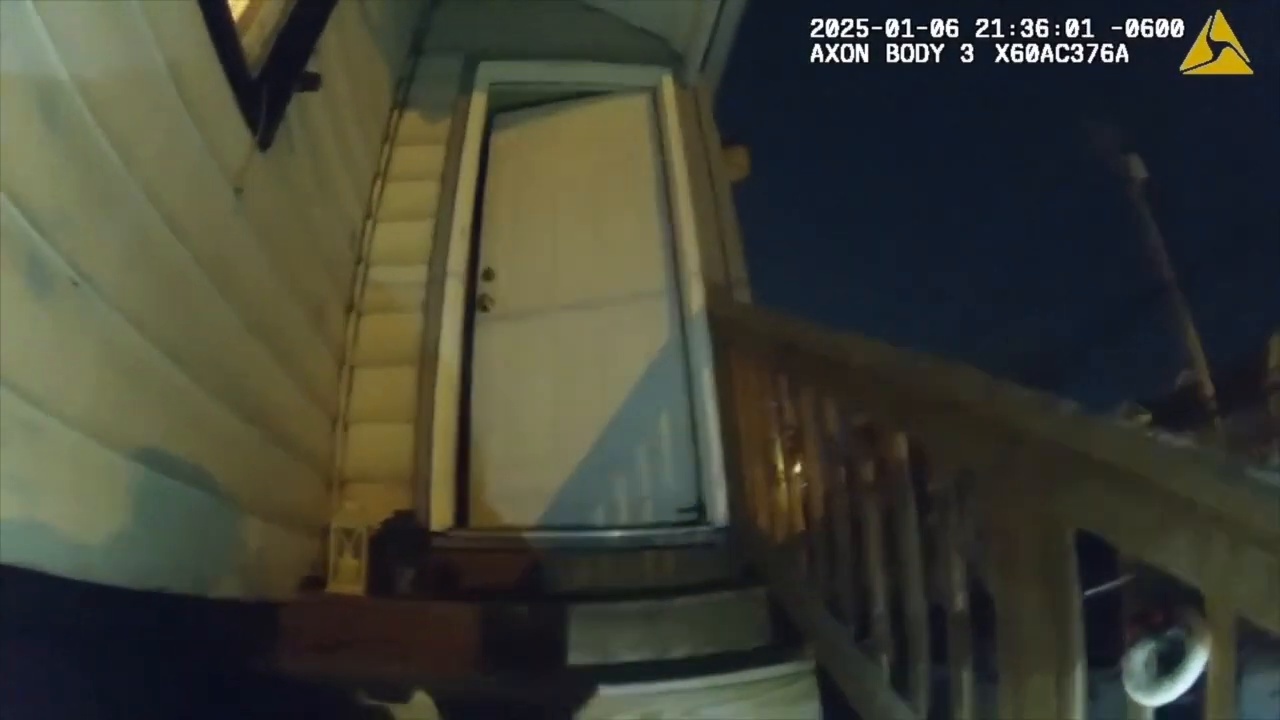
The opening portion of the bodycam footage is important precisely because it is relatively uneventful.
An officer approaches the house at night.
There is no vehicle pursuit.
Nobody is running down the street.
There is no obvious confrontation outside.
Instead, officers have to work through the uncertainty that comes with entering or approaching a residence while looking for a wanted person.
That uncertainty becomes one of the most important elements of the entire video.
The viewer knows something serious is going to happen.
The officers, however, are dealing with the situation moment by moment.
Police eventually learned that the person they wanted was indeed inside.
That man was later publicly identified as 19-year-old Emilio A. Arner-Ortiz.
The Investigation That Brought Police to the House
The circumstances leading police to Arner-Ortiz were serious.
According to the criminal charges subsequently announced by Milwaukee police, prosecutors charged him with use of a computer to facilitate a child sex crime, abduction of a child, child enticement, second-degree sexual assault of a child under 16, and intentionally pointing a firearm at law-enforcement officers.
FOX6 reported additional allegations from the criminal complaint. According to its coverage, investigators said the child had been communicating online with a person identified as a "boyfriend" for roughly three years. The child later identified that individual as Emilio Arner. Prosecutors alleged Arner-Ortiz crossed state lines and brought the child to his home.
Those were allegations contained in the criminal case, and they are important to distinguish from facts established merely by watching the bodycam footage.
For the officers arriving at the house, however, the immediate objective was much simpler:
Locate the wanted person and take him into custody.
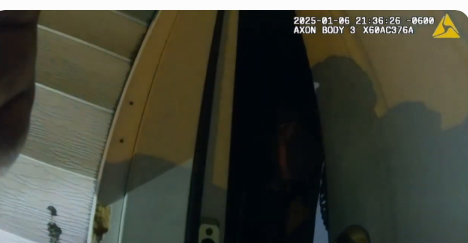
The video shows how little physical distance separates routine police communication from a potentially deadly encounter inside a residence.
Walls, doorways and furniture restrict movement.
Officers cannot always see a person's hands.
Other people may be present.
And a hidden weapon can change the situation before anyone has time to create distance.
That is essentially what Milwaukee police say happened here.
The Encounter Changes in Seconds
Once police made contact with Arner-Ortiz, the encounter did not immediately resemble a shooting.
There was communication.
There were officers close to the suspect.
Then, according to MPD's official account, Arner-Ortiz produced a firearm.
That was the turning point.
The footage becomes dramatically more chaotic because officers are operating at extremely close range.
There is no long standoff across a street.
There is no barricade separating the two sides.
Instead, officers and the suspect are within arm's reach of one another.
According to MPD, two officers struggled with Arner-Ortiz for control of the firearm.
That detail explains much of what viewers see and hear as the camera suddenly begins moving violently.
Body-worn cameras are attached to an officer rather than held by a dedicated camera operator. During a physical fight, the image therefore follows the officer's torso rather than the most important action.
The camera can point toward a wall.
A person can disappear from frame.
Hands and weapons can become difficult to distinguish.
Audio can become more informative than the picture itself.
That limitation is important when interpreting police footage.
A bodycam provides evidence, but it does not necessarily provide a perfect view.
A Fight Over the Gun
Once officers recognized the firearm, their priorities changed immediately.
Whatever investigative questions existed before that moment became secondary.
Control of the weapon was now the central issue.
Milwaukee police described it as a struggle involving two officers and the suspect.
One of the officers eventually discharged his service weapon, striking Arner-Ortiz.
The shooting did not occur after a lengthy exchange of gunfire.
It happened during an extremely compressed close-quarters confrontation.
That distinction is central to understanding the footage.
When viewers watch an officer-involved shooting after knowing the outcome, it can be tempting to analyze every frame as though everyone involved had the same complete information available to the viewer.
They did not.
Events were unfolding simultaneously.
Officers were attempting to control a suspect.
A firearm was involved.
Multiple people occupied a confined space.
Decisions had to be made in seconds.
The officer who fired was later described by MPD as 35 years old with more than eight years of service. As is routine following an officer-involved shooting, he was placed on administrative duty.
The Shot Does Not End the Officers' Work
One of the most revealing parts of police bodycam footage often occurs immediately after force is used.
The problem doesn't simply disappear.
Officers still have to determine whether the threat has ended.
They have to secure weapons.
They have to control the person involved.
They have to check other rooms and people.
And, when someone has been injured, they have to transition rapidly toward medical assistance.
That sequence is visible here.

MPD said Arner-Ortiz's firearm was recovered.
The 19-year-old was arrested and transported to a local hospital for treatment of non-life-threatening injuries.
No officer was reported shot in the confrontation.
The outcome could easily have been different given how close everyone was when police said the gun appeared.
Once the immediate threat was under control, the residence changed from the site of an attempted arrest into a shooting scene that investigators would need to document carefully.
The Milwaukee Police Homicide Unit investigated the incident.
Charges Follow Four Days Later
The shooting happened Monday night.
By Friday, prosecutors had filed criminal charges.
On January 10, 2025, the Milwaukee County District Attorney's Office charged Emilio A. Arner-Ortiz in connection with the case.
MPD listed five counts:
Use of a Computer to Facilitate a Child Sex Crime
Abduction of a Child
Child Enticement
Second-Degree Sexual Assault of a Child Under 16
Intentionally Pointing a Firearm at Law Enforcement Officers
According to the department's January 10 release, conviction on the charges could expose Arner-Ortiz to as much as 126 years of imprisonment and $360,000 in fines.
FOX6 subsequently reported that Arner-Ortiz made a court appearance from a hospital bed.
During that hearing, Milwaukee County Assistant District Attorney Madeline Witte described the state's allegations concerning how the child had been brought to Milwaukee.
The criminal case therefore extended far beyond the seconds captured during the shooting itself.
The bodycam shows the confrontation between police and Arner-Ortiz.
The criminal complaint provides the context for why officers were searching for him in the first place.
Those two pieces together create a much more complete picture of the January 6 incident.
Milwaukee Police Release the Video
The public did not have to wait months to see the footage.
On January 21, 2025, fifteen days after the shooting, Milwaukee police released video of the incident.
The department explained that its Standard Operating Procedure 575 establishes a presumption that video evidence involving officer incidents resulting in death or great bodily harm will be publicly released, while also attempting to balance transparency, investigative integrity and the privacy of victims, witnesses and other people appearing in the recordings.
TMJ4 reported on the bodycam release that same day, identifying the incident as the January 6 police shooting near 7th and Arthur and confirming Arner-Ortiz as the 19-year-old suspect.
The release is important for another reason.
It allows the department's written account to be compared with what officers' cameras captured.
The video shows the approach.
It shows the officers making contact.
It records the sudden physical struggle.
And it captures what officers did afterward.
That doesn't automatically answer every legal or tactical question about an officer-involved shooting.
But it gives the public evidence that previously would have remained almost entirely inside investigative files.
Why This Video Holds Attention Without Exaggeration
From a storytelling standpoint, this incident has a different structure from a vehicle pursuit.
There is almost no conventional action at the beginning.
That is actually its strength.
The opening creates anticipatory tension.
Viewers know from the title that an officer-involved shooting is coming, yet the first part of the footage consists largely of officers approaching and communicating at a house.
The audience begins watching hands, doors and movements more carefully because they are waiting for the moment when the situation changes.
Then it does.
Suddenly.
The best way to retain that tension in a written article is not to reveal every detail in the first paragraph.
Instead, the story should answer one question while creating the next.
Why were police there?
They were looking for a wanted 19-year-old.
What was he wanted for?
A serious child-sex-crime investigation.
Did officers find him?
Yes.
What happened when they contacted him?
Police say he produced a gun.
What happened to the gun?
Two officers struggled with him for control.
How did the struggle end?
An officer fired.
Did the suspect survive?
Yes.
What happened afterward?
He was hospitalized, arrested and criminally charged.
That question-and-answer progression keeps the reader moving naturally through the story without requiring sensational language.
The facts themselves supply the tension.
The Camera Shows How Fast Distance Disappears
Perhaps the most important takeaway from the footage is how dramatically circumstances can change when police operate inside a confined residence.
Outside, officers may have room to retreat, reposition or use cover.
Inside a home, distances collapse.
A few steps can put two people within physical contact.
A doorway can hide someone's hands.
Furniture can restrict movement.
Another person can suddenly enter the same space.
The January 6 footage demonstrates those constraints unusually clearly.
Before the struggle begins, the encounter does not visually resemble the violent confrontation that follows.
Then a firearm enters the equation.
The officers and suspect are suddenly fighting at close range.
One officer fires.
And almost immediately afterward, police have to switch from stopping a perceived threat to securing the scene and addressing an injured person.
The entire progression takes far less time than it takes to describe.
That is why bodycam footage can be so important when evaluating police encounters.
Written reports organize events into sentences.
Video demonstrates how those events overlap.
An Arrest Attempt That Changed in Seconds
The January 6 Milwaukee incident began with officers looking for a wanted person.
It ended with a 19-year-old wounded, arrested and facing multiple criminal charges.
According to Milwaukee police, officers located Emilio A. Arner-Ortiz inside a residence on South 7th Street at approximately 9:37 p.m.
During their interaction, police said Arner-Ortiz produced a firearm.
Two officers fought with him over the weapon.
One officer discharged his service firearm and struck him.
Police recovered the suspect's gun.
Arner-Ortiz survived and was transported to a hospital with non-life-threatening injuries.
Four days later, prosecutors filed five charges against him stemming from both the underlying investigation and the confrontation with police.
The officer who fired was placed on administrative duty, while MPD's Homicide Unit investigated the incident and the department later released the bodycam footage under its critical-incident video policy.
For viewers, the footage offers something that the short phrase "officer-involved shooting" cannot convey:
how little time existed between conversation and crisis.
There was no extended pursuit leading into the confrontation.
There was no lengthy standoff visible in the supplied footage.
There was an encounter inside a home.
A firearm appeared.
A struggle began.
And seconds later, everything had changed.
That sudden transition is what makes the January 6 footage so striking.
It also explains why the calm opening matters.
Without it, viewers see only the violence.
With it, they see just how abruptly an ordinary-looking police contact can become a fight over a firearm.
Want to see exactly how the encounter changed from a conversation into a fight over a gun in only seconds? Click the link below to watch the full bodycam sequence and see how the incident unfolded from the officers' perspective.
Comments (0)
Loading comments...
May You Like

💨 High-Speed Police Pursuits Caught on Dashcam | Intense Moments Across the USA 🇺🇸

Entitled Driver Skips the Line and Gets Instant Karma3