Police Arrive at a Dark Car and Discover the Situation Is Far From Over
Police Approach a Dark Sedan and Realize the Night Is Far From Over
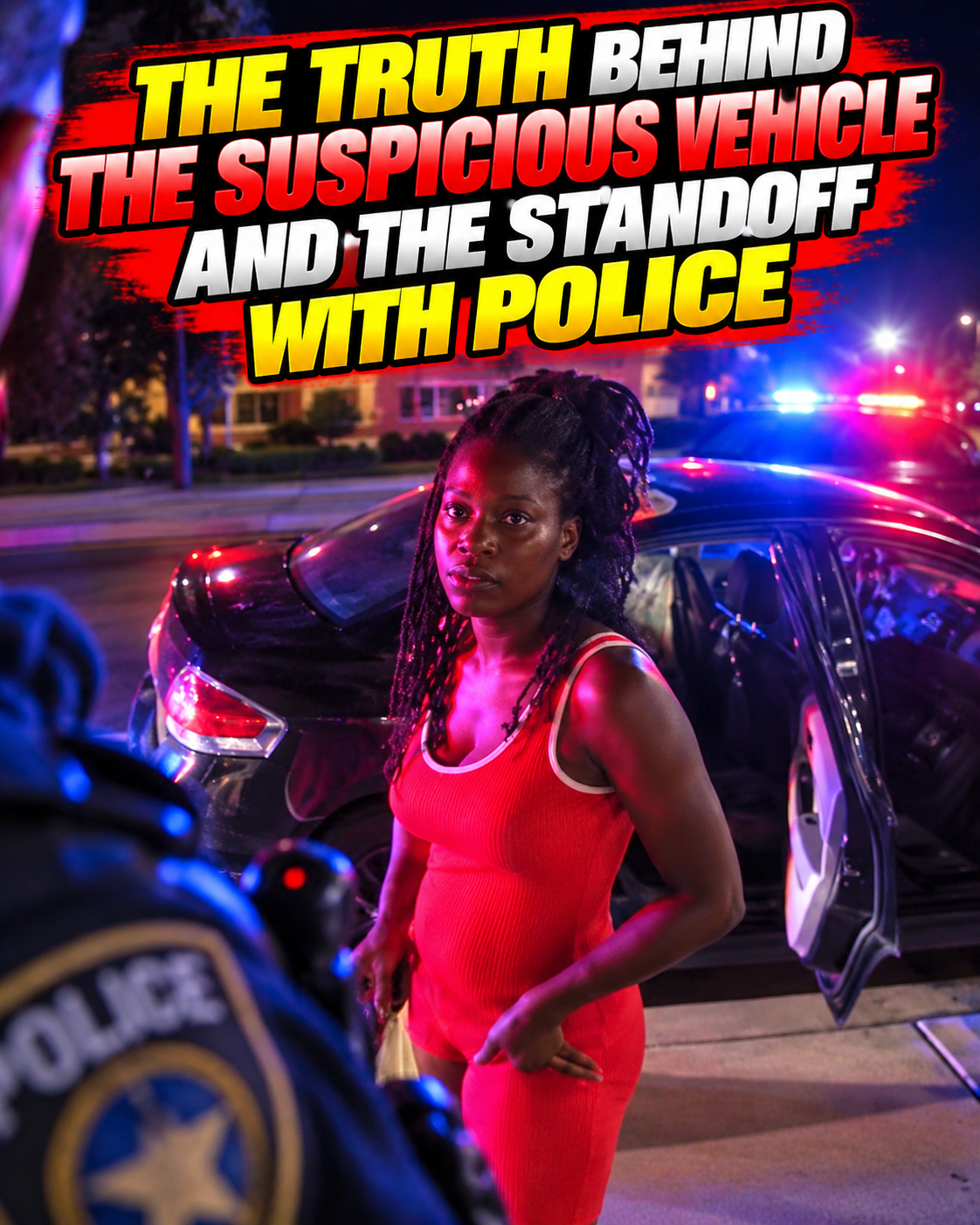
A dark sedan sits almost motionless under the flashing glow of emergency lights. An officer moves alongside the vehicle while another person is positioned unusually high near the car. Behind them, a residential property disappears into the darkness.
At first glance, it looks like police have already reached the end of whatever brought them there.
But arriving at the vehicle is only the beginning.
The supplied footage frame does not independently confirm the exact location, police department, identities of those involved, reason for the original response, or the final legal outcome. What it does show is an unusual nighttime police encounter centered around a stopped sedan, where officers have to quickly understand a scene that clearly does not resemble an ordinary traffic stop.
An Unusual Scene From the Moment Police Arrive
Nighttime calls present officers with an immediate disadvantage: they cannot see the entire environment at once.
Headlights, flashlights, streetlights, and emergency lights illuminate individual areas while leaving others almost completely dark. Reflections from vehicle windows can make the interior difficult to see, and a person who moves only a few feet may disappear into shadow.
That makes the position of the people around this sedan especially important.
One officer is close to the driver's side of the vehicle. Another individual appears to be standing on or immediately above the car.
Whatever happened before this moment, officers are clearly not approaching a conventional roadside stop.
Before they can determine what caused the situation, they first need to make it predictable.
The Sedan Becomes the Center of the Encounter
A stopped vehicle can contain numerous unknowns.
Police need to know whether anyone remains inside. They need to identify the people outside and determine their connection to the vehicle. They also need to understand whether the incident began at the sedan, at the nearby property, or somewhere else entirely.
The darkness makes those questions harder to answer.
An officer approaching the vehicle cannot simply focus on the person directly ahead. The officer also has to watch the windows, doors, surrounding property, and anyone moving nearby.
Something as simple as a door opening unexpectedly can immediately change the encounter.
The Person Above the Vehicle Creates Another Problem
Standing on or above a vehicle is already an unusual position during a police response.
For officers, it creates uncertainty.
The person could attempt to move toward the opposite side of the car. They could lose their footing. Their hands may not always be clearly visible. They may attempt to jump down suddenly.
None of those possibilities establishes hostile intent. They simply give officers more variables to manage.
Police therefore have a strong reason to slow the situation down.
Rather than allowing everyone to move independently, officers can issue clear instructions and attempt to bring each person into a location where their actions are easier to observe.
Communication Becomes Critical
The first objective does not necessarily have to be physical intervention.
It can be communication.
Stay where you are.
Keep your hands visible.
Move slowly.
Do not reach inside the vehicle.
Come down carefully.
Simple instructions can transform a confusing scene into something officers can begin understanding.
The problem comes when someone decides not to follow them.
A person who remains stationary gives police time.
A person who suddenly moves forces police to react.
Officers Still Do Not Know the Full Story
Police generally arrive after the event that triggered the call.
They see the aftermath.
They hear fragments of information.
Then they have to reconstruct what happened.
Someone at the scene may provide one explanation. Another person may remember events differently. Dispatch may have information that the responding officer has not yet been able to verify.
The vehicle itself may contain additional clues.
For the officers standing beside the sedan, the challenge is to avoid reaching conclusions too early.
The dramatic appearance of the scene does not necessarily explain the incident.
The Interior of the Vehicle Is Another Unknown
At night, looking into a dark sedan can be difficult even from only a few feet away.
Emergency lights reflect off glass.
Shadows conceal parts of the interior.
Seats block visibility.
If officers cannot immediately determine whether another person is inside, they have to behave as though that uncertainty still matters.
A movement behind the glass can suddenly draw attention away from the person outside.
A door opening can force an officer to reposition.
This is why control of the visible people is so important.
The fewer unpredictable movements occurring outside, the more attention officers can devote to understanding the vehicle.
The Nearby Property Cannot Be Ignored
The residence or building behind the car adds another layer to the response.
Police need to remain aware of doors, walkways, stairs, and other possible routes.
Someone else could emerge.
A person already outside could attempt to retreat toward the property.
The original incident might even have begun there.
Without the full context, officers cannot assume the sedan is the only relevant location.
They are effectively managing two environments simultaneously: the vehicle and the property surrounding it.
Backup Gives Officers More Control
Additional officers can dramatically change how such a scene is managed.
One officer can concentrate on the person near the sedan.
Another can watch the vehicle.
Someone else can monitor the residence or communicate with dispatch.
That division of responsibility reduces the number of things any single officer must watch.
It also gives police more flexibility if the situation suddenly changes.
And nighttime encounters can change extremely quickly.
One Person Starts Moving
Imagine the difference created by only a few steps.
A person who was stationary begins moving away.
An officer gives an instruction.
The person continues.
Now police have to determine whether the movement is simply confusion or an intentional attempt to leave.
Another command may follow.
If the person stops, the scene can return to relative calm.
If they accelerate, everything changes.
A Few Steps Can Turn Into a Chase
The transition from a controlled encounter to a foot pursuit can happen in seconds.
A person walks quickly.
The officer follows.
The person begins running.
Suddenly, the sedan is no longer the center of attention.
The encounter starts moving through the surrounding area.
One officer may pursue while another remains with the vehicle.
Additional units may begin moving toward nearby streets.
What had been concentrated around one car has now expanded into an entire neighborhood.
Darkness Gives a Runner Temporary Advantages
At night, breaking visual contact can be easier.
Trees create shadows.
Buildings block sightlines.
Fences divide properties.
A person can turn a corner and disappear almost immediately.
For the runner, that can create the impression that police have been left behind.
But disappearing from one officer's view does not necessarily mean escaping the larger response.
Police can communicate the last known direction.
Other officers can move toward likely routes.
The search can continue even after direct visual contact is lost.
The Neighborhood Becomes Part of the Incident
Once someone leaves the immediate scene, every surrounding street becomes relevant.
Officers begin thinking in terms of routes.
Where could the person go?
Is there another road behind the property?
Does a fence limit movement?
Are there businesses or additional residences nearby?
Instead of simply following footsteps, police can begin anticipating where the person might emerge.
The runner has to make decisions continuously.
Police can coordinate around those decisions.
The Original Scene Still Requires Attention
This is what makes the situation increasingly complicated.
Someone running does not erase the sedan.
The vehicle remains where officers found it.
Other people may still be there.
Police still need to understand why they were called.
One officer may therefore have to stay behind while others move away.
The incident effectively splits into two simultaneous operations.
One is an investigation.
The other is a search.
More Officers Can Become Necessary
From the outside, an expanding police response can sometimes look excessive.
But every new development creates another task.
Monitor the vehicle.
Speak with the people who remained.
Watch the nearby residence.
Search for someone who left.
Maintain communication.
Check surrounding streets.
What began as a single nighttime call can suddenly require several officers simply because the scene is no longer concentrated in one location.
The Runner Eventually Faces a New Problem
Distance is useful only while it continues increasing.
Running requires energy.
Hiding requires stopping.
The person eventually has to choose between the two.
Continue moving and risk being seen.
Or stop somewhere and hope police do not find the location.
Neither option guarantees escape.
Once officers establish the last known area, they can begin reducing the search zone.
A Hiding Place Can Become a Trap
A yard or concealed corner may look useful in darkness.
But once someone stops moving, they surrender one of their biggest advantages.
Police can search methodically.
Another officer may approach from the opposite direction.
A fence can prevent further movement.
A location that initially provided concealment can eventually leave the person with nowhere useful to go.
Police Close the Distance Again
Eventually an officer may see movement.
A silhouette appears.
Someone reports a sighting.
The person emerges from behind a structure.
The encounter becomes direct again.
After all the running and searching, police return to essentially the same question they had beside the sedan:
Will the person follow instructions?
The Final Contact Can Be the Most Tense
A person who believes they have run out of options may behave unpredictably.
They may stop immediately.
They may turn and run again.
They may argue.
They may make a sudden movement.
Police therefore cannot assume that locating someone means the incident is over.
The final seconds require just as much attention as the beginning.
Cooperation Changes the Entire Atmosphere
Once everyone stops moving unpredictably, the pace finally slows.
Officers can account for the people involved.
The search ends.
Attention can return to the original scene.
Questions replace commands.
The investigation begins taking priority over immediate containment.
Only now can police start fully reconstructing what happened.
Officers Return to the Dark Sedan
The vehicle that initially drew everyone's attention becomes important again.
Where was it when police arrived?
Who had been inside?
Who was standing near it?
What happened before officers appeared?
Does the physical scene support what witnesses are describing?
These questions help transform a confusing collection of moments into a timeline.
Video Can Fill Important Gaps
Police footage becomes particularly valuable during an incident with multiple transitions.
It can preserve the first approach.
The positions of everyone around the sedan.
The commands officers gave.
How people responded.
When someone began moving.
Which direction they went.
Those details can be difficult to reconstruct accurately from memory after a stressful nighttime encounter.
The camera does not provide every answer, but it gives investigators a chronological record of what was visible and audible from the officer's position.
The Most Dramatic Frame Is Only One Moment
A person positioned above a dark sedan while police approach is visually striking.
But the most dramatic image is not necessarily the most important part of the incident.
The crucial moment could occur seconds later.
Someone could reveal new information.
An officer might notice something inside the vehicle.
A person could suddenly leave.
The investigation could take an entirely different direction.
That is why judging the whole encounter from a single screenshot would be misleading.
The Real Story Begins Before Police Arrive
Something caused officers to respond.
Understanding that event is essential.
Was the vehicle already stopped?
How long had the people been there?
What prompted someone to contact police?
What information did officers receive while traveling to the scene?
Without those details, the frame shows the beginning of the police response rather than the beginning of the incident itself.
Police are entering a story already in progress.
Every New Answer Can Produce Another Question
One person explains why they are there.
That explanation mentions someone else.
Police ask where that person went.
Another witness provides additional information.
Officers check the vehicle.
A new detail appears.
This is how a call that looks nearly finished can continue expanding.
The vehicle is stopped, but the investigation keeps moving.
A Stationary Car Does Not Mean a Stationary Incident
That distinction is important.
The chase may already be over.
The driving may already be finished.
Yet the police encounter can remain highly dynamic.
People can run.
Arguments can develop.
Officers can discover additional information.
The response can spread away from the vehicle.
Movement of the car is only one form of movement within the incident.
The Darkness Increases the Pressure
Everything becomes more difficult when officers cannot clearly see the entire environment.
A hand disappears into shadow.
Someone moves behind the sedan.
A doorway opens.
An officer turns a flashlight toward another area.
Each small change demands attention.
Police have to constantly update their understanding of the scene.
What was safe five seconds earlier may require another assessment after someone moves.
Patience Can Prevent an Unnecessary Escalation
The presence of several officers does not necessarily mean police need to rush.
If everyone is communicating and nobody is in immediate danger, time can work in their favor.
More information arrives.
People calm down.
The environment becomes easier to understand.
Police can make decisions based on facts rather than confusion.
Sometimes the most effective action is simply preventing the situation from changing faster than officers can understand it.
The People Involved Also Have Choices
Police are not the only ones making decisions.
Someone can follow instructions.
Another person can remain where officers can see them.
People can explain what happened.
Those choices reduce uncertainty.
The opposite choices create more of it.
Running, reaching unexpectedly, or repeatedly ignoring instructions forces officers to respond to behavior instead of focusing on the original incident.
One Decision Can Double the Work
Consider how quickly the response changes if someone runs.
Police still have to investigate the sedan.
Now they also have to locate the person.
They still have to speak with witnesses.
Now they also have to coordinate a search.
They still have to understand what happened before arrival.
Now they also have to document everything that happened afterward.
One decision can effectively create a second incident inside the first.
The Scene Eventually Becomes Quiet Again
At some point, the rapid movement stops.
Emergency lights continue flashing.
The sedan remains where it was.
Officers stand nearby.
People are accounted for.
The neighborhood begins returning to normal.
Looking only at the final scene, someone arriving late might never realize how complicated the previous minutes had been.
That is where video provides context.
Investigators Can Now Work Backward
With the immediate uncertainty resolved, police can reconstruct events chronologically.
What happened before the call?
What happened before officers arrived?
What did officers see first?
Who moved?
What happened afterward?
Statements can be compared with recorded footage.
The confusing nighttime scene begins becoming understandable.
The Car Is Only the Starting Point
The dark sedan initially appears to be the entire story.
It is not.
The vehicle is simply the location where police first encounter the situation.
The real incident consists of people, decisions, movements, and information that extend beyond the car itself.
That is why officers cannot simply reach the vehicle and assume the job is finished.
Arrival is only the first step.
A Strange Scene Forces Officers to Adapt
Police may approach expecting one kind of call and immediately discover something different.
That requires flexibility.
An officer who expected to speak with a driver may instead find someone outside the vehicle.
A person may be in an unexpected position.
Another individual may not be where police expected.
The response has to adapt to what officers actually see rather than what they imagined while driving to the location.
The First Seconds Matter
When officers arrive, they begin forming their understanding almost immediately.
Vehicle.
People.
Hands.
Movement.
Nearby property.
Possible exits.
Those observations guide the next decisions.
If everyone remains calm, police have time to improve that understanding.
If someone moves suddenly, officers have to act with whatever information they currently possess.
That is why seemingly small decisions can have enormous consequences during the first moments of contact.
What Appears to Be the Ending Is Actually the Beginning
The vehicle is already stopped.
Police have already arrived.
Emergency lights are already illuminating the scene.
Everything visually suggests that the major action should be finished.
Instead, the officers may be only beginning to discover what they are dealing with.
That reversal makes the encounter compelling.
The expected conclusion becomes the starting point for another sequence of events.
One Unexpected Move Can Change Everything
The entire scene depends on predictability.
If everyone stays where officers can see them, police can communicate and investigate.
If someone suddenly moves, the priorities change.
The officer who was asking questions may have to pursue.
The person watching the sedan may need to reposition.
Additional units may be requested.
The quiet residential area can become an active police scene almost instantly.
POLICE MAY HAVE ALREADY FOUND THE CAR, BUT THAT DOES NOT MEAN THEY HAVE FOUND THE END OF THE INCIDENT. THE MOMENT SOMEONE MAKES AN UNEXPECTED MOVE, A STATIONARY NIGHTTIME SCENE CAN TURN INTO AN ENTIRELY NEW POLICE RESPONSE.
The Complete Footage Provides the Missing Context
A single frame leaves many unanswered questions.
Why are police there?
Why is someone positioned above the sedan?
What happened immediately before the officer approached?
Does anyone else remain inside?
What causes the situation to continue?
Those questions can only be answered through the complete sequence and reliable incident information.
What the image does establish is the atmosphere of the encounter perfectly.
Darkness.
A stopped sedan.
Police moving in.
An unusual position.
And the unmistakable feeling that reaching the vehicle has not resolved anything yet.
The Night Is Far From Over
Police calls rarely unfold exactly as expected.
Officers arrive with limited information and begin building the story from whatever they encounter.
Sometimes the scene is straightforward.
Other times, the first thing they see creates more questions than answers.
This dark sedan appears to represent the second kind of call.
The vehicle is stationary, but officers still have to understand the people around it, the nearby property, and whatever events brought everyone to this point.
And until every person is accounted for and the sequence has been reconstructed, the flashing emergency lights beside the car mark not the end of the story, but the beginning of the police investigation.
Watch the full encounter to follow officers from their first approach to the dark sedan, see why the unusual scene continues developing, and discover what happens when police realize their arrival is only the beginning: PASTE-YOUR-LINK-HERE https://www.youtube.com/shorts/8olidVQdiBE
Comments (0)
Loading comments...
May You Like

Police Chase Ends as Driver Hits Stoplight, Crashes Into West Towne Mall

Traffic Stop Turns Deadly After Man Steps Out of Stolen Car

What Happens when you get Caught Shoplifter Stealing Local Store