
Police Arrest Woman For DUI In Downtown Bellingham
Downtown Traffic Stop Ends With Woman Being Taken Into Custody for Suspected DUI
A Night Downtown Takes an Unexpected Turn
Downtown Bellingham is the kind of environment where police officers have to pay attention to everything at once.
Pedestrians move between restaurants and bars. Cars enter and leave parking spaces. Cyclists share the streets. Intersections can remain active well into the evening.
In that setting, one driver showing signs of impairment can quickly become more than an ordinary traffic issue.
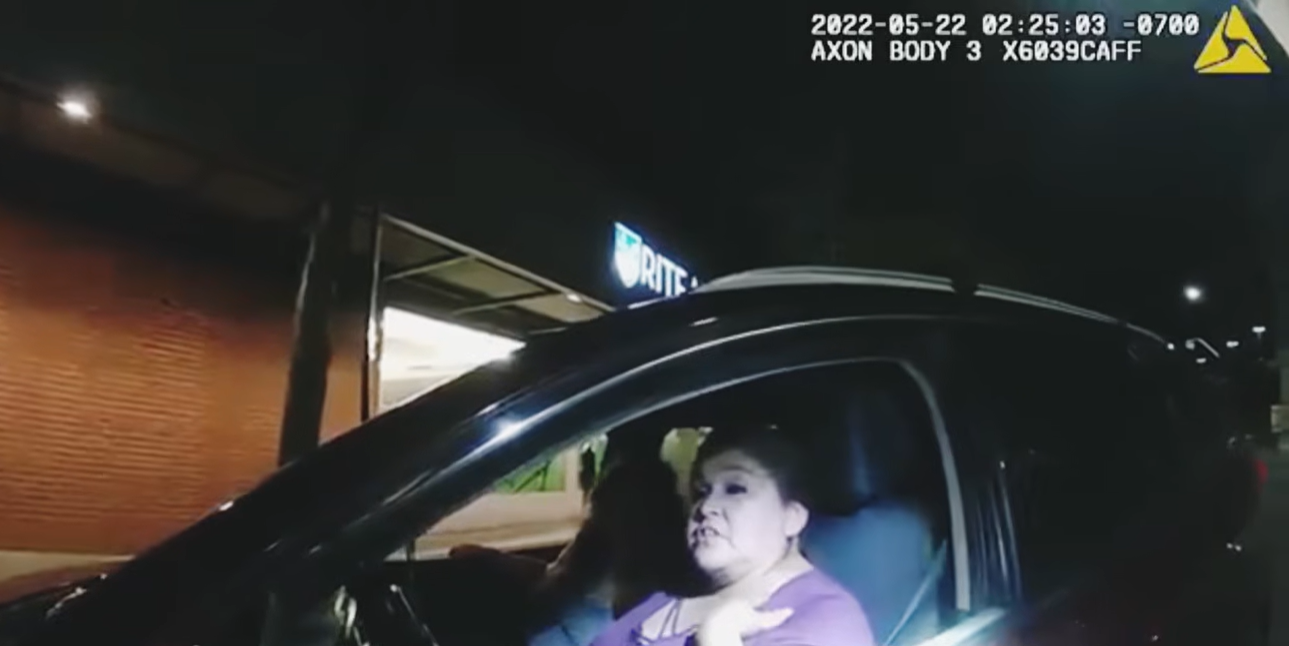
That is the backdrop to a Bellingham Police encounter later released publicly under the title “Police Arrest Woman Downtown Bellingham For DUI.” The footage was published by Washington State Bodycam in October 2025 and identifies the central incident as an arrest of a woman suspected of driving under the influence.
What makes the footage compelling is not a high-speed pursuit or a violent confrontation.
Instead, it shows the slower investigative process that happens when an officer has to decide whether somebody is safe to continue driving.
At the beginning, there is still uncertainty.
The woman is talking.
The officer is asking questions.
The interaction resembles countless other nighttime police contacts.
But DUI investigations are built from accumulated observations rather than one dramatic clue.
How is the person speaking?
How are they responding to instructions?
What does the officer observe about their movements?
What led to the initial contact?
Can the driver safely operate a vehicle?
As the encounter progresses, those questions begin pointing in one direction.
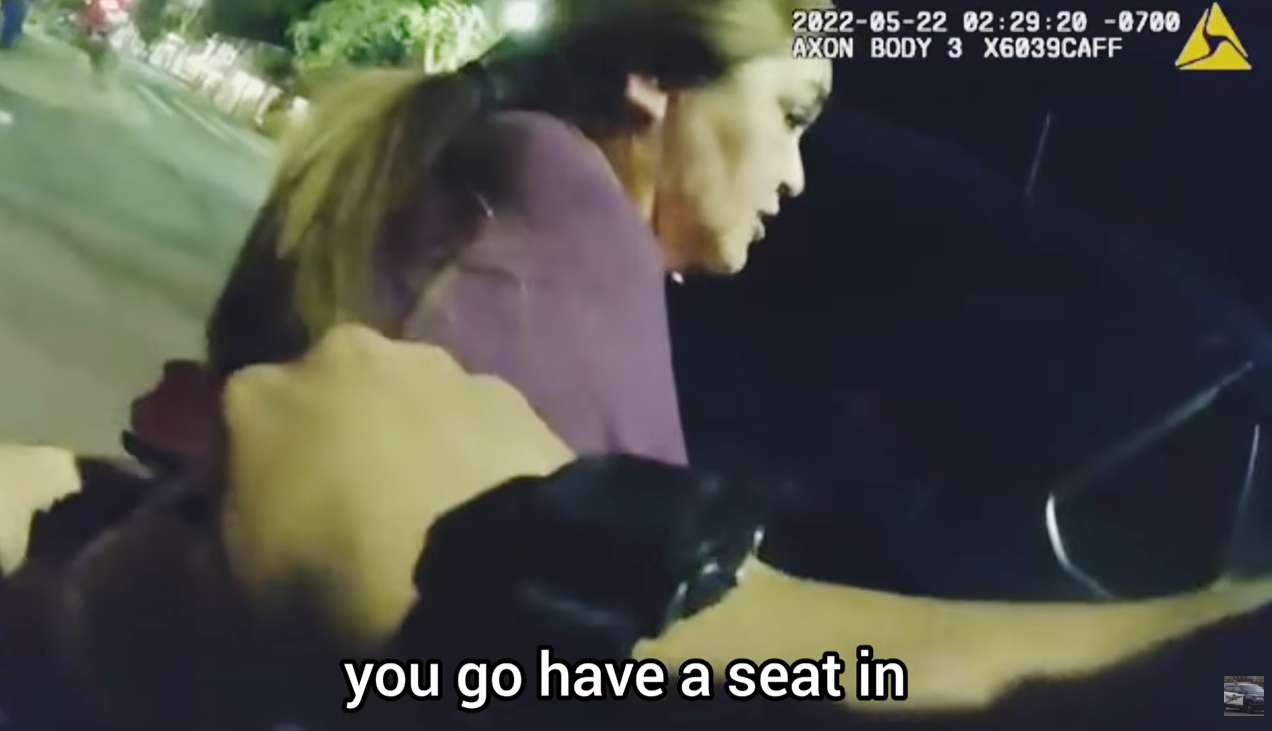
Eventually, the conversation ends with handcuffs.
A woman who had been behind the wheel is now being taken into police custody on suspicion of DUI.
And the vehicle is no longer going anywhere with her driving it.
Above: a real Bellingham Police vehicle photographed in downtown Bellingham. This is a contextual image from local reporting, not a still from this specific arrest.
The Officer Has to Decide What Happens Next
DUI stops are different from many other traffic encounters because the officer's investigation has an immediate public-safety consequence.
If somebody is speeding, an officer can issue a citation.
If a registration has expired, there may be an administrative resolution.
Suspected impairment creates a different question:
Can this person safely continue driving?
That decision matters because the consequences of getting it wrong can be severe.
If an impaired driver is allowed to leave, everyone sharing the road remains potentially exposed to danger.
But officers also need sufficient grounds for an arrest. They cannot simply decide that every nervous, tired or awkward driver is intoxicated.
That is why the middle portion of a DUI investigation can appear repetitive on bodycam.
Officers ask questions.
They observe.
They may request standardized field sobriety exercises.
They compare what the driver says with what they see.
The Bellingham footage follows that slower rhythm.
Rather than immediate escalation, the officer gives the woman opportunities to respond and comply with instructions.
The investigation develops incrementally.
That makes the footage less spectacular than a pursuit, but arguably more useful for understanding how everyday DUI enforcement actually works.
Bellingham has dealt with impaired-driving cases ranging from relatively straightforward arrests to extraordinarily dangerous incidents. In March 2022, for example, Bellingham Police assisted Washington State Patrol with a suspected DUI driver who fled for roughly nine miles, struck another vehicle, attacked police vehicles with an axe and ultimately crashed into Bellis Fair Mall. That was a completely separate case, but it demonstrates the extreme end of the danger officers are attempting to prevent when they intervene with suspected impaired drivers.
The woman in this bodycam footage does nothing comparable.
There is no reason to inflate the incident into something it was not.
Its significance comes from the opposite direction.
Police appear to intervene before the encounter becomes a major crash or pursuit.
The Investigation Moves Away From the Vehicle
As the interaction continues, attention moves increasingly toward the driver's condition.
That is the turning point.
A DUI investigation is not ultimately about the car.
It is about the person operating it.
Officers therefore need to evaluate behavior independently of whatever initially attracted their attention.
This is also where body-camera footage becomes valuable.
A written police report may summarize an officer's observations in several sentences.
Video allows viewers to watch the interaction develop in real time.
The pauses are visible.
The instructions can be heard.
The driver's responses are preserved.
So is the officer's behavior.
That does not mean bodycam footage automatically answers every legal question.
Camera angle, audio quality and the limitations of the recording still matter.
And a video alone cannot tell viewers a person's blood-alcohol concentration unless a valid test result is independently documented.
That distinction is particularly important in this case.
I found the public video release confirming that the woman was arrested for suspected DUI, but I did not find a reliable indexed primary record establishing a specific BAC result for her.
For that reason, no BAC number should be invented or borrowed from another Bellingham case.
The story remains compelling without it.
The officer's investigation eventually reaches the threshold where the woman will not be permitted to continue on her way.
The tone changes.
The encounter is becoming an arrest.
When the Conversation Becomes an Arrest
There is a recognizable moment in many DUI videos when the driver realizes the officer has reached a decision.
Before that point, the person may believe there is still a possibility of returning to the car.
After it, the entire situation changes.
The officer moves toward custody.
Instructions become more direct.
Handcuffs appear.
That transition occurs here without the explosive confrontation seen in many viral police videos.
The woman is taken into custody.
The suspected DUI investigation will now continue through the formal legal process rather than on the roadside.
This distinction is worth emphasizing:
An arrest for suspected DUI is not itself a conviction.
An officer establishes probable cause for an arrest. Prosecutors and courts determine what ultimately happens with the case.
Testing evidence, officer observations, video, procedural compliance and other evidence can all become relevant later.
The viral video title naturally focuses on the arrest because that is the visible climax.
But the legal story does not end when the handcuffs close.
It begins another stage.
That is why responsible coverage should resist declaring someone legally guilty based solely on body-camera footage.
The appropriate description here is that the woman was arrested for suspected DUI, consistent with the public video's description.
What the recording does establish is the transformation of the encounter.
A driver who was free to operate a vehicle at the beginning is no longer permitted to do so by the end.
Police have concluded that the circumstances justify taking her into custody.
Above: a real Bellingham Police Department image showing an officer at a nighttime response. It provides local context and is not represented as a photograph from this specific DUI stop.
Why Downtown DUI Enforcement Carries Extra Stakes
Location matters.
Downtown driving is fundamentally different from traveling along an empty rural highway.
There are more conflict points.
Crosswalks.
Parked cars.
Cyclists.
Traffic signals.
People leaving businesses.
Drivers pulling away from curbs.
A mistake does not need to occur at high speed to cause serious harm.
That is one reason impaired-driving enforcement remains such an important part of nighttime policing.
The broader Bellingham record shows that DUI cases can take many forms.
In October 2023, for example, Bellingham Police investigated a completely separate incident involving a 42-year-old woman accused of driving while intoxicated with an unrestrained seven-year-old child in the front seat. Police said that driver traveled in the wrong lane, ran a stop sign and collided with another vehicle before officers located her.
Another Bellingham case in January 2026 involved a driver accused of striking a vehicle stopped at a red light. Court documents later reported a BAC of 0.275 in that separate case, more than three times Washington's 0.08 per-se limit for most adult drivers.
Those examples are not connected to the woman in the supplied footage.
But they explain why officers do not treat suspected impairment as merely a private decision.
The danger extends beyond the person who chooses to drive.
The pedestrian in a crosswalk did not make that choice.
The family stopped at a traffic light did not make it.
The cyclist riding home did not make it.
The person approaching from the opposite direction did not make it.
Impaired driving transfers one person's risk onto everyone around them.
That is the public-safety issue sitting underneath an otherwise routine-looking police interaction.
Bodycam Lets Viewers See How Probable Cause Develops
There is another reason footage like this attracts viewers.
Most people know what a DUI arrest looks like at the end.
Handcuffs.
Patrol car.
Booking.
What they rarely see is how an officer gets there.
The process is incremental.
A driver does not necessarily step from the vehicle and announce that they are impaired.
Officers instead collect observations.
Some may ultimately prove important.
Others may not.
A single sign can have an innocent explanation.
Tiredness can affect coordination.
Stress can change speech.
Medical conditions can affect balance.
That is why officers consider the totality of the circumstances rather than relying on one isolated observation.
Video provides an opportunity to see that process instead of only reading the conclusion afterward.
It also provides accountability in both directions.
If a driver behaves very differently from how an officer later describes them, video can matter.
If the footage corroborates the officer's description, that matters too.
The camera does not replace the justice system.
But it preserves evidence that otherwise would depend much more heavily on memory.
Bellingham Police has used body-worn camera footage in DUI investigations for years. An official department account of a 2016 DUI pursuit, for instance, specifically noted that the investigative process at the Whatcom County Jail breath-testing room was recorded using body-worn cameras.
The technology therefore serves a purpose beyond producing compelling videos for the public.
It creates a contemporaneous record of police interactions.
For DUI cases, where small details in speech, movement, instructions and officer observations may later become disputed, that record can be particularly significant.
The Most Important Part Is What Doesn't Happen
The ending of this Bellingham footage is not spectacular.
And that may actually be the point.
There is no 100-mph pursuit.
No car rolls over.
No pedestrian is hit.
No officer is dragged beside a moving vehicle.
No innocent driver becomes collateral damage.
The encounter ends with an arrest rather than a crash.
Compare that with another unrelated Bellingham DUI case from January 2025.
Police said officers heard a Mercury Grand Marquis speeding and drifting through downtown shortly after 2 a.m. The driver allegedly fled, struck property and was eventually arrested on suspicion of offenses including attempting to elude, DUI, reckless driving and hit-and-run.
That case illustrates what can happen when a suspected impaired-driving encounter escalates into flight.
The woman in this footage does not produce that kind of ending.
That difference should not make the video less meaningful.
Effective police work does not always end with something dramatic.
Sometimes the objective is precisely to prevent the dramatic event from happening.
An officer identifies a possible problem.
The driver is investigated.
Probable cause is developed.
The driver is taken off the road.
Nobody gets hurt.
From a public-safety perspective, that is often the preferred ending.
Above: an authentic Bellingham Police vehicle photographed downtown. Because verified press photographs of this specific arrest were not publicly indexed, no unrelated suspect photograph has been substituted.
One Arrest and a Much Larger Lesson
The most useful way to understand this footage is not as entertainment about someone having a bad night.
It is a small window into a type of police work that happens repeatedly across American cities.
A driver attracts attention.
An officer investigates.
The roadside conversation gradually becomes more serious.
At some point, the officer determines that the person should not continue driving.
Then comes the arrest.
Washington State Bodycam's public upload identifies this Bellingham encounter as precisely that kind of case: a woman arrested for driving under the influence.
Beyond that verified description, caution is necessary.
Without a matching primary incident report or court record, there is no responsible reason to invent her name.
There is no responsible reason to assign her a BAC.
And there is no reason to claim a conviction when the publicly indexed material available for this article establishes only the arrest shown in the footage.
That restraint actually makes the story stronger.
The video itself contains enough.
It shows how an ordinary interaction can move steadily toward custody.
It shows why officers spend time observing and questioning rather than immediately jumping to the conclusion.
And it ends before the suspected impaired driver can return to downtown traffic.
That last point is easy to overlook because nothing catastrophic happens.
But sometimes the absence of a catastrophe is the outcome that matters most.
A DUI stop does not need a crash to justify attention.
It does not need a pursuit to become consequential.
The danger exists before either one occurs.
The objective is to intervene while the story is still only about a traffic stop.
In downtown Bellingham, this encounter ended exactly there.
With the car stopped.
With the investigation complete enough for an arrest.
And with the woman leaving in police custody rather than driving back onto the street.
Watch the complete downtown Bellingham encounter and follow the investigation from the initial police contact through the final DUI arrest here:https://www.youtube.com/watch?v=W5H58bi3l6o
Comments (0)
Loading comments...
May You Like

One Driver’s Decision to Flee Brings Police Racing After Him

A Suspicious Vehicle Leads Officers Into an Unexpected Chase

Couple Arrested for leaving 10 Dogs and Cats in Hot car in Florida












