
One Unexpected Move Turns a Routine Police Call Into a Tense Encounter
One Unexpected Move Turns a Routine Police Call Into a Tense Encounter
A quiet residential street, a white Ford Mustang GT, and an officer standing beside an open driver's door initially make this look like a relatively controlled police encounter. There is no heavy traffic surrounding the scene, no crowd gathered nearby, and no obvious chaos visible in the background. Yet encounters like this can change remarkably quickly when someone makes a move that officers were not expecting.
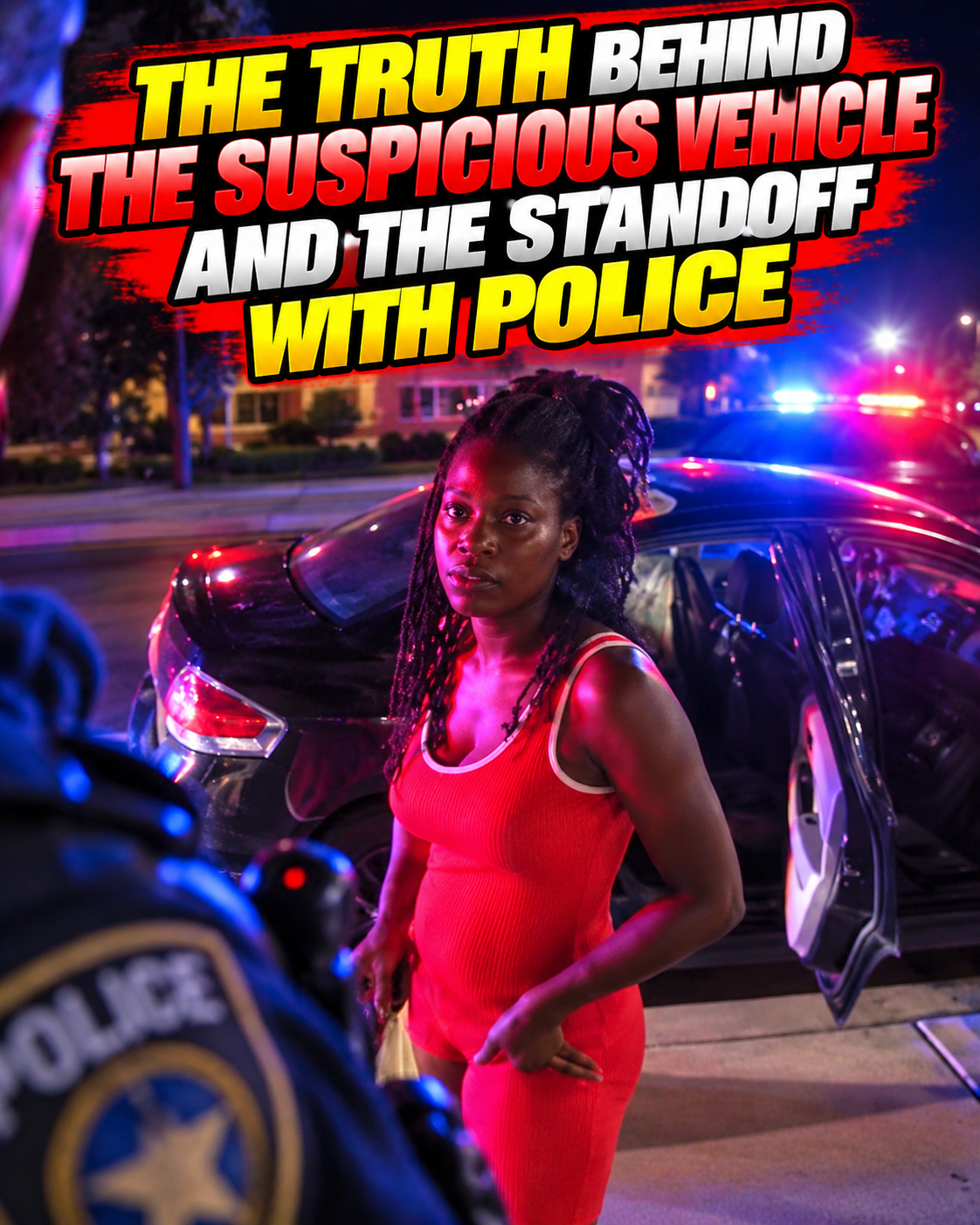
The supplied image captures the officer standing immediately behind the open driver's door while another person is positioned close to the Mustang. A patrol vehicle is directly behind them. The proximity between everyone involved means there is very little room for misunderstanding or sudden movement.
The photograph does not establish the exact location, identities of the people involved, reason police initially responded, or eventual outcome. Those details require the complete footage or verified records. What it does show is a police interaction that has reached a point where the officer is working at extremely close range.
A Quiet Street and an Ordinary-Looking Beginning
Nothing about the neighborhood immediately suggests trouble.
The weather is clear. The road appears almost empty. Houses and trees line the area, and the Mustang is stationary along the roadway.
This is the kind of environment where a police call might initially seem easy to manage.
An officer arrives, identifies the people involved, asks several questions, and determines what happened.
If everyone communicates and follows instructions, the entire interaction could potentially be resolved within minutes.
But that depends heavily on what happens next.
The Mustang Becomes the Center of the Encounter
The white Mustang GT immediately stands out.
It is stopped close to the curb, and its driver's door is open. The officer has positioned himself near that opening while another individual remains close to the vehicle.
Once a car door is open, the dynamics of an encounter change.
The vehicle is no longer simply a stationary object.
Someone can enter it.
Someone can reach inside.
The door itself can obstruct the officer's view.
If the engine is running, the possibility of sudden movement adds another concern.
None of those possibilities means something dangerous is necessarily happening. They simply explain why officers pay close attention to movement around an open vehicle.
The Officer Is Working at Close Range
Distance provides reaction time.
Here, there is very little of it.
The officer appears only a few feet from the other person. At that range, an unexpected movement can happen faster than a lengthy verbal warning can be given.
That makes communication especially important.
If the officer asks someone to remain in a particular position, the instruction may be intended to preserve a predictable environment while the situation is investigated.
Everything Depends on Communication
Many police encounters become complicated not because of the original reason for the call, but because communication begins breaking down afterward.
The officer gives an instruction.
The person responds.
Another question follows.
Someone moves unexpectedly.
The officer reacts.
Within seconds, an interaction that appeared calm can feel completely different.
This is one reason the moments before an escalation matter so much.
One Unexpected Move Changes the Atmosphere
The title points toward a specific turning point: an unexpected action.
That does not tell us precisely what the person does, and the still image cannot establish it.
Perhaps the individual moves toward the car.
Perhaps the person reaches somewhere the officer cannot immediately see.
Perhaps there is an attempt to walk away.
Whatever occurred should be established from the complete footage rather than invented from the screenshot.
What matters narratively is the sudden transition.
Before the movement, the officer may believe the situation is under control.
After it, uncertainty increases.
Officers React to What They Can See
Police do not have the benefit of watching an encounter afterward in slow motion.
They see events once, in real time.
If someone unexpectedly moves, the officer must immediately decide whether the action is harmless, uncooperative, or potentially dangerous.
Sometimes the answer becomes obvious.
Sometimes it does not.
That uncertainty explains why sudden movements during close police encounters can produce immediate reactions.
The Open Door Creates Another Variable
The Mustang's driver's door is particularly important in this image.
An open door can partially block the officer's view of the interior.
Depending on positioning, it can also limit movement.
If someone steps toward the driver's seat, the officer must determine why.
Are they retrieving something after being told to do so?
Are they attempting to enter the vehicle?
Is there simply a misunderstanding?
Context determines the answer.
The Patrol Vehicle Provides a Second Perspective
The camera appears to be positioned from a police vehicle behind the Mustang.
That perspective provides a valuable wide view.
It shows the officer.
The individual.
The open door.
The Mustang.
The surrounding roadway.
If body-worn footage also exists, investigators could potentially compare the two perspectives.
The dashcam shows overall positioning while the body camera may capture the conversation more clearly.
The Officer May Repeat Instructions
When someone does something unexpected, officers often attempt to restore predictability.
That means returning to clear directions.
Stay there.
Step away from the vehicle.
Show your hands.
Do not reach inside.
The exact commands in this incident cannot be determined from the photograph, but straightforward instructions are commonly used because they reduce ambiguity.
The Person's Response Becomes Critical
Once instructions are given, the next few seconds can determine whether the encounter settles down or becomes more difficult.
Following the instruction gives the officer more information.
Continuing unexpected movement creates more uncertainty.
The difference can be dramatic.
A person does not necessarily need to agree with the officer's interpretation of events in order to avoid escalating the immediate situation.
Questions and disagreements can be addressed once everyone is in a stable position.
A Calm Neighborhood Does Not Eliminate Risk
The surrounding environment looks almost peaceful.
That can be deceptive.
Police encounters do not become safe simply because they happen on a quiet residential street.
In fact, fewer distractions can make the behavior of the people involved even more central.
There is no traffic jam driving the tension.
No crowd appears to be pushing toward officers.
The interaction itself creates the uncertainty.
The Officer Has to Watch Hands and Movement
During close-range contacts, hands are particularly important.
Hands can show whether someone is complying.
They can also disappear behind a vehicle door or inside the passenger compartment.
An officer who cannot see someone's hands has less information.
Again, uncertainty does not automatically mean danger.
But uncertainty affects how cautiously officers respond.
The Mustang Could Become an Escape Route
If the person is standing beside the driver's door and suddenly enters the vehicle, the encounter changes instantly.
A stationary person becomes a mobile driver.
The officer now has to move away from the car.
A quiet roadside interaction could potentially become a vehicle-related incident.
The image does not establish that this happened here, but it illustrates why officers may pay particular attention when someone moves toward a driver's seat during an unresolved encounter.
The Officer Cannot Simply Stand in the Vehicle's Path
Positioning around vehicles matters.
If there is any possibility that the car could move, standing directly in front of or behind it can create unnecessary risk.
Officers may try to position themselves where they can observe the driver without becoming trapped.
The Mustang's open door makes those positioning decisions more complicated.
Backup Can Change the Dynamic
If the officer believes the situation is becoming less predictable, another unit may be requested.
Backup provides additional observation.
One officer can communicate while another watches the vehicle.
Another officer can monitor nearby people.
That division of attention can help slow the encounter down.
More Officers Do Not Necessarily Mean More Aggression
The arrival of additional officers can look dramatic on video.
But additional personnel can actually make it easier to avoid physical escalation.
One officer no longer has to simultaneously watch hands, communicate, monitor the vehicle, observe the surroundings, and use the radio.
Responsibilities can be divided.
That can create more time for communication.
The Person May Have a Different Understanding
The individual beside the Mustang may not interpret the situation the same way as police.
Perhaps they believe the encounter is nearly finished.
Perhaps they think they are free to move.
Perhaps they misunderstand an instruction.
Perhaps they intentionally choose not to follow it.
Those possibilities have very different meanings.
Audio and the complete footage are necessary to determine which applies.
Tone Matters
The words themselves tell only part of the story.
How are they delivered?
Is the officer explaining?
Is the person arguing?
Are commands becoming increasingly urgent?
Does someone repeatedly interrupt?
Tone can show when an encounter transitions from conversation toward confrontation.
The Original Police Call Still Matters
Once tension develops, viewers naturally focus on the dramatic portion.
But there was a reason police were there before this moment.
Understanding that reason provides essential context.
Was this originally a traffic-related matter?
A call for assistance?
A complaint involving the vehicle?
A dispute?
The supplied frame cannot answer that.
The beginning of the footage can.
The Encounter May Have Been Calm for Several Minutes
Another common feature of police footage is how suddenly the tone can change after a long period of relative calm.
Officers may spend several minutes speaking normally.
Everyone appears relaxed.
Then one person makes an unexpected decision.
The entire atmosphere changes almost instantly.
That contrast makes the turning point especially noticeable.
The Officer Must Adapt Immediately
Police cannot continue behaving as though nothing changed.
If circumstances become more uncertain, positioning may change.
Instructions may become more direct.
The officer may create distance.
Backup may be requested.
Those changes are responses to the new situation rather than necessarily to the original call.
The Driver's Door Remains a Critical Boundary
As long as the person remains outside and away from the controls, the Mustang is essentially stationary scenery.
Once someone moves into the driver's position, the vehicle becomes active again.
That distinction is why officers often pay close attention to whether someone approaches an open door during an unresolved encounter.
A few feet can completely change the officer's tactical problem.
A Vehicle Adds Weight and Mobility to the Situation
Cars are ordinary objects, but during police encounters they can introduce significant risk.
A person on foot can move quickly.
A person behind the wheel can move thousands of pounds of machinery.
This does not mean police should assume every driver intends harm.
It means controlling vehicle movement is an important safety consideration.
The Person Can Still Slow Everything Down
Even after an unexpected movement, cooperation can restore calm.
Stop moving.
Listen.
Explain what happened.
Follow clear instructions.
Once the officer understands what the person is doing, uncertainty decreases.
The encounter can return to conversation.
Escalation is not irreversible.
Police Can Also Help De-escalate
Officers have their own role in reducing tension.
Instructions should be understandable.
Conflicting commands should be avoided.
When circumstances permit, explaining what is happening can improve cooperation.
The objective is not to win an argument.
It is to bring an unpredictable scene back under control.
Physical Intervention May Not Be Necessary
A tense encounter does not automatically end with force.
Sometimes the person stops after a repeated instruction.
Sometimes another officer arrives and communication improves.
Sometimes a misunderstanding becomes clear.
The most dramatic possible outcome should never be assumed simply because a frame looks tense.
If Physical Contact Occurs, the Scene Changes Again
Should officers need to physically control someone, the open vehicle door and narrow roadside area become significant obstacles.
People can lose balance.
Someone can fall against the car.
The door can restrict movement.
The pavement provides little protection during a fall.
That is another reason officers generally benefit from resolving the situation verbally whenever possible.
The Dashcam Records the Larger Sequence
From behind the Mustang, the camera can preserve something human memory may not capture accurately.
Distance.
Timing.
Movement.
Who moved first.
Where the officer was standing.
Whether the person approached the vehicle.
Those details can become important afterward.
Bodycam Could Capture the Missing Conversation
The dashcam's visual perspective is excellent, but audio from the officer's body-worn camera may provide the missing context.
What instruction was given?
Did the person acknowledge it?
Was there a warning?
Was the movement unexpected because it contradicted a specific instruction?
Without those details, viewers see the reaction without necessarily understanding its cause.
The Two Perspectives Should Be Considered Together
Dashcam answers one set of questions.
Bodycam answers another.
Witness statements can add further context.
A complete understanding should not depend unnecessarily on one dramatic angle.
The goal is to reconstruct the sequence rather than select the most visually compelling moment.
The Encounter Eventually Stabilizes
Every tense police encounter reaches a point where the immediate uncertainty decreases.
The person cooperates.
Officers establish control.
Someone leaves.
The vehicle is secured.
Whatever the exact outcome here, that transition is important.
Once officers no longer have to react to unpredictable movement, they can return to investigating the original issue.
The Mustang Remains at the Center of the Story
The white GT creates a striking visual throughout the scene.
But the vehicle itself is not necessarily what makes the incident significant.
The important element is what happens around it.
The open door.
The officer's position.
The person's movement.
The decisions made during a very short window of time.
Those elements turn an ordinary roadside setting into a tense police encounter.
The Final Outcome Should Not Be Assumed
A screenshot cannot tell us whether anyone was arrested.
It cannot establish charges.
It cannot tell us whether the person was released.
It cannot prove why police initially arrived.
Those details require additional evidence.
Avoiding unsupported conclusions is especially important with police footage because short clips often circulate without their original context.
What the Image Clearly Establishes
The observable facts are relatively straightforward.
A white Ford Mustang GT is stopped on a residential street.
Its driver's door is open.
An officer stands beside the vehicle.
Another person is close to the officer.
A police vehicle is positioned behind them.
The scene occurs during daylight in what appears to be a quiet neighborhood.
Everything beyond that requires context.
The Tension Comes From Proximity
There is very little physical separation between the officer, the individual, and the vehicle.
That proximity is what makes the scene immediately compelling.
At greater distance, everyone has more reaction time.
Here, a single step can matter.
One movement toward the vehicle can change the officer's interpretation of what is happening.
Seconds Matter More Than Minutes
The entire police call may last a considerable amount of time.
But viewers will probably remember only a few seconds.
The moment someone moves.
The officer reacts.
The atmosphere changes.
Those seconds become the defining portion of the footage because they divide the encounter into a clear before and after.
The Moments Before the Turning Point Matter Most
To understand the reaction, viewers need to see what happened immediately beforehand.
What did the officer say?
Where was the person standing?
What were they instructed to do?
Was the driver's door already open?
Did anyone attempt to create distance?
Those details provide meaning to the sudden change.
The Moments Afterward Matter Too
The immediate aftermath reveals whether the encounter continues escalating.
Does the person stop?
Does the officer regain control through verbal commands?
Does backup arrive?
Does everyone calm down?
A dramatic moment without its aftermath gives viewers only half the story.
Routine Police Work Is Built Around Predictability
Most ordinary encounters follow recognizable patterns.
The officer asks questions.
The person answers.
Instructions are followed.
The issue is resolved.
Problems arise when that pattern unexpectedly changes.
Officers then have to determine whether the change represents confusion, resistance, fear, or genuine danger.
That determination may need to happen in seconds.
One Decision Can Reshape the Entire Call
This is ultimately what gives the footage its tension.
The neighborhood does not change.
The Mustang does not suddenly become unusual.
The weather remains clear.
The street remains quiet.
What changes is human behavior.
One decision alters the officer's expectations, and the response changes accordingly.
The Best Resolution Is a Return to Predictability
Whatever created the tension, the safest path forward is straightforward.
Stop unexpected movement.
Create space if necessary.
Communicate.
Follow clear instructions.
Allow officers to determine what happened.
Once behavior becomes predictable again, the encounter can slow down.
The Complete Footage Provides the Real Story
A single image can make the scene look dramatic, but video provides sequence.
Sequence establishes cause and effect.
It reveals whether the officer had given instructions before the movement.
It shows how quickly everything happened.
It demonstrates whether the situation settled down afterward.
That context is essential.
A Quiet Neighborhood Becomes the Backdrop to a Split-Second Decision
Perhaps the most striking aspect of the image is how ordinary everything around the people looks.
Blue sky.
Green trees.
A nearly empty road.
A parked performance car.
There is no environmental chaos.
The tension exists entirely within a few feet beside the Mustang.
That makes every movement easier to notice and potentially more significant.
The Encounter Is Defined by the Unexpected
Police officers routinely approach vehicles.
They routinely speak with drivers and passengers.
They routinely investigate calls in residential neighborhoods.
Most of those encounters end without becoming memorable.
This one becomes different because something happens that the officer apparently does not anticipate.
That unexpected action becomes the turning point.
WHAT MAKES THIS ENCOUNTER COMPELLING IS HOW LITTLE HAS TO CHANGE FOR THE ENTIRE ATMOSPHERE TO SHIFT. THE STREET REMAINS QUIET, THE MUSTANG REMAINS STOPPED, AND THE OFFICER IS ONLY FEET AWAY. THEN ONE UNEXPECTED MOVE FORCES EVERYONE TO REASSESS WHAT IS HAPPENING.
When a Calm Police Call Suddenly Feels Very Different
The opening circumstances appear almost ideal for a controlled encounter.
There is plenty of daylight.
Traffic is minimal.
The officer has room to communicate.
The vehicle is already stationary.
Nothing in the wider environment appears particularly threatening.
Yet those advantages cannot guarantee that an encounter will remain simple.
Police interactions are shaped primarily by the decisions of the people involved.
A single unexpected movement can introduce uncertainty.
Uncertainty changes positioning.
It changes the officer's tone.
It can bring additional units to the scene.
Most importantly, it changes what everyone expects to happen next.
The supplied frame captures that fragile point between routine and unpredictable.
The officer is close to the individual.
The driver's door is open.
The patrol vehicle is directly behind them.
There is little room for error if someone suddenly moves toward the car or away from the officer.
But the photograph alone cannot tell us why police were there, what instructions had already been given, or precisely what action changed the encounter.
For those answers, the complete footage matters.
The seconds before this image establish the context.
The seconds afterward reveal the consequences.
Together, they show how an apparently ordinary police response on a quiet residential street can suddenly become a much more tense encounter.
Watch the complete interaction to see what originally brings police to the Mustang, which unexpected decision changes the atmosphere, and how officers respond when this otherwise routine call suddenly becomes much more complicated: PASTE-YOUR-LINK-HERE. https://www.youtube.com/watch?v=hFqfPaMEmWc
Comments (0)
Loading comments...
May You Like

Woman Tries to Stop Police From Arresting “Brother” — He Denies Knowing Her

[DASHCAM] Drunk Driver Leads Trooper on High-Speed Pursuit Through City Streets
The Truth Behind the Suspicious Vehicle and the Standoff with Police














