One Arrest Attempt Takes a Dangerous Turn Inside the Suspect’s Home
Shoplifting Arrest Turns Chaotic When Suspect Fights a South Carolina Deputy
An attempted shoplifting arrest in Greer, South Carolina, turns into a prolonged struggle inside a family home, leaving the suspect's mother wounded and triggering years of investigation and litigation.
A Follow-Up Investigation Brings a Deputy Back to the House
On October 20, 2019, a Greenville County Sheriff's Office deputy went to a home on Cliffview Court in Greer, South Carolina, as part of a shoplifting investigation. The man she was looking for was 40-year-old Sean Theodore Kaiser. According to reporting based on the sheriff's office account, the deputy had already encountered Kaiser and his family earlier that day during a separate domestic call. Later, after reviewing surveillance footage connected to a convenience-store theft, she returned to the residence to take him into custody. The body-camera footage begins in a setting that looks calm enough: a suburban front porch in daylight, Kaiser standing outside the home, and a deputy trying to explain why she is there. That visual calm is important because it makes the escalation that follows feel even more abrupt. There is no high-speed chase, no weapon displayed by Kaiser and no chaotic crowd outside. The confrontation grows out of an attempted arrest that becomes increasingly difficult to complete. Kaiser acknowledges being at the store. As the deputy begins the arrest process and attempts to read him his rights, he retreats toward the house rather than remaining outside. From that point, the deputy has to decide whether to allow him to move deeper into the residence or physically stop him. The encounter begins shifting from conversation to resistance.
The Front Porch Encounter Starts to Break Down
The supplied footage shows Kaiser questioning the deputy and resisting her attempts to control his movement. What starts as verbal disagreement becomes a problem of physical positioning. The deputy is alone, Kaiser is close to the doorway, and the interior of the home is only steps away. Police officers making an arrest generally try to control a person's hands and movement because an unsecured person can flee, retrieve an object or turn a verbal confrontation into a physical one. But control is not always easy to establish, particularly when one officer is dealing with a larger or actively resistant person. Kaiser moves inside the house. The deputy follows. That decision becomes one of the central points later examined by the Greenville County Sheriff's Office. The department ultimately found that the deputy violated General Order 229, a policy governing arrests, although reporting also distinguished that policy finding from the question of whether the actual use of force during the violent struggle was justified.
Minutes of Negotiation Do Not Resolve the Arrest
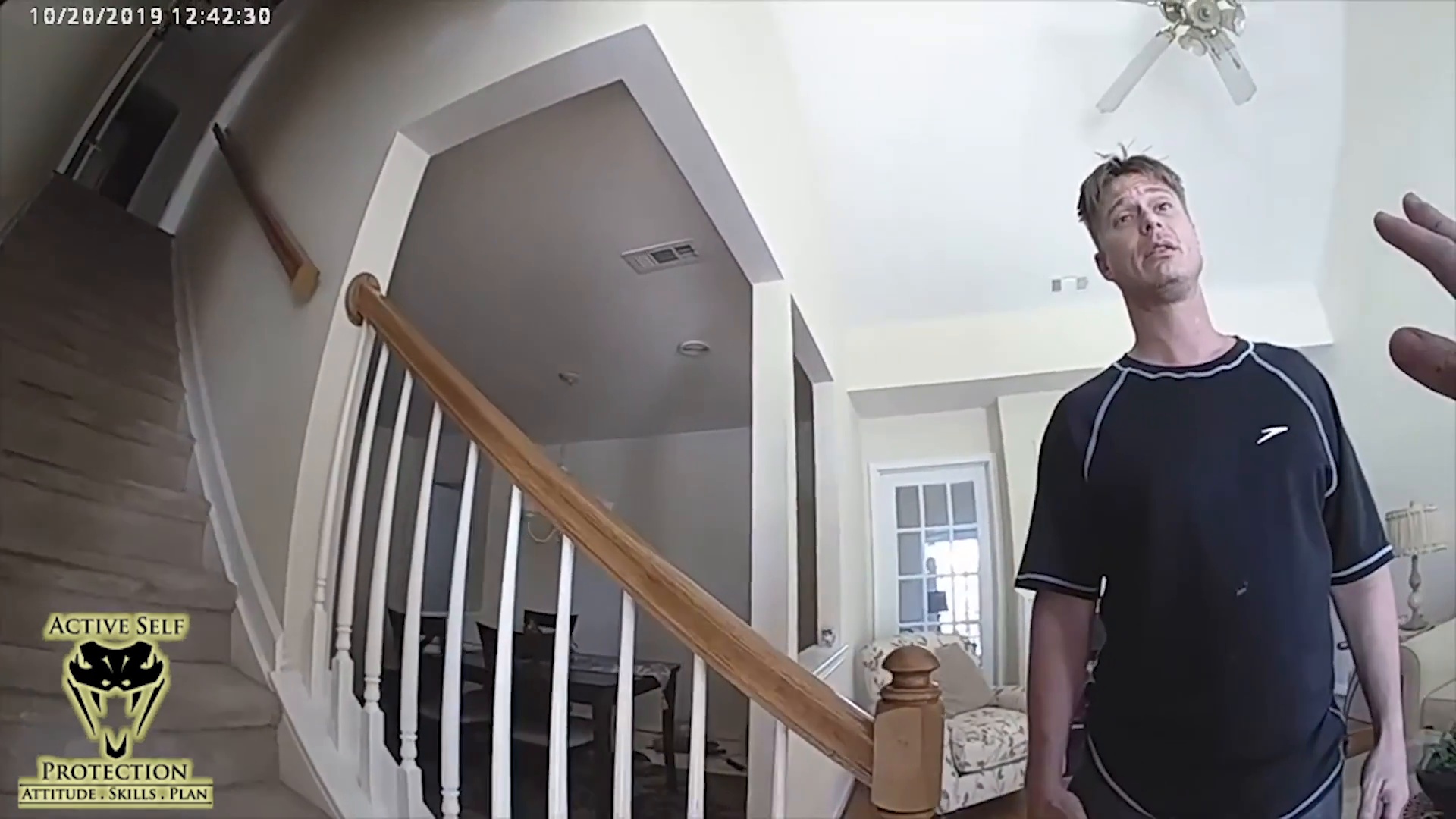
Inside the home, the confrontation does not immediately explode. The body camera records an extended period in which the deputy attempts to persuade Kaiser to cooperate. His mother, Dianne Maros, is present and becomes part of the effort to calm him and get him to submit to arrest. This middle portion of the footage is essential. A short viral edit can make the later shooting look as though it happened immediately after the deputy entered the house. In reality, the encounter lasts for several minutes. Kaiser sits on or near the stairs, argues with the deputy and resists efforts to place him in handcuffs. The deputy repeatedly tries to maintain verbal control while waiting for the situation to resolve. But the balance is precarious. She is inside a private residence with a suspect who does not intend to cooperate, and a family member is close enough to become physically involved in the struggle. The longer the arrest remains unresolved, the more opportunities there are for the situation to change.
Resistance Turns Into a Physical Fight
Eventually, the interaction becomes physical. Reporting based on the body-camera video describes Kaiser grabbing the deputy's wrists and refusing to release her. At one point, he tells her that he is stronger than she is. The deputy can be heard demanding that he let go. The struggle matters legally and tactically because the nature of the encounter has now changed. The deputy is no longer simply trying to persuade a reluctant suspect to accept handcuffs. She is physically fighting to regain control of her arms and create distance. The deputy later suffered a concussion and bruising, according to Greenville County Sheriff's Office officials. Those injuries help explain why investigators treated the confrontation as more than passive resistance. Kaiser was ultimately accused not only of the original shoplifting offense but also of resisting arrest with assault and assault and battery of a high and aggravated nature.
Kaiser's Mother Is Caught in the Middle
Dianne Maros is visible and audible during the confrontation. Like many relatives who find themselves watching an arrest unfold inside their own home, she attempts to influence both sides. At points she tries to restrain or calm her son. At other moments, the deputy directs her to move away. Her proximity becomes critically important once the deputy draws her firearm. A police officer facing a physical attack may need to create distance quickly, but a crowded interior makes every use of force more complicated. Walls, furniture and bystanders reduce the space available for movement and increase the danger that someone other than the intended target can be injured. The body-camera footage makes that danger painfully clear. Maros is not the person the deputy is attempting to arrest. Yet she is close enough to the confrontation that she becomes the person struck when the gunfire begins.
The Gunfire Happens in Seconds
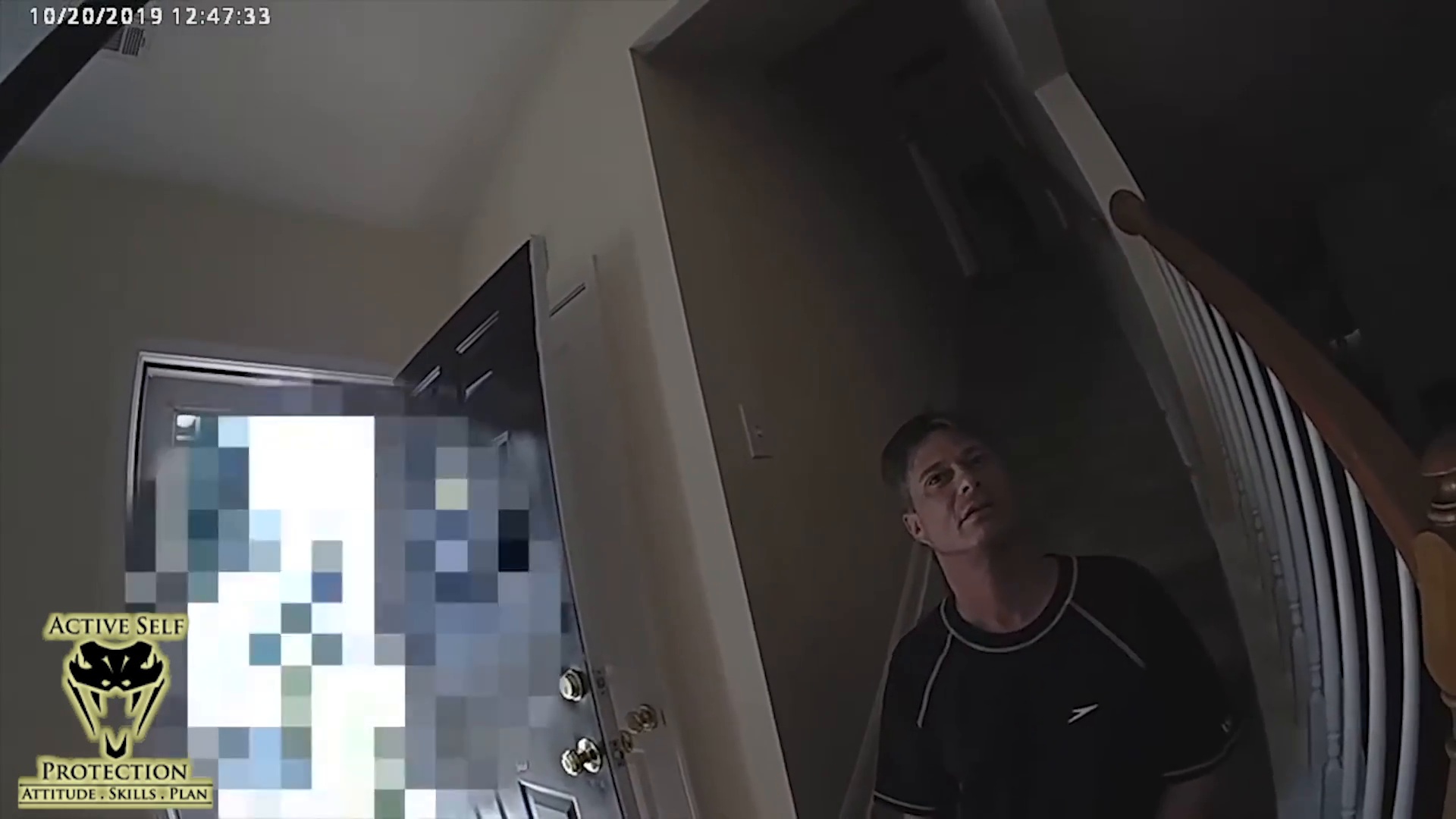
After the earlier grappling, Kaiser moves toward the deputy again. The deputy fires her service weapon. The first shot strikes Maros in the abdomen. A second shot does not strike anyone, according to contemporary reporting. The transition is extremely fast. Body-camera video during a close confrontation can be disorienting because the camera moves with the officer's torso. That is why the minutes before the shots matter so much. They establish the resistance, the physical struggle and the deputy's attempts to separate herself from Kaiser. The fact that Maros is hit rather than Kaiser transforms the incident. What had already become a difficult arrest is now also an accidental shooting involving an uninvolved family member. The deputy immediately has to deal with a medical emergency while Kaiser remains unsecured.
Backup Arrives and Kaiser Is Taken Into Custody
The deputy calls for assistance, and additional law-enforcement personnel eventually arrive. Kaiser is arrested after backup reaches the home. The immediate physical confrontation is over, but the shooting triggers a much larger investigative process. South Carolina's State Law Enforcement Division investigated the officer-involved shooting. Kaiser was charged in connection with his conduct during the attempted arrest. Contemporary reports list charges including resisting arrest with assault, assault and battery of a high and aggravated nature, and shoplifting. Charges are allegations rather than convictions, and the body-camera footage does not by itself answer every question that would later be considered in court. It does, however, provide unusually detailed evidence of the sequence leading from the attempted arrest to the struggle.
The Deputy Is Injured Too
The accidental shooting of Maros understandably became the dominant headline, but the deputy's injuries were also documented. Greenville County officials said she suffered a concussion and several bruises during the confrontation. Those injuries are relevant when evaluating the deputy's perception of danger. Use-of-force analysis generally considers what an officer reasonably perceived in the moment, including the intensity of resistance, the officer's ability to retreat or disengage and whether the suspect was actively attacking. At the same time, the existence of an assault does not automatically resolve every question about tactics. An agency can conclude that force was justified at one moment while also finding that earlier decisions violated policy or unnecessarily increased risk. That distinction became important in this case.

The Sheriff's Office Finds an Arrest-Policy Violation
After reviewing the incident, the Greenville County Sheriff's Office said the deputy violated General Order 229, a multi-page policy governing arrests and related procedures. Reporting at the time said the deputy received counseling and corrective training. This is an important nuance. A policy violation is not necessarily the same as a criminal act, and it does not automatically mean every later use of force was unjustified. Department policies can impose procedural expectations that are more detailed than the constitutional minimum. The finding nevertheless showed that the sheriff's office believed something about the handling of the arrest should have been done differently. It also became significant later when Maros pursued civil litigation over the shooting.
The Case Continues Long After the Bodycam Release
The body-camera footage was publicly released in December 2019, several weeks after the October incident. The release generated national attention because it showed the unusual chain of events in unusually direct detail: an attempted shoplifting arrest, prolonged resistance, a deputy physically struggling with the suspect, a mother trying to intervene and then the mother being struck by a bullet. The story did not end with the video release. Maros later brought a civil lawsuit connected to the shooting. Court records and subsequent local reporting show that Greenville County ultimately reached a $300,000 settlement with her in 2025. Local reporting also stated that the county incurred substantial additional legal fees and expenses. A settlement does not necessarily represent an admission that every allegation in a lawsuit was correct. It does show that the consequences of a few chaotic minutes inside the Greer home continued for years after the body-camera footage ended.
Why the Original Headline Misses the Most Important Detail
The original title describes a South Carolina deputy accidentally injuring a civilian in a crazy scenario. That is broadly true, but it is too vague to explain what actually happened. The injured civilian was not a random passerby. She was the suspect's mother, Dianne Maros, and she was standing inside her own home while her son resisted arrest. Likewise, the deputy was not responding to an unknown violent emergency when the confrontation began. She was attempting to arrest Kaiser in connection with an alleged shoplifting incident. The danger developed during the arrest itself. Those details make the case more understandable without sensationalizing it. The event is already extraordinary: a relatively ordinary property-crime investigation evolves into a prolonged fight and an unintended gunshot wound to a family member.

What the Video Shows and What Reporting Adds
The footage provides the strongest evidence for the physical sequence: the porch conversation, Kaiser's retreat into the house, the extended effort to arrest him, the struggle and the moments surrounding the shooting. News reports and official statements provide details the camera alone cannot establish, including names, charges, the deputy's diagnosed injuries and the department's policy review. Using both types of evidence is important. Video can show behavior but cannot always explain legal status or later investigative findings. Conversely, an official summary can omit details that become obvious when the public watches the recording. This case is particularly useful as an example of why body-camera footage matters. The recording allows viewers to examine the pace of escalation rather than relying entirely on a short written description produced after the event.
A Training Example Beyond South Carolina
The incident later appeared as a case study in law-enforcement crisis-intervention training materials. That is notable because the video presents several overlapping problems officers may face: a resistant subject, a family member attempting to intervene, an arrest inside a residence, limited space, a solo deputy and a rapidly changing threat. Training discussions can examine not only the final gunfire but also opportunities for disengagement, waiting for backup, positioning and communication. The goal of reviewing an incident after the fact is different from judging it with perfect hindsight. It is to identify decisions that might reduce risk in future encounters. The case therefore has value beyond the criminal allegations against Kaiser or the civil claims brought by Maros. It illustrates how a sequence of individually understandable decisions can combine into an outcome nobody intended.
The Full Encounter Is More Complicated Than a Short Clip
A short clip beginning with Kaiser grabbing the deputy would emphasize the danger she faced. A clip beginning with Maros being shot would emphasize the devastating mistake. A clip beginning outside on the porch would show a relatively calm arrest attempt. All three are parts of the same event. The complete recording is important because it connects those pieces. Kaiser repeatedly refuses to submit. The deputy remains engaged in the arrest. Maros becomes increasingly involved. Physical resistance intensifies. The deputy is injured. Gunfire follows, and an unintended person is hit. Understanding the sequence does not require viewers to agree about every decision. It requires acknowledging that the final outcome developed over time rather than appearing without warning.
A Case Defined by Escalation and Unintended Consequences
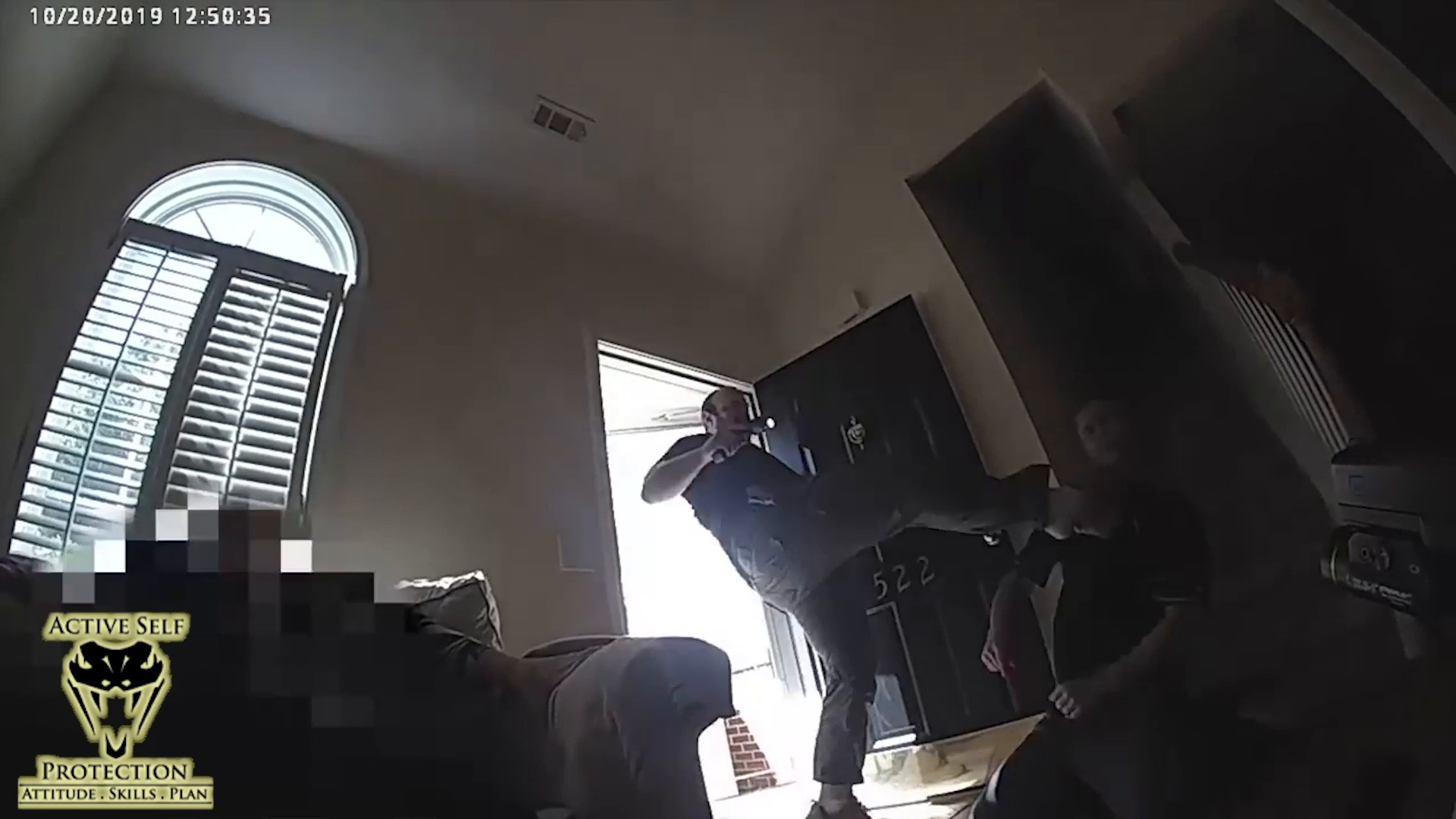
The Greer incident began with an allegation of shoplifting and ended with a woman hospitalized after being shot inside her home. Kaiser faced additional criminal allegations arising from the resistance and assault. The deputy underwent internal review and corrective action. Years later, the civil case ended in a financial settlement. That chain of consequences is what makes the footage so striking. None of those outcomes were inevitable when the deputy first stood on the front porch speaking with Kaiser. Each stage narrowed the available options until the encounter became a close-range physical fight. For viewers, the strongest lesson is not contained in one dramatic frame. It is in the progression from a routine arrest attempt to a situation where several people are exposed to serious harm.
Watch the Complete Bodycam Sequence
The most dramatic seconds occur inside the home, but the earlier conversation and resistance are essential to understanding how the deputy, Kaiser and Maros ended up in such a dangerous position.
Comments (0)
Loading comments...
May You Like

Four Suspects Try Killing a Cop After Police Chase

Neighborhood Grocery Store Suddenly Erupts Into Chaos
After Dad’s Arrest, One Emotional Moment With an Officer Stands Out