Ohio Woman Tased After Allegedly Ramming Two Police Cruisers
Ohio Woman Tased After Allegedly Ramming Two Police Cruisers
Verified incident: The footage matches the July 23, 2024 arrest of Kayla Ryder, 31, in Alliance, Ohio. Police accused Ryder of driving into two Alliance Police cruisers. Officers used a Taser while taking her into custody. Allegations are distinguished from any final conviction.
A Parking-Lot Dispute Escalates Fast
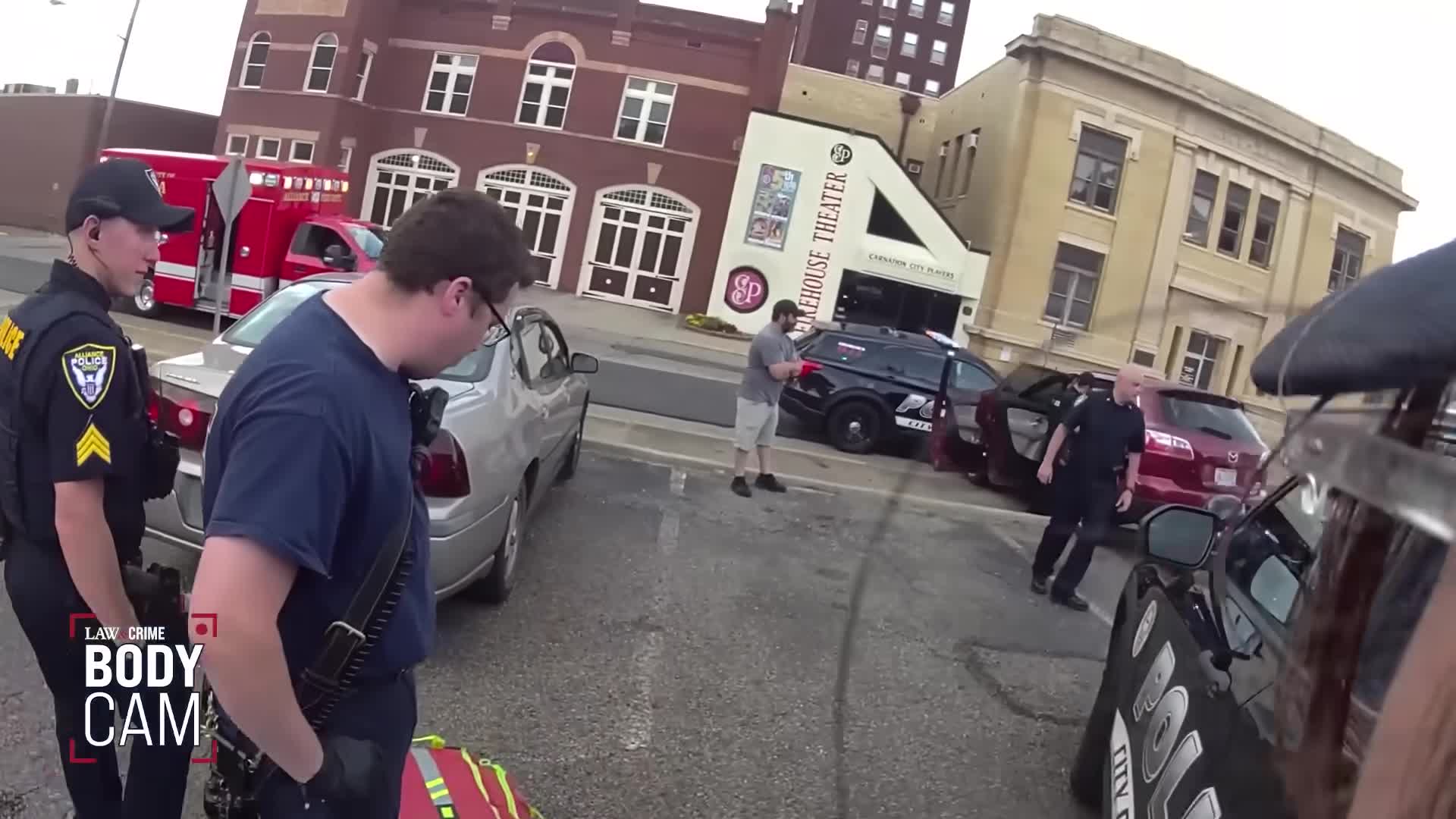
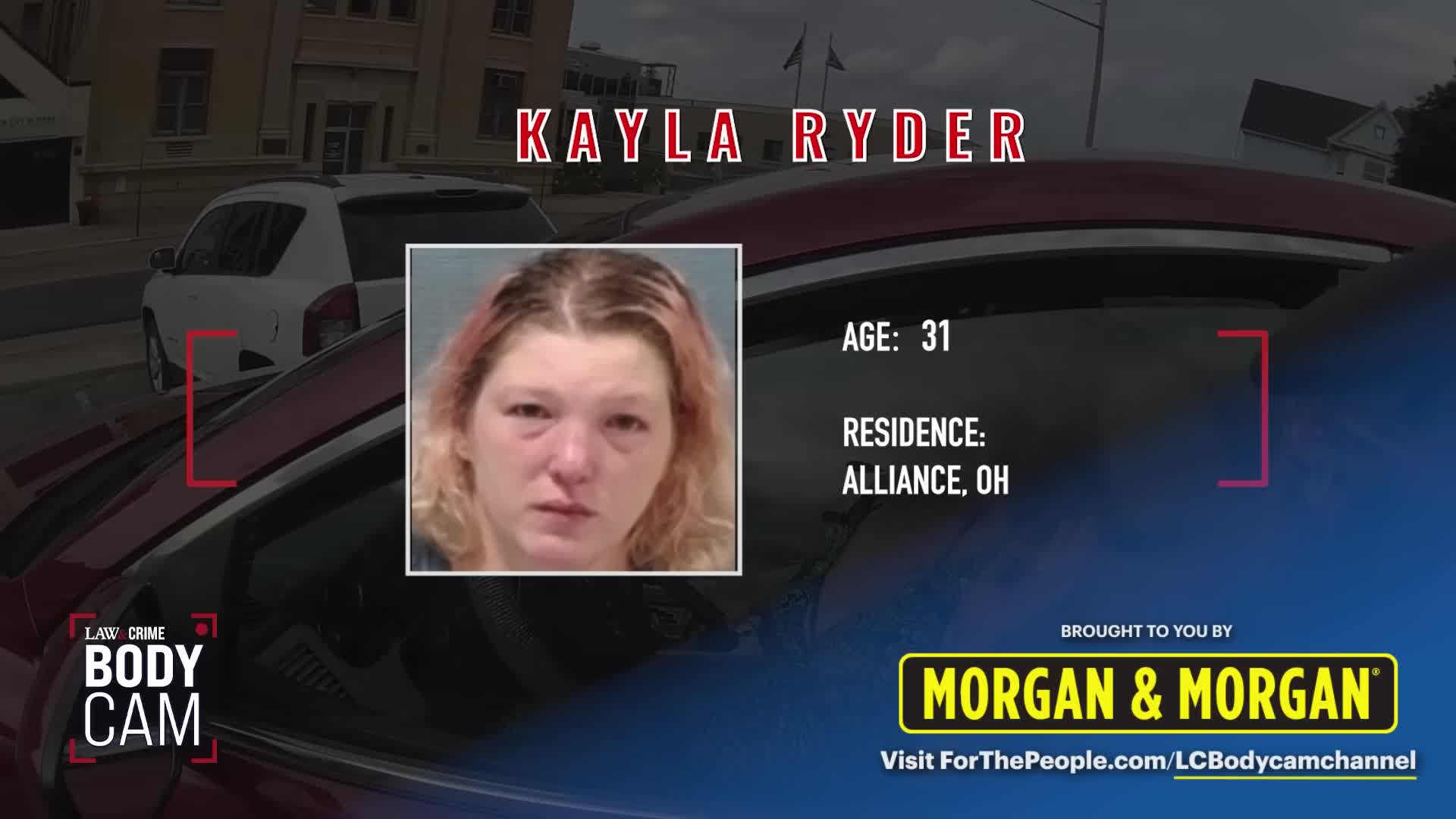
On July 23, 2024, Alliance Police officers responded to the Alliance Municipal Court parking lot on East Market Street in Alliance, Ohio, for a dispute involving a man and a woman in a red sedan. The woman was later identified as 31-year-old Kayla Ryder. Local reporting said Ryder was allegedly blocking the man's vehicle and was reportedly trying to prevent him from filing a police report. The supplied footage independently matches those details and later displays Ryder's name, age and Alliance residence on screen.
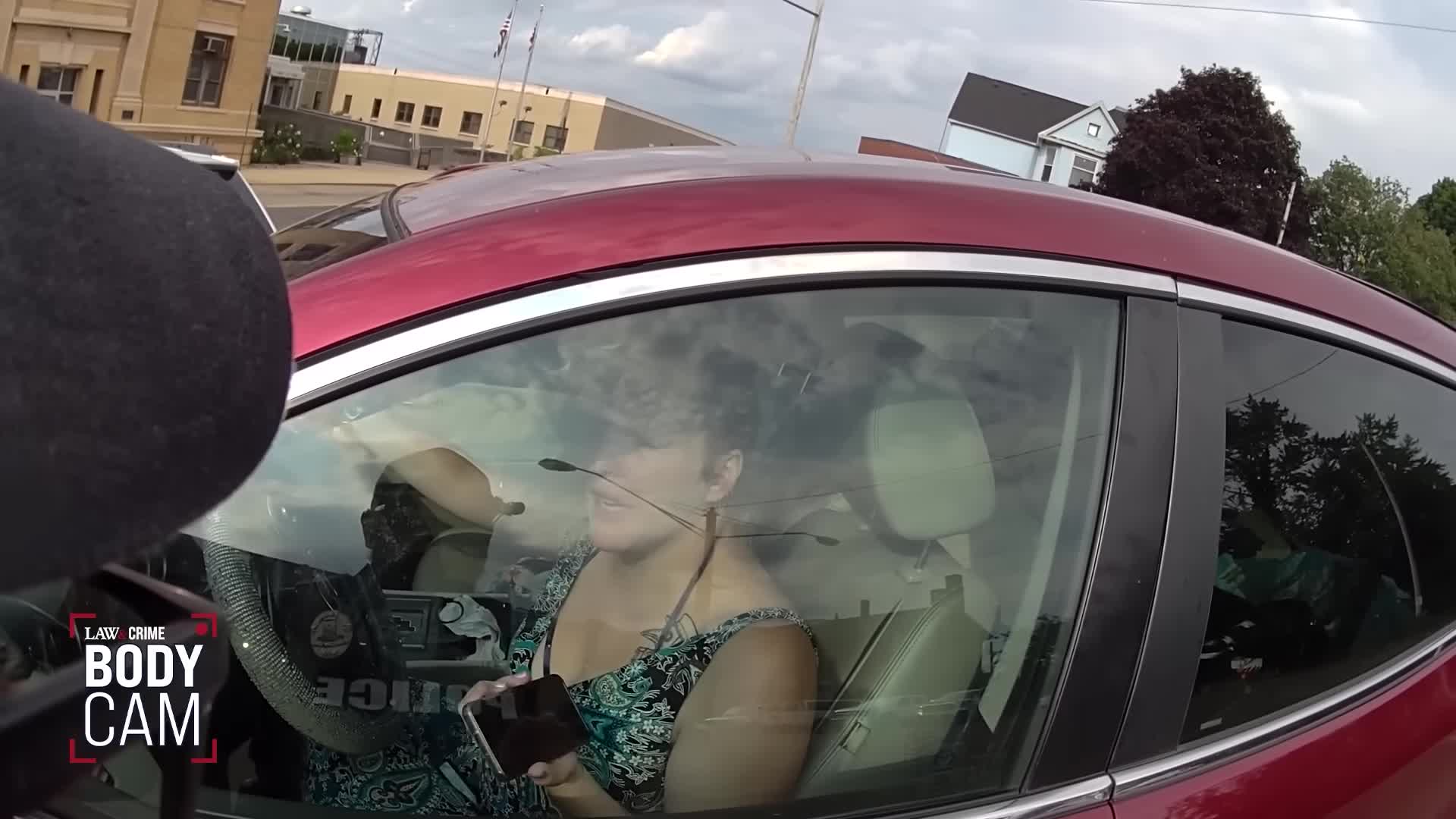
The encounter initially looks controlled. An officer stands beside Ryder's driver's window and speaks with her while she remains behind the wheel. The municipal building and police vehicles are nearby. Nothing about those first moments alone suggests how quickly the scene will change.
The original title says an Ohio woman was tased after allegedly ramming police cars. That description closely matches the public police account. WHBC reported that Ryder was accused of driving into two Alliance Police cruisers and nearly striking an officer. The word “allegedly” remains essential because an arrest and criminal charge are not the same as a conviction.
Why Police Were Called
According to local reporting, the confrontation began because Ryder was blocking a man's car in the municipal court parking lot. The man contacted police, and officers arrived to investigate.
That background matters because the police contact was not an unexplained traffic stop. Officers were responding to a specific complaint involving two people and a vehicle that was allegedly preventing another vehicle from leaving.
A later account accompanying the released body-camera footage said Ryder had been attempting to stop the man from filing a police report. That allegation helps explain why unlawful restraint was among the charges reported after her arrest.
The footage does not require viewers to accept every accusation automatically. It shows the police response and portions of the confrontation, while the legal significance of those events belongs to the criminal process.
The Car Becomes the Biggest Safety Concern
As long as Ryder remains behind the wheel, officers have to account for the possibility that the sedan can move. That is a fundamentally different risk from dealing with someone standing on foot.
A vehicle can cover several feet almost instantly. Officers positioned beside the door, near the hood or behind the car may have very little time to move if the driver accelerates.
The body-camera footage captures officers trying to communicate while Ryder remains seated. Their challenge is to gather information without allowing the situation to become more dangerous.
According to police accounts reported afterward, that danger soon became real. Ryder allegedly backed her vehicle into one police cruiser and then struck another cruiser head-on. WHBC summarized the incident as Ryder driving into two city police cruisers.
The Alleged Collisions Change Everything
Once police believe a driver has intentionally or recklessly driven into cruisers, the encounter is no longer a routine argument in a parking lot.
The immediate priority becomes stopping the vehicle from moving again. Officers must protect themselves, bystanders and other motorists while gaining control of the driver.
WHBC also reported that Ryder nearly struck an officer while she was behind the wheel. That allegation helps explain why authorities treated the case as substantially more serious than property damage.
The supplied video shows the urgency increasing around the red sedan. Officers issue commands and reposition themselves while marked police vehicles occupy the confined lot.
The original title's reference to multiple “cop cars” is therefore supported by the police account rather than being simple exaggeration.
Officers Move to Get Ryder Out
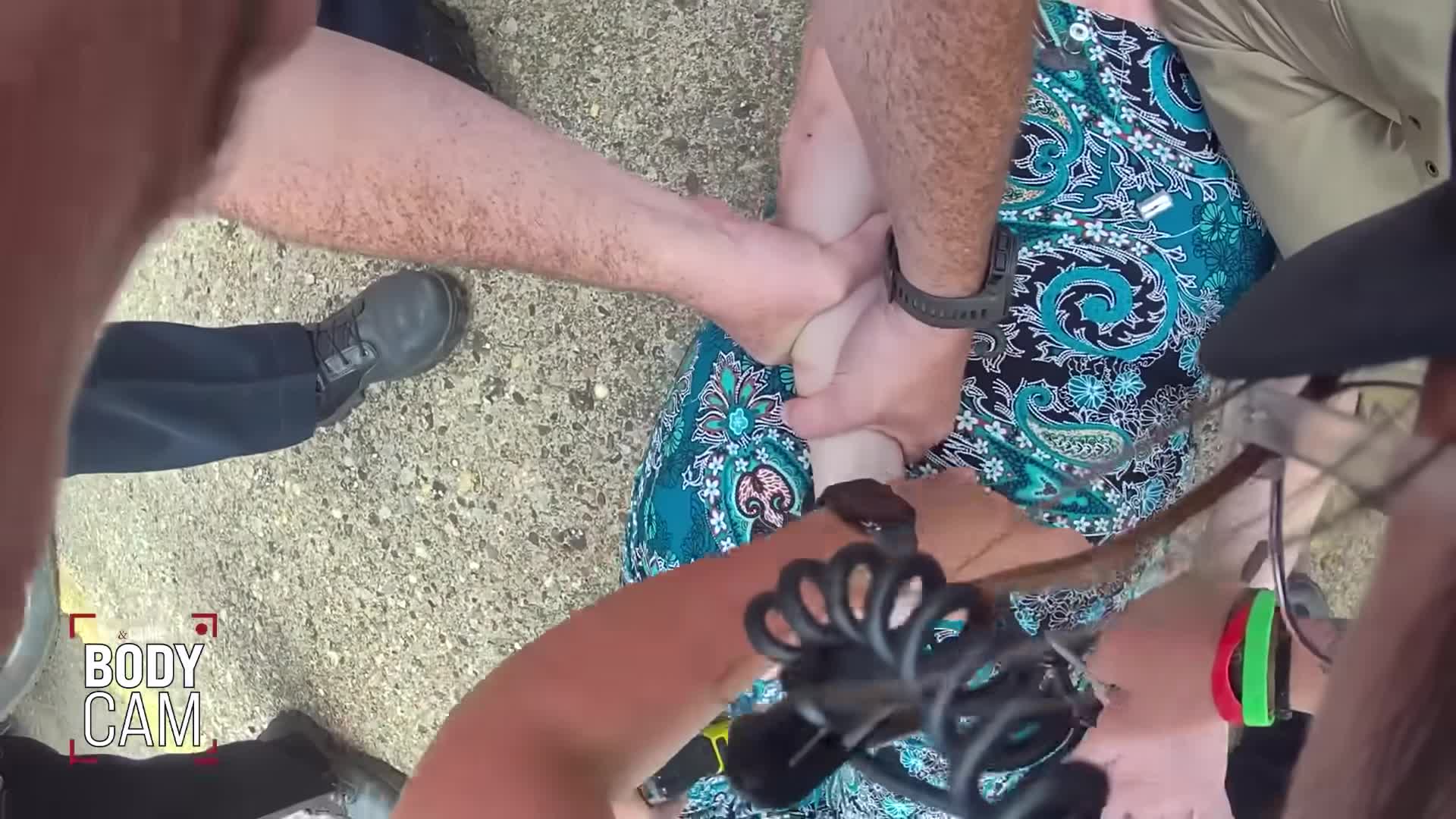
After the vehicle is stopped, officers focus on separating Ryder from the driver's controls. Commands become direct and repetitive.
Vehicle extractions are inherently difficult. A person can grip the steering wheel, brace against the seat, lock a door or attempt to shift the vehicle into gear. Officers also have to control the person's hands while avoiding being trapped between vehicles.
The body camera records the physical transition from conversation to arrest. This is an important part of the sequence because the Taser is not shown as the officer's first response to Ryder. Police initially communicate with her. The electronic-control weapon enters the encounter only after the situation has escalated and officers are attempting to take her into custody.
The Taser Deployment
The Taser use is the moment emphasized by the viral title.
Electronic-control weapons are intended to give police an intermediate force option when verbal commands and hands-on control are not enough. They can temporarily disrupt voluntary muscle control or cause pain compliance, depending on how they are deployed.
Local reporting states that Ryder had to be restrained with a Taser. The body-camera footage shows officers using force while attempting to remove and control her after the vehicle confrontation.
The context matters. The Taser was not deployed merely because Ryder disagreed with an officer. Police had already accused her of driving into cruisers and creating a risk to an officer.
After the deployment, officers work to secure Ryder and prevent her from returning to control of the vehicle.
The Charges Reported After the Arrest
The allegations following the arrest were serious. WHBC reported that Ryder faced felonious assault and other charges. Reporting tied to the body-camera release listed assault, obstructing official business, operating a vehicle under the influence, resisting arrest and unlawful restraint.
A Stark County booking record also confirms that Kayla Alexandra Ryder was booked on July 24, 2024 and lists resisting arrest among the reported charges.
These records establish an arrest and charging stage, not a final determination of guilt. Some criminal cases end in pleas, some go to trial, and charges can be amended or dismissed.
For that reason, this article does not claim that Ryder was ultimately convicted of every offense reported after the encounter. A sufficiently clear final disposition for the full case was not established in the sources reviewed.
Police Said Ryder Acknowledged Being Under the Influence
WHBC reported that police said Ryder confirmed she was under the influence. That statement provides context for the reported OVI allegation.
It does not justify inventing a BAC number or naming a particular substance. No verified toxicology result or breath-test figure was established through the sources used for this article.
OVI cases can rely on multiple forms of evidence, including driving behavior, officer observations, statements, field sobriety testing and chemical testing. Which combination prosecutors relied upon would require the actual court and police records.
The footage documents the encounter. It should not be stretched into laboratory evidence that the camera cannot provide.
Why the Municipal Court Location Stands Out
The location makes the incident particularly unusual. The confrontation unfolds in the parking lot of Alliance Municipal Court, a place where police vehicles and public officials are naturally likely to be present.
According to the police account, Ryder was already involved in a dispute with a man who wanted to make a report. The arrival of officers should have created an opportunity to separate the parties and resolve the immediate conflict.
Instead, the situation allegedly escalated around the red sedan until police vehicles themselves became involved.
The courthouse setting is clearly visible in the supplied footage and provides another strong match between the video and the local reporting about Ryder.
A $100,000 Bond
Three days after the incident, WHBC reported that Ryder was being held on a $100,000 bond.
Bond is not punishment and does not establish guilt. It is a pretrial mechanism used by courts while a criminal case is pending.
Still, the reported amount demonstrates the seriousness with which authorities initially treated the allegations. This was not processed as a minor parking-lot accident.
Police said the conduct involved two cruisers, a near-strike of an officer and resistance during the arrest. Those circumstances explain why the case quickly attracted local attention and later became widely circulated through body-camera media.
What the Video Confirms
The supplied program gives several strong identifiers. It shows the red sedan, Alliance setting and police confrontation. It later displays Kayla Ryder's name, age 31 and Alliance, Ohio residence.
Those details align directly with the July 2024 WHBC report identifying a 31-year-old Alliance woman named Kayla Ryder.
This cross-check is important because it means the article is not attaching an unrelated Ohio arrest to a generic viral title.
The video and reporting converge on the central sequence: officers respond to a parking-lot dispute, Ryder remains behind the wheel, police accuse her of striking two cruisers, officers work to remove her from the car, a Taser is used, and she is taken into custody.
What the Video Does Not Prove
Body-camera footage is powerful evidence, but it does not automatically answer every legal question.
It does not tell viewers the final disposition of each charge. It does not establish a conviction simply because an arrest is recorded. It also does not provide a verified chemical-test result that would allow an article to state a specific BAC.
Those boundaries matter when writing about criminal cases. A dramatic arrest video can create a strong impression, but prosecutors still have to prove the offenses charged.
The correct language therefore remains that Ryder was accused of ramming the cruisers and faced criminal charges after the encounter.
Why Officers Needed Ryder Away From the Wheel
The tactical logic of the arrest is straightforward. Once officers believe a driver has used a vehicle aggressively, leaving that person behind the wheel preserves the ability to repeat the behavior.
Even if the car is temporarily stationary, the driver may be able to shift into gear in seconds.
That makes physical separation from the vehicle a priority. Officers want the ignition controlled, the driver's hands visible and the person moved to a position where the car can no longer be used.
The footage shows this transition clearly. Officers go from talking through the window to urgently trying to gain physical control.
The Taser is part of that escalation in police response after the alleged vehicle collisions, not an isolated event detached from what happened moments earlier.
A Headline Compresses a Much Longer Encounter
“Ohio Woman Tased After Allegedly Ramming Cop Cars” is accurate as a short description, but it compresses more than twenty minutes of footage into one sentence.
The complete recording shows the slower process around the headline moments. Officers arrive, gather information and communicate with Ryder. The vehicle becomes a safety problem. Police cruisers are struck according to the department's account. Commands intensify. Officers then have to physically take Ryder into custody.
Watching that progression makes the force easier to understand in context.
It also gives viewers the opportunity to evaluate the encounter without relying entirely on a narrator's summary.
The Difference Between Property Damage and an Alleged Assault
A car striking a police cruiser can be a simple crash, but police treated this incident differently because of the way they said Ryder used the vehicle and the risk to officers.
WHBC reported that she almost struck an officer. That alleged danger to a person, rather than damage to metal and plastic alone, is central to understanding the seriousness of the case.
Ohio law can treat a vehicle as a dangerous instrument depending on how it is used. Whether every element of a particular felony offense is proven is ultimately a matter for the court.
The article therefore reports the felonious-assault allegation without independently declaring that the legal elements were conclusively established.
An Arrest Is the Beginning of the Legal Process
The moment officers place Ryder in custody is the end of the body-camera confrontation but only the beginning of the criminal case.
After an arrest, prosecutors review evidence and determine what charges to pursue. Defense counsel can challenge police reports, video evidence, statements and use-of-force issues. Courts decide pretrial conditions and, if the case proceeds, guilt is resolved through a plea or trial.
That process is why responsible reporting distinguishes between “charged with” and “convicted of.”
The available material clearly supports reporting Ryder's arrest and the allegations announced afterward. It does not support inventing a sentence that has not been verified.

The Full Footage Shows How Fast a Vehicle Encounter Can Change
The strongest lesson from the video is how quickly a police contact involving a vehicle can change.
At the beginning, an officer is standing beside a red sedan and talking through the window. The scene looks manageable.
Minutes later, police say Ryder has driven into two cruisers, nearly struck an officer and resisted attempts to take her into custody. Officers are issuing urgent commands and using a Taser to gain control.
That shift is what gives the video its tension. It does not require exaggeration.
The footage also shows why officers treat control of a vehicle so seriously during a confrontation. The driver may appear contained while seated, but the vehicle itself can dramatically increase the consequences of a sudden decision.
What Remains After the Viral Moment
The Taser deployment is the moment most likely to be clipped and shared, but the broader incident is about decision-making on both sides of the driver's window.
Police arrive to investigate a complaint. Ryder remains in the car. The situation escalates. Officers say the vehicle is used against police cruisers. They then have to remove Ryder and secure her.
For viewers, the full body-camera footage provides the context missing from a short social clip. For the justice system, the task is different: determining which allegations can be proved and what legal outcome is appropriate.
The verified facts are already substantial. Kayla Ryder, 31, was arrested in Alliance, Ohio after police accused her of striking two cruisers during the July 23, 2024 encounter. A Taser was used during the arrest, and local reporting said she faced felonious assault and other charges.
Anything beyond that should come from a verified final court record rather than assumption.
Comments (0)
Loading comments...
May You Like

🚨⛽ Man Caught in a Disturbing Incident at a Gas Station | Police Respond US
Female Driver Destroys Three Lives in a Matter of Minutes