
Midnight Motorcycle Stop Leads Deputies to Fentanyl, a Loaded Gun and Cash
Midnight Motorcycle Stop Leads Deputies to Fentanyl, a Loaded Gun and Cash
A Registration Check Changes a Midnight Stop
Around midnight in Bunnell, Florida, a Flagler County Sheriff’s Office deputy conducting traffic enforcement stopped a black Harley-Davidson motorcycle near Mahogany Boulevard and Mistletoe Street. According to FCSO’s November 6, 2025 release, the stop began after a records query showed inconsistencies between the motorcycle’s license plate and its registered owner.
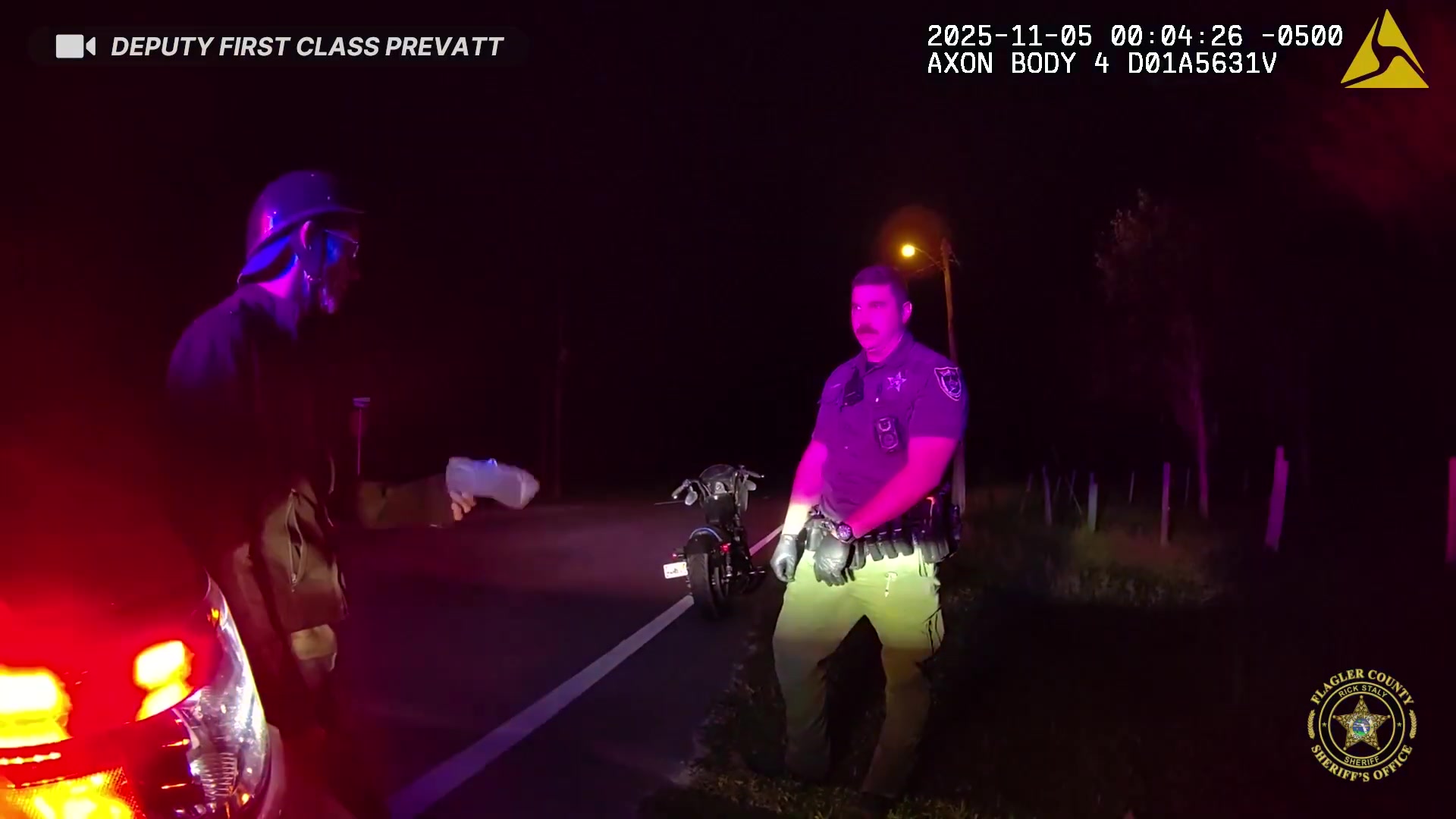
The supplied body-camera footage shows the roadside encounter at night, with deputies speaking to the motorcycle operator and working through paperwork and ownership questions. At this stage, the encounter is still fundamentally a vehicle-registration investigation. Nothing visible in the opening moments alone establishes that narcotics or a firearm are present.
FCSO identified the rider as David Burley, 62, of Bunnell. The agency said Burley produced a vehicle registration and an application for title, but both documents belonged to a different motorcycle. Further investigation showed that the Harley-Davidson itself had an expired registration under another name.
This distinction matters because the most dramatic discoveries came later. The initial stop was not described by FCSO as a fentanyl investigation. It developed from discrepancies involving the motorcycle’s registration and plate.
Deputies Work Through the Ownership Question
FCSO said deputies spoke with both Burley and the motorcycle’s previously registered owner while trying to establish the vehicle’s status. Investigators ultimately determined that Burley had purchased the motorcycle through a third party but had not properly registered it.
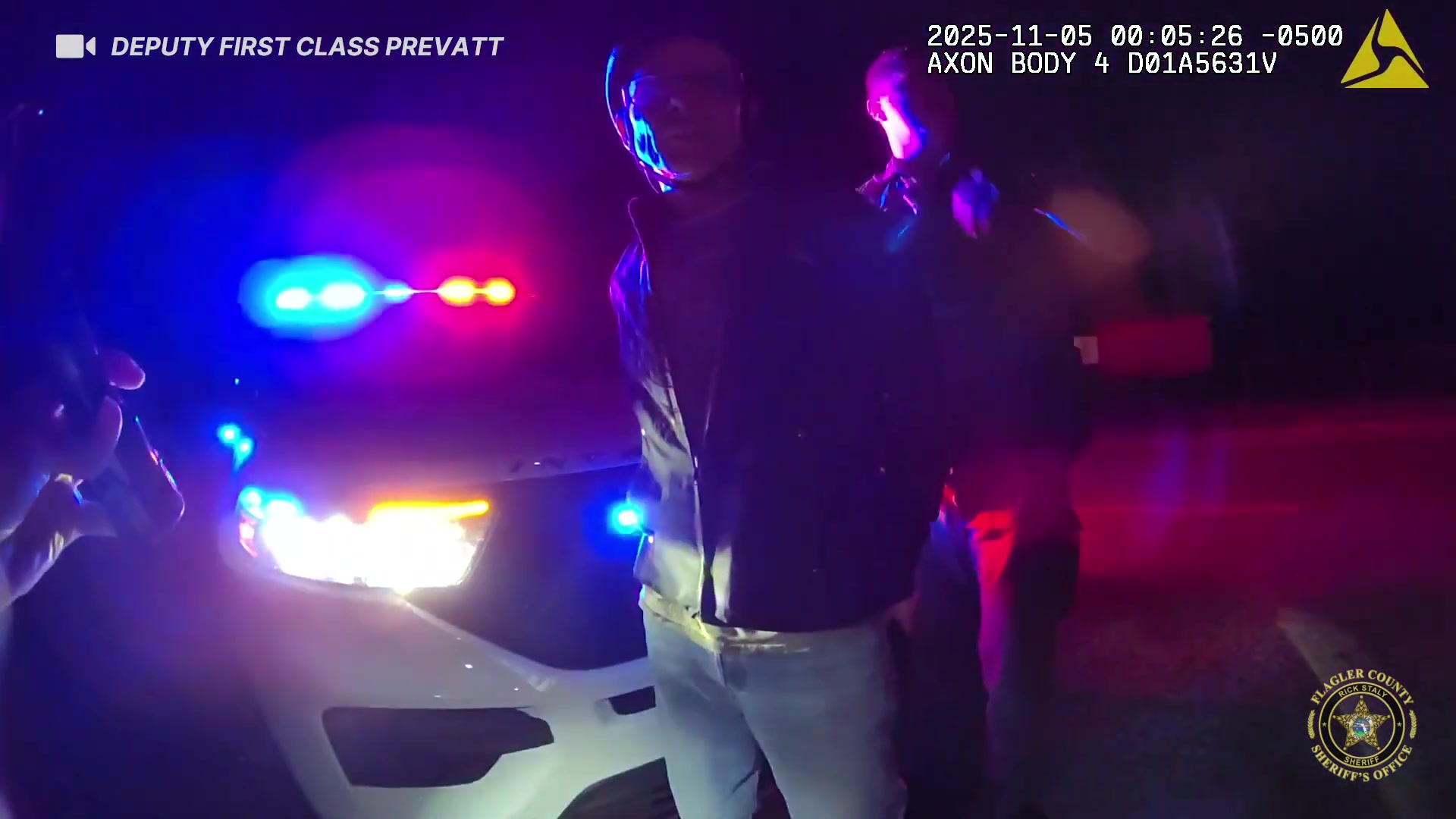
Body-camera footage adds the human and procedural context missing from a short press release. A nighttime roadside investigation can involve repeated questions, database checks, examination of documents and communication between officers. What looks uneventful on video can be important because each answer or document may affect what officers are legally permitted to do next.
The available official release states that Burley was placed under arrest in connection with the vehicle violations before deputies made the major contraband discoveries. That chronology is important. It avoids the misleading impression that officers stopped a rider because they somehow already knew fentanyl was present.
When reporting body-camera cases, the order of events is often as important as the final arrest. A headline may focus on narcotics, but the legal path to that discovery can begin with an ordinary traffic or registration issue.
The Search Produces a Much More Serious Discovery
After Burley was arrested, deputies searched him and reported finding a loaded pistol and 24.4 grams of fentanyl inside his jacket pocket. FCSO also reported that Burley had $2,307 in cash.
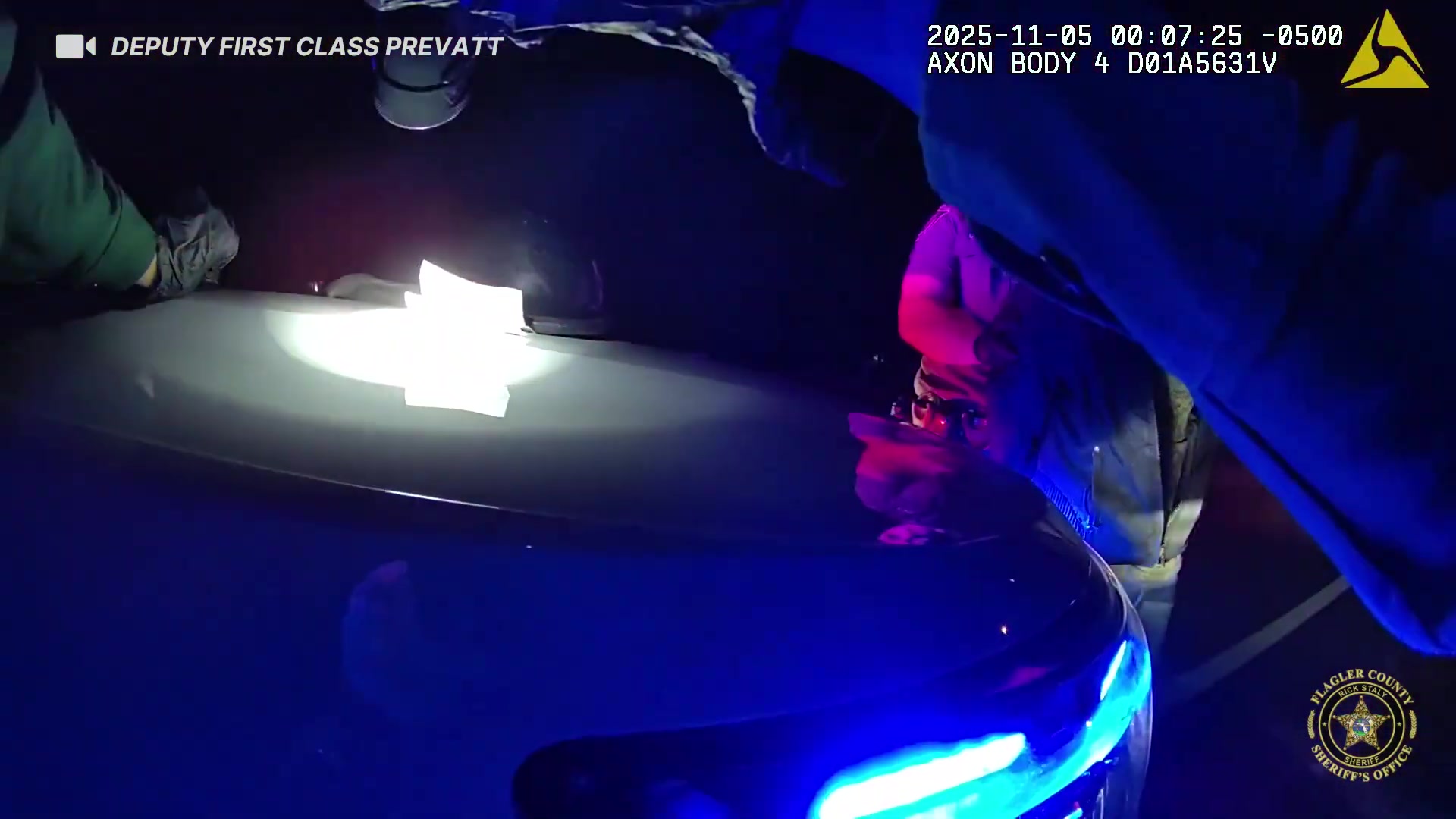
The footage can document officers handling items and conducting the arrest, but it cannot by itself establish the chemical identity or exact weight of a substance. Those details come from FCSO’s official account. For that reason, the substance is described here as fentanyl based on the agency’s identification rather than on visual assumptions from the video.
Fentanyl is a powerful synthetic opioid, and illicit fentanyl is associated with a substantial overdose risk. FCSO framed the seizure in stark terms, saying the amount recovered was enough to potentially kill 12,200 people. That figure is the sheriff’s office’s characterization and should be understood as such rather than as a literal prediction of how any particular quantity would affect every individual.
The loaded pistol also materially changed the case. FCSO alleged that Burley possessed the firearm while committing a felony, leading to a separate firearm-related charge. The combination of the narcotics allegation, firearm and cash transformed what began as a registration stop into a far more serious criminal investigation.
From Traffic Violations to a Trafficking Charge
FCSO announced that Burley was arrested for trafficking in fentanyl, carrying a concealed firearm during the commission of a felony, operating an unregistered motor vehicle, and attaching an unassigned license plate to a motor vehicle.
The trafficking allegation is particularly significant because drug trafficking statutes can depend on the type and quantity of the controlled substance. The sheriff’s office said Burley faced a 20-year mandatory minimum sentence and a $100,000 fine in connection with the fentanyl allegation. Those statements describe the potential statutory consequences cited by the agency, not a final sentence.
Burley was transported to the Sheriff Perry Hall Inmate Detention Facility. At the time of the agency’s release, FCSO said he was being held without bond. The motorcycle and $2,307 in cash were seized for forfeiture.
It is essential to distinguish an arrest from a conviction. FCSO’s release records the allegations and custody status at that point in the case. A court determines guilt, admissibility of evidence, sentencing and the ultimate disposition of criminal charges. Nothing in the body-camera footage alone establishes a final judicial outcome.
What the Body Camera Adds to the Official Record
The official release provides names, quantities, charges and custody information. The body-camera footage provides something different: the progression of the encounter.
Viewers can see how a roadside stop develops over time rather than receiving only the final list of allegations. Officers begin with the motorcycle and paperwork. Questions about registration and ownership follow. The encounter then transitions into an arrest, and the significance of the stop changes as deputies report locating the firearm and suspected narcotics.
That progression is useful because sensational headlines can collapse an entire investigation into one moment. In reality, police encounters often involve a sequence of separate legal decisions. A valid reason for a traffic stop does not automatically authorize every possible search. Arrest authority, searches incident to arrest, probable cause and other doctrines can become relevant at different stages depending on the facts.
The video should therefore be read together with the official release rather than treated as a substitute for it. The camera records what happened in its field of view, but it may not capture database results, conversations outside the camera’s range, laboratory analysis or later court proceedings.
In this case, the two sources complement each other: the footage supplies the roadside context, while FCSO’s written release supplies the verified identity, drug weight, cash amount, firearm information and charges.
A Small Discrepancy With Large Consequences
The defining feature of this case is the distance between how it started and where it ended. Deputies did not describe beginning the encounter with a narcotics warrant or a planned fentanyl operation. They described a registration discrepancy involving a motorcycle.
By the end of the stop, the rider was in custody and deputies reported recovering 24.4 grams of fentanyl, a loaded pistol and more than two thousand dollars in cash. FCSO also seized the motorcycle for forfeiture.
Sheriff Rick Staly praised deputies for looking beyond the original traffic violation and emphasized the potential danger of the fentanyl seized. His comments reflect the agency’s law-enforcement perspective and its broader campaign against illicit opioids.
For the public, the footage is most useful when viewed without skipping directly to the contraband discovery. The earlier minutes explain how officers arrived at that point. They also show why accurate chronology matters when evaluating police encounters.
The case ultimately illustrates how an apparently technical vehicle issue can develop into a serious felony investigation when additional facts emerge. It also demonstrates why body-camera footage, official reports and later court records serve different roles in understanding an arrest.
At the end of the roadside encounter, the motorcycle was no longer simply the subject of a registration inquiry. It had become part of a forfeiture action, its rider had been taken to jail, and deputies had removed a substantial quantity of what FCSO identified as fentanyl from circulation.
Watch the complete encounter to see how a midnight motorcycle stop progresses from a plate discrepancy to a major narcotics and firearm arrest.
Comments (0)
Loading comments...
May You Like

911 Call Leads Police to a Disturbing Family Situation
Entitled Teen REFUSES To Exit Vehicle, Takes Off On Police Instead

Woman Refuses Repeated Orders to Exit Her Car Before Officers Move In













