
Man Ignores Repeated Police Commands as a Roadside Encounter Escalates
Man Ignores Repeated Police Commands as a Roadside Encounter Escalates
A Hit-and-Run Call Leads Police to a Man Walking in Traffic
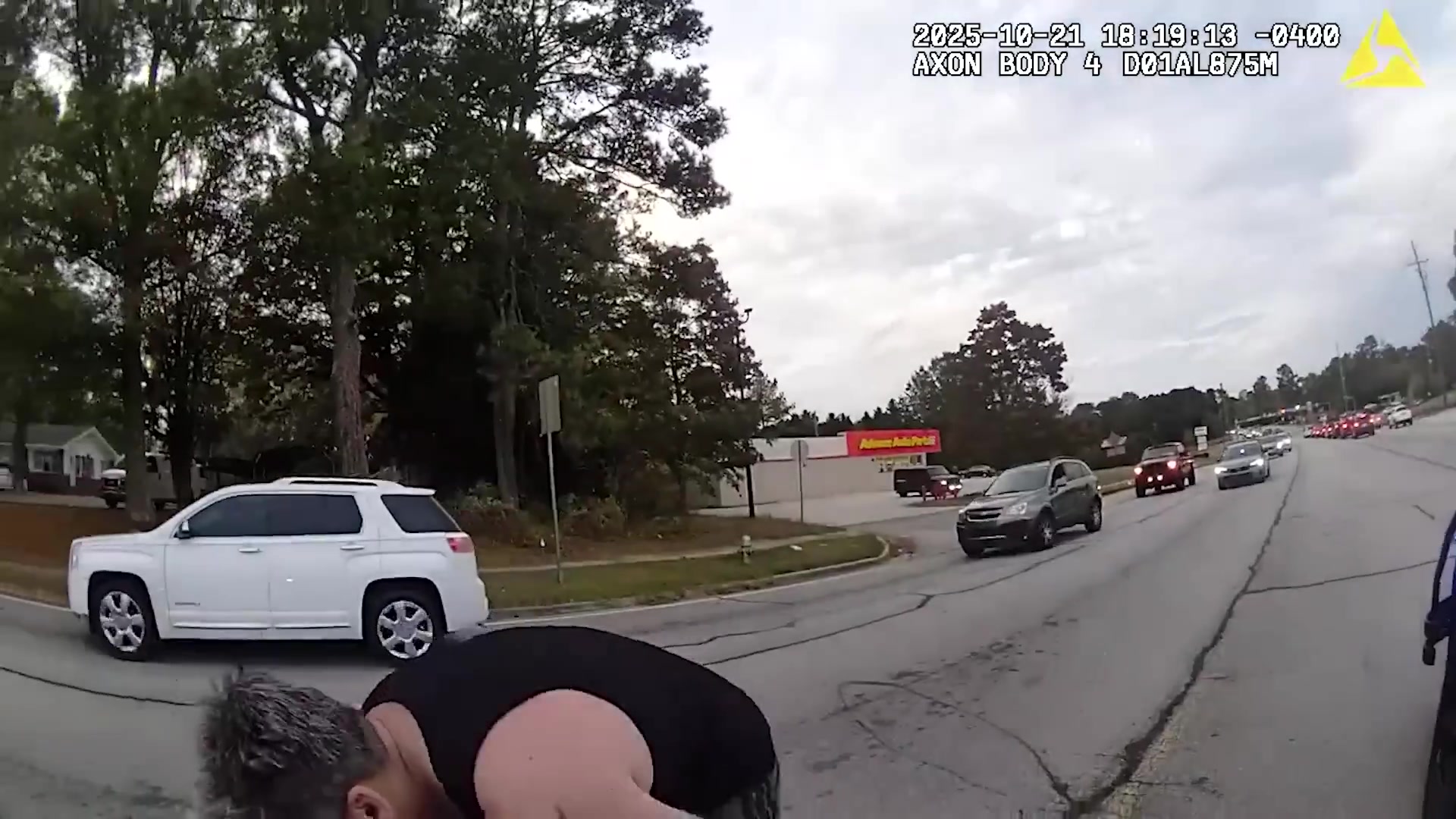
At about 6:10 p.m. on October 21, 2025, Cobb County Police responded to a reported hit-and-run crash in Cobb County, Georgia. The supplied body-camera footage begins as an officer encounters a man walking along a busy roadway near Powder Springs Road. The AXON overlay shows the same date and time described in the official investigation, and dialogue in the video references Powder Springs, providing a direct match to the publicly documented incident.
The man was later identified by the Georgia Bureau of Investigation as Timothy Lyle Sheats, 47, of Dallas, Georgia. According to the GBI's preliminary account, Sheats told the responding officer that he had been shot. The officer did not see an obvious injury and attempted to move him away from traffic while figuring out what was happening.
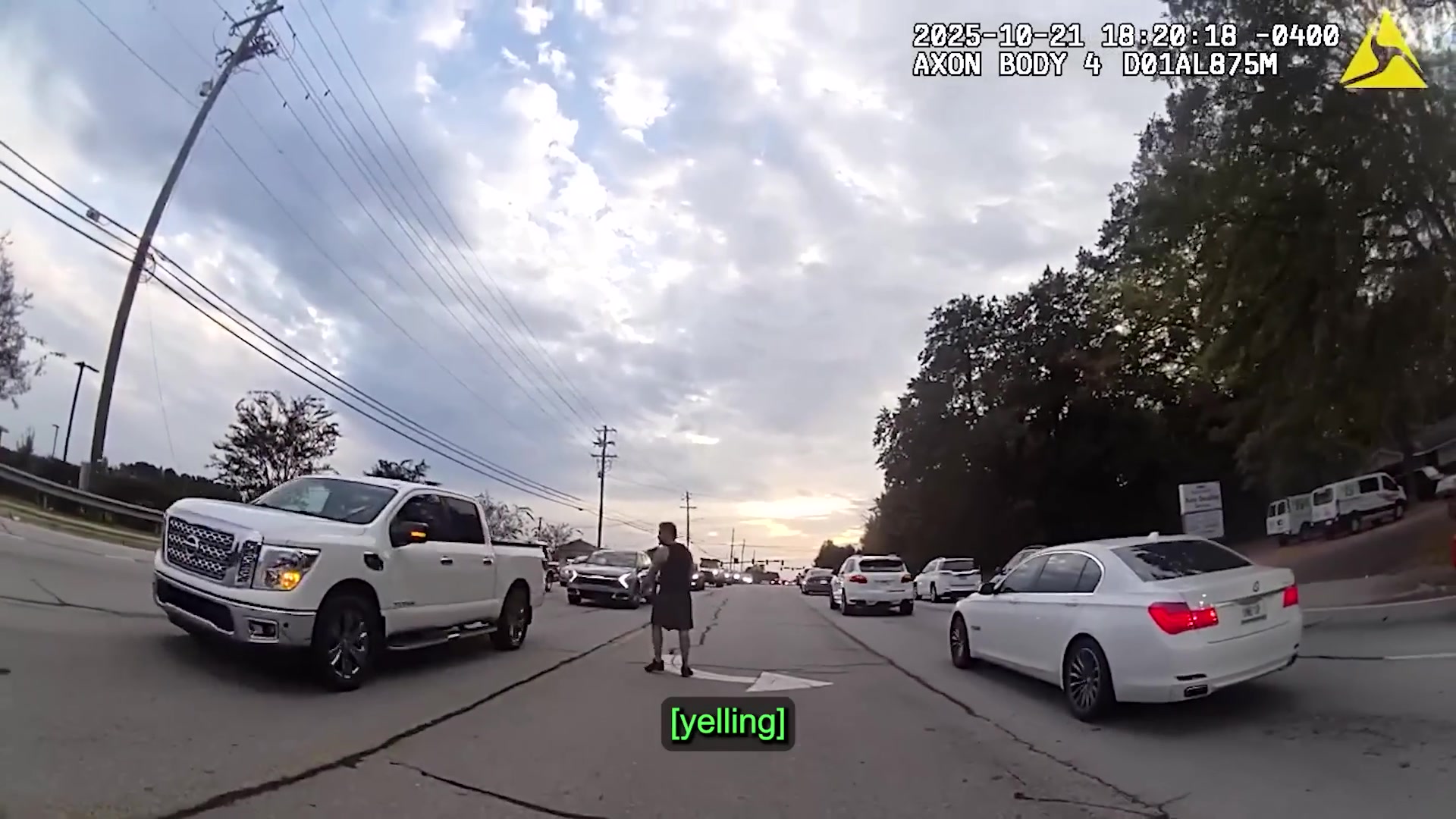
The situation was dangerous before any physical force was used. Cars and trucks continued passing in multiple lanes while Sheats stood and walked in the roadway. The officer repeatedly tried to persuade him to move to a safer position and eventually asked him to get into the patrol vehicle for his own safety.
Sheats refused. What follows is not a conventional arrest sequence in which officers immediately rush a person. Instead, the footage shows an extended attempt to manage someone who repeatedly disregards commands while remaining only a few steps from moving traffic.
The Officer Tries to Keep the Encounter From Becoming Physical
The early footage is dominated by verbal instructions. The officer stays near Sheats and repeatedly directs him away from traffic. Sheats continues moving along the roadway, sometimes stopping and turning toward the officer before walking again.
This setting matters. A person standing in an active traffic lane creates a danger not only to himself but also to drivers who may brake suddenly, swerve or become involved in a secondary collision. Officers responding to such situations have to balance patience with the need to prevent someone from stepping directly into a vehicle's path.
The GBI later said the officer asked Sheats to enter the patrol car as a safety measure. Sheats did not comply. The footage shows that the encounter remains mobile, with the officer following as traffic continues around them.
At this stage, it is important not to add motives the video cannot establish. The footage shows Sheats refusing commands, but it does not by itself explain why he was behaving that way. His statement that he had been shot prompted concern, yet the responding officer reportedly saw no visible injury. Any medical or psychological explanation beyond the verified record would be speculation.
Sheats Moves Deeper Into the Roadway
As the encounter continues, Sheats walks farther into traffic. Vehicles are forced to pass around the unfolding police contact, and the officer's repeated commands become more urgent.
At one point, according to the GBI, Sheats attempted to enter a passing vehicle. That action significantly increased the immediate risk. A driver unexpectedly confronted by a stranger trying to enter a vehicle in moving traffic may accelerate, swerve or react unpredictably.
The supplied footage captures the same chaotic environment described in the official release. Sheats is visible between active lanes while cars and large commercial vehicles continue passing nearby. The officer remains close enough to intervene but cannot physically control him through verbal commands alone.
This is the point where the original title, “He Refused Every Officer's Commands Then This Happened,” begins to make sense. The central issue is not a single refusal. It is the accumulation of repeated instructions while Sheats continues moving through a hazardous roadway.
A Taser Is Deployed to Stop Him From Entering Traffic
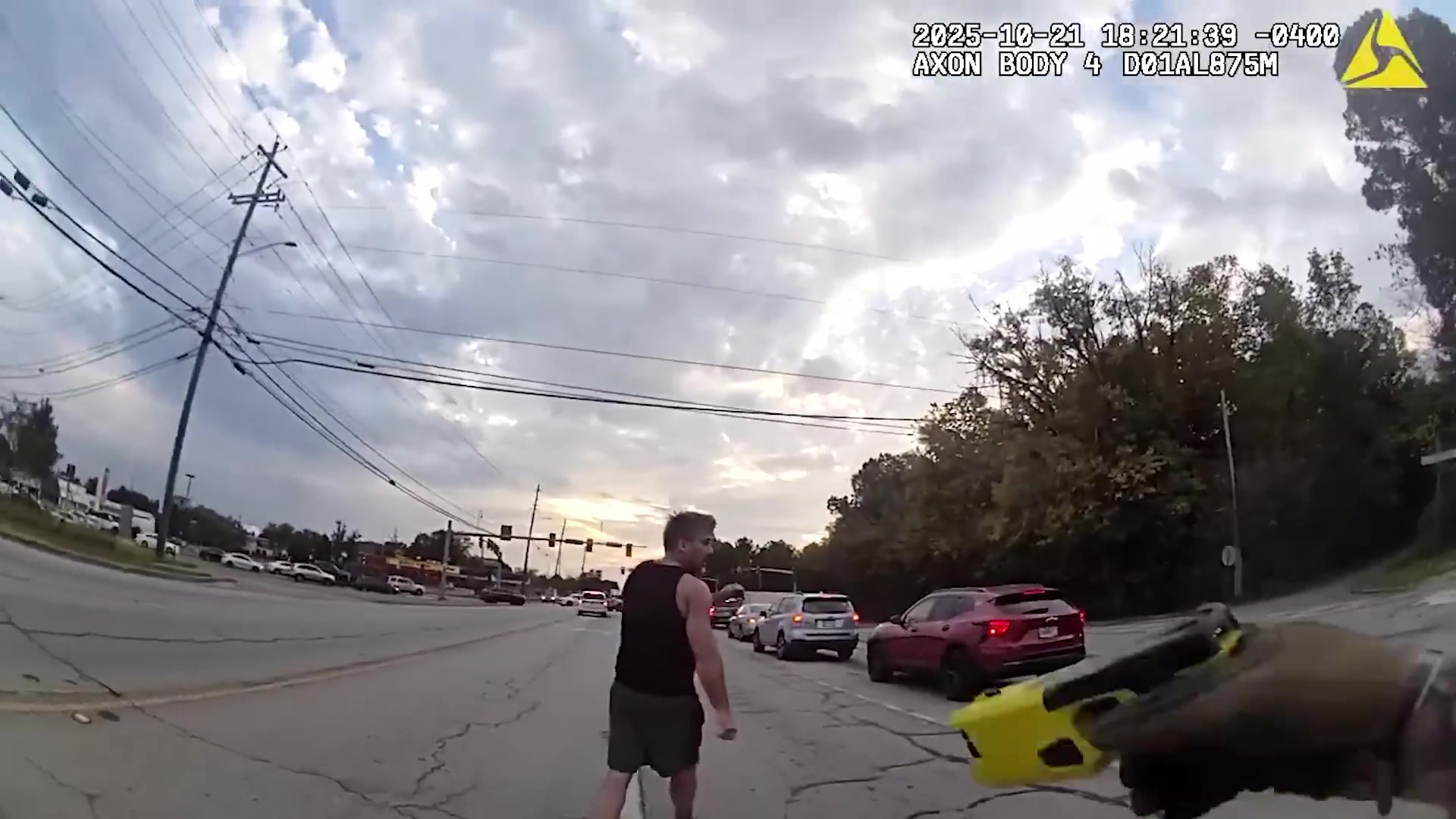
The GBI's preliminary investigation states that the officer deployed a Taser to gain control of Sheats and prevent him from running into oncoming traffic. The body-camera footage shows the officer draw the conducted-energy weapon as Sheats continues disregarding commands.
A Taser is often described as a less-lethal tool, but that phrase does not mean risk-free. Conducted-energy weapons can cause a person to lose muscular control and fall, and any use of force can carry medical or secondary-injury risks. Officers therefore have to weigh those risks against the danger they are trying to stop.
Here, the immediate competing danger was traffic. The officer was dealing with a man moving among vehicles on a busy multilane road and, according to investigators, attempting to enter a passing vehicle. The Taser deployment was intended to stop that movement long enough for officers to gain control.
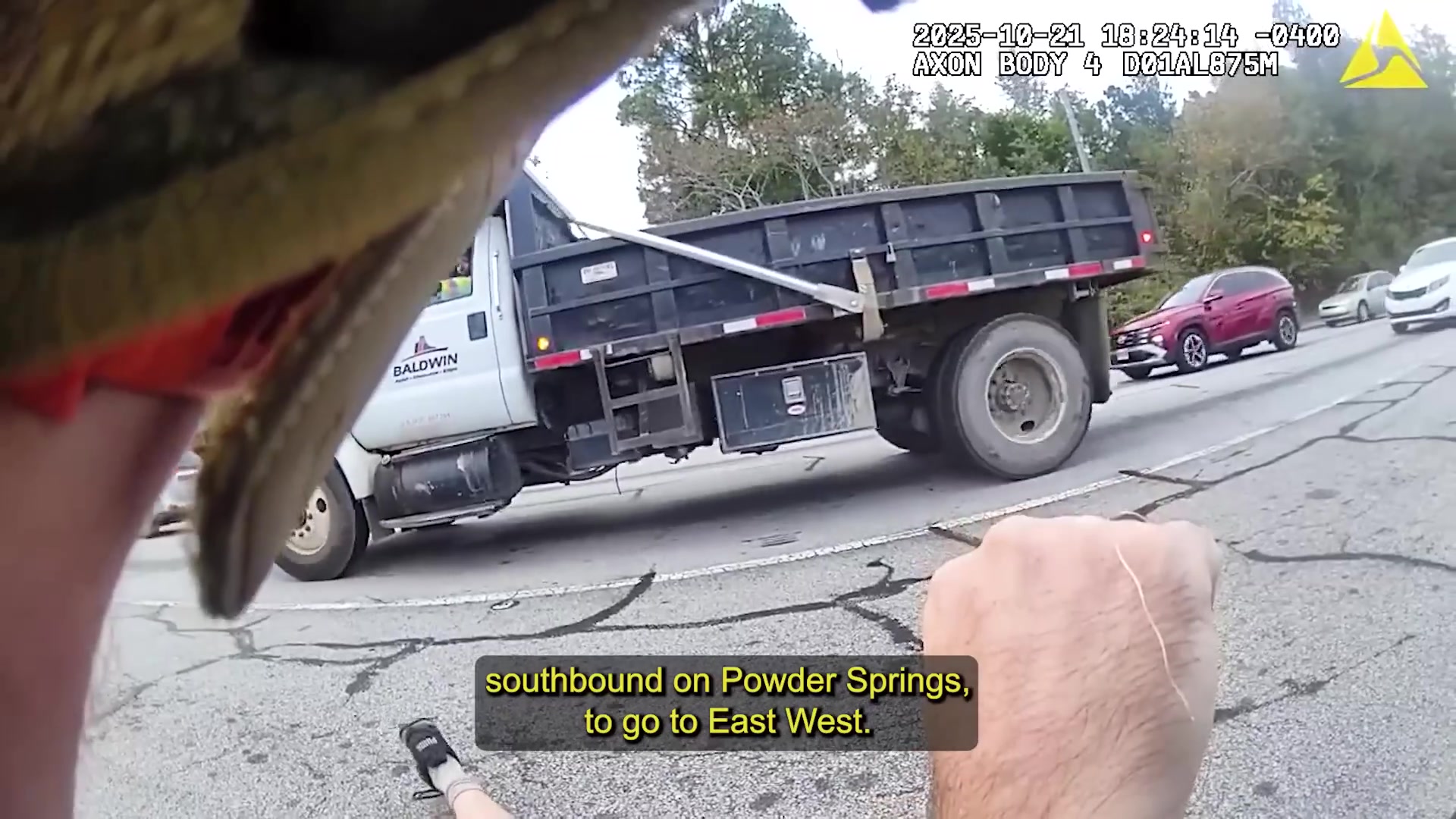
The footage becomes more physically chaotic after the deployment. The camera drops toward roadway level as the officer moves in, and traffic continues passing only a short distance away. Additional officers begin arriving to assist.
Backup Arrives and Officers Secure Sheats
Once other officers reach the scene, they help the first officer restrain Sheats. The focus shifts from following him through traffic to keeping him controlled on the roadway and moving the situation toward medical evaluation.
The arrival of backup matters because a single officer had been trying to manage both Sheats and the traffic environment. Additional officers allow one person to focus on restraint while others can watch the roadway, communicate with dispatch and coordinate emergency medical assistance.
The GBI said officers were able to secure Sheats with the help of additional responding personnel. No officers were reported injured. The footage shows the roadside scene remaining active as vehicles continue moving past the police response.
This phase should not be confused with the final medical outcome. Gaining physical control ended the immediate danger of Sheats walking into traffic, but it did not end the emergency. Investigators said he subsequently became unresponsive.
The Encounter Becomes a Medical Emergency
Emergency medical personnel responded to evaluate Sheats after he became unresponsive. He was transported to a local hospital, where he was later pronounced dead, according to the Georgia Bureau of Investigation.
That outcome changes how the entire encounter must be reported. It would be misleading to describe the footage merely as a dramatic Taser arrest without acknowledging that Sheats later died. At the same time, the fact that the death occurred after a Taser deployment does not, by itself, establish a medical cause of death or prove that the device caused the death.
Determining cause and manner of death requires medical evidence and investigation. The GBI's initial public statement did not announce a final causal conclusion. It described the sequence: police responded to the crash call, encountered Sheats, attempted to keep him out of traffic, deployed a Taser, secured him, and summoned EMS after he became unresponsive.
Responsible reporting should preserve that distinction. The chronological relationship is verified. A specific medical causal claim should not be added unless supported by an autopsy, investigative finding or other authoritative evidence.
The GBI Opens an Independent Use-of-Force Investigation
Because Sheats died following the police use-of-force encounter, Cobb County Police requested an investigation by the Georgia Bureau of Investigation. The GBI announced the investigation publicly on October 22, one day after the incident.
The agency identified Sheats and provided the preliminary timeline while emphasizing that the investigation was active and ongoing. Once completed, the case file was to be submitted to the Cobb County District Attorney's Office for review.
That process is significant. A body-camera video can show commands, movement and the moment force is used, but it cannot answer every legal or medical question surrounding a death. Investigators can review multiple camera angles, dispatch records, witness statements, medical evidence and officer interviews.
The existence of an investigation should also not be described as proof of officer wrongdoing. Independent review is a standard accountability mechanism in serious use-of-force cases. Its purpose is to establish the facts and provide prosecutors with evidence for legal review.
Why the Roadway Is Central to Understanding the Use of Force
Watching only the moment the Taser appears would remove the most important environmental fact from the encounter: Sheats is in active traffic. The officer is not dealing with a stationary person in an empty parking lot. Vehicles pass continuously around them.
That changes the urgency of every command. When an officer tells someone to move out of a lane, delay can have immediate consequences. A driver traveling at road speed may have only seconds to react to a pedestrian who suddenly steps into the lane.
The body camera also shows the limitations of verbal de-escalation. The officer repeatedly communicates, follows Sheats and attempts to redirect him. Yet Sheats continues walking into areas where passing traffic creates obvious danger.
This does not automatically answer every question about the force that followed. It does explain why the officer's decision-making cannot be evaluated as though the encounter occurred in a controlled indoor environment. The moving vehicles are part of the threat picture throughout the video.
The Exact Incident Can Be Verified From Multiple Details
This footage can be identified with unusually high confidence. The AXON overlay shows October 21, 2025 shortly after 6:19 p.m. The video references Powder Springs Road and shows a busy Cobb County roadway. The GBI says Cobb County Police responded at about 6:10 p.m. that evening and encountered Timothy Lyle Sheats walking in the roadway after a reported hit-and-run.
The distinctive sequence also matches: Sheats says he has been shot, refuses efforts to move him to safety, walks into traffic, attempts to enter a passing vehicle, is tased, is restrained with help from backup and later becomes unresponsive.
These overlapping details are far stronger than matching a title alone. They allow the article to use Sheats' verified identity and the official investigative timeline without borrowing facts from a similar but unrelated police encounter.
At the same time, several details should remain outside the story unless later authoritative records establish them. The exact reason for Sheats' behavior, any underlying medical condition, the final cause of death and the ultimate prosecutorial assessment should not be guessed from the footage.
A Difficult Encounter Ends With Questions Beyond the Body Camera
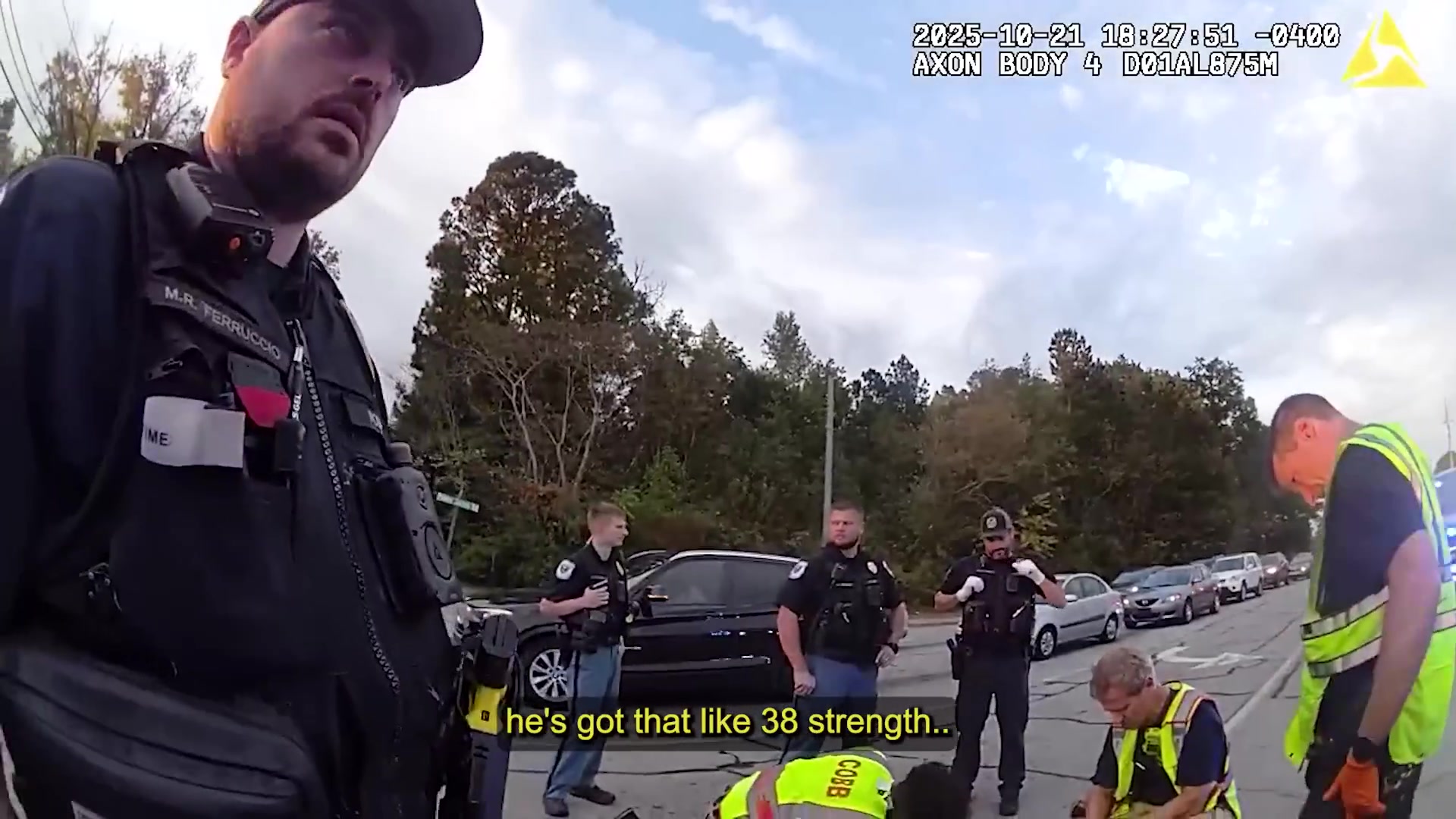
The supplied video is difficult to watch because the opening problem appears so simple: an officer needs a man to get out of the roadway. Yet repeated verbal commands fail to produce that result, and the situation becomes increasingly dangerous as Sheats moves among traffic.
The officer eventually uses a Taser in an attempt to stop him. Backup arrives and officers gain control. What initially looks like the end of the physical confrontation then becomes something more serious when Sheats becomes unresponsive.
The verified outcome is that Timothy Lyle Sheats, 47, was transported to a hospital and later pronounced dead. The GBI opened an independent investigation at Cobb County Police's request. No officers were reported injured.
That ending is why the story should not be reduced to a simple lesson about refusing police commands. The footage certainly documents repeated noncompliance, but it also documents an officer trying to manage a dangerous traffic environment and a use-of-force encounter followed by a death requiring independent investigation.
The strongest account therefore avoids both sensational extremes. It does not portray every ignored command as proof that any later force was automatically justified, and it does not ignore the immediate danger created by walking through active traffic. Instead, it follows the evidence in sequence and leaves unresolved medical and legal questions to the agencies responsible for investigating them.
Comments (0)
Loading comments...
May You Like
Female Driver Destroys Three Lives in a Matter of Minutes
Cops Arrive for a Medical Emergency and Walk Into Drunken Chaos
After Dad’s Arrest, One Emotional Moment With an Officer Stands Out















