
Man Accused of Stealing Phone Threatens to Break Cops Back
BODYCAM CAPTURES A CHAOTIC ARREST: WHEN A ROUTINE POLICE CONTACT TURNS PHYSICAL
Police encounters can change in seconds. One moment, an officer may be speaking with someone and attempting to determine what happened. The next, the same officer may be on the ground trying to restrain a person who is actively resisting.
The supplied body-camera frame captures the aftermath of such a confrontation. A man is lying on the pavement while an officer works to control his arms. The bodycam overlay shows a date of June 9, 2025, but the image alone does not provide enough reliable information to identify the individual, police department, location, or charges.
Rather than attaching the image to an unrelated June 9 incident, the important story visible here is the rapid transition from police contact to physical restraint.
THE FINAL ARREST MAY LOOK SIMPLE IN A STILL IMAGE. GETTING TO THAT POINT CAN BE ANYTHING BUT SIMPLE.
THE ENCOUNTER BEGINS BEFORE THE HANDCUFFS APPEAR
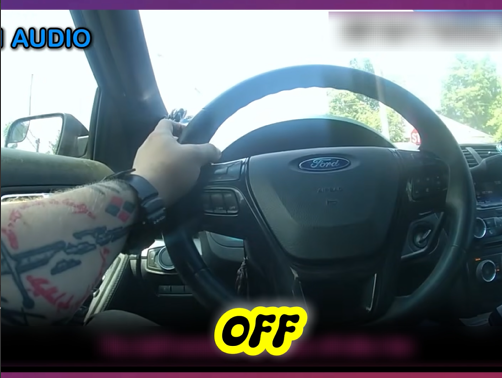
When bodycam footage goes viral, viewers frequently encounter the most dramatic moment first.
Someone is already on the ground.
An officer is shouting instructions.
Backup officers are arriving.
Handcuffs are being applied.
What is missing is often the beginning.
Before physical force occurs, officers may have spent several minutes talking to the person, gathering information or attempting to resolve the situation without force.
This context matters because police do not necessarily begin an encounter intending to make an arrest.
Depending on the call, officers may simply need to identify someone, investigate a complaint, check whether anyone requires assistance or determine whether a crime occurred.
The situation changes when officers develop grounds to detain or arrest someone—or when a person's behavior creates a new safety concern.
THE MOST IMPORTANT QUESTION IS OFTEN NOT “WHY IS HE ON THE GROUND?” BUT “WHAT HAPPENED IMMEDIATELY BEFORE HE WENT TO THE GROUND?”
VERBAL COMMANDS BECOME CRITICAL
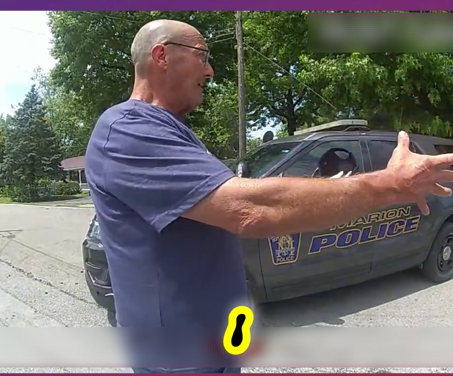
Once officers decide that someone needs to remain at the scene, communication becomes increasingly important.
Police instructions during tense encounters are often deliberately short.
“Stop.”
“Don't move.”
“Put your hands behind your back.”
“Get on the ground.”
These commands may sound repetitive on video, but repetition can serve several purposes.
A person may not have heard the first instruction. Noise, stress and other people at the scene can interfere with communication. Repeating a command also gives someone additional opportunities to cooperate before an officer uses physical force.
This is why the audio from bodycam footage can sometimes be just as important as the picture.
The camera might temporarily point toward the pavement during a struggle, but its microphone can continue recording instructions, warnings and responses.
Investigators can then compare what was said with what happened next.
IN A FAST-MOVING ENCOUNTER, A FEW WORDS CAN EXPLAIN WHY THE NEXT FEW SECONDS BECAME PHYSICAL.
WHEN AN OFFICER DECIDES TO MAKE THE ARREST
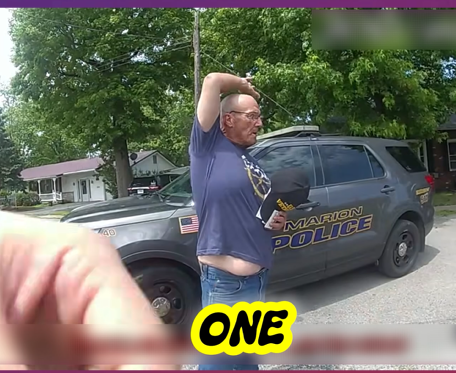
There is often a clear turning point.
An officer reaches for someone's wrist.
The individual pulls away.
The officer tells the person to stop.
The person attempts to walk or run.
Within seconds, the encounter is no longer simply verbal.
Physical resistance creates a fundamentally different problem because officers now have to maintain control while simultaneously determining what the person intends to do.
Are they simply trying to escape?
Are they reaching for something?
Will they turn and fight?
Is another person nearby about to intervene?
Those questions have to be processed extremely quickly.
Body-worn cameras are particularly useful for reconstructing this transition. Police agencies and independent investigators routinely examine such recordings alongside reports, dispatch records, witness accounts and other available video.
But the camera has limitations.
It moves with the officer.
During a struggle, the recording may show little more than arms, clothing and pavement.
THE MORE CHAOTIC THE ENCOUNTER BECOMES, THE LESS CINEMATIC THE BODYCAM FOOTAGE OFTEN LOOKS.
That does not necessarily make the recording less valuable. It simply means investigators may need several sources to reconstruct what occurred.
THE STRUGGLE REACHES THE GROUND
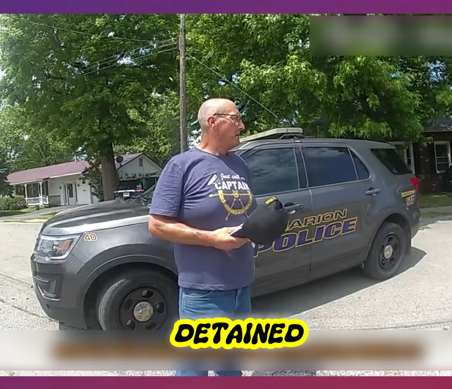
The supplied frame captures what appears to be the critical control stage.
The man is on his side on the pavement. One arm appears to be controlled behind his body while an officer remains extremely close.
From this position, officers generally attempt to secure a person's hands so the physical struggle can end.
For the person being detained, continuing to pull their arms away or attempting to stand can prolong the confrontation.
For officers, the problem is equally immediate: until both hands are controlled, they cannot necessarily know whether the individual can access an object, strike an officer or escape.
That is why the moment immediately before handcuffing can look particularly chaotic.
However, A STILL IMAGE CANNOT DETERMINE WHETHER A PARTICULAR USE OF FORCE WAS LEGALLY JUSTIFIED.
That assessment requires the complete circumstances.
Investigators would want to know what officers knew before making contact, what instructions were given, how the man responded, whether he resisted and precisely what force officers used in response.
The seconds before this screenshot are therefore more important than the screenshot alone.
HANDCUFFS CHANGE THE DYNAMIC
Once both hands are secured, the encounter enters another stage.
Officers may search the arrested person according to applicable procedures. They may check for identification, secure personal belongings and determine whether medical attention is necessary.
If a struggle occurred, officers may also examine the person for injuries.
Bodycam footage can document this aftermath just as it documents the confrontation itself.
That matters because questions about police encounters do not end when the handcuffs click shut.
Was the person injured?
Did they complain about pain?
Did officers request medical assistance?
Did the person continue resisting?
What explanation did officers provide for the arrest?
What happened to the individual afterward?
These details can become important if the encounter is later reviewed.
THE END OF THE PHYSICAL STRUGGLE IS NOT NECESSARILY THE END OF THE INVESTIGATION.
WHY BODYCAM FOOTAGE CAN BE SO IMPORTANT
The growth of police body-worn cameras has changed how encounters like this are examined.
Before widespread camera use, investigators often depended heavily on written reports, witnesses and physical evidence.
Those sources remain important, but video provides another layer.
It can preserve timing.
It can record commands.
It can show the person's movements.
It can document the officer's actions.
And it can sometimes resolve disagreements about what happened.
The importance of complete footage has also become a legal issue. In June 2025, for example, a Colorado judge ordered Aurora police to release unedited body-camera recordings connected with a fatal police shooting after a dispute over whether edited portions satisfied the state's disclosure requirements. The ruling emphasized the significance of access to complete recordings rather than selected segments.
That case is unrelated to the arrest pictured here, but the principle is highly relevant:
A SHORT CLIP CAN SHOW A MOMENT. UNEDITED FOOTAGE CAN SHOW THE SEQUENCE.
THE CAMERA DOESN'T SEE EVERYTHING
Bodycam footage is powerful evidence, but it is not perfect.
Imagine an officer attempting to control someone's right arm.
The officer's chest may be pressed against the person's shoulder.
The camera could therefore be pointing toward the ground while the important action occurs outside the frame.
Another officer's camera might show the same moment perfectly.
A surveillance camera across the street might provide an even clearer view.
That is why serious investigations should not rely on a single angle when additional evidence exists.
Investigators can potentially examine dashcam footage, security recordings, recordings from other officers, emergency-dispatch communications and witness videos.
Each piece adds context.
BODYCAM FOOTAGE IS A WINDOW INTO AN INCIDENT, NOT AUTOMATICALLY A COMPLETE 360-DEGREE RECORD OF IT.
RESISTING CAN TRANSFORM THE ORIGINAL ENCOUNTER
One recurring feature of police arrest videos is how quickly the original issue can become secondary.
An officer may initially be investigating something relatively minor.
Then someone attempts to flee.
A physical struggle begins.
Additional officers respond.
The person is taken to the ground.
Now the investigation involves not only the original incident but also everything that occurred during the attempted detention.
This is one reason compliance during an arrest can have such an enormous effect on how the scene develops.
A person may believe the arrest is unfair.
They may believe the officer misunderstood the situation.
They may believe they committed no crime.
Those claims can later be challenged through legal processes.
Physically fighting an officer on the street, however, can dramatically increase the danger for everyone involved.
Officers do not know whether resistance will remain an attempt to escape or turn into an assault.
The person resisting also cannot control exactly how several officers will respond once a struggle begins.
A FEW SECONDS OF PHYSICAL RESISTANCE CAN TURN A SIMPLE DETENTION INTO A MUCH MORE SERIOUS EVENT.
AN ARREST IS NOT A CONVICTION
There is another important point whenever arrest footage circulates online.
Handcuffs do not equal guilt.
Police officers make arrests based on legal standards applicable at that stage of an investigation. Courts determine criminal guilt through a separate process.
Evidence may later contradict an allegation.
Charges can be amended.
Prosecutors can decline cases.
Judges can dismiss charges.
Juries can acquit defendants.
Therefore, the man visible in this frame should not automatically be labeled guilty of a specific crime based only on the image.
Without a verified police report or court record tied to this exact footage, assigning specific allegations would create information that the image itself does not support.
BODYCAM SHOWS THE ARREST. THE JUSTICE SYSTEM DETERMINES WHAT THAT ARREST ULTIMATELY MEANS.
WHY THE SECONDS BEFORE THIS IMAGE MATTER MOST
Look at the supplied frame again.
We know the date displayed by the camera.
We can see a man on the pavement.
We can see an officer controlling him.
But the photograph leaves the biggest questions unanswered.
Why did police approach him?
What did the officer initially say?
Was he told he was being detained?
Did he attempt to leave?
Did a struggle occur while he was standing?
How did he end up on the pavement?
Were additional officers involved?
And what happened immediately after the handcuffs were secured?
Those questions demonstrate why complete footage is far more valuable than a screenshot.
The image captures the result of several decisions.
The video captures those decisions being made.
THE ARREST MAY BE THE MOST DRAMATIC PART OF THE FOOTAGE, BUT THE MOMENTS LEADING TO IT ARE WHAT EXPLAIN THE STORY.
A person standing and talking to police can be on the pavement only seconds later.
Once resistance begins, events move quickly.
Commands overlap.
Cameras shake.
Officers react.
And eventually the scene becomes what we see here: a suspect restrained on the ground while police attempt to bring a chaotic encounter back under control.
https://www.youtube.com/watch?v=UUZ7d4QMipw
The image shows how the struggle ended—but not what triggered it. Click the link below to watch the full encounter and see exactly what happened before the arrest suddenly turned physical.
Comments (0)
Loading comments...
May You Like

Police vs Chevy Impala High-Speed Pursuit Ends in TVI

Stolen Charger Flees Police During Highway Traffic Stop














