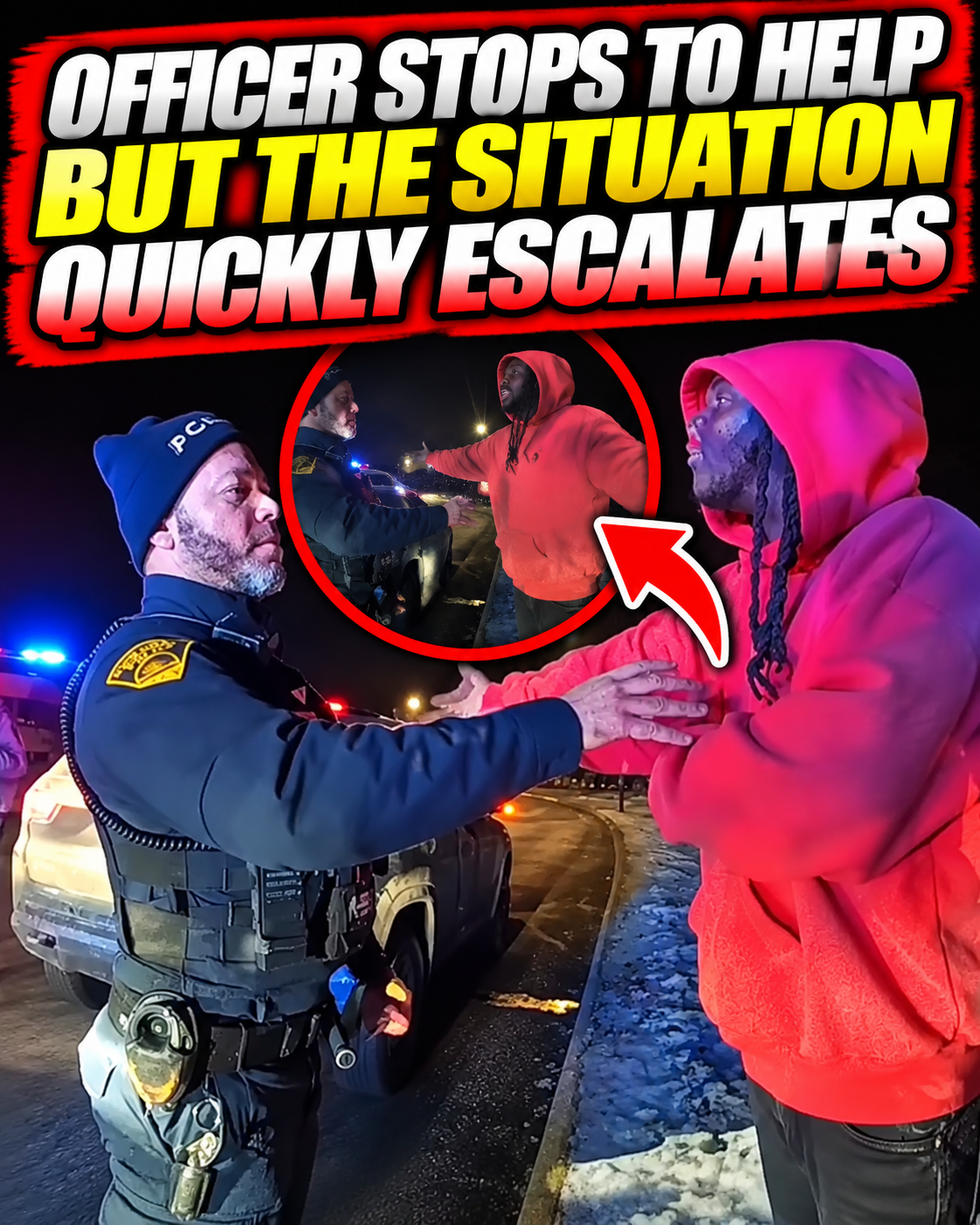
Lyft Driver Realizes Too Late She Made Huge Mistake 12
I Thought I Was Pulling Her Over for a Crosswalk
The first thing I remember about that night was how ordinary the traffic stop looked. I had pulled the driver over because she had stopped well past the stop bar at a red light, leaving her vehicle sitting in the middle of the crosswalk. Then, as she came down Cathedral Street, I watched her drift toward the left and nearly collide with a parked car before suddenly swerving back into her lane. When she turned quickly onto King Street, I decided I needed to find out what was going on. I walked up to the window and explained exactly why I had stopped her. She listened, but almost immediately began pushing back. She said she hadn't almost hit the parked car. She said she had simply moved over because the lane was confusing. I told her I was only describing what I had seen, and that regardless of what she thought about the first part, the crosswalk violation was clear. I asked for her driver's license, registration, and insurance. That's when the conversation started feeling strangely tense. She complained that the request was invasive, and I remember thinking that whatever was happening inside that car was probably bigger than a simple disagreement over a traffic stop.
I didn't know how much bigger until she suddenly drove away. There was no warning that made sense to me in that moment. One second I was standing beside her window, trying to get basic information, and the next I was watching the car accelerate away from the curb. I immediately got on the radio and started calling out her direction. She headed toward St. George Street and then continued southbound on Cathedral. What had begun as a routine stop turned into a pursuit through streets where people were still out walking. At one point, her speed reached around 70 miles per hour in an area posted for 20. I kept thinking about the reason I had stopped her in the first place. She had already been drifting across lanes and nearly hitting a parked vehicle. Now she was driving several times the speed limit with us behind her. The most frightening part came when she nearly struck two pedestrians, forcing them to jump out of the way. That was the moment I stopped thinking about whether she was going to receive a citation or a DUI charge. I was thinking about who might be standing on the sidewalk when she came around the next corner.
For a while, we lost sight of her. Then information started coming over the radio again, and officers moved toward where she had gone. Eventually, she abandoned the vehicle and ran. When I found her, I could hear the panic in her voice before I could even make sense of everything she was saying. I ordered her onto the ground and warned her that she would be tased if she continued moving. She kept pleading with us, saying she had a two-year-old and that she needed to make sure her child was safe. She told us she had never been in trouble, that she was scared, that she was a good person, and that she had never imagined anything like this happening to her. None of that changed what she had just done, but hearing her say it changed the atmosphere. She wasn't acting like someone who had planned to run from police. She sounded like someone who had made a terrible decision and was only beginning to understand how far that decision had taken her.
While officers were securing her, someone noticed that the vehicle was on fire. The car had crashed badly enough to scatter debris and damage property around the area. We started coordinating with fire rescue while keeping her secured. Pieces of the vehicle had ended up in a nearby yard, and the scene looked completely different from the quiet traffic stop that had existed only minutes earlier. A power pole had been struck, property had been damaged, and the vehicle was essentially destroyed. Standing there, I couldn't help thinking about how quickly an ordinary mistake can multiply. First, she stopped in a crosswalk. Then she drifted toward a parked car. Then she drove away from a deputy. Then she reached speeds that had no place on those streets. Then pedestrians had to jump clear. Now a burned-out vehicle was sitting in someone's yard.
Once she was calmer, I spoke with her again. She told me she had a two-year-old, a three-and-a-half-year-old, and a fiancé waiting at home. She wanted them to know she was okay. She said she had never been pulled over in her life and that she had gotten scared. That sentence explained more than anything else she had said. Fear had driven her from the traffic stop, but fear doesn't make the consequences disappear. I asked about her night. She said she had met friends around 9:30. When I asked about alcohol, she couldn't tell me exactly when she had her last drink or how many drinks she had consumed. She eventually declined to answer further questions. At that point, the pieces were beginning to fit together, and she was placed under arrest for DUI along with the other offenses connected to the pursuit.
Then came another moment I still remember. She refused the requested breath test, so I had to explain the implied-consent consequences to her. After that, she asked if we could contact her mother. I made the call and explained what had happened. I told her mother that her daughter was safe but had made a very serious mistake. I explained that she had driven impaired, fled from a traffic stop, reached an extremely high speed in the city, crashed through two yards, struck a power pole and a tree, and totaled the vehicle. Her mother sounded stunned. I could hear the disappointment in her voice, but I also heard something else—the immediate concern that every parent has when they receive a phone call telling them their child is in trouble. The deputy in me had to explain the charges. The human being in me understood that, on the other end of that phone, a mother was hearing the worst version of her daughter's night.
Later, I kept thinking about the woman who had been sitting in that car when I first approached her. She had been annoyed about a crosswalk, defensive about nearly hitting a parked car, and irritated that I was asking for her documents. At that point, none of us knew that the next few minutes would involve a pursuit, pedestrians running out of the way, a burning vehicle, damaged property, and an arrest. That is what makes traffic stops dangerous in a way people don't always understand. The first warning sign is often something incredibly small. A car stopped too far forward. A vehicle drifting across a lane. A driver making an unusually quick turn. You don't know whether you're looking at a harmless mistake or the beginning of something much worse.
She was ultimately released on a $113,000 bond. She initially faced eight charges, though the case later proceeded on four, and she pleaded not guilty and requested a jury trial. The case remained open at the time described in the footage, so whatever happened afterward belonged to the court, not to the people standing on that street that night. But I never forgot what she told me after everything was over: "I got scared." I believed that she was scared. I also knew that being scared didn't make the decisions disappear. Both things could be true.
What stays with me isn't the speedometer, the wrecked car, or even the moment she ran. It's the crosswalk where the whole thing began. At the beginning of the night, it was just a traffic violation—an inconvenience, a few seconds of someone's time. By the end, there was a destroyed vehicle, damaged property, terrified pedestrians, and a mother receiving a phone call about her daughter. That's why I think about that crosswalk differently now. Sometimes the most important moment in a dangerous incident isn't the crash at the end. It's the ordinary moment at the beginning, when someone still has the chance to stop, listen, and make a different decision.
Comments (0)
Loading comments...
May You Like
Female Driver Destroys Three Lives in a Matter of Minutes

Woman Refuses Repeated Orders to Exit Her Car Before Officers Move In
Entitled Driver Skips the Line and Gets Instant Karma3