
Landlord and Tenant Dispute Takes a Tragic Turn
He Warned Police What He Would Do to His Tenant, Then Officers Found Him Badly Injured
A Property Dispute That Was About to Become Something Much More Serious
When police are called to a dispute between a landlord and tenant, the first expectation is usually straightforward: separate the people involved, determine whether a crime has occurred, calm the situation and explain what can legally happen next.
But the confrontation investigated in Davie, Florida, developed into something far more troubling.
According to police records reported by Local 10, officers initially responded after 58-year-old Lennie Joseph Dufrene Jr. complained that his tenant was damaging the property. Officers spoke with both men, and the tenant was eventually transported to a facility for evaluation under Florida's Baker Act.
At that point, it might have appeared that the immediate confrontation had ended.
Instead, investigators say the landlord made statements in front of officers that would become extremely important only hours later.
Police allege that Dufrene said he would harm the tenant after the man returned.
Officers explicitly warned him that violence could send him to prison or jail.
The warning was direct.
The consequences were clear.
Yet according to the arrest-warrant account, the situation did not end there.
Hours later, the tenant returned to the property.
What police say happened after his return transformed an argument over a home into a felony criminal investigation.
Police Were Already Involved Before the Alleged Attack
The earlier police encounter is one of the most important details in understanding the case.
This was not an incident in which officers first became aware of a conflict only after somebody had been injured.
They had already been called.
According to Davie police, Dufrene contacted authorities and reported that his tenant was destroying property. Officers arrived and dealt with both men.
The tenant was subsequently transported to a medical facility under the Baker Act, Florida's legal framework that can permit an involuntary mental-health examination under qualifying circumstances.
That fact needs to be handled carefully.
Being transported for an examination does not mean someone has been convicted of a crime, and the publicly available reporting does not provide enough information to make independent conclusions about the tenant's mental condition.
What matters to the subsequent criminal investigation is what police say occurred while the tenant was away.
According to the warrant described by Local 10, Dufrene allegedly threatened to kill the tenant when he returned.
Officers warned him that such conduct would send him to prison.
Police say he then changed the wording of the threat but not its basic violent intent, indicating instead that he would beat the tenant.
Again, officers warned him.
Those exchanges would later become unusually significant because investigators say the tenant subsequently returned and was, in fact, seriously assaulted.
This gives the story its central tension.
The danger was allegedly verbalized before the violence took place.
The officers' warning also makes the later allegation more striking. If the warrant accurately describes the exchange, Dufrene was not merely reacting without any warning about the potential consequences. Police had specifically told him that physically attacking the tenant could result in incarceration.
Yet the next phase of the case suggests that the conflict was far from over.

The Tenant Comes Back and Finds Something Has Changed
After being released from the facility, the tenant returned to the residence.
Local 10 reports that this occurred at approximately 2:30 p.m.
But when he arrived, he allegedly discovered that he could no longer get inside using the access code he had previously used.
Police said the code had been changed.
That moment is important because landlord-tenant disputes have legal processes available for resolving possession and access issues. Changing access, removing belongings, eviction procedures and the right to occupy a property can all raise separate legal questions depending on the circumstances.
But those civil questions are not the core of the criminal allegation against Dufrene.
The criminal case centers on what investigators say happened immediately afterward.
According to the tenant's sworn account, Dufrene emerged from the residence and confronted him.
The encounter allegedly turned violent.
Police say Dufrene repeatedly punched the tenant in the face.
The tenant told investigators the attack continued until he lost consciousness.
When he regained consciousness, according to the warrant, the assault allegedly had not ended.
The tenant said he woke up face down with Dufrene over him, striking him in the back of the head.
He then alleged that Dufrene began choking him.
According to his statement, he lost consciousness again.
These are allegations, not a final judicial determination. Dufrene is entitled to challenge the accusation and evidence in court.
But investigators would soon encounter physical evidence that made the complaint much more serious.
The Tenant Leaves, but the Story Is Far From Over
According to police, the tenant eventually managed to leave the property.
He reportedly wandered through the surrounding area.
His description of what he believed had happened demonstrates how serious the encounter appeared from his perspective: investigators said he believed Dufrene had been trying to kill him.
But instead of the next major police contact happening at the residence, the case took an unexpected turn.
It happened at a Wawa convenience store at 2500 Davie Road.
Employees reportedly became concerned about a man who had remained on the property for an extended period and appeared badly injured.
Police were called.
When officers arrived, something immediately stood out.
They recognized him.
He was the same tenant they had encountered during the earlier landlord-tenant dispute.
That recognition effectively connected the earlier confrontation with the new report of an injured man.
The situation was no longer simply about property damage, access to a residence or an argument between two people.
Officers were now dealing with someone displaying apparent signs of significant physical trauma.
The tenant gave investigators a sworn statement describing the alleged assault.
He was then taken for medical treatment.
What doctors found would provide investigators with another important piece of evidence.
The Injuries Change the Nature of the Investigation
Medical personnel determined that the tenant had suffered significant facial injuries.
According to the police warrant reported by Local 10, doctors diagnosed a fracture of the left orbital floor and multiple nasal fractures.
The orbital floor forms part of the eye socket.
This was therefore not simply a case involving an allegation of pushing, grabbing or a minor altercation without documented injury.
Investigators had a complainant describing repeated blows and choking, alongside medical evidence showing serious facial trauma.
Police could also consider what officers had allegedly heard from Dufrene during their earlier response.
Those elements began forming a chronological chain:
Police respond to a dispute.
The tenant is taken away for evaluation.
The landlord allegedly threatens him.
Police warn the landlord not to use violence.
The tenant is released.
He returns home and discovers that his access code no longer works.
He alleges that Dufrene attacks him.
He leaves and is later discovered injured.
Officers who dealt with the original dispute recognize him.
Medical personnel document fractures.
Investigators then have to determine whether the available evidence establishes probable cause for an arrest.
Police concluded that it did.
That is the point where a chaotic interpersonal dispute became a formal felony case.
Investigators Seek Dufrene's Arrest
Authorities subsequently obtained an arrest warrant for Lennie Joseph Dufrene Jr.
The arrest itself occurred somewhere very different from the property where the confrontation allegedly happened.
Broward Sheriff's Office deputies took Dufrene into custody at Fort Lauderdale-Hollywood International Airport.
He was accused of felony battery. Local 10 reported that a Broward judge found probable cause and set his bond at $15,000.
A separate arrest-record database also lists Dufrene's July 27 booking and felony battery charge under Florida Statute 784.041(1).
There is an essential legal distinction here.
An arrest and charge are not proof of guilt.
Probable cause is also not the same standard as proof beyond a reasonable doubt.
The tenant's account, the officers' observations, medical evidence and other investigative material can support an arrest while still remaining subject to challenge later in court.
Dufrene therefore must be treated as accused rather than convicted unless and until the judicial process establishes otherwise.
That distinction becomes particularly important with incidents circulated through police footage.
A short video can create the impression that viewers have seen an entire case.
They have not.
Footage captures moments.
A criminal prosecution must consider the broader evidence.
Why the Earlier Police Warning Matters So Much
There are violent-crime investigations where authorities must reconstruct intent almost entirely from what happened after an encounter began.
This case contains another element.
Police say Dufrene expressed violent intentions beforehand.
That allegation gives the earlier bodycam encounter far greater significance.
If investigators' account is accurate, officers explicitly told Dufrene what could happen if he attacked the tenant.
The alleged assault therefore cannot be viewed only as an isolated physical confrontation without context.
Investigators could examine what was said beforehand, how much time passed, what happened when the tenant returned, the condition in which he was subsequently discovered and the medical findings.
This is one reason police footage can become particularly important evidence.
Body-worn cameras do more than capture arrests.
They can preserve statements made long before anybody realizes those statements could later become relevant to a criminal investigation.
An ordinary sentence recorded during the first police call can take on a completely different meaning after a later event.
In this case, that earlier interaction is arguably the detail that makes the entire sequence so compelling.
The officers appear to believe they are dealing with an escalating dispute and warn one of the people involved about the consequences of violence.
Later, according to investigators, they discover the other participant seriously injured.
The two encounters become pieces of the same story.
The Case Later Develops an Unusual Prosecutorial Issue
Dufrene's arrest was not the last noteworthy development.
On August 21, 2026, Florida Governor Ron DeSantis issued Executive Order 26-178 concerning the handling of matters involving Lennie Dufrene.
The official governor's record confirms the executive order and its August 21 issuance date.
Later reporting says Broward State Attorney Harold F. Pryor voluntarily disqualified himself because the alleged victim was related to a former employee of the Broward State Attorney's Office.
State Attorney Alexcia Cox of Florida's 15th Judicial Circuit was assigned to handle the matter instead.
This procedural development should not be misunderstood.
Changing the prosecutor does not establish that Dufrene committed the alleged offense.
Nor does it invalidate the allegations.
It is designed to address a potential conflict of interest or appearance of impropriety and preserve confidence in the prosecution.
As of the latest sources reviewed for this article, I did not find a verified final trial verdict or guilty plea resolving the felony battery allegation. A September report likewise stated that the reviewed public record did not yet establish a final disposition.
There is also a discrepancy in published reporting over the precise date of the original confrontation. Local 10 described the alleged attack as occurring the Wednesday before its July 29 report, while later accounts have cited a different date. Because the accessible underlying records do not resolve that discrepancy conclusively, it is better not to state a precise incident date as established fact.
The central sequence, however, is consistent across the stronger sources.
A Dispute Over a Home Becomes a Criminal Case
The most unsettling part of this case is how ordinary its beginning sounds.
A landlord believes a tenant is damaging his property.
Police are called.
Officers speak to the people involved.
One person is removed from the immediate situation.
Normally, distance and time should reduce the danger.
Here, investigators allege the opposite happened.
The tenant eventually returned.
The access code had allegedly been changed.
A confrontation followed.
Hours later, the same person police had encountered earlier was found badly injured at a convenience store.
Medical examinations revealed fractures.
And the landlord who had allegedly talked about hurting him in front of officers became the subject of an arrest warrant.
It demonstrates why context is essential when watching police footage.
The most dramatic moment is not always the moment that tells the viewer the most.
Sometimes a seemingly minor exchange at the beginning becomes crucial only after something happens later.
Sometimes an officer's warning sounds routine until investigators discover that the behavior they warned against allegedly occurred anyway.
And sometimes the arrest itself represents only the final visible stage of an investigation that began much earlier.
The footage can show us how officers react in real time.
Police reports provide the chronology investigators relied upon.
Medical evidence can help establish the severity of injuries.
Court proceedings will ultimately determine which allegations can be proved.
Keeping those pieces separate is essential.
Dufrene has been accused of felony battery, and the allegations against him are serious. But they remain allegations unless established in court.
What is already clear from the public record is that a dispute initially framed as a disagreement over property escalated into something far more consequential.
Police went from mediating between a landlord and tenant to investigating a seriously injured man.
The alleged warning beforehand makes the sequence particularly difficult to ignore.
The Warning Came First. The Injuries Came Later.
For anyone watching only the most dramatic moments, this could appear to be another police response involving an injured man and an arrest.
The fuller timeline tells a more complicated story.
Officers had already been there.
They had already heard threats, according to the warrant.
They had already warned against violence.
Then they encountered the tenant again under completely different circumstances.
That is what turns this case from a simple confrontation into a sequence worth examining closely.
It raises questions about escalation, threats, the limits of police intervention before a crime occurs, and how statements recorded during one call can become evidence in an investigation hours later.
It also demonstrates why landlord-tenant conflicts should remain within lawful civil and judicial processes rather than becoming personal confrontations.
A dispute over property can be repaired.
A lease can be litigated.
Possession can be decided through legal procedures.
Physical violence can create consequences that extend far beyond the original disagreement.
For Dufrene, what began as a complaint to police ultimately resulted in an airport arrest and a felony charge.
For the tenant, investigators say the confrontation ended with serious facial fractures and hospitalization.
And for the officers involved, a person they initially encountered during a property dispute later reappeared as the alleged victim of a violent crime.
That progression is what makes the incident so striking.
The police encounter was not the conclusion.
It was the beginning.
Continue With the Full Incident
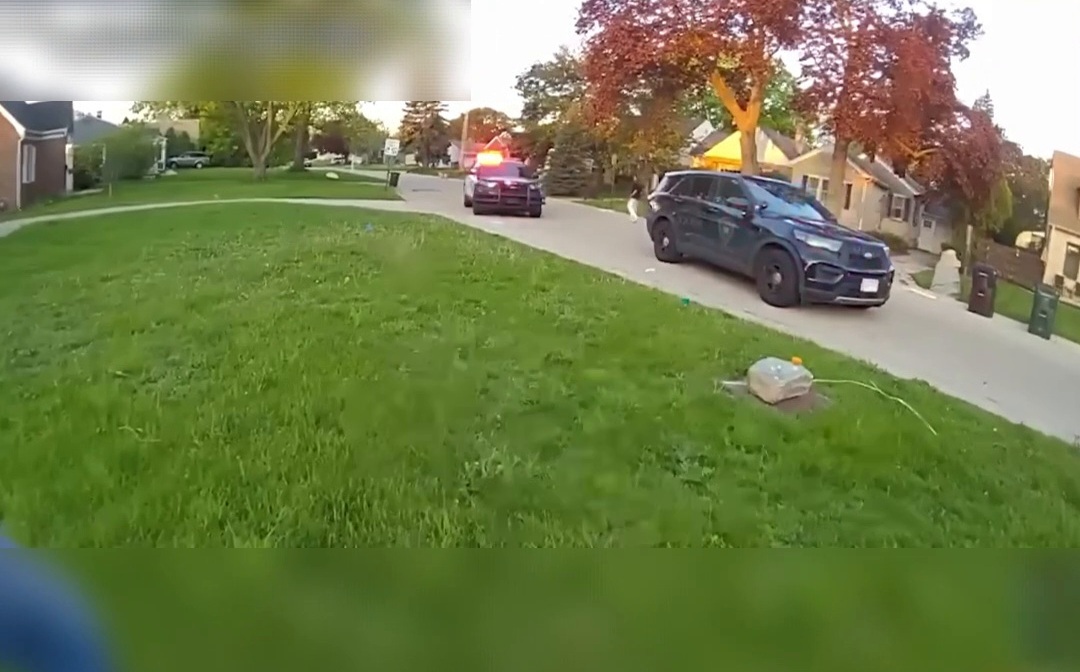
The first police warning was only the beginning. Watch the full footage to see how this landlord-tenant dispute unfolded and what officers encountered when the situation escalated:
Comments (0)
Loading comments...
May You Like

What Happens when you get Caught Shoplifter Stealing Local Store

One Driver’s Decision to Flee Brings Police Racing After Him

Woman Tries to Stop Police From Arresting “Brother” — He Denies Knowing Her












