
Knife-Armed Suspect Leads Portland Police Into an Hours-Long Standoff
Knife-Armed Suspect Leads Portland Police Into a Hours-Long Standoff
An August 2026 arrest attempt in Northwest Portland developed into an armed foot pursuit, a police vehicle strike, a barricade and a prolonged tactical operation.
A Follow-Up Investigation Suddenly Turns Into a Foot Chase
On August 12, 2026, two Portland Police Bureau officers assigned to the Central Precinct Neighborhood Response Team were working a follow-up investigation in Northwest Portland when they spotted a man they believed was connected to an earlier knife-related case. The encounter began at about 1:55 p.m. near Northwest 16th Avenue and the Overton-Northrup area.
Police later identified the man as 33-year-old Joshua R. Kuras of Portland. The earlier case dated to July 20, when a Portland Bureau of Transportation parking patrol employee reported that a man approached him with a knife, cut a tire on his marked city vehicle and opened the vehicle door while still holding the weapon. The employee was not physically injured, and the suspect had not been identified at that time.
Nearly a month later, officers conducting follow-up work recognized Kuras as a possible suspect. According to PPB's detailed account, they told him he was under arrest. Instead of remaining with the officers, he ran.
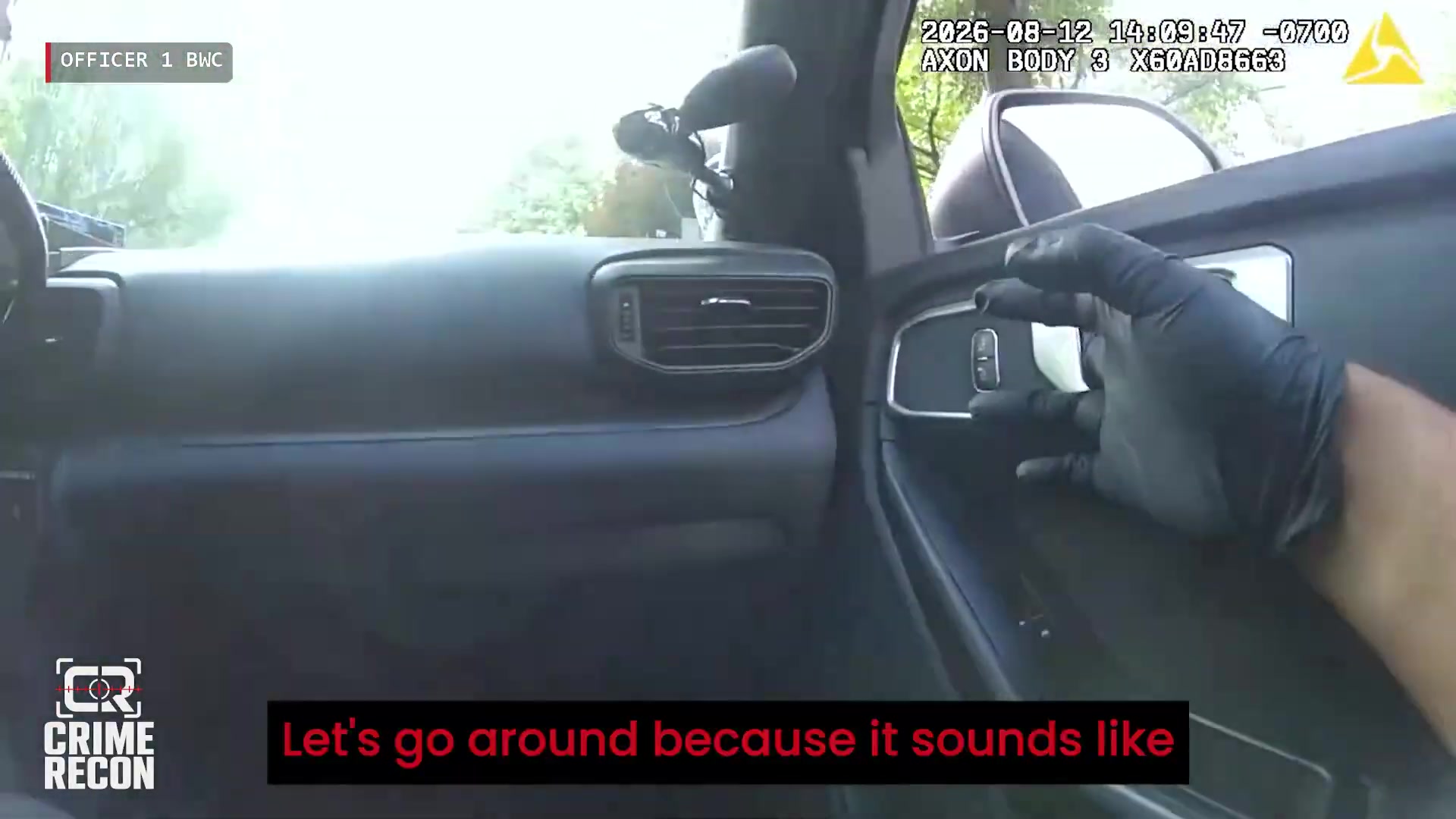
The supplied video captures the sudden transition into a foot pursuit. Body-worn-camera views show officers moving quickly through Northwest Portland while radio traffic builds around them. The pursuit is taking place in a populated neighborhood rather than an isolated area, meaning officers have to track not only the fleeing man but pedestrians, traffic, businesses and other people who may unexpectedly enter his path.
Officers reported seeing a large bladed weapon in Kuras's hand, later described by PPB as a large hunting knife. That observation immediately raised the stakes. What had begun as an attempt to arrest a suspect in an earlier investigation was now a pursuit of a man believed to be armed with a substantial blade.
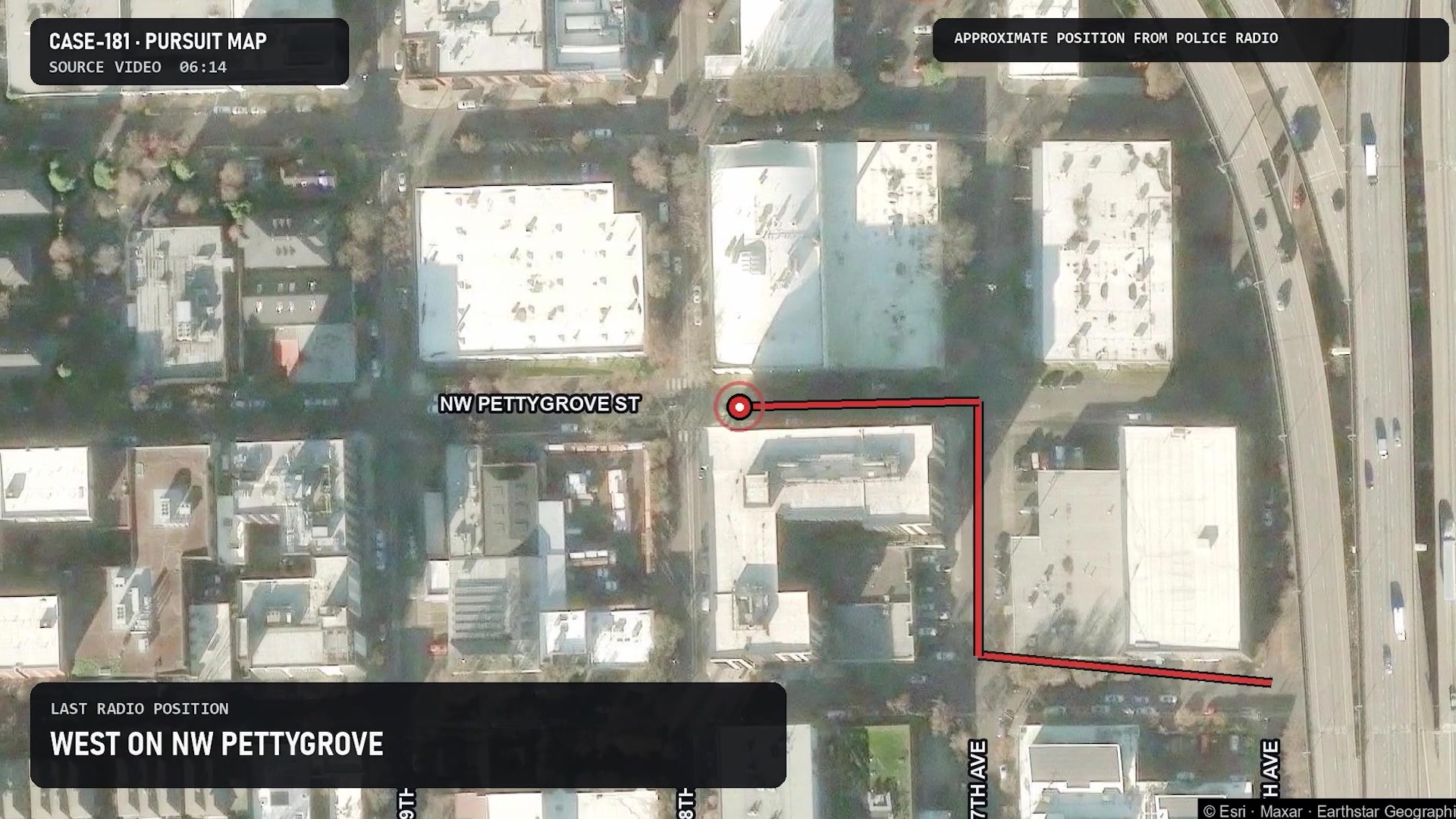
The Knife Changes the Risk for Everyone Around the Pursuit
A foot pursuit involving an edged weapon presents a difficult tactical problem. Officers want to prevent the suspect from reaching other people, but closing distance on someone carrying a knife can expose officers themselves to serious injury. The safest option can change from one block to the next depending on where the suspect runs.
PPB said officers saw Kuras running toward members of the public, including a mother and her child. That detail is important because it helps explain why officers could not simply disengage and wait for the situation to resolve on its own. The pursuit was moving through public space, and the reported weapon created a potential danger beyond the officers themselves.
The supplied footage shows the pace of the response increasing as more units converge. Officers communicate locations and directions of travel while attempting to contain the suspect. In a dense urban neighborhood, containment is difficult. Alleys, yards, businesses and side streets give a fleeing person multiple routes to change direction or disappear from view.
Police pursuits on foot also create fragmented information. One officer may have a direct view of the suspect while another hears only radio updates. An officer arriving from another street may know a knife has been reported without having seen it personally. Coordinating those perspectives becomes part of the incident command problem.
As the pursuit continued, Kuras moved toward Northwest 19th Avenue. PPB said he remained armed with the knife as he approached a tire repair shop in the 1200 block. The next few seconds would later trigger a separate use-of-force investigation inside the Police Bureau.
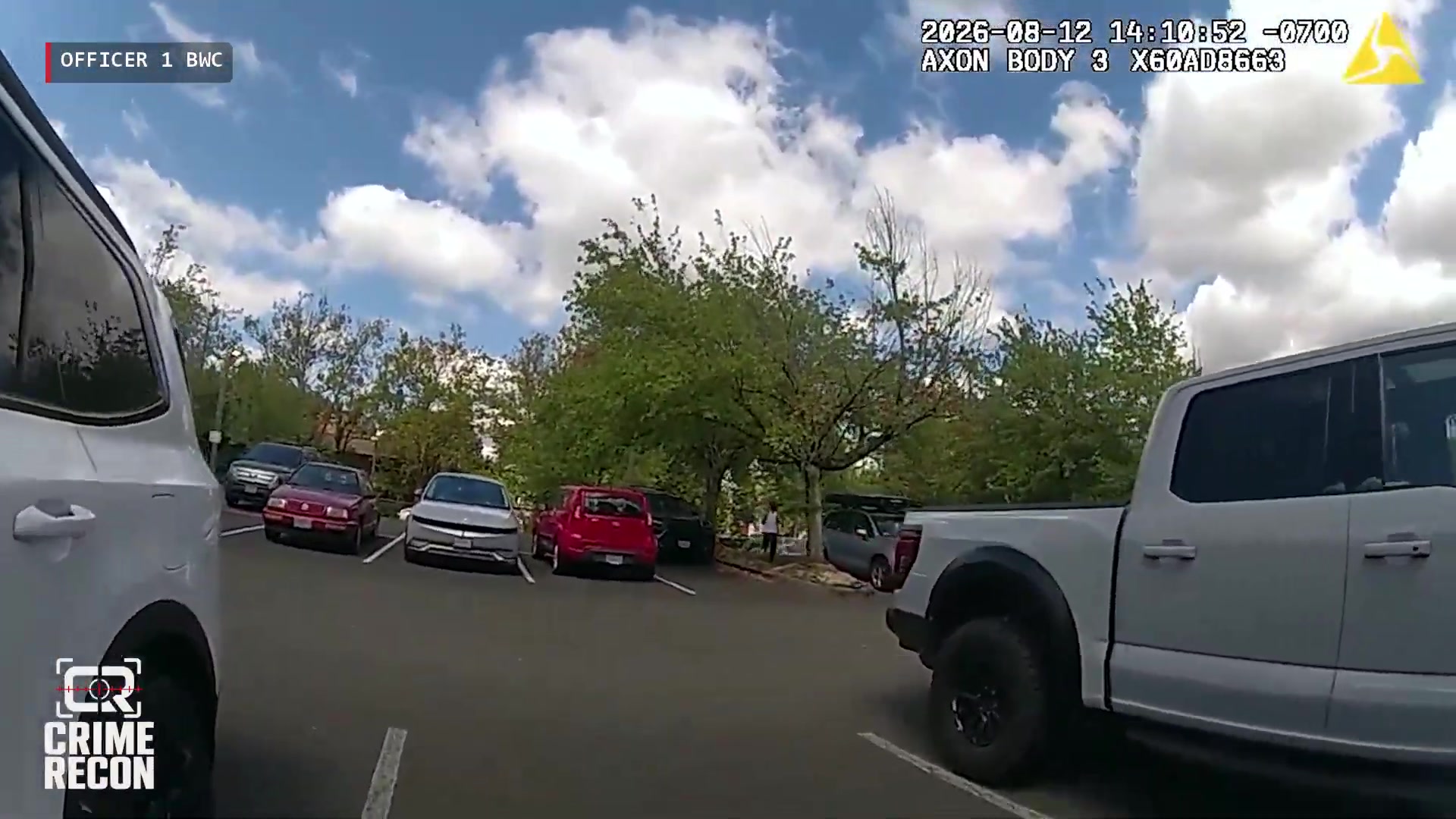
A Police Vehicle Enters the Tire Shop Parking Lot
Lieutenant Brent Maxey was in the area after attending a nearby meeting. According to PPB, Maxey drove into the tire shop parking lot and struck Kuras with his police vehicle at low speed.
The actual impact was not captured by another officer's body-worn camera. PPB later said Maxey was not wearing a body camera at the time, while footage from other officers shows his vehicle entering the parking lot immediately before the use of force. A traffic crash reconstruction team subsequently estimated the closure speed at approximately three to five miles per hour.
The impact caused Kuras to fall, but it did not end the pursuit. Police said he immediately got back up and continued running and did not appear to have been injured by the vehicle strike.
This became a significant part of the case because Portland Police policy categorizes deliberately using a motor vehicle to strike a suspect as Category I force. A vehicle used in that manner is capable of causing death or serious physical injury, so the event was investigated as a potential use of deadly force. Maxey was placed on paid administrative leave under bureau policy while the incident was reviewed.
That classification does not mean investigators had already concluded the lieutenant acted unlawfully. It means the level of force triggered the bureau's highest investigative and review procedures. PPB said its Detective Division and Internal Affairs Division would examine the event, while the Multnomah County District Attorney's Office was notified and consulted.
The video is useful here precisely because it has a limitation. Viewers can see the pursuit moving toward the tire shop and can see the police vehicle entering the area, but they should not claim the body camera shows an impact that it does not actually capture. The reconstruction findings come from PPB's subsequent investigation.
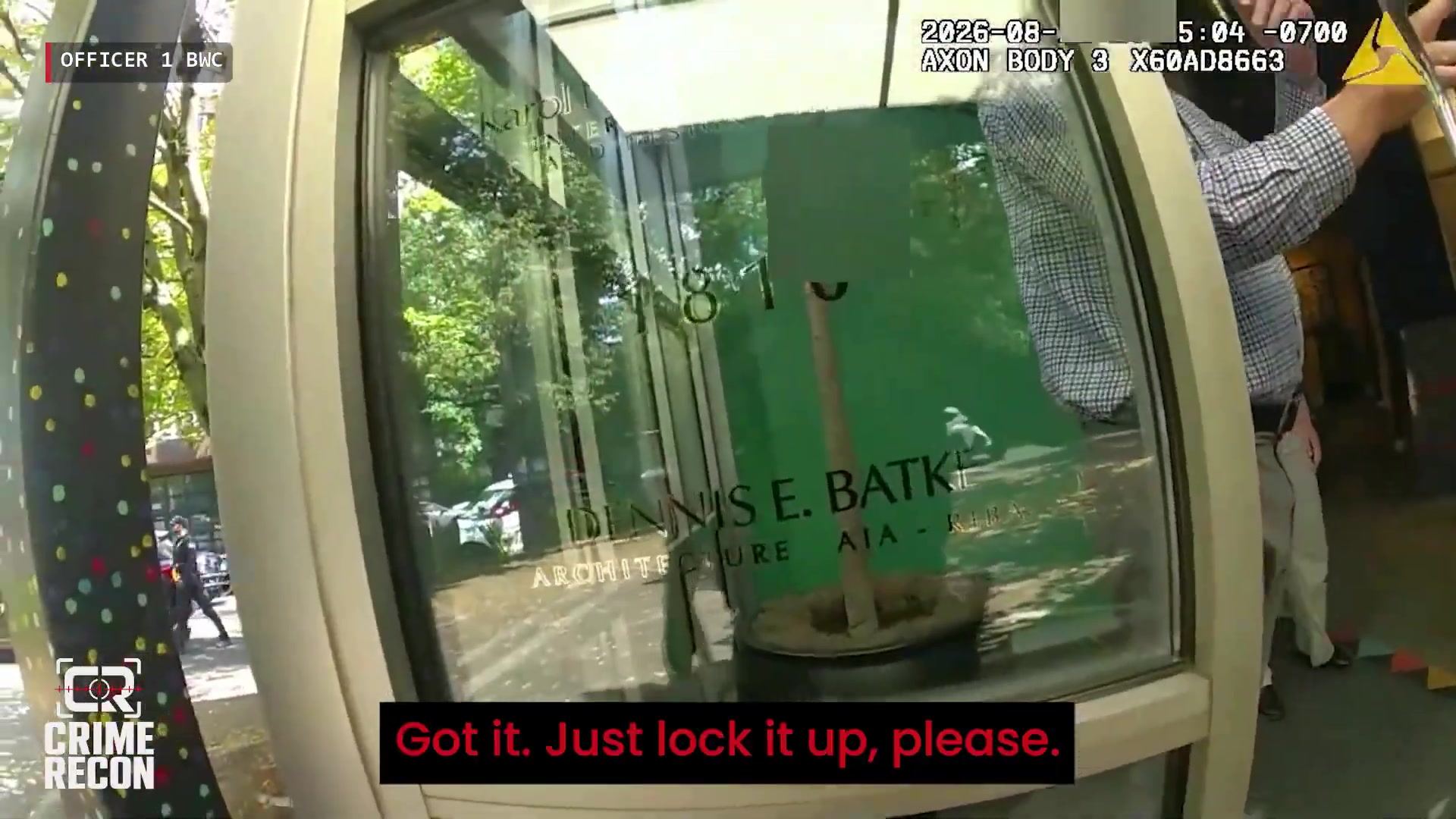
The Chase Ends at a Building, but the Incident Does Not
After escaping the tire shop area, Kuras moved into another property. PPB's updates describe him breaking into a nearby business and barricading himself in a basement storage or apartment area.
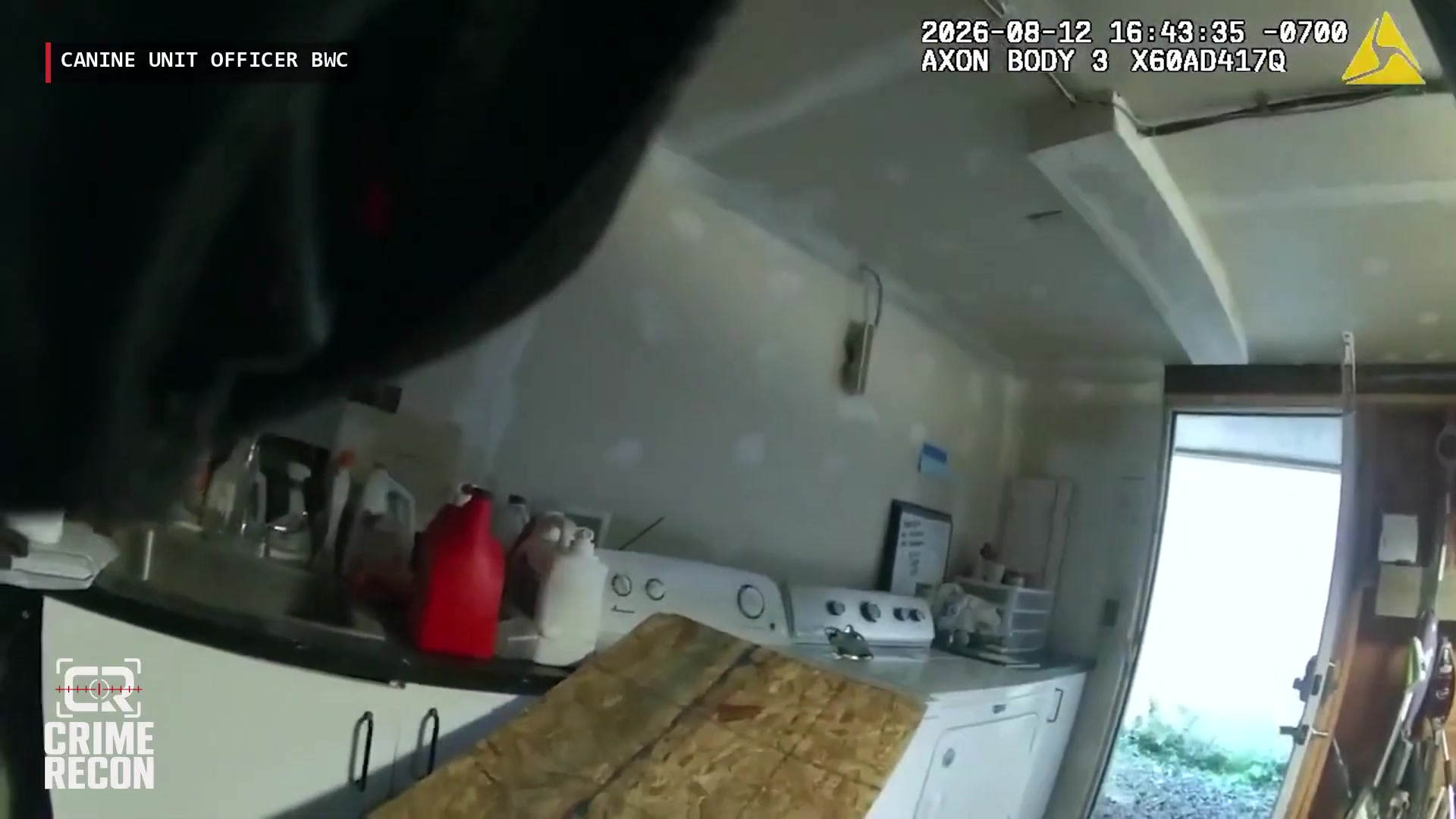
The supplied footage shows officers establishing positions around the building as the incident changes from a mobile pursuit to a containment operation. This is a major tactical shift. During a pursuit, officers are trying to keep up with a moving suspect. Once that person is contained inside a structure, the goal often becomes slowing events down and reducing unnecessary exposure.
Police confirmed that people were inside the main-level business while the basement-level apartment was vacant. Officers worked to separate uninvolved people from the suspect and establish a perimeter. At 3:05 p.m., authorities issued a shelter-in-place alert for the surrounding Northwest District neighborhood, asking people inside the police perimeter to remain indoors with doors and windows locked.
Because officers believed Kuras was contained, PPB said they began using de-escalation resources. The response grew to include an incident commander, K9 officers, drone operators, members of the Special Emergency Reaction Team, the Crisis Negotiation Team and a police robot operator.
This is an important part of the story because the original title's phrase “hides in the basement, then runs to a tire shop” reverses the verified chronology. According to PPB's official timeline, Kuras ran toward the tire repair shop during the pursuit first. After the vehicle strike, he continued running and later broke into the nearby building and barricaded himself in the basement area.
Police Use Technology to Avoid Rushing the Basement
Once the suspect was contained, officers had alternatives to immediately entering the basement. Drones and robots can provide information about a barricaded person's location while reducing the need to send an officer into a confined space with limited visibility.
PPB said officers used loudspeakers to order Kuras to come out. The goal of this slower approach was to gain time, improve information and create an opportunity for surrender. Crisis negotiators and tactical officers were available as the standoff continued.
The supplied footage reflects that slower phase. Instead of the constant motion of the initial foot chase, officers hold positions, communicate and wait while specialized resources are deployed. The change in tempo is deliberate. When a suspect is contained and civilians have been moved away, police generally have more ability to control time.
But containment did not mean the situation became uneventful. According to PPB, Kuras destroyed a police drone and damaged a police robot. Those actions reduced some of the tools officers were using to observe the interior without directly entering it.
Police said Kuras eventually attempted to break out through a side window. Officers challenged him, and the incident moved toward another confrontation. Force options used during the operation included pepper spray and a police K9.
The presence of specialized resources can sometimes make a scene look overwhelming from the outside, but each resource has a different purpose. Negotiators attempt communication. Drones and robots gather information. Tactical officers prepare for a higher-risk entry if it becomes necessary. K9 teams can be used to locate or apprehend a person while allowing officers to maintain some distance.
K9 Harcos Is Struck During the Final Arrest
The final stage of the standoff involved PPB K9 Harcos. According to the Police Bureau, Kuras struck the dog multiple times with a metal pipe during the attempt to take him into custody.
Harcos was able to re-engage and apprehend Kuras, allowing officers to complete the arrest. PPB said the dog did not suffer significant injuries. Kuras sustained minor injuries and was taken to a hospital for a precautionary medical evaluation before being booked into the Multnomah County Detention Center.
The shelter-in-place order was lifted at 4:44 p.m. From the first attempted arrest at approximately 1:55 p.m. to the end of the neighborhood alert, the incident had occupied officers and residents for hours.
Police recovered the knife and released photographs of the bladed weapon as part of their public updates. Kuras was booked on allegations including Unlawful Use of a Weapon, Menacing, Burglary in the Second Degree, Criminal Mischief in the First Degree, two counts of Criminal Mischief in the Second Degree, Interfering with a Law Enforcement Animal, Attempted Animal Abuse in the Second Degree and Escape in the Third Degree.
Those are booking allegations reported by PPB, not convictions. The distinction matters. An arrest establishes that authorities believe probable cause exists for charges; guilt on those charges is determined through the legal process.
The video compilation gives the arrest additional context by showing how many stages preceded it. The final K9 deployment was not the first attempt to resolve the incident. Officers had pursued Kuras, attempted containment, used loudspeaker commands, brought in negotiation and tactical resources, and deployed remote technology before the confrontation at the building was finally brought to an end.
Why the Vehicle Strike Is Being Reviewed Separately
Among the many unusual elements of the incident, the police vehicle strike has drawn particular scrutiny because of the level of force involved.
PPB policy treats the intentional use of a motor vehicle against a person as potentially deadly force. Even though investigators estimated a relatively low closure speed of three to five miles per hour and said Kuras appeared able to continue running immediately, the potential consequences of striking a person with a vehicle require a high-level review.
The Bureau said the Detective Division would conduct the criminal investigation of the event while the Professional Standards Division would conduct an administrative review. The broader incident, including tactics and other force used, is also subject to internal review and presentation to the Police Review Board.
That process is still relevant when discussing the case because the event occurred only in August 2026. The available official update describes an active and ongoing investigation. It would therefore be inaccurate to state that the vehicle strike has already been formally ruled justified, unlawful or within policy unless a later official determination is released.
The footage should be treated the same way. It documents portions of the pursuit and police response, but it does not answer every legal question. The absence of a camera view of the actual impact means the reconstruction team's evidence becomes especially important.
This is one of the reasons careful sourcing matters in fast-moving body-camera stories. A dramatic clip can circulate long before investigators finish reconstructing what happened. Responsible reporting should distinguish what the video visibly establishes, what police have reported from their investigation and what remains under review.
A Complex Incident That Changed Form Several Times
The August 12 incident did not remain one type of police call for long. It began as follow-up investigative work connected to an earlier knife allegation. It became an attempted arrest, then a foot pursuit involving an armed suspect, then a controversial vehicle use of force, then a burglary and barricade, and finally a tactical arrest involving chemical spray and a K9.
Each transition changed what officers needed to do. During the foot chase, the priority was tracking a mobile suspect while protecting people nearby. At the tire shop, officers were confronting the immediate problem of an armed man moving through a public business area. Once Kuras entered the building, the emphasis shifted toward containment and de-escalation.
The supplied video captures enough of those transitions to show why a short title cannot fully describe the incident. It also shows why chronology matters. The tire shop came before the basement barricade, not after it. The building standoff followed the low-speed vehicle strike and continued for hours.
The official PPB release provides the most reliable framework currently available. It identifies Kuras, describes the hunting knife, gives the approximate time and streets involved, documents the use of the police vehicle, explains the basement containment, identifies the damaged drone and robot, and describes the confrontation with K9 Harcos.
Some questions remain open because the use-of-force investigation is ongoing. That uncertainty should remain visible in any account of the incident. There is no need to fill those gaps with speculation.
What can be said confidently is that a follow-up arrest attempt in Northwest Portland turned into an unusually complicated police operation involving multiple force options and specialized units. The suspect was ultimately taken into custody alive, the police K9 was not seriously injured, and the most serious police use of force remains subject to formal review.
For viewers, watching the full footage provides a clearer sense of how rapidly the initial chase unfolded and how dramatically the pace changed once officers contained the suspect inside the building.
Comments (0)
Loading comments...
May You Like

Woman Tries to Stop Police From Arresting “Brother” — He Denies Knowing Her

Police Chase Ends as Driver Hits Stoplight, Crashes Into West Towne Mall

A Suspicious Vehicle Leads Officers Into an Unexpected Chase












