Intoxicated Hotel Guest Melts Down After Being Told to Leave
Intoxicated Hotel Guest Melts Down After Being Told to Leave
A Late-Night Hotel Call Starts With a Simple Request
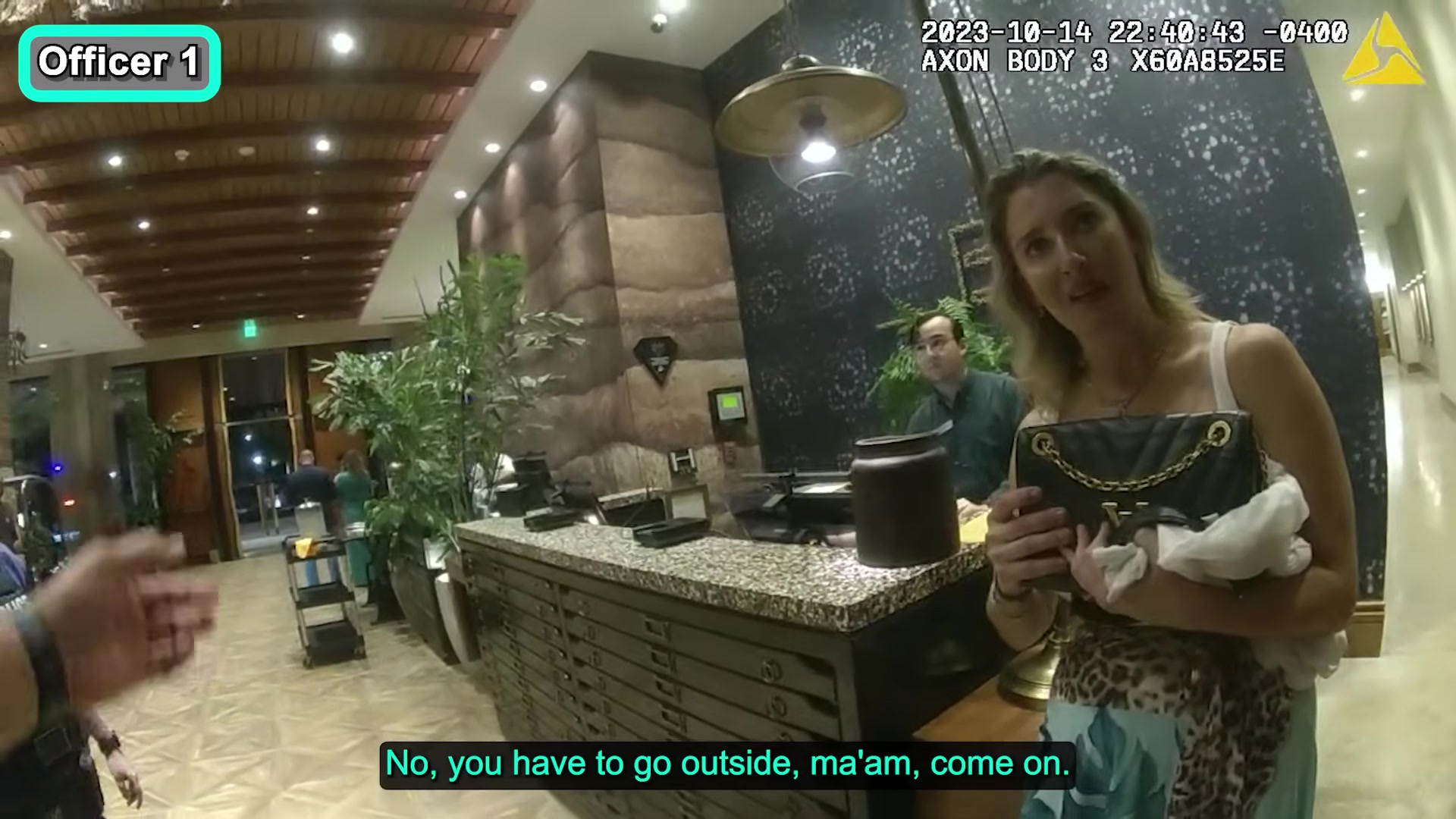
The encounter begins late on October 14, 2023, inside a hotel where staff have asked police to help remove a woman from the property. The body-camera overlay shows the date and a time shortly after 10:40 p.m. The first minutes are not a conventional criminal investigation. Officers are primarily trying to get a guest to understand that hotel management no longer wants her to remain there.
The supplied footage shows the woman standing near the front desk while officers repeatedly direct her toward the exit. Hotel employees remain nearby, and another man associated with the woman is also involved in the conversation. The woman appears upset and argumentative, and the officers spend considerable time explaining that the decision to remove her belongs to the property management.
That distinction matters. A hotel room may feel temporarily private to a paying guest, but a hotel can still terminate a guest's permission to remain under circumstances allowed by law and the lodging agreement. Once management withdraws permission and law enforcement communicates a lawful trespass warning, refusing to leave can create a separate legal problem.
The original title describes the woman as drunk. Her speech, behavior and the officers' comments in the footage are consistent with concerns about intoxication, but without a verified breath or blood test the article does not assign a specific alcohol concentration.
Officers Try to Move the Argument Outside
Rather than immediately placing the woman in handcuffs, officers repeatedly encourage her to walk out of the lobby. One officer can be heard telling her that she needs to go outside. The approach gives her multiple opportunities to leave without turning the encounter into an arrest.
The woman, however, continues to debate the situation. She appears focused on whether she has done anything wrong and whether the hotel has a right to remove her. From her perspective, payment for the room appears to be central to the argument. From the officers' perspective, the immediate question is much narrower: management wants her off the property.
This is a common source of confusion in trespass calls. Police do not necessarily need to prove a separate crime occurred inside a business before helping the lawful property representative remove someone. A guest can believe the business is treating them unfairly and still be required to leave first, then challenge charges or seek a refund through other channels.
The video becomes compelling because the woman never fully accepts that separation. Every explanation seems to generate another objection, keeping officers in a conversation that could have ended simply with her walking away.
The Conversation Continues Under the Hotel Entrance
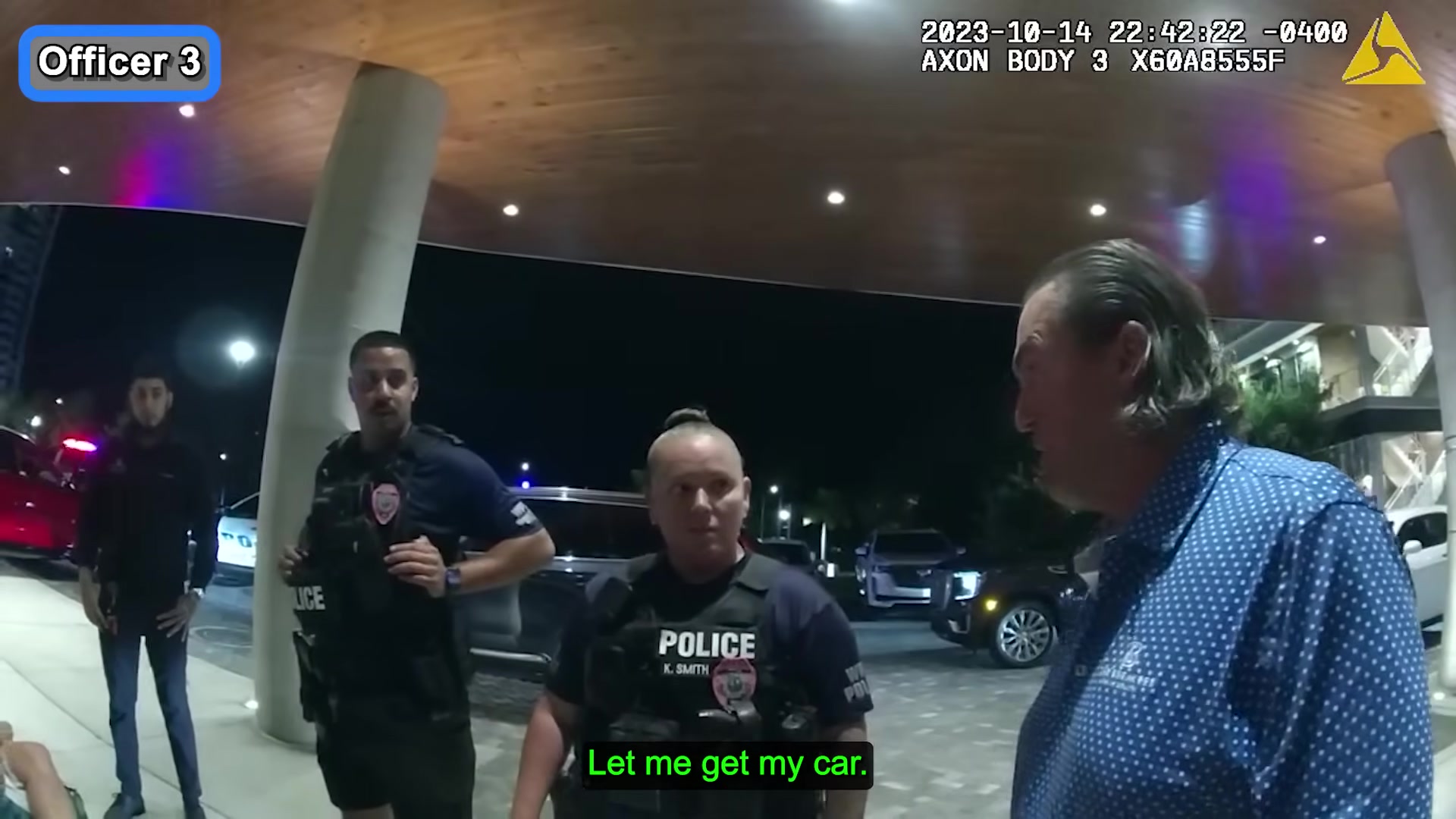
Outside the lobby, the interaction remains tense. Several officers are present under the covered hotel entrance, and the woman continues speaking with them while the man accompanying her tries to navigate the situation.
The body-camera footage shows officers using repetition more than force. They explain where she can and cannot go, tell her that she must leave the property and attempt to keep the group moving. The woman repeatedly returns to her objections.
Her emotional state also becomes more obvious as the encounter continues. She moves between arguing, questioning the officers and attempting to influence the man with her. The conversation becomes less about solving a practical problem and more about refusing to concede the point.
That dynamic is what makes a relatively ordinary hotel-removal call stretch into a much longer police encounter. The officers do not need her to agree that management is correct. They need her to comply with the direction to leave.
A Paid Room Does Not Guarantee an Unlimited Right to Stay
One of the strongest themes in the footage is the woman's insistence that the room was paid for. That argument may be relevant to a later dispute with the hotel, but it does not necessarily give a guest an unconditional right to remain after management terminates the stay.
Hotels operate differently from ordinary long-term residential leases. State law and individual circumstances determine the exact legal framework, but lodging establishments generally retain authority to remove guests for disruptive conduct, violations of hotel rules or other qualifying reasons.
Police responding to such a call usually do not adjudicate a refund dispute in the lobby. Their immediate role is to determine who controls the property, whether the person has been clearly told to leave and whether the person complies.
The footage shows officers trying to communicate exactly that. The woman can disagree, complain or pursue the matter later, but continuing to remain after a clear direction can turn a customer-service dispute into a trespass or disorder-related enforcement issue.
The Man With Her Begins to Cooperate
The man accompanying the woman appears more willing to follow the officers' directions. At points he tries to gather belongings or move the situation forward. His cooperation creates a visible contrast with the woman's continued resistance to the idea of leaving.
That contrast also affects the officers' response. They do not appear interested in arresting everyone associated with the room. Their focus remains on getting the parties off the property and ending the disturbance.
For the woman, however, the other man's willingness to cooperate seems to become another source of frustration. She continues talking over the process and trying to direct what happens next.
The footage illustrates how one person's refusal can keep an otherwise solvable call active. If everyone simply leaves, the hotel's immediate problem is resolved. If one person remains committed to arguing on the property, officers have to decide when conversation has stopped being productive.
Repeated Warnings Narrow the Woman's Options
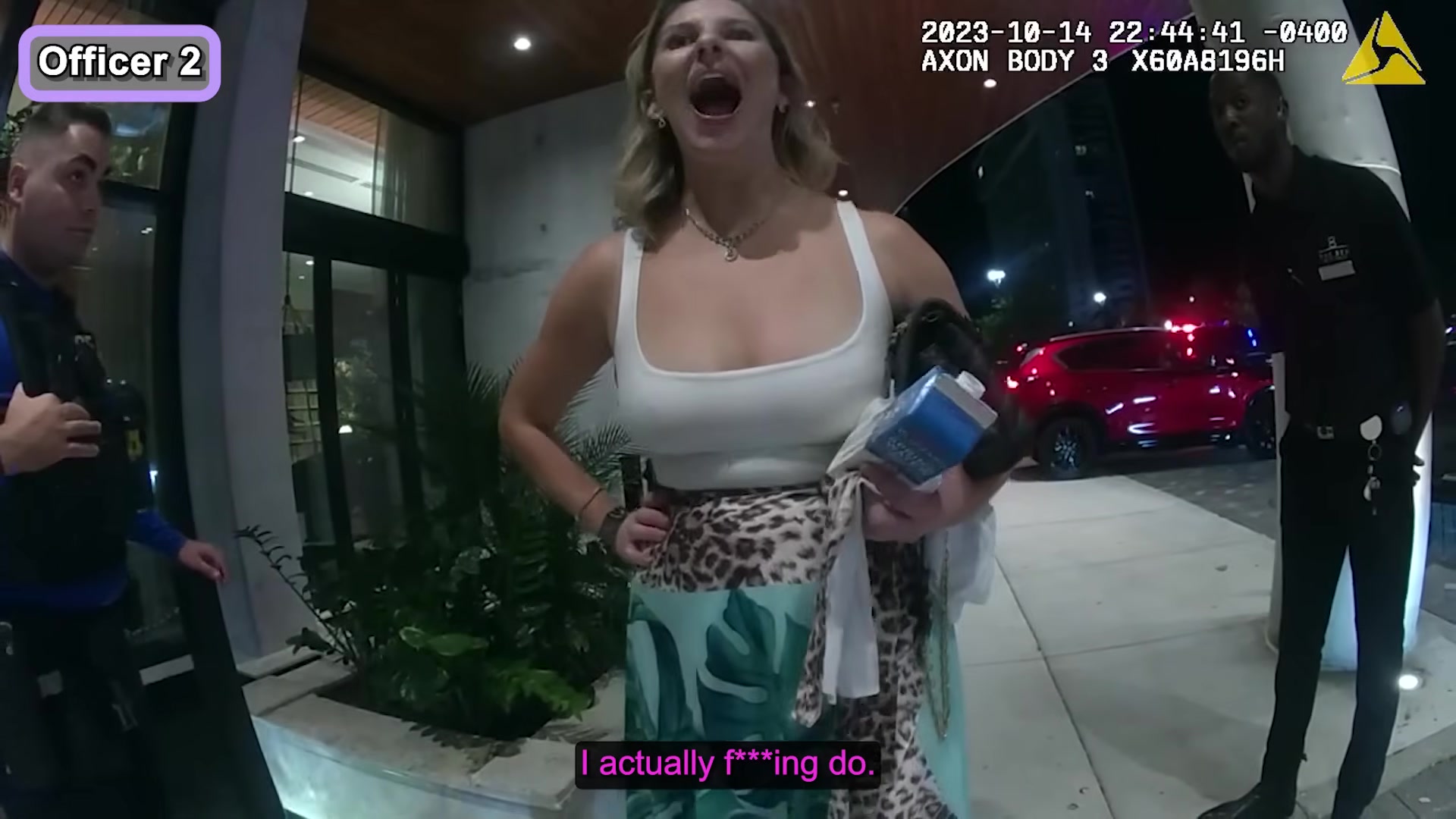
As time passes, officers make the consequences increasingly clear. The woman is told that she needs to leave and that continued refusal can result in arrest. This is an important procedural point because it removes ambiguity about what police expect.
A warning does not mean officers must negotiate indefinitely. Once a person understands the direction and has a reasonable opportunity to comply, officers may move toward enforcement if the person deliberately refuses.
The woman continues challenging the officers and asserting her position. Her insistence on having the final word becomes part of the rhythm of the encounter: officers give a direction, she responds with another argument, and the same basic issue returns.
From a viewer's perspective, this can make the arrest seem almost avoidable until the final seconds. That is precisely why the full footage matters. It shows the number of opportunities available before officers decide that continued discussion is no longer resolving the situation.
The Situation Finally Shifts From Removal to Arrest
Eventually, the officers' patience with the circular argument reaches its practical limit. The encounter shifts from asking the woman to leave voluntarily to taking physical control of her.
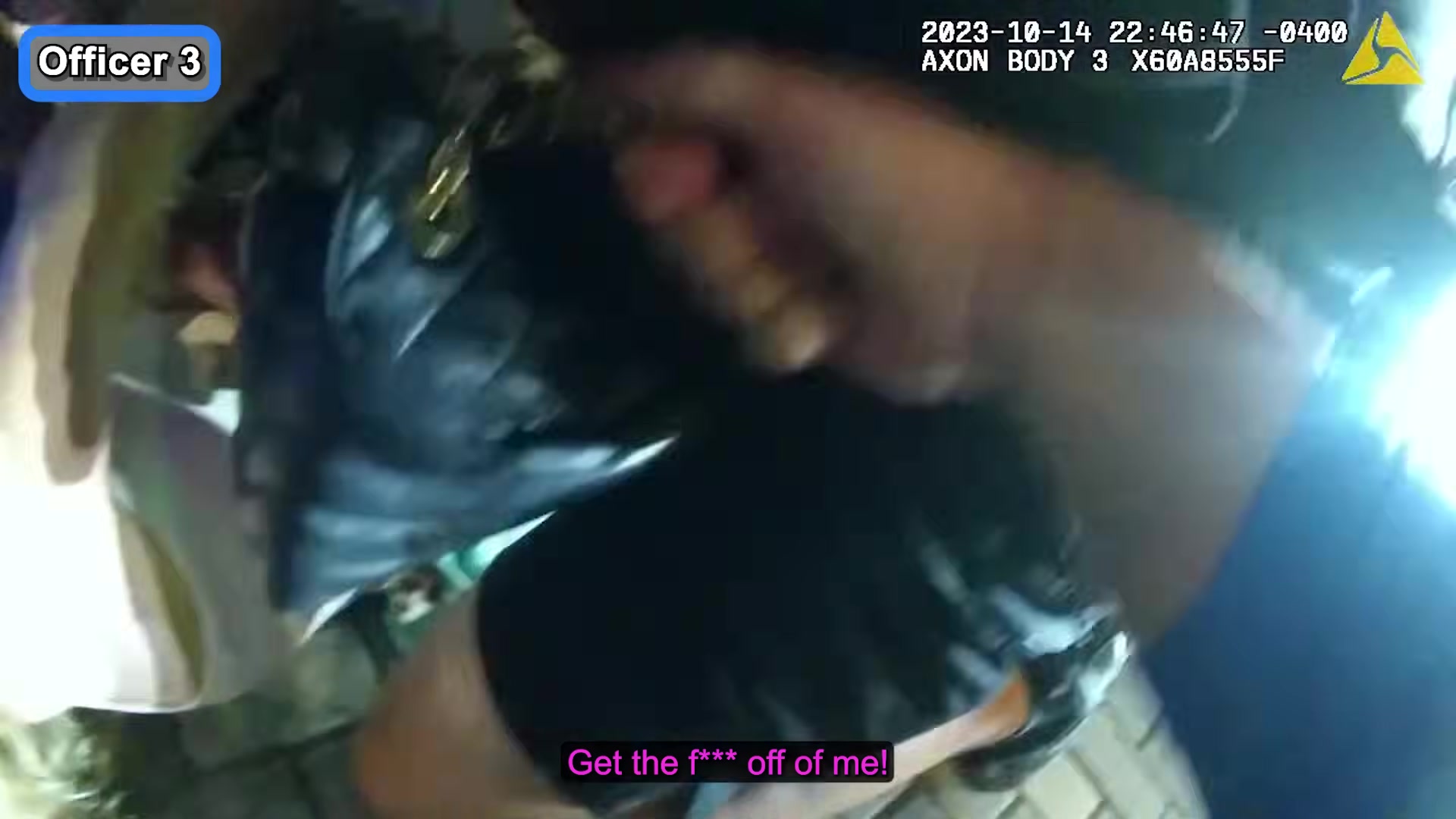
The body-camera view becomes more unstable as officers move in. That is typical when an officer-worn camera records a hands-on arrest: the lens moves with the officer's torso, so arms, uniforms and nearby objects can temporarily block the view.
The woman reacts emotionally as officers restrain her. What had been a verbal dispute over the hotel room now becomes an arrest scene in front of the property.
The important context is that the physical intervention does not occur at the beginning. The footage documents a prolonged period of explanation and warning before officers take that step.
Why Intoxication Makes These Calls More Difficult
Alcohol can make a hotel-removal call harder without automatically being a crime by itself. Intoxication may affect balance, impulse control, memory and a person's ability to process repeated instructions. It can also make someone more likely to interpret a practical direction as a personal challenge.
Officers have to account for those effects while still maintaining boundaries. They may need to determine whether a person can safely leave on foot, whether a sober companion can take responsibility for them or whether the person's conduct has crossed into an arrestable offense.
The video shows that tension. Officers are not simply dealing with an argument about a room. They are also trying to manage a woman whose behavior appears increasingly difficult to redirect.
That does not allow an outside observer to diagnose her condition or assign a precise level of intoxication. It does explain why officers repeatedly use simple, direct instructions rather than engaging every legal or personal argument she raises.
The Footage Shows More Than a Short Viral Clip
A short social-media edit could reduce this incident to the final arrest and the woman's most dramatic statements. The longer footage tells a different story. It shows hotel staff, repeated police explanations, movement from the lobby to the exterior and a long period in which leaving remains an available option.
That context is important when evaluating police encounters. The final seconds of an arrest rarely explain why officers reached that point. Commands may have been given many times before a person is touched, and alternatives may have been offered long before handcuffs appear.
The same caution applies in the opposite direction. Body-camera footage records what officers see and hear, but it may not contain the hotel's complete internal history with the guest, billing records or every conversation that happened before police arrived.
A responsible account therefore uses the video for what it establishes and avoids inventing details that the camera cannot prove.
The Exact Case Could Not Be Reliably Matched to Public Records
Research using the October 14, 2023 body-camera date, hotel setting, intoxication description and removal sequence did not produce a police release or local news report that could be matched to this footage with enough confidence.
There are many superficially similar cases involving intoxicated hotel guests, trespass warnings and arrests. Using one of those cases simply because the broad facts resemble this video would risk attaching the wrong name, city, department or charges to the woman shown here.
For that reason, this article does not identify the woman, the hotel or the police agency unless those details can be independently verified. It also does not invent a booking charge, bond amount or court outcome.
What can be verified directly from the footage is the date, the hotel environment, the repeated effort to remove the woman, her continued objections and the eventual police intervention. Those facts are enough to tell the core story without turning an uncertain match into a false one.
A Hotel Dispute Becomes an Avoidable Arrest
The encounter begins with a straightforward problem: hotel management wants a guest to leave. Officers arrive to help communicate and enforce that decision. For a substantial portion of the video, the solution remains simple. The woman and her companion can gather their things, leave the property and deal with any dispute afterward.
Instead, the woman keeps arguing. Payment for the room, her understanding of her rights and her disagreement with management become reasons to remain engaged rather than reasons to leave. Officers repeat the instruction and gradually make the consequences clearer.
The man with her shows that cooperation is possible. The woman continues resisting the direction, and the situation eventually moves beyond a voluntary departure. Officers take control and the hotel dispute becomes a police arrest.
The title describes the incident as a meltdown, and the footage certainly shows an increasingly emotional confrontation. But the more useful lesson is procedural: a person does not have to agree with a trespass decision in order to comply with it. Leaving the property does not surrender the right to dispute a bill, complain to management or pursue a legal remedy later.
This is also why the article avoids overstating the final legal result. Without a verified public record tied conclusively to this exact footage, it would be irresponsible to assign specific charges or claim a conviction. The camera documents the escalation; it does not provide a complete court file.
What viewers can see is a long series of opportunities for the encounter to end peacefully. Each time officers attempt to move the situation forward, the argument starts again. By the time the arrest occurs, the issue is no longer whether the woman believes the hotel treated her fairly. It is whether she will follow the officers' direction to leave.
Comments (0)
Loading comments...
May You Like

Cops Arrive for a Medical Emergency and Walk Into Drunken Chaos

Female Driver Destroys Three Lives in a Matter of Minutes

Her Dad Is a Lawyer — Then He Shows Up After Her Arrest | Bodycam US