
Intense Kentucky Pursuit: Suspect Crashes and Flees Into Forest After Lying to Police
A Routine Kentucky Traffic Stop Takes an Unexpected Turn
It Looked Like One of the Most Ordinary Stops of the Day
At approximately 5 p.m. on February 13, 2024, a Kentucky State Police cruiser sat behind an older Ford pickup on the shoulder of a two-lane highway.
Nothing about the opening image suggested that the encounter deserved a second look.
Traffic continued passing in the opposite lane. The winter trees were bare. Businesses and homes dotted the roadside. The late-afternoon sky was still bright.
A Kentucky State Police trooper walked toward the driver's window.
For motorists, scenes like this are familiar. A vehicle pulls onto the shoulder, an officer approaches, documents are exchanged, and several minutes later the driver either leaves with a warning or citation or the officer discovers a reason for further investigation.
But traffic stops are unpredictable precisely because officers often know very little about the person inside the vehicle when they first step out of their cruiser.
The dashcam identifier provides one particularly useful clue about this encounter: Trooper Lunz U/733.
Kentucky State Police records establish Dean Lunz as a Post 15 trooper. KSP announced his graduation and assignment to Post 15 in 2019, and subsequent official releases show him handling investigations across south-central Kentucky.
That allows us to establish where this footage belongs without inventing details about the driver.
And it illustrates something that dramatic police videos often obscure: many significant encounters do not begin with sirens, pursuits or drawn weapons.
They begin exactly like this one.
One vehicle.
One officer.
And a conversation through an open window.
Trooper Lunz Approaches the Ford
The footage is dated February 13, 2024.
The vehicle stopped ahead of the cruiser appears to be an older blue Ford pickup. It has pulled almost completely off the travel lane, leaving the passing roadway relatively unobstructed.
Trooper Lunz approaches from behind and makes contact at the driver's side.
That opening phase matters.
Before any police encounter becomes dramatic, an officer generally has to establish the basics: Who is driving? Why was the vehicle stopped? Does the driver have a valid license? Is the vehicle properly registered and insured? Is there anything occurring inside the truck that changes the nature of the encounter?
For viewers, the temptation is to jump immediately to whatever happens later.
But the first few minutes often contain the information that explains everything that follows.
The trooper's identity can be independently supported. Kentucky State Police records show Dean Lunz graduating with Cadet Class 99 in October 2019 and being assigned to Post 15 in Columbia. He also received the Ernie Bivens Award and was the class salutatorian.
Post 15 covers a broad section of south-central Kentucky, and subsequent official KSP releases document Lunz investigating cases in communities including Columbia, Campbellsville and surrounding counties.
That background fits the agency markings and identifier visible in the supplied footage.
What cannot responsibly be established from the material currently available is the driver's identity.
That distinction is important.
Police-video content is frequently reposted with new titles, edited narration and incomplete descriptions. Once that happens, details from unrelated cases can easily become attached to the wrong footage.
Rather than turning uncertainty into fact, the more useful approach is to follow the evidence visible on screen.
And the evidence begins with an ordinary roadside stop.
The roadside setting changes the stakes
A traffic stop on a two-lane highway creates risks that viewers rarely notice.
The trooper is standing only a short distance from moving vehicles.
The stopped Ford occupies the narrow shoulder.
The officer must divide attention between the driver, possible passengers, the interior of the vehicle and approaching traffic.
This is one reason traffic stops are procedural by nature.
The officer's positioning is not random. Neither is the approach to the driver's window.
Kentucky State Police routinely conducts traffic enforcement alongside criminal investigations, collision response and assistance to local agencies. Official releases involving Post 15 show troopers moving between these responsibilities across the region.
In this encounter, the camera preserves the moment before the outcome is known.
That uncertainty is what makes the footage compelling.
Why Routine Stops Can Change So Quickly
The most effective way to understand footage like this is not to assume that the driver is guilty of something serious simply because police footage exists.
Instead, watch how information changes the encounter.
At the beginning, Trooper Lunz has relatively little information.
He has the truck.
He has the driver.
He has whatever driving behavior or violation prompted the initial stop.
Then comes conversation.
Every answer can either resolve the officer's concerns or create another question.
This gradual progression is why a seemingly unremarkable traffic stop can become a lengthy roadside investigation.
Kentucky State Police records provide useful examples of how this process can work.
In a separate 2020 case, Lunz stopped a Ford Focus for a traffic violation on the Columbia Bypass. According to reporting based on KSP information, contact with that driver led to discovery of an outstanding Indiana warrant. A subsequent vehicle search reportedly uncovered suspected methamphetamine, scales, marijuana and a firearm. That driver was arrested on multiple charges.
That is not the February 2024 Ford pickup case shown here, but it demonstrates why officers cannot know the eventual scope of a traffic stop when they first walk toward a vehicle.
The first reason for contact may be minor.
The information discovered afterward may not be.
The officer has to investigate what he can actually observe
That distinction becomes particularly important with dashcam footage.
Viewers have advantages the officer does not.
We can replay a moment.
We can pause the screen.
We know the footage was important enough to be published.
The officer at the driver's window has none of that hindsight.
He has to interpret events as they occur.
This is also why the most engaging police footage is often built around uncertainty rather than action.
What does the officer notice?
Why does the conversation continue?
Is something inconsistent?
Does the driver appear nervous for an innocent reason, or is there something else the trooper has not yet discovered?
Those questions keep viewers engaged because the answer is developing simultaneously for both the officer and the audience.
A Trooper With Years of Post 15 Experience
By the time this February 2024 stop occurred, Lunz had been with Kentucky State Police for several years.
Official KSP records show that his work extended well beyond routine traffic enforcement.
In January 2023, for example, Lunz investigated a case after staff at the Adair County Detention Center intercepted a suspicious letter. Police alleged that an inmate was attempting to solicit another person's murder. The investigation resulted in a solicitation-of-murder charge.
He has also investigated serious traffic collisions.
In October 2024, KSP identified Senior Trooper Dean Lunz as the investigator in a fatal Adair County collision involving a Chevrolet pickup, a pedestrian and a Ford Edge.
In March 2025, KSP again identified him as the investigator after a fatal collision in Campbellsville involving a Ford Expedition and a moped.
These records provide context for what the camera shows in February 2024: an experienced state trooper conducting roadside enforcement within the Post 15 region.
They do not, however, tell us what happened to the Ford pickup driver afterward.
And that missing information matters.
What the footage proves and what it doesn't
There is an important line between observation and assumption.
From the supplied image we can establish:
The stop occurred on February 13, 2024.
The dashcam shows approximately 5:01 p.m.
The video identifies the officer as Trooper Lunz.
A blue Ford pickup is stopped along the roadside.
The footage is presented as a Kentucky incident.
Public Kentucky State Police records independently establish Dean Lunz as a Post 15 trooper.
Beyond that, details need independent evidence.
That means we should not attach drug possession, DUI, fleeing, weapons charges or outstanding warrants to this driver simply because similar outcomes appear in other KSP traffic stops.
The footage has to tell its own story.
And sometimes that restraint actually makes a police story more interesting.
Instead of telling readers immediately what they are supposed to believe, it allows the encounter to unfold naturally.
The Ford is sitting quietly on the shoulder.
The trooper is talking to its driver.
Nothing in that frozen opening image reveals where the encounter is headed.
That is the hook.
Not knowing.
One Camera Captures Only Part of the Story
Police dashcam footage creates the impression that the camera knows everything.
It doesn't.
It records what happens in front of the cruiser.
It captures the date, time and officer identifier.
It preserves movements that might otherwise depend entirely on memory.
But it does not automatically provide court records, explain every statement or reveal what investigators learned afterward.
That limitation is especially important with this February 13 stop.
We can independently establish that Dean Lunz was a Kentucky State Police trooper assigned to Post 15. His career and investigative work are well documented in official KSP records.
We can see him approaching the Ford.
We can establish when the recording occurred.
But the publicly indexed material I located does not provide enough evidence to responsibly identify the driver or attach a final criminal disposition to this specific stop.
That makes the footage valuable for another reason.
It shows police work before hindsight changes how we interpret it.
When an officer first approaches a stopped vehicle, neither he nor the audience necessarily knows whether the encounter will last five minutes or an hour.
Maybe the driver receives a citation.
Maybe the problem is resolved with a warning.
Maybe something discovered during the conversation completely changes the investigation.
The officer does not know yet.
Neither do we.
And on February 13, 2024, at approximately five o'clock in the afternoon, that uncertainty followed Trooper Lunz all the way from his cruiser to the driver's window of an old blue Ford.
Sometimes the most revealing moment in police footage is not the arrest at the end.
It is the quiet moment at the beginning, before anyone knows there will be a story worth telling.
CTA
Traffic stops can look almost identical during their first thirty seconds, yet end in completely different ways. That is why the opening moments matter: the officer is gathering information in real time, while every answer and observation can change what happens next.
This Kentucky footage captures that process from the beginning, placing the viewer directly behind the trooper as an apparently ordinary roadside stop develops.
Watch the complete encounter here to see what happened after Trooper Lunz walked up to the driver's window: https://www.youtube.com/watch?v=J3jINHJcjrQ
Comments (0)
Loading comments...
May You Like
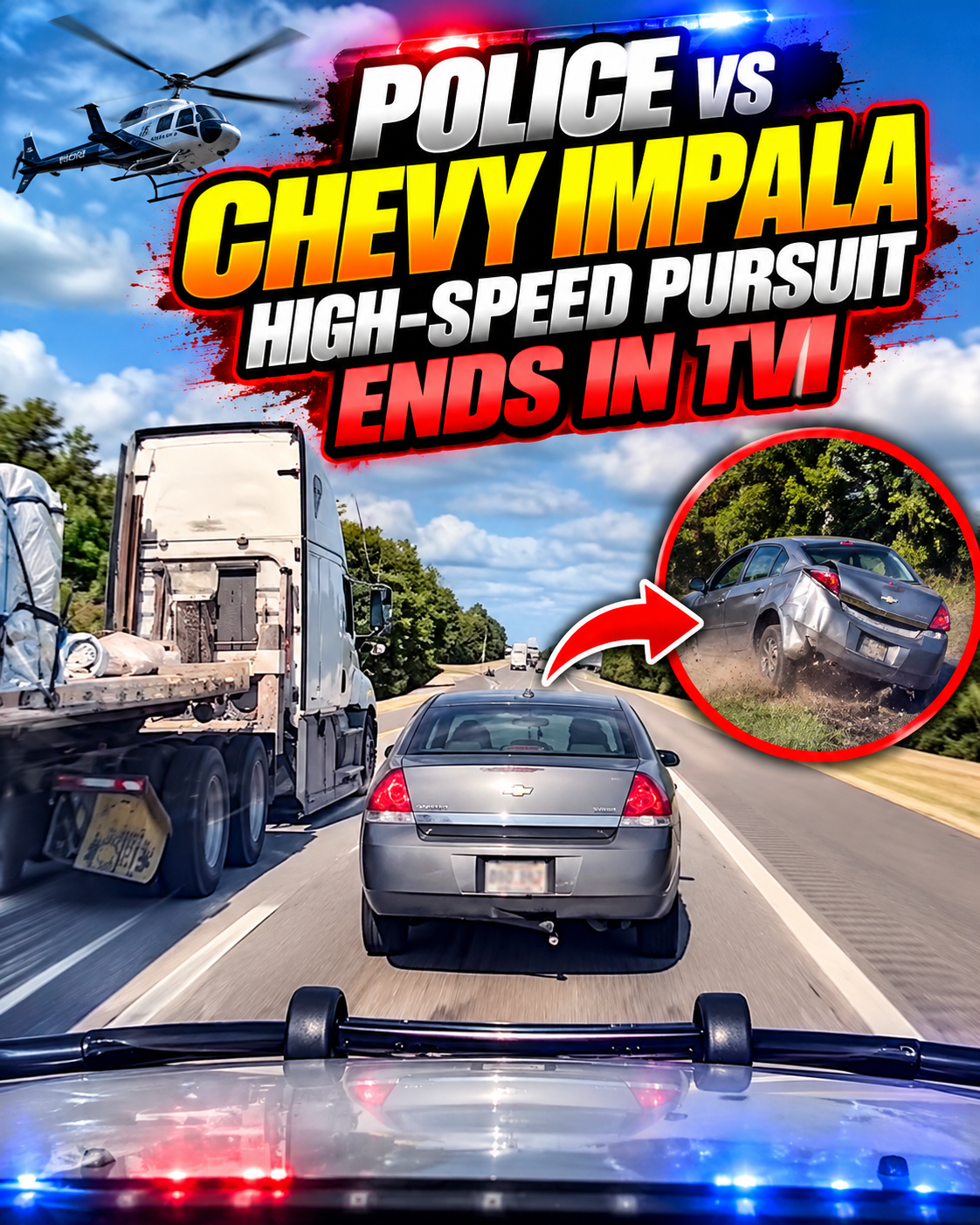
Police vs Chevy Impala High-Speed Pursuit Ends in TVI

Traffic Stop Turns Deadly After Man Steps Out of Stolen Car

Entitled Driver Learns Why You Must Obey Lawful Orders During Traffic Stop













