
How PTSD Ruined This Man's Wedding
HOW PTSD TURNED A WEDDING NIGHT INTO A POLICE ENCOUNTER
A wedding is supposed to be remembered for vows, celebration, family, and the beginning of a new chapter.
But for one man, what should have been a deeply personal celebration took a completely different direction.
Instead of ending quietly with friends and family, the night developed into an emotionally charged police encounter. Bodycam footage captures officers trying to understand what happened while dealing with a man whose behavior appears increasingly difficult to manage.
The video is framed around PTSD, but that context makes the situation more complicated—not simpler. Mental-health struggles can help provide context for someone's behavior, but footage alone cannot establish a diagnosis or explain every decision made during an encounter.
What the camera does show is a situation that keeps changing.
A NIGHT THAT SHOULD HAVE BEEN ABOUT A WEDDING ENDS WITH POLICE TRYING TO PREVENT AN ALREADY EMOTIONAL SITUATION FROM GETTING WORSE.
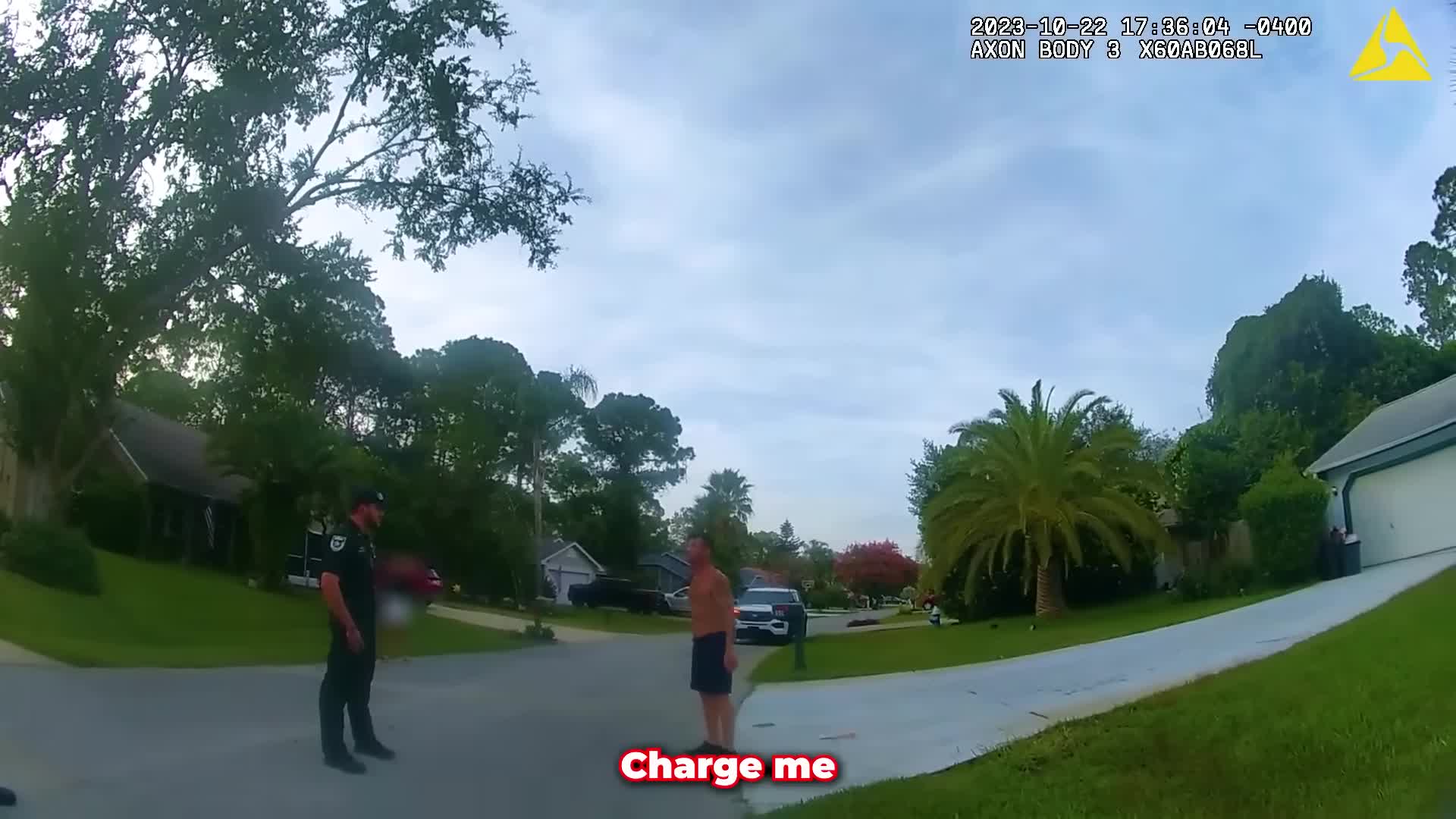
The opening minutes immediately create an important question:
WHAT HAPPENED BEFORE POLICE ARRIVED?
That question becomes the thread running through the entire encounter.
A CELEBRATION TAKES AN UNEXPECTED TURN
Police officers responding to emotionally charged calls often arrive after the most important events have already begun.
They do not necessarily know the relationships between everyone involved.
They may receive only limited information from dispatch.
And when alcohol, arguments, stress, trauma, or emotional distress may be involved, determining exactly what happened can become even more difficult.
That appears to be part of the challenge in this encounter.
The officers have to gather information while simultaneously watching the man's behavior and determining whether anyone is in immediate danger.
What makes the footage compelling is that it does not feel like a conventional criminal confrontation.
There is an emotional layer underneath virtually everything happening on camera.
This isn't a suspect simply trying to outrun police.
There isn't an obvious chase giving the audience a clear hero-and-villain narrative.
Instead, officers are dealing with a human situation that appears to have deteriorated badly.
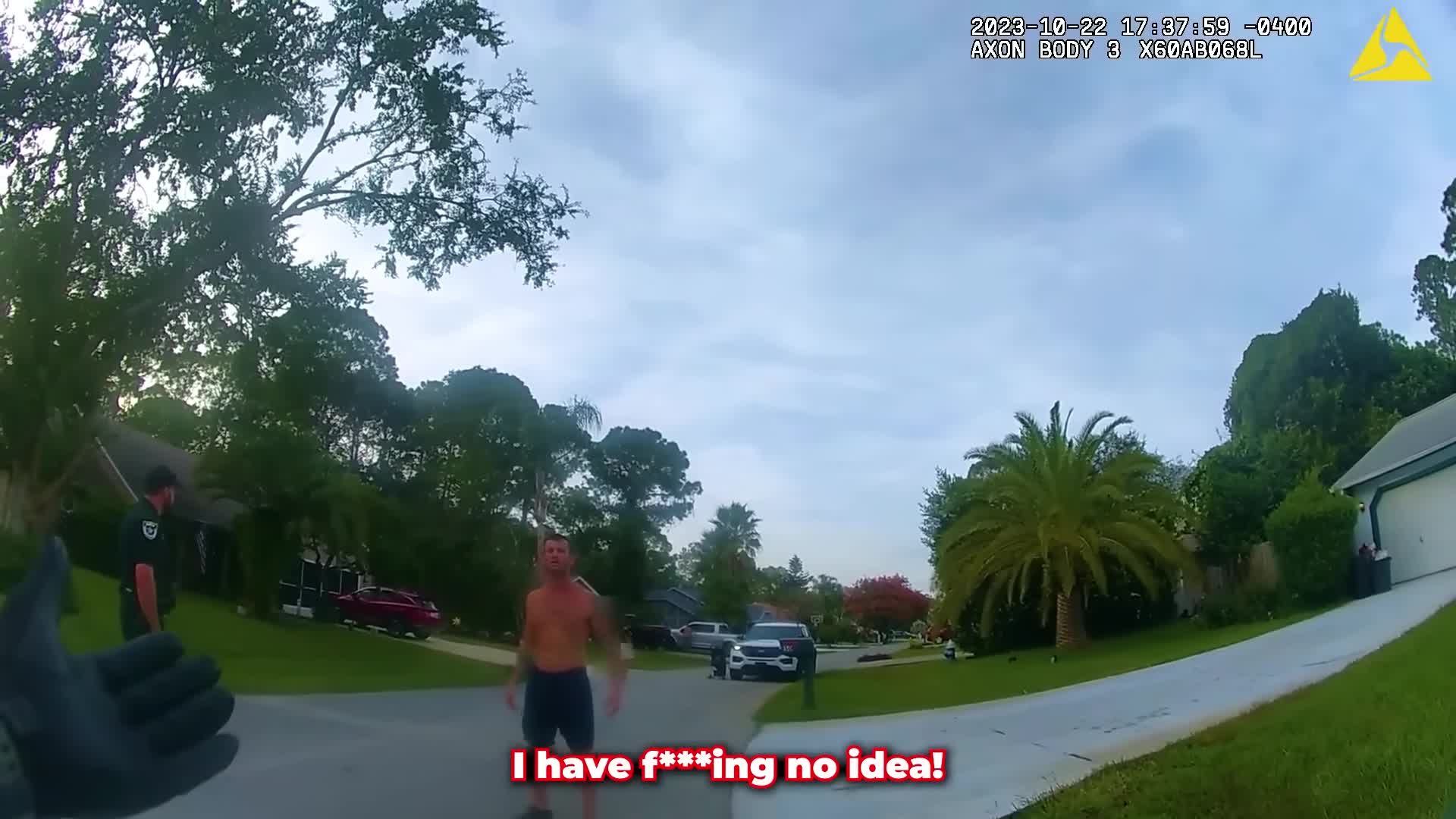
At this stage, the officers are trying to piece together a story while also managing what is happening directly in front of them.
And those are two very different tasks.
UNDERSTANDING WHAT HAPPENED IS IMPORTANT. KEEPING THE SITUATION FROM ESCALATING FURTHER IS IMMEDIATE.
That tension shapes the remainder of the footage.
THE EMOTIONAL WEIGHT OF THE NIGHT BECOMES CLEARER
As the interaction continues, it becomes increasingly obvious that this is not merely an ordinary disagreement.
The wedding context makes the situation especially striking.
Weddings carry enormous expectations.
Months of planning can lead to a single day that couples expect to remember for the rest of their lives. Family members travel. Friends gather. Emotions are already elevated before anything goes wrong.
When conflict enters an environment like that, emotions can escalate rapidly.
Add a person struggling with intense psychological distress, and the situation can become extraordinarily difficult for everyone involved.
But an important distinction has to be made.
PTSD SHOULD NOT AUTOMATICALLY BE USED AS A COMPLETE EXPLANATION FOR EVERYTHING A PERSON DOES.
Post-traumatic stress can affect people in very different ways. A bodycam video cannot tell viewers someone's full clinical history, symptoms, treatment, triggers, or mental state at every moment.
The footage can document behavior.
It cannot independently diagnose the person behind that behavior.
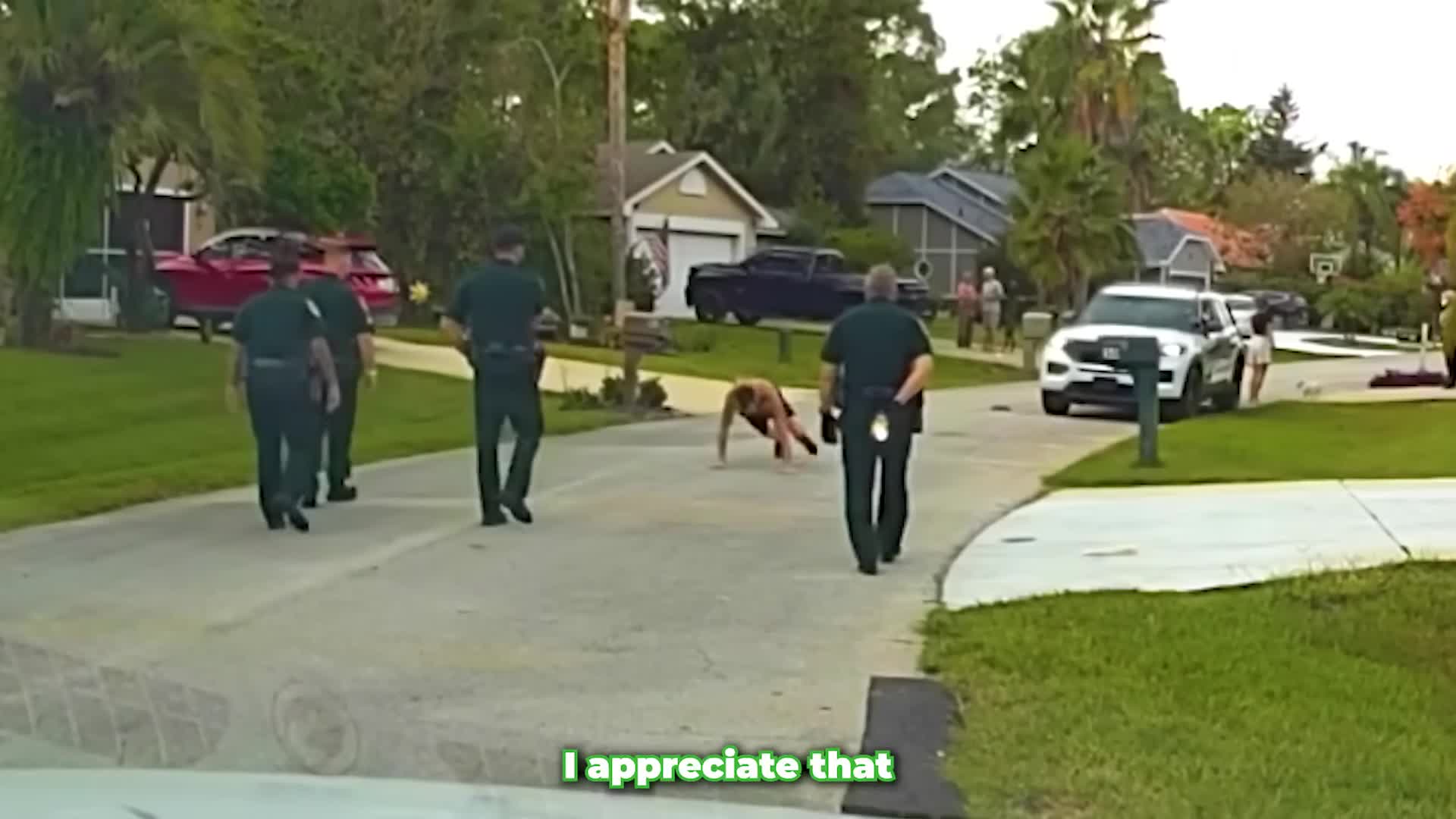
This distinction matters because sensational social-media titles often compress complicated situations into a few dramatic words.
“PTSD ruined his wedding” creates an immediate emotional hook.
The actual encounter is more complicated.
There are relationships involved.
There are decisions being made.
There are officers attempting to establish what occurred.
And there is a man whose behavior must be managed in real time.
THE TITLE TELLS YOU HOW THE NIGHT ENDED. THE BODYCAM SHOWS HOW COMPLICATED GETTING THERE ACTUALLY WAS.
POLICE NOW HAVE TO MANAGE MORE THAN AN ARGUMENT
There is a point in many police encounters when officers stop simply gathering information and begin actively managing behavior.
That transition can be subtle.
An officer may initially ask questions.
Then come instructions.
Then repeated instructions.
The officer begins paying closer attention to distance, movement, hands, other people nearby, and whether the person is becoming more or less cooperative.
That shift is important because officers cannot respond only to what someone has already done.
They also have to evaluate what could happen next.
In emotionally volatile situations, this becomes especially challenging.
Someone may appear calm for a moment and become agitated seconds later.
Someone who is speaking rationally may suddenly become overwhelmed.
Someone trying to help may inadvertently intensify the situation.
THE OFFICERS ARE NOT JUST INVESTIGATING THE PAST. THEY ARE TRYING TO CONTROL THE NEXT FEW SECONDS.
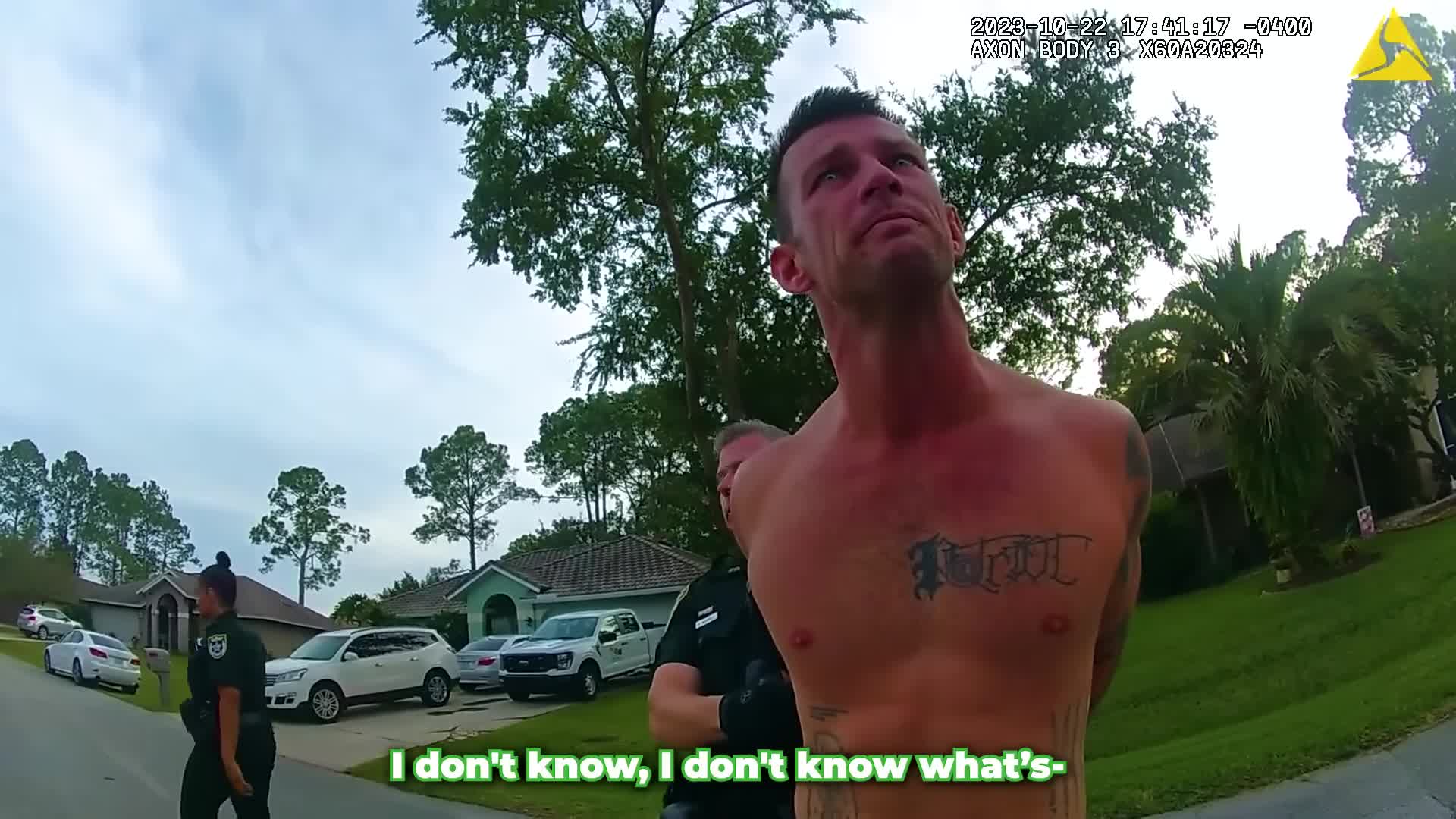
This is where bodycam footage gives viewers a perspective that a written incident summary often cannot.
You see the pauses.
You hear the tone.
You watch officers change positions.
You see how the people involved react to one another.
Most importantly, you experience the uncertainty.
Watching afterward, we know the video lasts nearly fifteen minutes.
The officers living through the encounter do not know what the next fifteen seconds will bring.
WHEN TRAUMA, STRESS AND POLICE AUTHORITY COLLIDE
PTSD is often discussed casually online, but the condition itself is far more complex than the shorthand commonly used in viral videos.
Trauma-related responses can involve intrusive memories, heightened alertness, avoidance, changes in mood, irritability, sleep problems, or intense reactions to reminders of traumatic experiences.
But there is no single “PTSD behavior.”
That is why caution is necessary when interpreting this footage.
The video's framing provides PTSD as part of the man's story, but viewers should resist the temptation to use a medical label to explain every action they see.
At the same time, the broader issue is important.
Police officers regularly encounter people experiencing mental-health crises, severe emotional distress, substance-related impairment, trauma responses, or combinations of several factors.
These encounters can create a difficult balance.
Officers may attempt verbal de-escalation while still having to maintain safety.
A person's distress can be genuine while their behavior can still create risks.
Empathy and accountability are not necessarily opposites.
A PERSON CAN BE STRUGGLING AND THE SITUATION CAN STILL REQUIRE POLICE INTERVENTION.
That complexity is one of the strongest themes running through this footage.
THE NIGHT MOVES FURTHER AWAY FROM THE WEDDING IT WAS SUPPOSED TO BE
By the middle portion of the video, the contrast becomes difficult to ignore.
This was supposed to be a wedding night.
Instead, police body cameras are recording the aftermath of a deeply emotional confrontation.
That contrast gives the footage much of its impact.
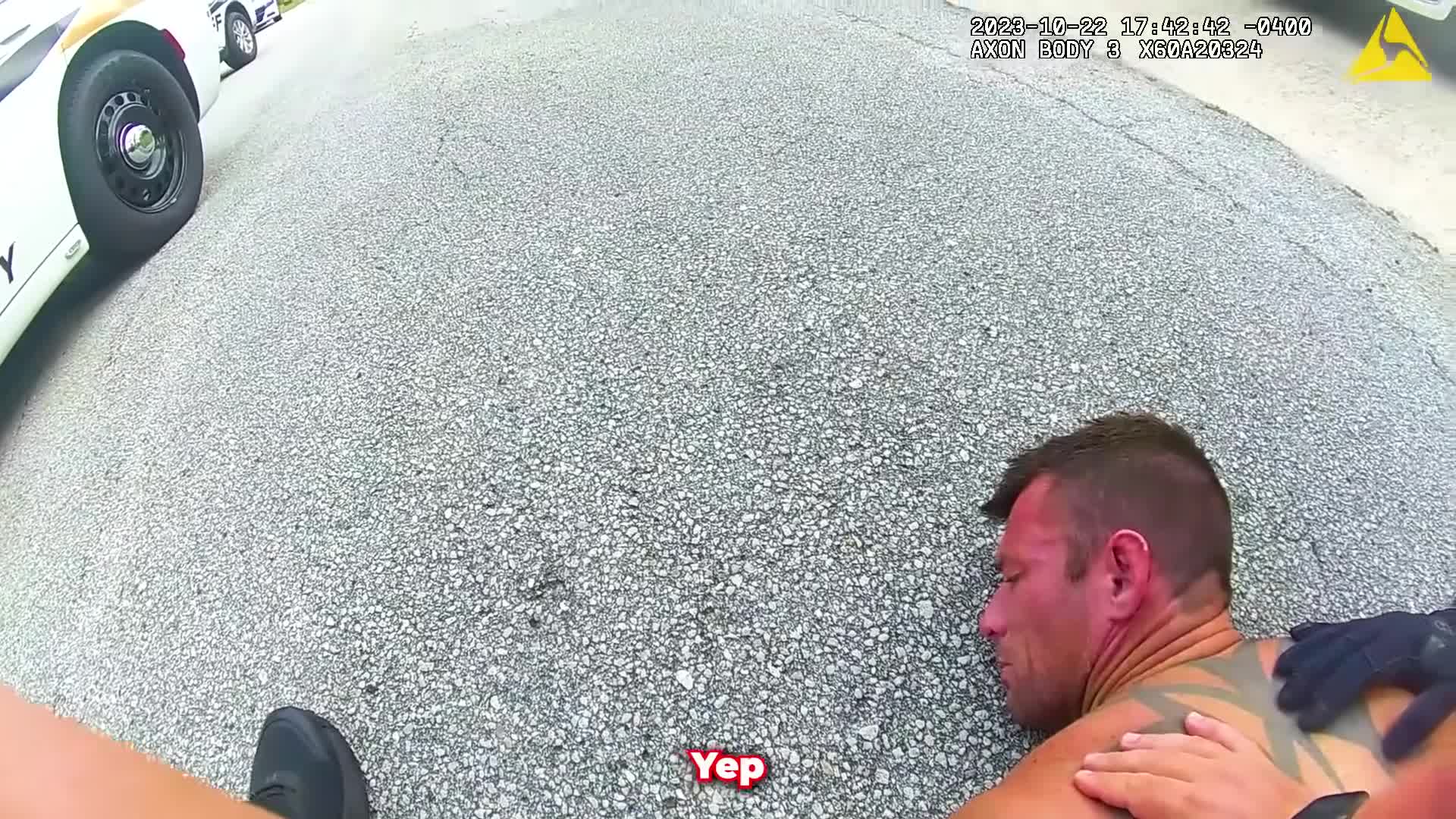
Imagine the expectations surrounding the beginning of that day.
The ceremony.
The guests.
The photographs.
The plans for what would happen afterward.
Then compare those expectations with the scene officers are now dealing with.
ONE OF THE MOST IMPORTANT NIGHTS OF A PERSON'S LIFE HAS BECOME A POLICE MATTER.
That is a dramatic transformation, but it is also a deeply human one.
Police bodycam footage frequently captures people at their worst moments.
Those few minutes may eventually become millions of people's only exposure to that person.
That creates an important limitation for viewers.
We see the crisis.
We rarely see the years before it.
We usually do not see treatment histories, family dynamics, private conversations, previous trauma, or what happens months afterward.
The camera captures an incident.
It does not capture an entire life.
THE OFFICERS HAVE TO MAKE A DECISION
As the encounter progresses, conversation alone does not necessarily resolve the underlying problem.
Officers still have responsibilities.
They must determine what happened.
They must evaluate whether an offense occurred.
They must consider the safety of the people involved.
And if the circumstances justify taking someone into custody, emotional distress does not automatically eliminate that responsibility.
This creates one of the most difficult aspects of crisis-related policing.
An officer may recognize that someone is struggling while simultaneously deciding that the person cannot simply remain where they are.
Those two conclusions can exist at the same time.
COMPASSION DOES NOT ALWAYS MEAN WALKING AWAY.
Sometimes intervention itself is the attempt to prevent a situation from becoming more dangerous.
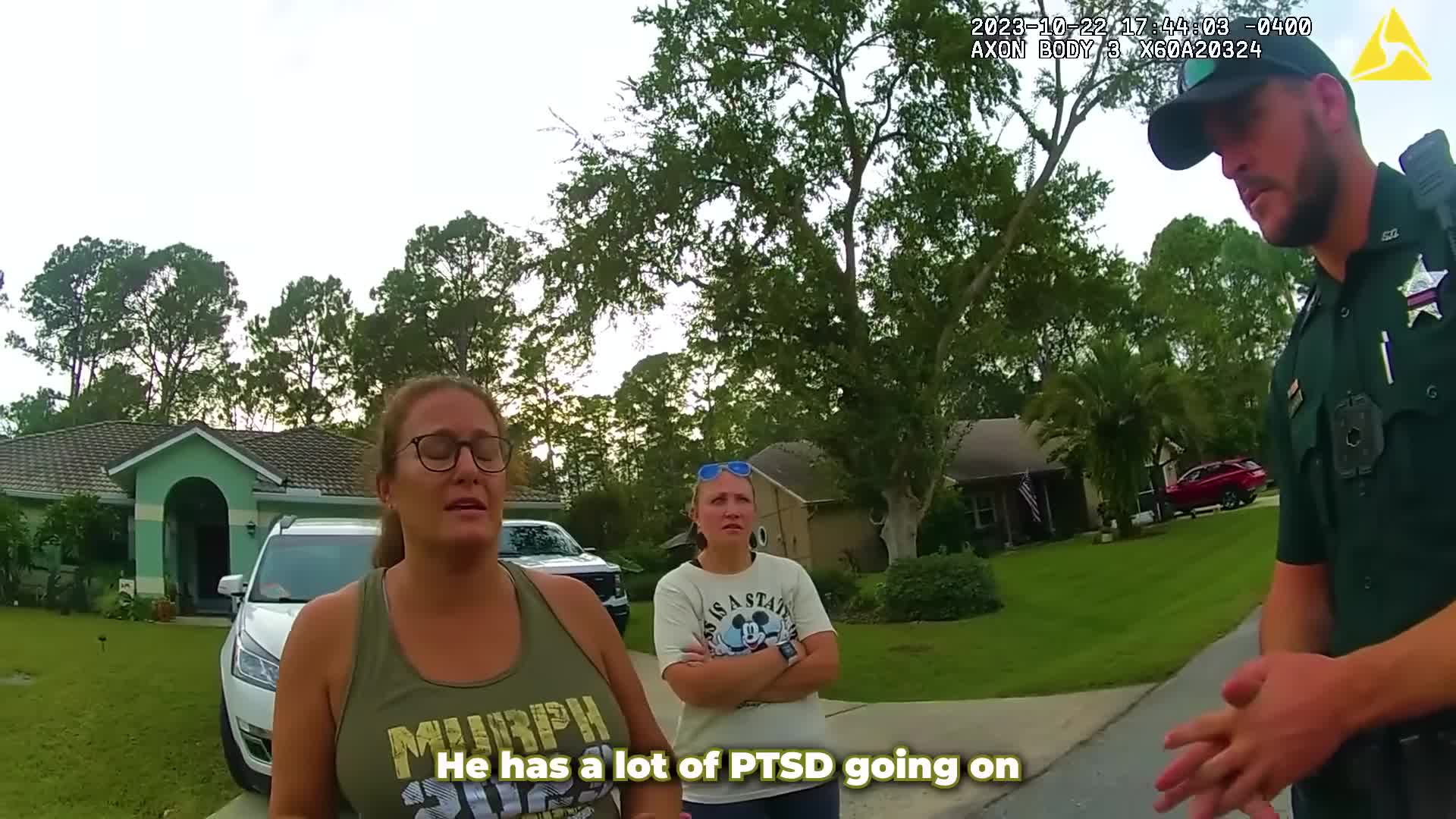
By this point, the story has moved far beyond the opening uncertainty.
The officers have had more time to observe behavior and gather information.
The people involved have had more opportunities to explain what happened.
And the encounter is moving toward a decision.
For viewers, this is where context becomes particularly important.
A short clip of the final police action would tell only part of the story.
The preceding minutes show why officers continued remaining involved rather than simply leaving.
WHY THIS VIDEO FEELS DIFFERENT FROM A TYPICAL ARREST
Many viral bodycam videos are built around obvious conflict.
Suspect versus officer.
Driver versus trooper.
Runner versus pursuing police.
This footage feels different because the strongest conflict appears to be happening on several levels at once.
There is the immediate conflict between the people involved.
There is the interaction with police.
And there appears to be an internal emotional struggle affecting the man at the center of the encounter.
That makes the footage uncomfortable in a different way.
It is easier to watch a pursuit and wonder whether the fleeing driver will escape.
Here, the audience is instead watching a personal celebration unravel into something nobody involved likely wanted.
THERE IS NO REAL WINNER WHEN A WEDDING NIGHT ENDS THIS WAY.
That is why reducing the story to entertainment alone misses part of what makes it powerful.
The footage is dramatic.
But underneath that drama is a reminder of how quickly unresolved emotional distress can collide with relationships, major life events, and law enforcement.
THE FINAL STAGES PUT THE ENTIRE NIGHT INTO PERSPECTIVE
As the encounter moves toward its conclusion, the contrast with the beginning becomes even stronger.
What started as officers arriving and attempting to determine what happened has developed into a lengthy intervention.
The wedding celebration is now almost secondary.
The immediate concern is bringing the police encounter to a safe conclusion.
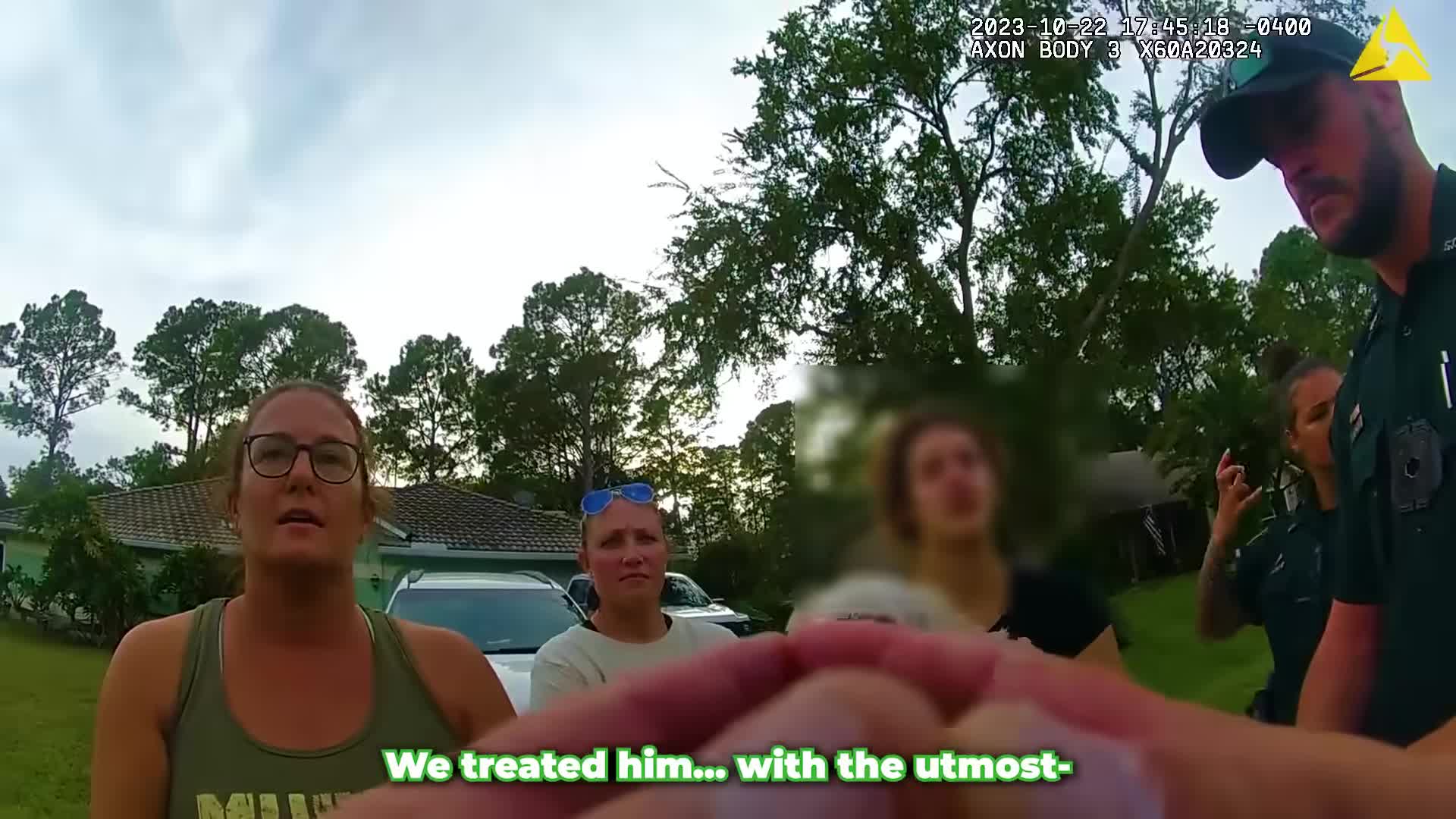
This image is particularly revealing when compared with the first.
The surroundings may not have changed dramatically.
But everything we understand about the situation has.
That is one of the reasons longer bodycam footage matters.
THE CAMERA DOESN'T JUST SHOW AN OUTCOME. IT SHOWS A TRANSFORMATION.
A person who initially appears in one context can look very different after viewers understand what officers are dealing with.
Likewise, an officer's decision near the end may make little sense if the viewer has skipped everything that happened beforehand.
Context does not automatically make every action correct.
It makes evaluation more informed.
A WEDDING NIGHT THAT WILL BE REMEMBERED FOR THE WRONG REASONS
By the time the encounter concludes, the emotional weight of the situation is difficult to ignore.
A day intended to celebrate a relationship became associated with police intervention and a deeply personal crisis.
That is what makes this footage memorable.
Not because it offers a spectacular chase.
Not because it contains an elaborate criminal plot.
But because it shows HOW QUICKLY A MAJOR LIFE MOMENT CAN COLLAPSE WHEN EMOTIONS, TRAUMA AND CONFLICT OVERWHELM THE PEOPLE INVOLVED.
There is also a broader lesson here.
Mental-health terminology should be handled carefully.
If PTSD was genuinely part of this man's history, that context deserves to be understood rather than mocked. At the same time, viewers should not assume that a diagnosis automatically explains every behavior captured on camera.
People are more complicated than that.
Police encounters are more complicated than that.
And bodycam footage, valuable as it is, still gives us only one window into a much larger story.
WHAT WE CAN SEE CLEARLY IS THE CONSEQUENCE: A NIGHT THAT WAS SUPPOSED TO BEGIN A NEW CHAPTER IN SOMEONE'S LIFE ENDED WITH POLICE AT THE CENTER OF IT.
That is a much more sobering story than the title alone suggests.
SEE THE MOMENTS THE SHORT CLIPS LEAVE OUT
The police response is only part of what happened that night. Watch the full bodycam footage to see how the encounter develops, why officers remain involved, and how a wedding celebration turns into an unforgettable police intervention.
→ WATCH THE FULL ENCOUNTER HERE TO SEE HOW THE NIGHT UNFOLDED FROM THE OFFICERS’ PERSPECTIVE: https://www.youtube.com/watch?v=_M8LkQUQk74
Comments (0)
Loading comments...
May You Like

🚨⛽ Man Caught in a Disturbing Incident at a Gas Station | Police Respond US

Neighborhood Grocery Store Suddenly Erupts Into Chaos

Woman Refuses Repeated Orders to Exit Her Car Before Officers Move In













